

U0130 on 2012-2018 Ford Focus: Lost Power Steering Communication Causes and Fixes
On a 2012-2018 Ford Focus, code U0130 almost always means the Electric Power Steering has failed. This is a very common issue, often caused by water damage or internal failure of the control module, which requires replacing the entire steering rack assembly for about $900-$2200.
- U0130 on a 2012-2018 Focus means the power steering is about to or has already failed.
- The cause is almost always an internal failure of the electronic control module, which is part of the steering rack assembly.
- This is a safety-critical failure; do not drive the vehicle. The steering will be extremely heavy.
- The standard repair is to replace the entire steering rack and then program the new unit to the car.
- Before replacing the rack, it's wise to quickly check the battery, fuses, and the main electrical connector on the rack for obvious corrosion or damage.
What's Unique About the 2012-2018 Ford FOCUS
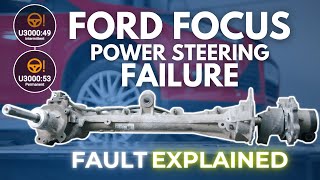
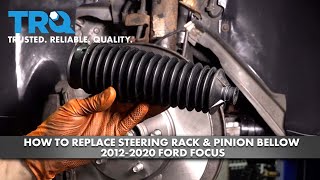
The third-generation Ford Focus (2012-2018) is notorious for failures of its Electric Power Assisted Steering (EPAS) system. 🎬 Watch: A breakdown of common causes for Focus steering failure. Unlike many cars where the control module is a separate, replaceable part, the Focus integrates the PSCM directly into the steering rack assembly. The design is highly susceptible to water intrusion, which seeps in around the bulkhead boot and the pinion shaft joint, corroding the torque sensor and internal electronics. This damage causes an internal failure, making a complete steering rack replacement the only long-term solution.
Diagnostic Flowchart
Tap your situation to follow the diagnostic path that matches what you're seeing on this vehicle.
Generation note: This guide covers the third generation (Mk3) of the Ford Focus, which includes the pre-facelift (2012-2014) and facelift (2015-2018) models. The Electric Power Steering (EPAS) system and its related failures are common across this entire generation.
Symptoms You May Notice
- Complete loss of power steering assist (steering feels very heavy)
- "Steering Assist Fault Service Required" message on the dashboard
- Illuminated warning lights for steering, ABS, and/or traction control
- Intermittent loss of steering assist before total failure
- Grinding or scraping noise from the steering rack when turning at low speeds
- Replacing only the battery without testing it first. While a bad battery can cause this code, it's more often a symptom of the failing steering rack drawing too much power or an unrelated issue.
- Assuming the replacement rack does not need programming. A new rack must be programmed to the car using a Ford-specific diagnostic tool (like IDS) via a process called Programmable Module Installation (PMI). Some remanufactured units may come 'pre-programmed' but this is not guaranteed.
Most Likely Causes
- Internal Failure of the Power Steering Rack/Control Module due to Water Ingress 🔴 High Probability Water is the primary killer of these racks. It commonly enters around the bulkhead boot or the joint housing of the pinion shaft, seeping into the torque sensor housing and the main module electronics. This corrosion leads to shorts and sensor failures, triggering codes U0130, U3000:49, and U3000:53.
How to confirm: A professional scan tool will be unable to communicate with the PSCM. After confirming power and ground to the module are good, the diagnosis points to an internal failure. Water stains or corrosion on the rack's electrical connector or housing are a strong visual clue.
Typical fix: The entire steering rack assembly must be replaced. The new rack will require programming (PMI - Programmable Module Installation) to the vehicle's VIN.
Est. part cost: $600-$1500 - Wiring Harness or Connector Damage 🟡 Medium Probability The main electrical connector on the steering rack is low on the subframe, exposing it to moisture, road salt, and vibrations. This can lead to corrosion on the pins or broken wires, severing communication with the PSCM.
How to confirm: Visually inspect the large connector and harness at the steering rack for green/white corrosion, bent pins, or physical damage. Use a multimeter to check for battery power, ignition power, ground, and CAN bus signal continuity at the connector.
Typical fix: Repair the damaged section of the wiring harness or replace the connector pigtail. Clean any corrosion with electrical contact cleaner and apply dielectric grease to seal the connection.
Est. part cost: $20-$150 - Blown Fuse or Main Power Feed Issue ⚪ Low Probability The EPAS system is protected by a high-amperage fuse. In some cases, a cracked or failed main fuse link near the battery can cause a loss of power to the steering rack, leading to a U0130 code.
How to confirm: Check the fuses in both the under-hood fuse box (Fuse F1, an 80A mega fuse) and the passenger compartment fuse box (Fuse 68). An owner on an Australian Ford Forum found a cracked main fuse link attached to the positive battery terminal was the culprit.
Typical fix: Replace the blown or damaged fuse.
Est. part cost: $5-$25 - Low Battery Voltage or Charging System Fault ⚪ Low Probability → Shop Vehicle Battery The EPAS system draws significant electrical current. A weak or failing battery, or a faulty alternator, cannot provide the stable voltage required, causing communication modules to drop off the network and set U-codes.
How to confirm: Test the battery's state of health and the alternator's output. Voltage should be above 12.4V with the engine off and between 13.5V and 14.5V while running. A simple voltage test is not enough; a load test is required to confirm battery health.
Typical fix: Replace the vehicle's battery and/or alternator.
Est. part cost: $150-$500
Diagnosis Steps
- Attempt to communicate with the Power Steering Control Module (PSCM) using a Ford-specific scan tool (like FORScan or IDS). If there is no communication, this confirms the fault.
- Check the battery and charging system. Ensure battery voltage is stable and passes a load test.
- Inspect the fuses. Check the 80A mega fuse (F1) in the under-hood fuse box and fuse 68 in the passenger compartment fuse box.
- Visually inspect the main electrical connector on the steering rack. Look for any signs of corrosion (green/white powder), water damage, or pushed-out pins.
- If the connector looks good, use a multimeter to verify that the PSCM is receiving battery power, ignition power, and has a solid ground connection at the connector pins.
- Check the CAN bus network wires at the PSCM connector for proper voltage (around 2.5V on each line when idle) and for shorts to power or ground. The total network resistance across CAN High and CAN Low should be approximately 60 Ohms.
- If all power, ground, and network wiring test good, the Power Steering Control Module (integrated into the rack) has failed and the entire assembly must be replaced.
Parts You'll Likely Need
- Electric Power Steering Rack Assembly
(OEM #HV6Z-3504-FH (example, part number is VIN specific))— This is the most common failure. The control module (PSCM) is built into the rack and is not sold separately. Water intrusion or internal electronic failure requires replacement of the whole unit. Part numbers are highly specific to the vehicle's production date and options.
Trusted brands: Motorcraft (OEM), Cardone (Remanufactured), Carquest (Remanufactured)
OEM price range: $1200-$1500
Aftermarket price range: $600-$900
Related Codes That Often Appear With This One
- U3000:49 — This is a Ford-specific code for an internal electronic failure within a control unit. It often appears with U0130 when the PSCM has failed internally due to water damage or other faults.
- U3000:53 — Another Ford-specific code indicating a control module has been deactivated. This code is often stored permanently once a serious internal fault is detected in the PSCM and cannot be cleared.
- C102D-00 — This code indicates 'High Friction Inside Power Steering' and points directly to a mechanical or electromechanical issue within the steering rack itself, often caused by water damaging the internal bearings.
Technical Service Bulletins (TSBs) & Recalls
- SSM 47528: For Focus BEV models, U0130 may set after HV battery replacement and requires a specific procedure (PMI) to correct.
- TSB 18-2062: Addresses wiring harness issues on 2012-2014 Focus models leading to various DTCs and drivability problems.
Platform-Specific Known Issues
- A Technical Service Bulletin (TSB #SSM 47528) exists for the 2012-2018 Focus BEV (Battery Electric Vehicle), where code U0130 may appear in the BECM after replacing the high-voltage battery pack. This is a separate issue from the common EPAS failure on gasoline models.
- TSB 18-2062 was issued for 2012-2014 Focus models for various drivability issues and DTCs caused by a wiring harness issue, though U0130 is not specifically listed, it highlights the platform's sensitivity to wiring faults.
- Ford issued Customer Satisfaction Program 16B32 for other models around this time for electronic throttle body issues, but no widespread recall or satisfaction program was ever issued for the Focus EPAS failure, despite numerous owner complaints.
Mechanic-Grade Diagnostic Values
- HS-CAN Bus Network Resistance — expected: Approximately 60 Ohms. Failure: A reading of 120 Ohms indicates a break in the circuit or a faulty terminating resistor in one module. A reading significantly lower than 60 Ohms (e.g., 45 Ohms) could indicate a shorted module or an extra terminating resistor on the network.
- HS-CAN Bus Voltage (Key On, Engine Off) — expected: CAN High (Pin 5): ~2.7V, CAN Low (Pin 6): ~2.3V. The sum of both lines should be ~5V.. Failure: Voltages that are stuck high, low, or at 0V indicate a short to power, short to ground, or an open circuit. If both lines read ~2.5V and do not change, the bus is idle and may not be communicating.
- PSCM Power and Ground — expected: Pin 1: Battery Voltage (~12.6V KOEO). Pin 2: Ground (less than 5 Ohms resistance to chassis ground).. Failure: No voltage on Pin 1 indicates a power supply issue (fuse, fusible link, wiring). High resistance on Pin 2 indicates a bad ground connection.
Hidden / Shadow Codes Worth Checking
- U3000:49 (Internal Electronic Failure): This Ford-specific DTC is often stored in the PSCM's non-volatile memory when an unrecoverable internal hardware fault occurs, frequently due to water damage. (see via Ford IDS, FORScan, or other high-level diagnostic scanners capable of reading manufacturer-specific codes.)
- U3000:53 (Control Module Deactivated): This code is often set as a permanent DTC after U3000:49 has been flagged multiple times. Once set, it typically cannot be cleared and confirms the module has been internally disabled due to a severe fault, necessitating replacement. (see via Ford IDS, FORScan, or other high-level diagnostic scanners.)
Scan Tool Commands That Help
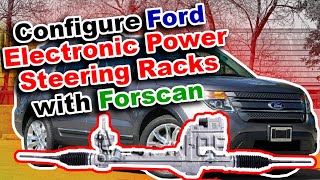
- FORScan / Ford IDS: Programmable Module Installation (PMI) — This function is mandatory after replacing the steering rack assembly. It downloads the vehicle's 'As-Built' data from Ford's servers (or copies it from the old module) and programs the new PSCM with the correct VIN, software, and calibration for features like Active Park Assist and torque steer compensation.
- FORScan / Ford IDS: PSCM Self-Test — This is a preliminary diagnostic step to command the module to run an internal check. If the self-test fails or the module doesn't respond, it points towards a module, power, ground, or network fault.
- FORScan: Pull-Drift Compensation — While not a direct fix for U0130, this setting within the PSCM configuration can be adjusted. If a replacement rack is programmed incorrectly, this feature may behave erratically. It is used to fine-tune the steering's tendency to pull to one side.
Wiring & Ground Locations
- C2280B — The main 6-pin electrical connector for the EPAS/PSCM, located on the steering rack itself, typically on the driver's side of the front subframe.. This is the primary connection point for power, ground, and CAN bus communication to the steering module. It is highly susceptible to corrosion from road spray and water intrusion, making it a critical inspection point.
- G108 / G104 — A primary chassis ground point located in the engine bay, typically on the driver's side frame rail or fender apron, underneath the airbox.. A loose or corroded ground at this location can cause intermittent or total loss of power to the PSCM, leading to a U0130 code even if the rack itself is functional.
- Battery Terminal Fusible Link — A high-amperage fusible link integrated directly into the positive battery terminal clamp assembly.. This fuse can develop hairline cracks that are difficult to see, causing an intermittent open circuit to the EPAS system under high load. This is a known cause of U0130 that is often misdiagnosed as a failed steering rack.
Real Owner Repair Stories
- Australian Ford Forums user (Ford Focus LW (Mk3)) — Steering Assist Fault message and code U0130.
❌ Tried (didn't work) Replacing the entire steering rack assembly.
✅ What actually fixed it The final cause was a cracked main fusible link located on the positive battery terminal clamp. Replacing this small, often-overlooked part restored power to the EPAS system and resolved the code. - FocusFanatics forum user (2014 Ford Focus) — Intermittent loss of power steering, eventually becoming a permanent failure with code U0130.
❌ Tried (didn't work) Initially, the user found the main connector on the steering rack (C2280B) filled with water. Cleaning the connector and pins and applying dielectric grease restored function temporarily.
✅ What actually fixed it The power steering failed completely a few months after the initial cleaning. The water intrusion had already caused irreversible internal damage to the PSCM electronics. The final fix was a complete replacement of the steering rack assembly.
"I Checked Everything" — The Actual Cause
- A smoke test is not applicable for this circuit. However, a common scenario is when a technician confirms the wiring harness has continuity and that the steering rack connector is clean and dry, yet communication still fails. In one documented case, the root cause was a cracked fusible link on the positive battery terminal. It would test fine with a multimeter (no load) but would fail under the high current draw of the power steering motor, causing the module to lose power and drop off the network.
When the Usual Fixes Don't Work
- While the vast majority of U0130 codes on this platform point to a failed steering rack, there are confirmed cases where the fix was entirely different. The most notable counter-evidence is the failure of the main fusible link on the positive battery terminal. In this scenario, replacing the expensive steering rack will not solve the problem, as the underlying issue is a loss of main power to the module under load. This highlights the importance of verifying stable power and ground to the PSCM *under load* before condemning the rack itself.
OEM Part Supersession History
BV6Z-3504-E→HV6Z-3504-F, HV6Z-3504-FH, and others— Revisions to address internal component failures and improve water resistance.
Heads up: Part numbers are extremely VIN-specific. A rack from a pre-facelift car (2012-2014) is not compatible with a facelift car (2015-2018). Furthermore, a rack from a vehicle without Active Park Assist will physically fit but will not program or function correctly in a vehicle equipped with that option. Always verify the part number with the VIN.
Model Year Variations Within This Range
- 2012-2014 vs 2015-2018: The core EPAS failure is common to both pre-facelift (12-14) and facelift (15-18) models. However, the PSCM software calibrations are different. Installing a rack from the wrong year range will result in a programming failure during the PMI process or improper steering feel and function, even if it physically bolts in.
Helpful Videos


The information in this article is provided for general reference and educational purposes only. Vehicle specifications, procedures, and part compatibility can vary by production date, trim level, and region. Always consult your vehicle's factory service manual and verify part numbers before purchasing or performing repairs. Safety-critical components such as airbags, seat belts, and braking systems should be installed by a qualified professional.
- Ford FOCUS:
- 🧭 Diagnostic Flowchart
- 🎬 Helpful Videos
- What's Unique About the 2012-2018 Ford FOCUS
- Symptoms You May Notice
- Most Likely Causes
- Diagnosis Steps
- Parts You'll Likely Need
- Related Codes That Often Appear With This One
- Technical Service Bulletins (TSBs) & Recalls
- Platform-Specific Known Issues
- Mechanic-Grade Diagnostic Values
- Hidden / Shadow Codes Worth Checking
- Scan Tool Commands That Help
- Wiring & Ground Locations
- Real Owner Repair Stories
- "I Checked Everything" — The Actual Cause
- When the Usual Fixes Don't Work
- OEM Part Supersession History
- Model Year Variations Within This Range
- 🎟️ Get 5% Off