

U0131 on 2015-2017 GMC Yukon XL: Lost Power Steering Communication Causes and Fixes
U0131 on a 2015-2017 Yukon XL indicates a loss of communication with the Power Steering Control Module (PSCM). The most common causes are not a failed module, but rather a bad ground connection (G218) under the dash or damaged wiring under the door sill plates, as documented in GM Technical Service Bulletins. These are well-known issues on the K2XX platform and should be checked first.
- U0131 means the Power Steering Control Module is offline, which will result in a loss of power steering assist.
- Before suspecting expensive component failure, you MUST inspect two common problem areas: the G218 ground under the driver's side dash and the wiring harnesses under the door sill plates.
- Driving the vehicle is not recommended due to the serious safety risk posed by the potential for sudden loss of steering control.
- This issue is often accompanied by other communication codes (like U0140 and U0121) because a single bad ground or wire can affect multiple modules on the network.
What's Unique About the 2015-2017 Gmc YUKON XL
On this generation of Yukon XL and its K2XX platform mates (Tahoe, Sierra, Silverado, Escalade), the U0131 code is frequently tied to specific, well-documented platform issues rather than random module failure. General Motors has issued multiple technical service bulletins that point directly to a faulty ground connection (G218) often impeded by dash insulation, and to wiring harnesses under the door sill plates that are susceptible to damage. Specifically, TSB PIT5405C addresses the G218 ground issue, while TSB PIT5457D covers the damaged wiring, particularly the Communication Enable Circuit 5986.
Diagnostic Flowchart
Tap your situation to follow the diagnostic path that matches what you're seeing on this vehicle.
Symptoms You May Notice
- Complete loss of power steering assist, making the wheel very heavy to turn
- "Service Power Steering" or "Steering Assist is Reduced Drive With Care" message o 🎬 Watch: A real-world example of this steering message and fix.n the Driver Information Center
- Illuminated warning lights for ABS, Traction Control (TCS), or StabiliTrak
- Warning chimes
- Multiple other communication codes stored in various modules
- Instrument panel cluster (IPC), radio, or HVAC controls going blank or flickering intermittently
- Replacing the entire power steering rack and pinion assembly without first thoroughly checking grounds (G218) and wiring (under sill plates). The module (PSCM) is often part of the rack, making this a very expensive and often unnecessary repair.
Most Likely Causes
- Poor Body Control Module (BCM) Ground at G218 🔴 High Probability As cited in GM TSB #PIT5405C, the front dash insulator mat can get trapped between the ground's ring terminal and the body stud during factory assembly. This prevents a solid connection and causes high resistance, leading to a host of communication codes, including U0131. This is a widely reported issue in owner forums. 🎬 See how to locate and repair the G218 ground connection.
How to confirm: Locate ground G218 behind the driver's side dashboard end cap, near the A-pillar and speaker. It is a 10mm nut on a stud. Visually inspect if the black, fibrous insulation mat is pinched under the ring terminal. A voltage drop test across the ground can confirm high resistance, but visual inspection is often sufficient.
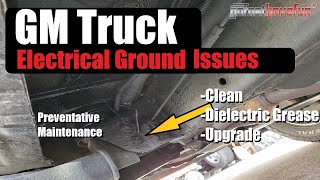
Typical fix: Remove the 10mm nut and ground eyelet. Use a utility knife to trim away the section of insulation mat around the ground stud. Clean the contact surfaces of the ground terminal and body stud with an abrasive pad to ensure a clean metal-to-metal connection, 🎬 Watch this guide on cleaning grounds and preventative electrical maintenance. then securely re-fasten the nut.
Est. part cost: $0 - Damaged Wiring Harness Under Sill Plates 🔴 High Probability As cited in GM TSB #PIT5457D, the wiring harnesses that run along the floor under the driver and passenger door sill plates can become damaged, corroded, or pinched. This can cause an open or short in the communication enable wire (Circuit 5986) or other network wires. Moisture can also get trapped under the sill plates, leading to corrosion.
How to confirm: Remove the driver and passenger sill plates and carefully inspect the wiring harnesses for any signs of pinching, chafing, corrosion from water intrusion, or other damage. A technician can test the voltage on Circuit 5986 at the PSCM connector; it should have approximately 12 volts with the ignition on. A load test using a 194 bulb should maintain at least 11 volts.
Typical fix: Repair the specific damaged section of wire, ensuring a solid, insulated connection. GM provides specific instructions for wire repair in bulletin #10-00-89-005. If a splice, like Splice J365 under the passenger sill plate, is the point of failure, it must be repaired properly.
Est. part cost: $5-$25 - High Resistance in Battery Cables 🟡 Medium Probability → Shop Vehicle Battery Over time, factory battery cables, particularly the negative cable, can develop high internal resistance or poor connections at the frame or engine block. This causes system-wide voltage drops that can disrupt module communication, especially when the high-current EPS motor is activated. This issue is noted in GM bulletins like 18-NA-161.
How to confirm: Perform a loaded voltage drop test on both the positive and negative battery cables. Per related TSBs, voltage drop should not exceed 200mV (0.2V) on the negative side or 100mV (0.1V) on the positive side while cranking. Also, inspect connections at the battery, fuse block, and engine block for tightness and corrosion.
Typical fix: Replace the faulty battery cable assembly, most commonly the negative cable, with a new OEM or high-quality aftermarket part. Ensure all connection points are clean and tight, and that the battery posts protrude 1-2mm above the clamps.
Est. part cost: $40-$150
Rare But Worth Checking
- Failed Power Steering Control Module (PSCM) / Motor: → Shop Power Steering Control Module While possible, this is less common than the wiring and ground issues. A diagnosis of exclusion after all wiring, grounds, and power feeds have been confirmed good. GM recall #18V586000 (also known as 14743) addressed a software issue causing momentary loss of assist in some 2015 models, which could set a U0131. If replaced, the PSCM requires dealer programming.
- Blown Power Steering Fuse: The PSCM is protected by a large 'Mega' fuse (often 100A or 175A) located in a small fuse block on the positive battery terminal. While not a common failure point, it should be checked for continuity before more complex diagnostics.
- Low System Voltage: A weak or failing battery can cause random communication codes. Always ensure the battery is fully charged (above 12.4V) and the charging system is working correctly (13.8-14.4V) before starting complex diagnostics.
Diagnosis Steps
- Scan all vehicle modules for DTCs. Note all current and history codes to see which other modules are reporting communication loss.
- Check battery state of charge and charging system operation. Ensure system voltage is stable and above 12.4V with the engine off.
- PRIORITY 1: Inspect ground G218. Remove the driver-side dash end panel. Disassemble the 10mm ground connection, check for trapped insulation, clean all contact surfaces, and re-torque the nut. This is a critical step from TSB PIT5405C.
- PRIORITY 2: Inspect sill plate wiring. Remove the driver and passenger door sill plates. Carefully lift and inspect the wiring harnesses for any signs of pinching, corrosion, or damage, as per TSB PIT5457D. Pay special attention to the Communication Enable wire (Circuit 5986) and Splice J365 under the passenger sill.
- Inspect the large fuse for the PSCM, typically located in a fuse block on the positive battery terminal.
- Perform loaded voltage drop tests on the main battery cables to check for high internal resistance, as per TSB 18-NA-161.
- If all wiring, grounds, and power feeds are confirmed to be good, the final step is to suspect a faulty Power Steering Control Module (PSCM), which is typically integrated into the steering rack assembly.
Parts You'll Likely Need
- Wiring Repair Supplies — Used to fix damaged wires found under the sill plates or at ground connections. This is a very common fix.
Trusted brands: 3M, Tesa Tape
OEM price range: $5-$25
Aftermarket price range: $5-$25 - Negative Battery Cable
(OEM #84516533 (ACDelco GM Genuine))— The original cable can develop high internal resistance, causing voltage drops and communication faults. This is a known issue per TSB 18-NA-161.
Trusted brands: ACDelco
OEM price range: $70-$150
Aftermarket price range: $40-$90 - Power Steering Gear
(OEM #84435323 (ACDelco GM Genuine))— This is the entire rack and pinion assembly, which includes the non-serviceable PSCM. It is only replaced after all other wiring, ground, and power issues are ruled out. Multiple part numbers exist; always verify by VIN. Other examples include 86553005 and 19417064.
Trusted brands: ACDelco (GM Genuine)
OEM price range: $1200-$1900
Aftermarket price range: $700-$1300
Related Codes That Often Appear With This One
- U0140 — Lost Communication With Body Control Module (BCM). This often appears with U0131 when the G218 ground is faulty, as this is a primary ground for the BCM itself.
- U0121 — Lost Communication With Anti-Lock Brake System (ABS) Control Module. The ABS and PSCM modules are on the same high-speed data network and often share the same communication enable circuit, so a wiring fault often affects both.
- U0073 — Control Module Communication Bus 'A' Off. This is a general network code indicating the entire bus is down, often triggered by the same ground or wiring faults that cause the more specific U0131 code.
Technical Service Bulletins (TSBs) & Recalls
- PIT5405C: Steering Jerks Or Kicks Back / Reduced Power Steering Assist / Engine Stall / No Start.
- PIT5457: Service ABS / TCS / Power Steering and/or Suspension Message.
Platform-Specific Known Issues
- TSB PIT5405C / 18-NA-161: A long list of communication DTCs, including U0131, can be caused by the dash insulator mat being trapped under the G218 ground terminal.
- TSB PIT5457D: Service messages for ABS, TCS, and Power Steering (including code U0131) can be caused by an open or high resistance in the Communication Enable Circuit (5986) located in the harness under the door sill plates.
- Recall 18289 / NHTSA 18V586000: Affects some 2015 models for a software issue that could cause a momentary loss of power steering assist, followed by a sudden return. A dealer software update is the fix.
Mechanic-Grade Diagnostic Values
- Communication Enable Circuit (5986) Voltage — expected: Approximately 12V with key in ACC, ON, or START.. Failure: Low or no voltage indicates an open/high resistance in the wiring, often under the sill plates.
- Communication Enable Circuit (5986) Load Test — expected: At least 11.0V measured across a 194 bulb connected between the circuit and a good ground.. Failure: Voltage below 11.0V under this ~250mA load confirms high resistance in the circuit.
- Negative Battery Cable Voltage Drop — expected: Less than 200mV (0.2V) while cranking the engine.. Failure: A reading above 200mV indicates high internal resistance in the cable, requiring replacement.
- High-Speed CAN Bus Resistance — expected: Approximately 60 Ω (Ohms) with key OFF, measured between CAN High and CAN Low pins at the DLC or a module connector.. Failure: Significantly higher than 60 Ω suggests an open circuit or missing termination resistor. Significantly lower suggests a short between the CAN lines.
Scan Tool Commands That Help
- GDS2 (GM Global Diagnostic System 2): PSCM Programming / Setup — This is required after replacing the Power Steering Control Module or the entire steering rack assembly to configure the new module to the vehicle.
- GDS2 (GM Global Diagnostic System 2): Steering Position/Torque Sensor Calibration — Must be performed after replacing the steering gear or motor to calibrate the steering angle and torque sensors, ensuring proper assist and feel.
Wiring & Ground Locations
- G218 — Driver's side, behind the A-pillar/kick panel trim, near the speaker. It is a 10mm nut on a body stud.. This is a primary ground for the Body Control Module (BCM). When compromised by a trapped insulation mat (a known factory defect), it causes widespread communication codes, including U0131.
- Splice J365 — Under the passenger front door sill plate, within the main wiring harness.. This is a known failure point (due to corrosion or damage) for the Communication Enable Circuit 5986, which wakes up the PSCM and other modules.
- PSCM Connector X1 — On the power steering rack assembly itself. This is the multi-pin connector for communication signals.. This is the final test point for signals before the module. Pin 2 is the Communication Enable Circuit (5986), and pins 8/10 (CAN+) and 9/11 (CAN-) are the data lines. Verifying signals here isolates the fault to either the vehicle wiring or the PSCM itself.
- EPS Mega Fuse — In a small, black fuse box mounted directly on the positive battery terminal. Typically a 100A or 175A fuse.. This is the main high-amperage fuse for the entire electric power steering system. If it's blown, the PSCM will have no power and cannot communicate.
"I Checked Everything" — The Actual Cause
- In some cases, particularly on 2017-2018 models, U0131 may persist as a 'current' code even after a battery change or if all wiring and grounds test perfectly. This can be caused by a software glitch documented in TSB #20-NA-113, where the PSCM fails to correctly move temporary faults to 'history'. The only fix in this scenario is a dealer-performed software update to the Power Steering Control Module.
Model Year Variations Within This Range
- 2015: Certain 2015 models were subject to GM Safety Recall #18V586000 (also referenced as #14743) for a software issue that could cause a temporary loss of power steering and set U0131. The dealer fix was a PSCM software update.
- 2017-2018: TSB #20-NA-113 identifies a software issue on these model years where the PSCM fails to clear temporary faults after events like a battery replacement, causing a persistent U0131 code even with no active fault. The fix requires a dealer to reflash the PSCM.
Helpful Videos

We Have This Part in Stock


The information in this article is provided for general reference and educational purposes only. Vehicle specifications, procedures, and part compatibility can vary by production date, trim level, and region. Always consult your vehicle's factory service manual and verify part numbers before purchasing or performing repairs. Safety-critical components such as airbags, seat belts, and braking systems should be installed by a qualified professional.
- Gmc YUKON XL:
- 🧭 Diagnostic Flowchart
- 🎬 Helpful Videos
- 🛍️ Shop This Part
- What's Unique About the 2015-2017 Gmc YUKON XL
- Symptoms You May Notice
- Most Likely Causes
- Rare But Worth Checking
- Diagnosis Steps
- Parts You'll Likely Need
- Related Codes That Often Appear With This One
- Technical Service Bulletins (TSBs) & Recalls
- Platform-Specific Known Issues
- Mechanic-Grade Diagnostic Values
- Scan Tool Commands That Help
- Wiring & Ground Locations
- "I Checked Everything" — The Actual Cause
- Model Year Variations Within This Range
- 🎟️ Get 5% Off