

OBD-II Code U0140: Lost Communication With Body Control Module
The Ultimate 2026 Guide to What U0140 Means, Why It Happens, and How to Fix It.
- Check the battery voltage first, as a drop below 12.4V is the leading trigger for false U0140 communication codes.
- Clean the main BCM chassis ground (like G218 on GM or G401 on Ford) to bare metal before spending $500+ on a replacement module.
- Never buy a used BCM to fix this code, as 90% of modern modules are VIN-locked and cannot be reprogrammed to a different vehicle.
- Expect to pay $125 to $250 for a dealer software update if you drive a 2014-2018 Ram or 2021-2022 F-150, as known software bugs cause this code.
What Does U0140 Mean?

Your car's main computer lost contact with the Body Control Module (BCM). The BCM is the central command for cabin electronic features like lights, power windows, security system, door locks, and wipers. When the BCM stops communicating on the network, these features act erratically or stop working altogether.
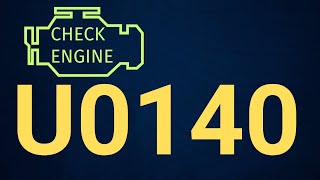
Technical definition: The official definition for U0140 is 'Lost Communication With Body Control Module (BCM) 🎬 Watch: A quick breakdown of U0140 causes and common fixes'. This generic network trouble code means a supervisory module (like the ECM or Gateway Module) stopped receiving periodic messages from the BCM on the vehicle's communication network (CAN bus) within a specific timeframe.
Can I Drive With U0140?
Yes, But With Caution. Driving is possible but unsafe. Critical systems like headlights, wipers, power steering, and the anti-theft system fail without warning. This leads to stalling while driving, loss of lights at night, or a no-start condition that leaves you stranded. Ignoring the code causes an automatic emissions test failure and risks turning a simple wiring fix into a multi-part failure.
Common Causes

- Poor Ground Connection (Very Common) — The single most common cause is a loose, corroded, or poorly secured ground wire for the BCM. This is a known issue on GM and Ford trucks where the ground point is exposed to moisture.
- Low Battery Voltage or Charging System Fault (Common) — Computer modules require stable voltage (above 12V) to operate. A weak battery, failing alternator, or corroded battery terminals cause modules to shut down randomly and trigger communication codes.
- Damaged Wiring or Loose Connectors (Common) — The CAN bus network relies on physical wires. Vibration, accidents, water intrusion, or rodents damage these wires. Corroded or loose pins in the BCM's main connector frequently disrupt communication.
- Blown Fuse or Faulty Relay (Common) — The BCM is protected by fuses and controlled by relays. A blown fuse takes the entire module offline, causing a total loss of communication.
- Faulty Body Control Module (BCM) (Less Common) — Internal failure from water damage, vibration, or age occurs, requiring BCM replacement and programming. A failing BCM also fails to enter 'sleep mode', causing a severe parasitic battery drain.
- Aftermarket Device Interference (Less Common) — Poorly installed aftermarket accessories like remote starters, alarms, or stereo systems improperly tie into the CAN bus network. This creates signal interference or voltage drops that prevent the BCM from communicating.
- Software Glitch (Rare) — On certain vehicles from Chrysler, Dodge, and Ford, a known software bug sets this code falsely. A dealer must fix this with a software update (reflash).
- Faulty Gateway or Other Network Module (Rare) — A different module on the network (like the ABS module or Nissan IPDM) fails and floods the CAN bus with noise, preventing the BCM from communicating even though the BCM itself is fine.
Symptoms

- Vehicle Will Not Start or Stalls — The BCM manages the vehicle's anti-theft (immobilizer) system. If it cannot communicate with the engine computer, it prevents the engine from cranking or starting, and causes stalling while driving.
- Malfunctioning Cabin Electronics (Lights, Wipers, Windows) — Headlights, turn signals, and interior lights flicker or fail. Wipers turn on by themselves. Power windows, door locks, and mirrors become completely inoperative.
- Multiple Dashboard Warning Lights — Because the BCM communicates with many systems, its failure causes a 'Christmas tree' effect on the dash, illuminating ABS, traction control, airbag, and check engine lights simultaneously.
- Security System Faults — The factory alarm goes off randomly or the key fob stops working because the BCM, which manages the security system, is offline.
- Parasitic Battery Drain / Dead Battery (also visible on scanner) — The vehicle's battery dies after sitting for a day or two. A faulty BCM fails to go to sleep, continually drawing power until the battery is depleted.
Diagnostic Flowchart
Tap your situation to follow the diagnostic path that matches what you're seeing on this code.
Common Fixes & Costs
- Clean or Repair BCM Ground Connection — Parts: $0-$10, Labor: $100-$150, ~1 hr book time (DIY)
- Replace Blown Fuse — Parts: $1-$5, Labor: $0-$100, ~0.2 hr book time (DIY)
- Replace Body Control Module (BCM)
— Parts: $300-$900, Labor: $150-$400 (includes programming), ~2 hr book time
(Professional)
2014 Chevrolet Silverado: OEM
2017 Ford F-150: OEM
2012 Dodge Grand Caravan (TIPM): OEM
2013 Nissan Titan (IPDM): OEM - Repair or Replace Wiring Harness — Parts: $20-$200, Labor: $250-$800, ~2.5 hr book time (Professional)
- Update BCM/PCM/PSDM Software — Parts: $0, Labor: $125-$250, ~1 hr book time (Professional)
DIY vs Professional
- Clean or Repair BCM Ground Connection 🟢 Beginner
Tools: Socket set, wire brush, sandpaper, dielectric grease. - Replace Blown Fuse 🟢 Beginner
Tools: Fuse puller or small pliers. - Replace Body Control Module (BCM) 🟢 Beginner
Tools: Socket set, trim removal tools, manufacturer-specific scan tool for programming. - Repair or Replace Wiring Harness 🟢 Beginner
Tools: Multimeter, wiring diagrams, depinning tools, wire strippers, soldering iron or quality crimpers. - Update BCM/PCM/PSDM Software 🟢 Beginner
Tools: Manufacturer-specific diagnostic tool (e.g., wiTECH) and a subscription to the OEM service.
Used vs. New Parts: Buying Guide
When a used part is worth it: For a Body Control Module (BCM), buying used is rarely recommended. Most BCMs are VIN-locked to the original vehicle. A used module is often not reprogrammable and corrupts other modules in your car, leading to a no-start condition. A used part only makes sense if purchased from a specialist who guarantees it is 'unlocked' and ready for programming.
Donor-vehicle mileage cap: roughly under 40000 miles for the part to have meaningful remaining life.
Donor quality checklist:
- Verify the exact part number matches; superseded numbers fail to communicate.
- Avoid modules from flood-damaged or high-humidity environments, as internal corrosion is a primary failure mode.
- Demand a warranty of at least 90 days and confirm the seller's return policy if the module cannot be programmed.
Decision logic:
- If The part is a Body Control Module (BCM) or other programmable network module → Buy a new OEM or high-quality remanufactured part. The risk of a used part failing programming is too high.
- If A remanufacturer offers a lifetime warranty and pre-programs the module to your VIN → This is a viable, affordable alternative to a new dealer part.
- If You find a used BCM online for a very low price → Avoid it. The cost of diagnostics and programming attempts quickly exceeds any initial savings.
Warranty tradeoff: Used parts: 30-90 day warranty, part replacement only (no labor). New Aftermarket/Reman: 1-year to lifetime warranty. New OEM: 1-2 year warranty, honored only if installed by an authorized dealer.
Worst-case if a used part fails: $500-$1000 (Cost of the unusable used part + labor for installation attempt + diagnostic time + cost of a second, new part and programming).
What Happens If You Wait — Timeline
- 0-2 weeks: Intermittent symptoms appear. Power windows hesitate, or a 'Service Stabilitrak' message flashes briefly. The U0140 code is stored as a history code but does not trigger the check engine light yet. (MPG impact: 0%% · Added cost: $0)
- 2 weeks - 2 months: Symptoms become frequent. The radio cuts out, door locks cycle randomly, and the check engine light illuminates. The car is occasionally difficult to start. A parasitic drain begins, weakening the battery. (MPG impact: 0-2%% · Added cost: $0-$50 (Diagnostic fees if checked))
- 2-6 months: A hard failure occurs. The vehicle fails to start and leaves you stranded. A persistent parasitic drain degrades and damages the battery, reducing its lifespan. Critical safety systems like headlights and wipers fail without warning. (MPG impact: 0-5% (Indirectly, if charging system is affected)% · Added cost: $350-$700 (Towing fee + new battery and installation))
- 6+ months: Cascading electrical failure. Continued operation with an unstable network sends corrupt data or voltage spikes to other modules, damaging the ECM, Instrument Cluster, or Gateway Module. A simple wiring fix becomes a multi-module replacement scenario. (MPG impact: 5-10%% · Added cost: $1000-$2500+ (Cost to replace the BCM plus one or two other damaged modules))
Cost of Not Fixing It
- Immediate: Unpredictable loss of headlights, wipers, or turn signals creates a serious safety hazard. The anti-theft system prevents the car from starting, leaving you stranded. (Added cost: $150-$300 (Towing and diagnostic fee when stranded))
- 1-3 months: An unresolved parasitic battery drain caused by a faulty BCM destroys the vehicle's battery, requiring premature replacement. Intermittent stalling or network failures worsen. (Added cost: $200-$400 (New battery purchase and installation))
- 3+ months: Continued driving with intermittent network failures causes cascading electrical problems, damaging other sensitive control modules on the same CAN bus network. A simple wiring issue evolves into a multi-module failure. (Added cost: $1000-$2500+ (Replacement of BCM plus another damaged module like the Instrument Cluster or Gateway Module))
Diagnosis Steps

- Check and Charge the Battery
A low or unstable battery is a primary cause of communication codes. Verify battery voltage. It must be above 12.4V with the engine off and 13.7V-14.7V when running.
Tools: Multimeter or Battery Tester (Beginner) - Inspect BCM Fuses and Relays
Consult your owner's manual to locate all fuses and relays related to the Body Control Module. Pull each fuse to visually inspect for a break and test relays to ensure they function.
Tools: Fuse Puller or Pliers, Multimeter (Beginner) - Inspect and Clean Key Ground Points
Research the location of the main BCM ground for your specific vehicle (e.g., G218 on Chevy Silverado, G401 on Ford F-150). Disconnect the battery, unbolt the ground wire, clean the terminal and chassis contact point to bare metal, and re-tighten securely.
Tools: Socket Set, Wire Brush, Dielectric Grease (Intermediate) - Perform a Visual Inspection
Locate the BCM (often under the dashboard or behind a kick panel). Inspect the module, its connectors, and surrounding wiring for water damage (corrosion, stains), rodent damage (chewed wires), or loose connections.
Tools: Flashlight, Inspection Mirror (Beginner) - Test for Power and Ground at the BCM Connector
Using a vehicle-specific wiring diagram, identify the main power and ground pins on the BCM's electrical connector. With the key on, verify full battery voltage (12.2V-12.8V) at the power pins and less than 0.1 ohms of resistance between the ground pins and the negative battery terminal.
Tools: Multimeter, Vehicle-Specific Wiring Diagram (Advanced) - Test the CAN Bus Network Resistance
With the battery disconnected, measure the resistance between Pin 6 (CAN High) and Pin 14 (CAN Low) on the OBD-II port. A healthy network reads approximately 60 ohms. A reading of 120 ohms indicates an open circuit or missing terminating resistor. A reading near 0 ohms indicates a short between the two CAN wires.
Tools: Multimeter (Advanced) - PRO TIP: Perform a Parasitic Draw Test
If the battery keeps dying, check for a parasitic draw. With the vehicle off and modules asleep (wait 60 minutes), place a multimeter in series between the negative battery cable and post. A normal draw is under 50 milliamps (0.05A). If higher, pull fuses one by one. If pulling the BCM fuse drops the draw, the BCM is failing to sleep.
Tools: Multimeter with Amp Clamp or 10A capability (Advanced) - PRO TIP: Check CAN Bus Voltage
Use a high-impedance multimeter to check CAN bus voltages with the key on, engine off. In the idle state, both CAN High (Pin 6) and CAN Low (Pin 14) sit at ~2.5V. When communicating, CAN High rises to ~3.5V and CAN Low drops to ~1.5V. Readings of 0V or 12V indicate a short to ground or power.
Tools: High-Impedance Multimeter (Advanced) - PROFESSIONAL: Use a Bi-Directional Scan Tool
Use the network topology map to see which modules are online. Run a 'Loss of Comm Test' or 'Ping Module' function to actively check for responses from the BCM. This differentiates between an offline BCM and a network wiring problem.
Tools: Professional Bi-Directional Scan Tool (e.g., wiTECH, Autel) (Professional) - PROFESSIONAL: Analyze with an Oscilloscope
Connect to Pins 6 and 14 to view the waveform. A healthy CAN bus shows a clean, square waveform mirroring itself. A noisy, distorted, or flat-lined pattern indicates data corruption from interference, a wiring fault, or a failing module transceiver.
Tools: Oscilloscope, OBD-II Breakout Box (Professional)
When This Code Triggers (Freeze-Frame Conditions)
- System Voltage: 9.5V - 11.5V (Low voltage during crank or while running)
- Vehicle Speed: 0 - 75 mph (Occurs at any time, from key-on to highway speeds)
- RPM: 0 - 3000 RPM (Occurs with engine off (key-on) or during normal driving)
- Module Status: BCM Not Detected (The primary module (ECM/Gateway) fails to receive a signal from the BCM)
Related Codes
- U0073 — Control Module Communication Bus 'A' Off. Diagnostic Tip: U0140 means one module cannot hear the BCM, while U0073 means the entire network is down. If you have U0073, U0140 is merely a symptom of the main network failure.
- U0100 — Lost Communication with ECM/PCM. Diagnostic Tip: This code appearing with U0140 is a major red flag for a network-wide failure. It indicates a problem with the main CAN bus wiring (short/open), a faulty gateway module, or a failed terminating resistor.
- U0155 — Lost Communication with Instrument Panel Cluster (IPC). Diagnostic Tip: U0140 and U0155 together point strongly to a shared network problem (like a bad ground or wiring) rather than an individual module failure.
- U0141 — Lost Communication With Body Control Module 'B'. Diagnostic Tip: Seeing U0140 and U0141 together points to a widespread network issue affecting both modules, making a central wiring, ground, or power supply problem the most likely cause.
Climate & Environmental Factors
- High Humidity / Water Intrusion: Moisture catalyzes corrosion on BCM connectors, CAN bus junction blocks, and chassis ground points. Water leaks from clogged sunroof drains or windshield seals are primary sources of these electrical faults.
- Cold Climates / Road Salt: Areas using road salt see a higher incidence of U0140. Salt spray penetrates underbody connectors and frame ground points (like the Ford F-150's G401), accelerating corrosion and causing high resistance in critical circuits.
How to Talk to a Mechanic About This Code
Say this: "I have a U0140 'Lost Communication with Body Control Module' code and multiple electrical issues. I'd like to book a diagnostic appointment. Please start by checking the battery, fuses, and the main BCM ground connection before assuming the module itself has failed."
This signals you've done research and are aware that simple, common faults cause this code. It directs the technician to follow a logical diagnostic path instead of jumping to the most expensive conclusion (replacing the BCM).
Avoid saying:
- 'My car is acting weird, can you fix it?'
- 'Just replace the BCM.'
- 'My check engine light is on, I don't know the code.'
Questions to ask before authorizing the repair:
- Did you verify the BCM has proper power and ground at the connector?
- What was the CAN bus resistance reading at the OBD-II port?
- If you are recommending a BCM replacement, can you confirm that you ruled out wiring, software, and other modules as the cause?
- Does your quoted price for a new BCM include the necessary programming and configuration?
Where to Take It: Dealer vs Independent vs Chain
- Dealer:
Necessary for most software updates and final module programming, but an independent shop is more cost-effective for initial diagnosis.
Best for: Vehicles under warranty., Known software-related TSBs that require a dealer-specific reflash., If a new BCM is required, as they have guaranteed access to the correct programming tools and software.
Downsides: Highest labor rates., Quicker to replace the BCM rather than perform time-consuming wiring diagnostics. (Typical cost: +50% vs. baseline) - Independent Shop:
Best starting point. A good independent electronics specialist diagnoses the majority of U0140 causes (wiring, grounds, fuses) for less than a dealer. If they determine a new module or a dealer-only software flash is needed, move to the dealer for that specific task.
Best for: Initial diagnosis of wiring, ground, and power supply issues., Out-of-warranty vehicles where cost is a major factor., Shops specializing in automotive electronics.
Downsides: Lacks the expensive, manufacturer-specific tools to program a new BCM., Quality varies greatly; look for ASE-certified technicians with strong electrical diagnostic reviews. (Typical cost: +0% vs. baseline) - Chain Shop:
AVOID for diagnosis. While they test a battery, they are not equipped for the complex network troubleshooting that U0140 requires. There is a high risk of misdiagnosis and paying for unnecessary parts.
Best for: Battery testing and replacement.
Downsides: Technicians lack the deep electrical and network diagnostic training needed for complex 'U' codes., High pressure to sell parts leads to misdiagnosis (e.g., selling a BCM when the problem is a ground wire). (Typical cost: -10% vs. baseline)
When to Walk Away From the Repair
If the estimated repair cost for the U0140 code exceeds 40-50% of the car's private-party value, seriously consider selling the vehicle as-is or trading it in.
- Car worth $14000, fix is $1200: Fix it. The repair cost is well below the 50% threshold for a vehicle of this value.
- Car worth $4500, fix is $1800: Borderline. This repair is 40% of the car's value. Get a second opinion to confirm the diagnosis before proceeding. Consider if the car has other pending issues.
- Car worth $2500, fix is $1500: Walk away. The repair cost is 60% of the car's value. It is not economically sensible to invest this much into an older, lower-value vehicle.
What Scan Tool You Need for This Code

Minimum: A scanner that reads codes from ALL vehicle modules (ABS, SRS, BCM, TCM), not just the engine (ECM). It must see manufacturer-specific 'U' codes.
A basic $20 code reader shows 'No Codes' because it only checks the engine computer. U0140 is a network code originating outside the engine module, requiring a full-system scanner to see the problem.
Budget: THINKCAR THINKSCAN 689BT / MUCAR 892BT (~$90) — These are the cheapest options offering full-system scanning to read BCM codes. They show which modules are offline and confirm the presence of the U0140 fault.
Mid-range: Innova CarScan Pro 5610 / Autel MaxiCOM MK808 (~$350) — This is the sweet spot for DIY diagnosis. These tools offer full bi-directional control, allowing you to 'ping' the BCM to see if it responds and command outputs like lights and locks to test functionality. They view network topology maps to see which modules communicate.
Professional: Autel MaxiSys MS906BT / Launch X431 Series (~$600-1200) — Provides full professional-level diagnostics, including advanced functions like BCM programming and coding. This is required when replacing a BCM, but is overkill for a DIYer unless they plan to open a repair business.
Rent vs buy: For U0140, free rental scanners at auto parts stores are insufficient as they are basic code readers. You must buy a budget-level full-system scanner. If the problem is complex, the money spent on a mid-range bi-directional tool is less than a single diagnostic fee at a shop.
How to Clear the Code After You Fix It
- Fix the underlying electrical or module fault.
- Reconnect the battery if disconnected for the repair.
- Use a quality OBD-II scan tool to erase the DTCs from all modules.
- Perform a 'hard reset' by disconnecting the battery for 15-20 minutes if a scanner is unavailable.
Drive cycle (~30 minutes): After clearing the code, complete a comprehensive drive cycle to run emissions readiness monitors. A typical cycle includes: a cold start (sit overnight), 5 minutes of idling, 15 minutes of mixed city/suburban driving with several stops, and 5-10 minutes of steady highway speed (55-65 mph).
Readiness monitors affected: Comprehensive Component Monitor (CCM), Catalyst (CAT), Evaporative System (EVAP), Oxygen (O2) Sensor
Before emissions retest: drive at least 50 miles to fully set monitors.
Watch out for:
- Clearing the code without fixing the root cause (e.g., bad ground, wiring short) causes the code to return immediately.
- Using a cheap scan tool only clears the code from the ECM, leaving it active in other modules.
- Failing to complete a full drive cycle leaves readiness monitors incomplete, causing an automatic emissions test failure.
Will This Fail Emissions / State Inspection?
Yes — this code typically fails an OBD-II emissions inspection.
- California: An active U0140 code with the Malfunction Indicator Lamp (MIL) on is an automatic failure for a Smog Check. All readiness monitors must be complete, requiring a full drive cycle after repairs.
- New York: The NYS inspection includes an OBD-II scan. Any active diagnostic trouble code illuminating the check engine light results in an immediate test failure.
- Texas: In the 17 counties requiring emissions testing, an active U0140 code causes the vehicle to fail the OBD portion of the annual safety inspection.
Most Commonly Affected Vehicles
- Chevrolet / GMC Silverado / Sierra (2007-2018) — Extremely prone to a poor BCM ground connection at G218, behind the driver's side kick panel. Factory-installed sound deadener is often trapped under the terminal. Also susceptible to intermittent network shorts (TSB PIT4730B).
- Dodge / Ram 2500 / 3500 (2014-2018) — Highly susceptible to a software glitch in the Powertrain Control Module (PCM) that sets a false, 'permanent' U0140 code. The fix is a dealer-installed software update detailed in TSBs #18-072-16 and #18-002-15 REV B.
- Ford F-150 (2015-2020) — Frequently caused by corrosion at the G401 ground point on the frame under the driver's door. This corrosion disrupts the MS-CAN network, leading to a no-start condition and multiple U-codes.
- Dodge / Chrysler / Jeep Grand Caravan, Town & Country, Wrangler, Liberty (2008-2016) — The BCM functions integrate into the Totally Integrated Power Module (TIPM). The TIPM is a known high-failure part, causing U0140 along with stalling and fuel pump issues.
- Nissan / Infiniti Titan, Frontier, Armada (2004-2015) — Caused by a failure of the Intelligent Power Distribution Module (IPDM). The internal ECM relay is a common failure point, leading to no-start or stalling along with a U0140 code.
- Ford F-150 (2021-2022) — A known software bug related to the Trailer Module (TRM) causes this code. A dealer must perform a software update per Technical Service Bulletin (TSB) 22-2256 to fix it.
- Chevrolet Tahoe / Suburban (2007-2014) — Prone to intermittent communication loss due to chafed wiring and poor connections in harness connectors, as documented in GM TSB #08-07-30-021H.
- Chrysler Pacifica Hybrid (2021-2024) — A software bug causes U0140, accompanied by inoperable power sliding doors. The fix is a dealer software update for the Power Sliding Door Module (PSDM) per TSB 08-170-24.
- Subaru Outback / Legacy (2010-2014) — Susceptible to corrosion in the CAN bus junction block (star connector) located in the passenger side footwell, often due to water leaks from the sunroof drain.
Manufacturer-Specific Notes
- General Motors (Chevy/GMC): A bad ground connection is the number one cause. Ground G218 behind the driver's kick panel is a known weak point due to trapped factory insulation (TSB PIT5405C). Intermittent wiring faults are also common (TSB 08-07-30-021H).
- Chrysler / Dodge / Jeep / Ram: The BCM is often part of the high-failure Totally Integrated Power Module (TIPM). On Ram HD trucks, a PCM software glitch sets a false 'permanent' code requiring a dealer reflash (TSBs #18-072-16, #18-002-15 REV B).
- Ford: On F-150s, the cause is frequently a corroded ground stud (G401) on the frame rail. On 2021+ models, a software glitch in the trailer module triggers the code, requiring a dealer update per TSB 22-2256.
- Nissan / Infiniti: U0140 is frequently caused by a failing Intelligent Power Distribution Module (IPDM). The internal relays are non-serviceable and prone to failure, cutting power to modules and causing communication loss.
Real Owner Stories
2011 Chevy Silverado with 150K miles
Truck would not start. The dash lights flickered, door locks cycled on their own, and the radio was dead. A scan tool showed U0140 and U0073.
What they tried:
- Replaced the battery, but the problem persisted.
- A shop quoted over $1,000 to replace the BCM.
Outcome: Owner found forum posts about the G218 ground. He located the ground behind the driver's kick panel, removed the nut, cleaned the contact surfaces to bare metal, and re-tightened it. The truck started immediately and all electrical problems resolved. Total cost was under $10 for cleaning supplies.
Lesson: On GM trucks, always check the G218 ground connection before suspecting a bad BCM. It is a very common, well-documented failure point that saves you a thousand dollars.
2007 Chevy Suburban with intermittent no-start
Vehicle intermittently failed to start, with multiple communication codes including U0140, U0100, and U0101. The gauge cluster sometimes went dead while driving.
What they tried:
- The owner was told it needed a new BCM.
- Another mechanic suspected a bad gauge cluster.
Outcome: The owner found a GM service bulletin related to wiring harness issues. Upon inspection, they found a chafed wiring harness directly under the under-hood fuse box where it rubbed against the frame. Repairing the damaged wires fixed the issue permanently.
Lesson: Multiple 'U' codes appearing together point to a network-wide wiring problem, not a single failed module. Check for TSBs and inspect common harness chafing points before replacing expensive components.
2007 Chevy Silverado with aftermarket alarm
Vehicle would not crank and showed code U0140. Power windows, door locks, and dome lights were all inoperative.
What they tried:
- Checked fuses and found a 20-amp fuse blown.
- Replacing the fuse did not solve the no-start condition.
Outcome: The owner discovered a poorly installed aftermarket alarm system spliced into the BCM wiring. After completely removing the aftermarket alarm, the vehicle returned to normal operation. The alarm caused interference and a short on the network.
Lesson: If a vehicle has aftermarket electronics (remote start, alarm, stereo), they are the first suspect for communication codes. Improper installation frequently causes network interference.
2021 Ford F-150 with multiple warnings
The truck's dashboard lit up with warnings and code U0140 was present. The issue was intermittent.
What they tried:
- Checked the battery and basic connections, which were all good.
Outcome: The owner took the truck to the dealership. The dealer found Technical Service Bulletin (TSB) 22-2256, describing a software bug in the Trailer Module (TRM) that causes this code. A software update resolved the problem completely.
Lesson: For newer vehicles, always check with a dealer for relevant TSBs or software updates before beginning repairs. A simple reflash fixes complex-seeming electronic issues.
How to Prevent This Code From Triggering
- Perform Annual Battery and Charging System Health Check (Once per year) — A weak battery or failing alternator provides unstable voltage, a primary cause of random module communication dropouts. Ensuring the battery holds a charge (over 12.4V) and the alternator output is stable (13.7V-14.7V) prevents these glitches.
- Clean and Protect Key Chassis Grounds (Every 2-3 years, or annually in salt-belt states) — Corrosion on ground points creates high resistance, starving modules of a stable electrical reference. Periodically disconnecting, cleaning ground terminals to bare metal, and applying dielectric grease prevents corrosion-induced failures like U0140.
- Clear Sunroof and Cowl Drains (Twice per year (spring and fall)) — Clogged drains cause rainwater to overflow into the cabin, dripping directly onto the BCM or its wiring harnesses. Using compressed air or a flexible brush to clear these drains prevents catastrophic water damage to electronics.
- Apply Dielectric Grease to Critical Connectors (When performing other electrical maintenance) — Dielectric grease is a non-conductive sealant blocking moisture and oxygen from reaching connector pins. Applying it to the BCM connector and underbody harness connectors prevents future corrosion and communication faults.
- Avoid Improperly Installed Aftermarket Accessories (During vehicle ownership) — Poorly installed accessories tapping into the CAN bus introduce electrical noise or voltage drops, disrupting communication between modules. Ensure additions are professionally installed or use dedicated, isolated circuits.
Frequently Asked Questions
Can I fix a U0140 code myself?
Yes, if the cause is simple. Checking fuses, testing the battery, and cleaning a ground connection are DIY-friendly tasks that resolve this code frequently. Stop DIY and consult a professional if the problem requires complex network testing or module programming.
How much does it cost to fix U0140?
Costs range from $0 for a simple ground cleaning to over $1,300 for a full module replacement. A dealer software update typically costs $125-$250. Replacing the BCM itself costs between $500 and $1,300 including parts, labor, and mandatory programming.
What are the most common misdiagnosis mistakes for U0140?
The biggest mistake is replacing the BCM without ruling out simpler causes. Technicians often condemn the module when the true fault is a poor ground, weak battery, or corroded wire. Always perform a full network and power/ground check before buying an expensive module.
Can a bad BCM drain my battery?
Yes. A failing BCM often suffers an internal short or fails to enter 'sleep mode' when the car is off. This creates a parasitic draw that drains a healthy battery in hours or days, causing a no-start condition.
Does a new BCM need to be programmed?
Yes, almost always. A new BCM must be programmed to your vehicle's specific VIN and options to function correctly and sync with the anti-theft system. This requires a dealer or a shop with factory-level diagnostic tools.
What does a BCM reset do?
A hard reset clears the temporary (volatile) memory from the module. This resolves temporary software glitches caused by voltage spikes. It does not fix hardware failures, wiring problems, or major software bugs requiring a dealer reflash.
How do you reset the Body Control Module (BCM)?
Disconnect both battery cables. Touch the positive and negative cable ends together for 60 seconds to drain residual power from the module capacitors. Reconnect the battery, noting this erases radio presets and temporary settings.
What happens if I ignore a U0140 code?
Ignoring this code is unsafe and leads to expensive repairs. The problem escalates from inoperative power windows to stalling while driving or headlights failing at night. It eventually causes a no-start condition that leaves you stranded.
Can a bad ground really cause all these problems?
Absolutely. A loose or corroded ground connection creates unwanted resistance, disrupting the low-voltage CAN bus signals. This starves the module of stable power, causing it to shut down intermittently and trigger widespread electrical failures.
Key Takeaways
- Check the battery voltage first, as a drop below 12.4V is the leading trigger for false U0140 communication codes.
- Clean the main BCM chassis ground (like G218 on GM or G401 on Ford) to bare metal before spending $500+ on a replacement module.
- Never buy a used BCM to fix this code, as 90% of modern modules are VIN-locked and cannot be reprogrammed to a different vehicle.
- Expect to pay $125 to $250 for a dealer software update if you drive a 2014-2018 Ram or 2021-2022 F-150, as known software bugs cause this code.
Helpful Videos
Shop the Parts Behind U0140
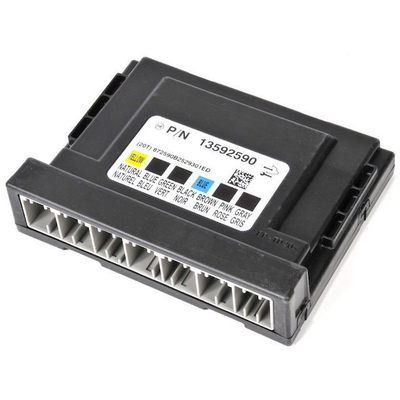
Below are the parts most often responsible for code U0140, ranked by how frequently each one is the actual culprit (per the diagnosis above). Tap any to see what we have for your vehicle.





The information in this article is provided for general reference and educational purposes only. Vehicle specifications, procedures, and part compatibility can vary by production date, trim level, and region. Always consult your vehicle's factory service manual and verify part numbers before purchasing or performing repairs. Safety-critical components such as airbags, seat belts, and braking systems should be installed by a qualified professional.
- 🧭 Diagnostic Flowchart
- 🎬 Helpful Videos
- 🛍️ Shop This Part
- What Does U0140 Mean?
- Can I Drive With U0140?
- Common Causes
- Symptoms
- Common Fixes & Costs
- DIY vs Professional
- Used vs. New Parts: Buying Guide
- What Happens If You Wait — Timeline
- Cost of Not Fixing It
- Diagnosis Steps
- When This Code Triggers (Freeze-Frame Conditions)
- Related Codes
- Climate & Environmental Factors
- How to Talk to a Mechanic About This Code
- Where to Take It: Dealer vs Independent vs Chain
- When to Walk Away From the Repair
- What Scan Tool You Need for This Code
- How to Clear the Code After You Fix It
- Will This Fail Emissions / State Inspection?
- Most Commonly Affected Vehicles
- Manufacturer-Specific Notes
- Real Owner Stories
- 2011 Chevy Silverado with 150K miles
- 2007 Chevy Suburban with intermittent no-start
- 2007 Chevy Silverado with aftermarket alarm
- 2021 Ford F-150 with multiple warnings
- How to Prevent This Code From Triggering
- Frequently Asked Questions
- Can I fix a U0140 code myself?
- How much does it cost to fix U0140?
- What are the most common misdiagnosis mistakes for U0140?
- Can a bad BCM drain my battery?
- Does a new BCM need to be programmed?
- What does a BCM reset do?
- How do you reset the Body Control Module (BCM)?
- What happens if I ignore a U0140 code?
- Can a bad ground really cause all these problems?
- Key Takeaways
- 🎟️ Get 5% Off