

U0140 on 2010-2017 BMW 5 Series: Lost Communication With Body Control Module Fixes
On a 2010-2017 BMW 5 Series (F10/F11/F07), code U0140 typically points to a power supply issue or a problem with the Front Electronic Module (FEM) or Body Domain Controller (BDC). Before replacing any parts, check the battery's health and all relevant fuses, as low voltage is the most common culprit. Water intrusion in the passenger footwell is another very common cause that specifically targets this module.
- U0140 on a 2010-2017 BMW 5 Series means the Front Electronic Module (FEM) or Body Domain Controller (BDC) is offline.
- Before suspecting an expensive module failure, ALWAYS test the battery and check all related fuses. Low voltage is the most common trigger for this code.
- Diagnosis requires a BMW-specific scan tool to read network codes; a basic engine code reader will not be sufficient.
- Check for signs of water intrusion in the passenger footwell and trunk, as this is a known vulnerability that can damage electronics.
- If the FEM/BDC module needs replacement, it must be programmed to your vehicle by a professional with the proper equipment.
What's Unique About the 2010-2017 BMW 5 Series
The 2010-2017 BMW 5 Series (F10/F11/F07 generation) uses a highly sophisticated network of modules. The 'body control' functions are managed by a powerful computer called the Front Electronic Module (FEM) or, on later models, the Body Domain Controller (BDC). These cars are notoriously sensitive to battery voltage. A slightly weak or improperly registered battery is a leading cause of random communication faults like U0140, often before any starting issues become apparent. Crucially, the FEM/BDC is located in the front passenger footwell, making it extremely vulnerable to water damage from common issues like clogged sunroof drains or leaking windshield seals, a well-documented flaw in this platform.
Generation note: The 2010-2017 range primarily covers the F10 (Sedan), F11 (Touring/Wagon), and F07 (Gran Turismo) generation. Early F10/F11/F07 models (approx. 2010-2016) used a CAS4/FEM system, while later models (approx. 2016 onwards) transitioned to the Body Domain Controller (BDC). This guide focuses on the F-chassis models which use either the FEM or BDC as the primary body module.
Symptoms You May Notice
- Power windows, door locks, or mirrors stop working.
- Interior lights (dome, map) or exterior lights (headlights, taillights) are inoperative or behave erratically.
- Windshield wipers do not work or activate randomly.
- Key fob remote functions (lock/unlock) fail or 'Key not detected' warning appears.
- Multiple warning lights appear on the instrument cluster, such as for ABS, traction control, or airbags.
- The iDrive screen may show multiple system failure warnings.
- Car fails to crank or start due to immobilizer function within the FEM/BDC.
- Severe or parasitic battery drain when the car is off.
- Replacing the FEM/BDC without first verifying battery health and checking for blown fuses. A weak or unregistered battery is the most common cause and should always be the first check.
- Replacing the FEM/BDC without first identifying and fixing the source of a water leak. A new module will quickly be destroyed if the underlying leak is not repaired.
Most Likely Causes
- Low Battery Voltage or Failing/Unregistered Battery 🔴 High Probability → Shop Vehicle Battery F-series BMWs have high electrical demands and a sophisticated Intelligent Battery Sensor (IBS). A weak battery, or a new battery that wasn't 'registered', can cause the charging system to behave incorrectly, leading to under-voltage conditions where modules drop off the network to save power.
How to confirm: Test the battery voltage at rest (should be >12.4V) and during charging (should be >13.5V). A professional load test is the most reliable method. Use a BMW-specific scan tool (like BimmerLink, ISTA) to check the battery registration status and history.
Typical fix: Replace the AGM battery and, critically, 'register' the new battery to the vehicle using a diagnostic tool. This resets the charging algorithm. 🎬 Watch: How to register and code a new BMW battery If the battery capacity (Ah) or type (AGM vs standard lead-acid) is changed, it must also be 'coded'.
Est. part cost: $200-$400 - Water Intrusion and Corrosion at the FEM/BDC 🔴 High Probability The FEM/BDC is located in the passenger footwell, a known collection point for water from clogged sunroof drains, failed door vapor barriers, or leaking windshield cowls. Even minor moisture can cause severe corrosion on the module's connector pins and internal circuit board.
How to confirm: Pull back the carpet in the front passenger footwell and physically inspect the area for dampness, water stains, or a musty smell. Unplug the FEM/BDC connectors (with battery disconnected) and look for blue/green corrosion on the pins or inside the module's case.
Typical fix: If corrosion is minor, cleaning the pins with a specialized electronic cleaner may work temporarily. In most cases, the water damage is internal and the FEM/BDC must be replaced or sent to a specialist for repair. The source of the water leak must also be found and fixed.
Est. part cost: $150-$400 (Used/Cloned), $600-$1200 (New) - Blown Fuse for FEM/BDC 🟡 Medium Probability Voltage spikes from a failing battery or short circuits can blow the fuses that supply power to the FEM/BDC, causing it to go offline.
How to confirm: Consult the vehicle's fuse chart. The FEM/BDC fuses are typically located in the front fuse box (behind the glove compartment) and sometimes in the rear fuse box (in the trunk). Check fuses such as F48, among others related to body electronics. Use a multimeter to test for continuity.
Typical fix: Replace the blown fuse with one of the correct amperage. If the fuse blows again, a short circuit in the wiring or the module itself must be diagnosed.
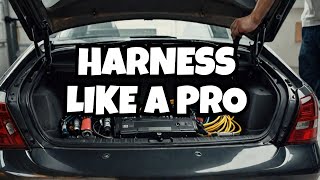
Est. part cost: $1-$5 - Corroded or Damaged Wiring/Connectors 🟡 Medium Probability Besides water damage at the module, wiring harnesses in the A-pillar, door sills, or under the carpet can become corroded or damaged. The F11 Touring models are also known for wiring harness fatigue in the trunk lid hinge area, which can 🎬 See: How to repair the trunk wiring harness affect CAN bus lines.
How to confirm: Visually inspect the FEM/BDC connectors for any signs of blue/green corrosion, water stains, or physical damage. A wiggle test on the harness while monitoring communication status can help identify intermittent breaks. Check CAN bus wiring for damage, especially in the trunk hinge area on F11 models.
Typical fix: Clean corroded terminals with a specialized cleaner. If damage is severe, the connector or a section of the wiring harness may need to be repaired or replaced. This can be labor-intensive.
Est. part cost: $50-$500 - Faulty Front Electronic Module (FEM) / Body Domain Controller (BDC) ⚪ Low Probability While robust, these modules can fail internally due to voltage spikes, manufacturing defects, or simple component failure over time, even without water damage. Software corruption can also cause the module to become unresponsive.
How to confirm: This is a diagnosis of exclusion. After confirming the module has proper power (at least 12.4V), solid ground (<0.1 Ω resistance), and the CAN bus network wiring is intact (~60 Ohms between CAN-High and CAN-Low), the module itself is the likely culprit. A BMW-specific scan tool will show the module as completely unresponsive.
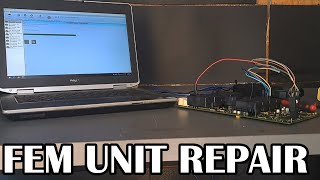
Typical fix: Replace the FEM/BDC. This requires programming and coding the new module to the vehicle's specific VIN and options. A common practice is to send the original and a used replacement module to a specialist service to 'clone' the data.
Est. part cost: $600-$1200 (New), $150-$400 (Used)
Rare But Worth Checking
- Faulty Gateway Module (ZGW): The Central Gateway Module (ZGW) directs all network traffic. On F-series models, the ZGW is integrated into the FEM/BDC. Therefore, a ZGW failure is synonymous with an internal FEM/BDC failure, not a separate component.
- Interference from Aftermarket Electronics: Poorly installed remote starters, alarms, or audio equipment can introduce noise onto the CAN bus, disrupting communication and causing random codes like U0140.
Diagnosis Steps
- Perform a full vehicle scan with a BMW-compatible diagnostic tool (e.g., ISTA, Foxwell, Autel) to see which modules are reporting faults and which are not communicating. A generic OBD-II reader is insufficient.
- Check and record the battery's state of charge and health. Voltage should be >12.4V at rest and >13.5V when the engine is running. Check if the battery has been properly registered.
- Inspect the passenger footwell for any signs of moisture. Pull back the carpet and feel the padding underneath. This is a critical step for this specific vehicle.
- Locate the fuse boxes (glove compartment, trunk) and inspect all fuses related to the FEM, BDC, or body electronics (e.g., F48).
- Gain access to the FEM/BDC, located in the front passenger footwell/A-pillar area. Disconnect the battery, then unplug the module's connectors. Visually inspect the module and its connectors for signs of water damage, corrosion, or loose pins.
- If no damage is visible, use a multimeter to verify that the FEM/BDC is receiving constant battery power and ignition power, and has a solid ground connection (less than 0.1 Ohms resistance to chassis ground).
- If power and ground are good, test the CAN bus wiring. With the battery disconnected, measure the resistance between CAN-High (Pin 6) and CAN-Low (Pin 14) at the OBD-II port. A healthy network should read approximately 60 Ohms. Readings of 120 Ohms or 0 Ohms indicate a break or short in the wiring or a faulty terminating resistor.
- If all wiring, power, and grounds are confirmed good, the FEM/BDC module itself is the most likely cause of the failure.
Parts You'll Likely Need
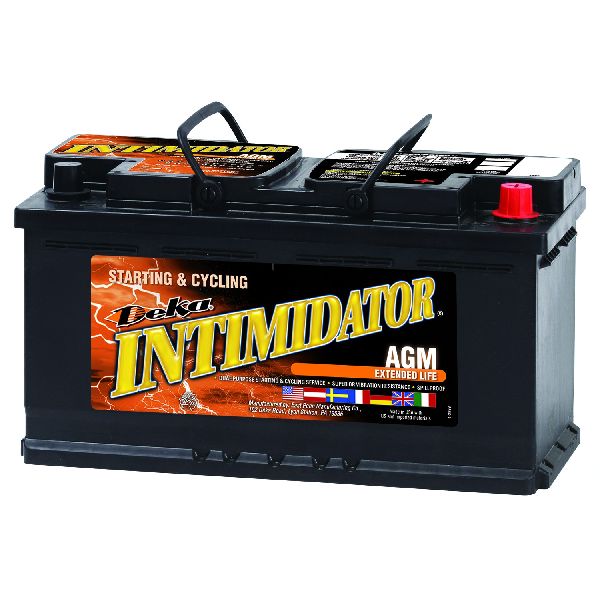
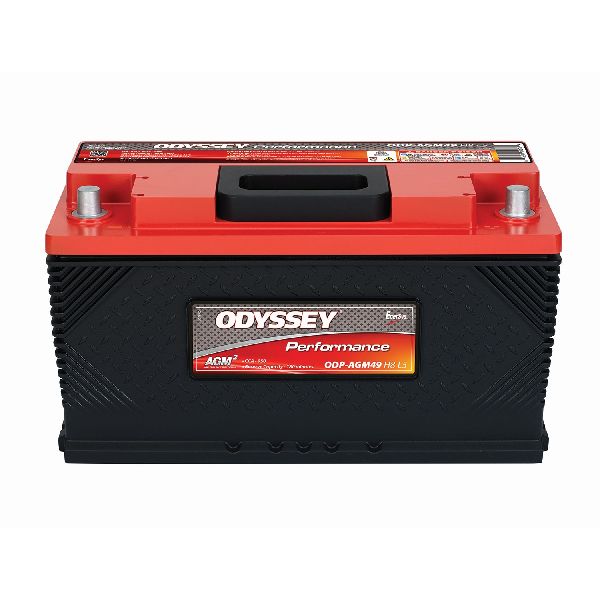
- AGM Battery — The most frequent cause of this code is a weak or failing battery that can no longer support the vehicle's complex electrical network. Must be registered upon replacement.
Trusted brands: Varta, Bosch, Exide, Interstate
OEM price range: $300-$500
Aftermarket price range: $200-$350 - Front Electronic Module (FEM) / Body Domain Controller (BDC)
(OEM #Varies (e.g., 61359383691, 61359395656). Must match part number from original unit.)— If the module itself has failed due to internal damage or water intrusion, it will need to be replaced. This part requires professional installation and programming/cloning.
Trusted brands: BMW (OEM)
OEM price range: $600-$1200
Aftermarket price range: $150-$400 (Used) - Sunroof Drain Cleaning Tools / Door Vapor Barrier Sealant — Preventative parts needed to fix the root cause of water ingress that commonly destroys the FEM/BDC.
Trusted brands: Generic drain cleaning brushes, Butyl tape sealant
Aftermarket price range: $15-$50
Related Codes That Often Appear With This One
- U0100 — Lost Communication with ECM/PCM. If seen with U0140, it suggests a more widespread network failure affecting multiple critical modules, possibly pointing to a bad gateway (ZGW) or a major CAN bus wiring issue.
- U0155 — Lost Communication with Instrument Panel Cluster. The cluster is another key module on the network. Its failure to communicate often accompanies other U-codes and points toward a network-level problem.
Platform-Specific Known Issues
- Water Damage to FEM/BDC: The location in the passenger footwell makes this module highly susceptible to water damage from clogged sunroof drains, leaking windshield cowls, or failed door vapor barriers. This is the most common and severe vehicle-specific cause.
- Trunk Lid Wiring Harness (F11 Touring): The wagon models are known to have issues with wires breaking inside the flexible conduit for the tailgate hinge. This can cause shorts or open circuits on CAN bus lines, leading to various communication faults, including U0140.
- Yellow Grommet Leak (Right-Hand Drive cars): On RHD vehicles, a yellow grommet covering a hole for the steering column on the left side of the bulkhead can degrade and leak water into the passenger footwell, directly onto the FEM. The part number for the replacement is 51719151866.
Mechanic-Grade Diagnostic Values
- CAN Bus Network Resistance — expected: ~60 Ω. Failure: A reading of ~120 Ω suggests a break in the CAN wiring or a failure of one of the two terminating resistors. A reading near 0 Ω indicates a short between the CAN High and CAN Low wires.
- FEM/BDC Power Supply Voltage — expected: 12.2V - 12.8V. Failure: Significantly lower voltage indicates a power supply issue, such as a blown fuse or wiring fault, preventing the module from operating.
- FEM/BDC Ground Resistance — expected: < 0.1 Ω. Failure: Higher resistance indicates a poor ground connection, which can cause intermittent module operation and communication faults.
Hidden / Shadow Codes Worth Checking
- 8041A9: Daytime running light lock active. This is a software lock within the BDC/FEM, often set after deleting transport mode, which can indicate a software glitch or the need for a module reset. (see via BMW-specific diagnostic software like ISTA.)
- 8041A8: Welcome light repeat lock active. The FEM/BDC deactivates the welcome light function after a set number of repeated cycles (e.g., from repeatedly pressing the key fob). While not a direct cause of U0140, it shows the module is actively managing and locking functions, and can be a sign of other software-related issues. (see via BMW-specific diagnostic software like ISTA.)
Scan Tool Commands That Help
- ISTA: Control unit reset — After resolving a software glitch or clearing certain shadow codes (like 8041A9), performing a control unit reset on the BDC/FEM can restore normal functionality without part replacement.
- ISTA: "System analysis message missing" test module — This automated test plan analyzes all 'message not present' faults across the vehicle's network to help pinpoint the most likely source of a communication breakdown like U0140.
- AutoHex II, VVDI2, CGDI BMW, Yanhua Mini ACDP: FEM/BDC Cloning / Exchange FEM/BDC — This is required when replacing a faulty FEM/BDC with a used unit. The function reads critical data (VIN, ISN, key data) from the original module (if possible) and writes it to the donor module, making it plug-and-play.
Wiring & Ground Locations
- Engine-to-Chassis Ground Strap — On N55 rear-wheel-drive models, this strap is located at the very end of the transmission, grounding it to the transmission tunnel. On other models, such as the N20 xDrive, it may be near the passenger side engine mount.. A corroded or broken main engine/powertrain ground strap creates high resistance, leading to widespread electrical issues and communication faults between modules. The FEM/BDC is highly sensitive to such voltage irregularities.
- Rear Fuse Box Ground Point — In the trunk, near the battery and rear fuse distribution panel, there is a chassis ground point where multiple brown wires connect.. This is a major grounding hub for many electronic components. Corrosion or looseness here can cause unpredictable behavior in various modules, including those communicating with the FEM/BDC.
- FEM/BDC Module Connectors — Located in the A-pillar of the passenger footwell. The FEM has up to 9 multi-pin connectors, color-coded and keyed to prevent incorrect installation.. This is the direct interface for the module. All power, ground, and communication lines pass through these connectors. They are the primary inspection point for water damage and corrosion.
Real Owner Repair Stories
- F30POST Bimmerpost Forum (2013 BMW F31 (3 Series Wagon, similar FEM architecture)) — Lights stayed on when the car was off, left turn signal not working. Problems would temporarily resolve after unplugging and replugging the FEM, then return after 1-2 days.
❌ Tried (didn't work) Charging the battery.
✅ What actually fixed it The user suspected a corrupted FEM module. The community advised that replacing it with a used unit requires specialized tools to clone the security data (VIN, ISN, key info). The recommended solution was to send the original FEM, a working key, and a compatible used FEM to a programming service on eBay to perform the cloning. - Bimmerpost Forum (2013 528i xDrive (F10)) — Car stalled while driving, then would only crank very slowly or just click. Ground wire and starter became hot when trying to start.
❌ Tried (didn't work) Replacing the battery.
✅ What actually fixed it The symptoms of the ground wire getting hot during a crank attempt strongly pointed to a failed or high-resistance engine-to-chassis ground strap. The heat is generated by the starter motor trying to pull high amperage through a compromised ground path. The fix is to replace the corroded ground strap.
OEM Part Supersession History
Varies widely by vehicle options and production date.→BMW frequently updates FEM/BDC part numbers. For example, 61359325653 was superseded by 61359438729.— Hardware revisions and software updates.
Heads up: It is critical to use a replacement FEM/BDC with the exact same part number or a confirmed compatible superseded part number. Even if hardware numbers appear to match, internal components can differ, leading to failure after cloning.
Model Year Variations Within This Range
- 2010-2016 (approx.): These models typically use the CAS4 (Car Access System) module in conjunction with the Front Electronic Module (FEM).
- 2016-2017 (approx.): These later models transitioned to the integrated Body Domain Controller (BDC), which combines the functions of the CAS and FEM into a single unit. The diagnostic and replacement procedures are similar, but the specific module part numbers are different.
Diagnostic Flowchart
Other Known Issues on This Vehicle
Issues unrelated to this code that are worth knowing about as an owner of this generation:
- N20 Engine Timing Chain Guide Failure 🔴 High — Common on 2.0L 4-cylinder N20 engines, primarily models produced before March 2015. Failure can occur from 50,000 miles onward. (Ref: BMW issued an extended warranty program (not a recall) for 7 years/70,000 miles in some markets.)
- Electric Water Pump Failure 🔴 High — Common across many engines (N55, N63, etc.), with failures often occurring between 50,000 and 80,000 miles. Failure is often sudden and can cause rapid overheating. (Ref: A class-action lawsuit led to a settlement and extended warranty in the US for some models.)
- Oil Filter Housing Gasket / Oil Cooler Gasket Leaks 🟠 Medium — Extremely common on most 6-cylinder (N52, N55) and V8 (N63) engines. Gaskets harden over time, causing oil to leak onto the serpentine belt, leading to belt failure and potential engine damage.
- Thrust Arm Bushing / Control Arm Bushing Wear 🟠 Medium — Front suspension bushings, particularly on the thrust arms (tension struts), wear out, causing vibrations under braking and clunking noises. Typically requires replacement every 60,000-80,000 miles.
- Water Leaks into Cabin/Trunk 🟠 Medium — Commonly caused by clogged sunroof drains, degraded door vapor barriers, or leaking windshield cowls/seals. Leads to wet carpets and can damage electronic modules.
Used vs. New Parts: Buying Guide for This Vehicle
When a used part is the smart pick: A used FEM/BDC is a very common and cost-effective solution, BUT only if you use a cloning/programming service. A used module cannot be simply installed; it contains the immobilizer data from the donor car and will prevent your car from starting.
Donor-vehicle mileage cap: roughly under 120000 miles for the part to have meaningful remaining life.
What to inspect on the donor part:
- Verify the part number on the used module EXACTLY matches your original module.
- Source the part from a reputable recycler that guarantees it is from a non-flood vehicle.
- Inspect the connectors on the used module for any signs of corrosion, bent pins, or physical damage before purchase.
- Ask for the donor vehicle's VIN to check its option list, as modules can be hardware-dependent on features like lighting or comfort access.
OEM-only on this vehicle (don't cheap out):
- Front Electronic Module (FEM) / Body Domain Controller (BDC) - While used OEM parts are viable, no aftermarket company manufactures a complete replacement for these complex, vehicle-specific modules.
Aftermarket brands forum-validated for this vehicle:
- N/A for the complete module. The repair path is either a new OEM module from a dealer or a used OEM module that is professionally cloned.
Brands owners have reported issues with on this vehicle:
- N/A
Real Owner Stories
Aggregated from forums and TSBs cited above. Mileages and costs reflect what owners reported in those sources.
2010-2017 BMW 5 Series (F10/F11)
Symptoms: Owner discussed the importance of coding a new, non-OEM battery to prevent electrical issues and ensuring registration was performed to maintain system communication.
What fixed it: Registering the new battery and coding the correct battery capacity (Ah) and type (AGM) using a diagnostic tool.
Source hint: https://f10.bimmerpost.com/forums/showthread.php?t=1695420
2010-2017 BMW 5 Series (F10)
Symptoms: Owner experienced an overheating issue and investigated the power supply and fuses relevant to module communication during the diagnostic process.
What fixed it: Diagnostic process involved checking power supply and fuses relevant to module communication, though the primary failure was the water pump.
Source hint: https://f10.bimmerpost.com/forums/showthread.php?t=1676730
Related OBD-II Codes
Frequently Asked Questions
Why is my 5 Series showing 'Key not detected' and multiple warning lights for ABS and traction control?
I have a Right-Hand Drive (RHD) BMW; is there a specific part I should check for water leaks?
Can I just swap in a used FEM/BDC module from another 5 Series to fix U0140?
How does a trunk wiring issue cause a U0140 code in my F11 Touring?
Do I really need to 'register' a new battery if I replace it myself?
Where are the fuses located for the FEM/BDC on the 2010-2017 5 Series?
Helpful Videos
We Have This Part in Stock


The information in this article is provided for general reference and educational purposes only. Vehicle specifications, procedures, and part compatibility can vary by production date, trim level, and region. Always consult your vehicle's factory service manual and verify part numbers before purchasing or performing repairs. Safety-critical components such as airbags, seat belts, and braking systems should be installed by a qualified professional.
- BMW 5 Series:
- 🧭 Diagnostic Flowchart
- 🎬 Helpful Videos
- 🛍️ Shop This Part
- What's Unique About the 2010-2017 BMW 5 Series
- Symptoms You May Notice
- Most Likely Causes
- Rare But Worth Checking
- Diagnosis Steps
- Parts You'll Likely Need
- Related Codes That Often Appear With This One
- Platform-Specific Known Issues
- Mechanic-Grade Diagnostic Values
- Hidden / Shadow Codes Worth Checking
- Scan Tool Commands That Help
- Wiring & Ground Locations
- Real Owner Repair Stories
- OEM Part Supersession History
- Model Year Variations Within This Range
- Other Known Issues on This Vehicle
- Used vs. New Parts: Buying Guide for This Vehicle
- Real Owner Stories
- 2010-2017 BMW 5 Series (F10/F11)
- 2010-2017 BMW 5 Series (F10)
- Related OBD-II Codes
- Frequently Asked Questions
- 🎟️ Get 5% Off