

U0140 on 2007-2013 Cadillac Escalade EXT: Lost Communication with BCM Causes and Fixes
On a 2007-2013 Escalade EXT, code U0140 means the Body Control Module (BCM) is offline. This is most often caused by a wiring harness issue or a bad ground connection (specifically G201 or G300), not a failed BCM. Inspecting wiring near the transmission and checking specific grounds is the first step before replacing parts. A momentary wiring short can make the BCM appear dead when it is not, so thorough diagnosis is key.
- U0140 on a 2007-2013 Escalade EXT indicates a loss of communication with the Body Control Module (BCM).
- Do not immediately assume the BCM has failed. The most common cause is a wiring harness problem or a bad ground connection.
- Thoroughly inspect wiring near the transmission and engine, and check all major power and ground connections before replacing any parts.
- This code is serious and can make the vehicle unsafe to drive due to potential loss of lights and transmission control.
- Repairing this code is complex and typically requires professional diagnostic tools and expertise.
What's Unique About the 2007-2013 Cadillac ESCALADE EXT
On this generation of GM trucks (GMT900 platform), a U0140 code is frequently part of a larger network communication failure rather than an isolated BCM problem. GM Technical Service Bulletin #08-07-30-021H specifically links U0140 to other communication codes and symptoms like the transmission not shifting. These issues are often traced back to chafed wiring harnesses, particularly in areas near the transmission or where the harness is clipped to the engine or frame. Furthermore, TSB PIT4730B warns that an intermittent short circuit on the data lines can cause the BCM to appear completely offline for an entire ignition cycle, often leading to misdiagnosis and unnecessary BCM replacement.
Diagnostic Flowchart
Tap your situation to follow the diagnostic path that matches what you're seeing on this vehicle.
Symptoms You May Notice
- Multiple warning lights on the dashboard (Check Engine, ABS, Traction Control)
- Transmission may not shift or gets stuck in one gear.
- Vehicle will not crank or start.
- Power windows, door locks, or mirrors stop working.
- Interior or exterior lights flicker, stay on, or do not work at all
- Instrument panel gauges behave erratically or go dead.
- Erratic chiming from the instrument panel.
- "Service Traction System" or similar messages on the driver information center
- Engine may stall.
- Replacing the Body Control Module (BCM) without first thoroughly inspecting all related wiring and grounds. Many owners and shops replace the expensive BCM only to find the U0140 code returns because the root cause was a simple wiring fault. TSB PIT4730B highlights that the BCM can appear faulty due to intermittent network shorts, making this a very common misdiagnosis.
Most Likely Causes
- Wiring Harness Damage 🔴 High Probability As documented in GM TSBs, the wiring harnesses on this platform are known to chafe or corrode in specific locations. Common problem areas include the harness section that routes over the transmission bell housing, the harness above the transfer case, and the harness below the underhood fuse block rubbing on the frame.
How to confirm: Visually inspect the wiring harness running from the BCM to other components, paying close attention to areas where it bends, is secured by clips, or is close to hot exhaust components. Look for worn-through insulation, corrosion, or broken wires. A user on a Tahoe/Yukon forum fixed multiple U-codes by repairing rub-through wires in the harness.
Typical fix: Repair the damaged section of the wiring harness. This may involve soldering, splicing in a new section of wire, and protecting the repair with heat shrink tubing and loom.
Est. part cost: $10-$50 - Poor Ground Connection 🟡 Medium Probability Grounds on the GMT900 platform are a well-documented failure point. Specific grounds for the BCM can become loose or corroded. Key locations to check are G201 (in the upper left corner of the instrument panel, near the A-pillar), G300 (on the driver's side frame, near the body mount), and G103 (on the left front of the engine block).
How to confirm: Locate grounds G201, G300, and G103. Check that they are clean, tight, and free of corrosion or foreign material. A voltage drop test on the ground circuit can confirm a poor connection. Per TSB 07-08-47-004E, you MUST disconnect the negative battery cable before disconnecting BCM grounds to avoid damaging the module.
Typical fix: Disconnect the negative battery terminal. Remove the ground connection, clean the terminal and the chassis mounting point with a wire brush until shiny, and re-secure it tightly. Applying dielectric grease can help prevent future corrosion.
Est. part cost: $1-$5 - Failed Body Control Module (BCM) ⚪ Low Probability → Shop Body Control Module While less common than wiring issues, the BCM can fail internally. However, TSB PIT4730B specifically warns against premature replacement, as intermittent wiring shorts can make a good BCM appear 'offline' for an entire ignition cycle, leading to misdiagnosis. Water intrusion from clogged sunroof drains is another potential cause of failure, which can drip directly onto the BCM located under the driver's side dash.
How to confirm: This is a process of elimination. If the BCM has proper power and ground, and the communication network wiring (CAN bus) is confirmed to be intact with proper resistance (approx. 60 ohms), the module itself is the likely culprit. A high-end scan tool will show the BCM as completely offline and unresponsive.
Typical fix: Replace the Body Control Module. The new BCM will need to be programmed by a dealer or a qualified shop with the correct software for your vehicle's specific VIN and options.
Est. part cost: $250-$500 - Low Battery Voltage ⚪ Low Probability → Shop Vehicle Battery Modern vehicles are highly sensitive to system voltage. A weak or failing battery can cause unpredictable behavior in various control modules, leading to communication errors and a host of 'U' codes. When voltage falls below the BCM's minimum threshold (typically around 9V), the internal microcontroller can reset 🎬 See this guide on how to reset your body control module., making the module appear offline.
How to confirm: Test the battery with a multimeter or a dedicated battery tester. A healthy, fully charged battery should read approximately 12.6 volts with the engine off and 13.7-14.7 volts with the engine running.
Typical fix: Recharge or replace the vehicle's battery.
Est. part cost: $150-$300
Rare But Worth Checking
- Aftermarket Device Interference:
Diagnosis Steps
- CRITICAL FIRST STEP: Per GM Bulletin 07-08-47-004E, disconnect the negative battery terminal BEFORE inspecting or disconnecting any BCM ground connections to prevent permanent damage to the BCM.
- Check and charge the battery. Ensure system voltage is above 12.4 volts.
- Use a professional scan tool to check for all stored DTCs in all modules. Note which modules are and are not communicating.
- Attempt to communicate directly with the Body Control Module (BCM). If it's offline, proceed to check its power and ground.
- Inspect all fuses related to the BCM and other control modules.
- Visually inspect the main wiring harness, especially around the transmission bell housing, above the transfer case, and under the driver's side of the vehicle for any signs of chafing, melting, or corrosion.
- Locate and inspect the main BCM ground connections, specifically G201 (behind driver's side dash near A-pillar) and G300 (on the frame). Ensure they are clean, tight, and corrosion-free.
- If wiring and grounds appear good, use a multimeter to test the resistance of the CAN bus wires between pins 6 and 14 of the OBD-II port (with the battery disconnected). A healthy network should read approximately 60 ohms.
- If all wiring, power, and grounds are confirmed to be good, and the BCM remains offline, the BCM is the most likely failed component.
Parts You'll Likely Need
- Body Control Module (BCM)
(OEM #e.g., 15263363, 25844479, 13595894 (Always verify by VIN))— If all wiring and power/ground circuits are intact, the BCM itself has likely failed. This is the last part to replace after ruling out all other causes.
Trusted brands: ACDelco (OEM), Cardone, Dorman
OEM price range: $300-$500
Aftermarket price range: $200-$400 - Wiring Harness Repair Supplies — Often, the fix is not a component but a damaged wire that needs to be repaired. This is the most common cause on this platform.
Trusted brands: 3M, Dorman
OEM price range: $10-$50
Aftermarket price range: $10-$50
Related Codes That Often Appear With This One
- U0073 — This code for 'Control Module Communication Bus 'A' Off' indicates a general network failure and is often logged alongside U0140, as noted in TSB #08-07-30-021H. TSB PIT4730B also links U0073 with U0140 as a symptom of intermittent data line shorts.
- U0100 — Lost Communication with ECM/PCM. This can occur if the BCM acts as a gateway and its failure disrupts communication with the engine computer, or if a shared network wire is compromised.
- U0101 — Lost Communication with TCM (Transmission Control Module). This often appears with U0140 and is directly related to the 'transmission may not shift' symptom.
- U0121 — Lost Communication with ABS Control Module. The BCM often shares data with the ABS module, so a network fault will cause both to log codes.
Technical Service Bulletins (TSBs) & Recalls
- Bulletin #08-07-30-021H: Mentions U0140 in a list of communication DTCs that can be set due to wiring issues (especially near the transmission), causing various warning lamps and potential no-shift conditions.
- Bulletin #PIT4730B: Cautions against replacing the BCM for an intermittent U0140, explaining that a momentary network short can cause the BCM to go offline for an entire ignition cycle, mimicking a failed module.
- Bulletin #07-08-47-004E: Informs technicians that the BCM can be damaged if its ground path is removed while the negative battery cable is still connected.
Platform-Specific Known Issues
- Per TSB #08-07-30-021H, these vehicles can set a host of U-codes, including U0140, due to wiring harness issues near the transmission, leading to symptoms like warning lamps and the transmission not shifting.
- TSB PIT4730B warns technicians not to immediately replace the BCM for this code. An intermittent short on the network can make the BCM appear 'dead' for a full ignition cycle, even though the module is fine.
- TSB 07-08-47-004E provides a critical warning that the BCM can be internally damaged if a BCM ground is disconnected while the battery is still connected.
Mechanic-Grade Diagnostic Values
- High-Speed GMLAN Bus Resistance — expected: Approximately 60 Ω (measured between Pin 6 and Pin 14 of the OBD-II port with battery disconnected).. Failure: A reading of 120 Ω indicates an open circuit or a missing terminating resistor. A reading near 0 Ω indicates a short between the CAN high and low wires.
- BCM Battery Positive Voltage — expected: 12.2 - 12.8 V with ignition on, engine off.. Failure: Low or no voltage indicates a problem with the fuse, wiring, or battery connection.
- BCM Ground Circuit Resistance — expected: < 0.1 Ω resistance to a clean chassis ground point.. Failure: High resistance indicates a corroded, loose, or broken ground connection.
- CAN Bus Idle Voltage — expected: CAN High (Pin 6) ≈ 2.5 V, CAN Low (Pin 14) ≈ 2.5 V.. Failure: Voltages shorted to power (e.g., 14V) or ground (0V) indicate a direct short in the harness.
Hidden / Shadow Codes Worth Checking
- U0140 sym00 / U0073 sym71: These are symptom-byte or failure-record codes stored in other high-speed modules when the BCM goes offline due to an intermittent short on the data lines. (see via A professional scan tool like the GM Tech 2 or GDS2 is required to view these specific symptom codes.)
Scan Tool Commands That Help
- GDS2 / Techline Connect: SPS2 (Service Programming System 2) - Replace and Program ECU — This function is required after physically installing a new BCM. It downloads the correct vehicle-specific software and VIN to the new module.
- GDS2 / High-end Scan Tool: Setup SDM Primary Key in BCM — After programming a new BCM, the airbag/SIR warning light may stay on and set a B1001 code. This function is required to synchronize the new BCM with the existing Supplemental Inflatable Restraint (SIR) module.
- GDS2 / High-end Scan Tool: Theft Deterrent Relearn (30-Minute Procedure) — After BCM replacement, the vehicle may not start due to the anti-theft system. This procedure synchronizes the immobilizer system with the new BCM. It involves cycling the key to 'ON' for 10 minutes, three consecutive times.
Wiring & Ground Locations
- BCM Location — Behind the driver's side lower dashboard, to the left of the steering column.. This is the location of the module itself. It is susceptible to water intrusion from leaking sunroof drains or windshield seals.
- G201 — In the upper left corner of the instrument panel, near the A-pillar, under the dash.. This is a primary ground point for the BCM and other nearby modules. A poor connection here can directly cause the BCM to lose power and communication.
- G300 — Under the vehicle on the driver's side frame, near the first or second body mount.. This is a major chassis ground. Corrosion from road salt and moisture is common here, leading to high resistance and intermittent network issues.
- G103 — On the left front (driver's side) of the engine block, sometimes part of the main negative battery cable harness.. This is a critical engine-to-chassis ground. A poor connection here can create ground potential differences between modules, disrupting network communication.
- Splice Packs (JX200, JX300) — Splice packs like JX200 are often located behind the driver's side dash near the A-pillar, consolidating multiple data wires.. These packs are junction points for the GMLAN network. Corrosion inside a splice pack can take down multiple modules at once, including the BCM.
Real Owner Repair Stories
- YouTube channel 'New Level Auto' (2010 Cadillac Escalade) — All dashboard lights on, gauges acting erratically, chimes going on and off, no communication with scan tool.
❌ Tried (didn't work) Initial scan tool connection failed.
✅ What actually fixed it The technician diagnosed 14 volts on the CAN data lines, indicating a short to power. By disconnecting modules one by one, the fault was isolated to the electronic suspension control module, located above the spare tire. The module's connector was heavily corroded from water intrusion, shorting the network. Disconnecting this module restored communication with all other modules. - Tahoe Yukon Forum user (2008 Chevrolet Tahoe (GMT900 platform-mate)) — Intermittent wonky dash gauges, door lock issues, codes U0140, U0100, U0101, U0102.
❌ Tried (didn't work) Replaced ECM, Replaced BCM, Replaced negative battery cable and mega fuse, Replaced battery, Replaced terminating resistor under spare tire, Cleaned and applied dielectric grease to ABS module connector
✅ What actually fixed it Another user reported fixing similar random U-codes by finding and repairing wires that had rubbed through inside the main wiring harness. The fix involved using sealing butt splice connectors and wrapping the repaired area thoroughly with electrical tape.
OEM Part Supersession History
e.g., 15263363→25844479, 13595894 (verify by VIN)— Part consolidation and internal revisions by the manufacturer.
Heads up: A replacement BCM must be programmed to the vehicle's VIN using GM's SPS2 software. Some aftermarket suppliers offer 'plug and play' units, but these may not support all vehicle-specific functions and may still require an SDM (airbag) setup procedure.
Model Year Variations Within This Range
- Early Production Models (e.g. 2007-2008): Early production GMT900s were equipped with plenum drain valves related to the sunroof drains. Later models had these valves removed. A GM service bulletin regarding drain hose extensions has different procedures depending on whether these valves are present.
Helpful Videos
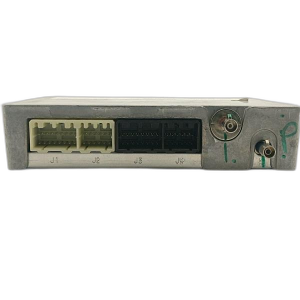
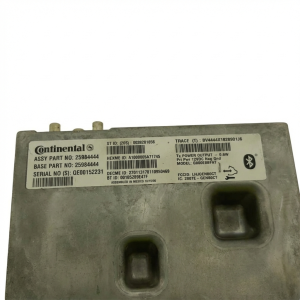
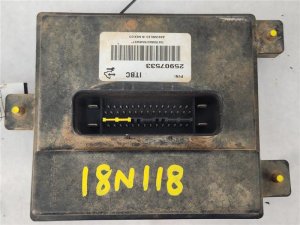
We Have This Part in Stock

The information in this article is provided for general reference and educational purposes only. Vehicle specifications, procedures, and part compatibility can vary by production date, trim level, and region. Always consult your vehicle's factory service manual and verify part numbers before purchasing or performing repairs. Safety-critical components such as airbags, seat belts, and braking systems should be installed by a qualified professional.
- Cadillac ESCALADE EXT:
- 🧭 Diagnostic Flowchart
- 🎬 Helpful Videos
- 🛍️ Shop This Part
- What's Unique About the 2007-2013 Cadillac ESCALADE EXT
- Symptoms You May Notice
- Most Likely Causes
- Rare But Worth Checking
- Diagnosis Steps
- Parts You'll Likely Need
- Related Codes That Often Appear With This One
- Technical Service Bulletins (TSBs) & Recalls
- Platform-Specific Known Issues
- Mechanic-Grade Diagnostic Values
- Hidden / Shadow Codes Worth Checking
- Scan Tool Commands That Help
- Wiring & Ground Locations
- Real Owner Repair Stories
- OEM Part Supersession History
- Model Year Variations Within This Range
- 🎟️ Get 5% Off