

U0140 on 2007-2009 Cadillac SRX: Lost Communication With Body Control Module - Often a Wiring Issue, Not a Bad BCM
On a 2007-2009 Cadillac SRX, code U0140 is most often caused by a poor electrical connection at the main transmission harness connector (X1), not a failed Body Control Module (BCM). Inspecting and cleaning this specific connector as per GM TSB #PIC4740E is the most common and cost-effective first step. A weak battery or other wiring faults are also more likely causes than BCM failure.
- Do not immediately assume the Body Control Module (BCM) has failed. On the 2007-2009 SRX, the root cause is far more likely to be a wiring or connector issue.
- The first and most important place to inspect is the large X1 electrical connector on the transmission, as cited in GM TSB #PIC4740E.
- This is not a DIY-friendly repair for beginners. Network diagnostics are complex and can lead to more expensive problems if done incorrectly.
- A new BCM will require professional programming to function with your vehicle's specific options and security system.
What's Unique About the 2007-2009 Cadillac SRX
For this generation of Cadillac SRX and related GM platforms, the U0140 code is very frequently a wiring issue rather than a module failure. GM issued multiple Technical Service Bulletins (TSBs) pointing technicians away from immediately replacing the BCM. 🎬 Watch: Common causes and fixes for the U0140 code. TSB #PIC4740E specifically identifies a poor connection at the transmission's main electrical connector (X1) as a primary cause for a flood of communication codes, including U0140. Another bulletin, #PIT4730B, notes that intermittent shorts in the communication wiring can make the BCM appear to be offline when it is actually fine. A third TSB, #07-08-47-004D, warns technicians that the BCM can be permanently damaged if its ground path is removed while the battery is connected, emphasizing the importance of proper diagnostic procedure.
Diagnostic Flowchart
Tap your situation to follow the diagnostic path that matches what you're seeing on this vehicle.
Symptoms You May Notice
- Multiple warning lights on the dashboard, such as Check Engine, ABS, and a 'Service StabiliTrak' message.
- Erratic or non-functioning power windows, door locks, and interior/exterior lights.
- Wipers operating incorrectly or not at all.
- Vehicle may not start, or may stall intermittently.
- Harsh shifting or transmission performance issues.
- Instrument cluster gauges behaving erratically or going blank.
- Power door locks cycling randomly while driving or parked.
- Keyless entry and remote start not working.
- Replacing the Body Control Module (BCM) without first thoroughly inspecting the transmission X1 connector and other harness connections. This is a costly mistake, as the problem is frequently a simple wiring or pin-fitment issue, as highlighted by multiple GM TSBs.
Most Likely Causes
- Loose or Corroded Terminals in Transmission X1 Connector 🔴 High Probability → Shop Transmission Assembly This is a well-documented issue cited in GM Technical Service Bulletin #PIC4740E. The connector is located on the driver's side of the transmission, where it is exposed to heat, moisture, and vibration, leading to poor pin connections or chafed wires over time. The GMLAN communication wires pass through this connector, so a fault here disrupts the entire network.
How to confirm: Visually inspect the large, round, lever-actuated X1 electrical connector on the transmission. Disconnect it (with the battery disconnected) and check for any loose, bent, or corroded pins/terminals. Gently tug on each wire to ensure it is fully seated in the connector.
Typical fix: Clean the connector terminals with electrical contact cleaner, apply dielectric grease, and ensure a secure connection. In some cases, individual terminals may need to be replaced or re-pinned. If wires are chafed, they must be repaired with solder and heat-shrink tubing.
Est. part cost: $5-$50 - Intermittent Short/Open in CAN Bus Wiring 🟡 Medium Probability GM TSB #PIT4730B notes that intermittent shorts in the high-speed GMLAN data circuits (circuits 2500 & 2501, typically Tan and Tan/Black wires) can cause the BCM to drop offline, often when driving over bumps. Wiring harnesses can rub against chassis components, heat shields near the transmission, or brackets over time, causing chafing.
How to confirm: This requires advanced diagnostics. Check CAN bus resistance between pins 6 and 14 of the OBD-II port (should be ~60 ohms with battery disconnected). A reading of 120 ohms indicates an open circuit, while near 0 ohms indicates a short. A wiggle test on the harness while monitoring resistance can help find the intermittent fault.
Typical fix: Locate the damaged section of the wiring harness and repair the shorted or broken wire, often using heat-shrink splice sleeves for a durable repair.
Est. part cost: $10-$100 - Poor BCM Power or Ground Connection ⚪ Low Probability Corrosion at chassis ground points is a common issue on aging vehicles and can starve the BCM of the stable voltage it needs to communicate. TSB #07-08-47-004D specifically warns that disconnecting a BCM ground while the module is powered can damage it. A key ground point for the BCM is G103, located on the cowl above the brake booster.
How to confirm: Check for stable battery voltage (12.4V+). The BCM is located under the driver's side dashboard, above the accelerator pedal. Locate the BCM's main ground points (e.g., G103 on the cowl, G200 behind the left kick panel) and inspect for looseness or corrosion. Use a multimeter to test voltage and ground continuity directly at the BCM connector.
Typical fix: Clean and tighten the ground connection by sanding the contact point to bare metal and applying dielectric grease. Test the battery and alternator to rule out low system voltage.
Est. part cost: $0-$250 - Failed Body Control Module (BCM) ⚪ Low Probability → Shop Body Control Module While possible, internal BCM failure is less common than wiring issues on this platform. TSBs specifically warn against replacing the BCM before ruling out all wiring and connection faults. A faulty BCM is a diagnosis of exclusion.
How to confirm: This is a process of elimination. If all wiring (especially the X1 connector), connectors, power, and grounds have been tested and confirmed to be good, the BCM itself is the likely culprit. A professional scan tool will be unable to communicate with the BCM.
Typical fix: Replace the Body Control Module. The new module will require programming by a dealer or a qualified shop with GM-specific software (like Techline Connect or SPS) to match the vehicle's VIN and options, and to perform the immobilizer learn procedure.
Est. part cost: $250-$500
Diagnosis Steps
- Check and charge the battery. Low system voltage is a known cause of communication codes. Ensure voltage is ~12.6V with engine off and 13.7-14.7V while running.
- Use a professional scan tool to read codes from ALL modules, not just the engine computer. Note all 'U' (network) codes present, including any two-digit symptom codes (e.g., U0140 00).
- CRITICAL STEP: Follow the guidance of TSB #PIC4740E. Disconnect the negative battery terminal. Locate and disconnect the large, round X1 electrical connector on the driver's side of the transmission. Carefully inspect all male and female terminals for corrosion, damage, or a loose fit. Tug gently on each wire to confirm it is securely crimped and seated.
- If the X1 connector is perfect, inspect the main BCM connectors (located above the accelerator pedal) and its chassis ground points for corrosion or looseness. A key ground is G103 on the cowl above the brake booster. Per TSB #07-08-47-004D, ensure the battery is disconnected before servicing grounds to prevent BCM damage.
- Check the high-speed CAN bus resistance at the OBD-II port (pins 6 and 14). It should measure approximately 60 ohms with the battery disconnected. A reading of 120 ohms indicates an open circuit or a missing terminating resistor, while a reading near 0 ohms indicates a short circuit.
- If wiring, connectors, power, and grounds are all confirmed to be good, and the scan tool still cannot communicate with the BCM, suspect a faulty BCM.
Parts You'll Likely Need
- Connector Terminals / Pigtail — If pins in the transmission X1 connector are corroded or damaged, they will need to be replaced to ensure a solid connection. A pigtail may be needed if the connector housing itself is damaged.
Trusted brands: ACDelco, Dorman
OEM price range: $20-$60
Aftermarket price range: $10-$40 - Body Control Module (BCM)
(OEM #25861239, 15946445, 25892622 (Part numbers can vary; always verify with VIN))— This is the last resort if all wiring and connection issues have been ruled out. It is the module that has stopped communicating. Requires programming after installation.
Trusted brands: ACDelco (GM Genuine)
OEM price range: $300-$500
Aftermarket price range: $200-$400
Related Codes That Often Appear With This One
- U0073 — This is a general 'Control Module Communication Bus 'A' Off' code that often appears with U0140, indicating a system-wide high-speed network problem. TSB #PIT4730B specifically mentions it appearing as U0073 71.
- U0100 — Lost Communication With ECM/PCM. This can occur if the BCM's failure disrupts the entire network.
- U0101 — Lost Communication With TCM (Transmission Control Module). This is very common alongside U0140, as the problematic X1 connector is part of the transmission harness.
- U0121 — Lost Communication With ABS Control Module. The ABS/StabiliTrak system relies on data from the BCM and other modules, so it will log a code when communication is lost.
- C0561, P0700, P0856 — These are various StabiliTrak and transmission-related codes that are specifically listed in TSB #PIC4740E as appearing with U0140 due to the transmission connector fault.
Technical Service Bulletins (TSBs) & Recalls
- PIC4740E: Details multiple communication DTCs (including U0140) caused by a poor fit in the transmission X1 connector terminals.
- PIT4730B: Provides diagnostic tips for an intermittent U0140 where the BCM appears offline due to temporary shorts on the GMLAN data bus, often triggered by bumps.
- 07-08-47-004D: Warns technicians that the BCM can be damaged if its ground path is removed while battery power is still supplied.
Platform-Specific Known Issues
- TSB #PIC4740E explicitly calls out the 2007-2009 SRX for setting U0140 and other communication codes due to a poor connection at the transmission X1 connector.
Mechanic-Grade Diagnostic Values
- High-Speed GMLAN Bus Voltage (Engine Off) — expected: GMLAN Low (Pin 14): ~2.3V. GMLAN High (Pin 6): ~2.7V. During communication, the 'Low' wire toggles down to ~1.5V and the 'High' wire toggles up to ~3.5V.. Failure: Voltages stuck high, low, or at 0V indicates a short or open on the bus.
- System Voltage (Engine Running) — expected: 13.7 - 14.7 Volts. Failure: Voltage below 13.7V may indicate a charging system issue that can cause module communication errors.
Hidden / Shadow Codes Worth Checking
- U0140 00: This is a common symptom byte for 'Lost Communication with BCM' indicating a general communication failure. (see via GM Tech 2, GDS2, or other professional scan tools that can read manufacturer-specific codes and data.)
- U0073 71: This symptom byte for 'Control Module Communication Bus 'A' Off' indicates the BCM has detected an invalid serial data message was received. (see via GM Tech 2, GDS2, or other professional scan tools. Mentioned specifically in TSB #PIT4730B.)
Scan Tool Commands That Help
- GM Scan Tool (Tech 2 / GDS2): BCM - Module Setup — After replacing the BCM, this function must be used to configure the new module to the vehicle's specific options.
- GM Scan Tool (Tech 2 / GDS2): IMMO Immobilizer Learn - Setup — This is a mandatory step after BCM replacement to synchronize the new module with the vehicle's anti-theft system and keys.
- GM Scan Tool (Tech 2 / GDS2): Setup SDM Primary Key in BCM — This function is required after BCM or SDM (airbag module) replacement to establish the communication link and security handshake between the two modules.
Wiring & Ground Locations
- G103 — Located at the left rear of the engine compartment on the cowl, above the brake booster.. This is a primary ground point for the Body Control Module (BCM), Instrument Panel Cluster (IPC), and Data Link Connector (DLC). A poor connection here can directly cause a loss of communication with the BCM.
- G200 — Located behind the left kick panel, near the A-pillar.. This is another ground point for interior modules. While G103 is more directly cited for the BCM, corrosion in this area can affect multiple systems and should be inspected.
- X1 Connector (Transmission) — Large, round, lever-actuated electrical connector on the driver's side of the transmission.. This is the location identified in TSB #PIC4740E as the most common cause of U0140. The GMLAN communication wires pass through this connector, and poor pin fitment or corrosion here will take the BCM and other modules offline.
Real Owner Repair Stories
- Reddit user, r/Cadillac (2008 Cadillac CTS (related platform and systems)) — Dashboard lit up like a Christmas tree, cycling 'Service Stabilitrak' messages, ABS and Traction Control lights, no power, slow acceleration. Codes U0100, U0101, C0242, U0073, P0700, and U0140.
❌ Tried (didn't work) Initial diagnosis pointed towards multiple module failures.
✅ What actually fixed it The vehicle's sunroof drains were clogged, causing a major water leak that drenched the interior. The root cause was water damage to the fuse boxes and electrical connectors. The fix involved opening the fuse boxes (under the rear seat on that model), drying all components and connectors thoroughly, and clearing the sunroof drains to prevent recurrence.
"I Checked Everything" — The Actual Cause
- The diagnostic equivalent for this network code is when a scan tool shows the BCM is completely offline. TSB #PIT4730B warns that an intermittent short-to-ground or short-together of the two GMLAN wires can cause the BCM to enter a 'bus off' state for the entire ignition cycle. A technician connecting a scan tool at this point would find no communication with the BCM and might wrongly condemn the module. However, cycling the ignition and letting the vehicle sit for up to 20 minutes can allow the BCM to reset and communicate again, proving the issue is an intermittent wiring fault and not a failed BCM.
Helpful Videos

Used OEM Parts in Stock
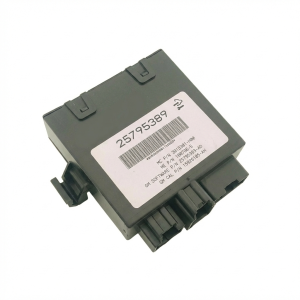
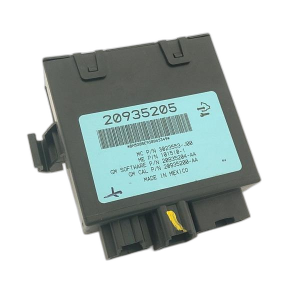
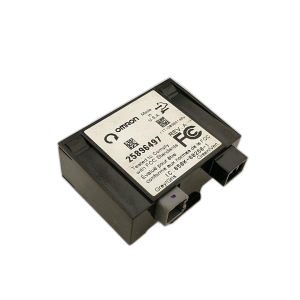
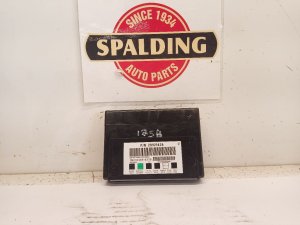
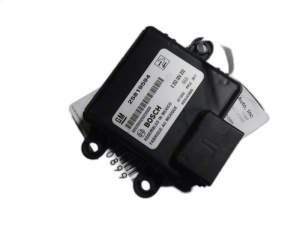
New Aftermarket Parts Available
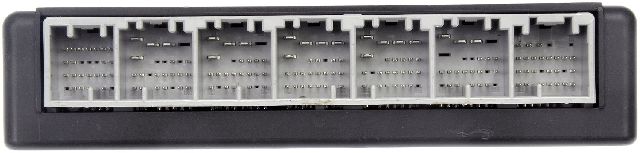


The information in this article is provided for general reference and educational purposes only. Vehicle specifications, procedures, and part compatibility can vary by production date, trim level, and region. Always consult your vehicle's factory service manual and verify part numbers before purchasing or performing repairs. Safety-critical components such as airbags, seat belts, and braking systems should be installed by a qualified professional.
- Cadillac SRX:
- 🧭 Diagnostic Flowchart
- 🎬 Helpful Videos
- 🛍️ Shop This Part
- What's Unique About the 2007-2009 Cadillac SRX
- Symptoms You May Notice
- Most Likely Causes
- Diagnosis Steps
- Parts You'll Likely Need
- Related Codes That Often Appear With This One
- Technical Service Bulletins (TSBs) & Recalls
- Platform-Specific Known Issues
- Mechanic-Grade Diagnostic Values
- Hidden / Shadow Codes Worth Checking
- Scan Tool Commands That Help
- Wiring & Ground Locations
- Real Owner Repair Stories
- "I Checked Everything" — The Actual Cause
- 🎟️ Get 5% Off