

U0140 on 2005-2010 Chevrolet Cobalt: Causes and Fixes for Lost BCM Communication
On a 2005-2010 Cobalt, code U0140 is most often caused by a poor or missing ground connection at the Body Control Module (BCM) or Transmission Control Module (TCM). Before replacing any parts, inspect and clean all grounds, particularly the main ground for the TCM on the transmission stud under the hood. Adding a supplementary ground wire is a common, low-cost DIY fix that resolves the issue in many cases.
- Before suspecting a costly BCM failure, ALWAYS check and improve the ground connections for the BCM and TCM under the hood. This is the most likely fix.
- Symptoms are often widespread and intermittent, affecting everything from the power steering warning to the transmission shifting and interior lights.
- A weak battery can cause communication codes; ensure your battery and alternator are healthy before proceeding with complex diagnostics.
- If the BCM does need to be replaced, it must be programmed to your vehicle's VIN, which typically requires a trip to a dealership or a specialized repair shop.
What's Unique About the 2005-2010 Chevrolet Cobalt
The first-generation Chevrolet Cobalt and its platform-mates (Pontiac G5, Chevy HHR) are notorious for developing electrical issues that trigger code U0140. The most common culprit is not a failed BCM, but rather a poor or faulty ground connection. Specifically, the ground for the Transmission Control Module (TCM), located under the hood on a transmission case stud, is a frequent failure point. The BCM itself is located inside the car, typically behind the passenger or driver side of the center console kick panel. Because the modules share the same communication network, a ground fault at the TCM can prevent the BCM from communicating, leading to the U0140 code. These electrical faults are often intermittent and can be triggered by bumps, moisture, or temperature changes, leading to a frustrating diagnostic process if you assume a major component has failed.
Symptoms You May Notice
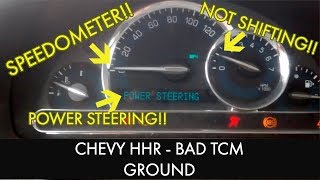
- Power steering warning message appears on the dash
- Instrument cluster gauges (speedometer, tachometer, fuel) drop to zero or behave erratically 🎬 Watch: Fixing crazy gauges and warning lights without buying parts
- Harsh or jerky automatic transmission shifting
- Complete loss of power to interior accessories like the radio and windows
- Exterior lights (headlights, daytime running lights) fail to work
- Vehicle may not crank or start, accompanied by a security light
- Erratic locking and unlocking of doors
- Parasitic battery drain that kills the battery overnight
- Traction Control (TC) light illuminates on the dash
- Replacing the Transmission Control Module (TCM) when the communication issue is actually a shared ground problem.
- Replacing individual components like the headlight switch or instrument cluster when the BCM is the root cause of the failure.
- Assuming the BCM is bad without first thoroughly checking and reinforcing the ground connections, especially the one for the TCM.
Most Likely Causes
- Poor or Missing Ground Connection 🔴 High Probability This is a widely documented issue on the Cobalt/G5/HHR platform. The factory grounds for the BCM and especially the TCM can become corroded or loose over time, interrupting communication across the entire network.
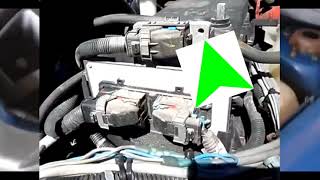
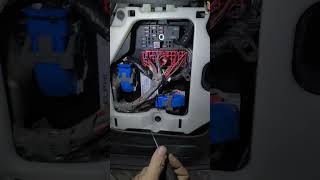
How to confirm: Visually inspect the ground wires connected to the TCM under the hood, specifically the black wires bolted to a stud on the transmission housing. 🎬 Watch: How to locate and fix this bad TCM ground Check for looseness, corrosion, or breakage. A voltage drop test on the ground circuit can confirm high resistance. In one documented case, adding a temporary ground wire immediately stabilized CAN bus voltage readings.
Typical fix: Clean the existing ground connection points to bare metal. The most common and effective fix is to add a supplementary ground wire (14-16 gauge) from one of the module's mounting bolts directly to a clean, solid point on the chassis or strut tower.
Est. part cost: $1-$10 - Corroded or Faulty Under-hood Fuse Block 🟡 Medium Probability The under-hood fuse block is susceptible to moisture and corrosion, which can create poor connections (fretting corrosion) for the relays and fuses that power the BCM and other modules. This is a known issue on many GM vehicles of this era.
How to confirm: Inspect the fuse block for signs of water intrusion, green or white corrosion on terminals, or burnt-looking relays. Some owners report temporarily fixing the issue by disassembling and cleaning the fuse block.
Typical fix: In minor cases, cleaning the terminals may work. More often, the entire under-hood fuse block assembly needs to be replaced.
Est. part cost: $75-$250 - Failing Body Control Module (BCM) 🟡 Medium Probability → Shop Body Control Module While less common than ground issues, the BCM itself can fail due to internal solder joint cracks, component failure, or water damage. On related platforms like the Pontiac G6, water intrusion from clogged sunroof drains is a known cause of BCM failure.
How to confirm: This should be the last step after ruling out all power, ground, and wiring issues. A professional scan tool is needed to see if the BCM is offline and not communicating with any other modules.
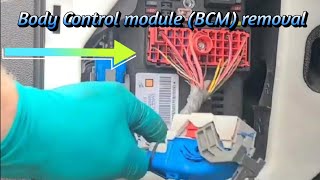
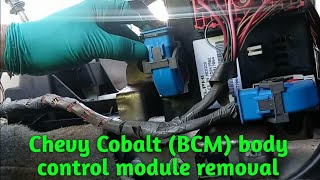
Typical fix: Replace the Body Control Module. This new module must be programmed by a dealer 🎬 See this step-by-step BCM removal walkthrough or a well-equipped independent shop to work with the vehicle's specific VIN and options.
Est. part cost: $150-$400 - Weak Battery or Failing Alternator ⚪ Low Probability → Shop Vehicle Battery
How to confirm: Test the battery voltage with the car off (should be ~12.4-12.6V) and the alternator output with the car running (should be ~13.5-14.5V). Low system voltage can cause modules to drop off the network.
Typical fix: Replace the weak battery or failing alternator.
Est. part cost: $150-$400
Rare But Worth Checking
- Damaged CAN Bus Wiring: While less common than a bad ground, the communication wires (CAN bus) can get chafed or corroded, especially in the harness near the BCM or where it passes through the firewall. This requires careful inspection of the wiring harness. GM TSBs for other models point to chafing on brackets as a potential cause.
Diagnosis Steps
- Check the Battery: Ensure the battery is fully charged and the terminals are clean and tight. Low voltage can cause numerous communication errors.
- Inspect and Add a Ground: This is the most important step for a Cobalt. Locate the TCM under the hood near the fuse box. Find the black ground wires bolted to a stud on the transmission housing. Unbolt, clean the terminal and the mounting surface to bare metal, and re-secure tightly. For a robust fix, add a supplementary ground wire (14-16 gauge) from a TCM mounting bolt to a clean chassis ground point like the strut tower.
- Check BCM Fuses: Check all fuses related to the BCM in both the under-hood and interior fuse panels. They may be labeled BCM, ECU, or BODY.
- Inspect the Under-hood Fuse Block: Look for any signs of corrosion, water damage, or loose-fitting relays. Check for fretting corrosion on the pins.
- Scan for Codes in All Modules: Use a professional-grade scan tool to see which other modules are reporting a loss of communication. This can help isolate the problem.
- Check Network Wiring: If grounds and power are good, inspect the CAN bus wiring harness for visible damage, chafing, or corrosion, paying close attention to the connectors at the BCM and TCM.
- Test the BCM: If all other steps fail, the BCM may be faulty. This is best confirmed by a professional technician before ordering a replacement part.
Parts You'll Likely Need
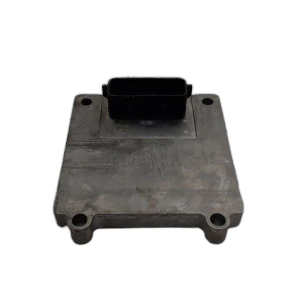
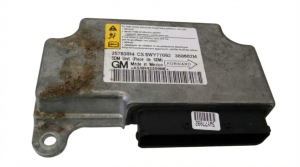
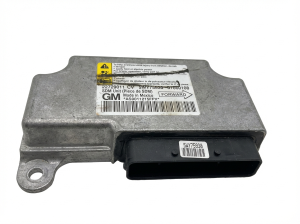
- Body Control Module (BCM)
(OEM #15906912, 25848392, 15845151, 25928052)— This is the module that has lost communication. It should only be replaced after verifying all power, ground, and network wiring is intact. Part numbers vary by year and options; verify with VIN.
Trusted brands: ACDelco, Dorman
OEM price range: $250-$400
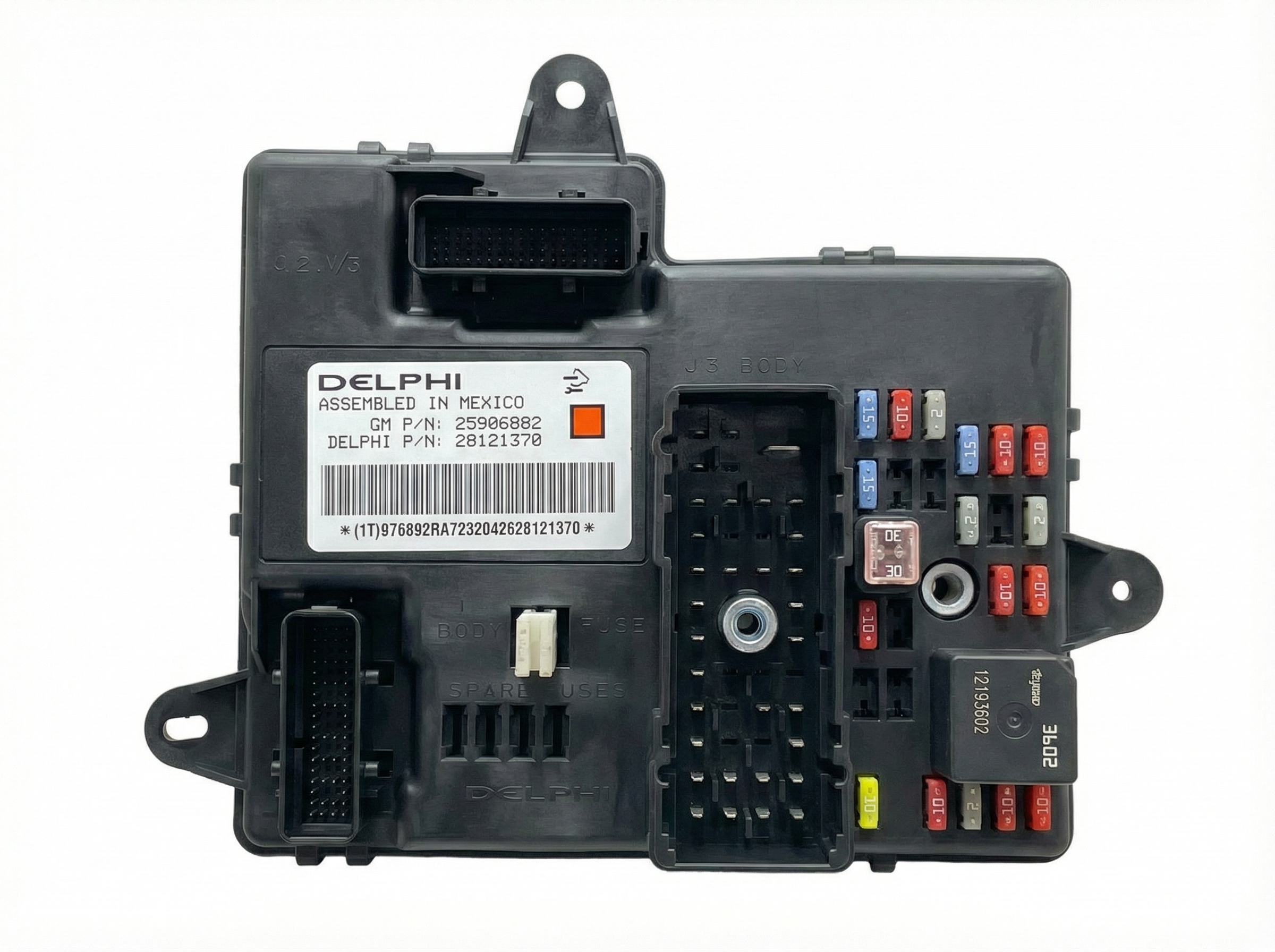
Aftermarket price range: $150-$300 - Under-hood Fuse Block
(OEM #15944946, 25894225)— Internal corrosion can interrupt power or communication signals to the BCM and other modules. Part numbers vary; verify with VIN.
Trusted brands: ACDelco
OEM price range: $150-$250
Aftermarket price range: $100-$180
Related Codes That Often Appear With This One
- U0101 — Lost Communication with Transmission Control Module (TCM). The TCM and BCM are on the same communication network and often share related power/ground circuits, so a fault can cause both codes to appear. A bad TCM ground is a primary suspect for both codes.
- U0073 — Control Module Communication Bus 'A' Off. This is a general network code indicating a total communication breakdown, often triggered by the same root causes as U0140, such as a bad ground or shorted wire.
Technical Service Bulletins (TSBs) & Recalls
- While no TSB is specific to the Cobalt for U0140, GM TSB #08-07-30-021H addresses loss of high-speed GMLAN communications on other models and points to wiring terminal issues, which is relevant context for this network code.
- NHTSA Campaign 14V047000: A critical recall for the ignition switch, which can shut off the engine while driving, disabling all electronics and airbags. This major electrical fault is a key issue for this platform.
- NHTSA Campaign 10V073000: A recall for the electric power steering motor, which can fail and cause a loss of steering assist. This is another major electrical system failure point that shares symptoms (warning lights) with a U0140 fault.
Platform-Specific Known Issues
- A common DIY repair involves adding a dedicated ground wire from the BCM/TCM housing to the chassis, which often permanently resolves the intermittent electrical problems associated with U0140 on this platform.
Mechanic-Grade Diagnostic Values
- GMLAN Bus Resistance — expected: Approximately 60 Ohms (± 5 Ohms). Failure: A reading of 120 Ohms indicates an open circuit or a missing terminating resistor. A reading near 0 Ohms indicates a short between the CAN High and CAN Low wires. A reading of 35-50 Ohms may indicate an incorrect module with a third terminating resistor has been installed.
- GMLAN Bus Voltage (Key On, Engine Off) — expected: CAN High (Pin 6) should be ~2.5V. CAN Low (Pin 14) should be ~2.5V. When active, CAN High rises towards 3.5V and CAN Low falls towards 1.5V.. Failure: Voltages that are stuck high, low, or do not mirror each other indicate a short to power, short to ground, or an open circuit.
- BCM Ground Circuit Resistance — expected: Less than 0.1 Ohms. Failure: Any reading higher than 0.1 Ohms indicates excessive resistance in the ground circuit, which is a very common cause of this code.
- BCM Power Supply Voltage — expected: 12.2V - 12.8V (Key On). Failure: Voltage below 12.2V, especially below 9V, can cause the BCM to reset or drop off the network.
Hidden / Shadow Codes Worth Checking
- U0140 00: This is a more specific version of the code, with the '00' symptom byte indicating 'No Sub Type Information'. It is often stored as a history code when an intermittent short on the GMLAN data circuits occurs. (see via A professional scan tool like the GM Tech 2 or GDS2 is required to view symptom bytes.)
- U0073 71: This code for 'Control Module Communication Bus 'A' Off' with a '71' symptom byte ('Invalid Serial Data Received') is often stored alongside U0140. It points to intermittent shorts on the GMLAN circuits (2500 and 2501) as the root cause. (see via Visible with a GM Tech 2 or other professional scan tool that can read manufacturer-specific symptom codes.)
Scan Tool Commands That Help
- GM Tech 2 / GDS2: Module Status / Communication Status — Use this function to see a list of all modules on the network and their communication status (e.g., 'Communicating' or 'Not Communicating'). If the BCM is listed as 'Not Communicating' while other high-speed modules are online, it helps isolate the fault to the BCM or its direct wiring/power/ground.
- GM Tech 2 / GDS2: Bidirectional Output Controls — After confirming the BCM is online, use bidirectional controls to command BCM-controlled functions like 'Headlights On', 'Door Lock', or 'Wipers On'. If the commands work, it proves the BCM processor and its output circuits are functional, suggesting the U0140 was likely intermittent or caused by a network-wide issue that has resolved. If the commands fail, it points towards an internal BCM fault.
Wiring & Ground Locations
- BCM Location — Under the center dash, typically on the passenger side of the center console, behind the kick panel.. This is the primary module in question. Access is required for checking connectors, power, and grounds directly at the module.
- TCM Ground — A black wire bolted to a stud on the transmission housing, under the hood near the fuse box.. This is the most notorious failure point for this code on the Cobalt. The TCM and BCM are on the same high-speed GMLAN, and a bad ground here disrupts the entire network, causing the BCM to lose communication.
- G103 — At the left rear of the engine compartment on the cowl, above the brake booster.. This is a major ground point that serves the BCM, Instrument Panel Cluster (IPC), and Data Link Connector (DLC), among other components. Corrosion here can cause widespread communication issues.
- G107 — On the engine block, near the starter.. This is a primary engine-to-chassis ground. While not directly for the BCM, a poor connection here can introduce electrical noise and voltage stability problems that affect all modules.
- G301 — Under the driver's seat or behind the right rear passenger seat track on the floor.. This ground serves various interior components. While less likely to be the primary cause for U0140, it's part of the overall ground distribution system that should be checked for corrosion if interior symptoms are present.
- GMLAN Circuits 2500 & 2501 — A twisted pair of wires (often Tan and Tan/Black or Brown/White) running between all high-speed modules, including the ECM, TCM, BCM, and DLC.. These are the specific data wires for the high-speed network. The U0140 code is set when communication on these wires fails. They must be inspected for chafing, shorts to each other, or shorts to ground, especially where they pass through the firewall or near sharp brackets.
Real Owner Repair Stories
- YouTube video 'High speed CAN bus diagnostic resistance check' (2005 Chevrolet Cobalt) — Intermittent hard/erratic shifting, flashing traction control and SES lights, power steering affected. Multiple network codes including U2100, U2105, U2107.
❌ Tried (didn't work) Dealer replaced steering column, Dealer replaced Transmission Control Module (TCM)
✅ What actually fixed it The technician identified a faulty Power Steering Control Module (PSCM) that was internally shorting the CAN bus. Unplugging the PSCM caused the bus resistance to return to a stable 60 Ohms, restoring communication for all other modules. The final fix was replacing the PSCM. - NHTSA ODI #10609404 — An owner reported a dangerous situation where the vehicle could not be properly steered or braked. A shop identified multiple error codes including P0575, U7300, U0121, and U0140 as the cause of the problem.
OEM Part Supersession History
15906912→25910845— Standard part lifecycle update by the manufacturer.
Heads up: While 15906912 is listed for 2007-2010 Cobalt/HHR, it has been discontinued. The superseding part 25910845 should be used, but always verify compatibility with the vehicle's VIN before ordering. Programming by a dealer is required.
Model Year Variations Within This Range
- 2005-2006 vs 2007-2010: While the core issue of bad grounds and network faults remains the same, some BCM part numbers and wiring configurations may differ. The mid-cycle refresh in 2007 introduced some electrical changes. Always use a wiring diagram specific to the vehicle year. For example, some early models may have different fuse designations or ground locations than later models.
Diagnostic Flowchart
Other Known Issues on This Vehicle
Issues unrelated to this code that are worth knowing about as an owner of this generation:
- Defective Ignition Switch 🔴 High — Extremely widespread, affecting all 2005-2010 models. Led to a massive recall. (Ref: NHTSA Campaign ID: 14V047000. The switch can move out of the 'Run' position if bumped or with a heavy keychain, causing the engine to stall and disabling airbags.)
- Sudden Loss of Electric Power Steering (EPS) 🔴 High — Very common across all model years, leading to a major recall. (Ref: NHTSA Campaign ID: 10V073000. The electric power steering motor can fail suddenly, making the vehicle very difficult to steer at low speeds.)
- Leaking Fuel Pump Module/Lines 🔴 High — Common enough to warrant a recall for certain model years, particularly 2007-2009. (Ref: NHTSA Campaign ID: 09V419000 and 12V459000. The plastic supply or return port on the fuel pump module can crack and leak fuel.)
- Worn Front Lower Control Arm Bushings 🟠 Medium — A common wear item that often fails prematurely, typically noticed after 60,000 miles. Causes clunking noises from the front suspension over bumps.
- Timing Chain Tensioner and Guide Failure (2.2L & 2.4L Ecotec) 🔴 High — A known problem on Ecotec engines of this era. A failing tensioner can cause rattling noises on startup, and if it fails completely, can lead to catastrophic engine damage.
Used vs. New Parts: Buying Guide for This Vehicle
When a used part is the smart pick: A used Under-hood Fuse Block is a reasonable choice if it is visually inspected for corrosion, comes from a dry climate, and has a warranty from the seller. For the BCM, a used part is generally not recommended due to programming requirements.
Donor-vehicle mileage cap: roughly under 80000 miles for the part to have meaningful remaining life.
What to inspect on the donor part:
- For a fuse block, check for any green or white powder/corrosion on the terminals, both top and bottom.
- Ensure there are no signs of water intrusion or staining on the plastic housing.
- Verify the donor vehicle was not a flood car.
- For a BCM, ensure the connectors and pins are perfectly straight and clean.
OEM-only on this vehicle (don't cheap out):
- Body Control Module (BCM) - Aftermarket BCMs can be problematic. An OEM ACDelco part (new or remanufactured) is strongly recommended. A used BCM is a high-risk purchase as it is VIN-locked and requires special tools to reprogram, which many shops cannot do.
Aftermarket brands forum-validated for this vehicle:
- Dorman (for remanufactured BCMs, but OEM is preferred)
- ACDelco (OEM)
Brands owners have reported issues with on this vehicle:
- Unbranded, no-name BCMs from online marketplaces without a clear warranty or programming support.
Real Owner Stories
Aggregated from forums and TSBs cited above. Mileages and costs reflect what owners reported in those sources.
2005-2010 Chevrolet Cobalt
Symptoms: Intermittent electrical problems and communication errors associated with U0140.
What fixed it: Added a dedicated ground wire from the BCM/TCM housing to the chassis.
Source hint: vehicle_specific_issues
2007-2010 Pontiac G5
Symptoms: U0140 symptoms including instrument cluster and communication failures identical to the Cobalt.
What fixed it: Cleaned ground connections and utilized the ground wire fix.
Source hint: platform_mates: 2007-2010 Pontiac G5
2006-2011 Chevrolet HHR
Symptoms: Loss of communication codes (U0140) and identical electrical symptoms as the Cobalt platform.
What fixed it: Resolved through ground-related repairs and addressing core electrical components shared with the Delta platform.
Source hint: platform_mates: 2006-2011 Chevrolet HHR
Related OBD-II Codes
Frequently Asked Questions
Is there a recall for the power steering warning and U0140 symptoms on my 2005-2010 Cobalt?
My Cobalt's gauges are dropping to zero and the transmission is shifting hard. Could this be a ground issue?
Does GM TSB #08-07-30-021H apply to the U0140 code on my Cobalt?
Can a bad under-hood fuse block cause a U0140 on a 2007 Cobalt?
Will adding a ground wire to the TCM help with my intermittent electrical problems?
Could my Cobalt's security light and no-crank condition be related to the BCM?
Helpful Videos
We Have This Part in Stock

The information in this article is provided for general reference and educational purposes only. Vehicle specifications, procedures, and part compatibility can vary by production date, trim level, and region. Always consult your vehicle's factory service manual and verify part numbers before purchasing or performing repairs. Safety-critical components such as airbags, seat belts, and braking systems should be installed by a qualified professional.
- Chevrolet Cobalt:
- 🧭 Diagnostic Flowchart
- 🎬 Helpful Videos
- 🛍️ Shop This Part
- What's Unique About the 2005-2010 Chevrolet Cobalt
- Symptoms You May Notice
- Most Likely Causes
- Rare But Worth Checking
- Diagnosis Steps
- Parts You'll Likely Need
- Related Codes That Often Appear With This One
- Technical Service Bulletins (TSBs) & Recalls
- Platform-Specific Known Issues
- Mechanic-Grade Diagnostic Values
- Hidden / Shadow Codes Worth Checking
- Scan Tool Commands That Help
- Wiring & Ground Locations
- Real Owner Repair Stories
- OEM Part Supersession History
- Model Year Variations Within This Range
- Other Known Issues on This Vehicle
- Used vs. New Parts: Buying Guide for This Vehicle
- Real Owner Stories
- 2005-2010 Chevrolet Cobalt
- 2007-2010 Pontiac G5
- 2006-2011 Chevrolet HHR
- Related OBD-II Codes
- Frequently Asked Questions
- 🎟️ Get 5% Off