

U0140 on 2007-2014 Chevrolet Tahoe: Causes and Fixes for Lost BCM Communication
On a 2007-2014 Tahoe, code U0140 almost always points to a wiring or connector issue on the vehicle's communication network, not a failed Body Control Module (BCM). A GM Technical Service Bulletin (TSB) highlights this known problem. The fix often involves inspecting and repairing harness connectors, particularly under the driver's side dash and near the transmission, rather than replacing the expensive BCM.
- U0140 on a 2007-2014 Tahoe indicates a communication failure with the Body Control Module, a serious fault that can make the vehicle unsafe or inoperable.
- Do not immediately assume the BCM has failed. The most likely cause on this specific vehicle is a wiring or connector problem, as documented in GM Service Bulletin #08-07-30-021H.
- A thorough inspection of the battery, grounds, and key wiring harness connectors is the critical first step in diagnosis.
- Due to the complexity of network diagnostics, professional service is strongly recommended.
- If the BCM must be replaced, it will require programming to your vehicle's VIN to function correctly.
What's Unique About the 2007-2014 Chevrolet TAHOE

The 2007-2014 Tahoe, part of the GMT900 platform, is specifically mentioned in GM Technical Service Bulletin #08-07-30-021H. This bulletin documents a pattern where intermittent network failures, including code U0140, are caused by poor connections or chafed wiring in the main vehicle harnesses, particularly at major inline connectors like the 16-way transmission connector and connectors under the driver's side dash. This makes a wiring fault a much higher probability on this truck than a random BCM failure. Forum discussions frequently cite these wiring issues as the root cause.
Diagnostic Flowchart

Tap your situation to follow the diagnostic path that matches what you're seeing on this vehicle.
Symptoms You May Notice
- Vehicle may not start or may stall while driving.
- Transmission may not shift correctly or may default to a single gear (limp mode).
- Multiple warning lights illuminated on the instrument panel, such as Check Engine, ABS, Airbag, or Stabilitrak.
- "Service Stabilitrak" or "Service Traction Control" message on the Driver Information Center (DIC).
- Erratic or non-functional power windows, door locks, and interior/exterior lights.
- Instrument panel gauges may fluctuate wildly or go dead.
- Warning chimes may operate randomly.
- Battery gauge on the dash may show zero voltage even if the battery is good.
- Key fob and remote start may not work.
- Replacing the Body Control Module (BCM) without first performing a thorough inspection of the vehicle's wiring, connectors, and grounds.
- Replacing the battery without confirming it is the root cause of a voltage drop.
- Replacing other control modules like the ECM or TCM, when the U0140 code specifically points to a communication loss with the BCM.
Most Likely Causes

- Wiring Harness or Connector Fault 🔴 High Probability As documented in TSB #08-07-30-021H, these vehicles are known for issues with chafed wiring or corrosion/poor pin contact in major harness connectors. Specific problem areas mentioned by owners include the harness rubbing on the frame near the ECM, corrosion in the underhood fuse block, and backed-out pins in the 16-way transmission connector. Water intrusion under the driver's side door sill plate is a known chafe and corrosion point for a large harness bundle.
How to confirm: Visually inspect major wiring harnesses for chafing, especially where they pass through the firewall, near the parking brake pedal, under the driver's door sill plate, and around the engine/transmission. Disconnect and inspect key connectors (BCM, transmission, main body harness) for corrosion, moisture, or backed-out pins. Wiggling the harness while the vehicle is running may trigger the symptoms.
Typical fix: Repair the damaged section of wire or clean/replace the faulty connector. Applying dielectric grease to connectors can help prevent future moisture intrusion.
Est. part cost: $5-$50 - Low Battery Voltage or Poor Grounds 🟡 Medium Probability → Shop Vehicle Battery All communication modules are sensitive to voltage. An aging battery or corroded battery terminals/ground straps can cause intermittent voltage drops that make modules temporarily drop off the network. Owners have specifically pointed to loose or corroded grounds on the firewall, front passenger cylinder head, and a critical ground designated G218 located under the driver's side dash A-pillar trim as culprits.
How to confirm: Test the battery voltage at rest (should be ~12.4-12.6V) and while the engine is running (should be ~13.7-14.7V). Inspect and clean the battery terminals and all major ground points from the battery to the chassis, firewall, and engine block. A temporary jumper cable from the negative battery post to the engine block can help diagnose a bad ground.
Typical fix: Replace a weak battery, or clean/tighten all battery and ground connections.
Est. part cost: $0-$250 - Failed Body Control Module (BCM) ⚪ Low Probability → Shop Body Control Module While the BCM can fail, it is far less common than wiring or voltage issues. Water intrusion from a leaking windshield or A-pillar seal can sometimes damage the BCM, which is located under the driver's side dashboard. Owners report dealers sometimes replace the BCM when the actual fault was a wire, leading to expensive and unnecessary repairs.
How to confirm: This is a diagnosis of exclusion. If all wiring, connectors, power, and ground inputs to the BCM have been tested with a multimeter and are confirmed to be good, the module itself is the likely culprit. A professional scan tool that cannot communicate with the BCM points towards a BCM or wiring issue.
Typical fix: Replace the Body Control Module. 🎬 Watch: How to replace the BCM and perform the relearn procedure. The new module must be programmed to the vehicle's VIN and specific options using special software like GM's Techline Connect.
Est. part cost: $250-$450
Rare But Worth Checking
- Faulty Aftermarket Electronics: Poorly installed remote starters, alarms, or stereo systems can tap into the vehicle's CAN bus wiring incorrectly, causing interference that disrupts communication and triggers a U0140 code. One owner found an aftermarket alarm was the source of the problem.
- Failed Network Termination Resistor: The CAN bus network requires a 120-ohm resistor at each end to function. If one of these resistors fails (becomes open or shorted), it can bring down the entire network. This is mentioned as a possible cause in TSB #08-07-30-021H and can be tested by measuring resistance between pins 6 and 14 of the OBD-II port (should be ~60 ohms).
Diagnosis Steps
- Check and record all Diagnostic Trouble Codes (DTCs) from all modules using a full-system scanner. Note which codes are current versus history.
- Verify battery voltage is stable and above 12.4 volts. Clean battery terminals and check main ground connections at the chassis, firewall, and engine block.
- Inspect all fuses related to the BCM and other control modules, often located in the underhood fuse block.
- Following the guidance in TSB #08-07-30-021H, locate and inspect major harness connectors, particularly under the driver's side dash (BCM connectors), near the firewall, and the 16-way connector at the transmission, for any signs of corrosion, water damage, or loose pins.
- Inspect for common wiring chafe points: the harness rubbing on the frame below the ECM, near the parking brake pedal, and under the driver's door sill plate.
- If a scan tool is available, attempt to communicate directly with the BCM. If it's offline, check for power and ground at the BCM connector using a multimeter and wiring diagrams.
- Test the resistance of the CAN bus network at the OBD-II port (with the battery disconnected). It should read approximately 60 ohms between Pin 6 and Pin 14 if the termination resistors are intact.
- If all wiring, power, and grounds are confirmed good, suspect a faulty BCM.
Parts You'll Likely Need
- Body Control Module (BCM)
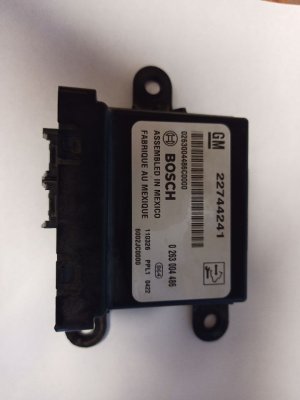
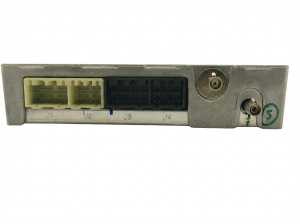
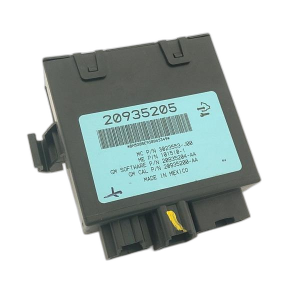
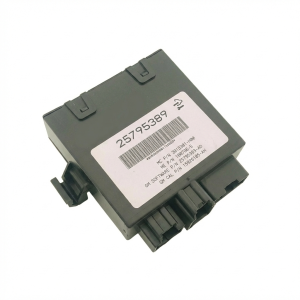
(OEM #25835966)— This is only needed if the module itself has failed after all wiring issues have been ruled out. A replacement BCM must be programmed to the vehicle's VIN. This part number supersedes several previous numbers including 15940214 and 25971917.
Trusted brands: ACDelco, Dorman
OEM price range: $210-$350
Aftermarket price range: $180-$280 - Dielectric Grease — Used to protect electrical connectors from moisture and corrosion after cleaning or repair, as recommended by the TSB and other owners who have performed the repair.
Trusted brands: Permatex, CRC
OEM price range: $5-$15
Aftermarket price range: $5-$15
Related Codes That Often Appear With This One
- U0073 — This code means "Control Module Communications Bus 'A' Off," indicating a general network failure. It often appears with U0140 because the entire high-speed communication bus is compromised.
- U0100 — Lost Communication with ECM/PCM.
- U0101 — Lost Communication with TCM (Transmission Control Module).
- U0121 — Lost Communication with ABS Control Module. The presence of multiple 'U' codes strongly suggests a network-wide problem rather than a single failed module.
Technical Service Bulletins (TSBs) & Recalls
- #08-07-30-021H: Details intermittent no crank, warning lamps, and communication DTCs (including U0140) caused by wiring and connector issues.
- PIT4730B: Explains how an intermittent short on the communication bus can cause the BCM to appear offline, triggering code U0140.
- PIT4853C: Though for hybrid models, it provides relevant diagnostic locations for grounds (G102, G300) and harness chafe points that can cause network communication loss.
Platform-Specific Known Issues
- TSB #08-07-30-021H specifically calls out intermittent loss of high-speed GMLAN communication on these vehicles, leading to a host of symptoms and codes including U0140. The primary causes are listed as chafed wiring and poor connections.
- Another bulletin, PIT4730B, notes that the BCM can appear to be offline for an entire ignition cycle if the high-speed data lines are shorted to ground or each other even for a fraction of a second. This reinforces the sensitivity of the system to wiring faults.
Mechanic-Grade Diagnostic Values
- CAN Bus Network Resistance — expected: 58-64 Ohms. Failure: A reading of 116-128 Ohms indicates an open circuit on the bus. A reading near 0 Ohms indicates the CAN High and CAN Low wires are shorted together.
- CAN High Voltage to Ground — expected: ~2.6 Volts DC. Failure: Significant deviation from this voltage suggests a fault on the CAN High circuit.
- CAN Low Voltage to Ground — expected: ~2.4 Volts DC. Failure: Significant deviation from this voltage suggests a fault on the CAN Low circuit.
- BCM Power Supply Voltage — expected: 12.2 - 12.8 Volts. Failure: Low or no voltage indicates a problem with the power feed wire or fuse for the BCM.
- BCM Ground Resistance — expected: < 0.1 Ohms. Failure: High resistance indicates a poor ground connection, a common cause of intermittent module communication.
Scan Tool Commands That Help
- GDS2 (GM Global Diagnostic System 2): Module Diagnostics > BCM > Control Functions — This allows a technician to perform bidirectional tests, such as commanding lights, locks, and windows to activate. If the BCM can receive and execute these commands from the scan tool but doesn't respond to normal inputs (like the window switch), it helps isolate the fault to the input side (switch, wiring) rather than the BCM or output side.
- GDS2 (GM Global Diagnostic System 2): Data Bus Diagnostic Tool — This specialized function within GDS2 actively polls the CAN bus to determine which modules are communicating and which are not. It can help pinpoint the location of a communication breakdown on the network, especially when multiple 'U' codes are present.
- Professional Scan Tool: Vehicle Anti-Theft System Relearn — This procedure is required after replacing the Body Control Module. The new BCM must be synchronized with the vehicle's immobilizer system before the engine will be allowed to start. Some tools may also require an SDM (airbag module) key reset.
Wiring & Ground Locations

- BCM (Body Control Module) — To the left of the steering column, under the driver's side dashboard.. This is the module that has lost communication. All power, ground, and data line connections at its connectors are primary inspection points.
- G218 — Driver's side A-pillar, behind the kick panel or trim. Foam insulation in this area can sometimes interfere with the connection, causing a poor ground.. This is a critical ground point for several interior modules. A poor connection here is a known cause of various electrical gremlins, including communication codes.
- Engine to Chassis/Body Grounds — One strap typically runs from the passenger side cylinder head to the firewall/body. Another runs from the rear of the driver's side cylinder head to the chassis.. These main ground straps ensure all modules have a stable reference to the battery negative. Corrosion or looseness can cause voltage fluctuations that disrupt network communication.
- High Speed GMLAN Wires — At the ECM C1 connector, these are typically a Tan wire (Pin 27) and a Tan/Black wire (Pin 28). At the OBD-II port, they are at Pin 6 and Pin 14.. These are the physical data wires for the high-speed communication network. Technicians may need to access these wires at different points to test for continuity, shorts, or to isolate sections of the network during diagnosis.
- Driver's Door Sill Harness — In the channel under the plastic driver's side front door sill trim plate.. A large wiring harness runs through this channel. It is a known area for moisture to get trapped, leading to corrosion and chafing of wires, which can short out the communication bus.
Real Owner Repair Stories
- TahoeYukonForum.com user (2007 Chevrolet Tahoe) — No start, multiple warning lights, "Service Stabilitrak" message, code U0140.
❌ Tried (didn't work) Replacing the battery, Checking all fuses
✅ What actually fixed it The owner discovered a corroded splice pack and several damaged wires in the wiring harness located under the driver's side door sill plate. Water had leaked into the channel, causing the corrosion. Repairing the damaged wires and re-sealing the area resolved all symptoms. - YouTube video by 'Super Auto Dent' (Chevrolet Tahoe (GMT900 generation)) — No crank, no start, security light on.
❌ Tried (didn't work) Resetting the system by disconnecting the battery.
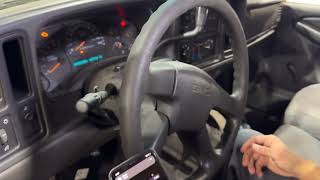
✅ What actually fixed it The Body Control Module (BCM) itself had failed. The video demonstrates replacing the BCM and performing the 30-minute vehicle anti-theft relearn procedure (cycling the key on for 10 minutes, three consecutive times) to program the new module and allow the vehicle to start.
OEM Part Supersession History
15940214, 25971917, 15263363, 15263497, 15284816, 25790508, 25790509, 25971916→25835966— Standard part evolution for improved reliability or manufacturing changes.
Heads up: While physically interchangeable, a new BCM must be programmed to the vehicle's VIN and specific options to function correctly. The vehicle will not start until the anti-theft system is relearned.
Helpful Videos
We Have This Part in Stock

The information in this article is provided for general reference and educational purposes only. Vehicle specifications, procedures, and part compatibility can vary by production date, trim level, and region. Always consult your vehicle's factory service manual and verify part numbers before purchasing or performing repairs. Safety-critical components such as airbags, seat belts, and braking systems should be installed by a qualified professional.
- Chevrolet TAHOE:
- 🧭 Diagnostic Flowchart
- 🎬 Helpful Videos
- 🛍️ Shop This Part
- What's Unique About the 2007-2014 Chevrolet TAHOE
- Symptoms You May Notice
- Most Likely Causes
- Rare But Worth Checking
- Diagnosis Steps
- Parts You'll Likely Need
- Related Codes That Often Appear With This One
- Technical Service Bulletins (TSBs) & Recalls
- Platform-Specific Known Issues
- Mechanic-Grade Diagnostic Values
- Scan Tool Commands That Help
- Wiring & Ground Locations
- Real Owner Repair Stories
- OEM Part Supersession History
- 🎟️ Get 5% Off