

U0140 on 2009-2017 Chevrolet Traverse: Lost BCM Communication Causes and Fixes
On a 2009-2017 Traverse, code U0140 is most often caused by an intermittent wiring short or water intrusion from clogged sunroof drains affecting the Body Control Module (BCM). Do not replace the BCM until you have thoroughly inspected the wiring and checked for water damage, as this is a common misdiagnosis.
- Do not immediately assume the BCM has failed. The most likely cause of U0140 on a Traverse is a water leak or a wiring problem.
- Your first step should be to check for water damage in the front footwells, especially if you have a sunroof.
- Clean your sunroof drains regularly as preventative maintenance to avoid costly electrical repairs.
- This is a complex electrical issue. If you are not comfortable with diagnosing CAN bus networks, professional service is highly recommended.
- If the BCM must be replaced, it requires programming to your vehicle's VIN to function correctly.
What's Unique About the 2009-2017 Chevrolet Traverse
The 2009-2017 Traverse and its GM Lambda platform siblings (Buick Enclave, GMC Acadia, Saturn Outlook) are highly susceptible to two specific issues that cause U0140. First, clogged sunroof drain tubes can cause water to leak directly onto the BCM and its connectors, causing corrosion and shorts. This is a well-documented design flaw. Second, GM issued a specific bulletin (PIT4730B) for these vehicles, warning that a brief, intermittent short in the communication wiring can knock the BCM offline for an entire ignition cycle, making it appear faulty when the real problem is the wiring. These two issues make a wiring or water problem far more likely than an actual BCM failure.
Symptoms You May Notice
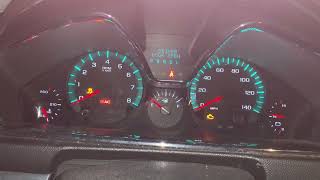
- Multiple warning lights on the dashboard, especially "Service StabiliTrak".
- Erratic or non-working power windows, door locks, and interior/exterior lights.
- Wipers operating on their own or not at all.
- Intermittent no-crank or no-start condition.
- Speedometer and tachometer needles freezing or dropping to zero while driving.
- Audible clicking from relays or door locks cycling while driving.
- Radio or infotainment system malfunctioning.
- HVAC controls becoming inoperative.
- Replacing the Body Control Module (BCM) without first checking for water intrusion or performing an intermittent wiring check as described in TSB PIT4730B.
Most Likely Causes
- Water Intrusion from Clogged Sunroof Drains 🔴 High Probability The sunroof drain tubes on the Traverse and its platform mates are known to clog with debris. The drain exits feature a rubber grommet with a restrictive flap or a 90-degree elbow that easily traps debris. When they back up, water overflows from the tubes inside the A-pillars and drips directly onto the BCM and its connectors, which are located in the passenger or driver side footwell area.
How to confirm: Peel back the carpet in the front footwells to check for dampness, especially after rain. Visually inspect the BCM and its connectors for any signs of blue or green corrosion. Pour a small amount of water into the sunroof tray and see if it drains out behind the front wheels; if it doesn't, or if it drips inside the cabin, the drains are clogged.
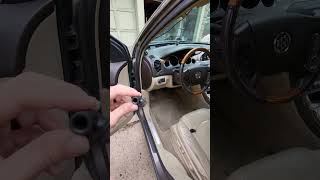
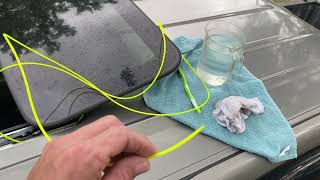
Typical fix: Clear the clogged drain tubes using compressed air at low pressure (under 30 psi) or a flexible line (like weed trimmer string). Some owners modify the restrictive exit grommet to improve flow. 🎬 Watch: How to clear and modify clogged sunroof drains If the BCM or connectors are corroded, they must be disconnected (with battery unplugged), cleaned with electrical contact cleaner, and thoroughly dried. Applying dielectric grease before reconnecting can prevent future corrosion. GM also has a TSB (21-NA-183) detailing inspection and securing the HVAC drain hose, another potential leak source.
Est. part cost: $0-$20 for cleaning tools and dielectric grease. - Intermittent Short in GMLAN Wiring Harness 🔴 High Probability GM TSB PIT4730B specifically addresses this platform. It states that an intermittent short-to-ground or short-between-wires on the high-speed GMLAN circuit (often triggered by bumps) can cause the BCM to go offline for the rest of the ignition cycle, mimicking a failed module.
How to confirm: This is difficult to pinpoint. A technician will use a scan tool to see which modules are offline and test the CAN bus wiring (pins 6 and 14 at the OBD-II port) for proper resistance (approx. 60 ohms). The issue often requires wiggling harnesses under the dash, in the driver's kick panel, and through the firewall to try and trigger the fault while monitoring the network.
Typical fix: Locate the section of wiring that is chafed or shorting and repair it with solder and heat shrink. Common areas are behind the dashboard, where the harness passes through the firewall, and under the driver's kick panel near the parking brake mechanism.
Est. part cost: $5-$25 for wiring repair supplies. - Low Battery Voltage or Poor Ground Connection 🟡 Medium Probability → Shop Vehicle Battery All modern control modules are sensitive to voltage. A weak battery, failing alternator, or corroded main ground connection can cause modules to drop off the communication network unexpectedly. The BCM ground (G301) is located behind the left-hand kick panel and can be susceptible to corrosion from water leaks.
How to confirm: Test the battery with the engine off; it should be above 12.4 volts. With the engine running, the alternator should produce between 13.5 and 14.5 volts. Inspect the main battery terminals and the BCM ground strap for tightness and corrosion. A voltage drop test on the ground circuit is the most definitive test.
Typical fix: Replace the battery, repair the charging system, or clean/tighten the ground connections. This includes disassembling, cleaning, and re-securing the G301 ground point if corrosion is found.
Est. part cost: $0-$250
Rare But Worth Checking
- Failed Body Control Module (BCM): → Shop Body Control Module This is a common misdiagnosis. The BCM should only be replaced after all wiring, power, ground, and water intrusion issues have been completely ruled out. TSB PIT4730B explicitly warns against premature BCM replacement. A failed BCM is almost always the result of another problem, like repeated water damage.
- Serial Data Gateway Logic Lock: As noted in manufacturer TSB Bulletin #PIT5586G for related Chevrolet models, technicians should check for a logic lock of the Serial Data Gateway Module when U0140 is present alongside other communication codes.
- History DTCs in Image Processing Module: Manufacturer TSB Bulletin #PIC6607B advises against replacing the Image Processing Module if U0140 is stored only as a history code.
Diagnosis Steps
- Check the battery and charging system. Ensure voltage is stable and above 12.4V with the engine off.
- Scan all modules for codes. Note which modules are setting U0140 and which, if any, are not communicating at all. Note that TSB Bulletin #PIT5677E lists U0140 among several codes that may appear during complex electrical diagnostics.
- Inspect for water intrusion. Pull back the carpet in the driver and passenger footwells and check for moisture or corrosion, especially around the BCM and the fuse block.
- Test the sunroof drains. Pour water into the sunroof channel and confirm it drains freely behind the front wheels. If not, clear the drains.
- Inspect the GMLAN wiring. Visually check harnesses under the dash, behind kick panels, and through the firewall for any signs of chafing, damage, or poor repairs.
- Test the CAN bus resistance. With the battery disconnected, measure the resistance between Pin 6 and Pin 14 of the OBD-II port. A healthy network will read approximately 60 Ohms. A reading of 120 Ohms indicates an open circuit or a missing terminating resistor, while a reading near 0 Ohms indicates a short circuit.
- Perform a 'wiggle test' on the wiring harness while monitoring network status with a scan tool to identify intermittent shorts.
- If all wiring, power, grounds, and resistance checks are good, and the BCM is still offline, the module itself may have failed, likely due to internal corrosion from past water damage.
Parts You'll Likely Need
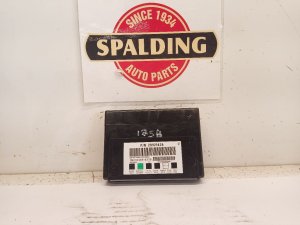
- Body Control Module (BCM)
(OEM #25934763 (supersedes multiple numbers for 2009-2012 models), 13594692)— This part is only needed if it has failed internally, typically from water damage or an internal short, and all other causes have been ruled out. It is often replaced unnecessarily. Must be programmed to the vehicle's VIN.
Trusted brands: ACDelco (GM Genuine), Dorman (Remanufactured)
OEM price range: $250-$400
Aftermarket price range: $170-$280
Related Codes That Often Appear With This One
- U0073 — Stands for 'Control Module Communication Bus A Off'. This is a general network failure code often set alongside U0140 when the BCM drops off the high-speed CAN bus.
- U0100 — Lost Communication with ECM/PCM. This can be set in other modules when the BCM communication fault disrupts the entire network.
- U0121 — Lost Communication with Anti-Lock Brake System (ABS) Control Module. The ABS module is another critical component on the same network that will log a code if communication is disrupted.
Technical Service Bulletins (TSBs) & Recalls
- PIT4730B: Diagnostic tip for intermittent U0140 or U0073 where the BCM appears offline. Warns that a brief network short can cause the BCM to stop communicating for the entire ignition cycle, and advises against premature replacement.
- 21-NA-183: Details a procedure to inspect for and prevent leaks from the HVAC module drain hose, which can also cause water intrusion near the BCM.
- 11340C: Special coverage for premature timing chain wear on 2009 models. While not directly related to U0140, it highlights a major platform issue.
- 14329A: Special coverage for power steering pump wear causing loss of assist. Not directly related to U0140 but a significant platform issue.
- Bulletin #PIT5586G: Instructs dealers to check for logic lock of the Serial Data Gateway Module when multiple communication codes, including U0140, are found.
- Bulletin #PIC6607B: Advises technicians not to replace the Image Processing Module if U0140 is found as a history DTC.
- Bulletin #PIT5677E: Lists U0140 as a potential DTC found during electrical system diagnostics on GM vehicles.
Platform-Specific Known Issues
- Clogged sunroof drains are a well-documented issue on the Lambda platform, leading to water leaking into the cabin and damaging electronics like the BCM.
- GM TSB PIT4730B details a specific software behavior where an intermittent wiring short can cause the BCM to appear completely offline, leading to misdiagnosis.
- The BCM is located under the dashboard on the driver's or passenger's side, directly in the path of potential water leaks from the sunroof or HVAC drain.
Mechanic-Grade Diagnostic Values
- GMLAN Bus Resistance — expected: ~60 Ω (measured between Pin 6 and Pin 14 of the DLC with battery disconnected). Failure: 120 Ω indicates an open in the circuit or a missing termination resistor. ~0 Ω indicates a short between the CAN High and CAN Low wires.
- GMLAN Bus Idle Voltage — expected: ~2.5 V on both CAN High (Pin 6) and CAN Low (Pin 14) circuits relative to ground.. Failure: Significant deviation from 2.5V on either line at idle indicates a short to power or ground.
- GMLAN Bus Active Voltage — expected: CAN High toggles to ~3.5V and CAN Low toggles to ~1.5V during active communication.. Failure: A flat line or lack of voltage differential when the network should be active points to a module or wiring failure.
- BCM Ground Circuit Resistance — expected: < 0.1 Ω (measured between the BCM ground pin at the connector and a clean chassis point). Failure: Higher resistance indicates a corroded or loose ground connection (e.g., at G301).
Hidden / Shadow Codes Worth Checking
- B1001: Set after BCM replacement, this code means 'SDM Configuration Error'. It indicates the new BCM has not been properly configured with the Supplemental Inflatable Restraint (Airbag) Decision Module's primary key. (see via A professional scan tool like a GM Tech2 or GDS2 is required. This code will often be accompanied by an illuminated airbag warning light.)
- No Code / BCM Offline Behavior (per TSB PIT4730B): This is not a code, but a hidden behavior. A momentary short on the GMLAN bus can cause the BCM to go completely offline and stop communicating for the entire ignition cycle. It will appear as a failed module to a scan tool, but will function again on the next key cycle if the short is gone. (see via Diagnosed by observing that the BCM is offline on a scan tool, but returns to normal operation after cycling the ignition. This points to an intermittent wiring issue rather than a failed BCM.)
Scan Tool Commands That Help
- GM GDS2/Tech2: Setup SDM Primary Key in BCM — This function is mandatory after installing a new or used BCM. It synchronizes the airbag system (SDM) with the new BCM. Failure to perform this step will leave the airbag warning light on and store a B1001 DTC.
- GM GDS2/Tech2: BCM Programming/Setup — When installing a new BCM, it must be programmed with the vehicle's VIN and specific RPO codes (option configuration) using GM's Service Programming System (SPS). This is required for the vehicle to start and for all features to function correctly.
Wiring & Ground Locations
- G301 — Behind the left-hand (driver's side) kick panel.. This is a primary ground point for the Body Control Module. Corrosion at this location, often due to water leaks, can cause a loss of power to the BCM and trigger a U0140 code.
- G110 — At the right rear of the engine, mounted to the back of the cylinder head, sometimes on a bracket above the power steering pressure hose.. This is a critical engine/transmission ground. A loose or corroded G110 can cause intermittent communication loss across multiple modules, including the TCM and ECM, which can disrupt the entire network and cause other modules like the BCM to log communication codes.
- BCM Connectors (X1-X7) — Under the driver's side dashboard, plugged into the BCM.. These are the direct interfaces for the BCM. The GMLAN High Speed bus wires are located in these connectors. Water intrusion from sunroof drains frequently causes corrosion on the pins of these specific connectors, leading to shorts or open circuits.
- DLC (OBD-II Port) Pins 6 & 14 — Under the driver's side dashboard.. Pin 6 is GMLAN High (+) and Pin 14 is GMLAN Low (-). These are the primary access points for testing the entire high-speed communication network's resistance and voltage with a multimeter.
Real Owner Repair Stories
- Reddit user and YouTube video confirmation (2011 Chevrolet Traverse) — Intermittent no crank/no start, multiple communication loss DTCs across various modules.
❌ Tried (didn't work) Initial diagnosis pointed towards a faulty module or a wiring issue near the modules themselves.
✅ What actually fixed it The root cause was a loose G110 ground on the back of the engine cylinder head. A previous transmission repair shop had cross-threaded the bolt, causing an intermittent ground connection for multiple modules. Tightening this ground bolt resolved all communication issues. - NHTSA ODI #11623058 — An owner of a related Chevrolet vehicle reported that the truck was read for codes and U0140 appeared, indicating the body control module was malfunctioning.
- NHTSA ODI #11252479 — A report describes a vehicle where U0140 "Lost Body Control" appeared alongside B101D, B1325, and U0184 Lost Communication with HVAC Control.
"I Checked Everything" — The Actual Cause
- A technician may check all wiring harnesses around the BCM and find no visible damage or shorts, and a wiggle test may not reproduce the fault. The actual cause could be the specific behavior described in TSB PIT4730B, where a very brief, intermittent short (e.g., from hitting a bump) knocks the BCM offline for the entire key cycle. The short is no longer present when the technician is testing, but the BCM remains unresponsive until the ignition is cycled, mimicking a failed module.
- Diagnostics may focus on the BCM and under-dash wiring due to the U0140 code. However, the actual cause can be a poor ground connection elsewhere in the vehicle, such as the G110 engine ground. This ground is not physically near the BCM, so it is often overlooked, but its failure can disrupt the entire vehicle network, causing the BCM to lose communication.
OEM Part Supersession History
25934763→This part number is a common service replacement and is often listed as compatible with or a supersession for several other numbers.— Part consolidation and minor revisions over the model years.
Heads up: Part number 25934763 is listed as compatible with 15921353, 22820315, 20935350, 20864768, 22737274, and 95151084. However, it is critical to match the part number from the original module exactly, as internal hardware can differ based on vehicle options (RPO codes). Installing a BCM with the wrong hardware, even if it plugs in, can cause features to be inoperative. After replacement, the 'Setup SDM Primary Key in BCM' procedure is required to prevent an airbag light and B1001 code.
Model Year Variations Within This Range
- 2009-2017: The primary variation within the generation is not a significant year-over-year design change, but rather the specific BCM part number installed at the factory based on the vehicle's trim level and options (RPO codes). This makes matching the part number on the original module critical when sourcing a replacement.
- 2009-2017: The factory diagnostic tool transitioned from the Tech2 handheld scanner to the PC-based GDS2 (Global Diagnostic System 2) software during this period. GDS2 is the current standard and is required for programming and setting up modules on later models within this range.
Diagnostic Flowchart
Other Known Issues on This Vehicle
Issues unrelated to this code that are worth knowing about as an owner of this generation:
- Premature Timing Chain Stretch (3.6L V6) 🔴 High — Very common, especially on earlier 2009-2012 models. Can occur as early as 50,000 miles but more typically around 100,000 miles. Triggers codes like P0008, P0016, P0017. (Ref: Special Coverage Adjustment 11340C extended the warranty to 10 years/120,000 miles for 2009 models.)
- 3-5-R Transmission Wave Plate Failure (6T70/6T75) 🔴 High → Shop Transmission Assembly — Common on 2009-2012 models, often occurring just outside the powertrain warranty period (80,000-120,000 miles). Results in loss of 3rd, 5th, and Reverse gears and requires a transmission rebuild or replacement. (Ref: GM extended warranty coverage for some early models (Special Coverage 14404B) due to the high failure rate.)
- Power Steering Pump Failure / Stiff Steering 🟠 Medium — Common across the platform, especially 2009-2012 models. Can cause intermittent loss of power steering assist, particularly at low speeds. (Ref: Special Coverage Adjustment 14329A extended warranty to 10 years/150,000 miles for this issue.)
- Excessive Oil Consumption (3.6L V6) 🟠 Medium — Reported on higher mileage engines, often linked to a clogged PCV orifice in the valve cover, leading to increased crankcase pressure. (Ref: TSB 10-06-01-008 addresses PCV issues on some GM 3.6L engines.)
- Cracked Front Strut Mounts / Coil Springs 🟡 Low — Owners report clunking noises from the front suspension, often traced to failed top strut mounts or broken coil springs.
Used vs. New Parts: Buying Guide for This Vehicle
When a used part is the smart pick: A used BCM from a salvage yard is a very smart choice for this repair, but ONLY if you use a mail-in cloning service. These services transfer the VIN, key data, and programming from your original (even if faulty) BCM to the used donor part. This makes the replacement completely plug-and-play, avoiding the need for expensive dealer programming.
Donor-vehicle mileage cap: roughly under 150000 miles for the part to have meaningful remaining life.
What to inspect on the donor part:
- ZERO corrosion on connector pins. Any sign of blue or green powder means it suffered water damage and should be rejected.
- Verify with the seller that the part came from a running vehicle, not a flood car.
- Ensure the part number on the used module's label matches your original module's part number EXACTLY.
OEM-only on this vehicle (don't cheap out):
- Body Control Module (BCM)
Aftermarket brands forum-validated for this vehicle:
- ACDelco (GM Genuine) is the only recommended brand for a new part.
Brands owners have reported issues with on this vehicle:
- While brands like Dorman offer remanufactured BCMs, forum discussions often suggest that a used, cloned OEM module is more reliable than a remanufactured unit which can have quality control issues. Avoid generic, unbranded modules.
Real Owner Stories
Aggregated from forums and TSBs cited above. Mileages and costs reflect what owners reported in those sources.
2009 Chevrolet Traverse
Symptoms: Wet passenger floor and U0140 code appearing after rain.
What fixed it: Cleared clogged sunroof drain tubes and cleaned BCM connectors with electrical contact cleaner to remove blue/green corrosion.
Source hint: traverseforum.com: Numerous threads discuss U0140 in conjunction with water leaks.
2008-2017 Buick Enclave (Lambda Platform)
Symptoms: U0140 caused by water dripping on the BCM.
What fixed it: Clearing clogged sunroof drains and drying out the BCM area.
Source hint: vehicle_specific_issues: The Enclave is widely documented to suffer from U0140 caused by clogged sunroof drains dripping on the BCM.
Documented NHTSA Reports
NHTSA ODI #11623058
Symptoms: Malfunctioning body control module and U0140 code.
Details: An owner reported that the vehicle was read for codes and the code U0140 came up for the body control module that is malfunctioning.
NHTSA ODI #11252479
Symptoms: Multiple communication and power circuit codes.
Details: A report notes that the following codes appeared: B101D, B1325 Control Module Power Circuit, U0028, U0140 Lost Body Control, and U0184 Lost Communication HVAC Control.
Related OBD-II Codes
Frequently Asked Questions
My 2009 Chevrolet Traverse has a U0140 code and the BCM appears offline; should I replace the module immediately?
Can a clogged sunroof drain really cause electrical codes like U0140 on my Traverse?
Is there a specific ground point I should check for U0140 issues on a 2009-2017 Traverse?
Are there other leak sources besides the sunroof that could cause BCM communication failure?
What should the CAN bus resistance be when diagnosing a U0140 on this vehicle?
Does the 2009 Traverse have any special coverage for related engine issues?
Helpful Videos
We Have This Part in Stock

The information in this article is provided for general reference and educational purposes only. Vehicle specifications, procedures, and part compatibility can vary by production date, trim level, and region. Always consult your vehicle's factory service manual and verify part numbers before purchasing or performing repairs. Safety-critical components such as airbags, seat belts, and braking systems should be installed by a qualified professional.
- Chevrolet Traverse:
- 🧭 Diagnostic Flowchart
- 🎬 Helpful Videos
- 🛍️ Shop This Part
- What's Unique About the 2009-2017 Chevrolet Traverse
- Symptoms You May Notice
- Most Likely Causes
- Rare But Worth Checking
- Diagnosis Steps
- Parts You'll Likely Need
- Related Codes That Often Appear With This One
- Technical Service Bulletins (TSBs) & Recalls
- Platform-Specific Known Issues
- Mechanic-Grade Diagnostic Values
- Hidden / Shadow Codes Worth Checking
- Scan Tool Commands That Help
- Wiring & Ground Locations
- Real Owner Repair Stories
- "I Checked Everything" — The Actual Cause
- OEM Part Supersession History
- Model Year Variations Within This Range
- Other Known Issues on This Vehicle
- Used vs. New Parts: Buying Guide for This Vehicle
- Real Owner Stories
- 2009 Chevrolet Traverse
- 2008-2017 Buick Enclave (Lambda Platform)
- Documented NHTSA Reports
- NHTSA ODI #11623058
- NHTSA ODI #11252479
- Related OBD-II Codes
- Frequently Asked Questions
- 🎟️ Get 5% Off