

U0140 on 2019-2021 Chrysler 300: Lost Communication With Body Control Module Causes and Fixes
U0140 on a 2019-2021 Chrysler 300 means the Body Control Module (BCM) has stopped communicating. The most common causes are a weak battery, a poor ground connection, or a wiring issue. A faulty BCM is also possible but less frequent. Always check the battery and grounds first before considering expensive module replacement. On this platform, the BCM acts as a critical gateway, so its failure can bring down multiple unrelated systems.
- U0140 means the Body Control Module (BCM) is offline.
- Before suspecting an expensive BCM failure, always test the battery and inspect all major ground connections. These are the most common and cheapest fixes.
- Symptoms are widespread and electrical: lights, locks, windows, wipers, and even starting the car can be affected.
- If multiple 'U' codes are present, the problem is almost certainly in the network's power supply, grounds, or wiring, not a single module. [TSB #1801322]
- Replacing a BCM is a job for a professional, as it requires programming to your vehicle's VIN.
What's Unique About the 2019-2021 Chrysler 300
For the Chrysler 300 and other similar FCA (Fiat Chrysler Automobiles) platforms like the Dodge Charger, the BCM often functions as a network gateway, translating messages between different speed CAN buses. This means a problem with the BCM can cause a cascade of communication failures across seemingly unrelated modules. The provided NHTSA TSB #1801322 shows U0140 appearing alongside a cluster of other communication loss codes (U0128, U0129, U0155, etc.), which points towards a systemic problem like low battery voltage, a bad ground, or a network wiring fault affecting multiple modules at once. While the BCM can fail, it's often the victim of an external electrical issue, not the root cause.
🎬 Watch: Common causes and fixes for the U0140 codeDiagnostic Flowchart
Tap your situation to follow the diagnostic path that matches what you're seeing on this vehicle.
Symptoms You May Notice
- Malfunctioning interior or exterior lights (flickering, staying on, or not working at all).
- Power windows, door locks, or mirrors not responding.
- Windshield wipers behaving erratically or not working.
- Key fob not working or issues with the keyless entry/start system.
- Multiple warning lights illuminated on the dashboard, often for ABS, traction control, and airbags simultaneously.
- Vehicle may not start or may stall.
- Air conditioning system not functioning correctly, such as blowing hot air on one side.
- Parasitic battery drain causing a dead battery after sitting.
- Instrument cluster gauges sweeping erratically or going dead.
- Replacing the BCM without first thoroughly checking the battery and ground connections. A simple voltage or ground issue is a much more common and cheaper fix.
- Replacing another module (like ABS or TCM) that has also set a communication code, when the root cause is a network-wide issue originating from the BCM's power, ground, or the CAN bus wiring itself.
Most Likely Causes
- Weak or Failing Battery 🔴 High Probability → Shop Vehicle Battery Modern vehicles with numerous electronic modules are highly sensitive to system voltage. A small drop below 12V can cause modules to temporarily drop off the network, triggering communication codes.
How to confirm: Test the battery voltage with a multimeter. A healthy battery should read about 12.4-12.6 volts with the engine off and 13.7-14.7 volts when the engine is running. Most auto parts stores offer free battery testing.
Typical fix: Recharge or replace the battery. If charging voltage is low, the alternator may need inspection.
Est. part cost: $150-$300 - Poor Ground Connection 🟡 Medium Probability Ground straps and connection points can corrode or loosen over time, creating high resistance and causing intermittent electrical issues for modules. A bad ground can introduce electrical noise that disrupts CAN bus communication.
How to confirm: Visually inspect the main battery ground in the trunk, engine-to-chassis ground straps, and BCM ground points under the dash for corrosion or looseness. A multimeter can be used to check for voltage drop between the BCM ground pin and the battery negative terminal; it should be less than 0.1 volts.
Typical fix: Clean the contact surfaces of the ground connection and terminal with a wire brush and re-secure the connection tightly.
Est. part cost: $0-$20 - Damaged Wiring or Connectors 🟡 Medium Probability The CAN bus wiring harness can be susceptible to chafing, corrosion, or damage, especially in areas where it passes through the firewall, doors, or near sharp metal edges. Rodent damage has also been reported.
How to confirm: Visually inspect the wiring harness leading to the BCM for any signs of damage, pinching, or corrosion at the connectors. A professional would use a multimeter to check for continuity and shorts on the CAN High and CAN Low wires.
Typical fix: Repair the damaged section of wire or clean/replace the affected connector. Soldering and heat-shrinking the repair is recommended.
Est. part cost: $10-$100 - Faulty Body Control Module (BCM) ⚪ Low Probability → Shop Body Control Module Internal failure of the BCM can occur due to age, vibration, or moisture intrusion from a water leak, though it's less common than external wiring or power supply issues.
How to confirm: This is typically a diagnosis of exclusion. If the battery, grounds, and all related wiring have been confirmed to be good, the BCM itself becomes the primary suspect. A professional scan tool that can communicate directly with the BCM is needed for a definitive diagnosis.
Typical fix: Replace the Body Control Module. The new module will require programming to the vehicle's specific VIN and options.
Est. part cost: $300-$550
Rare But Worth Checking
- Aftermarket Electronics Interference: Poorly installed remote starters, alarms, or stereo systems can tap into the CAN bus improperly, creating signal noise that disrupts communication and triggers a U0140 code.
- CAN Bus Splice/Star Connector Corrosion: The CAN bus network on these vehicles uses splice packs or 'star connectors' to branch the network out to various modules. One is often located behind the glove box area. Corrosion or a loose connection in this central hub can take multiple modules offline at once, causing a flood of U-codes including U0140.
Diagnosis Steps
- Check Battery Health: Ensure the battery is fully charged and in good condition. Test voltage with the engine off (should be ~12.6V) and running (should be ~14.0V). A weak battery is a primary cause.
- Scan for All Codes: Use a professional-grade OBD-II scanner to read all codes from all modules. Note all other 'U' (communication) codes to understand the scope of the network failure.
- Inspect Fuses: Check all fuses related to the BCM and other non-communicating modules. These are located in fuse boxes in the engine bay and inside the trunk.
- Inspect Ground Connections: Locate and inspect the main battery ground (in the trunk) and body ground points under the dash near the BCM. Look for looseness and corrosion.
- Locate and Inspect BCM: On the Chrysler 300, the BCM is typically located under the driver's side dashboard, often to the left of the steering column. Visually inspect its connectors for corrosion, moisture, or loose pins.
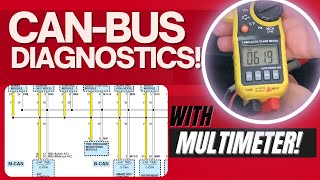
- Perform CAN Bus Resistance Test: Disconnect the battery. Use a multimeter to measure the resistance between Pin 6 (CAN High) and Pin 14 (CAN Low) on the OBD-II port. A healthy network should read approximately 60 ohms. A reading of 120 ohms indicates a break in the circuit or a missing terminating resistor, while a reading near 0 ohms indicates a short between the two wires.
- Inspect CAN Bus Star Connectors (Professional): Locate the CAN bus splice blocks (star connectors), often found behind the glove box or kick panels. Inspect for corrosion or damage, which can disrupt the entire network.
- Isolate the Faulty Module (Professional): A technician may use an oscilloscope to analyze the CAN bus signal. By disconnecting modules one by one at the star connector, they can watch for the signal to return to normal, thereby identifying which module is corrupting the network.
- Diagnose BCM (Professional): If the network wiring and all other modules are confirmed to be intact, the BCM itself is the likely culprit and will need to be tested and likely replaced and programmed.
Parts You'll Likely Need
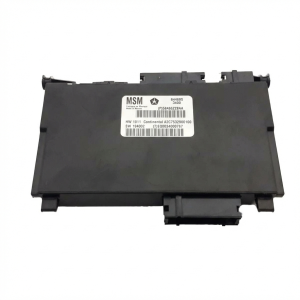
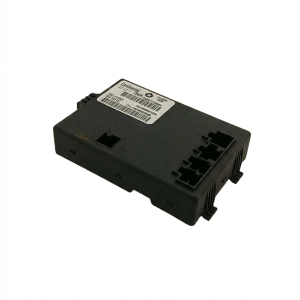
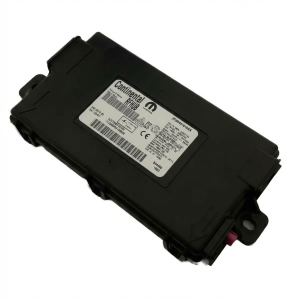
- Body Control Module (BCM)
(OEM #68396565AC (for 2019 models, supersedes 68396565AB), 68424597AB (for 2020 models). Part numbers are VIN-specific, always verify with a dealer.)— If all power, ground, and wiring checks pass, the module itself has likely failed internally. This is the final step after ruling out simpler causes.
Related Codes That Often Appear With This One
- U0128 — Lost Communication With Park Brake Control Module. As seen in TSB #1801322, this often indicates a network-wide issue rather than a single module failure.
- U0129 — Lost Communication With Brake System Control Module. Also listed in TSB #1801322, pointing to a shared communication bus problem.
- U0155 — Lost Communication With Cluster/CCN. The instrument panel cluster is another module on the CAN bus that can lose communication during a network fault, as noted in TSB #1801322.
- B210D, B210E — Battery Voltage Low/High. These codes often accompany U0140 and point directly to an unstable power supply as the root cause of the communication loss.
Technical Service Bulletins (TSBs) & Recalls
- NHTSA TSB #1801322: This bulletin lists U0140 as part of a group of communication codes that can appear together, reinforcing the idea that the cause is often a network-wide fault rather than a single module failure.
- Various TSBs for platform mates (e.g., Dodge Journey TSB SB-18-066-15) have been issued for older models to fix U0140 with a PCM software update. While not directly applicable to 2019-2021 models, it shows a history of software fixes for this code within the manufacturer's ecosystem.
Platform-Specific Known Issues
- The presence of multiple communication codes (U0128, U0129, U0140, U0155, etc.) as documented in TSB #1801322 strongly suggests a network-wide electrical fault rather than an isolated BCM failure. This points diagnosis towards the battery, main grounds, or a CAN bus wiring fault first.
- A dead battery after the vehicle sits for a few days is a strong indicator of a module (often the BCM) not going to 'sleep' and causing a parasitic draw, which can then lead to low voltage and communication codes on the next startup attempt.
Mechanic-Grade Diagnostic Values
- CAN Bus Network Resistance — expected: ~60 Ohms. Failure: A reading of ~120 Ohms indicates an open circuit or a missing termination resistor. A reading near 0 Ohms indicates a short between the CAN High and CAN Low wires.
- BCM Power Supply Voltage — expected: 12.2 - 12.8 Volts (Key On). Failure: Voltage significantly below 12V can cause the module to drop off the network.
- BCM Ground Resistance — expected: < 0.1 Ohms. Failure: Higher resistance indicates a poor ground connection, which can cause communication errors.
- CAN High (CAN C) Voltage — expected: ~2.5V to 3.5V (active). Failure: Voltages that are stuck high, low, or do not mirror the CAN Low signal indicate a bus fault.
- CAN Low (CAN C) Voltage — expected: ~1.5V to 2.5V (active). Failure: Voltages that are stuck high, low, or do not mirror the CAN High signal indicate a bus fault.
Scan Tool Commands That Help
- wiTECH (Chrysler OEM) or high-end aftermarket (e.g., Autel): Module Reset — After replacing a module or to resolve software glitches, a module reset function can be used to re-establish communication handshakes between modules like the PCM and BCM.
- wiTECH or equivalent: Network Topology View — To get a visual representation of all modules on the network and see which ones are not communicating. This helps quickly identify if the BCM is offline or if multiple modules are down.
- wiTECH or equivalent: Bidirectional Controls — To command the BCM to perform a function (e.g., 'turn on dome light'). If the command works, it confirms the BCM has power, ground, and internal logic, pointing the diagnosis towards network wiring or other modules.
Wiring & Ground Locations
- CAN Bus Star Connector (Junction Block) — In the passenger footwell area, directly below the glove box on the right side. The lower trim panel must be removed for access.. This is a central hub where many CAN bus circuits meet. Corrosion or a loose connection in this single connector can take down multiple modules at once, causing a flood of communication codes including U0140.
- BCM Ground Points — Common ground points (e.g., G300 series) are located under the dashboard, typically attached to the chassis behind the kick panels on either the driver or passenger side.. The BCM requires a solid ground to function. A corroded or loose ground at these locations can cause intermittent voltage drops and disrupt communication.
- BCM Connector (Plug E, Black) — Located above the passenger kick panel.. This is a main connector for the BCM. Specific pins for CAN communication are located here: HS CAN 1 High (Orange/Green), HS CAN 1 Low (Orange/Brown), HS CAN 2 High (Tan/Black), HS CAN 2 Low (Tan).
Real Owner Repair Stories
- YouTube channel 'Advanced Level Automotive' (2012 Chrysler 300 3.6L (similar platform and architecture)) — Numerous communication codes between all different modules.
❌ Tried (didn't work) Focusing on a single trouble code instead of diagnosing the network as a whole.
✅ What actually fixed it The technician used a lab scope on the CAN bus and isolated modules one-by-one at the star connector under the glove box. Disconnecting the power steering pump module caused the noisy CAN signal to return to normal. The internal electronics of the power steering pump module had failed and were corrupting the entire vehicle network, causing the widespread communication loss. Replacing the power steering pump assembly resolved all communication codes.
OEM Part Supersession History
68396565AB→68396565AC— Standard part revision by the manufacturer, likely for minor hardware or firmware improvements.
Helpful Videos
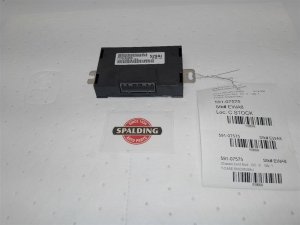
We Have This Part in Stock

The information in this article is provided for general reference and educational purposes only. Vehicle specifications, procedures, and part compatibility can vary by production date, trim level, and region. Always consult your vehicle's factory service manual and verify part numbers before purchasing or performing repairs. Safety-critical components such as airbags, seat belts, and braking systems should be installed by a qualified professional.
- Chrysler 300:
- 🧭 Diagnostic Flowchart
- 🎬 Helpful Videos
- 🛍️ Shop This Part
- What's Unique About the 2019-2021 Chrysler 300
- Symptoms You May Notice
- Most Likely Causes
- Rare But Worth Checking
- Diagnosis Steps
- Parts You'll Likely Need
- Related Codes That Often Appear With This One
- Technical Service Bulletins (TSBs) & Recalls
- Platform-Specific Known Issues
- Mechanic-Grade Diagnostic Values
- Scan Tool Commands That Help
- Wiring & Ground Locations
- Real Owner Repair Stories
- OEM Part Supersession History
- 🎟️ Get 5% Off