

U0140 on 2021-2024 Chrysler Pacifica Hybrid: Lost Communication With Body Control Module Fixes
On a 2021-2024 Pacifica Hybrid, code U0140 is most often caused by a software glitch, especially if your power sliding doors stop working. A dealer software update for the Power Sliding Door Module (PSDM), covered by TSB 08-170-24, is the most likely fix and may be performed at no cost for vehicles under warranty.
- For a 2021-2024 Pacifica Hybrid, U0140 is strongly linked to inoperable power sliding doors due to a known software bug affecting vehicles built on or before August 18, 2024.
- The first and most important step is to check if TSB 08-170-24 applies to your vehicle, as a simple software update for the Power Sliding Door Module (PSDM) will likely fix the issue.
- Do not replace the Body Control Module (BCM) unless all other possibilities, especially the PSDM software update, have been exhausted.
- Always check the 12V battery and its connections first, as low voltage is a common cause for communication codes on electronically complex vehicles.
What's Unique About the 2021-2024 Chrysler PACIFICA PLUG-IN HYBRID
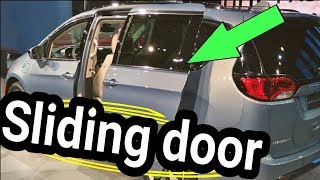
For the 2021-2024 Pacifica Hybrid, this code is very specifically linked to a known software issue affecting vehicles built on or before August 18, 2024. Chrysler issued Technical Service Bulletin (TSB) 08-170-24, which directly connects the U0140 code to inoperable power sliding doors— 🎬 See this quick fix for inoperable power sliding doors.a signature feature of the minivan. The bulletin clarifies that the problem is often not with the BCM itself, but with the software in the Power Sliding Door Module (PSDM), which requires an update. This makes a software reflash the primary fix to explore before suspecting more expensive hardware failures. The Pacifica Hybrid's complex dual-battery system can also be a source of electrical issues, where a failing auxiliary battery can cause low-voltage conditions that trigger communication codes like U0140.
Diagnostic Flowchart
Tap your situation to follow the diagnostic path that matches what you're seeing on this vehicle.
Symptoms You May Notice
- Check Engine Light (Malfunction Indicator Lamp) is on
- Left and/or right power sliding doors are inoperable
- Malfunctioning power windows or door locks
- Erratic or non-working interior or exterior lights
- Wipers behaving erratically
- Vehicle may not start if the BCM is part of the immobilizer circuit
- False 'key fob not detected' warnings (may be related to general BCM software issues per TSB 08-033-22)
- Replacing the Body Control Module (BCM) without first checking for software updates. The primary cause for this code on this specific vehicle is a software issue in the Power Sliding Door Module (PSDM).
- Replacing the 12V battery without checking the auxiliary battery, which can be the root cause of voltage-related issues on the hybrid model.
Most Likely Causes
- Power Sliding Door Module (PSDM) Software Glitch 🔴 High Probability A specific TSB (08-170-24) was issued for 2021-2024 Pacificas/Voyagers built on or before August 18, 2024, indicating a known software bug from the manufacturer that directly causes code U0140 and sliding door failure.
How to confirm: A Chrysler dealership or qualified shop using a wiTECH scan tool can verify if TSB 08-170-24 applies to your VIN and build date and if the PSDM software is outdated.
Typical fix: Update the Power Sliding Door Module (PSDM) with the latest software. This is a 0.2-hour labor operation under warranty according to the TSB.
Est. part cost: $0 - Low Battery Voltage or Poor Ground Connection 🟡 Medium Probability → Shop Vehicle Battery Modern vehicles with numerous electronic modules, like the Pacifica Hybrid, are highly sensitive to voltage fluctuations. The hybrid model has a dual-battery system, and a failing auxiliary battery can cause widespread, intermittent electrical faults that trigger communication codes.
How to confirm: Test the 12V battery voltage with a multimeter; it should be above 12.4V with the engine off. Test the charging system. Inspect the main ground connections at the battery, chassis, and BCM for tightness and corrosion.
Typical fix: Recharge or replace the 12V main or auxiliary battery. Clean, tighten, or repair ground connections.
Est. part cost: $0 - $350 - Wiring Harness or Connector Issue ⚪ Low Probability The complex wiring harnesses in modern minivans, especially around moving parts like sliding doors or under the dashboard near the BCM, can be susceptible to chafing, moisture intrusion, or loose pins over time.
How to confirm: Visually inspect the wiring and connectors at the BCM and PSDM for any signs of damage, corrosion, or water intrusion. A multimeter can be used to check for continuity and shorts on the CAN bus wires (typically twisted pairs). 🎬 Watch: Troubleshooting CAN bus communication issues on a Pacifica.
Typical fix: Repair the damaged section of the wiring harness or clean and re-secure the affected connector.
Est. part cost: $10 - $200 - Failed Body Control Module (BCM) ⚪ Low Probability → Shop Body Control Module While possible, outright BCM failure is less common than software or wiring issues. It's usually a last resort after all other possibilities are exhausted.
How to confirm: This is a diagnosis of exclusion. If the software is up-to-date, and all wiring, power, and ground connections are confirmed to be good, the BCM itself is the likely culprit. A professional scan tool may show it's completely unresponsive.
Typical fix: Replace the Body Control Module and program the new unit to the vehicle's VIN, which requires dealer-level tools.
Est. part cost: $300 - $600
Diagnosis Steps
- Check for Technical Service Bulletins (TSBs). For this vehicle, TSB 08-170-24 is the most critical first step. Check if your VIN and build date apply.
- Using a capable OBD-II scanner, confirm U0140 is present and check for any other communication (U-series) codes in other modules.
- Verify battery health. Test the 12V battery voltage and charging system output. On hybrid models, be aware of the dual-battery setup. Ensure voltage is stable and above 12.4V.
- If sliding door issues are present, have a dealer or qualified shop perform the PSDM software update as described in TSB 08-170-24. The TSB notes to install a battery charger to ensure voltage does not drop below 13.2 volts during the flash process.
- If the code persists, inspect the wiring and connectors for the BCM and PSDM. The BCM is typically located under the dashboard. Look for any visible damage, corrosion, or loose pins.
- With a multimeter, check for proper power and ground at the BCM connector.
- If all wiring, power, and software are confirmed good, the Body Control Module itself may be faulty and require replacement and programming.
Parts You'll Likely Need
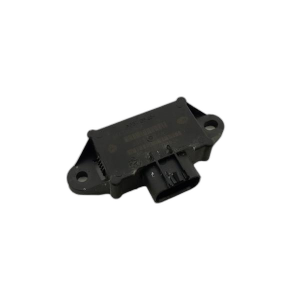
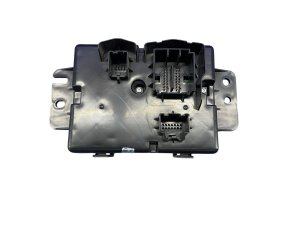
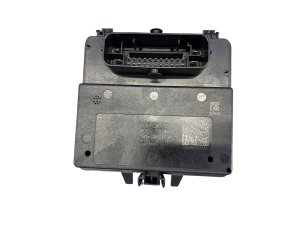
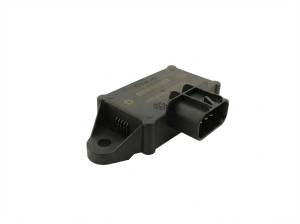
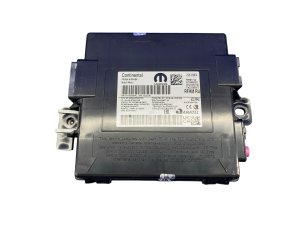
- Body Control Module (BCM)
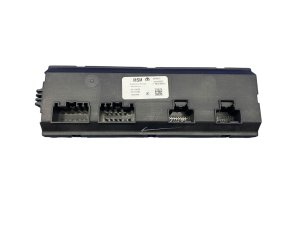
(OEM #68529662AD (example for 2022 model, VIN specific))— This part is only needed if it has been confirmed to have failed after ruling out the much more common software and wiring issues. It is not the first part to replace. Part numbers are highly specific to year and options; always verify with a dealer using your VIN.
Trusted brands: Mopar
OEM price range: $280-$450
Aftermarket price range: $250-$450
Technical Service Bulletins (TSBs) & Recalls
- 08-170-24: Flash: Power Sliding Door Module (PSDM) System Updates. Addresses MIL illumination for U0140 and inoperable power sliding doors.
- 08-033-22: Flash: Body Control Module (BCM) Updates. For 2022 models, addresses various electrical concerns like key fob detection and liftgate operation.
Platform-Specific Known Issues
- TSB 08-170-24 specifically addresses MIL illumination for DTC U0140-00 and inoperable power sliding doors on 2021-2024 models built on or before August 18, 2024. The fix is a software update for the Power Sliding Door Module (PSDM).
- TSB 08-033-22, while not directly for U0140, involves a BCM software update for 2022 models to fix other electrical issues like false 'key fob not detected' warnings, showing that BCM software updates are a common repair strategy for this platform.
Mechanic-Grade Diagnostic Values
- CAN Bus Network Resistance — expected: ~60 Ω. Failure: A reading of 120 Ω indicates a missing termination resistor or an open in the bus. A reading significantly lower than 60 Ω (e.g., near 0 Ω) indicates a short circuit between the CAN High and Low wires.
- CAN Bus Voltage (Key On, Engine Off) — expected: CAN High (Pin 6): ~2.5V to 2.7V. CAN Low (Pin 14): ~2.3V to 2.5V. The two voltages should add up to approximately 5V.. Failure: Voltages that are stuck high, low, or do not change indicate a bus fault. For example, both lines near 0V could be a short to ground.
- BCM Power Supply Voltage — expected: 12.2V - 12.8V (Ignition On). Failure: Low or no voltage indicates a problem with the fuse, relay, or wiring supplying power to the BCM.
- BCM Ground Connection Voltage Drop — expected: ≤ 100–200 mV. Failure: A higher voltage reading indicates excessive resistance in the ground circuit, which can cause intermittent module operation.
- System Voltage During Module Flashing — expected: Stable voltage between 13.2V and 13.5V. Failure: Voltage dropping below 13.2V or climbing above 13.5V can cause the software flash to fail and potentially damage the module.
Hidden / Shadow Codes Worth Checking
- U0140-00: This is the most common variant, meaning 'Lost Communication With Body Control Module (No Subtype Information)'. Its presence is a strong indicator for the software glitch described in TSB 08-170-24. A key diagnostic clue is that this code may be impossible to clear until the required software update on a related module (like the PSDM) is performed. (see via Chrysler wiTECH scan tool or equivalent advanced aftermarket scanner.)
Scan Tool Commands That Help
- wiTECH: Reprogram Module / Flash ECU — This is the primary function used to perform the software update on the Power Sliding Door Module (PSDM) as specified in TSB 08-170-24 to resolve the U0140 code when sliding door symptoms are present.
- wiTECH 2.0: Loss of Comm Test — This function continuously 'pings' all modules on the network and highlights any that fail to respond. It is extremely useful for diagnosing intermittent communication faults, as a technician can wiggle wires and connectors while watching the screen to see if a specific module drops offline.
- wiTECH: Vehicle Configuration — After replacing or reprogramming a BCM, this routine must be run to ensure the new or updated module is correctly configured for the vehicle's specific options and features.
Wiring & Ground Locations
- Body Control Module (BCM) — Located under the dashboard, to the left of the steering column.. This is the module that has lost communication. Checking its connectors for moisture, corrosion, or loose pins is a critical diagnostic step after verifying power and grounds.
- Star Connector (CAN Bus Junction Block) — Located under the glove box on the passenger side. It is a central hub where many CAN bus wires meet.. These connectors are a known failure point. Poor pin retention (loose terminals) within the connector can cause intermittent CAN bus faults and a flood of U-codes, including U0140. This issue may not be found with a simple resistance check but can be identified with a 'wiggle test'.
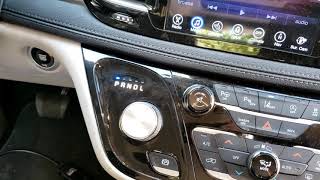
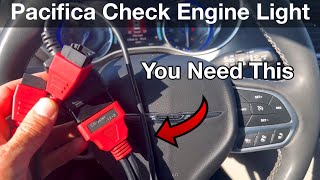
- Security Gateway Module (SGM) Bypass Connector — The SGM connectors are located behind the center stack, accessible after removing the shifter and climate control trim panel.. For 2017+ models, this module prevents aftermarket scan tools from performing bidirectional commands (like resets or programming). A 12+8 bypass cable must be connected here to gain full diagnostic access with non-dealer tools.
- Chassis Ground Point — A critical ground point is often located on the chassis behind the left front headlight assembly.. While documented on older models, corrosion at this main chassis ground point is known to cause widespread, bizarre electrical issues and communication codes. It's a key location to inspect for corrosion or looseness on any Pacifica experiencing network problems.
Real Owner Repair Stories
- YouTube video from a professional technician (Super Mario Diagnostics) (2017 Chrysler Pacifica) — Multiple communication (U-series) codes, including CAN C bus off codes. Instrument panel doing 'all kinds of weird stuff'. Vehicle would not shift out of park. Electronic power steering and other systems would go out.
❌ Tried (didn't work) Initial scan showed a flood of U-codes, pointing to a network-wide failure, not a single module.
✅ What actually fixed it The root cause was poor pin retention in the CAN C Star Connector located under the glove box. Wiggling the wires going into the connector would cause the bus to fail or recover. The final fix was to de-pin the connector, install new female terminal pins on the wires, and reassemble the connector to ensure a tight fit.
"I Checked Everything" — The Actual Cause
- While not a smoke test, a common scenario is that a standard CAN bus resistance test will show a correct reading of ~60 Ohms, leading a technician to believe the wiring is fine. However, the actual cause can be poor pin retention in the Star Connector under the passenger dash. The connection is electrically sound when stationary but fails intermittently due to vibration while driving. The fault is only found by physically wiggling the connector and wires while monitoring the bus status with a scan tool or oscilloscope.
Model Year Variations Within This Range
- 2017-2024: These models are equipped with a Security Gateway Module (SGM/SGW). This module blocks advanced diagnostic commands from non-OEM scan tools. To perform functions like BCM programming, resets, or bidirectional tests with an aftermarket tool, a special 12+8 bypass cable must be physically connected to the gateway's connectors, which are located behind the center dash panel.
Helpful Videos
We Have This Part in Stock

The information in this article is provided for general reference and educational purposes only. Vehicle specifications, procedures, and part compatibility can vary by production date, trim level, and region. Always consult your vehicle's factory service manual and verify part numbers before purchasing or performing repairs. Safety-critical components such as airbags, seat belts, and braking systems should be installed by a qualified professional.
- Chrysler PACIFICA PLUG-IN HYBRID:
- 🧭 Diagnostic Flowchart
- 🎬 Helpful Videos
- 🛍️ Shop This Part
- What's Unique About the 2021-2024 Chrysler PACIFICA PLUG-IN HYBRID
- Symptoms You May Notice
- Most Likely Causes
- Diagnosis Steps
- Parts You'll Likely Need
- Technical Service Bulletins (TSBs) & Recalls
- Platform-Specific Known Issues
- Mechanic-Grade Diagnostic Values
- Hidden / Shadow Codes Worth Checking
- Scan Tool Commands That Help
- Wiring & Ground Locations
- Real Owner Repair Stories
- "I Checked Everything" — The Actual Cause
- Model Year Variations Within This Range
- 🎟️ Get 5% Off