

U0140 on 2021-2024 Chrysler Voyager: Lost Communication with Body Control Module Fixes
This code means your Voyager's Body Control Module (BCM) has stopped communicating. This often causes issues like inoperable power sliding doors. The most likely causes are faulty wiring, a bad BCM, or a software glitch, as noted in Chrysler Technical Service Bulletins. Diagnosis involves checking connections and may require a software update or BCM replacement.
- U0140 on a 2021-2024 Voyager means the Body Control Module (BCM) has lost communication.
- Check for specific symptoms like inoperable power sliding doors, which is a known issue referenced in Chrysler TSB 08-170-24.
- The most common causes are a software glitch in the Power Sliding Door Module (PSDM), bad wiring/connections to the BCM, or a failed BCM.
- A dealer software update for the PSDM should be the first step if sliding door issues are present, as this may fix the code without replacing parts.
- Diagnosing the network and replacing the BCM requires special tools and is not a simple DIY job.
What's Unique About the 2021-2024 Chrysler VOYAGER
For the 2021-2024 Voyager and its platform-mate, the Chrysler Pacifica, Chrysler has issued specific Technical Service Bulletins (TSBs) related to this code. TSB 08-170-24 directly links U0140 to the failure of the power sliding doors, a key feature of these minivans. The fix prescribed is a software update for the Power Sliding Door Module (PSDM), not necessarily the BCM itself. This manufacturer-specific guidance underscores that the problem is a known issue where a software fix should be explored before replacing expensive hardware like the BCM.
Diagnostic Flowchart
Tap your situation to follow the diagnostic path that matches what you're seeing on this vehicle.
Symptoms You May Notice
- Malfunction Indicator Lamp (MIL) or Check Engine Light is on
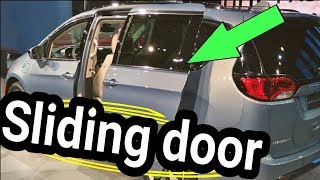
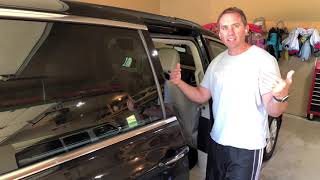
- Left or right power sliding door is inoperable [TSB #08-170-24].
- Power windows and door locks not working or operating erratically
- Interior or exterior lights behaving erratically, not working, or staying on
- Wipers not functioning correctly or activating on their own
- Key fob / remote entry not working
- Vehicle may not start in some cases (security light may flash)
- Multiple warning lights on the dashboard (ABS, Traction Control, Airbag) may appear simultaneously 🎬 Watch: Common symptoms of a failing Body Control Module
- Replacing the Body Control Module (BCM) before checking for applicable software updates, especially TSB 08-170-24, which points to a PSDM reflash.
- Replacing other modules (like the ECM or TCM) before confirming the BCM is the source of the communication loss.
Most Likely Causes
- BCM or PSDM Software Issue 🔴 High Probability TSB #08-170-24 was issued specifically for 2021-2024 Pacifica and Voyager models to address U0140 and inoperable power sliding doors. 🎬 See this quick fix for Pacifica and Voyager sliding door issues The prescribed fix is a software update to the Power Sliding Door Module (PSDM), indicating a known software glitch.
How to confirm: A Chrysler dealership or a qualified shop with access to OEM software (wiTECH) can check if TSB #08-170-24 applies to your vehicle's VIN and if the software update has been performed.
Typical fix: Reflash or update the Power Sliding Door Module (PSDM) with the latest available software. This is a 0.2-hour labor operation according to the TSB.
Est. part cost: $0-$200 - Poor Connection or Wiring Issue at BCM 🟡 Medium Probability TSB #9100221 specifically advises technicians to follow diagnostic procedures to ensure all module connections are secure, suggesting this is a primary checkpoint. The BCM is often located under the dashboard, where connectors can be kicked or stressed.
How to confirm: Visually inspect the BCM connectors for corrosion, moisture, or loose/pushed-back pins. Check for power and ground at the BCM connector with a multimeter. Wiggling the harness while checking for continuity can help identify intermittent faults.
Typical fix: Clean the connectors with electrical contact cleaner and apply dielectric grease. Repair any damaged sections of the wiring harness or replace connector pigtails.
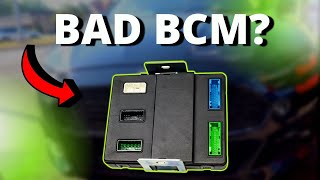
Est. part cost: $10-$50 - Faulty Body Control Module (BCM) 🟡 Medium Probability → Shop Body Control Module While software and wiring are common, internal BCM failure from vibration, moisture, or age can occur. The module itself is the central hub, and if it fails internally, communication stops.
How to confirm: After confirming wiring, power, and grounds are good, and all software updates are applied, the BCM is the likely culprit. This requires a diagnostic scan tool capable of communicating with the BCM. If the scan tool cannot communicate with the BCM at all, it points to an internal failure.
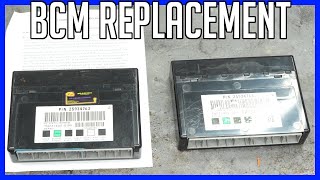
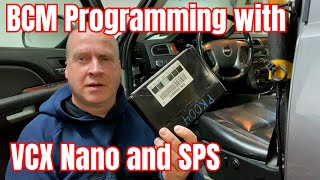
Typical fix: Replace the Body Control Module. The new module will require programming to the vehicle's specific VIN and configuration by a dealer or specialized shop.
Est. part cost: $130-$350 - Low Battery Voltage or Poor Ground ⚪ Low Probability → Shop Vehicle Battery
How to confirm: Test the battery voltage; it should be above 12.2V with the ignition off. Modern modules are sensitive to low voltage. Check the main battery ground and the BCM ground connection for corrosion or looseness.
Typical fix: Charge or replace the battery. Clean, tighten, or replace ground straps.
Est. part cost: $0-$250
Rare But Worth Checking
- Interference from Aftermarket Accessories: Poorly installed remote starters, alarms, or audio equipment can disrupt the CAN bus network, causing communication errors.
Diagnosis Steps
- Check for any Technical Service Bulletins (TSBs) related to your vehicle's VIN, paying close attention to TSB #08-170-24 regarding the PSDM software update.
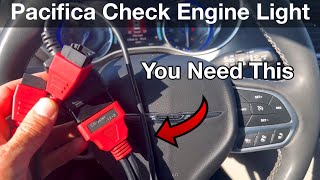
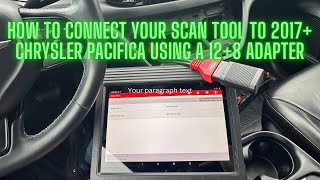
- Perform a full vehicle scan with a diagnostic tool capable of reading Chrysler-specific codes (e.g., wiTECH) to see which other modules have stored codes and to view the network topology. Note: For aftermarket tools, a 12+8 SGW bypass adapter is required.
- Check the battery voltage and inspect the main ground connections. Ensure voltage is above 12.2V (engine off) and the charging system is providing 13.7-14.7V (engine on).
- Locate the Body Control Module (BCM), typically under the driver's side dashboard. Visually inspect its connectors and wiring harness for any signs of damage, corrosion, or moisture.
- Following TSB #9100221, ensure all module connections are secure by physically checking them.
- Use a multimeter to verify that the BCM is receiving proper power and has a solid ground connection at its connector pins (resistance to chassis ground should be < 0.1 Ω).
- Test the CAN Bus integrity. With the battery disconnected, measure the resistance between CAN-C High (pin 6) and CAN-C Low (pin 14) at the OBD-II port. A healthy network should read approximately 60 Ω.
- If wiring, power, and grounds are good, and TSBs do not apply or have been performed, attempt to communicate directly with the BCM using a scan tool. If it's unresponsive, the BCM has likely failed.
- If the BCM communicates but the code persists, and you have the power sliding door symptom, insist on the PSDM software update as per TSB #08-170-24 before replacing any parts.
Parts You'll Likely Need
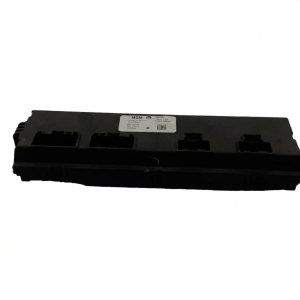
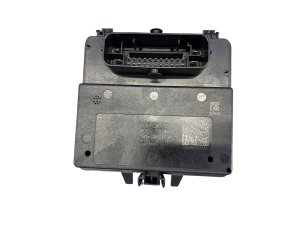
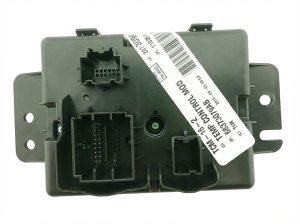
- Body Control Module (BCM)
(OEM #68491084AG)— This module is the central hub for body electronics. If it fails internally after software and wiring issues are ruled out, it will stop communicating, triggering U0140. This part number supersedes previous versions 68491084AE and 68491084AF.
Trusted brands: Mopar
OEM price range: $250-$350
Aftermarket price range: $130-$250
Technical Service Bulletins (TSBs) & Recalls
- 9100221: Body Control Module concern related to DTC U0140 - Lost Communication with Body Control Module.
- 08-170-24: Malfunction Indicator Lamp (MIL) illumination for U0140-00 - Lost Communication With Body Control Module, with symptoms including inoperable power sliding doors. The official fix is a software reflash of the Power Sliding Door Module (PSDM).
Platform-Specific Known Issues
- TSB #08-170-24 notes that customers may experience an illuminated Malfunction Indicator Lamp (MIL) and that the power sliding doors may become inoperable when code U0140-00 is set. The fix is a software update for the Power Sliding Door Module (PSDM).
- TSB #9100221 directs technicians to follow published diagnostic information for DTC U0140 to ensure all module connections are secure, indicating that loose connections are a known point of failure.
- As a platform-mate, the Chrysler Pacifica (2021-2024) experiences the exact same issue, and TSB 08-170-24 explicitly covers both the Voyager and Pacifica.
Mechanic-Grade Diagnostic Values
- CAN Bus Network Resistance — expected: Approximately 60 Ω. Failure: A reading of ~120 Ω indicates a missing terminating resistor or an open in the circuit. A reading significantly lower than 60 Ω (e.g., ~40 Ω) suggests an extra terminating resistor or a shorted module.
- CAN High Voltage (Recessive State) — expected: Approximately 2.5 V. Failure: Significant deviation from 2.5V at rest indicates a bus problem.
- CAN Low Voltage (Recessive State) — expected: Approximately 2.5 V. Failure: Significant deviation from 2.5V at rest indicates a bus problem.
- BCM Ground Connection Resistance — expected: < 0.1 Ω. Failure: Higher resistance indicates a poor ground connection, which can cause module malfunction.
- System Voltage (Engine Off) — expected: > 12.2 V. Failure: Low voltage can cause various modules to drop off the network and set communication codes.
Hidden / Shadow Codes Worth Checking
- U0140-00: Lost Communication With Body Control Module (No Subtype Information). While this is the primary code, multiple TSBs note that it may be impossible to clear with a scan tool until a required software update is performed on a related module (like the PCM or PSDM), which is a diagnostic clue in itself. (see via Chrysler wiTECH scan tool or equivalent advanced aftermarket scanner.)
Scan Tool Commands That Help
- wiTECH or advanced aftermarket tool with SGW bypass: View Network Topology / View Active DTCs in All Modules — This is a primary step to see which other modules are also reporting a loss of communication with the BCM. If every module reports the loss, the BCM or its direct wiring is suspect. If only a few modules do, it could point to a wiring issue affecting a segment of the network.
- wiTECH or advanced aftermarket tool with SGW bypass: PSDM/BCM Reprogram/Flash — Used to perform software updates as prescribed by TSBs, such as TSB #08-170-24 for the Power Sliding Door Module (PSDM). This should be done before replacing hardware if a relevant TSB exists.
- wiTECH or advanced aftermarket tool with SGW bypass: Bidirectional Controls (e.g., 'Actuate Door Locks', 'Turn on Headlights') — To test if the BCM is capable of receiving commands and controlling its outputs. If the scan tool can command a function and it works, it proves the BCM's processor and output circuits are at least partially functional. If the command fails, it points more strongly to a BCM or output wiring issue.
Wiring & Ground Locations
- Security Gateway Module (SGW) — Behind the radio/climate control center stack. The trim panel must be removed to access it.. This module blocks advanced diagnostics from the OBD-II port for aftermarket tools. A 12+8 bypass adapter must be connected directly to the SGW's connectors to perform bidirectional tests or programming, which are essential for diagnosing U0140.
- CAN Bus Star Connector (Splice Pack) — On the passenger side, behind the plastic kick panel/trim near the door.. This connector is a central hub where many modules on the CAN-C bus connect. It provides a single point to test the network or to disconnect individual modules to isolate one that may be crashing the entire network.
- Body Control Module (BCM) — Under the driver's side of the dashboard, often to the left of the steering column.. This is the target module for the U0140 code. Physical inspection of its connectors for security, corrosion, or damage is a primary diagnostic step per TSB #9100221.
- OBD-II Data Link Connector (DLC) — Under the driver's side dashboard.. Pins 6 (CAN-H) and 14 (CAN-L) are the primary, non-invasive points for measuring overall network resistance and observing bus voltage with a multimeter or oscilloscope.
OEM Part Supersession History
68491084AE, 68491084AF→68491084AG— Standard part revision by the manufacturer to address potential issues or component changes.
Heads up: The 'AG' revision is the current recommended replacement for the earlier versions. No specific incompatibilities are noted, but as with all module replacements, it must be programmed to the vehicle's VIN.
Model Year Variations Within This Range
- 2021-2024 (and all 2018+ FCA vehicles): The presence of a Security Gateway Module (SGW) behind the dashboard. Unlike older vehicles, performing advanced diagnostics (like bidirectional controls, resets, or programming) requires physically bypassing this module with a special 12+8 adapter cable. Simply plugging into the standard OBD-II port will only allow for basic code reading. This is a critical difference for any non-dealer diagnosis.
Helpful Videos


We Have This Part in Stock

The information in this article is provided for general reference and educational purposes only. Vehicle specifications, procedures, and part compatibility can vary by production date, trim level, and region. Always consult your vehicle's factory service manual and verify part numbers before purchasing or performing repairs. Safety-critical components such as airbags, seat belts, and braking systems should be installed by a qualified professional.
- Chrysler VOYAGER:
- 🧭 Diagnostic Flowchart
- 🎬 Helpful Videos
- 🛍️ Shop This Part
- What's Unique About the 2021-2024 Chrysler VOYAGER
- Symptoms You May Notice
- Most Likely Causes
- Rare But Worth Checking
- Diagnosis Steps
- Parts You'll Likely Need
- Technical Service Bulletins (TSBs) & Recalls
- Platform-Specific Known Issues
- Mechanic-Grade Diagnostic Values
- Hidden / Shadow Codes Worth Checking
- Scan Tool Commands That Help
- Wiring & Ground Locations
- OEM Part Supersession History
- Model Year Variations Within This Range
- 🎟️ Get 5% Off