

U0140 on 2009-2011 Dodge Nitro: Lost Communication With Body Control Module Causes and Fixes
On a 2009-2011 Dodge Nitro, U0140 means the Body Control Module (BCM) has stopped communicating with the engine computer. A manufacturer TSB points to a software glitch fixed by a dealer PCM update for 2010-2011 models. Before replacing parts, check for software updates, inspect wiring, and rule out the notoriously problematic Totally Integrated Power Module (TIPM).
- For 2010-2011 models, check if your vehicle needs the software update from TSB #18-092-16 before any repairs, as this is a very common and low-cost fix.
- U0140 indicates a communication failure with the Body Control Module, which controls many non-engine electronics like lights, locks, and windows.
- Do not immediately assume the BCM is bad. The Totally Integrated Power Module (TIPM) is a more frequent failure point on this platform and can cause identical symptoms.
- Diagnosis requires a professional scan tool, and replacement of either the BCM or TIPM requires programming to your vehicle's VIN.
What's Unique About the 2009-2011 Dodge NITRO
🎬 Watch: A breakdown of common Dodge Nitro problems and complaints.For many Dodge/Chrysler vehicles of this era, including the Nitro and its Jeep Liberty (KK) platform-mate, the U0140 code is specifically addressed by Technical Service Bulletin (TSB) #18-092-16. This TSB indicates the problem on 2010-2011 models is often a software issue within the Powertrain Control Module (PCM), not a hardware failure. This is a critical distinction, as the fix may be a simple software reflash at a dealership. Furthermore, problems with the Totally Integrated Power Module (TIPM), which is the main fuse box in the engine bay, are extremely common on this platform and can cause a cascade of electrical issues and communication errors that mimic a BCM failure. Distinguishing between a faulty BCM (in-cabin) and a faulty TIPM (engine bay) is crucial for an accurate diagnosis.
Diagnostic Flowchart
Tap your situation to follow the diagnostic path that matches what you're seeing on this vehicle.
Symptoms You May Notice
- Check Engine Light is on
- Erratic operation of interior or exterior lights (flickering, staying on, or not working at all).
- Power windows and door locks not working or working intermittently.
- Wipers activating on their own, not responding to the switch, or stopping mid-swipe.
- Horn may sound randomly or not work at all.
- Instrument cluster may display multiple warning lights 🎬 See what happens when a Nitro loses communication with the bus. (ABS, Airbag, Traction Control).
- Parasitic battery drain, leading to a dead battery overnight because modules aren't commanded to 'sleep'.
- No-start or long crank time conditions, sometimes related to the anti-theft system.
- Remote keyless entry may fail to work.
- Engine may stall unexpectedly while driving, a symptom often linked to TIPM failure.
- Replacing the Body Control Module (BCM) without first checking for required software updates per TSB #18-092-16.
- Replacing the BCM when the actual fault lies within the more commonly failing Totally Integrated Power Module (TIPM).
Most Likely Causes
- PCM Software Glitch 🔴 High Probability A specific Technical Service Bulletin (TSB #18-092-16) was issued by Chrysler to address this exact code with a PCM software update, indicating a known problem with the original software logic for 2010-2011 models. The NHTSA bulletin explicitly lists U0140 as a covered DTC.
How to confirm: Contact a Dodge dealership or a qualified shop with access to OEM service information. Provide your VIN and ask them to check if TSB #18-092-16 is open and applicable to your vehicle.
Typical fix: Reprogram the Powertrain Control Module (PCM) with the latest software version. This must be done by a dealer or a shop with a wiTECH scan tool or equivalent.
Est. part cost: $0-$0 - Wiring Harness or Connection Issues 🟡 Medium Probability Wiring harnesses can become damaged over time due to vibration, heat, or moisture. Common failure points include wiring in the driver's door jamb, under the dash near the BCM, and at the large connectors on the TIPM in the engine bay 🎬 Watch: How to remove and install a TIPM with a soft reset., which can suffer from corrosion.
How to confirm: Visually inspect the wiring harness between the PCM, BCM, and TIPM for any signs of damage, corrosion, or loose connections. Check for continuity and resistance on the CAN bus wires (typically twisted pairs of wires) using a multimeter; resistance between CAN High and CAN Low at the OBD-II port should be approximately 60 ohms with the battery disconnected.
Typical fix: Repair or replace the damaged section of the wiring harness. Clean and secure any corroded or loose connectors with dielectric grease. One owner on a Ram forum noted that simply clearing the code worked if it was a one-time glitch, possibly from a battery disconnect, but if it returns, a deeper wiring check is needed.
Est. part cost: $10-$150 - Failing Body Control Module (BCM) ⚪ Low Probability → Shop Body Control Module While less common than software or TIPM issues, the BCM can fail internally due to factors like moisture intrusion from a windshield leak, voltage spikes, or age-related component failure.
How to confirm: After confirming the software is up-to-date and all wiring, power, and grounds to the BCM are good, the BCM itself is the likely culprit. This is best confirmed by a professional using a high-level scan tool to see if the BCM is offline and not communicating.
Typical fix: Replace the Body Control Module. The new module must be programmed to the vehicle's VIN and specific options by a dealer or a properly equipped independent shop.
Est. part cost: $200-$450 - Weak Battery or Poor Ground Connections ⚪ Low Probability → Shop Vehicle Battery All modern electronic modules are sensitive to system voltage. A weak battery or corroded ground straps can cause intermittent voltage drops below the ~9V threshold required for modules to operate, disrupting communication and setting U-codes.
How to confirm: Test the battery's state of charge and health with a load tester. Inspect and clean the main battery terminals and all major ground connections from the battery to the chassis and engine block. Ensure charging system voltage is stable (13.5-14.5V when running).
Typical fix: Replace the battery if it fails a load test. Clean or replace corroded ground straps.
Est. part cost: $5-$250
Rare But Worth Checking
- Failing Totally Integrated Power Module (TIPM): → Shop Fuse Box The TIPM (engine bay fuse box) is a known major failure point on many Chrysler/Dodge/Jeep products of this era. It acts as a gateway for communication and contains internal, non-serviceable relays. A failing TIPM can mimic a BCM or wiring issue, causing U0140 along with a host of other bizarre electrical problems like random wiper/horn activation or a no-start condition. A YouTube video by 'aricwithautoreplay' documents replacing a TIPM on a Nitro to solve these exact types of 'demon possessed' electrical issues.
- Aftermarket Electronics: Improperly installed aftermarket accessories like remote starters, alarms, or stereos can interfere with the vehicle's CAN bus network by being incorrectly spliced into data wires, causing communication codes.
- Failing Wireless Control Module (WCM): On some early Nitros, issues with the Wireless Control Module (the module for the ignition key and immobilizer) could cause no-start conditions and communication faults due to static discharge or internal failure. While less directly linked to U0140, a fault in this related module can disrupt network communication.
Diagnosis Steps
- Check for other DTCs. A cascade of U-codes points to a network-wide issue (like TIPM, power, or ground), not just a BCM fault.
- Check with a dealer if TSB #18-092-16 applies to your VIN (for 2010-2011 models) and has been performed. If not, this is the most likely fix.
- Test the battery and charging system. Ensure voltage is stable and above 12.4V with the engine off.
- Inspect all main power and ground connections for corrosion and tightness, especially the main ground strap from the battery to the chassis.
- Visually inspect the wiring harnesses connected to the BCM (under driver's dash) and TIPM (engine bay) for any signs of damage, chafing, or corrosion at the connectors.
- Check the fuses for the BCM and other related modules in the TIPM.
- With the battery disconnected, use a multimeter to check for CAN bus termination resistance at pins 6 and 14 of the OBD-II port. A reading of ~60 ohms indicates the main network wiring is likely intact.
- If all the above are good, a professional should use a scan tool to determine if the BCM is truly offline. If it is, and all wiring/power is confirmed good, the BCM is the likely point of failure.
Parts You'll Likely Need
- Body Control Module (BCM)
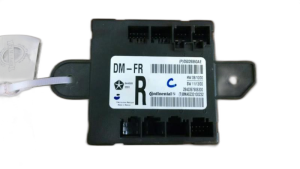
(OEM #68209969AA (supersedes 5026074AI, 5026074AJ, 5026074AK, 5026074AL, 5026074AM, 5026074AN, 5026074AO, 5026074AP, 5026074AQ, 5026074AR, 68025094AA, 68025094AC))— If software, wiring, and the TIPM are ruled out, the BCM itself may have failed internally. It is the central hub for body electronics. Note that this part requires programming.
Trusted brands: Mopar
OEM price range: $165-$250
Aftermarket price range: $150-$350
Related Codes That Often Appear With This One
- P0401 — This EGR system code is also mentioned in TSB #18-092-16 as being resolved by the same PCM software update that fixes U0140.
- U0100 — Lost Communication with ECM/PCM. This and other U-codes often appear in a cascade when a major network problem occurs, pointing towards a wiring, ground, or module issue rather than a single component failure.
Technical Service Bulletins (TSBs) & Recalls
- 18-092-16: Flash: Powertrain Diagnostic And System Improvements, which lists U0140 as a symptom fixed by a PCM software update for 2010-2011 models.
Platform-Specific Known Issues
- Technical Service Bulletin #18-092-16 specifically calls out code U0140 on 2010-2011 models and resolves it with a PCM software update.
- The Totally Integrated Power Module (TIPM) on this platform is a very common source of complex electrical issues and can be a root cause for communication codes like U0140. Symptoms often include random activation of wipers, horn, and lights.
Mechanic-Grade Diagnostic Values
- CAN Bus Network Resistance — expected: ~60 Ω (measured between Pin 6 and Pin 14 of the OBD-II port with the battery disconnected).. Failure: A reading of ~120 Ω suggests a fault in one of the two terminating resistors or a break in the wiring. A reading near 0 Ω indicates a short circuit between the CAN High and CAN Low wires.
- BCM Power Supply Voltage — expected: 12.2 - 12.8 V at the BCM's main power input pin(s) with the ignition on.. Failure: Voltage significantly below 12.2V points to a problem with the fuse, wiring, or power source (TIPM) feeding the BCM.
- BCM Ground Circuit Resistance — expected: < 0.1 Ω between the BCM's main ground pin(s) and a clean chassis ground.. Failure: Resistance higher than 0.1 Ω indicates a corroded, loose, or broken ground connection, which is a common cause of intermittent module communication failures.
- CAN Bus Voltage (Live Data) — expected: CAN High (D65) should be ~2.5-3.5V and CAN Low (D64) should be ~1.5-2.5V, with both mirroring each other.. Failure: A wire shorted to ground will read near 0V; a wire shorted to power will read high (5V or 12V). A flatlined or non-responsive signal on either line indicates a break or module failure.
Scan Tool Commands That Help
- wiTECH: Network Topology / Bus Diagnostics — This is the primary diagnostic step for any U-code. The tool displays a visual map of all modules on the network. Modules that are not communicating will be color-coded (typically red), instantly showing the technician that the BCM is offline and confirming the U0140 fault from the network's perspective.
- wiTECH: BCM/PCM Reprogram/Flash — This is used to perform TSB #18-092-16 for 2010-2011 models. It is also required after replacing a BCM or PCM to load the correct vehicle-specific software and configuration.
- wiTECH: Vehicle Configuration — After reprogramming or replacing a BCM, this routine ensures all vehicle options (like remote start, security system, etc.) are correctly enabled in the new or updated module.
Wiring & Ground Locations
- CAN C Bus Wires — Twisted pair of wires running between all major control modules, including the PCM, BCM, and TIPM.. These are the specific data lines for communication. On a Dodge Nitro, the CAN C High wire is typically White/Light Green (Circuit D65) and the CAN C Low wire is White/Dark Green (Circuit D64). Damage to these wires will directly cause a U0140 code.
- G300 — A primary body ground point located at the base of the driver's side D-pillar (the rearmost pillar).. This ground serves numerous rear-body electronic components. While not the direct ground for the BCM, a poor connection here can introduce electrical noise onto the network, potentially disrupting communication.
- G201 — A key interior ground point located in the driver's side kick panel area.. This is a major ground for many components under the dashboard. A loose or corroded G201 is a prime suspect for issues affecting the BCM and other nearby modules.
- G100 / G101 — Main engine grounds. G100 is typically on the lower left side of the engine block, and G101 is on the right front of the engine.. A poor engine-to-chassis ground can create a voltage potential difference between modules, leading to communication errors across the entire vehicle network.
- TIPM Connectors — The large multi-pin connectors on the underside of the Totally Integrated Power Module (fuse box) in the engine bay.. The TIPM acts as a central gateway. Corrosion on the pins for the CAN bus or the power feeds to the BCM can directly cause a U0140 code. The CAN C wires can be found at pins 15 (CAN C -) and 16 (CAN C +) on the C1 connector.
OEM Part Supersession History
5026074AI, 5026074AJ, 5026074AK, 5026074AL, 5026074AM, 5026074AN, 5026074AO, 5026074AP, 5026074AQ, 5026074AR, 68025094AA, 68025094AC→68209969AA— Standard part evolution for bug fixes and component updates.
Heads up: The final part number (68209969AA) is the correct service replacement for the listed predecessors. Ensure the replacement module is programmed for the vehicle's specific options (VIN, remote start, security system, etc.).
Model Year Variations Within This Range
- 2010-2011: These model years are specifically covered by TSB #18-092-16, which states that code U0140 can be caused by a software glitch. The primary fix is a PCM software update, not necessarily a hardware replacement.
- 2009: The 2009 model is not listed under TSB #18-092-16 for the U0140 code. Therefore, for a 2009 Nitro, the cause is more likely to be a hardware-related issue such as wiring, a poor ground, a failing TIPM, or the BCM itself, rather than a software problem that can be fixed with a reflash.
Helpful Videos

We Have This Part in Stock

The information in this article is provided for general reference and educational purposes only. Vehicle specifications, procedures, and part compatibility can vary by production date, trim level, and region. Always consult your vehicle's factory service manual and verify part numbers before purchasing or performing repairs. Safety-critical components such as airbags, seat belts, and braking systems should be installed by a qualified professional.
- Dodge NITRO:
- 🧭 Diagnostic Flowchart
- 🎬 Helpful Videos
- 🛍️ Shop This Part
- What's Unique About the 2009-2011 Dodge NITRO
- Symptoms You May Notice
- Most Likely Causes
- Rare But Worth Checking
- Diagnosis Steps
- Parts You'll Likely Need
- Related Codes That Often Appear With This One
- Technical Service Bulletins (TSBs) & Recalls
- Platform-Specific Known Issues
- Mechanic-Grade Diagnostic Values
- Scan Tool Commands That Help
- Wiring & Ground Locations
- OEM Part Supersession History
- Model Year Variations Within This Range
- 🎟️ Get 5% Off