

U0140 on 2009-2012 Dodge RAM 3500: Lost Communication with BCM Causes and Fixes
For 2010-2012 models, this code is most often a software glitch in the Powertrain Control Module (PCM) that requires a dealer software update (reflash) to fix. The code often cannot be cleared with a standard scanner until this is done. Owners report paying $150-$250 for this service. For 2009 models, the cause is more likely a wiring issue (check firewall and under-dash connectors), a faulty Body Control Module (BCM), or a failing Totally Integrated Power Module (TIPM).
- For a 2010-2012 Ram 3500, do not replace any parts for a U0140 code until you have checked with a dealer about a PCM software update.
- The code being 'permanent' or uncleared by a standard scanner is a key symptom of the software issue, not necessarily a sign of a major hardware failure.
- For a 2009 model, diagnosis should follow a more traditional path: check battery/grounds, inspect wiring, and then suspect the BCM or TIPM.
- Symptoms are often electrical and relate to body functions (lights, locks, wipers), but the truck is usually safe to drive to a repair shop.
What's Unique About the 2009-2012 Dodge RAM 3500
For the 2010-2012 Fourth Generation models, this code is uniquely tied to a known software bug. Multiple Technical Service Bulletins (TSBs) confirm that the PCM can erroneously set a U0140 code that cannot be cleared with a standard scan tool. The official fix is not a part replacement, but a PCM software update performed by a dealer. The 2009 model, being the last of the Third Generation (DH), uses a slightly different electrical architecture, is less prone to this specific software issue, and more likely suffers from traditional wiring or module failures, particularly with the TIPM.
Diagnostic Flowchart
Tap your situation to follow the diagnostic path that matches what you're seeing on this vehicle.
Generation note: This range covers two generations. The 2009 model is a Third Generation (DH) truck. The 2010-2012 models are Fourth Generation (DJ) trucks. The most common cause (a PCM software bug) primarily affects the 2010-2012 models, as documented in TSBs. Diagnosis for a 2009 model should focus more on wiring and hardware like the TIPM.
Symptoms You May Notice
- Check Engine Light (MIL) is on
- Inability to clear the U0140 code with a standard OBD-II scanner, often showing as 'permanent' or 'stored'.
- Erratic or non-functional power windows, door locks, or interior/exterior lights.
- Windshield wipers not working correctly or activating on their own.
- Parking lights may stay on after the truck is turned off.
- Other warning lights (ABS, traction control, airbag) may illuminate.
- Loss of power steering (on models with electronic power steering assist).
- In some instances, no symptoms are noticeable other than the code itself.
- Replacing the Body Control Module (BCM) on a 2010-2012 model before checking for the required PCM software update. The TSBs clearly indicate the problem is often an erroneous code stored in the PCM, not a failed BCM.
- Replacing parts without checking for simple wiring issues. One owner on a forum found chewed wires in the passenger footwell were the cause after extensive troubleshooting.
Most Likely Causes
- PCM Software Requires Update 🔴 High Probability Multiple manufacturer TSBs (#18-097-15, #18-092-15, #18-093-15) were issued for 2010-2012 models to fix an erroneous U0140 code that cannot be cleared without a software update. This is widely confirmed by owners in forums as the primary fix.
How to confirm: Attempt to clear the code with a scan tool. If the code is listed as 'permanent' or immediately returns, and the vehicle is a 2010-2012 model, a software issue is the most likely cause. A dealer can confirm if a TSB applies to your VIN.
Typical fix: Reprogramming (flashing) the Powertrain Control Module (PCM) with the latest software at a dealership or a qualified shop with a J2534 pass-thru device.
Est. part cost: $0 - CAN Bus Wiring or Connector Fault 🟡 Medium Probability Wiring harnesses can chafe, corrode, or break over time. Common problem areas on these trucks include the harness near the parking brake mechanism, where it passes through the firewall, and large connectors in the passenger footwell which can be damaged by water ingress or rodents.
How to confirm: Visually inspect harnesses between the PCM, BCM, and TIPM. Use a digital multimeter to check for continuity and for shorts to power or ground on the CAN C bus wires (typically a twisted pair of White/Light Blue and White/Orange wires). With the battery disconnected, measure resistance between pins 6 and 14 of the OBD-II port; a healthy reading is ~60 ohms.
Typical fix: Repair the damaged section of the wiring harness or clean/replace the corroded connector.
Est. part cost: $10-$100 - Low Battery Voltage or Poor Grounds 🟡 Medium Probability → Shop Vehicle Battery Ram trucks of this era are notoriously sensitive to low voltage. A weak battery, failing alternator, or corroded ground straps can cause modules to drop off the communication network intermittently, triggering U-codes.
How to confirm: Perform a battery load test and check the charging system output (should be 13.2-14.5V when running). Inspect and clean the main battery terminals, chassis ground connections under the hood, and the ground strap from the engine to the frame.
Typical fix: Replace the weak battery, repair the charging system, or clean/tighten ground connections.
Est. part cost: $5-$300 - Failing Body Control Module (BCM) ⚪ Low Probability → Shop Body Control Module While less common than software or wiring faults, the BCM itself can fail due to age, vibration, or moisture intrusion from a leaking windshield or cowl.
How to confirm: This is diagnosed by exclusion. If the software is up to date, and all wiring, power, and grounds are confirmed to be good, the BCM is the likely culprit. An advanced scan tool can attempt to communicate directly with the BCM; if it's unresponsive but has good power and ground, it has likely failed.
Typical fix: Replace the Body Control Module. This requires programming by a dealer or specialist to match the vehicle's VIN and options.
Est. part cost: $250-$500
Rare But Worth Checking
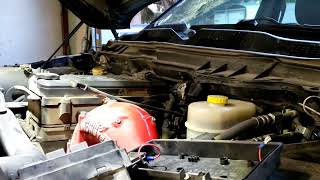
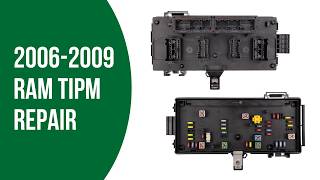
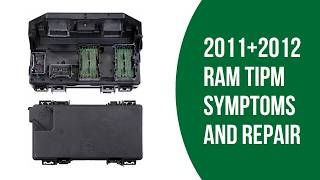
- Faulty Totally Integrated Power Module (TIPM): → Shop Fuse Box The TIPM (the main under-hood fuse box) acts as a central communication gateway. Internal failures within the TIPM are a very well-known issue on 2009-2012 Ram products and can disrupt the CAN bus network, causing codes like U0140. Symptoms often include multiple random electrical issues (wipers, fuel pump, lights, locks) occurring along with the code. 🎬 See common TIPM symptoms and replacement steps
- Failing Powertrain Control Module (PCM): → Shop Engine Control Module (ECM) Although the PCM is what logs the code, it can itself be the source of the communication failure due to an internal fault. This is rare compared to the other potential causes and should only be considered after all other possibilities are exhausted.
Diagnosis Steps
- Attempt to clear the U0140 code with an OBD-II scanner. If it is listed as 'permanent' or returns immediately, suspect the software issue on 2010-2012 models.
- Contact a Ram dealership with your VIN to check for open recalls or applicable TSBs related to PCM software updates (e.g., #18-097-15, #18-092-15, #18-093-15).
- If a TSB applies, have the dealer perform the PCM reflash. This is the most probable fix. Ensure a battery maintainer is used during the flash to keep voltage stable (13.2-13.5V).
- If no TSBs apply or the reflash does not resolve the issue, perform a full battery and charging system test. Ensure battery voltage is above 12.4V with the engine off and between 13.2-14.5V with the engine running. Inspect all major ground connections.
- Visually inspect the wiring harness between the PCM and the BCM/TIPM. Look for any signs of chafing, corrosion, or damage, particularly where the harness passes through the firewall and under the driver/passenger side dash.
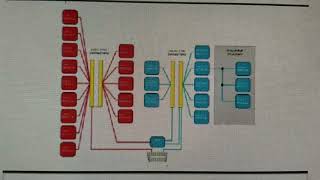
- Using a wiring diagram and a multimeter, test the CAN C bus wires (typically a twisted pair of White/Light Blue and White/Orange) for proper resistance. Disconnect the battery. At the OBD-II port, measure resistance between Pin 6 (CAN-H) and Pin 14 (CAN-L). It should be ~60 ohms. A reading of 120 ohms indicates an open circuit or a failed terminating resistor in a module. A reading near 0 ohms indicates a short between the two CAN wires. 🎬 Watch: How to troubleshoot Dodge RAM CAN bus network issues
- If wiring and power are good, the fault likely lies with a control module. An advanced scan tool can show which modules are active on the network. If the BCM is the only module not communicating, it is the primary suspect. If multiple modules are offline, suspect a wiring or TIPM issue.
Parts You'll Likely Need
- Powertrain Control Module (PCM) Reflash — This is not a physical part, but a software update. It is the most common fix for the 2010-2012 models as specified by multiple TSBs.
Trusted brands: Mopar (Dealer Service)
OEM price range: $150-$250
Aftermarket price range: N/A - Body Control Module (BCM)
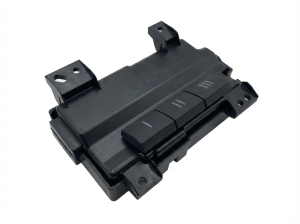
(OEM #68235348AF (supersedes 4692281 series, VIN match is critical))— If hardware failure is confirmed after ruling out software and wiring, the BCM is the module that has lost communication and may need replacement. It is critical to match the part number to the vehicle's VIN and options.
Trusted brands: Mopar
OEM price range: $400-$600
Aftermarket price range: $250-$400
Related Codes That Often Appear With This One
- P0032 — TSB #18-092-15 for 2011 models notes that U0140 may appear alongside this O2 sensor heater code, with the root cause being the same PCM software issue.
- P050D — TSB #18-093-15 for 2010 models notes that U0140 may appear with this cold start code, also pointing to an erroneous DTC that cannot be cleared without a software update.
Technical Service Bulletins (TSBs) & Recalls
- 18-097-15: For 2012 models, explicitly states the fix for an unclearing U0140 is reprogramming the PCM.
- 18-092-15: For 2011 models, notes that U0140 may be present and that attempting to clear it will be unsuccessful.
- 18-093-15: For 2010 models (specifically 5.7L), identifies U0140 as an erroneous DTC that cannot be cleared without a software update.
Platform-Specific Known Issues
- A well-documented software glitch in the PCM of 2010-2012 models causes a 'ghost' U0140 code to be stored.
- This erroneous code cannot be cleared by standard scanners and requires a dealer-level tool (wiTECH) to perform a software update as per TSBs #18-097-15, #18-092-15, and #18-093-15.
- Owners on forums like RamForum.com and CumminsForum.com widely report that a dealer visit for a PCM flash, costing between $150 and $250, is the definitive fix for the non-clearing code on 2010-2012 models.
Mechanic-Grade Diagnostic Values
- CAN C Bus Resistance (at OBD-II Port) — expected: 53.5 to 67 Ohms (typically ~60 Ohms). Failure: A reading of ~120 Ohms indicates an open in the bus or a missing terminating resistor. A reading near 0 Ohms indicates a short between the CAN High and CAN Low wires.
- CAN C Bus Voltage (at OBD-II Port, Ignition ON) — expected: CAN High (Pin 6): ~2.6V. CAN Low (Pin 14): ~2.4V.. Failure: Voltages that are stuck high (near 3.5V), low (near 1.5V), or shorted to ground (0V) or power (~5V or 12V) indicate a bus wiring fault.
- BCM Power Supply Voltage — expected: Greater than 10 volts, ideally matching battery voltage (~12.6V KOEO).. Failure: Voltage below 9.0V for more than one second can set a BCM internal fault. This indicates a problem with the power feed circuit or fuse.
- BCM Ground Circuit Resistance — expected: Less than 5 ohms to a known good chassis ground.. Failure: High resistance indicates a corroded or loose ground connection, which can cause intermittent module communication.
Scan Tool Commands That Help
- wiTECH: Clear All DTCs — After a successful PCM reflash for the TSB-related software issue, the wiTECH application will prompt the technician to clear all DTCs that were set during the programming process. This is a mandatory final step to ensure the U0140 code is gone.
- wiTECH: Network Topology / ECU View — This function displays all control modules on the CAN bus and their communication status. For a U0140, a technician would use this view to confirm if the BCM is the *only* module that is not communicating (shown in red or greyed out), which would point towards a BCM-specific issue. If multiple modules are offline, it suggests a wider network problem.
- wiTECH or advanced aftermarket (e.g., Launch, Autel): Write VIN — If the BCM or ABS module is replaced, the VIN must be written to the new module. A VIN mismatch between modules can cause communication errors and set U-codes.
Wiring & Ground Locations
- G300 / G303 — Typically located on the driver's side A-pillar, behind the kick panel.. This is a major interior ground point for multiple modules and components, including potentially the Body Control Module. A loose or corroded ground here can cause a host of intermittent electrical issues and communication codes.
- Main Body Ground — On the core support, near the battery.. This is a primary ground connection for the entire body. Corrosion here due to battery fumes or weather can cause widespread, difficult-to-diagnose electrical problems, including module communication failures.
- Frame Ground — On the driver's side frame rail, forward of the upper control arm.. This is a key chassis ground. A poor connection here can affect various systems, and checking it is a crucial step when diagnosing any electrical fault on the vehicle.
- BCM Connectors — The BCM is located high in the dashboard, above and behind the driver's side knee bolster. It is difficult to access and has multiple large connectors.. These are the direct connection points for the BCM. Physical inspection for corrosion, moisture, or pushed-out pins is a key diagnostic step if a BCM hardware failure is suspected.
Real Owner Repair Stories
- RamForum.com user (2014 Ram (similar platform, demonstrates the software issue)) — A 'permanent' U0140 code that could not be erased with an Actron scanner.
❌ Tried (didn't work) Attempting to clear the code with a standard scanner., Disconnecting the battery to reset modules (this temporarily cleared the code from the scanner's view, but it was likely still present for the dealer tool).
✅ What actually fixed it The user had the dealer perform a PCM flash update. After the flash, the code was gone and the truck was more responsive. The dealer could not find the U0140 code before the flash, leading the user to theorize that the battery disconnect for a separate repair had temporarily hidden it. - YouTube channel 'Online Mechanic Tips' (General Chrysler/Dodge/Ram vehicles) — Intermittent communication (U-series) codes.
❌ Tried (didn't work) Immediately suspecting module failure or complex wiring issues.
✅ What actually fixed it The technician noted that a significant number of communication problems he encountered were ultimately caused by poor connections at the battery terminals. Cleaning and tightening the battery clamps was the first and often final fix.
Model Year Variations Within This Range
- 2009: As a Third Generation (DH/D1) truck, the electrical architecture is different from the 2010+ models. Diagnosis should focus more on traditional hardware (TIPM, wiring, grounds) rather than the software bug prominent in later years.
- 2010-2012: These Fourth Generation (DS) models are the primary subject of the TSBs for the erroneous U0140 code. The first diagnostic step for a permanent, non-erasable U0140 should be checking for a required PCM software update.
Helpful Videos
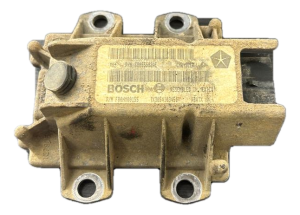
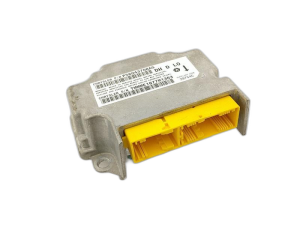
We Have This Part in Stock

The information in this article is provided for general reference and educational purposes only. Vehicle specifications, procedures, and part compatibility can vary by production date, trim level, and region. Always consult your vehicle's factory service manual and verify part numbers before purchasing or performing repairs. Safety-critical components such as airbags, seat belts, and braking systems should be installed by a qualified professional.
- Dodge RAM 3500:
- 🧭 Diagnostic Flowchart
- 🎬 Helpful Videos
- 🛍️ Shop This Part
- What's Unique About the 2009-2012 Dodge RAM 3500
- Symptoms You May Notice
- Most Likely Causes
- Rare But Worth Checking
- Diagnosis Steps
- Parts You'll Likely Need
- Related Codes That Often Appear With This One
- Technical Service Bulletins (TSBs) & Recalls
- Platform-Specific Known Issues
- Mechanic-Grade Diagnostic Values
- Scan Tool Commands That Help
- Wiring & Ground Locations
- Real Owner Repair Stories
- Model Year Variations Within This Range
- 🎟️ Get 5% Off