

U0140 on 2017-2018 Ford Escape: Lost Communication With Body Control Module Fixes
On a 2017-2018 Ford Escape, code U0140 typically indicates a loss of communication with the Body Control Module (BCM), often causing the radio and climate controls to stop working. The issue is frequently related to a module software or configuration problem, as outlined in Ford Technical Service Bulletins. A dealer-level scan and potential software update is often the first step before inspecting wiring or replacing the BCM.
- For a 2017-2018 Ford Escape, U0140 is strongly linked to inoperative radio and climate controls due to a known software/configuration issue per Ford TSBs.
- Do not immediately assume the BCM has failed. A dealer-level software update or module reconfiguration is the most likely and cost-effective first step.
- Always check the simple things first: battery health and the two BCM-related fuses in the under-hood fuse box.
- If a hardware replacement is needed, the Front Controls Interface Module (FCIM) is a likely culprit if symptoms are limited to the radio/climate system.
- Diagnosing this code properly requires advanced scan tools, making it a difficult DIY repair. Professional service is recommended.
What's Unique About the 2017-2018 Ford ESCAPE
The 2017-2018 Ford Escape (third generation) is specifically known for logging U0140 due to module communication and configuration issues, as documented by Ford itself. Technical Service Bulletins SSM 47040 and SSM 46875 directly address this code in relation to failing climate and radio controls, pointing technicians toward software-level diagnostics before replacing expensive hardware. [SSM 47040, SSM 46875] This suggests a higher-than-average likelihood of a non-hardware fix compared to other vehicles where this code might more commonly point to wiring corrosion or a failed BCM. The fix often involves a 'Programmable Module Installation' (PMI) or reconfiguration procedure using Ford's diagnostic software (IDS/FDRS) or a capable aftermarket tool like FORScan.
Diagnostic Flowchart
Tap your situation to follow the diagnostic path that matches what you're seeing on this vehicle.
Symptoms You May Notice
- Inoperative climate controls. [SSM 47040, SSM 46875]
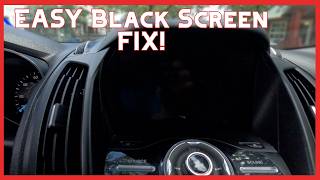
- Inoperative radio controls or a black screen. [SSM 47040, SSM 46875, 9]
- Check Engine Light is on.
- Malfunctioning power windows or door locks.
- Erratic wiper operation.
- Multiple warning lights on the dashboard (ABS, traction control).
- Key fob or remote entry not working.
- Vehicle may not start in some cases.
- Replacing the BCM immediately. The TSBs for this vehicle strongly suggest a software or configuration issue is a more likely cause than a failed module. [SSM 47040, SSM 46875]
- Replacing the radio (APIM module) when only the controls (FCIM) are faulty. The screen and radio brain may be fine, but if the control interface can't communicate, they won't work. A black screen with audio still functioning can be a clue. 🎬 Watch: Quick troubleshooting for a radio that won't turn on.
Most Likely Causes
- Module Communication or Configuration Error 🔴 High Probability Ford issued two TSBs (SSM 47040 and SSM 46875) for the 2017-2018 Escape specifically pointing to this as the cause for U0140 when climate/radio controls fail. This indicates an incomplete module configuration which requires a software-based reset.
How to confirm: A Ford-specific diagnostic scan tool (like FORScan or the dealer's IDS/FDRS) is needed to check for module configuration errors and to see if any software updates are available. The TSBs guide technicians to perform a module reconfiguration before any hardware replacement.
Typical fix: Reprogramming or reconfiguring the affected modules (BCM, FCIM, or APIM) using a dealer tool or FORScan. This is often referred to as a Programmable Module Installation (PMI) procedure.
Est. part cost: $0 - Poor Power or Ground to the BCM 🟡 Medium Probability All modern vehicles rely on stable voltage. Low battery voltage or a bad ground connection can cause modules to drop off the network intermittently. This can be caused by an aging battery or corroded ground points.
How to confirm: Test the battery and charging system to ensure voltage is stable (above 12.4V key-off, 13.5-14.7V running). Check the BCM's dedicated fuses in the under-hood fuse box. Inspect and test the main BCM ground connection for corrosion or looseness. A multimeter can be used to verify power and ground continuity at the BCM connector.
Typical fix: Charge or replace the battery, replace blown fuses, or clean and tighten the ground connection.
Est. part cost: $5-$250 - Faulty Front Controls Interface Module (FCIM) 🟡 Medium Probability → Shop HVAC Control The TSBs mention U0140 being set in the FCIM. This module, which contains the physical radio and climate buttons/touchscreen, can fail, disrupting communication. [SSM 47040, SSM 46875] Forum discussions mention the screen going black while the radio audio still works, pointing towards an FCIM or related APIM issue.
How to confirm: If the radio and climate controls are the only symptoms and a software update doesn't work, the FCIM is a likely suspect. A scan tool may show the FCIM is unresponsive or has internal faults.
Typical fix: Replacement of the FCIM. Note that Ford has reportedly discontinued 🎬 Watch: Step-by-step walkthrough for replacing the radio and screen module. new production for some of these modules, so a used or remanufactured part may be the only option. The new module will require programming to the vehicle.
Est. part cost: $200-$600 - Damaged Wiring or Connectors ⚪ Low Probability Wiring for the BCM is often located in kick panels or behind the glove box, areas susceptible to moisture or accidental damage during other repairs like cabin air filter replacement.
How to confirm: Visually inspect the wiring harnesses connected to the BCM (located behind the glove box) and the FCIM. Check for corrosion, pinched wires, or loose pins in the connectors. A 'wiggle test' on the harness while monitoring communication status can sometimes identify an intermittent connection.
Typical fix: Repairing the damaged section of the wiring harness or cleaning/replacing the affected connector.
Est. part cost: $10-$100 - Failed Body Control Module (BCM) ⚪ Low Probability → Shop Body Control Module While possible, module failure is less common than software or wiring issues. It should be considered a last resort after all other causes are ruled out. Physical damage from impact or water intrusion are potential causes for failure.
How to confirm: If a professional scan tool cannot communicate with the BCM at all, and its power, ground, and network wiring have been verified as good, the module itself has likely failed. Sometimes a burnt smell or visible damage on the circuit board can be observed upon removal.
Typical fix: Replacement and reprogramming of the BCM. This must be programmed to the vehicle's VIN using a tool like FORScan or by a dealer.
Est. part cost: $400-$800
Rare But Worth Checking
- Major Component Failure Causing Electrical Issues: In one NHTSA complaint for a 2018 Escape, code U0140 was present alongside misfire codes (P0302, P0316) where the root cause was a major coolant leak into the engine. This suggests that in severe cases, U0140 can be a secondary symptom of a larger problem causing system-wide electrical faults. [ODI #11687721]
- Aftermarket Device Interference: Poorly installed aftermarket devices like remote starters, alarms, or telematics units that are tapped into the CAN bus can disrupt network communication and trigger U-codes.
Diagnosis Steps
- Check for TSBs: First, confirm if TSB SSM 47040 or SSM 46875 applies to your vehicle's symptoms. This is the most direct path to a fix for the common radio/climate control failure.
- Perform a Full System Scan: Use a professional-grade scan tool (like FORScan) to see which modules are logging the U0140 code and if any other 'U' codes (like U2100 or U0164) are present. Note which module is setting the code.
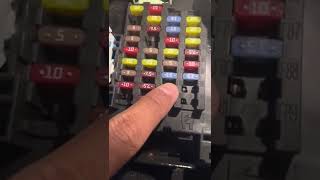
- Check Battery and Fuses: Ensure the battery voltage is stable (above 12.4V) and the charging system is working correctly. Check the BCM-related fuses (F11 and F41 in the under-hood fuse box for this generation) to ensure they are not blown. 🎬 See this guide to locate and check your BCM fuses.
- Attempt Module Reconfiguration/Update: If TSBs are relevant, have a dealer or qualified shop attempt to reconfigure the FCIM and BCM modules as instructed. This involves running a PMI (Programmable Module Installation) routine with Ford's IDS/FDRS or FORScan.
- Inspect BCM Wiring and Grounds: If software fixes fail, access the BCM behind the glove box. Visually inspect its connectors and nearby wiring for any signs of damage, corrosion, or looseness. Check the integrity of the BCM ground points.
- Inspect FCIM Wiring: Remove the trim around the radio/climate controls to access the FCIM. Check its connectors and wiring for similar issues.
- Test Network Integrity: This advanced step involves using a multimeter to check for proper resistance (around 60 ohms) on the CAN bus network wiring to rule out shorts or open circuits. This is best left to a professional.
- Isolate Modules: If a network fault is suspected, a technician may unplug modules one by one to see if communication is restored, which would indicate a single faulty module is bringing down the network.
- Condemn the Module: If a specific module (BCM or FCIM) has good power, ground, and network connections but still
Parts You'll Likely Need
- Body Control Module (BCM)
- Front Controls Interface Module (FCIM)
- Battery
Related Codes That Often Appear With This One
- U2100 — Mentioned directly in TSBs SSM 47040 and SSM 46875 as a related code that can appear in the FCIM along with U0140, indicating an initial configuration is not complete.
- U0164 — Also mentioned in TSBs SSM 47040 and SSM 46875 as a code that can appear in the BCM when communication with the HVAC control module is lost.
- P0302 / P0316 — These misfire codes appeared with U0140 in a severe case involving a coolant leak, indicating a possible link during major system failures. [ODI #11687721]
Technical Service Bulletins (TSBs) & Recalls
- SSM 47040
- SSM 46875
Platform-Specific Known Issues
- Intermittent Black Screen with Audio: A very common complaint for this platform is the main infotainment screen going black, but the audio from the radio continues to play. This often points to a fault in the FCIM or APIM, or the communication between them, rather than a complete BCM failure. Sometimes this is temporarily resolved by a battery disconnect or fuse pull.
Mechanic-Grade Diagnostic Values
- CAN Bus Network Resistance — expected: Approximately 60 Ω. Failure: A reading of 120 Ω indicates one of the two terminating resistors is offline. A reading near 0 Ω indicates a short between the CAN High and CAN Low wires.
- CAN Bus Voltage (Key On, Engine Off) — expected: CAN High (Pin 6): ~2.6V, CAN Low (Pin 14): ~2.4V. Failure: Voltages that are stuck high, low, or at 0V indicate a short to power or ground on the network.
- Battery Voltage — expected: Above 12.4V (Key Off), 13.5V-14.7V (Engine Running). Failure: Low voltage can cause modules to drop off the network and set communication codes.
Hidden / Shadow Codes Worth Checking
- U0140:00: Indicates 'No Subtype Information'. This is a common suffix seen on Ford vehicles when a module simply stops receiving the expected messages from the BCM. It doesn't point to a specific failure type, just the loss of communication. (see via Ford IDS/FDRS or advanced aftermarket scanners like FORScan.)
Scan Tool Commands That Help
- FORScan / IDS: BCM Self-Test — To command the BCM to run an internal diagnostic check. This can help determine if the module is responsive and can identify internal faults not visible otherwise.
- FORScan / IDS: Programmable Module Installation (PMI) — When replacing the BCM or FCIM. This procedure downloads the configuration data from the old module (if possible) and uploads it to the new one, or retrieves As-Built data from Ford's servers to configure a new module.
- FORScan / IDS: PATS Parameter Reset — After replacing the BCM. This function is required to synchronize the new BCM with the vehicle's Passive Anti-Theft System (PATS), PCM, and existing keys. It involves a mandatory 10-minute security wait and requires two programmed keys.
- FORScan / IDS: Clear DTCs — After a repair is performed, clearing the codes in the BCM can reset internal Field Effect Transistor (FET) protection, potentially restoring function to a circuit that was shut down due to a temporary fault.
Wiring & Ground Locations
- BCM (Body Control Module) — Located behind the glove compartment in the passenger footwell area. The glove box assembly must be removed for access.. This is the module that has lost communication. All power, ground, and network connections terminate here, making it a central point for diagnosis.
- Battery — Under a plastic cowl panel on the driver's side, near the windshield. The cover must be removed for access. Jump start posts are provided for convenience.. The battery's location is not obvious. Low battery voltage is a common cause of communication codes, so accessing the battery or jump points is a key first step.
- BCM Fuses — In the under-hood fuse box (Battery Junction Box). Specifically, check fuses F11 (30A) and F41 (20A) for the 2017 model year.. These fuses supply main power to the BCM. A blown fuse will cause the BCM to go completely offline, triggering U0140 in other modules.
- G103 / G104 — Ground points located on the right and left front corners of the engine compartment, respectively.. These are major engine compartment grounds. While not the primary BCM ground, poor connections here can introduce electrical noise and voltage stability issues system-wide.
- G200 — A primary interior ground point located behind the right side of the dashboard.. This is a critical ground connection for multiple interior modules, including the BCM. A loose or corroded G200 is a high-probability cause for intermittent communication issues.
- BCM Connectors (C2280B, C2280C, C2280F) — These are the main multi-pin connectors that plug into the BCM itself.. The HS-CAN network wires (VDB04/VDB05) pass through connector C2280B at pins 10 and 9. A loose pin or corrosion in this specific connector can directly cause the U0140 code.
Real Owner Repair Stories
- Reddit user in r/fordescape (2017 Ford Escape) — Screen went totally black.
❌ Tried (didn't work) Not specified, but the user was seeking solutions online.
✅ What actually fixed it Replaced fuse #67 (a 7.5A mini fuse) in the fuse panel located under the glove box. The screen came back on immediately after starting the car with the new fuse.
Helpful Videos


Used OEM Parts in Stock
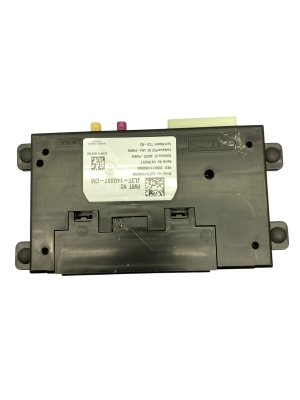
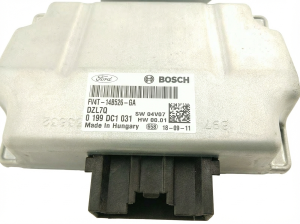
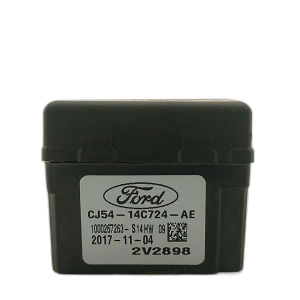
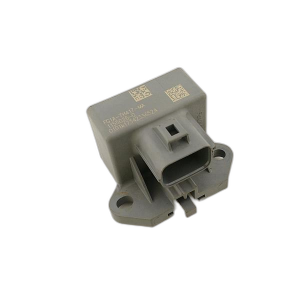
New Aftermarket Parts Available


The information in this article is provided for general reference and educational purposes only. Vehicle specifications, procedures, and part compatibility can vary by production date, trim level, and region. Always consult your vehicle's factory service manual and verify part numbers before purchasing or performing repairs. Safety-critical components such as airbags, seat belts, and braking systems should be installed by a qualified professional.
- Ford ESCAPE:
- 🧭 Diagnostic Flowchart
- 🎬 Helpful Videos
- 🛍️ Shop This Part
- What's Unique About the 2017-2018 Ford ESCAPE
- Symptoms You May Notice
- Most Likely Causes
- Rare But Worth Checking
- Diagnosis Steps
- Parts You'll Likely Need
- Related Codes That Often Appear With This One
- Technical Service Bulletins (TSBs) & Recalls
- Platform-Specific Known Issues
- Mechanic-Grade Diagnostic Values
- Hidden / Shadow Codes Worth Checking
- Scan Tool Commands That Help
- Wiring & Ground Locations
- Real Owner Repair Stories
- 🎟️ Get 5% Off