

U0140 on 2015-2022 Ford F-150: Lost Communication With Body Control Module Causes and Fixes
On a 2015-2022 F-150, code U0140 typically means there's a communication failure with the Body Control Module (BCM). The most common causes are software glitches requiring a dealer update, a corroded ground wire (G401) under the driver's door on 2015-2020 models, or a damaged transmission wiring harness. Check for TSBs and inspect the G401 ground before replacing any parts.
- U0140 on a 2015-2022 F-150 means the Body Control Module (BCM) is offline.
- Always check for software-related TSBs first, as a simple dealer reprogram often fixes the issue.
- Before suspecting a bad BCM, inspect for common physical faults: the G401 ground on the driver's frame rail (2015-2020) and the transmission wiring harness for chafing.
- Symptoms are primarily electrical and can range from minor annoyances (radio not working) to serious issues (no-start, shifting problems).
- Diagnosing this code at home is difficult and typically requires professional tools to test the CAN network properly.
What's Unique About the 2015-2022 Ford F-150

The Ford F-150, particularly in the 13th (2015-2020) and 14th (2021-2022) generations, uses a complex network of modules. This complexity makes it susceptible to communication codes like U0140. Ford has issued multiple Technical Service Bulletins (TSBs) acknowledging that these issues are often caused by software parameters or wiring harness routing, rather than a failed BCM. For example, a specific ground point (G401) on the frame of 2015-2020 models is notoriously prone to corrosion, and certain software updates for 2021+ models can inadvertently trigger this code in related modules.
Diagnostic Flowchart
Tap your situation to follow the diagnostic path that matches what you're seeing on this vehicle.
Generation note: This range covers the 13th generation (2015-2020) and the 14th generation (2021-2022) F-150. TSBs indicate some issues are generation-specific. The 2015-2020 models have a well-documented issue with the G401 ground point on the frame rail corroding. The 2021 models have known software bugs related to the Trailer Module (TRM) that can set a U0140 code after a software update. [TSB 22-2256, SSM 50789]
Symptoms You May Notice

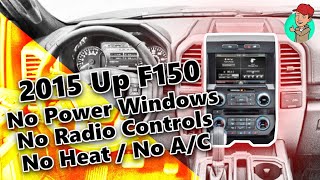
- Inoperative A/C, radio, or power window switches. 🎬 See how these symptoms look and how to diagnose them. [SSM 46902]
- Multiple warning lights on the dashboard, including the check engine and powertrain malfunction indicators. [SSM 48563]
- Harsh or incorrect transmission shifting. [SSM 48563, ODI #11604166]
- Crank-no-start or no-start condition.
- Malfunctioning interior or exterior lights (flickering, staying on, or not working at all).
- Trailer-related warnings or features not working. [TSB 22-2256]
- Power door locks inoperative.
- Wipers behaving erratically or not working.
- A flood of communication codes (U-codes) stored in various modules, even with no check engine light on the dash.
- Replacing individual components like the radio, A/C controls, or window switches when the actual fault is in the network communication to the BCM.
- Replacing the BCM when the root cause is a simple corroded ground wire (G401), a chafed harness, or a software issue.
Most Likely Causes

- Corroded Ground Connection (G401) 🔴 High Probability On 2015-2020 models, the G401 ground point for the MS-CAN bus is located on the frame rail under the driver's door, where it is exposed to road salt and moisture. This corrosion creates high resistance, disrupting the sensitive network signals and causing widespread communication failures.
How to confirm: Visually inspect the ground bolt on the driver's side frame rail for rust. With the battery disconnected, measure resistance between pins 3 and 11 of the OBD-II port; a healthy network should read approximately 60 ohms. A reading of 120 ohms suggests a break in the circuit, and an open or very high reading points directly to a wiring or ground issue like a corroded G401.
Typical fix: Disconnect the ground wires, use a wire brush to clean the terminals, bolt, and frame contact point to bare metal, then reassemble tightly and protect with dielectric grease to prevent future corrosion. 🎬 Watch: How to locate and repair the G401 ground connection.
Est. part cost: $0-$10 - Software/Firmware Glitch 🟡 Medium Probability Ford has released multiple TSBs (SSM 46902, TSB 22-2256, SSM 50789) to address software parameters in various modules (BCM, GWM, TRM) that can cause this code, sometimes as a result of other updates. [SSM 46902, TSB 22-2256, SSM 50789]
How to confirm: A Ford dealer or a shop with a Ford-specific scan tool (like IDS) can check for and apply any available module software updates. FORScan can also be used to check module firmware versions.
Typical fix: Reprogramming the BCM, GWM (Gateway Module), or TRM (Trailer Module) with the latest software. In some cases, like TSB 22-2256, Ford advises that the code is benign and to not replace parts. [TSB 22-2256]
Est. part cost: $0 - Damaged Wiring Harness 🟡 Medium Probability TSB SSM 48563 and SSM 47097 point to issues with the transmission wiring harness (15525 harness) being improperly routed or secured. This can lead to chafing against the engine or frame, causing shorts or open circuits that affect the CAN bus and trigger U0140 and other codes. [SSM 48563, SSM 47097, 10]
How to confirm: Visually inspect the wiring harnesses connected to the BCM (often in the passenger footwell area) and the main transmission harness where it runs down the back of the engine for signs of chafing, pinching, or corrosion.
Typical fix: Repairing the damaged section of the harness with solder and heat shrink, and re-routing it securely away from sharp edges or moving parts. Sometimes a connector pigtail needs to be replaced.
Est. part cost: $10-$50 - Low Battery Voltage or Failing Alternator ⚪ Low Probability → Shop Vehicle Battery Modern vehicles are highly sensitive to voltage. A weak battery or failing alternator can cause voltage drops during startup or operation, leading to random communication faults between modules.
How to confirm: Test the battery voltage with the engine off (should be >12.4V) and while running (should be 13.7V-14.7V). A load test is the most definitive way to check battery health.
Typical fix: Charge or replace the battery and/or replace the alternator.
Est. part cost: $150-$600
Rare But Worth Checking
- Failed Body Control Module (BCM): → Shop Body Control Module While often suspected, the BCM itself is one of the less likely causes. Water intrusion into the passenger footwell area is a known cause of BCM failure. All wiring, grounds, and software updates should be checked thoroughly before condemning the module.
- Failed Gateway Module (GWM): TSB SSM 50789 indicates that faulty software in the GWM can trigger U0140 in other modules. A hardware failure in the GWM can also disrupt network traffic, as it acts as a bridge between different CAN bus networks.
- Aftermarket Accessories: Poorly installed remote starters, alarms, LED lighting, or stereo systems can interfere with the CAN bus network by introducing electrical noise or improper connections, causing communication codes.
Diagnosis Steps
- Check and charge the battery. Ensure voltage is stable and above 12.4V with the engine off, and 13.7-14.7V while running.
- Scan all vehicle modules with a Ford-specific scan tool (like FORScan or IDS) to see which modules are logging the U0140 code and what other codes are present. Note if the BCM is communicating at all.
- Check for applicable TSBs for your specific year and model on the Ford service portal. Prioritize any software updates recommended by Ford.
- If you have a 2015-2020 model, locate and inspect the G401 ground connection on the driver's side frame rail for corrosion. Disassemble, clean to bare metal, and re-secure.
- With the battery disconnected, measure the resistance between pins 3 (MS-CAN+) and 11 (MS-CAN-) on the OBD-II port. A reading near 60 ohms is healthy. A reading of 120 ohms indicates one of the two terminating resistors is offline. An open circuit (infinite resistance) points to a break in the wiring.
- Visually inspect the main wiring harness to the BCM (typically in the passenger-side kick panel/footwell) for water damage or corrosion.
- Inspect the transmission wiring harness (15525 harness) for chafing or damage, especially where it runs down the back of the engine, as detailed in TSBs SSM 48563 and 47097. [SSM 48563, SSM 47097]
- If all wiring, grounds, and software are confirmed to be good, the BCM may be faulty. This should be the last step in diagnosis. 🎬 Watch: Step-by-step BCM replacement and FORScan programming guide.
Parts You'll Likely Need
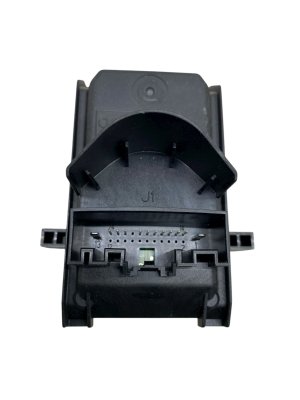
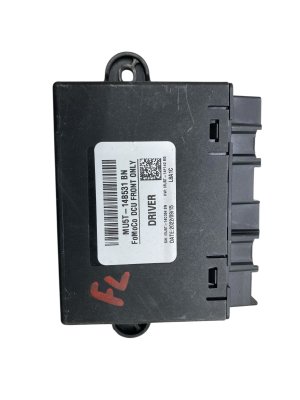
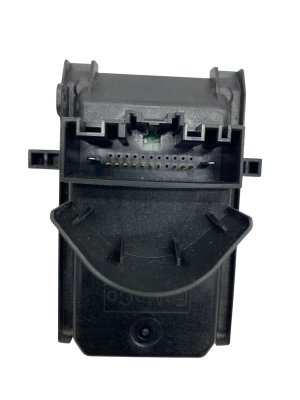
- Body Control Module (BCM)
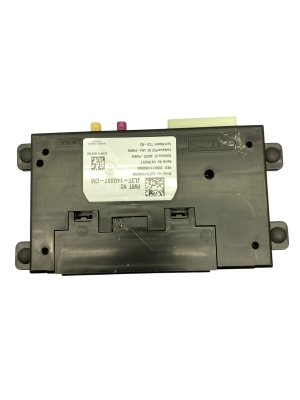
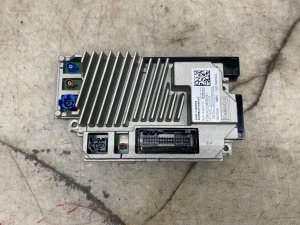
(OEM #JU5Z-15604-BZ (Supercedes multiple previous numbers for 2018-2020 models, fitment varies greatly by options))— This is the part that must be replaced if it is diagnosed as internally faulty after all other causes are ruled out. It requires programming to the vehicle's VIN and configuration.
Trusted brands: Ford (OEM)
Related Codes That Often Appear With This One
- U0101 — Lost Communication with TCM. Often appears with U0140 when a wiring harness issue (per TSB SSM 48563) affects both modules. [SSM 48563]
- U0253 — Lost Communication With Accessory Protocol Interface Module. Often appears with U0140 due to general network traffic issues or software glitches. [SSM 46902, ODI #11604166]
- U0155 — Lost Communication With Instrument Panel Cluster (IPC) Control Module. Indicates a widespread network communication problem, often pointing to a core issue like a bad ground or harness. [SSM 46902]
- P061A — Internal Control Module Torque Performance. Can be triggered by communication issues between the PCM and other modules, often cited alongside U0140 in TSBs related to wiring harness problems. [SSM 48563]
Technical Service Bulletins (TSBs) & Recalls
- TSB 22-2256: Notes that U0140:82 may appear in the trailer module on 2021 F-150s due to software parameters and advises against component replacement.
- SSM 50789: Clarifies that the U0140:82 in the TRM on 2021 F-150s may be due to software in the Gateway Module (GWM).
- SSM 48563: Points to a chafed transmission wiring harness on 2017-2020 models as a cause for U0140 and other communication/powertrain codes.
- SSM 47097: Also addresses an improperly secured transmission wire harness on 2017-2018 models causing similar issues to SSM 48563.
- SSM 46902: Addresses multiple communication codes, including U0140, on 2015 models caused by excessive network traffic, leading to inoperative interior controls.
Platform-Specific Known Issues
- 2015 models may experience U0140 with failures of the A/C, radio, and power windows due to excessive network traffic, as noted in TSB SSM 46902.
- 2017-2018 models built before late 2017 are specifically called out in TSB SSM 47097 for a transmission wiring harness that may not be properly secured, causing chafing and a host of communication codes including U0140.
- 2021 F-150s have a documented software issue that can cause U0140:82 to be stored in the trailer module (TRM) after a software update. Per TSB 22-2256 and SSM 50789, this is a known bug that does not affect vehicle function, and replacing modules will not fix it.
Mechanic-Grade Diagnostic Values
- MS-CAN Bus Resistance — expected: ~60 Ω. Failure: 120 Ω indicates a break in the circuit or a failed terminating resistor. Readings significantly different from 60 Ω suggest a wiring fault.
- BCM Power Supply Voltage (Ignition On) — expected: 12.2V - 12.8V. Failure: Voltage below ~9V can cause the module's microcontroller to reset and drop off the network.
- BCM Ground Resistance — expected: < 0.1 Ω. Failure: High resistance indicates a poor ground connection, a very common cause for this code.
- Battery State of Charge (for module programming) — expected: 80% or higher. Failure: Attempting to program modules with a low state of charge can cause the programming to fail or corrupt the module.
Hidden / Shadow Codes Worth Checking
- U0140:82: This code with the Failure Type Byte (FTB) ':82' indicates 'Alive/Sequence Counter Incorrect/Not Updated'. This specific sub-code is often triggered by software parameter mismatches between modules, especially after a software update, as noted in TSB 22-2256. It means a module (like the TRM) is receiving messages from the BCM, but the messages are not in the expected sequence or format. (see via Ford Diagnosis and Repair System (FDRS) or an advanced scan tool like FORScan that can read manufacturer-specific DTCs with FTBs.)
Scan Tool Commands That Help
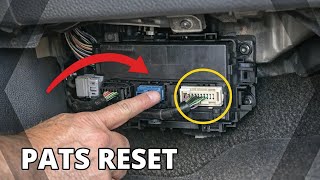
- FORScan / IDS: PATS Parameter Reset — This is a mandatory security procedure required after installing a new BCM. It synchronizes the new BCM with the PCM and the vehicle's keys. Failure to perform this step will result in a no-start condition. The process involves a 10-minute security wait and requires two valid keys.
- FORScan / IDS: BMS Reset (Battery Monitoring System Reset) — This should be performed after replacing the vehicle's battery or after installing a new BCM. The BCM tracks the battery's age and health; resetting the BMS tells the module to relearn the characteristics of the new battery, ensuring proper charging strategy.
- FORScan / IDS: BCM Self-Test — This on-demand test commands the BCM to check its internal circuits and its communication with other modules. It can help confirm if the BCM is online and responding to commands, or if it has an internal fault.
Wiring & Ground Locations

- Body Control Module (BCM) — On 2015+ F-150s, the BCM is integrated with the interior fuse panel, located in the passenger-side kick panel area.. This is the module that has lost communication. Its location is critical for checking power, ground, and network connections directly at its connectors.
- G401 — On 2015-2020 models, this ground is located on the left (driver's side) frame rail, above the rear axle. It serves as a crucial ground point for various modules on the MS-CAN network.. This ground is highly susceptible to corrosion from road salt and moisture, causing high resistance and disrupting network communication, making it a primary suspect for U0140.
- BCM Connectors (C2280 series) — These are the main multi-pin connectors that plug into the BCM at the passenger kick panel. They are designated C2280A, C2280B, C2280C, etc.. The MS-CAN bus wires (pins 3 and 11 at the OBD-II port) run through these connectors. Checking for pin fitment, corrosion, or backed-out terminals at these connectors is a key diagnostic step.
- G303 — Located behind the parking brake assembly in the driver's side kick panel area.. This is an interior ground point that can affect various in-cab electronics. While less common than G401, a poor connection here can cause intermittent electrical issues.
Real Owner Repair Stories
- f150forum.com user report (2018 Ford F-150) — Multiple U-codes including U0140, U0155, U0253. Truck would randomly not start, displaying a 'No Key Detected' message. Dealer could not replicate the issue.
❌ Tried (didn't work) Dealer checked for codes and found nothing wrong., Owner suspected a wiring issue or bad BCM.
✅ What actually fixed it The owner replaced the original, 3.5-year-old battery. After replacing the battery and clearing the codes, the issue did not return. The root cause was determined to be a failing battery causing low voltage and communication dropouts between modules.
OEM Part Supersession History
DL3Z-15604-B→Not explicitly stated, but this is a common part number for the 2011-2014 generation BCM (Smart Junction Box).— Part revisions and updates.
Heads up: BCMs are highly specific to the vehicle's year, model, and options (keyless start, trim level, etc.). A part from a different year or trim will likely not function correctly. Programming is always required.ju5z15604q→JU5Z-15604-BA— Part revision.
Heads up: This part number is listed for 2018-2020 models but has no specific vehicle fitment data, emphasizing the need to verify the correct part number with a VIN at a dealership.
Model Year Variations Within This Range
- 2015-2020 (13th Gen): These models are particularly known for the G401 ground corrosion issue on the driver's side frame rail. The BCM is located in the passenger kick panel.
- 2021-2022 (14th Gen): These models are more prone to software-related U0140 codes, particularly the U0140:82 variant in the Trailer Module (TRM) after other module updates, as noted in TSB 22-2256. The BCM part numbers are different (e.g., MU5T-14C708-BA) and the network architecture is more complex.
Helpful Videos

We Have This Part in Stock

The information in this article is provided for general reference and educational purposes only. Vehicle specifications, procedures, and part compatibility can vary by production date, trim level, and region. Always consult your vehicle's factory service manual and verify part numbers before purchasing or performing repairs. Safety-critical components such as airbags, seat belts, and braking systems should be installed by a qualified professional.
- Ford F-150:
- 🧭 Diagnostic Flowchart
- 🎬 Helpful Videos
- 🛍️ Shop This Part
- What's Unique About the 2015-2022 Ford F-150
- Symptoms You May Notice
- Most Likely Causes
- Rare But Worth Checking
- Diagnosis Steps
- Parts You'll Likely Need
- Related Codes That Often Appear With This One
- Technical Service Bulletins (TSBs) & Recalls
- Platform-Specific Known Issues
- Mechanic-Grade Diagnostic Values
- Hidden / Shadow Codes Worth Checking
- Scan Tool Commands That Help
- Wiring & Ground Locations
- Real Owner Repair Stories
- OEM Part Supersession History
- Model Year Variations Within This Range
- 🎟️ Get 5% Off