

U0140 on 2022-2025 Ford Maverick: Lost Communication With Body Control Module Causes and Fixes
On a 2022-2025 Ford Maverick, code U0140 is most often caused by a software issue in the Body Control Module (BCM). Several recalls exist for this problem, which can cause taillight failure or stalling. The fix is a free software update at a Ford dealership.
- For a 2022-2025 Ford Maverick, U0140 is almost certainly related to a software issue covered by a recall.
- DO NOT replace the BCM before checking for open recalls. The fix is likely a free software update from a Ford dealer.
- Symptoms are serious and can include taillight failure or engine stalling, so the vehicle should be inspected promptly.
- Always check the 12V battery's health first, as low voltage is a common trigger for network communication codes.
- Replacing the BCM is a last resort and requires professional programming to the truck's VIN.
What's Unique About the 2022-2025 Ford Maverick
The Ford Maverick is highly prone to setting a U0140 code due to software calibration issues in the Body Control Module, not necessarily a hardware failure. Ford has issued multiple recalls for 2022-2024 models to update the BCM software. These software flaws can cause serious issues, including the rear taillights shutting off while driving or the engine stalling at low speeds due to incorrect battery degradation detection. Therefore, checking for open recalls is the most critical first step for any Maverick owner seeing this code.
Symptoms You May Notice
- One or both taillights not working.
- Engine stalling at low speeds or failing to restart after an auto start/stop event.
- Multiple unrelated warning lights on the dashboard (ABS, traction control, etc.).
- Power windows, door locks, or key fob not working.
- Wipers behaving erratically.
- Parasitic battery drain leading to a dead battery.
- No-start condition due to the anti-theft system.
- Loss of hazard lights.
- "Trailer Brake System Fault See Manual" message appearing in the instrument cluster, even without a trailer connected.
- Replacing the Body Control Module (BCM) without first checking for software updates. Many issues on the Maverick are fixed with a free recall software flash from the dealer.
Most Likely Causes
- BCM Software Requires Update (Recalls) 🔴 High Probability Multiple recalls (NHTSA 24V-293, 24V-267) have been issued for 2022-2024 Mavericks for BCM software that can cause taillight failure or stalling.
How to confirm: Check your VIN for open recalls on the NHTSA website or by contacting a Ford dealer. A dealer can scan the vehicle to see if the updates have been applied.
Typical fix: A Ford dealer will reprogram the Body Control Module (and potentially the PCM) with updated software at no cost under the recall.
Est. part cost: $0 - Low Battery Voltage or Charging System Fault 🟡 Medium Probability → Shop Vehicle Battery Modern control modules are sensitive to low voltage. A specific recall for the Maverick (NHTSA 24V-267) addresses the BCM's inability to properly detect a degrading 12-volt battery, which can trigger communication faults and lead to stalling. Additionally, a Special Service Message (SSM 53087) was issued for hybrid models concerning an intermittent 12V battery drain. 🎬 Watch: Troubleshooting why your Maverick battery keeps dying
How to confirm: Test the battery with a multimeter. It should read above 12.4V with the engine off. Check for corroded terminals. Have the alternator tested at an auto parts store. A Ford dealer can check the battery's state of health (SOH).
Typical fix: Recharge or replace the 12-volt battery. Clean battery terminals and cable ends. Perform a battery monitor sensor (BMS) reset after replacement.
Est. part cost: $150-$350 - Wiring Harness or Connector Issue ⚪ Low Probability While not unique to the Maverick, wiring issues are a common cause for all network codes. This includes poor ground connections, corroded connector pins, or chafed wires. One owner on MaverickTruckClub.com reported pinched wires under the driver's side door sill found during a separate airbag recall repair, indicating potential chafe points.
How to confirm: Visually inspect the wiring harnesses leading to the BCM (typically located in the passenger compartment kick panel area) for damage. Check for loose or corroded ground wires connected to the chassis. This often requires a wiring diagram and multimeter for continuity checks.
Typical fix: Repair the damaged section of the wiring harness. Clean and re-secure ground connections. Clean or replace corroded connectors.
Est. part cost: $10-$200
Rare But Worth Checking
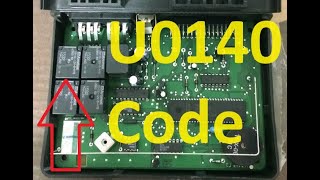
- Faulty Body Control Module (BCM): → Shop Body Control Module While possible, internal BCM failure from hardware issues like water intrusion or solder joint fatigue is much less likely than a software or wiring issue. This should only be considered after all other causes, especially recalls, have been ruled out. 🎬 Watch: A deep dive into U0140 causes and common fixes
- Interference from Aftermarket Accessories: Poorly installed remote starters, alarms, or telematics devices that tap into the CAN network can disrupt communication and trigger U-codes.
- Gear Shift Module (GSM) Software: Manufacturer Bulletin #TSB 25-2071 notes that U0140 can be stored in the gear shift module due to its internal software, potentially accompanied by a "Service Vehicle Soon" message.
Diagnosis Steps
- Check for Recalls: Use your VIN to check for open recalls on the NHTSA website or contact a Ford dealer. Specifically ask about recalls 24S27 (NHTSA 24V-293) for taillights and 24S24 (NHTSA 24V-267) for stalling.
- Check Battery Health: Test the 12V battery voltage. It should be above 12.4V engine-off. Clean any corrosion from the terminals. A weak battery is a known cause of communication codes and is the subject of recall 24V-267.
- Scan for Other Codes: Use a capable OBD-II scanner to see what other modules are reporting communication loss. If many modules have U-codes, it points to a network-wide issue like power/ground or a gateway module fault. Note if codes like U0155, P25B0, or U2403 are present, as reported in NHTSA ODI #11715107.
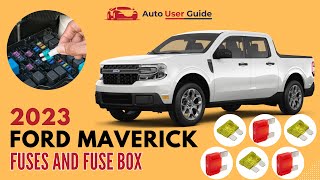
- Inspect BCM Fuses and Connections: Locate the BCM (typically behind the passenger or driver side kick panel) and check its related fuses in the fuse box. 🎬 See this guide for Maverick fuse box locations and diagrams Inspect the main electrical connectors at the BCM for looseness, corrosion, or water intrusion.
- Inspect Grounds: Locate and inspect the main chassis ground points for the BCM. Ensure they are clean, tight, and free of corrosion. A poor ground is a very common cause of communication codes.
- Professional Diagnosis: If the steps above do not reveal the issue, professional help is needed. A technician will use a specialized scan tool to perform a network test, check CAN bus wiring for proper resistance (around 60 ohms), and trace for shorts or open circuits.
Parts You'll Likely Need
- Body Control Module (BCM) Software Update — This is the mandated fix for several major recalls on the 2022-2024 Maverick that cause code U0140.
Trusted brands: Ford (Dealer Service)
OEM price range: $0 (if under recall)
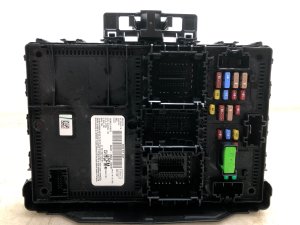
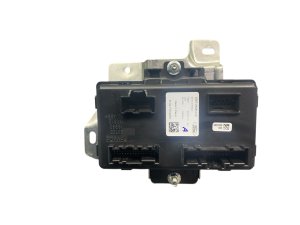
Aftermarket price range: N/A - Body Control Module (BCM)
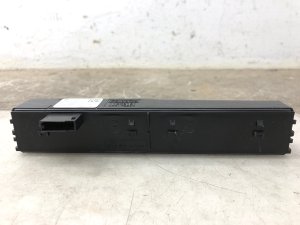
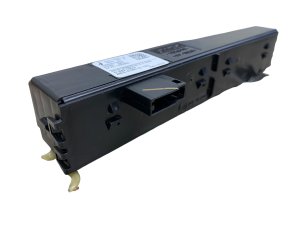
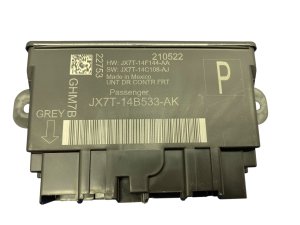
(OEM #M1PT-14F390-AC* (*example from recall, part varies))— This is a last resort if the module has failed internally, which is rare. It MUST be programmed by a dealer or qualified locksmith to function.
Trusted brands: Motorcraft
OEM price range: $400-$600
Aftermarket price range: Not Recommended (due to programming)
Related Codes That Often Appear With This One
- U0100 — Lost Communication with ECM/PCM. If a battery or network-wide issue is present, communication with multiple modules can be lost. This code is often set alongside U0140 in the case of the stalling recall (24V-267).
- U0155 — Lost Communication with Instrument Panel Cluster (IPC). This often appears with U0140 and points to a broader network problem rather than a single module failure.
- U0140:82 — This specific variant can appear in the Trailer Relay Module (TRM) after a software update, as noted in a Ford TSB. It's a known bug that doesn't affect function.
- U0140:87 — Stored in the trailer module (TRM), this can trigger a "Trailer Brake System Fault" message even without a trailer connected, as described in Bulletin #TSB 24-2116.
Technical Service Bulletins (TSBs) & Recalls
- Ford Recall 24S27 (NHTSA 24V-293): BCM software update for taillight failure.
- Ford Recall 24S24 (NHTSA 24V-267): BCM and PCM software updates for stalling issues related to battery state-of-charge detection.
- Ford Recall 23C41 / 25C04: BCM software update for turn signal indicator malfunction.
- Ford Special Service Message (SSM) 53087: For 2022-2024 Maverick Hybrids, addresses an intermittent 12V battery drain. Recommends a battery reset and test, noting a software fix is in development.
- Ford TSB 22-2150 (related to Recall 25S15): Notes that U0140:82 may appear as a harmless bug after a trailer module update.
- Bulletin #TSB 24-2117: Notes that U0140:87 may be stored in the trailer module (TRM) when installing certain trailer brake controller kits.
- Bulletin #TSB 24-2116: Describes a Trailer Brake System Fault message and DTC U0140:87 in the TRM occurring without a trailer connected.
- Bulletin #TSB 25-2071: Identifies that U0140 can be stored in the gear shift module (GSM) due to software issues.
Platform-Specific Known Issues
- Recall 24V-293 / 24S27: Affects 242,669 vehicles from 2022-2024. The BCM software may falsely detect a current overload and deactivate one or both rear taillights while driving.
- Recall 24V-267 / 24S24: Affects over 450,000 Bronco Sports and Mavericks (2022-2023). BCM/PCM software fails to detect a degrading 12V battery, which can lead to stalling at low speeds or a no-start condition after an auto-stop event.
- Recall 23C41 / 25C04: A BCM software glitch prevents the instrument cluster from displaying a warning if a rear turn signal bulb fails.
- SSM 53087: Acknowledges an intermittent 12V battery drain on 2022-2024 Hybrid (FHEV) models when the ignition is off. A software solution is expected in 2025.
Mechanic-Grade Diagnostic Values
- CAN Bus Network Resistance — expected: ~60 Ohms between CAN_H and CAN_L pins at the OBD-II port (Pins 6 & 14 for HS-CAN).. Failure: A reading of ~120 Ohms indicates one of the two terminating resistors is offline. A reading of 0 Ohms indicates a short between the two CAN lines. An open line (OL) indicates a break in the wiring.
- BCM Power Supply Voltage — expected: 12.2V - 12.8V at the BCM power input pin with key on, engine off.. Failure: Voltage below 12V can cause modules to drop off the network. This is a key check, especially given the Maverick's known battery degradation detection issues.
- BCM Ground Resistance — expected: < 0.1 Ω between the BCM ground pin and a clean chassis point.. Failure: High resistance (anything over 0.5 Ω is suspect) indicates a poor ground connection, a common cause for communication codes.
Hidden / Shadow Codes Worth Checking
- U0140:82: This is a standard DTC with a Failure Type Byte (FTB). The ':82' suffix indicates 'Alive/Sequence Counter Incorrect/Not Updated'. This means a module is broadcasting, but its data packets are out of sequence or the 'alive' counter isn't incrementing as expected, often due to a software bug or intermittent network disruption. A Ford TSB for the F-150 notes this specific code can appear in the Trailer Module (TRM) after a software update and is considered a harmless bug in that context. (see via A professional scan tool like Ford's IDS/FDRS is required to view Failure Type Bytes.)
- U0140:00-08: As noted in NHTSA ODI #11693477, this code can indicate BCM missing communication, potentially appearing alongside APIM private communication network malfunctions.
Scan Tool Commands That Help
- Ford IDS/FDRS: Self-Test > All CMDTCs (Continuous Memory Diagnostic Trouble Codes) — This is the first step to retrieve all stored fault codes from every module on the network. It provides a complete picture of which modules are reporting communication loss.
- Ford IDS/FDRS: Toolbox > Network Test — This function actively pings each module on the network to see which ones are online and responding. It's essential for confirming if the BCM is truly offline or just intermittently failing.
- Ford IDS/FDRS: Module Programming > Programmable Module Installation (PMI) > BCM — This is used when replacing a BCM. The function first attempts to download the configuration data (known as 'As-Built' data) from the old module, then prompts the tech to install the new one, and finally uploads the data to the new BCM.
- Ford IDS/FDRS: Toolbox > BCM > Reset Battery Monitor Sensor Learned Values — This must be performed after replacing the 12V battery. Failure to do so can lead to incorrect charging strategies and trigger communication codes, which is directly related to recall 24V-267.
Wiring & Ground Locations
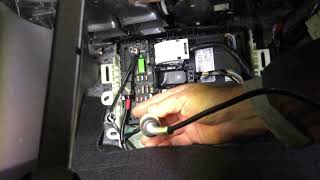
- Body Control Module (BCM) — Located in the passenger footwell, behind the right-side kick panel.. This is the module that has lost communication. Physical access is required to check its connectors (C2280 series), power, and ground connections.
- BCM Ground Studs — There are two threaded ground bolts on the firewall just under the BCM/fusebox area in the passenger footwell. Other forum users mention a 7mm nut on the center console side panel, toward the front, that serves as a ground point.. A loose or corroded ground is a primary cause of network communication faults. These are the specific points to inspect, clean, and tighten when diagnosing U0140.
- Connector C2280F — One of the main connectors plugging into the BCM in the passenger footwell.. This connector carries many essential signals, including LIN bus circuits and ignition switch status. A pinout diagram is necessary to test for proper voltage and continuity on specific circuits if a wiring fault is suspected.
OEM Part Supersession History
MU5Z-15604-L→MU5Z-15604-KP— Part revision or update by the manufacturer. Supersessions often contain hardware or software improvements to address known issues.MU5Z-15604-K→MU5Z-15604-KN— Part revision or update by the manufacturer.
Model Year Variations Within This Range
- 2025: The 2025 Maverick receives a significant interior tech upgrade, making a larger 13.2-inch touchscreen with the SYNC 4 system standard. The previous 8-inch screen is discontinued. This change in infotainment hardware and software architecture could potentially alter diagnostic paths for network issues compared to 2022-2024 models.
- 2022-2024: These model years are the primary focus of the major BCM software recalls (24V-293 and 24V-267). While 2025 models are new, they are expected to have the updated software from the factory, making them less likely to exhibit these specific recall-related U0140 faults.
Diagnostic Flowchart
Other Known Issues on This Vehicle
Issues unrelated to this code that are worth knowing about as an owner of this generation:
- Engine Fire Risk (2.5L Hybrid) 🔴 High — Affects 2020-2023 models with the 2.5L HEV/PHEV engine. Over 125,000 vehicles recalled (including Escape/Corsair). (Ref: NHTSA 22S47 / 23S27)
- Side Curtain Airbag Non-Deployment 🔴 High — Affects nearly 65,000 2022 models. The airbags failed to meet NHTSA's ejection mitigation standard during testing. (Ref: NHTSA 22V-702 / Ford 22C20)
- Fuel Tank Leaks 🔴 High — Two separate, low-volume recalls. One for 2022 models due to unauthorized drilling during bedliner installation (NHTSA 21V-976) and another for 217 2024 models due to a manufacturing defect (NHTSA 24V-185). (Ref: NHTSA 21V-976, 24V-185)
- Instrument Panel Cluster Goes Blank 🟠 Medium → Shop Instrument Cluster — A recall affecting over 62,000 2022-2023 models where warning lights or gauges might fail to illuminate. (Ref: Ford ID 24C01)
- Grabby or Sticking Brakes at Low Speeds 🟡 Low — Common complaint on 2022 models, particularly in Eco mode. A TSB was issued to reprogram the PCM and SOBDM-C. (Ref: TSB 22-2493)
Used vs. New Parts: Buying Guide for This Vehicle
When a used part is the smart pick: A used BCM is almost never a smart choice for a DIY or standard shop repair. The module is tied to the vehicle's VIN and security system (PATS). While significantly cheaper, it cannot be simply swapped in. It requires specialized tools like Ford's IDS and specific knowledge to perform a 'Programmable Module Installation' (PMI) to wipe and reprogram it with the target vehicle's 'As-Built' data.
Donor-vehicle mileage cap: roughly under 50000 miles for the part to have meaningful remaining life.
What to inspect on the donor part:
- Verify the part number EXACTLY matches the original or is a valid superseded part number.
- Inspect the connector pins for any signs of corrosion, water damage, or physical bending.
- Obtain the VIN of the donor vehicle if possible. This can be used to look up its original 'As-Built' data from Ford's Motorcraft service site, which is critical for reprogramming.
OEM-only on this vehicle (don't cheap out):
- Body Control Module (BCM)
Brands owners have reported issues with on this vehicle:
- Any used BCM sold without a guaranteed return policy, given the high likelihood of programming difficulties.
Real Owner Stories
Aggregated from forums and TSBs cited above. Mileages and costs reflect what owners reported in those sources.
2022 Ford Maverick
Symptoms: The truck was 'bricked' and completely unresponsive; the owner reported a 'wiring mess' was found during a separate airbag recall service.
What fixed it: The dealer found and repaired pinched wires located under the driver's side door sill.
Source hint: MaverickTruckClub.com thread titled 'Recall: 2022 Maverick Side Curtain Airbag Recall'
2022-2024 Ford Maverick Hybrid (FHEV)
Symptoms: Intermittent 12V battery drain occurring while the vehicle was parked with the ignition off.
What fixed it: Battery reset and testing per manufacturer instructions, with some owners receiving battery replacements under warranty while awaiting a 2025 software fix.
Source hint: MaverickTruckClub.com thread titled 'SSM 53087 2022-2024 Maverick - FHEV'
Ford Owner Report
Symptoms: An owner reported multiple communication errors including U0140 "Lost communication with body control module," U0155 "lost communication with instrument panel control module," and P25B0 "Fuel level sensor defective."
What fixed it: Diagnostic investigation into the control modules and Ethernet failure with the instrument panel cluster (NHTSA ODI #11715107).
Ford Owner Report
Symptoms: Vehicle exhibited BCM missing communication (U0140:00-08) and APIM private communication network malfunction (U1A00:87-08).
What fixed it: OBD-II scanning revealed these communication codes were the primary issue rather than a mechanical transmission failure (NHTSA ODI #11693477).
Related OBD-II Codes
Frequently Asked Questions
My 2022 Maverick is stalling at low speeds and won't restart after an auto-stop. Is there a recall for this?
I noticed my Maverick's taillights aren't working. Could this be related to the BCM?
Is there a known issue with the 12V battery draining on the Maverick Hybrid?
Will the dealership charge me to fix the BCM software issues related to U0140?
My turn signal bulb is out but I didn't get a dashboard warning. Is this a software bug?
I see code U0140:82 after updating my trailer module. Should I be worried?
Helpful Videos
We Have This Part in Stock

The information in this article is provided for general reference and educational purposes only. Vehicle specifications, procedures, and part compatibility can vary by production date, trim level, and region. Always consult your vehicle's factory service manual and verify part numbers before purchasing or performing repairs. Safety-critical components such as airbags, seat belts, and braking systems should be installed by a qualified professional.
- Ford Maverick:
- 🧭 Diagnostic Flowchart
- 🎬 Helpful Videos
- 🛍️ Shop This Part
- What's Unique About the 2022-2025 Ford Maverick
- Symptoms You May Notice
- Most Likely Causes
- Rare But Worth Checking
- Diagnosis Steps
- Parts You'll Likely Need
- Related Codes That Often Appear With This One
- Technical Service Bulletins (TSBs) & Recalls
- Platform-Specific Known Issues
- Mechanic-Grade Diagnostic Values
- Hidden / Shadow Codes Worth Checking
- Scan Tool Commands That Help
- Wiring & Ground Locations
- OEM Part Supersession History
- Model Year Variations Within This Range
- Other Known Issues on This Vehicle
- Used vs. New Parts: Buying Guide for This Vehicle
- Real Owner Stories
- 2022 Ford Maverick
- 2022-2024 Ford Maverick Hybrid (FHEV)
- Ford Owner Report
- Ford Owner Report
- Related OBD-II Codes
- Frequently Asked Questions
- 🎟️ Get 5% Off