

U0140 on 2013-2018 Hyundai Santa Fe: Lost Communication With Body Control Module Guide
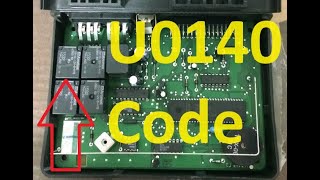
This code means the Body Control Module (BCM) has stopped communicating with other computers in the vehicle. The cause is most often a simple electrical issue like a low battery, a blown fuse, or a bad ground connection. In some Santa Fe models, the BCM is integrated into the Smart Junction Box (SJB) or interior fuse panel. Always check these basic items before suspecting the BCM itself.
- U0140 means the Body Control Module (BCM) is offline and not communicating.
- Before suspecting a failed BCM, always test the battery, check all related fuses, and inspect the BCM's ground connection.
- Symptoms are widespread and electrical, affecting lights, locks, windows, and wipers.
- Due to the complexity of network diagnostics and the need for programming a replacement module, professional service is recommended if the issue isn't a simple battery or fuse problem.
- There are no known common pattern failures for this specific code on the Santa Fe, but wiring shorts have been identified as a cause in owner forums.
What's Unique About the 2013-2018 Hyundai Santa Fe
For the 2013-2018 Santa Fe, there are no widely documented pattern failures or Technical Service Bulletins (TSBs) specifically for the U0140 code. However, a Reddit user with a 2017 Santa Fe experiencing similar electrical chaos (multiple warning lights, loss of steering assist) reported the issue was traced to a short between the Smart Junction Box and the trunk latch. This highlights that on the Santa Fe, U0140 should be treated as a general network fault requiring systematic diagnosis, starting with simple electrical checks and inspecting harnesses for shorts, especially if recent repairs have been performed.
Generation note: The 2013-2018 year range covers the third generation (chassis code DM) of the Hyundai Santa Fe. This includes both the 5-seat 'Santa Fe Sport' and the long-wheelbase 7-seat 'Santa Fe' (later named Santa Fe XL). The information here applies to all variants within this generation, though BCM part numbers will differ based on trim and options.
Symptoms You May Notice
- Interior or exterior lights not working, working erratically, or staying on
- Power windows and/or power door locks unresponsive
- Wipers behaving strangely or not working at all
- Keyless entry or push-button start may fail
- Multiple warning lights on the instrument cluster (e.g., ABS, Traction Control) may illuminate at once
- Radio and HVAC (climate control) system may not work
- Parasitic battery drain leading to a dead battery
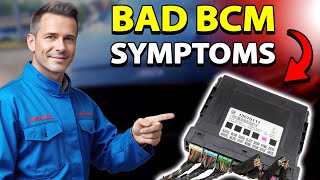
- Vehicle may not start 🎬 See common symptoms of a failing Body Control Module
- Replacing the Body Control Module (BCM) without first testing the battery, fuses, and ground connections.
- Replacing the wrong module. The BCM is often integrated with the interior fuse panel (Smart Junction Box), but can also be a separate unit behind the dashboard.
Most Likely Causes
- Low Battery Voltage or Poor Connection 🔴 High Probability → Shop Vehicle Battery All modern vehicles with many electronic modules are sensitive to low voltage. The BCM can stop communicating if its supply voltage drops too low during startup.
How to confirm: Test the battery with a multimeter or electronic battery tester. It should read ~12.6V with the engine off and ~14.2V while running. Check battery terminals for corrosion and ensure they are tight. A user on a forum resolved intermittent electrical issues by tightening loose battery cables.
Typical fix: Recharge or replace the battery. Clean or tighten battery terminals.
Est. part cost: $150-$300 - Blown Fuse for BCM/SJB 🟡 Medium Probability
How to confirm: Locate the interior fuse panel (Smart Junction Box), typically under the driver's side dashboard. Inspect all fuses labeled 'BCM', 'SJB', 'Module', or 'Memory' for continuity. A visual check or a multimeter test is required.
Typical fix: Replace the blown fuse with one of the identical amperage rating. If the fuse blows again, there is an underlying short circuit that needs to be found.
Est. part cost: $1-$5 - Poor Ground Connection 🟡 Medium Probability
How to confirm: Locate the main ground points for the BCM and chassis in the driver's side footwell area. Check for loose, corroded, or broken ground straps. A voltage drop test from the BCM ground wire to the battery negative terminal can confirm a bad ground.
Typical fix: Clean the ground point to bare metal and re-secure the connection. Replace corroded ground straps.
Est. part cost: $5-$20 - Damaged Wiring or Connectors ⚪ Low Probability
How to confirm: Visually inspect the wiring harness going to the Smart Junction Box/BCM for any signs of chafing, pinching, or rodent damage. A Reddit user's Santa Fe had a short between the SJB and the trunk latch, causing widespread electrical failure. Disconnect the BCM connectors (with the battery disconnected) and check for corroded, bent, or pushed-out pins.
Typical fix: Repair the damaged section of the wiring harness. Clean or replace damaged connector pins.
Est. part cost: $20-$500+
Rare But Worth Checking
- Faulty Body Control Module (BCM) / Smart Junction Box (SJB): → Shop Body Control Module This is the component that has stopped communicating, but it is often replaced unnecessarily. All other possibilities (power, ground, wiring) must be ruled out before condemning the BCM. A faulty SJB can also cause a parasitic battery drain. On some models, the BCM is located behind the center of the dashboard, requiring removal of the radio and vents to access.
- CAN Bus Network Fault: A short or open in the CAN bus wiring itself, or a fault in another module on the same network, can disrupt communication and set this code. This requires advanced diagnostics with an oscilloscope or specialized scan tool.
Diagnosis Steps
- Scan the vehicle for all codes in all modules. Note any other communication codes (U-codes).
- Check and record the vehicle's battery voltage. Ensure it is fully charged and the terminals are clean and tight.
- Inspect all relevant fuses in the interior and under-hood fuse boxes, particularly any labeled BCM, SJB, or Memory.
- If fuses are okay, locate the BCM/Smart Junction Box. On the Santa Fe, this is often integrated with the interior fuse panel under the driver's dash, but on some trims, it is a separate module behind the center stack. Visually inspect its connectors and nearby wiring for any obvious damage or water intrusion.
- Locate and verify the integrity of the main BCM ground connection, typically found in the driver-side kick panel area.
- If all the above checks pass, the next steps involve using a multimeter to check for power and ground at the BCM connector pins and using an advanced scan tool to check the CAN bus network status. This level of diagnosis is best left to a professional.
- Only after confirming the BCM has proper power, ground, and network connections should the module itself be considered faulty. Remember that a replacement BCM/SJB will require programming by a dealer or specialist.
Parts You'll Likely Need
- Body Control Module (BCM) / Smart Junction Box (SJB)
(OEM #95400-B8930 (For 2013-14 LWB 3.3L w/ Smart Key, w/o Park Assist))— This is the module that has lost communication. It is only replaced after all power, ground, and wiring issues have been ruled out. Part numbers are highly specific to trim and options. For example, 95400-4Z310 is for 2017-2018 Santa Fe models. Replacement requires programming.
Trusted brands: Hyundai OE
OEM price range: $500-$700
Aftermarket price range: $300-$500 - Automotive Battery — Low system voltage is a primary cause of communication codes in modern vehicles.
Trusted brands: Bosch, ACDelco, DieHard
OEM price range: $200-$350
Aftermarket price range: $150-$300
Platform-Specific Known Issues
- source — A user on Reddit with a 2017 Santa Fe reported experiencing multiple warning lights, loss of turn signals, and the steering wheel locking up. After multiple dealer visits, the issue was finally traced to a short circuit between the Smart Junction Box (SJB) and the trunk latch. This demonstrates how a wiring fault in a seemingly unrelated area can cause the BCM/SJB to lose communication and trigger code U0140.
- BCM Location Varies by Trim: While the BCM is often integrated into the Smart Junction Box (interior fuse panel) on many Hyundais, some Santa Fe models have a separate BCM located behind the center of the dashboard. Accessing this requires removing the radio, climate controls, and surrounding trim panels. A YouTube video for a 2017-2018 Santa Fe shows this specific location and removal process. 🎬 Watch: How to access and remove the Santa Fe BCM
Mechanic-Grade Diagnostic Values
- CAN Bus Network Resistance — expected: ~60 Ω (Ohms) across pins 6 (CAN-H) and 14 (CAN-L) of the OBD-II port with the battery disconnected.. Failure: A reading of ~120 Ω indicates an open circuit or a module offline (missing one of two terminating resistors). A reading near 0 Ω indicates a short between the CAN High and Low wires.
- CAN Bus Voltage (Key On, Engine Off) — expected: CAN High (Pin 6 to ground): ~2.5V to 3.5V. CAN Low (Pin 14 to ground): ~1.5V to 2.5V.. Failure: A voltage stuck at 0V suggests a short to ground. A voltage stuck at a higher level (e.g., 5V or 12V) suggests a short to power. The two lines should show fluctuating, mirrored signals on an oscilloscope.
- BCM Ground Circuit Resistance — expected: < 0.1 Ω (Ohms) from the BCM ground pin to a clean chassis ground point.. Failure: A reading higher than 0.1 Ω indicates excessive resistance in the ground circuit, which can cause the module to malfunction.
Hidden / Shadow Codes Worth Checking
- B1762: 'ACU Coding Error'. While related to the Airbag Control Unit (ACU), seeing this code indicates a failure or omission of the 'Variant Coding' procedure, a process also required for a replacement BCM. It points to a programming issue rather than a hardware fault. (see via Hyundai GDS or equivalent professional scan tool.)
- C1702: 'Variant Coding Required'. This code is explicitly set by the ABS/ESP module when it has been replaced and not correctly coded. A similar logic applies to the BCM, where a replacement will not function correctly until this procedure is completed. (see via Hyundai GDS or equivalent professional scan tool.)
Scan Tool Commands That Help
- Hyundai GDS (Global Diagnostic System): Variant Coding — This procedure is mandatory after replacing the BCM. It writes the vehicle's specific configuration (trim level, options) to the new module, allowing it to communicate correctly on the network. Failure to perform this will result in a non-functional module and likely set a coding-related fault code.
- Hyundai GDS (Global Diagnostic System): Actuation Test — To verify if the BCM is capable of controlling its outputs. This test allows a technician to command functions like wipers, door locks, and lights directly from the scan tool. If the command is sent but the component doesn't activate (and wiring is good), it points towards a faulty BCM.
- Hyundai GDS (Global Diagnostic System): Input/Output Monitoring — To check the live data status of switches and sensors that report to the BCM. This helps determine if the BCM is correctly receiving input signals (e.g., from the headlight switch or door latch switch) before condemning the module itself.
Wiring & Ground Locations
- GM02 / GM03 — GM02 is located at the left top of the dash. GM03 is located behind the center of the dash.. These are primary ground points for various modules in the dashboard area. A loose or corroded connection at these locations can disrupt power to the BCM or other modules, causing communication faults.
- GF01 / GF02 — GF01 is in the left kick panel area. GF02 is in the right kick panel area.. The BCM and Smart Junction Box are typically grounded in the driver-side kick panel area. GF01 is a critical ground to inspect for looseness or corrosion when diagnosing U0140.
- BCM Connectors (M02-A, B, C, D) — These are the main multi-pin connectors that plug into the BCM itself, whether it's part of the SJB or a separate unit.. All power, ground, and CAN bus signals pass through these connectors. Testing for voltage, ground, and network signals must be done at these specific connector pins to confirm the BCM has what it needs to operate.
- CAN Bus Pins at OBD-II Port — Pin 6 (CAN High) and Pin 14 (CAN Low) at the Data Link Connector under the driver's side dashboard.. This is the most accessible point to perform initial network health checks, such as measuring overall bus resistance and voltage levels, without having to access individual modules.
OEM Part Supersession History
Varies Greatly (e.g., 95400-0W150, 91950-2W560, 95400-4Z310)→Varies— Part numbers for the BCM / SJB are highly specific to the vehicle's model year, trim level, and installed options (e.g., Smart Key, Parking Assist).
Heads up: It is critical to match the OEM part number on the replacement module EXACTLY to the original. Do not rely on vehicle compatibility lists from sellers. Using a BCM with the wrong part number, even from a similar vehicle, will result in failed programming or malfunctioning features.
Model Year Variations Within This Range
- 2013-2018 (Varies by trim): The physical location of the Body Control Module is a key variation. On many trims, the BCM is integrated into the Smart Junction Box (the interior fuse panel). However, on other trims (specifically documented for 2017-2018 models), the BCM is a completely separate module located behind the center dashboard stack, requiring the removal of the radio and climate control panel for access.
Diagnostic Flowchart
Other Known Issues on This Vehicle
Issues unrelated to this code that are worth knowing about as an owner of this generation:
- Theta II GDI Engine Failure 🔴 High — Widespread across multiple model years (esp. 2013-2017). Can manifest as knocking, excessive oil consumption, stalling, or catastrophic failure due to bearing wear and metal debris. (Ref: Multiple recalls and class-action lawsuits have been issued, but not all VINs are covered.)
- Worn Steering Coupler 🟡 Low — Very common. Owners notice a clicking or clunking sound from the steering column when turning the wheel. It is generally considered a nuisance rather than a safety risk. (Ref: TSB 17-ST-001 describes the replacement procedure with an improved part (56315-2K000-FFF).)
- Peeling Exterior Paint (Especially White) 🟠 Medium — Common on white-painted vehicles, where the paint can peel off in large sheets. Affects 2017-2018 Santa Fe Sport models within this generation. (Ref: Hyundai extended the paint warranty to 10 years/unlimited miles for affected vehicles.)
- Engine Stalling / Crankshaft Position Sensor Failure 🔴 High — Reported in multiple model years, particularly 2013-2014. A failing crankshaft position sensor can cause the engine to stall unexpectedly while driving.
- ABS Module Fire Risk 🔴 High — A recall was issued for some models due to a risk of the ABS module short-circuiting, which could cause a fire even when the vehicle is parked. (Ref: NHTSA recalls have been issued for this problem.)
Used vs. New Parts: Buying Guide for This Vehicle
When a used part is the smart pick: A used BCM/SJB from a salvage vehicle is a very sensible and cost-effective option, as the part itself is typically reliable. The primary cost and complexity are in the programming, not the hardware.
Donor-vehicle mileage cap: roughly under 150000 miles for the part to have meaningful remaining life.
What to inspect on the donor part:
- The OEM part number printed on the used module MUST be an exact match to your original module's part number.
- Inspect the connectors and pins on the used module for any signs of corrosion, moisture damage, or bent pins.
- Purchase from a reputable salvage yard that offers a short-term warranty in case the module is dead on arrival.
OEM-only on this vehicle (don't cheap out):
- While the part can be used OEM, the programming/coding service is effectively 'OEM-only' in the sense that it requires dealer-level tools (like the Hyundai GDS) or high-end professional aftermarket tools.
Aftermarket brands forum-validated for this vehicle:
- There are no widely trusted 'new' aftermarket BCMs for this vehicle; the main alternatives to new OEM are used OEM or remanufactured OEM modules.
Brands owners have reported issues with on this vehicle:
- Be cautious of any 'plug-and-play' or 'no programming needed' claims from unknown online sellers. For this vehicle, a BCM replacement requires VIN-specific programming to integrate with the immobilizer and other systems.
Real Owner Stories
Aggregated from forums and TSBs cited above. Mileages and costs reflect what owners reported in those sources.
2017 Hyundai Santa Fe
Symptoms: Multiple warning lights, loss of turn signals, and the steering wheel locking up.
What fixed it: Traced and repaired a short circuit between the Smart Junction Box (SJB) and the trunk latch.
Source hint: Reddit r/Hyundai thread titled 'Santa Fe electrical issues, need advice'
Related OBD-II Codes
Frequently Asked Questions
Where is the BCM located on my 2017-2018 Hyundai Santa Fe?
Can a loose battery cable really cause a U0140 communication code?
Is there a specific TSB for the clicking sound in my steering column?
My white 2018 Santa Fe Sport has peeling paint; is this covered?
Could a problem with my trunk latch cause the U0140 code?
Do I need to program a replacement BCM/SJB?
Helpful Videos


Used OEM Parts in Stock
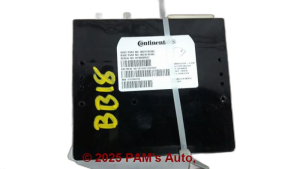
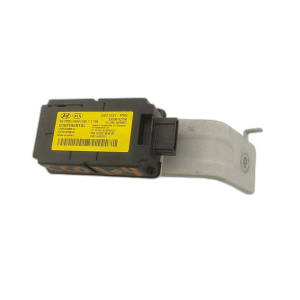
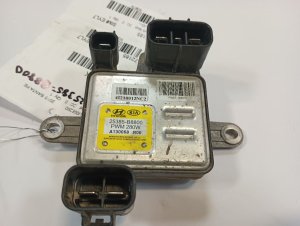
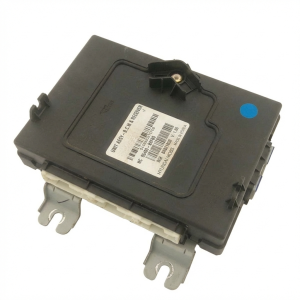
New Aftermarket Parts Available

The information in this article is provided for general reference and educational purposes only. Vehicle specifications, procedures, and part compatibility can vary by production date, trim level, and region. Always consult your vehicle's factory service manual and verify part numbers before purchasing or performing repairs. Safety-critical components such as airbags, seat belts, and braking systems should be installed by a qualified professional.
- Hyundai Santa Fe:
- 🧭 Diagnostic Flowchart
- 🎬 Helpful Videos
- 🛍️ Shop This Part
- What's Unique About the 2013-2018 Hyundai Santa Fe
- Symptoms You May Notice
- Most Likely Causes
- Rare But Worth Checking
- Diagnosis Steps
- Parts You'll Likely Need
- Platform-Specific Known Issues
- Mechanic-Grade Diagnostic Values
- Hidden / Shadow Codes Worth Checking
- Scan Tool Commands That Help
- Wiring & Ground Locations
- OEM Part Supersession History
- Model Year Variations Within This Range
- Other Known Issues on This Vehicle
- Used vs. New Parts: Buying Guide for This Vehicle
- Real Owner Stories
- 2017 Hyundai Santa Fe
- Related OBD-II Codes
- Frequently Asked Questions
- 🎟️ Get 5% Off