

U0140 on 2019-2024 Jeep Compass: Lost Communication with BCM Fixes
This code means the Body Control Module (BCM) has stopped communicating. The most common causes are wiring issues, a weak battery, or a faulty BCM. Diagnosis should start with checking the battery and all BCM wiring connections before considering BCM replacement. In some cases, the issue may resolve itself temporarily.
- U0140 on a Jeep Compass means the Body Control Module (BCM) is offline.
- Always check the battery and its connections first, as low voltage is a frequent cause of this code.
- Refer to TSB #08-219-24, which links this code to other specific communication faults on this vehicle.
- Diagnosis can be complex and is best left to a professional with a proper scan tool; BCM replacement requires dealer/shop programming.
What's Unique About the 2019-2024 Jeep COMPASS

On the 2019-2024 Jeep Compass, the U0140 code is specifically mentioned in a Technical Service Bulletin (TSB 08-219-24) alongside other communication codes. This indicates that Jeep has recognized a pattern where this fault can be related to specific network bus issues, sometimes involving the steering wheel controls or the LIN bus. This provides a more focused diagnostic starting point compared to generic vehicles where U0140 can have broader causes.
Diagnostic Flowchart

Tap your situation to follow the diagnostic path that matches what you're seeing on this vehicle.
Symptoms You May Notice

- Check Engine Light is on
- Multiple dashboard warning lights may illuminate (ABS, traction control, etc.)
- A 'Christmas tree' effect of many warning lights appearing at once
- Power windows or door locks not working
- Interior or exterior lights behaving erratically or not working
- Windshield wipers not functioning correctly
- Key fob remote may stop working
- Vehicle may not start in some cases
- Steering wheel may lock upon starting
- Poor or slow acceleration
- Replacing other modules (like the instrument cluster or radio) before confirming they are the source of the network disruption.
- Replacing the BCM without first thoroughly checking the battery, grounds, and wiring harness connections.
Most Likely Causes

- Low or Unstable Battery Voltage 🔴 High Probability → Shop Vehicle Battery Modern vehicles like the Compass are packed with electronic modules that are highly sensitive to voltage fluctuations. A weak or failing battery is a very common trigger for communication codes, as modules can drop off the network if voltage is unstable. Some owners report these issues resolving temporarily on their own, which can be indicative of an intermittent power supply problem. 🎬 See this video on why Compass batteries often die overnight.
How to confirm: Test the battery voltage with a multimeter; it should be above 12.4V (ideally 12.6V) with the engine off and between 13.7V and 14.7V with the engine running. Have the battery and charging system professionally load tested, as a simple voltage test may not reveal a weak battery.
Typical fix: Recharge or replace the battery. Clean any corrosion from the battery terminals and check for secure connections. Ensure chassis and engine ground straps are clean and tight. 🎬 Watch: How to test for a bad engine ground strap.
Est. part cost: $150-$350 - Wiring or Connector Issue 🟡 Medium Probability Wiring harnesses can be susceptible to chafing, corrosion, or damage, especially connectors exposed to moisture or vibration. The BCM's location can sometimes make it vulnerable to water intrusion from a clogged sunroof drain or leaking windshield seal.
How to confirm: Visually inspect the wiring harness and connectors going to the BCM for any signs of damage, corrosion, or loose pins. Wiggle the connector to see if the fault is intermittent. Check for power and ground at the BCM connector using a multimeter and a wiring diagram.
Typical fix: Repair the damaged section of the harness or clean/replace the faulty connector. Applying dielectric grease can help prevent future moisture intrusion.
Est. part cost: $10-$100 - Faulty Body Control Module (BCM) 🟡 Medium Probability → Shop Body Control Module Internal failure of the BCM can occur due to moisture intrusion, voltage spikes, or component age. Physical shock from an accident can also damage the module.
How to confirm: This is a last resort after confirming the battery, grounds, and wiring are all in good condition. A professional scan tool will be unable to communicate with the BCM, or bidirectional tests will fail.
Typical fix: Replace the Body Control Module. The new BCM will need to be programmed to the vehicle's specific VIN and configuration by a dealer or qualified shop with the proper tools like wiTECH.
Est. part cost: $300-$700
Rare But Worth Checking
- Faulty Powertrain Control Module (PCM): → Shop Engine Control Module (ECM) While rare, a failing PCM can sometimes disrupt the entire CAN bus network, causing other modules to report communication loss. A recall (18V-524) was issued for some 2018 models for faulty PCMs.
- Interference from Aftermarket Accessories: Poorly installed remote starters, alarms, stereo equipment, or even OBD-II dongles can interfere with the CAN bus network and cause communication codes.
- CAN Bus Termination Issue: The CAN bus network requires a specific resistance (typically around 60 ohms) to function. A faulty terminating resistor in a module or wiring can disrupt the entire network. This requires advanced diagnostics with a multimeter between pins 6 and 14 of the OBD-II port.
Diagnosis Steps
- Check the battery and charging system. Ensure voltage is stable and above 12.4V (ideally 12.6V).
- Use a professional scan tool to attempt communication with all modules on the network. Note which modules are and are not responding. Check for any other stored DTCs.
- Perform a thorough visual inspection of the BCM wiring harness and connectors. Look for chafing, corrosion, or loose pins.
- Check for any relevant Technical Service Bulletins (TSBs). TSB #08-219-24 is directly related to this code on the Jeep Compass.
- Using a wiring diagram, verify power and ground connections at the BCM connector with a digital multimeter.
- Inspect main chassis and engine ground connections for corrosion and tightness.
- If wiring, power, and ground are confirmed good, and the BCM is still unresponsive, the BCM is the likely culprit and may require replacement and programming.
Parts You'll Likely Need
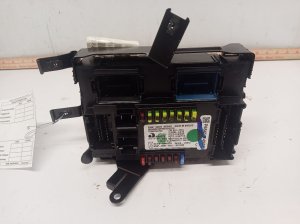
- Body Control Module (BCM)
(OEM #68409791AG, 68409792AG, P68411149AE)— This is the module that has lost communication. If wiring and power are good, the module itself has likely failed internally. Replacement requires programming to the vehicle's VIN.
Trusted brands: Mopar
OEM price range: $400-$700
Aftermarket price range: $250-$500 - Automotive Battery — A weak or failing battery is a very common cause of communication codes in modern vehicles. This should be the first component tested.
Trusted brands: Mopar, Interstate, DieHard
OEM price range: $200-$350
Aftermarket price range: $150-$250
Related Codes That Often Appear With This One
- U1046-00 — As cited in TSB #08-219-24, this code for 'LIN 4 Bus' often appears with U0140, indicating a related network fault.
- U121E-00 — Also mentioned in TSB #08-219-24, this code for 'Lost Communication With Steering Wheel Cruise Control Switch' points to a potential issue in the same network area.
Technical Service Bulletins (TSBs) & Recalls
- 08-219-24: Addresses MIL illumination with DTC U0140-00, U1046-00, and U121E-00.
Platform-Specific Known Issues
- Jeep issued Technical Service Bulletin (TSB) #08-219-24 for some models which notes that U0140-00 may be set along with U1046-00 (LIN 4 Bus) and U121E-00 (Lost Communication With Steering Wheel Cruise Control Switch). This points diagnostics toward the BCM and its related local interconnect networks.
- Owner experiences suggest that sometimes this code can appear with multiple other warnings, only to resolve itself after a few hours or key cycles, pointing towards intermittent electrical issues like a weak battery or poor connection.
Mechanic-Grade Diagnostic Values
- CAN Bus Network Resistance — expected: ~60 Ohms. Failure: A reading of ~120 Ohms indicates a missing terminating resistor or an open in the bus. A reading near 0 Ohms indicates a short between CAN High and CAN Low wires. A reading of ~40-45 Ohms may indicate a third, unintended resistor on the network or a faulty module transceiver.
- CAN Bus Voltage (at DLC, key on, engine off) — expected: CAN High (Pin 6) should be ~2.5-3.0V. CAN Low (Pin 14) should be ~2.0-2.5V. These are best measured with an oscilloscope due to the rapid data transmission.. Failure: Voltages that are stuck high, low, or at 0V indicate a short to power or ground. Voltages that do not mirror each other (symmetrically around 2.5V) indicate a bus problem.
- BCM Power and Ground — expected: With ignition on, specific pins on the BCM connector should show battery voltage (~12.6V). Specific ground pins should show less than 0.1 Ohms of resistance to a known good chassis ground.. Failure: No voltage or low voltage on power pins indicates a fuse or wiring issue upstream. High resistance on ground pins indicates a corroded or loose ground connection.
Scan Tool Commands That Help
- wiTECH 2.0: Network Topology / View All DTCs — This is the first step to see which modules are communicating and which are not. A grayed-out BCM in the topology view instantly confirms it is offline.
- wiTECH 2.0: BCM Flash Reprogramming — Used when a Technical Service Bulletin (TSB) calls for a software update to fix a known bug that could cause communication issues. A battery charger supplying stable voltage (13.2-13.5V) is required during the flash.
- wiTECH 2.0: Proxy Configuration Alignment — This function is required after replacing the BCM. It synchronizes the new module with the vehicle's existing configuration and other modules. Failure to perform this step will result in a non-functional BCM and persistent communication errors.
- wiTECH 2.0: ESL Secret Key Transfer — When replacing the BCM on vehicles with an Electronic Steering Lock (ESL), this procedure transfers security information to the new module. It is critical for ensuring the vehicle will start after the repair.
Wiring & Ground Locations
- BCM Location — On the 2019-2024 Jeep Compass, the BCM is typically located in the driver's side footwell, to the left of the steering column, often attached to a bracket behind the lower dash panels.. This location can be susceptible to water intrusion from a leaking windshield seal or door seal, and the connectors can be disturbed during under-dash work. Physical access is required to test power, ground, and network wires directly at the module.
- G305 (or similar) — A major chassis ground point is commonly found in the driver's side kick panel area, near the base of the A-pillar. This serves as a ground for multiple interior modules.. A loose or corroded G305 ground can cause a floating ground for the BCM, leading to intermittent communication failures and strange electrical behavior. This is a common point of failure due to moisture and foot traffic in the area.
- Engine/Transmission Ground Straps — There are several ground straps connecting the engine/transmission assembly to the vehicle chassis. One is often located near the alternator and motor mount.. While not a direct BCM ground, a broken or corroded main engine ground strap can cause electrical noise and unstable voltage throughout the vehicle's entire electrical system, which can disrupt CAN bus communication and trigger a U0140 code.
Real Owner Repair Stories
- Reddit user on r/jeepproblems (2019 Jeep Compass Trailhawk) — Vehicle would not start. Jumping it worked for a while but then stopped working completely.
❌ Tried (didn't work) Jumping the battery with another car, Using a jump pack
✅ What actually fixed it The user was advised by multiple people that the issue was a grounding problem and was searching for the locations of the main ground cables to clean them. While the final outcome wasn't posted by the original author, this strongly points to a common fix pattern where a poor ground connection mimics a dead battery and causes starting/communication issues.
OEM Part Supersession History
68409791AB, 68409791AC, 68409791AD, 68409791AE, 68409791AF→68409791AG— Part revisions for hardware updates, software compatibility, or manufacturing process improvements.
Heads up: Using an older, superseded part number may result in software incompatibilities or missing features. It is critical to use the latest specified part (68409791AG or its subsequent replacement) and ensure it is programmed with the correct software for the vehicle's VIN and options.
Model Year Variations Within This Range
- 2022-2024 (Facelift models): The 2022 model year introduced a significant interior and electronics refresh. Pre-facelift models (2019-2021) used the Uconnect 4 system with up to an 8.4-inch screen. Post-facelift models (2022+) use the much faster Uconnect 5 system with a standard 8.4-inch or optional 10.1-inch screen, and an available 10.25-inch digital instrument cluster. This change in architecture means the BCM, instrument cluster, and radio/infotainment modules are different and not interchangeable with earlier models. Diagnostic procedures for network issues may differ.
Helpful Videos

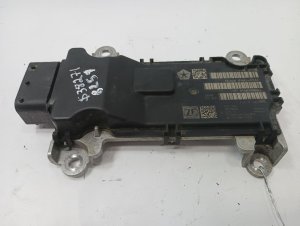
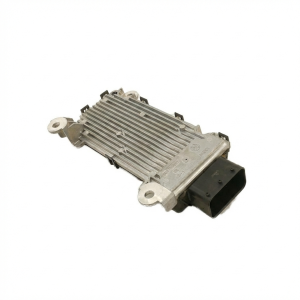
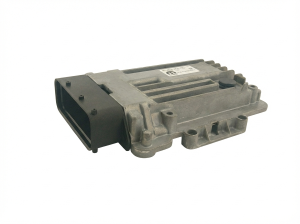
Used OEM Parts in Stock
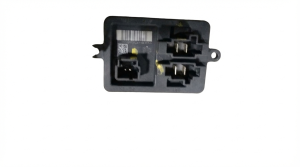
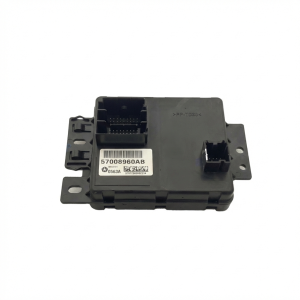
New Aftermarket Parts Available
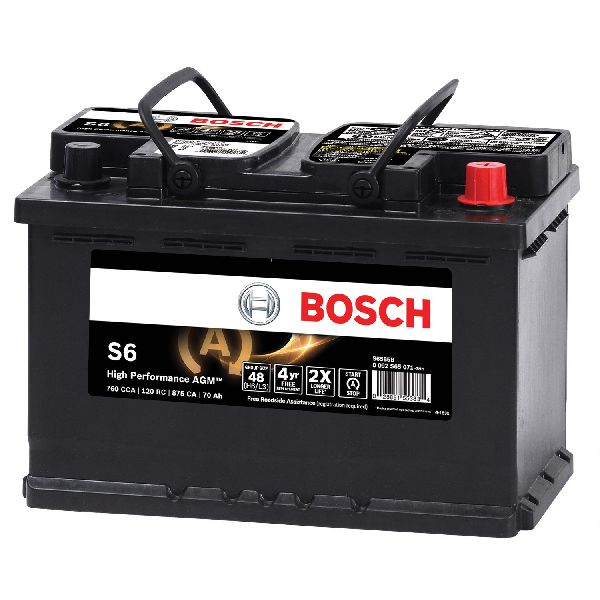

The information in this article is provided for general reference and educational purposes only. Vehicle specifications, procedures, and part compatibility can vary by production date, trim level, and region. Always consult your vehicle's factory service manual and verify part numbers before purchasing or performing repairs. Safety-critical components such as airbags, seat belts, and braking systems should be installed by a qualified professional.
- Jeep COMPASS:
- 🧭 Diagnostic Flowchart
- 🎬 Helpful Videos
- 🛍️ Shop This Part
- What's Unique About the 2019-2024 Jeep COMPASS
- Symptoms You May Notice
- Most Likely Causes
- Rare But Worth Checking
- Diagnosis Steps
- Parts You'll Likely Need
- Related Codes That Often Appear With This One
- Technical Service Bulletins (TSBs) & Recalls
- Platform-Specific Known Issues
- Mechanic-Grade Diagnostic Values
- Scan Tool Commands That Help
- Wiring & Ground Locations
- Real Owner Repair Stories
- OEM Part Supersession History
- Model Year Variations Within This Range
- 🎟️ Get 5% Off