

U0140 on 2013-2020 Lincoln MKZ: Lost Communication With Body Control Module Causes and Fixes
U0140 on a 2013-2020 Lincoln MKZ means the Body Control Module (BCM) is offline. This is most often caused by a weak battery, a blown fuse, or water damage to the BCM from a leaking windshield or clogged sunroof drains. Diagnosis should start with the battery and fuses before suspecting the BCM itself, which is located under the driver's side dash, left of the steering column.
- Code U0140 on a Lincoln MKZ means the Body Control Module (BCM) has lost communication.
- Before suspecting a bad BCM, always test the battery and check BCM-related fuses first.
- A primary cause of BCM failure on this specific vehicle is water damage from a leaking windshield or sunroof. Check for dampness in the driver's footwell.
- Replacing the BCM is a job for a professional. The new module must be programmed to your car's VIN and security system, and this requires two working keys.
- Do not drive the vehicle extensively, as essential safety systems like headlights and wipers could fail at any time.
What's Unique About the 2013-2020 Lincoln MKZ
The 2013-2020 Lincoln MKZ, which shares its CD4 platform with the Ford Fusion, has a known vulnerability where the Body Control Module (BCM) is susceptible to failure from water intrusion. Leaks from the windshield seal or clogged sunroof drains can allow water to drip onto the BCM, which is located under the driver's side dashboard, causing corrosion and electrical shorts. Consequently, when this code appears, checking for signs of dampness in the driver's footwell and around the BCM is a critical, platform-specific diagnostic step.
Symptoms You May Notice
- Erratic or non-functional interior and exterior lights.
- Power windows and door locks not working or operating on their own.
- Key fob not being recognized, preventing keyless entry or starting.
- A battery that dies overnight or after a few days due to a parasitic draw from a faulty BCM.
- Multiple warning lights on the instrument cluster (ABS, traction control, anti-theft, etc.).
- Windshield wipers behaving erratically or not working.
- Vehicle will not start (crank-no-start).
- Alarm system may go off randomly.
- Instrument panel displays multiple error messages, such as 'all doors open'.
- Replacing the BCM without first checking for a weak battery or blown fuses.
- Replacing the BCM without finding and fixing the source of a water leak, leading to repeat failure.
- Confusing the Body Control Module (BCM) with the SYNC/APIM module, which controls the infotainment screen. They are separate components.
- Replacing a good BCM when the actual fault is in the network wiring or another module causing interference.
Most Likely Causes
- Weak or Failing Battery 🔴 High Probability → Shop Vehicle Battery All modern vehicles with multiple computer modules, including the MKZ, are sensitive to low voltage. A battery below 12.2V can cause unpredictable communication errors between modules, triggering U-codes.
How to confirm: Test the battery voltage at rest (should be >12.4V) and with the engine running (should be >13.5V). Perform a load test to check its health, as a battery can show good voltage but fail under load.
Typical fix: Recharge or replace the vehicle's 12V battery.
Est. part cost: $150-$300 - Water Intrusion into BCM 🔴 High Probability The BCM on this platform is located under the driver's side dash, an area vulnerable to water leaks from a faulty windshield seal or clogged sunroof drains that run down the A-pillars.
How to confirm: Inspect the driver's side footwell carpet for dampness. Visually inspect the BCM and its connectors for any signs of moisture, green/white corrosion, or water stains. This is a well-documented failure mode.
Typical fix: The BCM must be replaced. The source of the water leak (e.g., sunroof drains, windshield seal) must also be identified and repaired to prevent repeat failure. After drying, pack connectors with dielectric grease.
Est. part cost: $250-$600 - Blown Fuse for the BCM 🟡 Medium Probability
How to confirm: Locate the passenger compartment fuse box under the dash to the left of the steering column. Check fuses related to the BCM. For a 2017 MKZ, relevant fuses include #26 (Datalink-Gateway module), #35 (Run-start bus), and others that power BCM-controlled functions. Fuse numbers can vary by year, so consult the owner's manual.
Typical fix: Replace the blown fuse. If it blows again, further diagnosis is needed to find the short circuit.
Est. part cost: $1-$5 - Wiring Harness or Connector Fault 🟡 Medium Probability Wiring in the A-pillar, door jambs, or under the driver's seat can be subject to chafing or corrosion, leading to intermittent shorts or opens on the CAN bus network.
How to confirm: Visually inspect the wiring harness and connectors going to the BCM for damage, corrosion, or loose pins. A multimeter is needed to check for power, ground, and continuity on the CAN bus wires at the BCM connector. The CAN network should show approximately 60 ohms of resistance across the CAN High and CAN Low pins when the battery is disconnected.
Typical fix: Repair the damaged section of the wiring harness or clean/re-pin the faulty connector. Apply dielectric grease to protect the connection.
Est. part cost: $20-$150 - Failed Body Control Module (BCM) ⚪ Low Probability → Shop Body Control Module Internal failure can occur due to age, vibration, or electrical stress, but is often secondary to water damage on this platform. A user on TexAgs reported a complete BCM failure on their 2017 MKZ Hybrid that required replacement.
How to confirm: This is confirmed after ruling out all other possibilities (power, ground, fuses, wiring, and network integrity). A professional scan tool will be unable to communicate with the BCM, showing it as 'offline'.
Typical fix: Replace the BCM and have it professionally programmed to the vehicle. Alternatively, a 'cloning service' can copy data from the old module to a used one, avoiding dealer programming.
Est. part cost: $250-$600
Rare But Worth Checking
- Faulty Gateway Module (GWM):
- Interference from Aftermarket Devices:
Diagnosis Steps
- Check Battery Health: Ensure the battery has a full charge (at least 12.4V) and clean, tight terminals. A weak battery is a very common cause of communication codes.
- Scan for All Codes: Use a capable OBD-II scanner (like FORScan for Ford/Lincoln) to see what other modules are reporting communication loss. If many modules have U-codes, the problem is likely network-wide, not just the BCM.
- Inspect Fuses: Check all fuses related to the Body Control Module in the interior fuse panel. For 2017+ models, this is under the dash to the left of the steering column. Check fuses like #26 (Gateway Module) and #35 (Run-start bus).
- Check for Water Intrusion: This is a critical step for the MKZ/Fusion platform. Carefully inspect the driver's side footwell carpet and the area around the BCM for any signs of moisture, water stains, or corrosion.
- Inspect BCM Connectors and Wiring: Disconnect the battery. Unplug the electrical connectors from the BCM and inspect for bent or corroded pins and any signs of wire damage.
- Test BCM Power and Ground: With the connectors unplugged and battery reconnected, use a multimeter to verify that the BCM is receiving proper power (12V+) and has a solid ground connection (<0.5 ohms to chassis ground) at the harness connector.
- Test CAN Bus Network: With the battery disconnected, measure the resistance between the CAN High and CAN Low pins at the OBD-II port or BCM connector. A healthy network should read approximately 60 ohms. A reading of 120 ohms suggests a break in the circuit or a faulty terminating resistor. A reading near 0 ohms indicates a short between the two lines.
- Professional Diagnosis: If power, ground, and wiring appear good, the issue is likely an internal BCM failure or a complex network fault that requires professional diagnosis.
Parts You'll Likely Need
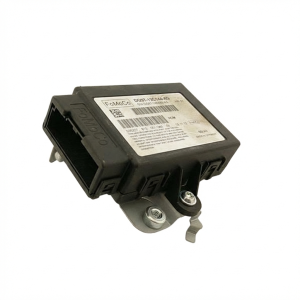
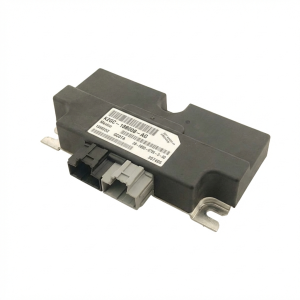
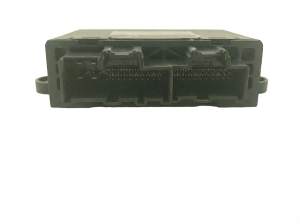
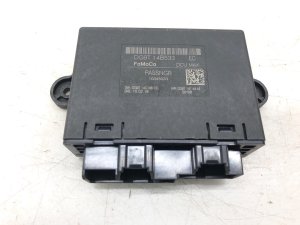
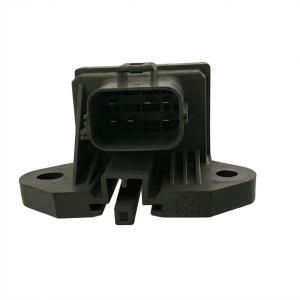
- Body Control Module (BCM)
(OEM #DG9Z-15604-H (example for 2013), GG9Z-15604-E (example for 2017), GU5Z-15604-Q (example for 2017 Hybrid))— This module is the most common part to be replaced, usually due to internal failure caused by water damage or electrical faults. Note: This part is VIN-specific and requires programming.
Trusted brands: Motorcraft
OEM price range: $400-$600
Aftermarket price range: $250-$450 (Remanufactured/Used)
Related Codes That Often Appear With This One
- U0073 — This code means 'Control Module Communication Bus 'A' Off' and indicates a more widespread network failure. If U0073 is present, it's the root cause, and U0140 is just one of the symptoms.
- U0155 — 'Lost Communication With Instrument Panel Cluster (IPC)'. This often appears with U0140, pointing to a broader network problem affecting multiple modules.
- U0422 — 'Invalid Data Received From Body Control Module'. This code suggests the BCM is online but sending corrupt data, which can point to an internal BCM fault or severe network interference.
Technical Service Bulletins (TSBs) & Recalls
- While no TSBs directly link U0140 to the MKZ, TSBs for other Ford products highlight related issues. TSB 19-2345 and its successor 20-2170 address water leaks on the *right* front floor from the A/C evaporator drain on various Ford/Lincoln trucks and SUVs, showing a history of water ingress issues in Ford engineering, though not directly on the MKZ's driver-side BCM.
Platform-Specific Known Issues
- The BCM in the 2013-2020 MKZ is known to be vulnerable to water damage from leaks originating from the sunroof drains or windshield cowl area.
- A user on the Lincoln MKZ Forum reported a water leak in the front passenger area, another potential source of electrical issues.
- A user on CarComplaints.com reported a persistent water leak on their left foot while driving a 2017 MKZ, which the dealer struggled to diagnose, indicating potential issues with body seals.
Mechanic-Grade Diagnostic Values
- CAN Bus Network Resistance — expected: ~60 Ohms. Failure: A reading of ~120 Ohms indicates an open circuit or a fault in one of the two terminating resistors. A reading near 0 Ohms indicates a short between the CAN High and CAN Low wires.
- CAN Bus Voltage (Key On, Engine Off) — expected: CAN High (Pin 6 at OBD-II port) should be ~2.7V and CAN Low (Pin 14 at OBD-II port) should be ~2.3V. Both should be at ~2.5V in the idle state.. Failure: Voltages that are stuck high, low, or at 0V indicate a short to power or ground.
- BCM Ground Connection Resistance — expected: < 0.5 Ohms. Failure: A higher resistance reading indicates a poor ground connection, which can cause the module to malfunction under load.
- BCM Power Supply Voltage (Key On) — expected: 12.2V - 12.8V. Failure: Voltage below 12.2V suggests a battery or charging system issue that must be corrected before diagnosing the BCM.
Scan Tool Commands That Help
- FORScan: BCM Self-Test — This is an initial diagnostic step to command the BCM to run an internal check and report any specific faults that may not trigger a standard DTC.
- FORScan / Ford IDS: Programmable Module Installation (PMI) — This function is required when installing a new or used BCM. It downloads the vehicle's 'As-Built' data and programs the module to work with the specific VIN, options, and security system.
- FORScan: PATS Programming — After a BCM replacement, this function is used to erase all previous keys and program two new (or existing) keys to the new module. The car will not start until this is completed.
- FORScan: Backup and Restore Module Configuration — Before attempting any programming or replacement, this function allows you to save the original BCM's configuration data, which can then be restored to the new module. This is a critical safety step.
Wiring & Ground Locations
- BCM Main Connectors (C2280A, B, C, etc.) — On the Body Control Module itself, located under the driver's side dashboard, to the left of the steering column.. These are the primary connection points for power, ground, and all CAN bus network lines. They are the main areas to inspect for corrosion from water intrusion or loose pins.
- Ground Point G200 — Located at the left center of the dash area, often near the base of the A-pillar.. This is a major ground point for multiple instrument panel modules, including the BCM. A loose or corroded G200 can cause intermittent communication failures and a U0140 code.
- CAN Bus Wires (Twisted Pair) — Routed throughout the vehicle, but key inspection points are at the BCM connector, the OBD-II port (Pins 6 & 14), and in the A-pillar harness where water damage can occur.. The U0140 code is a direct result of a communication failure on these wires. Any damage, shorts, or opens in this twisted pair will sever the BCM's connection to the rest of the vehicle network.
Real Owner Repair Stories
- TexAgs Forum User (2017 Lincoln MKZ Hybrid) — Vehicle was completely dead, would not start or respond in any way.
❌ Tried (didn't work) Attempting to reprogram the existing BCM.
✅ What actually fixed it The BCM had completely failed and required replacement. The owner had difficulty sourcing the specific part number (GU5Z-15604-Q). - 2GFusions.net Forum (Ford Fusion, same platform) (2014 Ford Fusion) — Multiple U-codes including U0140, erratic electrical behavior, no-start condition.
❌ Tried (didn't work) Clearing codes (they returned immediately).
✅ What actually fixed it Water was found to have leaked from a bad windshield seal down the A-pillar and into the BCM connectors. The fix required replacing the BCM and resealing the windshield to prevent a recurrence.
OEM Part Supersession History
DG9T-14B476-xx (Pre-facelift)→HG9T-14B476-xx (Post-facelift)— Model year facelift in 2017 introduced updated electronics and features.
Heads up: Modules from pre-facelift (2013-2016) and post-facelift (2017-2020) vehicles are generally not interchangeable due to different hardware and firmware. Always match the part number prefix (e.g., DG9T vs HG9T) when sourcing a replacement.GU5Z-15604-Q→Unknown— Standard part evolution.
Heads up: This specific part number for a 2017 MKZ Hybrid was reported as being on backorder and difficult to find in 2023, suggesting supply chain issues or a potential supersession.
Model Year Variations Within This Range
- 2017-2020: The 2017 model year marked a significant facelift for the MKZ, which included updated interior controls, infotainment (SYNC 3), and revised electronic modules. BCMs from 2013-2016 models (prefix DG9T-) are not compatible with 2017-2020 models (often prefix HG9T-). Fuse box layouts and some fuse assignments also changed.
- 2013-2016: The interior fuse panel on pre-facelift models is located in a slightly different position, behind a panel on the right side of the center console in the passenger footwell, compared to the driver's side location on later models.
Diagnostic Flowchart
Used vs. New Parts: Buying Guide for This Vehicle
When a used part is the smart pick: A used BCM is a very cost-effective option, but ONLY if you plan to use a 'cloning service'. This service transfers the VIN, key data, and vehicle configuration from your original module to the used donor module, making it plug-and-play and avoiding expensive dealer programming.
Donor-vehicle mileage cap: roughly under 150000 miles for the part to have meaningful remaining life.
What to inspect on the donor part:
- Ensure the part number prefix (e.g., DG9T, HG9T) matches your original module.
- Inspect the donor BCM's casing and all connector ports for any signs of white/green corrosion, water stains, or physical damage.
- Source the part from a vehicle in a dry climate if possible to minimize the risk of prior water damage.
- Confirm the donor vehicle had similar options (e.g., sunroof, AWD) as yours for better compatibility, though cloning can often resolve mismatches.
OEM-only on this vehicle (don't cheap out):
- Body Control Module (BCM)
Brands owners have reported issues with on this vehicle:
- Non-brand 'remanufactured' or 'rebuilt' BCMs from online marketplaces without a lifetime warranty and a clear cloning process. These often have high failure rates.
Real Owner Stories
Aggregated from forums and TSBs cited above. Mileages and costs reflect what owners reported in those sources.
2017 Lincoln MKZ Hybrid
Symptoms: The car was completely inoperable due to a total BCM failure.
What fixed it: The Body Control Module (BCM) had to be replaced. The repair shop had difficulty sourcing the correct replacement part (GU5Z-15604-Q).
Source hint: TexAgs Forum - 'need some help-2017 Lincoln mkz hybrid bcm module'
2017 Lincoln MKZ
Symptoms: A frustrating and persistent water leak on the driver's side that would get the owner's left foot wet while driving.
What fixed it: The dealership had difficulty locating and fixing the source of the leak, which was suspected to be a body seal issue. The report highlights the difficulty in resolving the root cause of potential BCM water damage.
Source hint: CarComplaints.com - '2017 Lincoln MKZ Water Leak'
2014 Lincoln MKZ
Symptoms: A large amount of water was discovered under the front and rear passenger seats, highlighting the platform's general susceptibility to water intrusion.
What fixed it: The forum post described the water intrusion problem but did not specify the repair that was performed to fix the leak or any resulting electrical issues.
Source hint: Lincoln MKZ Forum - 'Water Leak'
Related OBD-II Codes
Frequently Asked Questions
My 2017 MKZ has a U0140 code and the driver's side carpet is wet. What's the most likely cause?
Is the Ford Fusion related to my Lincoln MKZ, and does it have the same U0140 problems?
Before I replace the BCM on my MKZ, what are the first things I should check?
I need to replace the Body Control Module. Can I use a used one from a junkyard?
My MKZ won't start and is showing multiple warning lights. Could this be related to the U0140 code?
How can I test the CAN bus network on my MKZ to diagnose a U0140 code?
Are there any official TSBs for the Lincoln MKZ for BCM water leaks causing code U0140?
We Have This Part in Stock

The information in this article is provided for general reference and educational purposes only. Vehicle specifications, procedures, and part compatibility can vary by production date, trim level, and region. Always consult your vehicle's factory service manual and verify part numbers before purchasing or performing repairs. Safety-critical components such as airbags, seat belts, and braking systems should be installed by a qualified professional.
- Lincoln MKZ:
- 🧭 Diagnostic Flowchart
- 🛍️ Shop This Part
- What's Unique About the 2013-2020 Lincoln MKZ
- Symptoms You May Notice
- Most Likely Causes
- Rare But Worth Checking
- Diagnosis Steps
- Parts You'll Likely Need
- Related Codes That Often Appear With This One
- Technical Service Bulletins (TSBs) & Recalls
- Platform-Specific Known Issues
- Mechanic-Grade Diagnostic Values
- Scan Tool Commands That Help
- Wiring & Ground Locations
- Real Owner Repair Stories
- OEM Part Supersession History
- Model Year Variations Within This Range
- Used vs. New Parts: Buying Guide for This Vehicle
- Real Owner Stories
- 2017 Lincoln MKZ Hybrid
- 2017 Lincoln MKZ
- 2014 Lincoln MKZ
- Related OBD-II Codes
- Frequently Asked Questions
- 🎟️ Get 5% Off