

U0140 on 2004-2015 Nissan Armada: Lost Communication With Body Control Module Causes and Fixes
On a 2004-2015 Armada, code U0140 is most often caused by a failing Intelligent Power Distribution Module (IPDM), the fuse box in the engine bay. A faulty internal relay cuts power to the ECM and other modules, causing communication loss with the BCM. Replacing the IPDM is the common fix, costing around $200-$350 for the part. Early models with a white-colored IPDM are especially prone to failure.
- Before buying any parts for a U0140 code on a 2004-2015 Armada, check the IPDM first.
- A simple test is to swap the ECM relay in the IPDM with the fog light relay. If the truck starts, you've found the problem.
- Do not replace the BCM unless the IPDM, battery, and grounds have been ruled out as the cause.
- If the vehicle cranks but won't start, or stalls randomly, a failing IPDM is a very high probability.
- Replacing the BCM is not a DIY job for most, as it requires special tools to program the keys to the new module.
What's Unique About the 2004-2015 Nissan Armada
While U0140 can be caused by many things, the 2004-2015 Nissan Armada and its platform-mates, the Titan and Infiniti QX56, have a very common and specific point of failure: the Intelligent Power Distribution Module (IPDM). The IPDM, which is the main fuse and relay box in the engine compartment, contains several non-serviceable internal relays. The ECM power relay inside the IPDM is particularly prone to failure due to issues like perished solder joints, especially in earlier white-colored units. This failure cuts power and communication to multiple modules, directly leading to a U0140 code and often a no-start or stalling condition.
Symptoms You May Notice
- Check Engine Light is on
- Multiple other warning lights may illuminate (VDC, ABS, Slip, etc.)
- Engine will crank but not start, or will not crank at all
- Engine stalls while driving, especially at low speeds or after hitting a bump
- Power windows, door locks, and mirrors do not work
- Interior or exterior lights malfunction (flickering, staying on, or not turning on)
- Windshield wipers operate erratically or not at all
- Key fob (remote) stops working
- Fuel pump may not prime (no humming sound from the tank when key is turned)
- Rough or no idle
- Replacing the BCM first, when the IPDM is the much more common culprit on this platform.
- Replacing the starter, fuel pump, or battery for a no-start condition without first checking for communication codes like U0140.
- Assuming a U0140 code means the BCM is bad. The code means communication is lost, which is more often caused by a power supply issue (from the IPDM) than a BCM failure itself.
Most Likely Causes
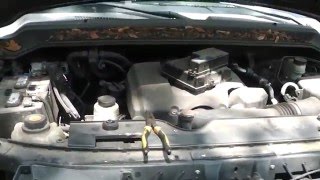
- Faulty Intelligent Power Distribution Module (IPDM) 🔴 High Probability → Shop Fuse Box The internal, non-serviceable ECM relay within the IPDM is a well-documented failure point on this platform, leading to power and communication loss. Early models (approx. 2004-2009) with a white-colored IPDM housing were particularly susceptible to internal solder joint failures. The updated OEM part is black. 🎬 Watch: How to replace the IPDM to fix a no-start
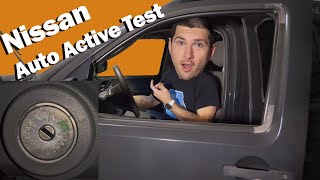
How to confirm: Perform the IPDM's built-in self-test (Auto Active Test) by turning the ignition on, then opening and closing the driver's door 10 times within 20 seconds. The vehicle will cycle various components like wipers and lights to confirm IPDM function. 🎬 See how to perform the IPDM Auto Active Test A more direct test for a no-start is to temporarily swap the ECM relay with a matching, non-essential relay (like for the fog lamps) to see if the vehicle starts. If it starts, the IPDM is faulty.
Typical fix: Replace the entire IPDM unit. Nissan does not sell the internal relays separately. The updated black-colored module is the recommended replacement.
Est. part cost: $200 - $350 - Low Battery Voltage or Poor Grounds 🟡 Medium Probability → Shop Vehicle Battery All modern vehicles are sensitive to voltage. A weak battery or corroded ground connections can cause unpredictable electronic behavior, including CAN network communication failures that trigger a U0140.
How to confirm: Test the battery voltage with a multimeter; it should be above 12.4V with the engine off. Inspect and clean the main battery terminals, chassis ground points, and the BCM ground point. The BCM ground is typically located near the module itself, under the driver's side dashboard. A 2015 Armada service manual shows the BCM ground point is terminal 67 on connector M20.
Typical fix: Charge or replace the battery. Clean or repair corroded ground connections with a wire brush until shiny metal is exposed.
Est. part cost: $0 - $250 - Faulty Body Control Module (BCM) ⚪ Low Probability → Shop Body Control Module The BCM can fail from internal faults or water intrusion, but it is far less common than IPDM failure on this specific vehicle. It is often misdiagnosed as the primary culprit.
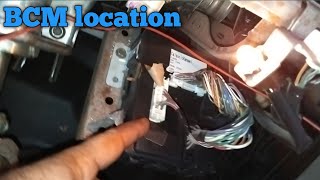
How to confirm: After confirming the IPDM, battery, and wiring are all good, the BCM becomes the likely suspect. It is located under the driver's side dashboard, near the steering column. 🎬 Watch: Locate the BCM under the dashboard Advanced diagnostics with a scan tool are needed to verify it is offline despite having proper power and ground inputs per the factory service manual.
Typical fix: Replace the Body Control Module and have it programmed to the vehicle's VIN and keys by a dealer or a locksmith with appropriate tools. A used BCM may be 'cloned' by a specialist service.
Est. part cost: $150 - $400
Rare But Worth Checking
- CAN Bus Wiring Damage: While not common, a rodent could chew through wires or a previous repair could have damaged the network harness, causing a short or open circuit that takes the BCM offline. This often occurs in the wiring bundles running along the floor or through the firewall.
Diagnosis Steps
- Check Battery Health: Use a multimeter to ensure the battery has at least 12.4 volts with the engine off and 13.7-14.7 volts when running. A weak battery is a common cause of electronic faults. Charge or replace if necessary.
- Scan for All Codes: Use a full-system scanner (not a basic engine code reader) to confirm U0140 and see which other modules are reporting communication loss. Note if U1000 or U0100 are also present.
- Inspect and Test the IPDM: Locate the IPDM (fuse/relay box) in the engine bay near the battery. Check for signs of water intrusion or corrosion. Perform the IPDM self-test. For a no-start, swap the ECM relay with the fog light relay and see if the vehicle starts. If it does, the IPDM is faulty and needs replacement.
- Test CAN Bus Resistance: With the battery disconnected, measure the resistance between Pin 6 (CAN-H) and Pin 14 (CAN-L) at the OBD-II port. A healthy network should read approximately 60 Ohms. A reading of 120 Ohms indicates a missing terminating resistor or a break in the wiring, while a reading significantly lower than 60 Ohms (e.g., 40 Ohms) suggests an extra resistor or a shorted module.
- Inspect Grounds: Check the main battery ground cable connection to the chassis and engine block. Inspect the BCM ground point under the driver's side dash for tightness and corrosion. A factory service manual for a 2015 Armada specifies checking continuity between BCM connector M20, terminal 67, and ground.
- Inspect BCM Connections: Locate the BCM under the driver's side dash. Disconnect its connectors and inspect for any signs of corrosion, moisture, or bent pins. Re-seat the connectors firmly.
- Test BCM Power and Ground: Use a multimeter and a vehicle-specific wiring diagram to verify that the BCM is receiving constant power (approx. 12.6V) and has a solid ground connection (less than 0.1 Ohms resistance to chassis) at its main connector.
- Professional Diagnosis: If the IPDM, battery, and basic wiring are good, the issue is likely a more complex CAN bus wiring fault or a failed BCM, which requires professional diagnosis with tools like Nissan CONSULT.
Parts You'll Likely Need
- Intelligent Power Distribution Module (IPDM)
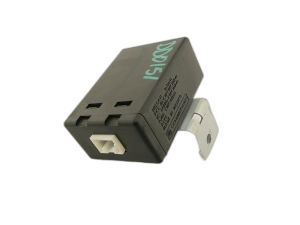
(OEM #284B7-ZE03B (supersedes 284B6-ZE03A and others, verify with VIN))— This is the most frequent cause of code U0140 on the 2004-2015 Armada due to a high failure rate of its internal, non-serviceable relays.
Trusted brands: Nissan (OEM), Hitachi
OEM price range: $250-$400
Aftermarket price range: $200-$300 - Body Control Module (BCM)
(OEM #284B1-9GE3A (example, part number varies by year/options, must match exactly))— If the IPDM and wiring are confirmed to be good, the BCM itself may have failed. Replacement requires programming.
Trusted brands: Nissan (OEM)
OEM price range: $200-$400
Aftermarket price range: N/A
Related Codes That Often Appear With This One
- U1000 — CAN Communication Circuit. This is a very common code to see alongside U0140 on Nissan vehicles, indicating a general network problem. It is frequently caused by the same IPDM failure.
- U0100 — Lost Communication with ECM/PCM. This code often appears with U0140 when the IPDM fails, as its internal ECM relay cuts power to the Engine Control Module, severing its communication with the rest of the network.
- U0155 — Lost Communication with Instrument Panel Cluster (IPC). The instrument cluster relies on data from the BCM for many of its functions, so a BCM communication loss will often trigger a fault in the cluster as well.
Technical Service Bulletins (TSBs) & Recalls
- While no specific TSB number was found for U0140, service documents and parts catalogs confirm Nissan's guidance on IPDM relay failures and the supersession of the original white IPDM (e.g., 284B7-ZE01A) to the updated black IPDM (e.g., 284B7-ZE03B).
Platform-Specific Known Issues
- A known issue on 2004-2006 models involved oxidized ECM relay contacts within the original white-colored IPDM, for which Nissan issued service bulletins and later an updated black-colored IPDM.
- Water intrusion into the IPDM from a leaking cowl or windshield seal can also cause failure, though less common than internal relay failure.
Mechanic-Grade Diagnostic Values
- CAN Bus Network Resistance — expected: Approximately 60 Ω. Failure: A reading of 120 Ω indicates an open circuit or missing terminating resistor. A reading significantly below 60 Ω indicates a shorted module or extra resistor on the network.
- BCM Power Supply Voltage — expected: 12.2V - 12.8V (Key On, Engine Off). Failure: Voltage significantly below 12V indicates a power supply issue to the module, which could be caused by a faulty fuse, relay, or wiring.
- BCM Ground Circuit Resistance — expected: < 0.1 Ω. Failure: High resistance indicates a poor ground connection, which can cause intermittent communication and module malfunction.
- CAN Bus Voltage (Recessive/Idle State) — expected: CAN-H and CAN-L both near 2.5V. Failure: Voltages that are stuck high or low, or do not center around 2.5V, indicate a short to power, short to ground, or a faulty transceiver.
- CAN Bus Voltage (Dominant/Active State) — expected: CAN-H rises to ~3.5V, CAN-L falls to ~1.5V. Failure: Failure to achieve these voltage swings during communication indicates a bus fault.
Scan Tool Commands That Help
- Nissan CONSULT-II / CONSULT-III: CAN DIAG SUPPORT MNTR — This function allows a technician to see the real-time transmit/receive status of all modules on the CAN network. It can quickly confirm if the BCM is truly offline or if other modules are also failing to communicate, helping to isolate the source of the network failure.
- Nissan CONSULT-II / CONSULT-III: IPDM E/R ACTIVE TEST — This is the scan tool equivalent of the manual 'Auto Active Test'. It allows the technician to command individual components controlled by the IPDM (like wipers, lights, fuel pump) to turn on and off, verifying the IPDM's output functions are working correctly.
- Nissan CONSULT-III: WRITE CONFIGURATION — This function is mandatory after replacing the BCM. It writes the vehicle's specific configuration (options, VIN, key data) to the new module. Failure to perform this step will result in a non-functional BCM and persistent U-codes.
Wiring & Ground Locations
- BCM Location — Under the driver's side dashboard, to the left of the steering column, often a black box with multiple large connectors.. This is the module that has lost communication. Physical inspection for water damage, corrosion, or loose connectors is a key diagnostic step.
- IPDM E/R Location — In the engine bay, typically behind the battery. It is the main fuse and relay box.. This module is the most common cause of the U0140 code on this vehicle, as it contains the failing ECM power relay that disrupts network communication.
- BCM Ground (Example: 2015 Armada) — The ground connection for the BCM is at terminal 67 of the M20 harness connector.. A poor ground connection at this specific pin can cause the BCM to malfunction and drop off the network, triggering a U0140 code. Verifying continuity to ground here is a critical electrical test.
- OBD-II Port (DLC) — Under the driver's side dashboard, to the right of the steering column.. This is the primary access point for testing the CAN bus network resistance (Pins 6 & 14) and communicating with the vehicle's modules via a scan tool.
Real Owner Repair Stories
- YouTube user comment on an IPDM diagnostic video (2006 Nissan Titan 5.6L (platform mate to Armada)) — Vehicle would quit intermittently, then eventually became a no-start condition.
❌ Tried (didn't work) The owner's neighbor had gone through multiple other repairs before the final fix was found.
✅ What actually fixed it The problem was diagnosed as a faulty IPDM. The video demonstrates swapping the internal ECM relay with the fog light relay as a successful diagnostic test before replacing the entire IPDM unit. - NICOclub Forums user 'rutz1972' (2003 Infiniti G35 (uses similar IPDM technology)) — After driving through deep water, the car would not restart. Dash lights looked like a 'pinball game' and wipers would activate when trying to crank.
❌ Tried (didn't work) Jumping the battery did not work., A battery test showed the battery was good.
✅ What actually fixed it The owner identified that the IPDM got wet, causing the Ignition and A/C relays to be 'toasted'. The final fix required replacing the water-damaged IPDM.
OEM Part Supersession History
284B6-ZE03A (and similar white-cased units)→284B7-ZE03B (black-cased unit)— The original white-cased IPDM units were prone to internal failure of the non-serviceable ECM power relay. The updated black-cased part is a more robust design intended to fix this common issue.
Model Year Variations Within This Range
- 2004-2009 (approx.): These earlier models were factory-equipped with the white-colored IPDM that is highly prone to internal ECM relay failure. Later models came with the updated black IPDM, which is less likely to fail in this specific manner.
Diagnostic Flowchart
Other Known Issues on This Vehicle
Issues unrelated to this code that are worth knowing about as an owner of this generation:
- Cracked Exhaust Manifolds 🔴 High — Very common, typically occurs between 80,000 and 120,000 miles. Causes a ticking noise, especially when cold.
- Radiator Failure / Transmission Cooler Leak (SMOD) 🔴 High → Shop Transmission Assembly — A critical issue primarily on 2005-2010 models where the internal transmission cooler fails, mixing coolant and transmission fluid, which destroys the transmission. Nicknamed the 'Strawberry Milkshake of Death'.
- Timing Chain Guide Wear 🟠 Medium — The plastic timing chain guides on the VK56DE engine can wear out over time, typically after 100,000 miles, causing a whining or rattling sound from the front of the engine. While chain failure is not extremely common, worn guides are.
- Brake System Faults (Delta Stroke Sensor) 🔴 High — Common on earlier models (2004-2008), involving a faulty delta stroke sensor in the brake booster, leading to ABS light illumination and, in some cases, brake failure. (Ref: Multiple NHTSA complaints and service campaigns were issued.)
- Catalytic Converter Failure 🟠 Medium — Premature failure of the catalytic converters can occur, sometimes secondary to a failing fuel pump causing a lean condition.
Used vs. New Parts: Buying Guide for This Vehicle
When a used part is the smart pick: A used IPDM from a junkyard can be a cost-effective solution, as it does not typically require programming. This is a good option if you can find a donor vehicle that is a later model year (e.g., 2010+) which is more likely to have the updated black-colored IPDM.
Donor-vehicle mileage cap: roughly under 150000 miles for the part to have meaningful remaining life.
What to inspect on the donor part:
- Ensure the part number is the updated version (e.g., 284B7-ZE03B).
- Visually inspect the unit for any signs of water intrusion, corrosion on the pins, or physical damage to the case.
- If possible, source the part from a vehicle that was not involved in a front-end collision to minimize the risk of hidden damage.
- Check the seller's return policy in case the used unit is also faulty.
OEM-only on this vehicle (don't cheap out):
- Body Control Module (BCM) - A used BCM is strongly discouraged. It is VIN-locked and contains security information for the original vehicle's keys. It cannot be simply swapped; it requires specialized programming or 'cloning' by an expert, which often negates any cost savings.
Brands owners have reported issues with on this vehicle:
- Dorman (for complex electronics) - While Dorman makes some excellent 'OE Fix' parts, forum discussions and general mechanic sentiment suggest their complex electronic modules like IPDMs can be hit-or-miss in terms of quality and longevity compared to an OEM or OEM-supplier (Hitachi) part.
Real Owner Stories
Aggregated from forums and TSBs cited above. Mileages and costs reflect what owners reported in those sources.
2006 Nissan Armada VK56DE
Symptoms: The engine would crank but not start, or sometimes it would not crank at all. Multiple warning lights like VDC, ABS, and Slip were illuminated on the dash.
What fixed it: Replaced the original white-colored IPDM with the updated black-colored module after the ECM relay-swap trick confirmed the relay was dead.
Source hint: titantalk.com - Numerous threads such as 'Crank no start, U1000, U0100, C1130' and 'Another IPDM failure story'
2008 Nissan Armada VK56DE
Symptoms: The vehicle would suddenly stall while driving, especially at low speeds or after hitting a bump. The fuel pump did not make its usual humming sound when the key was turned.
What fixed it: Replacement of the entire IPDM unit because the internal ECM relay is non-serviceable.
Source hint: clubarmada.com - Owners report similar patterns of sudden no-start or stalling, multiple warning lights, and resolution by replacing the IPDM
Related OBD-II Codes
Frequently Asked Questions
How can I tell if my 2004-2009 Armada has the older, failure-prone IPDM?
My Armada won't start and I suspect the IPDM; is there a quick way to test it without tools?
Where is the BCM ground located on a 2015 Armada if I'm getting a U0140?
Can I use a used Body Control Module from another Armada to fix this code?
Is the U0140 code related to the 'Strawberry Milkshake of Death' (SMOD) issue?
Helpful Videos

We Have This Part in Stock

The information in this article is provided for general reference and educational purposes only. Vehicle specifications, procedures, and part compatibility can vary by production date, trim level, and region. Always consult your vehicle's factory service manual and verify part numbers before purchasing or performing repairs. Safety-critical components such as airbags, seat belts, and braking systems should be installed by a qualified professional.
- Nissan Armada:
- 🧭 Diagnostic Flowchart
- 🎬 Helpful Videos
- 🛍️ Shop This Part
- What's Unique About the 2004-2015 Nissan Armada
- Symptoms You May Notice
- Most Likely Causes
- Rare But Worth Checking
- Diagnosis Steps
- Parts You'll Likely Need
- Related Codes That Often Appear With This One
- Technical Service Bulletins (TSBs) & Recalls
- Platform-Specific Known Issues
- Mechanic-Grade Diagnostic Values
- Scan Tool Commands That Help
- Wiring & Ground Locations
- Real Owner Repair Stories
- OEM Part Supersession History
- Model Year Variations Within This Range
- Other Known Issues on This Vehicle
- Used vs. New Parts: Buying Guide for This Vehicle
- Real Owner Stories
- 2006 Nissan Armada VK56DE
- 2008 Nissan Armada VK56DE
- Related OBD-II Codes
- Frequently Asked Questions
- 🎟️ Get 5% Off