

U0140 on 2005-2021 Nissan Frontier: Lost Communication With BCM Fixes
This code means the Body Control Module (BCM) has stopped communicating with other computers in the truck. The most common causes are a failing BCM, poor electrical grounds, or wiring issues. A failing BCM is a known issue on this platform, often caused by water intrusion from clogged sunroof drains or leaking windshield seals.
- U0140 on a Nissan Frontier means the Body Control Module (BCM) has gone offline.
- The most common cause is a failed BCM, often due to water damage from known leak points in the cabin.
- Before replacing the BCM, always check the battery, fuses, and BCM ground connections first.
- Replacing the BCM is not a simple swap; the new module must be programmed to the vehicle's VIN.
- This is not a DIY-friendly repair for beginners due to the complex electrical diagnosis and programming requirements.
What's Unique About the 2005-2021 Nissan Frontier
The Nissan Frontier's D40 platform had a very long production run. Over these years, the Body Control Module (BCM) has become a well-documented failure point. A primary cause of BCM failure on these trucks is water intrusion from leaking windshield seals or clogged sunroof drains 🎬 Watch: How to clean clogged sunroof drains, which allows moisture to drip directly onto the module and its connectors. This moisture can short-circuit pins within the connectors or corrode the BCM's internal printed circuit board. While wiring and ground issues can also trigger a U0140 code, a faulty BCM is a very common root cause for the Frontier and related Nissan models like the Xterra and Pathfinder which share the same platform and similar vulnerabilities.
Generation note: The 2005-2021 year range covers the D40 generation of the Nissan Frontier. While the core platform remained, a major powertrain update occurred in 2020 with a new 3.8L V6 engine and 9-speed transmission. This introduced a new generation of control modules, including a new TCM. While the U0140 code's meaning remains the same, TSBs related to module communication are often specific to the 2020-2021 models.
Symptoms You May Notice
- Multiple, unrelated warning lights on the dashboard (ABS, VDC, Airbag, etc.)
- Erratic or non-functional power windows, door locks, and interior/exterior lights
- Windshield wipers turning on by themselves or not working at all
- Key fob not working for remote entry
- Parasitic battery drain, leading to a dead battery overnight
- Engine will not crank or start, possibly with the security light illuminated
- Instrument cluster gauges behaving erratically or not working
- A/C system not functioning correctly
- Replacing individual components like window motors or light switches when the root cause is the BCM not sending the command.
- Replacing the BCM without fixing the underlying water leak, leading to a repeat failure of the new module.
Most Likely Causes
- Failing Body Control Module (BCM) 🔴 High Probability → Shop Body Control Module Water intrusion from leaking windshield seals or clogged sunroof drains is a very common cause of BCM failure on this platform, leading to internal corrosion. The BCM is located in the passenger or driver-side kick panel area, directly in the path of these common leak points. Simple component fatigue over time is also a factor.
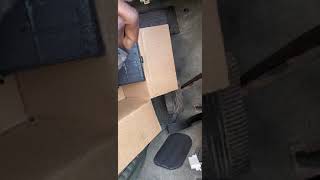
How to confirm: After confirming the BCM has proper power and ground, and the CAN bus wiring is intact, the BCM is the likely culprit. A professional scan tool may show the BCM as 'offline'. Physical inspection is key: pull back the carpet and trim in the BCM area and look for signs of moisture, water stains, 🎬 See this Nissan BCM flood damage inspection or green/white corrosion on the BCM connectors and pins.
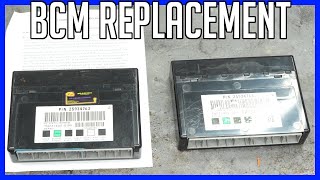
Typical fix: Replace the BCM. The new module must be programmed to the vehicle's VIN and options. Alternatively, a 'cloning' service can transfer the original data to a donor module, making it plug-and-play. It is critical to fix the source of the water leak before replacing the BCM.
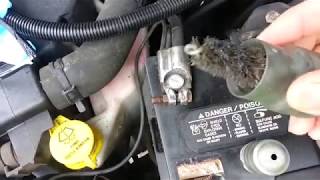
Est. part cost: $400-$700 - Poor Power or Ground to the BCM 🟡 Medium Probability Corrosion at chassis ground points is common on trucks. The main body ground on the Frontier is often a 🎬 Watch: How to clean corroded ground connections 'strip-and-clip' style on the passenger-side inner fender, which can corrode under the strap. Other key ground points are located behind the kick panels (M57, M61, M79) and in the engine bay (E15, E24).
How to confirm: Use a multimeter to test for 12V+ at the BCM's power pins and for low resistance (less than 0.5 ohms) between the BCM's ground pins and a clean chassis point. Perform a voltage drop test on the ground circuit by connecting a voltmeter between the negative battery terminal and the firewall; with the engine running and accessories on, it should be less than 0.5V.
Typical fix: Clean or repair the corroded ground connection. This involves removing the bolt/strap, sanding the contact surfaces to bare metal, and re-securing it with dielectric grease to prevent future corrosion.
Est. part cost: $1-$10 - Low Battery Voltage or Failing Alternator 🟡 Medium Probability → Shop Vehicle Battery All modern vehicles are sensitive to low voltage. A weak battery can cause random communication codes as modules fail to initialize properly during startup. Some owners report that the OEM battery's vent location near the positive terminal can accelerate corrosion, leading to poor connections.
How to confirm: Test the battery voltage with the engine off. It should be above 12.4V. With the engine running, voltage should be between 13.7V and 14.7V. A load test at an auto parts store is the most definitive way to confirm battery health.
Typical fix: Charge or replace the battery. If the alternator is not charging correctly, it will need to be replaced.
Est. part cost: $150-$400 - Damaged CAN Bus Wiring ⚪ Low Probability
How to confirm: Visually inspect wiring harnesses for chafing, cuts, or corrosion, especially where they pass through the firewall, into doors, or near the BCM connectors (a common spot for water damage). A multimeter can be used to check for continuity on the CAN wires and to check for shorts to power or ground. Resistance between Pin 6 (CAN High) and Pin 14 (CAN Low) at the OBD-II port should be approximately 60 ohms with the battery disconnected.
Typical fix: Repair the damaged section of the wiring harness. If corrosion is found in a connector, it may need to be cleaned with contact cleaner or the connector pigtail may need to be replaced.
Est. part cost: $5-$50
Rare But Worth Checking
- Faulty Intelligent Power Distribution Module (IPDM): → Shop Fuse Box On these Nissan models, a failing IPDM (located in the engine bay near the battery) can cause communication codes like U0140. The IPDM contains non-serviceable relays that power various modules, including the ECM and BCM. Failure of the internal ECM relay is a known issue that can cause stalling or a no-start condition and may disrupt network communication.
- Aftermarket Accessories: Improperly installed remote starters, alarms, or audio equipment can interfere with the CAN bus network and cause communication errors. These devices are often tapped into wiring near the BCM, creating a point of failure.
Diagnosis Steps
- Check Battery Health: Ensure the battery voltage is above 12.4V with the engine off and that the charging system is working correctly (13.7-14.7V when running). A weak or failing battery is a common cause of communication codes.
- Scan for All Codes: Use a full-system scanner capable of reading manufacturer-specific 'U' codes from all modules. Note all present and past codes to see which modules are offline.
- Check for Water Intrusion: This is a critical step for the Frontier. Pull back the carpet and kick panels on both the driver's and passenger's sides. Inspect the BCM, its connectors, and the surrounding area for dampness, water stains, or corrosion.
- Inspect Fuses: Inspect all fuses related to the BCM, typically labeled 'BCM' or 'ELEC PARTS(BAT)', in the fuse boxes in the cabin (J/B) and engine bay (IPDM E/R).
- Test BCM Power and Ground: Using a multimeter and a wiring diagram, confirm that the BCM is receiving proper battery voltage on its power pins and has a solid connection to chassis ground (less than 0.5 ohms). Check the main body ground on the passenger fender.
- Check CAN Bus Integrity: With the battery disconnected, measure the resistance between Pin 6 (CAN High) and Pin 14 (CAN Low) at the OBD-II port. A healthy network will read approximately 60 ohms. A reading of 120 ohms suggests a break in the circuit or a missing terminating resistor. A reading near 0 ohms indicates a short between the two lines.
- Isolate the Fault: If wiring, power, and grounds are good, and especially if water damage is evident, the BCM itself is the most likely cause of the failure. If no water is found, consider the IPDM as a secondary possibility.
Parts You'll Likely Need
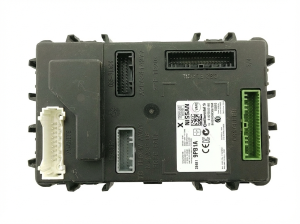
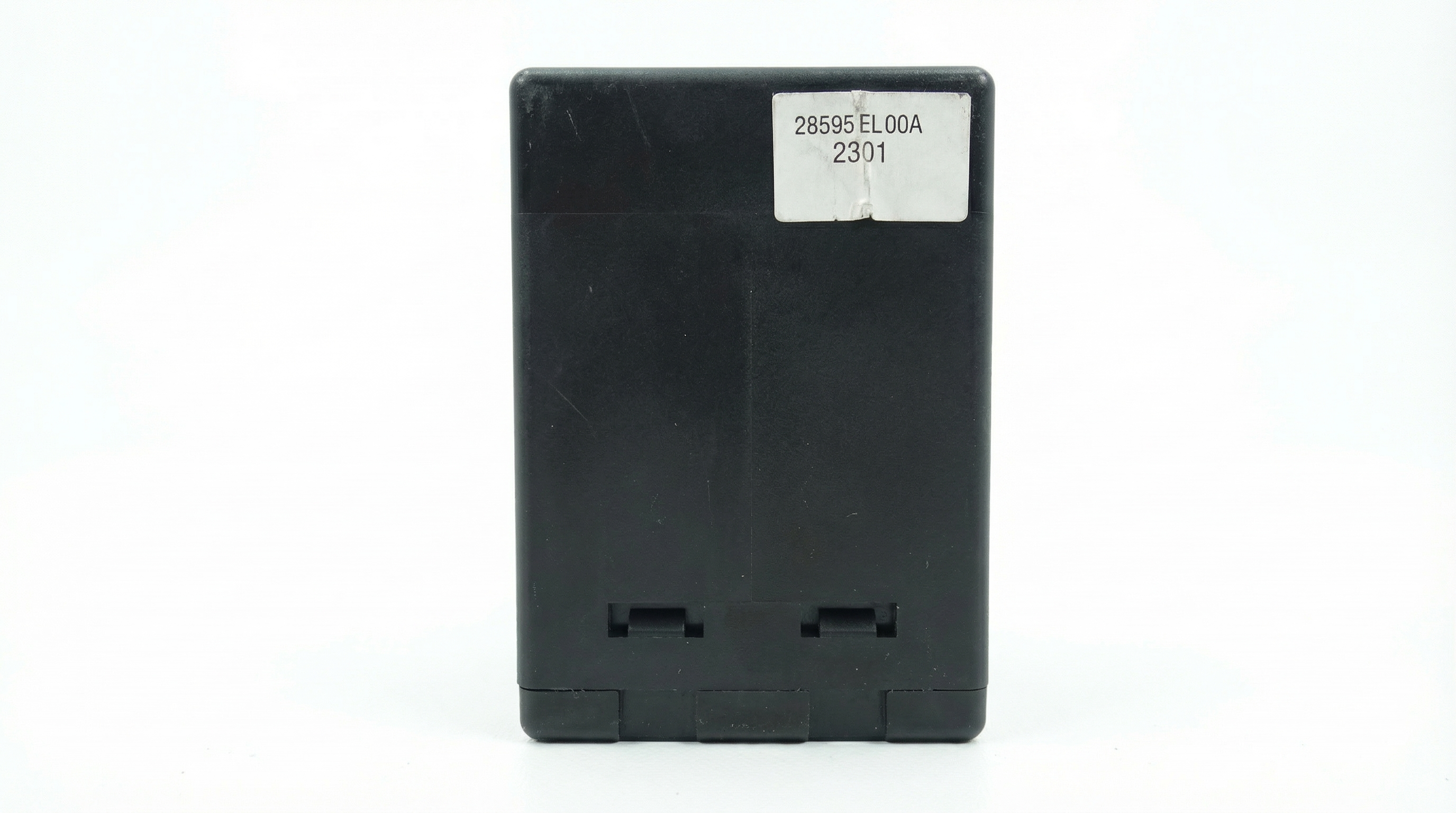
- Body Control Module (BCM)
(OEM #Varies by year/options (e.g., 284B1-9BF3A for 2017). Part number must match original.)— This module is a common failure point on the Frontier, often due to internal faults caused by water damage. It is the central hub for body electronics, and its failure directly causes the U0140 code.
Related Codes That Often Appear With This One
- U1000 — This is a generic Nissan code for a CAN Communication Circuit fault. It often appears alongside more specific U-codes like U0140, indicating a general network problem.
- U0100 — Lost Communication with ECM/PCM. If this code is present with U0140, it points to a more severe network-wide failure, as two of the most critical modules are offline.
- U0101 — Lost Communication with TCM. On 2020-2021 models, this can be related to a specific TSB (NTB21-002A) for a no-start condition.
Technical Service Bulletins (TSBs) & Recalls
- NTB21-002A: Addresses a no-start condition on the 2020 Frontier related to a TCM communication error (U0101), which can occur alongside other communication codes. This TSB points to a potential software or module issue specific to the newer powertrain.
- NTB07-042: While related to timing chains, this TSB is an example of Nissan addressing known component issues on the D40 platform, similar to how they have updated parts for other common failures.
Platform-Specific Known Issues
- Water leaking from a poorly sealed windshield or clogged sunroof drains is a known issue that can drip directly onto the BCM, causing corrosion and failure.
- The main body ground connection on the passenger-side inner fender is a known weak point for corrosion.
Mechanic-Grade Diagnostic Values
- CAN Bus Resistance — expected: ~60 Ω. Failure: 120 Ω indicates an open in the circuit or a missing terminating module. ~0 Ω indicates a short between CAN High and CAN Low lines.
- CAN Bus Voltage (Healthy) — expected: CAN High (Pin 6): 2.5V to ~3.5V. CAN Low (Pin 14): 2.5V to ~1.5V. Both lines should mirror each other around a 2.5V bias.. Failure: A bias voltage significantly different from 2.5V (e.g., 6-7V) indicates a module is shorting the bus to voltage.
- BCM Power Supply Voltage — expected: Battery voltage (~12.6V with key on, engine off) at specified power input pins (e.g., Pins 11, 38, 57, 70 on some models).. Failure: 0V or significantly low voltage indicates a problem with the fuse, wiring, or IPDM.
- BCM Ground Circuit Resistance — expected: < 0.5 Ω. Failure: High resistance indicates a corroded or loose ground connection.
- Body Ground Voltage Drop — expected: < 0.5V (ideally < 0.2V). Failure: Voltage greater than 0.5V indicates a poor main body ground connection, which can cause widespread electrical issues.
Scan Tool Commands That Help
- Nissan CONSULT: WRITE CONFIGURATION / After Replace ECU — This function is mandatory when replacing the BCM. It writes the vehicle's specific configuration (options, VIN, key data) to the new module. Failure to perform this step will result in a non-functional or improperly functioning BCM.
- Nissan CONSULT: CAN Diag Support Monitor — This function shows the status of all modules on the CAN network. It's a primary step to confirm which modules are online and which are not communicating, directly identifying the BCM as offline.
- Nissan CONSULT or advanced aftermarket: IPDM Auto Active Test — This self-test commands the IPDM to cycle various outputs (wipers, lights, etc.). If this test fails or acts erratically, it can point towards an issue with the IPDM itself or its communication with the BCM, helping to differentiate between a bad BCM and a bad IPDM.
Wiring & Ground Locations
- BCM Location — Typically located behind the driver's or passenger's side kick panel or under the center of the dash, mounted vertically.. This is the module that has lost communication. Its location makes it highly susceptible to water damage from clogged sunroof drains or leaking windshield seals, a primary cause of U0140 on this truck.
- M57 — Behind the left side (driver's) kick panel.. This is a major ground point for many in-cabin electronics. Corrosion here can cause intermittent communication issues for the BCM and other modules.
- M61 / M79 — Behind the right side (passenger's) kick panel.. These are primary ground points for components on the passenger side, including potentially the BCM itself depending on the year and configuration. They are also in the path of common water leaks.
- Main Body Ground — A 'strip-and-clip' style ground strap on the passenger-side inner fender panel, connected to the negative battery cable.. This is the main return path for the entire vehicle body's electrical system. Corrosion under this strap is common and can cause a voltage drop, leading to unpredictable behavior from multiple modules, including the BCM.
- IPDM E/R — Intelligent Power Distribution Module Engine Room, located in the engine bay near the battery, typically a black box with fuses and relays.. The IPDM supplies power to the BCM. An internal failure of the IPDM, particularly the ECM relay on early models, can disrupt power and communication signals to the BCM.
Real Owner Repair Stories
- YouTube / ScannerDanner Forum (2016 Nissan Frontier 4.0L V6) — Crank no-start, sometimes no-crank. No communication with ECM, but communication with TCM, ABS, 4WD modules. All other modules had U-codes for CAN communication faults.
❌ Tried (didn't work) Initial scan showed no communication with ECM., Checking CAN resistance with battery disconnected showed a correct 60 ohms, suggesting the wiring was physically intact., Disconnecting the ECM did not fix the abnormal voltage on the CAN bus.
✅ What actually fixed it The Transmission Control Module (TCM) was internally shorted, pulling the CAN bus bias voltage up from the normal 2.5V to over 6V, corrupting all network communication. Disconnecting the TCM fuse (Fuse #19 in the cabin fuse block) or unplugging the TCM harness connector caused the CAN bus voltages to return to normal. The fix was to replace the TCM, which is located inside the transmission oil pan on this model. - Reddit r/nissanfrontier (Nissan Frontier (year not specified)) — Vehicle suddenly died while driving, multiple electrical systems failed.
❌ Tried (didn't work) Initial thought was a failed alternator.
✅ What actually fixed it Heavy corrosion on the positive battery terminal was preventing the battery from charging and providing stable voltage to the vehicle's modules. The owner noted that the standard battery design has a vent near the positive terminal, which accelerates corrosion. Cleaning the terminal and ensuring a solid connection resolved the electrical issues. The recommendation was to switch to an AGM battery or a battery with a better vent design and to regularly clean the terminals.
Model Year Variations Within This Range
- 2005-2006: Early models with a 'white' IPDM were subject to a service bulletin for a faulty internal ECM relay that could cause stalling and communication issues. Later IPDMs were a different color (typically black) and used an updated relay.
- 2005-2021: BCM part numbers are highly specific to year, trim, and options, especially regarding the Nissan Anti-Theft System (NATS). A BCM from a non-NATS truck cannot be used in a NATS-equipped truck, and vice-versa. The part number on the replacement module must exactly match the original.
Diagnostic Flowchart
Other Known Issues on This Vehicle
Issues unrelated to this code that are worth knowing about as an owner of this generation:
- Transmission Cooler Failure (SMOD - Strawberry Milkshake of Death) 🔴 High → Shop Transmission Assembly — Common on 2005-2010 models with automatic transmissions. The internal radiator transmission cooler fails, mixing coolant and transmission fluid, which destroys the transmission. (Ref: Nissan extended the warranty for this issue, but it is outside the normal warranty period now. Proactive radiator replacement or bypassing the internal cooler is the recommended fix.)
- Timing Chain Guide Wear 🔴 High — Common on early VQ40DE engines (approx. 2005-2010). Plastic timing chain guides wear out, causing a distinct whining noise, especially on acceleration. If ignored, it can lead to catastrophic engine failure. (Ref: NTB07-042 was issued for this problem. The replacement guides are made of a more durable material.)
- Fuel Level Sending Unit Failure 🟠 Medium — Very common across most model years. The sensor in the fuel tank fails, causing an erratic or inaccurate fuel gauge reading, often showing empty with fuel still in the tank. (Ref: Nissan extended the warranty for this part on some earlier models, but many vehicles were not covered.)
- IPDM-E/R Internal Relay Failure 🟠 Medium → Shop Fuse Box — Affects 2005-2006 models with the original white-colored IPDM. The internal, non-serviceable ECM relay fails, causing intermittent stalling or a no-start condition. (Ref: Nissan issued a bulletin and a replacement ECM relay (Part No. 284B7-CW29E) for a specific range of early models.)
- Clogged Rear Axle Breather 🟡 Low — Common on trucks used in rust-prone areas or off-road. The stock axle breather clogs, causing pressure to build in the differential and blow out the axle seals.
Used vs. New Parts: Buying Guide for This Vehicle
When a used part is the smart pick: A used BCM is a viable and cost-effective option, but ONLY if you use a 'cloning' service. A used BCM cannot be simply swapped in, as it is programmed to the original vehicle's VIN, keys (NATS), and options.
Donor-vehicle mileage cap: roughly under 150000 miles for the part to have meaningful remaining life.
What to inspect on the donor part:
- The part number on the used BCM MUST exactly match your original module's part number.
- Inspect the donor BCM's connectors for any signs of green or white corrosion, water stains, or bent pins. Do not buy if any are present.
- Ask the seller if the donor vehicle had any signs of water leaks (stains on headliner, damp carpets). Avoid parts from flood-damaged vehicles.
- Source the part from a reputable dismantler with a warranty and return policy.
OEM-only on this vehicle (don't cheap out):
- Body Control Module (BCM) - While a used OEM part is acceptable with cloning, avoid unbranded, no-name aftermarket BCMs as they are unlikely to be programmable or reliable.
Aftermarket brands forum-validated for this vehicle:
- No specific aftermarket brands are recommended for the BCM itself. The recommended path is a new OEM module or a cloned used OEM module.
Brands owners have reported issues with on this vehicle:
- Any non-programmable or 'universal' BCMs.
Real Owner Stories
Aggregated from forums and TSBs cited above. Mileages and costs reflect what owners reported in those sources.
2020 Nissan Frontier
Symptoms: Engine will not crank or start; vehicle is throwing communication codes including U0101.
What fixed it: Addressed via TSB NTB21-002A which identifies software or module issues specific to the 2020 powertrain.
Source hint: TSB NTB21-002A
2005-2015 Nissan Frontier/Xterra
Symptoms: Multiple warning lights on the dash, erratic power windows and door locks, and windshield wipers operating independently.
What fixed it: Identified water intrusion from clogged sunroof drains dripping onto the BCM; replaced the BCM and cleared the drains.
Source hint: TheNewX.org forum regarding BCM failures and water intrusion
Nissan Frontier (D40 Platform)
Symptoms: Erratic electrical behavior and communication codes; found corrosion under the ground strap.
What fixed it: Cleaned the main body ground connection on the passenger-side inner fender by sanding to bare metal and applying dielectric grease.
Source hint: ClubFrontier.org thread 'ground location in cab'
Related OBD-II Codes
Frequently Asked Questions
I have a 2020 Frontier with a no-start condition and code U0101. Is this related to U0140?
Why are my windshield wipers turning on by themselves on my Nissan Frontier?
Where is the BCM located in my Frontier so I can check for water damage?
Can a bad ground cause U0140 on a Frontier?
Will I need to program a new BCM if I replace it to fix U0140?
Is the U0140 code related to the 'Strawberry Milkshake of Death' (SMOD)?
Helpful Videos

We Have This Part in Stock

The information in this article is provided for general reference and educational purposes only. Vehicle specifications, procedures, and part compatibility can vary by production date, trim level, and region. Always consult your vehicle's factory service manual and verify part numbers before purchasing or performing repairs. Safety-critical components such as airbags, seat belts, and braking systems should be installed by a qualified professional.
- Nissan Frontier:
- 🧭 Diagnostic Flowchart
- 🎬 Helpful Videos
- 🛍️ Shop This Part
- What's Unique About the 2005-2021 Nissan Frontier
- Symptoms You May Notice
- Most Likely Causes
- Rare But Worth Checking
- Diagnosis Steps
- Parts You'll Likely Need
- Related Codes That Often Appear With This One
- Technical Service Bulletins (TSBs) & Recalls
- Platform-Specific Known Issues
- Mechanic-Grade Diagnostic Values
- Scan Tool Commands That Help
- Wiring & Ground Locations
- Real Owner Repair Stories
- Model Year Variations Within This Range
- Other Known Issues on This Vehicle
- Used vs. New Parts: Buying Guide for This Vehicle
- Real Owner Stories
- 2020 Nissan Frontier
- 2005-2015 Nissan Frontier/Xterra
- Nissan Frontier (D40 Platform)
- Related OBD-II Codes
- Frequently Asked Questions
- 🎟️ Get 5% Off