

U0140 on 2004-2015 Nissan Titan: Lost BCM Communication Causes and Fixes
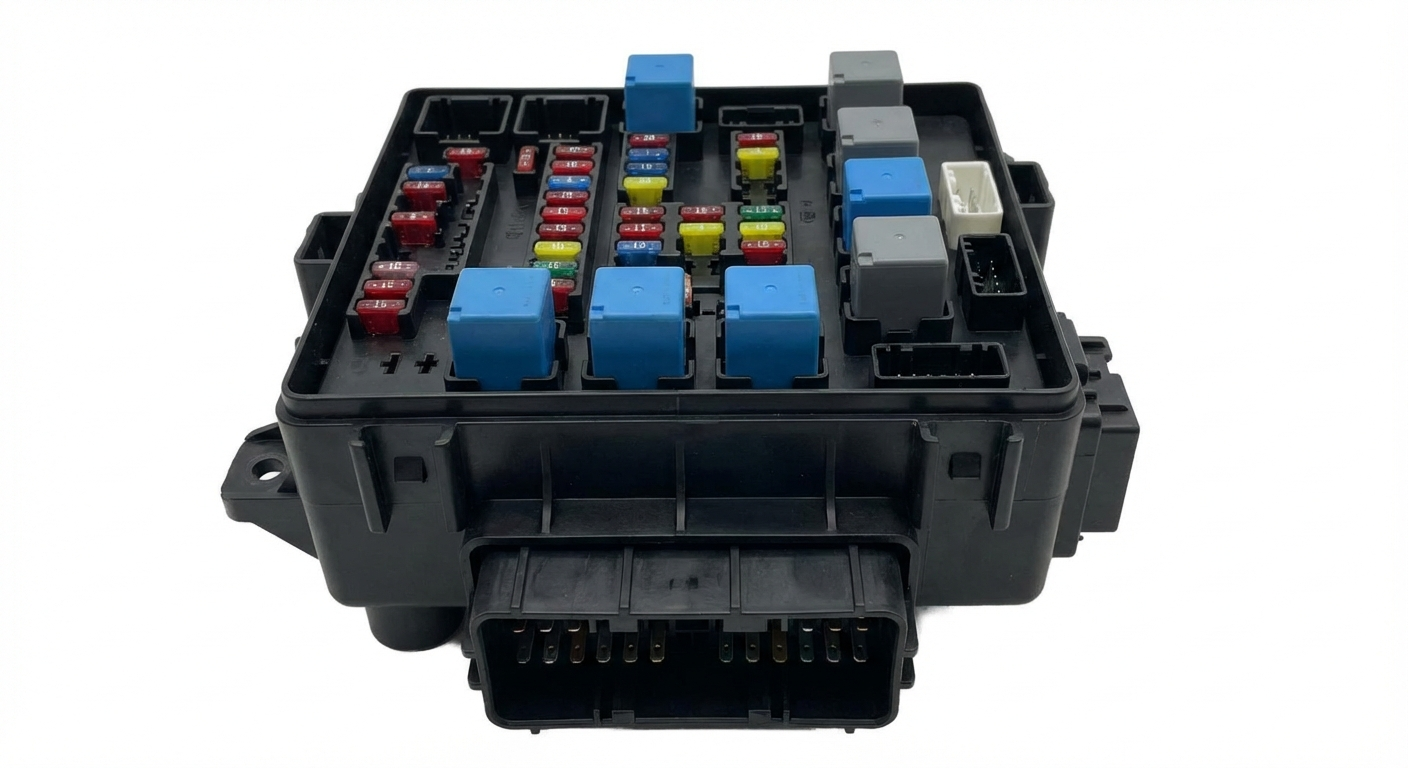
On a 2004-2015 Nissan Titan, code U0140 almost always points to a failing Intelligent Power Distribution Module (IPDM), not the BCM itself. This can cause widespread electrical issues and no-start problems. Start by checking the battery and grounds before suspecting the IPDM, which is a known weak point on this truck. For 2004-2006 models, a specific recall (NHTSA #10V-517) addressed the failure-prone ECM relay within the IPDM that causes stalling.
- Code U0140 on a 2004-2015 Titan is a communication code, but the problem is usually power-related.
- Before suspecting any expensive computers, ensure the battery is fully charged and all main ground connections are clean and tight.
- The Intelligent Power Distribution Module (IPDM) is the most likely culprit. Learn how to perform the self-test.
- Do not replace the Body Control Module (BCM) unless you have definitively ruled out the IPDM and all wiring/power issues, as BCM replacement requires costly programming.
What's Unique About the 2004-2015 Nissan Titan
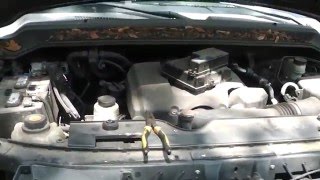
On this specific generation of Nissan Titan, network communication codes like U0140 are very frequently a symptom of a different problem: a failing Intelligent Power Distribution Module (IPDM). The IPDM, which is essentially a smart fuse box in the engine bay, contains internal, non-serviceable relays that are prone to failure. When the relay that powers the BCM or the ECM fails, it cuts off communication, triggering the U0140 code even though the BCM itself is likely fine. Early models (2004-2006) were particularly known for issues with the ECM relay inside the IPDM causing stalling and no-start conditions, which led to Nissan Safety Recall Campaign PC068 (NHTSA ID: 10V-517). 🎬 See a real-world diagnosis of this Titan crank-no-start issue The original white-cased IPDMs are known to be less reliable than the updated black-cased units.
Symptoms You May Notice
- Check Engine Light is on
- Multiple unrelated warning lights on the dashboard (ABS, Airbag, etc.)
- Erratic or non-functional power windows and door locks
- Headlights, taillights, or interior lights flickering, staying on, or not working at all
- Windshield wipers activating unexpectedly or not working
- Engine cranks but will not start
- Engine stalls unexpectedly, especially at low speeds
- Remote key fob not working
- Cooling fans running at high speed constantly when the key is on
- Replacing the Body Control Module (BCM) first. The U0140 code is most often a symptom of a problem with the IPDM or power supply, not the BCM itself.
- Replacing the battery without cleaning the associated ground connections.
- Replacing the Engine Control Module (ECM) for a no-start condition when the IPDM is not providing it with power.
Most Likely Causes
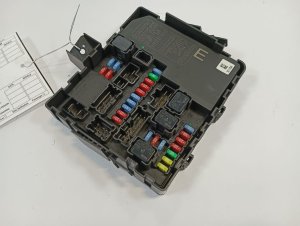
- Failing Intelligent Power Distribution Module (IPDM) 🔴 High Probability → Shop Fuse Box The IPDM used in this generation of Titan contains internal relays that are a known high-failure item. The original IPDMs were often white and later updated by Nissan to a black-cased unit. Failure of the internal ECM or BCM power relay is common and was the subject of a recall for 2004-2006 models.
How to confirm: Perform the IPDM self-test (auto active test). With the ignition on and doors closed, press and release the driver's door jamb switch 10 times within 20 seconds. The IPDM should cycle various components like wipers, lights, and the A/C compressor clutch. If it doesn't, or if behavior is erratic, the IPDM is suspect. A more direct test for a no-start is to temporarily swap the ECM relay with the identical fog lamp relay 🎬 Watch: Quick video guide on swapping the ECM relay (if equipped) to see if the vehicle starts. You can also check for voltage drop at sensors powered by the ECM relay, like the mass airflow sensor; voltage should be within 0.5V of battery voltage.
Typical fix: Replace the entire IPDM assembly. It is located in the engine bay near the battery. This is typically a plug-and-play part that does not require programming on early models, though verifying with the VIN is recommended.
Est. part cost: $250-$500 - Low Battery Voltage or Poor Ground Connections 🟡 Medium Probability → Shop Vehicle Battery All modern vehicle networks are sensitive to low voltage. As batteries age or ground straps corrode, intermittent voltage drops can cause modules to reset or lose communication, generating false codes.
How to confirm: Test the battery voltage with a multimeter; it should be above 12.4V at rest. With the engine running, it should be 13.7-14.7V. Inspect the main battery negative cable, its connection to the chassis, and other engine/body ground straps for corrosion or looseness.
Typical fix: Clean all corroded ground connection points to bare metal and apply dielectric grease. Replace the battery if it fails a load test.
Est. part cost: $5-$250 - Damaged Wiring or Corroded Connectors ⚪ Low Probability
How to confirm: Visually inspect the wiring harnesses going to the BCM (located behind the glove box or kick panel) and the IPDM. Look for any signs of chafing, rodent damage, or water intrusion. Check connectors for corrosion or bent pins.
Typical fix: Repair the damaged section of the wiring harness or clean/replace the affected connector.
Est. part cost: $10-$100
Rare But Worth Checking
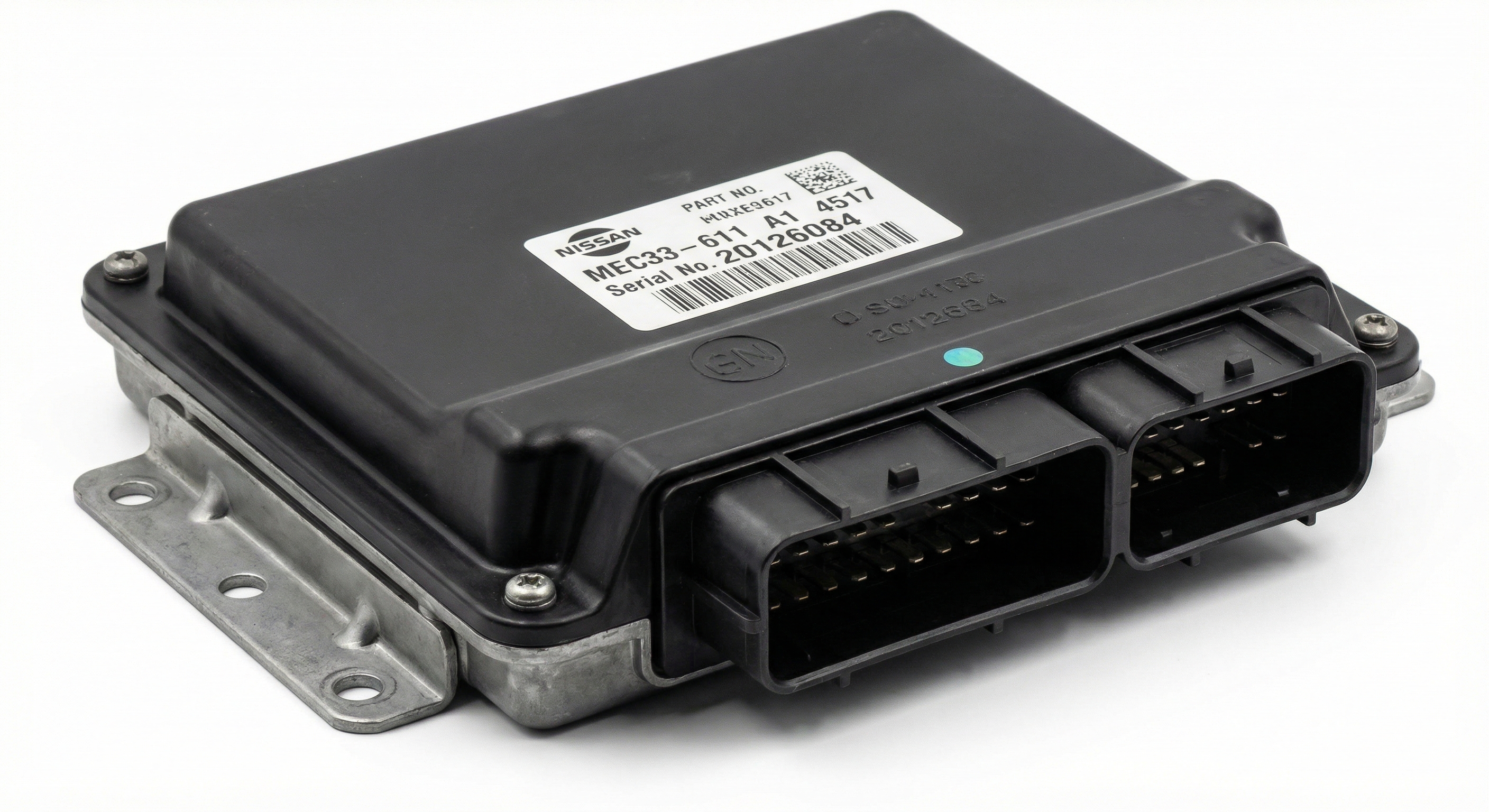
- Faulty Body Control Module (BCM): → Shop Body Control Module While the code directly names the BCM, it is rarely the actual point of failure on this platform. Only consider replacing the BCM after all other possibilities, especially the IPDM and all power/ground connections, have been exhaustively ruled out. A replacement BCM requires programming by a dealer or a qualified locksmith with Nissan-specific tools.
Diagnosis Steps
- Read All Codes: Use a professional-grade scanner capable of reading codes from all modules (BCM, ECM, ABS, etc.), not just a basic engine code reader. Note all present 'U' codes.
- Check Battery Health: Test the battery voltage. It must be above 12.4V at rest and 13.7-14.7V when running. A weak battery is a common cause of communication codes.
- Inspect and Clean Grounds: Disconnect the battery. Inspect and thoroughly clean the main battery-to-chassis ground, engine block grounds, and any grounds near the BCM and IPDM. Corrosion here is a frequent culprit.
- Perform IPDM Self-Test: Reconnect the battery. With the key on and doors closed, press the driver's door jamb switch 10 times in 20 seconds. Watch and listen for the IPDM to cycle the lights, wipers, and horn. Failure to do so points to a faulty IPDM.
- Check for Recalls/TSBs: Specifically for 2004-2006 models, be aware of Nissan Safety Recall PC068 (NHTSA #10V-517) for a failing ECM relay within the IPDM that causes stalling.
- Inspect IPDM and Relays: Visually inspect the IPDM for water intrusion or corrosion. As a diagnostic test, you can try swapping the ECM relay with the identical fog lamp relay (if available) to see if a no-start condition is resolved. The original IPDM is often white; the updated part is black.
- Check BCM Power and Ground: If the IPDM appears functional, use a multimeter to verify that the BCM is receiving constant power and has a good ground at its main connector.
- Professional Diagnosis: If the above steps do not identify the issue, professional diagnosis is required to test the CAN bus wiring for shorts or opens and to definitively condemn the BCM, which requires programming for replacement.
Parts You'll Likely Need
- Intelligent Power Distribution Module (IPDM)
(OEM #284B6-ZE03C (supersedes 284B6-ZE03B, 284B6-ZC00A, etc. VIN verification is critical))— This is the most common point of failure on the 2004-2015 Titan that leads to a U0140 code. Its internal relays fail, cutting power and communication to other modules.
Trusted brands: Nissan (OEM), Hitachi
OEM price range: $280-$500
Aftermarket price range: $150-$300 - IPDM ECM Relay
(OEM #284B7-CW29E)— For early models covered by the recall, or as a first-step diagnostic swap, just the relay can be replaced. If swapping this relay solves a no-start, it's a cheap fix.
Trusted brands: Nissan (OEM)
OEM price range: $20-$30
Aftermarket price range: $10-$20
Related Codes That Often Appear With This One
- U1000 — This is a general Nissan CAN communication failure code. It often appears alongside more specific 'U' codes like U0140, indicating a widespread network problem, frequently pointing back to the IPDM or a bad ground.
- U1001 — Similar to U1000, this indicates a CAN communication error. Seeing multiple 'U' codes together strengthens the diagnosis of a network-level fault rather than a single failed module.
Technical Service Bulletins (TSBs) & Recalls
- NHTSA ID: 10V-517 / Nissan Campaign ID: PC068 - Voluntary safety recall for 2004-2006 Titan, Armada, and other models to replace the ECM relay within the IPDM. The original relay could develop oxidation, leading to stalling at low speeds.
Platform-Specific Known Issues
- A known Nissan issue on 2004-2006 models involves the ECM relay inside the IPDM failing, leading to stalling or a crank-no-start condition, which can be accompanied by communication codes. This was addressed by recall PC068.
- The original IPDM modules were often in a white or clear case and are known to be less reliable than the updated black-cased replacement parts from Nissan.
- Owner experiences on forums like TitanTalk and Reddit frequently confirm that swapping the ECM relay or the entire IPDM resolves a host of electrical gremlins, including the U0140 code and no-start issues.
Mechanic-Grade Diagnostic Values
- CAN Bus Resistance — expected: Approximately 60 Ω. Failure: A reading of ~120 Ω indicates one of the two terminating resistors is offline. A reading significantly different from 60 Ω or 120 Ω suggests a wiring short or open.
- CAN-H Voltage to Ground — expected: Approximately 2.5V to 3.5V (key on, engine off). Failure: Voltage that is stuck high (near 5V or battery voltage) or low (near 0V) indicates a short to power or ground.
- CAN-L Voltage to Ground — expected: Approximately 1.5V to 2.5V (key on, engine off). Failure: Voltage that is stuck high or low indicates a short circuit on the CAN-L line.
- IPDM E/R Power Supply at Connector E118 — expected: Battery Voltage. Failure: No or low voltage indicates a problem with the fusible links or the power harness leading to the IPDM.
- IPDM E/R Ground Continuity — expected: Continuity to ground (near 0 Ω). Failure: High resistance or an open circuit indicates a failed ground connection.
Scan Tool Commands That Help
- Nissan CONSULT: Self Diagnostic Result — This function within the BCM menu on the CONSULT tool is used to read DTCs specific to the BCM and can help confirm if the U0140 is being reported by other modules about the BCM, or if the BCM itself is reporting internal faults.
- Nissan CONSULT: WRITE CONFIGURATION — This function is mandatory when replacing the BCM. It writes the vehicle's specific configuration (options, trim, etc.) to the new module. Failure to perform this step will result in incorrect operation of body features.
- Nissan CONSULT: READ CONFIGURATION — This should be performed on the old BCM before replacement (if possible) to save the vehicle's configuration data, which can then be written to the new BCM.
- Manual Procedure (No Scan Tool): IPDM E/R Auto Active Test — This is a built-in self-test to verify the IPDM's ability to control various outputs like wipers, lights, and the A/C clutch. If the test runs successfully, it confirms the IPDM's internal logic and relays for those circuits are likely functional. The test is initiated by turning the key on, pressing the driver's door jamb switch 10 times in 20 seconds, then cycling the key off and on.
Wiring & Ground Locations
- E15 — Right side of the engine compartment.. This is a major grounding point for the ECM and other critical engine components. Corrosion here can disrupt ECM operation and its ability to communicate on the CAN bus.
- E24 — Left front of the engine compartment.. This is another primary engine bay ground point. A wiring diagram for a 2008 Titan shows it as a ground for the ABS actuator and control unit, which is also on the CAN bus.
- F16 — Left front of the engine.. This ground point serves numerous components, including the IPDM E/R itself. A failure at this specific point could directly cause IPDM malfunction and communication loss.
- B117 / B19 — Behind the right kick panel in the passenger cabin.. These are cabin ground points. Since the BCM is located behind the dash/glove box area, these grounds are critical for its proper operation. A loose or corroded ground here could directly cause BCM failure and a U0140 code.
- M57 / M61 — Behind the left side and center of the dash, respectively.. These are primary dash-area grounds. The BCM, combination meter, and data link connector all rely on these grounds. A problem here can cause widespread communication failure.
- Battery Tray Ground — The main negative battery cable has a smaller wire that bolts to the side of the battery tray with a 10mm bolt.. This is a frequently overlooked but critical ground connection. Corrosion at this point can cause intermittent and widespread electrical issues, mimicking module failure.
Real Owner Repair Stories
- Reddit user in r/NissanTitan (Nissan Titan (year not specified, but behavior is consistent with 2004-2015)) — Frequent electrical issues, seeking common ground locations.
✅ What actually fixed it Another user advised checking the fuse box connector on the positive battery terminal, noting it can be taken apart and checked for rust or dirty connections and is inexpensive to replace. They also confirmed the main negative cable grounds to the frame and engine block. - Phoenix Automotive Head Unit Install Video (Nissan Titan) — Poor sound quality after installing an aftermarket 'Tesla-style' head unit.
❌ Tried (didn't work) Using the provided wiring harness connector labeled 'with amplifier'.
✅ What actually fixed it The installer switched to the harness connector labeled 'without amplifier', which resolved the sound issue. This highlights how aftermarket electronics can interact unexpectedly with the factory system. While this case didn't set a U0140, improper splicing or incorrect harness use with aftermarket stereos is a known cause of CAN bus interference that can trigger communication codes.
OEM Part Supersession History
284B6-ZC00A, 284B6-ZE03B, etc.→284B6-ZE03C— Updates to improve reliability of internal relays and circuitry.
Heads up: While many IPDMs are physically plug-and-play, VIN verification is critical when ordering. Using the wrong IPDM can result in features not working correctly. The original white/clear case IPDMs are known to be less reliable than the updated black case versions.
Model Year Variations Within This Range
- 2004-2006: These model years were subject to Nissan Safety Recall PC068 (NHTSA ID: 10V-517) specifically for the ECM relay within the IPDM, which could cause stalling. Later models may have received an improved IPDM from the factory.
- 2008+: Wiring diagrams for 2008 and later models are more readily available and show slight differences in connector and component designations compared to early models, though the overall architecture and failure points (IPDM, grounds) remain consistent.
Diagnostic Flowchart
Other Known Issues on This Vehicle
Issues unrelated to this code that are worth knowing about as an owner of this generation:
- Rear Axle Seal Leaks 🔴 High — Very common on 2004-2007 models. Caused by a lack of a differential breather vent, leading to pressure buildup that forces gear oil past the seals. Can lead to differential failure if not addressed. (Ref: NTB07-038)
- Cracked Exhaust Manifolds 🟠 Medium — Common across all years of the first generation. The integrated catalytic converter design causes high heat, leading to cracks that produce an exhaust tick, especially when cold. Repair is expensive due to parts and labor.
- Radiator Failure causing Transmission Failure (SMOD) 🔴 High → Shop Transmission Assembly — Known as the 'Strawberry Milkshake of Death,' this affects models from roughly 2005-2010. The internal barrier in the radiator between the engine coolant and transmission fluid cooler fails, mixing the two fluids and destroying the automatic transmission. Prevention involves bypassing the radiator cooler or replacing the radiator with an updated part. (Ref: Nissan extended the warranty for some vehicles, but most are now expired.)
- Fuel Level Sending Unit Failure 🟡 Low — Common on 2005-2009 models, causing the fuel gauge to read inaccurately (often showing 1/4 tank when empty). This was subject to a recall. (Ref: NHTSA #10V075000)
Used vs. New Parts: Buying Guide for This Vehicle
When a used part is the smart pick: A used IPDM from a junkyard is a very common and cost-effective repair for this specific issue on the 2004-2015 Titan. Since the IPDM does not typically require programming, a matching part number from a donor vehicle is often a direct plug-and-play fix.
Donor-vehicle mileage cap: roughly under 150000 miles for the part to have meaningful remaining life.
What to inspect on the donor part:
- Match the part number EXACTLY. Do not rely on visual appearance alone.
- Prioritize a donor vehicle from a dry climate to reduce the risk of internal corrosion.
- Look for the updated black-cased IPDM, as the original white-cased units are more prone to failure.
- Inspect the connectors on the used IPDM for any signs of water intrusion, corrosion, or melted/burnt pins.
- If possible, choose a part from a vehicle that was not involved in a front-end collision.
OEM-only on this vehicle (don't cheap out):
- Body Control Module (BCM) - A used BCM is almost never a good idea as it is VIN-locked and requires dealer-level programming that often fails on a used unit.
Aftermarket brands forum-validated for this vehicle:
- Hitachi (Often the OEM supplier)
Brands owners have reported issues with on this vehicle:
- Unbranded, no-name IPDMs from online marketplaces should be avoided due to questionable quality control of the internal relays.
Real Owner Stories
Aggregated from forums and TSBs cited above. Mileages and costs reflect what owners reported in those sources.
2004-2006 Nissan Titan
Symptoms: The vehicle died unexpectedly while driving. It experienced a crank-no-start condition and various electrical gremlins.
What fixed it: Swapping the ECM relay or replacing the entire IPDM assembly resolved the no-start and communication issues.
Source hint: Owner experiences on forums like TitanTalk and Reddit
Nissan Xterra (Platform Mate)
Symptoms: The car died and would not restart, a situation common to the F-Alpha platform vehicles sharing the IPDM design.
What fixed it: Replacing the faulty IPDM (Intelligent Power Distribution Module).
Source hint: https://www.reddit.com/r/XTerra/comments/zk5n6u/anyone_here_dealt_with_ipdm_failure_car_died
Related OBD-II Codes
Frequently Asked Questions
Is there a recall for the stalling and communication issues on my 2005 Nissan Titan?
How can I tell if I have the updated IPDM in my Titan?
My Titan won't start; is there a quick way to test if the IPDM relay is the problem?
What is the 'IPDM self-test' I keep hearing about for Nissan trucks?
Could a bad battery cause the U0140 code on my 2012 Titan?
Does the U0140 code mean I have to replace my BCM?
Helpful Videos
We Have This Part in Stock

The information in this article is provided for general reference and educational purposes only. Vehicle specifications, procedures, and part compatibility can vary by production date, trim level, and region. Always consult your vehicle's factory service manual and verify part numbers before purchasing or performing repairs. Safety-critical components such as airbags, seat belts, and braking systems should be installed by a qualified professional.
- Nissan Titan:
- 🧭 Diagnostic Flowchart
- 🎬 Helpful Videos
- 🛍️ Shop This Part
- What's Unique About the 2004-2015 Nissan Titan
- Symptoms You May Notice
- Most Likely Causes
- Rare But Worth Checking
- Diagnosis Steps
- Parts You'll Likely Need
- Related Codes That Often Appear With This One
- Technical Service Bulletins (TSBs) & Recalls
- Platform-Specific Known Issues
- Mechanic-Grade Diagnostic Values
- Scan Tool Commands That Help
- Wiring & Ground Locations
- Real Owner Repair Stories
- OEM Part Supersession History
- Model Year Variations Within This Range
- Other Known Issues on This Vehicle
- Used vs. New Parts: Buying Guide for This Vehicle
- Real Owner Stories
- 2004-2006 Nissan Titan
- Nissan Xterra (Platform Mate)
- Related OBD-II Codes
- Frequently Asked Questions
- 🎟️ Get 5% Off