

U0140 on 2011-2018 Ram 1500: Lost Communication With Body Control Module Fixes
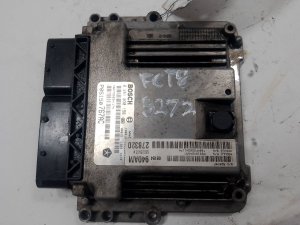
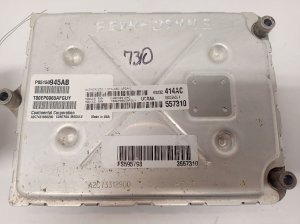
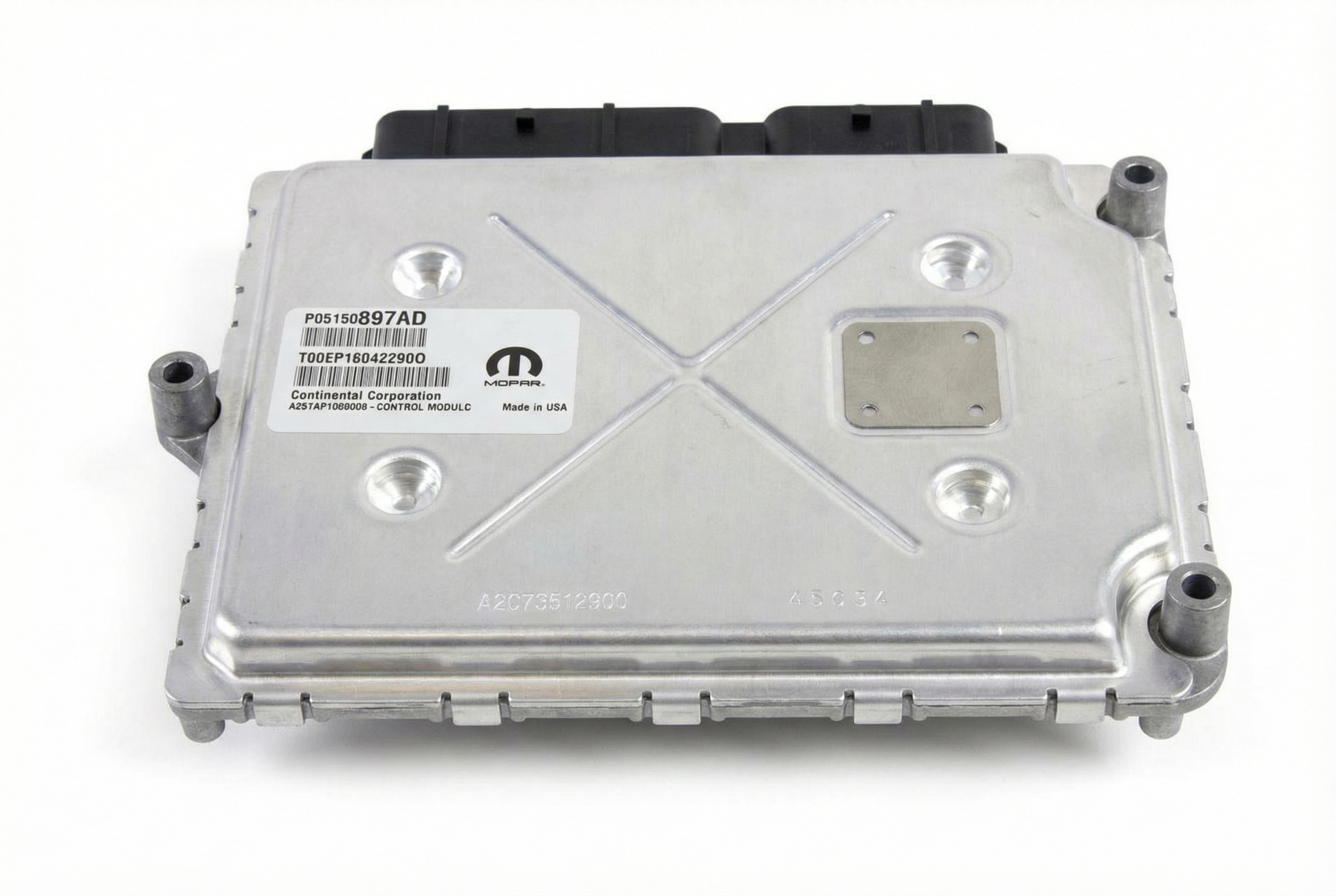
On a 2011-2018 Ram 1500, U0140 is most often caused by a software glitch in the Powertrain Control Module (PCM). Ram issued multiple Technical Service Bulletins (TSBs) for this, and the fix is a dealer software update. If the code is 'permanent' and cannot be cleared with a scan tool, a dealer visit for a reflash is almost certainly required. [2, TSB #18-072-16, TSB #18-103-16 REV. B, TSB #18-112-15] Other common causes include a failing Totally Integrated Power Module (TIPM) or wiring harness d
- For the 2011-2018 Ram 1500, U0140 is very often a software problem, not a failed part.
- If you cannot clear the code with your scanner, do not replace any parts. The next step should be a visit to the dealer for a PCM software update per the official TSBs.
- Always check the simple things first: battery health and all major ground connections.
- If a software update does not fix the issue, the next most likely culprit is the TIPM, followed by wiring damage, and finally the BCM itself.
What's Unique About the 2011-2018 Ram 1500

For the 2011-2018 fourth-generation Ram 1500 (DS/DJ), this code is frequently tied to a known software issue. Ram released several TSBs (18-072-16, 18-103-16, 18-112-15) for the 3.6L, 4.7L, and 5.7L engines, noting that U0140 may appear and be impossible to clear with a standard scan tool. [TSB #18-072-16, TSB #18-103-16 REV. B, TSB #18-112-15] This is a strong indicator that a dealer software update is the required fix, rather than a physical part failure. Additionally, this generation of Ram trucks is known for issues with the Totally Integrated Power Module (TIPM), which can also cause communication faults like U0140. For 2013 and newer models, this module may be referred to as the Power Distribution Center (PDC).
Diagnostic Flowchart
Tap your situation to follow the diagnostic path that matches what you're seeing on this vehicle.
Symptoms You May Notice

- Check Engine Light is on
- Inability to clear the trouble code with a standard OBD-II scanner, often showing as a 'permanent' DTC. [2, 13, TSB #18-072-16, TSB #18-103-16 REV. B, TSB #18-112-15]
- Erratic or non-functional power windows, door locks, and mirrors.
- Interior or exterior lights flickering, staying on, or not working at all.
- Wipers operating randomly or not at all.
- Instrument cluster gauges may drop to zero or behave erratically.
- "Service Electronic Stability Control" message may appear.
- Vehicle may not start, or crank but not start.
- Horn may sound randomly or not work at all.
- Airbag light may stay on.
- Replacing the Body Control Module (BCM) without first verifying if a PCM software update is needed or checking for a faulty TIPM.
- Replacing the battery without confirming it has failed a load test, as the root cause is often a parasitic drain from a faulty TIPM.
Most Likely Causes

- PCM Software Requires Update 🔴 High Probability Ram issued multiple TSBs confirming a software bug causes this code and prevents it from being cleared. This affects 3.6L, 4.7L, and 5.7L engines within this year range. [TSB #18-072-16, TSB #18-103-16 REV. B, TSB #18-112-15, TSB #1810316, TSB #1810016]
How to confirm: Attempt to clear the code with a scan tool. If the code is 'permanent' or returns immediately and cannot be erased, it strongly points to the software issue described in the TSBs. Owners on forums confirm a dealer reflash is the definitive fix.
Typical fix: A Ram dealership must update the Powertrain Control Module (PCM) software using their proprietary wiTECH scan tool. Owners report paying between $130 and $350 for this service if the vehicle is out of warranty.
Est. part cost: $0 - Failing Totally Integrated Power Module (TIPM) 🟡 Medium Probability → Shop Fuse Box The TIPM on 2011-2012 Ram trucks is a well-documented weak point, responsible for a wide array of electrical and communication problems, including fuel pump failure, starter issues, and random operation of accessories.
How to confirm: A professional will perform advanced diagnostics to see if the TIPM is failing to route power or communication signals correctly. This is often a process of elimination after checking wiring and software. Symptoms like the fuel pump staying on or wipers activating on their own are strong indicators.
Typical fix: Replace the TIPM. This part is VIN-specific and requires programming. Remanufactured units are available from specialists. An external fuel pump relay bypass cable 🎬 Watch: Common TIPM symptoms and how to replace the module. is a common temporary fix for related fuel pump issues.
Est. part cost: $400-$900 - Wiring Harness Damage or Corrosion 🟡 Medium Probability CAN bus wires are a twisted pair that can be sensitive to electrical interference or physical damage. Chafing against engine components, frame members, or corrosion in connectors (especially at the BCM or TIPM) can disrupt communication.
How to confirm: Visually inspect wiring harnesses between the PCM, BCM, and TIPM. Pay close attention to areas where the harness is close to hot exhaust components or sharp edges. A multimeter can be used to check for continuity and shorts to ground on the CAN bus wires.
Typical fix: Repair the damaged section of the wiring harness and protect it from future damage. Clean corroded connectors with electrical contact cleaner and apply dielectric grease.
Est. part cost: $10-$100 - Weak Battery or Poor Ground Connections ⚪ Low Probability → Shop Vehicle Battery Low system voltage can cause unpredictable communication errors between modules. These trucks have multiple critical ground points that can corrode over time, especially on 2013 and newer models which are noted to be very sensitive to battery issues.
How to confirm: Test the battery to ensure it holds a charge and provides at least 12.4 volts with the engine off. With the engine running, voltage should be stable between 13.5V-14.5V. Inspect and clean the main battery terminals, chassis grounds, and engine block ground straps.
Typical fix: Replace a weak battery. Clean or tighten all ground connections.
Est. part cost: $150-$300
Rare But Worth Checking
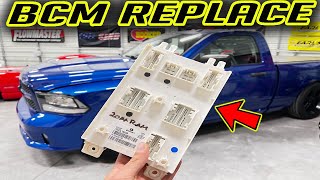
- Faulty Body Control Module (BCM): → Shop Body Control Module While the code directly names the BCM, the module itself is less likely to fail than the software, TIPM, or wiring. It should only be replaced after all other possibilities have been ruled out. Water intrusion is a common cause of BCM failure.
- Aftermarket Electronics Interference: Improperly installed remote starters, alarms, or audio equipment can interfere with the CAN bus network and cause communication codes. Some owners report issues after using aftermarket tuners that lock the PCM.
- Faulty module on the CAN bus network: A different module on the same network (e.g., radio, instrument cluster, door control module) can fail and broadcast erratic data, disrupting communication for all other modules and causing the BCM to appear offline. Isolating the faulty module requires disconnecting modules one by one at the star connector/junction block. 🎬 Watch: How to diagnose a CAN bus fault on your Ram.
Diagnosis Steps
- Check Battery Health: Ensure the battery voltage is stable and above 12.4V with the engine off. Test the charging system with the engine running (should be 13.5V-14.5V). Charge or replace the battery if necessary.
- Inspect Fuses and Grounds: Check all fuses related to the BCM, PCM, and TIPM/PDC. For 2013-2018 models, BCM fuses are often F10, F12, F14, and F23 🎬 See this guide to locating your BCM fuses. in the under-hood fuse box. Inspect the main battery, chassis, and engine ground connections for tightness and corrosion.
- Attempt to Clear Code: Use an OBD-II scanner to try and clear the U0140 code. If it cannot be cleared and is listed as 'permanent', this strongly suggests the software issue from the TSBs.
- Check for TSBs: Confirm if your vehicle's year, model, and engine are covered by TSBs #18-072-16, #18-103-16, or #18-112-15. If so, a dealer software update is the most likely solution. [TSB #18-072-16, TSB #18-103-16 REV. B, TSB #18-112-15]
- Inspect Wiring: Visually inspect the wiring harnesses between the PCM, BCM, and TIPM for any signs of chafing, melting, or corrosion, especially where they run near hot or vibrating parts. Check connectors for bent or corroded pins.
- Check CAN Bus Resistance: Turn the ignition off and disconnect the negative battery cable. Use a multimeter to measure the resistance between the CAN C High (Pin 6) and CAN C Low (Pin 14) terminals at the OBD-II port. A healthy network should read approximately 60 ohms. A reading of 120 ohms indicates a missing termination resistor or a break in the wiring, while a reading near 0 ohms indicates a short circuit.
- Professional Diagnosis: If the above steps do not resolve the issue, take the vehicle to a qualified technician. They will use an advanced scan tool (like wiTECH) to check the live status of all modules on the CAN network and perform pin-out tests on the BCM, PCM, and TIPM connectors to isolate the fault.
- Perform Software Update: If indicated by the TSBs, have a Ram dealer perform the PCM software reflash. This typically costs $130-$350.
- Test/Replace Modules: As a final step, the technician will test and, if necessary, replace the TIPM or BCM.
Parts You'll Likely Need
- PCM Software Update — This is not a physical part, but a service performed by a dealer. It is the most common fix for this specific code on this platform, as documented in multiple TSBs. [TSB #18-072-16, TSB #18-103-16 REV. B, TSB #18-112-15]
OEM price range: $150-$350 (dealer labor)
Aftermarket price range: N/A - Totally Integrated Power Module (TIPM)
(OEM #Varies by VIN (e.g., 68244873AA, 68089321AF, 68244877AA))— The TIPM is a known failure point on these trucks, causing a wide range of electrical and communication faults.
Related Codes That Often Appear With This One
- P0607 — This code for 'ECU Internal Performance' is specifically mentioned alongside U0140 in TSB #1810316 and #18-103-16 REV. B, indicating they are related to the same software issue.
- P2096 / P2097 — These fuel trim codes are also listed in TSB #1810316 as potentially being set along with U0140 due to the same software glitch.
- U0100 — Lost Communication with ECM/PCM. This and other U-series codes can appear in clusters when there is a network-wide communication problem, often pointing to a central issue like the TIPM or a major wiring fault.
- P0300 — A random misfire code that is also mentioned in TSBs #1810016 and #18-072-16 as being related to software issues that can be fixed with a PCM flash. [TSB #1810016]
Technical Service Bulletins (TSBs) & Recalls
- 18-072-16
- 18-072-16 REV. A
- 18-103-16
- 18-103-16 REV. B
- 18-112-15
- 1810016
Platform-Specific Known Issues
- A widespread software issue requires a PCM update, as documented in TSB #18-072-16 (3.6L), TSB #18-103-16 REV. B (3.6L, 4.7L), and TSB #18-112-15 (5.7L). A key symptom is the code being 'permanent' and unable to be cleared by a standard scan tool.
- The Totally Integrated Power Module (TIPM) is a notoriously unreliable component on this platform and is a frequent cause of network communication codes and other electrical gremlins.
Mechanic-Grade Diagnostic Values
- CAN Bus Resistance (CAN-C) — expected: 53.5 to 67 Ohms. Failure: A reading of ~120 Ohms indicates an open circuit or missing terminating resistor. A reading near 0 Ohms indicates a short between the CAN High and CAN Low wires.
- BCM Power Supply Voltage — expected: 12.2V - 12.8V. Failure: Significantly lower voltage indicates a power supply issue (fuse, wiring) to the module.
- BCM Ground Resistance — expected: < 0.1 Ω. Failure: Higher resistance indicates a poor ground connection, which can cause module misbehavior.
- CAN-C Bus Voltage (Active) — expected: CAN-H: ~2.5V to 3.5V; CAN-L: ~2.5V to 1.5V. Failure: Voltages stuck high, low, or at 0V indicate a short to power, short to ground, or an open circuit.
Scan Tool Commands That Help
- wiTECH: View Network Topology — This function provides a visual map of all modules on the CAN bus and shows which ones are communicating and which are offline. It is the fastest way to confirm if the BCM is the only module not responding or if there is a wider network issue.
- wiTECH: Body Verification Test — This is a guided diagnostic routine within the factory scan tool used after a repair (like fixing a wire or replacing a module) to confirm that the BCM and all its related functions are operating correctly and communicating on the network.
Wiring & Ground Locations
- CAN Bus Star Connectors (Junction Block) — Located under the driver's side dashboard, often taped to the main harness near the steering column. There may be two separate star connectors for the CAN-IHS and CAN-C networks.. These are the central hubs for the CAN bus. A bad connection here can take down the whole network. They are also the primary access point for a technician to disconnect individual modules one by one to isolate which one might be causing the network fault.
- G300 — A major chassis ground point located under the vehicle near the driver's door, attached to a body mount on the frame rail.. A corroded or loose G300 is a known cause of multiple, unpredictable electrical issues and communication codes, as it provides the ground path for numerous modules.
- BCM Connectors (C1-C7) — The Body Control Module is located high up under the driver's side of the dashboard, to the left of the steering column. It has multiple large connectors, often designated C1 through C7.. These are the direct connection points to the BCM. Any corrosion (especially from a water leak) or loose pins in these connectors will cause a loss of power, ground, or communication for the module, directly triggering U0140.
- BCM C2 Connector (Power/Ground) — One of the main connectors at the BCM under the driver's dash.. Pin 1 (BK wire) is a primary ground for the BCM. Pin 3 (RD wire) is a primary fused B(+) power feed. Loss of either of these can cause the BCM to go offline.
- BCM Fuses (TIPM/PDC) — In the under-hood fuse box (also called TIPM or PDC). For 2013-2018 models, these are commonly fuses F10, F12, F14, and F23.. These fuses supply power to the BCM. A single blown fuse will cause the module to shut down and trigger a U0140 code. Always check these before suspecting a faulty module.
Real Owner Repair Stories
- RamForum.com user (2014 Ram 1500, 50,000 miles) — Permanent U0140 code that could not be erased with an Actron scanner.
❌ Tried (didn't work) Attempting to clear the code with a consumer-grade scanner.
✅ What actually fixed it The owner had the dealer perform a PCM software flash update for $149. After the flash, the code was gone and the owner noted improved responsiveness and fuel economy. The dealer could not find the U0140 code when they scanned it, suggesting a prior battery disconnect may have temporarily cleared it from the active list, but the flash was the permanent solution mentioned in the TSBs. - YouTube Channel - Automotive Diagnostics & Programming (2016 Ram 1500) — No communication with any interior CAN bus modules; windows and radio not working.
❌ Tried (didn't work) Initial visual inspection showed no obvious damage.
✅ What actually fixed it The technician diagnosed a faulty aftermarket radio that was shorting the CAN-IHS bus to ground. When the radio was disconnected from the network at the star connector, normal communication was restored to all other modules. The root cause was the aftermarket radio, not the BCM or wiring.
Model Year Variations Within This Range
- 2013-2018: Starting in 2013, Ram trucks became more electronically complex and sensitive to battery voltage issues. They utilize two separate CAN networks that are bridged by the BCM (acting as a gateway): the high-speed CAN-C (500kbps) for critical powertrain/chassis modules and the lower-speed CAN-IHS (125kbps) for interior/body functions. A fault on the CAN-IHS bus (e.g., a bad radio) can cause the BCM to set codes.
- 2011-2012 vs 2013-2018: The under-hood fuse box on 2011-2012 models is called the Totally Integrated Power Module (TIPM) and is a well-known failure point. For 2013 and newer models, this component is generally referred to as the Power Distribution Center (PDC) or is still colloquially called a TIPM, but the internal designs and part numbers differ.
Helpful Videos

We Have This Part in Stock

The information in this article is provided for general reference and educational purposes only. Vehicle specifications, procedures, and part compatibility can vary by production date, trim level, and region. Always consult your vehicle's factory service manual and verify part numbers before purchasing or performing repairs. Safety-critical components such as airbags, seat belts, and braking systems should be installed by a qualified professional.
- Ram 1500:
- 🧭 Diagnostic Flowchart
- 🎬 Helpful Videos
- 🛍️ Shop This Part
- What's Unique About the 2011-2018 Ram 1500
- Symptoms You May Notice
- Most Likely Causes
- Rare But Worth Checking
- Diagnosis Steps
- Parts You'll Likely Need
- Related Codes That Often Appear With This One
- Technical Service Bulletins (TSBs) & Recalls
- Platform-Specific Known Issues
- Mechanic-Grade Diagnostic Values
- Scan Tool Commands That Help
- Wiring & Ground Locations
- Real Owner Repair Stories
- Model Year Variations Within This Range
- 🎟️ Get 5% Off