

U0140 on 2019-2022 Ram 1500: Lost Communication With Body Control Module Causes and Fixes
This code means the Body Control Module (BCM) has lost communication with other modules on the truck's network. The most common causes are low battery voltage, poor ground connections, or a software glitch requiring a dealer update. Water intrusion into the BCM from a windshield leak or during tinting is also a notable cause. A new BCM is rarely the first step.
- U0140 means the Body Control Module (BCM) isn't communicating on the truck's network.
- Before suspecting an expensive BCM failure, always check the battery, ground connections, and for any available software updates from a Ram dealer.
- This code often appears with other communication codes, pointing to a network-level problem rather than a single failed part.
- Driving is possible, but be aware that body-related functions (lights, locks, etc.) may be unreliable.
- Due to the complexity, professional diagnosis with a high-end scan tool is strongly recommended.
What's Unique About the 2019-2022 Ram 1500

For the 5th generation Ram 1500 (DT), the U0140 code is often a software or network issue rather than a hard part failure. Ram has issued TSBs that address communication losses between modules, sometimes requiring a software re-flash at the dealership. One TSB specifically points to the radio losing its connection to the BCM, which can trigger this code. [⭐ MANUFACTURER TSB — highest authority] Bulletin #S238A000007 (2022 ELECTRICAL SYSTEM, dated 2023-02-10) This highlights the complexity of the truck's integrated electronics and suggests that diagnosis should start with checking for software updates. Additionally, the BCM is located high in the driver's side dashboard, making it susceptible to water damage from windshield leaks or during the process of window tinting, a recurring issue noted by owners.
Diagnostic Flowchart

Tap your situation to follow the diagnostic path that matches what you're seeing on this vehicle.
Symptoms You May Notice

- Check Engine Light is on
- Malfunctioning power windows or door locks
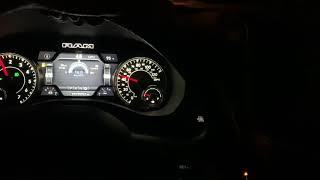
- Erratic or non-functional interior or exterior lights (may flash like strobes)
- Wipers not working correctly
- Issues with the radio or infotainment system
- ECO mode may be disabled
- Multiple warning lights on the dashboard (ABS, traction control, etc.)
- Tailgate ajar warning light
- Parking sensors alarming falsely
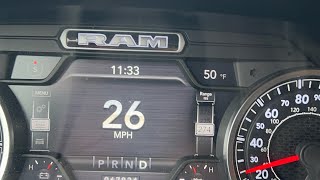
- Battery drain overnight 🎬 Watch: Real-world example of these erratic electrical symptoms
- Replacing the BCM immediately without checking battery, grounds, and for available software updates. This is an expensive and often unnecessary first step.
- Ignoring an old battery. Due to the platform's sensitivity to voltage, a battery that still starts the truck can still be the root cause of communication codes.
Most Likely Causes
- Low Battery Voltage or Weak Alternator 🔴 High Probability → Shop Vehicle Battery Modern trucks with extensive electronics, including the 5th Gen Ram, are highly sensitive to voltage fluctuations. A weak battery can cause modules to drop off the communication network temporarily, triggering a U0140 code.
How to confirm: Test the battery with a multimeter or electronic battery tester. Voltage should be above 12.4V with the engine off and between 13.7V and 14.7V with the engine running. Many owners report that simply replacing an aging battery resolves the issue.
Typical fix: Recharge or replace the battery. If charging voltage is low, the alternator may need replacement.
Est. part cost: $150-$400 - Software Glitch / Update Required 🟡 Medium Probability Manufacturers often release software updates to fix communication bugs. TSB 08-037-21 for 2021 models with the 3.6L eTorque engine specifically lists U0140 as a code addressed by a Hybrid Control Processor (HCP) software update.
How to confirm: A dealership or a professional shop with a wiTECH scan tool can check the current software version of the BCM and other modules against available updates.
Typical fix: The dealer performs a software re-flash of the affected module(s), such as the BCM, Radio, or HCP.
Est. part cost: $0-$250 - Poor Ground Connection 🟡 Medium Probability Vehicle control modules rely on clean, tight ground connections. Corrosion or looseness at a primary ground point can cause intermittent communication loss. On the Ram 1500, a key ground strap is located on the passenger side inner fender/wheel well area.
How to confirm: Visually inspect and physically check the main battery ground, the chassis ground strap on the passenger side, and any grounds connected to the BCM for tightness and corrosion.
Typical fix: Clean the contact surfaces of the ground connection with a wire brush and tighten the fastener to specification. Applying dielectric grease can help prevent future corrosion.
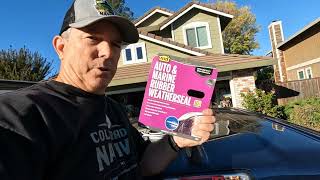
Est. part cost: $0-$10 - Water Intrusion into BCM 🟡 Medium Probability The BCM is located high in the driver-side dash, making it vulnerable to water running down from the A-pillar or windshield area. This is a known issue after windshield replacement or tinting. Ram also has TSBs (e.g., 23-016-21) for water leaks from the rear sliding window frame 🎬 See how water leaks can damage your truck's electronics, which can cause various electrical issues.
How to confirm: Inspect the BCM and its connectors for any signs of moisture, corrosion, or water stains. The BCM is located under the driver's side dashboard, high up and difficult to access. Owners often report flickering lights and multiple random warnings immediately after a windshield tint job.
Typical fix: If caught early, disconnecting the battery and thoroughly drying the BCM and connectors with a fan may resolve the issue. If the module is corroded or internally damaged, it will require replacement and programming.
Est. part cost: $300-$700 - Damaged Wiring or Loose Connector ⚪ Low Probability Wiring for the CAN bus network can be damaged by vibrations, chafing, or rodent activity. The steering wheel wiring harness, which contains CAN bus wires, can also be a point of failure.
How to confirm: Visually inspect the wiring harnesses connected to the BCM. Check for continuity and resistance on the CAN bus wires using a multimeter and wiring diagram. Wiggling the harness at the BCM may cause symptoms to appear or disappear.
Typical fix: Repair the damaged section of wire or replace the connector pigtail. In some cases, the entire steering wheel harness may need replacement.
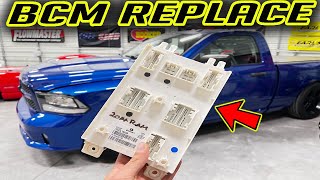
Est. part cost: $15-$200 - Failed Body Control Module (BCM) ⚪ Low Probability → Shop Body Control Module While less common, the BCM itself can fail due to internal circuit board issues, often from water intrusion or vibration over time. This is typically a diagnosis of last resort.
How to confirm: This is a last resort after all other possibilities (power, ground, wiring, software) have been eliminated. A professional scan tool will be unable to communicate with the BCM at all, even with a direct connection.
Typical fix: Replace the Body Control Module. This part must be programmed (cloned) to the vehicle's specific VIN and options, which requires specialized tools or sending the original and replacement units to a service.
Est. part cost: $300-$700
Rare But Worth Checking
- Faulty Third-Party Accessory: Poorly installed aftermarket accessories like remote starters, alarms, or lighting can interfere with the CAN bus network and cause communication codes. An owner on RamForum.com noted their aftermarket remote start stopped working when the U0140 code appeared.
- Another Failing Module: Sometimes a different module on the network (like the radio or ABS module) can fail in a way that it 'shouts' on the network, preventing the BCM from communicating. The provided TSB 08-037-21 lists several other 'U' codes that can appear with U0140, pointing to a wider network issue. [3, ⭐ MANUFACTURER TSB — highest authority] Bulletin #08-037-21 (2021 STRUCTURE, dated 2021-03-16)
Diagnosis Steps
- Check and record any other stored trouble codes, paying close attention to other 'U' codes or voltage-related codes like P0562.
- Verify battery health and charging system operation. Ensure voltage is stable and above 12.4V (engine off) and 13.7V (engine running). These trucks are very sensitive to battery health.
- Inspect the battery terminals and main chassis ground connections for corrosion and tightness. The main ground strap is on the passenger side fender wall.
- Check for water intrusion. Inspect the driver's side floor and look up under the dash at the BCM for any signs of moisture, especially if the windshield was recently tinted or replaced.
- Using a capable scan tool, attempt to communicate with the BCM. Check if it is online and responding.
- Check for any available Technical Service Bulletins (TSBs) related to U0140 or communication issues. TSBs S238A000007 (radio comms) and 08-037-21 (HCP update) are known to be related. [⭐ MANUFACTURER TSB — highest authority, 3]
- If TSBs do not apply, inspect the connectors and wiring harness at the BCM for any signs of physical damage, corrosion, or backed-out pins.
Parts You'll Likely Need
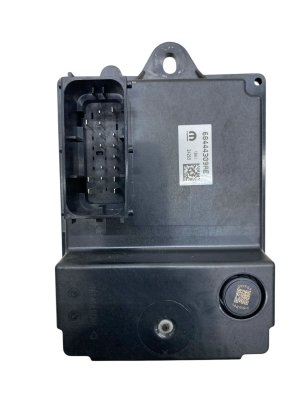
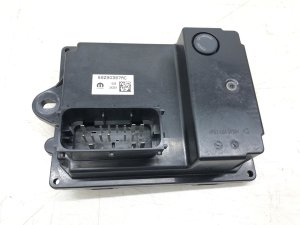
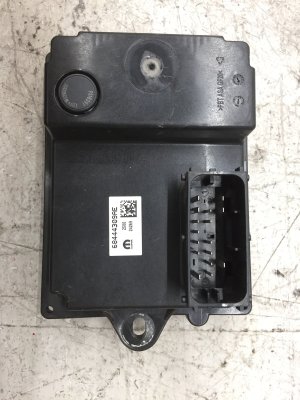
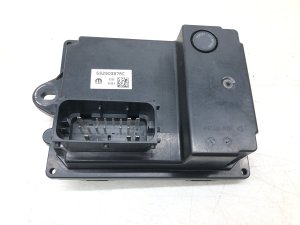
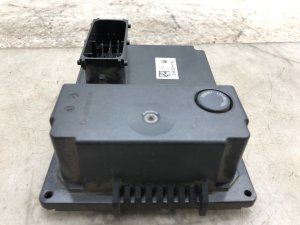
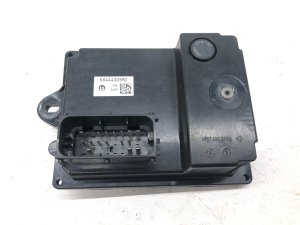
- Body Control Module (BCM)
(OEM #68357472AC, 68405097AA, 68287182 (Varies by VIN/options))— This is the part that needs to be replaced if it is confirmed to have failed internally, often due to water damage or an internal short. Replacement requires programming.
Trusted brands: Mopar
OEM price range: $400-$700
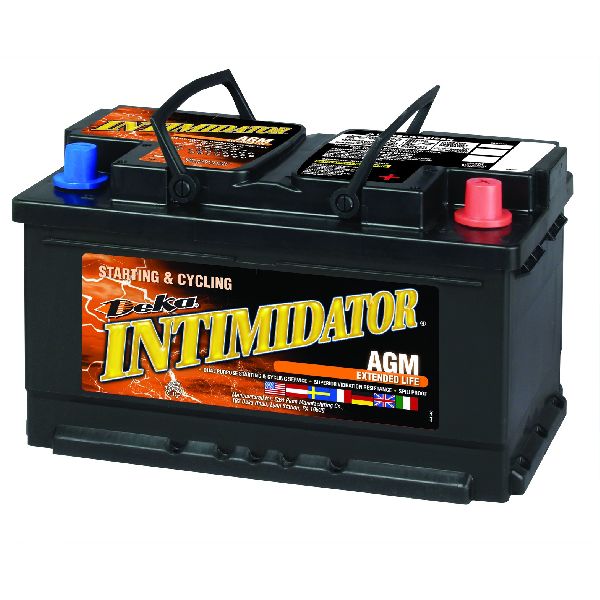
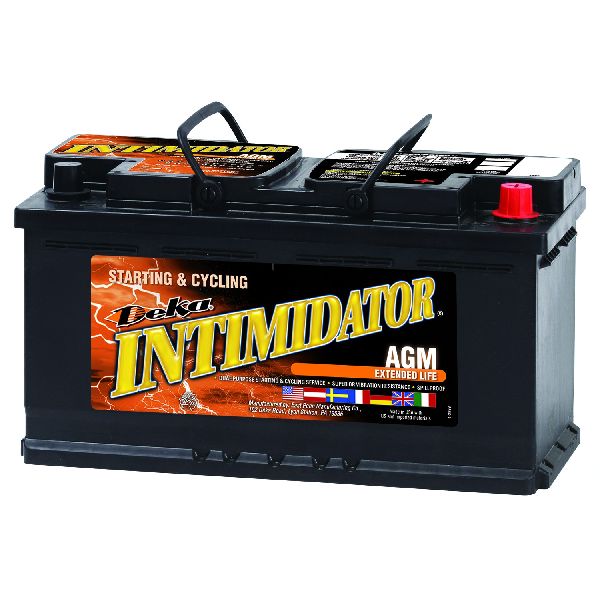
Aftermarket price range: $300-$550 - Battery — A weak or failing battery is a very common cause of communication codes in modern vehicles.
Trusted brands: Mopar, Interstate, DieHard
OEM price range: $250-$400
Aftermarket price range: $150-$300
Related Codes That Often Appear With This One
- U0100 — Lost Communication with ECM/PCM. Often appears with U0140 during a widespread network issue. [3, OWNER COMPLAINT] NHTSA ODI #11662767 (2019, ELECTRICAL SYSTEM, filed 2025-05-23)
- U0121 — Lost Communication with Anti-Lock Brake System (ABS) Control Module. Indicates the communication problem is affecting multiple critical systems. [3, ⭐ MANUFACTURER TSB — highest authority] Bulletin #08-037-21 (2021 STRUCTURE, dated 2021-03-16)
- U0159 — Lost Communication With Parking Assist Control Module. Another body-related module that can lose communication during a network fault. [OWNER COMPLAINT] NHTSA ODI #11662767 (2019, ELECTRICAL SYSTEM, filed 2025-05-23)
- P0562 — Battery/System Voltage Low. This code often accompanies network communication codes and strongly points to the battery or charging system as the root cause.
Technical Service Bulletins (TSBs) & Recalls

- S238A000007: Radio Loss Of Communication To Body Control Module (BCM) Diagnostic trouble Code (DTC) U0140-00
- 08-037-21: Flash: Hybrid Control Processor (HCP) Updates. Addresses U0140 among other codes for 2021 3.6L eTorque models.
- 08-037-21: Flash: Hybrid Control Processor (HCP) Updates. Addresses U0140 among other codes for 2021 3.6L eTorque models.
- 23-016-21 / XL1: Water Leaks At Sliding Backlite / Warranty Extension. Addresses a known source of water leaks into the cab that can damage electronics.
Platform-Specific Known Issues
- TSB #S238A000007 specifically identifies an issue where the radio loses communication with the BCM, triggering U0140-00. [⭐ MANUFACTURER TSB — highest authority]
- TSB #08-037-21 addresses a list of communication codes, including U0140, that can be resolved with a software update to the Hybrid Control Processor (HCP) on 3.6L eTorque models.
- Water intrusion from windshield tinting is a recurring theme in owner forums. Water can drip down onto the BCM, causing immediate or delayed failure.
- TSB #23-016-21 and the subsequent warranty extension XL1 address water leaks from cracked rear sliding window frames, which can lead to widespread electrical issues in the cab.
Mechanic-Grade Diagnostic Values
- CAN Bus Network Resistance — expected: Approximately 60Ω (acceptable range 53.5Ω to 67Ω) when measured between Pin 6 (CAN-H) and Pin 14 (CAN-L) of the OBD-II port with the battery disconnected.. Failure: A reading of ~120Ω indicates an open circuit or a missing terminating resistor. A reading of ~40Ω suggests a third, unwanted terminating resistor is on the network (often from an aftermarket device).
- CAN C Bus Voltage (Key On, Engine Off) — expected: CAN C High (CAN-H) should be approximately 2.7V. CAN C Low (CAN-L) should be approximately 2.3V.. Failure: Voltages shorted to ground (0V), shorted to power (~12V), or shorted together (~0-2.5V) indicate a wiring fault.
- BCM Ground Circuit Resistance — expected: Less than 0.1Ω between the BCM ground pin at its connector and a clean chassis ground point.. Failure: Higher resistance indicates a poor ground connection, which is a common cause of module communication issues.
Scan Tool Commands That Help
- wiTECH 2.0: Vehicle Topology View — This is the primary diagnostic screen for network issues. It provides a color-coded map of all vehicle modules, instantly showing which are online (responsive), offline (not communicating), have stored DTCs, or have pending software updates. It is the first step in identifying which modules are affected by the communication loss.
- wiTECH 2.0: Network Test / Bus Diagnostics — After observing faults in the Topology view, this function can be used to run a specific test on the CAN bus network to help isolate the source of communication errors.
- Any Professional Scan Tool: Wiggle Test (Manual Procedure) — While observing the live status of the BCM (or other suspect module) on the scan tool, physically wiggle the module's connectors and associated wiring harness. If the module comes online or goes offline during this test, it strongly indicates a poor connection, loose pin, or wiring fault at that location.
- No Tool Required: ParkSense System Reset — If ParkSense system errors accompany the U0140 code, this procedure can reset the system. Press the rear ParkSense button on the dashboard to turn the system off and on again, repeating this 10 times and leaving it 'on' during the 10th cycle.
- No Tool Required: Hard Reset / Low Voltage Reset — To clear stubborn 'permanent' codes after a repair or to reset all modules. Disconnect both battery terminals and touch them together for a moment. This dissipates all stored energy in the modules, forcing a complete reboot upon reconnection.
Wiring & Ground Locations

- CAN C Hub / Star Connector (5th Gen DT Body) — Located under the dashboard near the steering wheel shaft. There are typically two connector banks.. This is the central junction point for the high-speed CAN C bus. A technician can disconnect individual branches of the network here to isolate which leg contains a fault (e.g., a shorted module or wire) without having to access each module individually.
- CAN C Hub / Star Connector (2019 'Classic' Body) — Located behind the passenger side kick panel, clipped to the outer body structure.. This serves the same function as the DT star connector but is in a different location for the older body style that was still sold in 2019. Correctly locating this is critical for diagnosis on this specific model variant.
- Ground G212 — Located on the left side of the dash structure.. This is a potential grounding point for modules in the dashboard area. Poor ground connections are a frequent cause of communication codes.
- Park Assist Module (PAM) — Located under the driver's side dash, accessible after removing the door sill plate and lower kick panel.. A fault in the PAM or its wiring can disrupt the CAN bus and cause a U0140 code, as documented in a real repair story.
Real Owner Repair Stories
- 5thGenRams Forum (2019 Ram 1500 4x4 Bighorn) — Intermittent 'ParkSense Temporarily Unavailable' message, along with ABS and Stability Control lights.
❌ Tried (didn't work) Software update performed by the dealer for $300 did not fix the issue.
✅ What actually fixed it A different dealer found the Park Assist Module was 'dead on the bus'. While power and ground tested good, a 'wiggle test' on the module's C1 connector caused it to come online and go offline. The final repair was replacing the wiring harness and connectors for the Park Assist Module. - 5thGenRams Forum (2021 Ram 1500 Laramie, 58k miles) — Loud 'thump' sound while driving, check engine light on, loss of communication with hybrid system (eTorque).
❌ Tried (didn't work) The vehicle was built after the cutoff date (Dec 31, 2020) for a known water leak TSB, so it was not initially considered a warranty item.
✅ What actually fixed it Diagnosis revealed the BCM was fried due to a water leak originating from the third brake light seal. The water ingress caused the BCM failure, which in turn triggered the U0140 communication code.
"I Checked Everything" — The Actual Cause
- A common scenario for U0140 involves the initial electrical checks for power and ground passing without issue. In one documented case on a 2019 Ram, the Park Assist Module had correct voltage and ground resistance, but the module was still offline. The root cause was a poor pin connection inside the module's main connector, which was only discovered by physically wiggling the connector while monitoring the module's status on a scan tool. This highlights that a 'good' voltage reading doesn't always mean a 'good' connection capable of handling data traffic.
Model Year Variations Within This Range
- 2019-2020: A Technical Service Bulletin (TSB) addressing water leaks from the rear of the cab may not apply to vehicles built after December 31, 2020, suggesting a potential change in the seals or assembly process for the 2021 model year and newer. However, leaks are still reported on newer models.
- 2021-2022: On 2021 and newer trucks, the ParkSense system is more sensitive to changes in tire size. Installing larger tires can cause the 'ParkSense Unavailable' message and may contribute to network faults. This requires either a speedometer recalibration via a tool like the Tazer module or a dealer-level adjustment.
Helpful Videos
Used OEM Parts in Stock
New Aftermarket Parts Available


The information in this article is provided for general reference and educational purposes only. Vehicle specifications, procedures, and part compatibility can vary by production date, trim level, and region. Always consult your vehicle's factory service manual and verify part numbers before purchasing or performing repairs. Safety-critical components such as airbags, seat belts, and braking systems should be installed by a qualified professional.
- Ram 1500:
- 🧭 Diagnostic Flowchart
- 🎬 Helpful Videos
- 🛍️ Shop This Part
- What's Unique About the 2019-2022 Ram 1500
- Symptoms You May Notice
- Most Likely Causes
- Rare But Worth Checking
- Diagnosis Steps
- Parts You'll Likely Need
- Related Codes That Often Appear With This One
- Technical Service Bulletins (TSBs) & Recalls
- Platform-Specific Known Issues
- Mechanic-Grade Diagnostic Values
- Scan Tool Commands That Help
- Wiring & Ground Locations
- Real Owner Repair Stories
- "I Checked Everything" — The Actual Cause
- Model Year Variations Within This Range
- 🎟️ Get 5% Off