

U0140 on 2014-2020 Ram 3500: Lost Communication With BCM Causes and Fixes
On 2014-2020 Ram 3500 trucks, U0140 is most often a software glitch in the Powertrain Control Module (PCM), particularly on 2014-2018 models. The fix is a dealer-installed software update that typically costs $150-$250. A key symptom is that the code cannot be cleared with a standard scanner and may be listed as 'permanent' until the PCM is reprogrammed.
- For a 2014-2020 Ram 3500, U0140 is most likely a software problem, not a failed part.
- Your first step should be to contact a Ram dealer to see if your truck needs a PCM software update per the numerous TSBs.
- Do not replace the Body Control Module (BCM) unless the software update has been performed and all wiring has been thoroughly checked.
- A key symptom of the software bug is the code being 'permanent' and unable to be cleared with a standard scanner.
What's Unique About the 2014-2020 Ram 3500
For this specific generation of Ram trucks, the U0140 code is uniquely and strongly tied to a known software bug. Ram issued multiple Technical Service Bulletins (TSBs) acknowledging that the PCM's software could falsely report a communication loss with the BCM. TSB 18-002-15 REV B specifically applies to 2015 Ram 2500/3500 with the 6.4L engine, while TSB 18-072-16 REV. A applies to 2014 models with the 5.7L engine. A critical detail noted in the TSBs and confirmed by owners is that the code often appears as 'permanent' and cannot be cleared with a standard scan tool until the dealer performs a PCM software update.
Diagnostic Flowchart
Tap your situation to follow the diagnostic path that matches what you're seeing on this vehicle.
Generation note: This range covers the end of the Fourth Generation (DS/D2 platform, 2014-2018) and the start of the Fifth Generation (DJ platform, 2019-2020). The well-documented TSBs regarding the PCM software fix specifically apply to the 2014-2016 'DS/D2' models with gasoline engines (5.7L and 6.4L). While U0140 can occur on 2019+ models and those with the 6.7L Cummins engine, it is less likely to be caused by this specific software bug and diagnosis should focus more on traditional wiring, power, and ground issues.
Symptoms You May Notice
- Check Engine Light is on
- Code cannot be cleared with a standard OBD-II scanner, often listed as 'permanent'.
- Electrical features work erratically (lights, wipers, power locks, windows).
- Warning lights on the dashboard may illuminate (e.g., security, ABS, traction control).
- Battery drains overnight.
- Vehicle may not start or crank.
- Remote keyless entry may not function.
- Replacing the Body Control Module (BCM) before checking for software updates. The TSBs make it clear that a PCM reflash is the most common fix, and replacing the BCM would be an expensive and unnecessary repair in those cases.
Most Likely Causes
- Powertrain Control Module (PCM) Software Glitch 🔴 High Probability → Shop Engine Control Module (ECM) Multiple TSBs were issued by the manufacturer for this specific problem. TSB #18-072-16 REV. A covers 2014 models with 5.7L engines, and TSB #18-002-15 REV B covers 2015 models with 6.4L engines.
How to confirm: If the U0140 code is 'permanent' and will not clear with a scan tool, it strongly points to the software issue. A dealer can check your VIN for applicable TSBs. Disconnecting the battery may provide a temporary fix, but the code will likely return.
Typical fix: Reprogramming (flashing) the PCM with the latest software version using a dealer's wiTECH diagnostic tool. This typically costs one hour of shop labor.
Est. part cost: $0 - Low Battery Voltage or Poor Grounds 🟡 Medium Probability → Shop Vehicle Battery Control modules are sensitive to voltage, and a weak battery or corroded ground can cause intermittent communication errors. A main chassis ground point located below the driver's side battery is a known spot for corrosion on these trucks.
How to confirm: Test the battery with a multimeter; it should be above 12.4 volts at rest and 13.7-14.7V with the engine running. Perform a load test on the battery. Inspect the main battery terminals and the chassis ground connection under the driver's side battery for corrosion or looseness.
Typical fix: Charge or replace the battery. Clean, tighten, or repair the ground connections.
Est. part cost: $0-$350 - Wiring Harness or Connector Issue 🟡 Medium Probability The CAN bus wiring harness can become damaged, corroded, or loose. A known chafe point is the harness near the parking brake assembly under the dash, which can rub and short out communication wires. Connectors at the BCM or the CAN bus hub (a green connector block under the dash on 2018+ models) can also be sources of failure.
How to confirm: Visually inspect the wiring harness between the BCM (under the driver's side dash, near the parking brake) and the PCM (in the engine bay). Check connectors for corrosion, moisture, or pushed-out pins. Advanced diagnosis involves checking for 60 ohms of resistance between pins 6 and 14 at the OBD-II port (with battery disconnected).
Typical fix: Repair the damaged section of wiring. Clean or replace the faulty connector.
Est. part cost: $10-$200 - Faulty Body Control Module (BCM) ⚪ Low Probability → Shop Body Control Module While less common than software or wiring issues for this specific code, the BCM can fail internally due to factors like moisture intrusion or component wear.
How to confirm: This is typically diagnosed by exclusion. If the PCM software is up to date, and all wiring, power, and grounds are confirmed to be good, the BCM itself is the likely culprit. A professional scan tool may show the BCM is offline and unresponsive.
Typical fix: Replace the Body Control Module and have it programmed to the vehicle's VIN and specific options. This is a last resort repair.
Est. part cost: $250-$600
Rare But Worth Checking
- Faulty Aftermarket Electronics: Improperly installed remote starters, alarms, or audio equipment can interfere with the CAN bus network, causing communication codes like U0140. These devices can introduce noise or draw excessive power, disrupting module communication.
- Faulty Powertrain Control Module (PCM): → Shop Engine Control Module (ECM) It is much more likely for the PCM to have a software issue than a complete hardware failure, but it is possible. This should be considered a last resort after all other possibilities are exhausted.
Diagnosis Steps
- Attempt to clear the U0140 code with an OBD-II scanner. If it immediately returns or is listed as 'permanent', suspect the software issue described in the TSBs.
- Contact a Ram dealership with your VIN to check for open recalls or applicable TSBs like #18-072-16 (for 5.7L) or #18-002-15 REV B (for 6.4L).
- If a TSB applies, have the dealer perform the PCM reflash. This is the most likely and often most cost-effective solution, typically costing around $150-$250.
- If no TSBs apply or the reflash does not fix the issue, perform a full battery and charging system test. Ensure battery voltage is stable and above 12.4V at rest.
- Inspect all BCM-related fuses in the under-hood fuse box (Totally Integrated Power Module - TIPM). For 2013-2018 models, these are typically fuses F10, F12, F14, and F23.
- Visually inspect the main wiring harnesses and connectors at the BCM (located high under the driver's side dash, near the parking brake) and PCM for any signs of damage, corrosion, or water intrusion. Pay special attention to the harness near the parking brake mechanism for chafing.
- Inspect the main chassis ground connection on the sheet metal below the driver's side battery for corrosion.
- If wiring appears intact, advanced diagnostics are needed. Use a multimeter to check for 60 ohms of resistance across pins 6 (CAN-H) and 14 (CAN-L) of the OBD-II port with the battery disconnected.
- If all other steps fail, the BCM may need to be replaced and programmed.
Parts You'll Likely Need
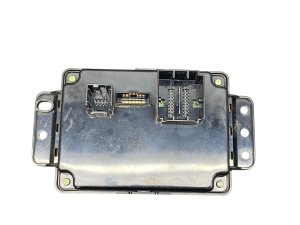
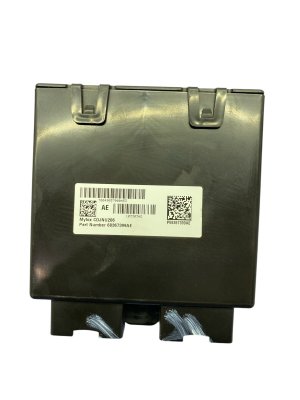
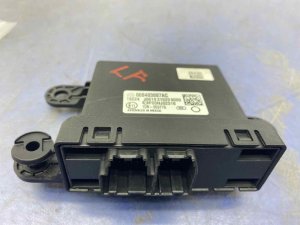
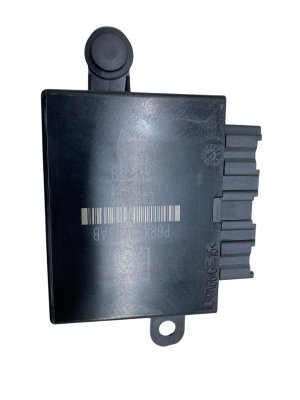
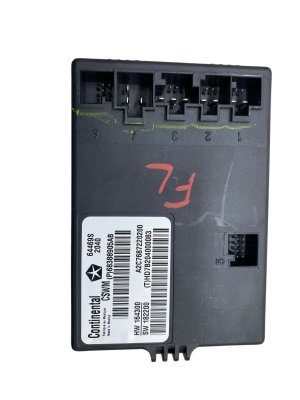
- Body Control Module (BCM)
(OEM #68320319AB, 68200252AF, 68372337, 68444250 (Note: Part numbers are VIN-specific and frequently superseded. Always verify with a dealer.))— This part is only needed if the software update and wiring checks do not resolve the issue. It is the computer that controls body electronics and may have failed internally.
Trusted brands: Mopar
OEM price range: $400-$600
Aftermarket price range: $250-$400
Related Codes That Often Appear With This One
- P0300 — TSB #18-002-15 REV B lists this random misfire code as being potentially resolved by the same PCM software update that fixes U0140 on 6.4L engines.
- P030X — Similar to P0300, specific cylinder misfire codes are also mentioned in TSB #18-002-15 REV B as being related to the PCM software issue.
- P3401, P3425, P3441 — Cylinder deactivation codes are also listed in TSB #18-002-15 REV B as being resolved by the same PCM software update for the 6.4L engine.
Technical Service Bulletins (TSBs) & Recalls
- 18-002-15 REV B: 'Flash: MDS Performance, Misfire, And Deactivation DTC's, And U0140' - Applies to 2015 Ram 2500/3500 with 6.4L engine.
- 18-072-16 REV. A: 'Flash: Powertrain Diagnostic And System Improvements' - Applies to 2014 Ram 2500 with 5.7L.
- 18-013-15: 'Flash: U0140 Lost Communication With Body Control Module (BCM)' - Applies to 2015 Ram 2500/3500/Cab Chassis with 5.7L engines.
Platform-Specific Known Issues
- A software bug in the Powertrain Control Module (PCM) is the most documented cause for this code on 2014-2016 models with gas engines, as detailed in TSBs #18-072-16 (5.7L) and #18-002-15 REV B (6.4L).
- The U0140 code resulting from this software issue often cannot be cleared by standard diagnostic tools and will be flagged as 'permanent' until the PCM is updated by a dealer.
- A corroded main chassis ground point under the driver's side battery is a common source of various electrical faults, including communication codes.
Mechanic-Grade Diagnostic Values
- CAN Bus Network Resistance — expected: Approximately 60 Ohms (Ω) across pins 6 (CAN-H) and 14 (CAN-L) of the OBD-II port with the battery disconnected.. Failure: A reading of ~120 Ω suggests an open in the circuit or that one of the two terminating resistors is offline. A reading near 0 Ω indicates a short between the CAN-H and CAN-L wires.
- CAN Bus Voltage (Key On, Engine Off) — expected: CAN High (Pin 6 at OBD-II port) should be ~2.6V. CAN Low (Pin 14 at OBD-II port) should be ~2.4V.. Failure: Voltages that are stuck high, low, or at battery voltage indicate a short to power or ground on the respective line.
- Battery Voltage — expected: Above 12.4V at rest. Between 13.7V and 14.7V with the engine running.. Failure: Low resting voltage or unstable charging voltage can cause modules to drop off the network.
- BCM Fuses (in TIPM) — expected: Continuity across fuses F10, F12, F14, and F23 (typical for 2013-2018 models).. Failure: A blown fuse will cut power to the BCM, causing it to go offline.
Hidden / Shadow Codes Worth Checking
- U0140 - Permanent: This is not a separate code, but a status flag indicating the DTC cannot be cleared by a generic scan tool. It's a key symptom of the software glitch described in Ram TSBs. The 'permanent' status is designed to prevent clearing of emissions-related codes until the underlying issue is fixed and the system runs a self-check. In this case, the 'fix' is a PCM reflash. (see via Visible on many standard OBD-II scanners. The inability to clear the code is the primary diagnostic clue.)
Scan Tool Commands That Help
- wiTECH (FCA Dealer Tool): Reprogram PCM / Flash ECU — This is the primary repair procedure outlined in multiple TSBs for the ghost U0140 code. It updates the PCM software to the latest version, correcting the bug that falsely reports the communication loss.
- wiTECH (FCA Dealer Tool): Restore Vehicle Configuration — This function is required after physically replacing the BCM. It downloads the vehicle's specific configuration (options, VIN, etc.) from FCA's servers and programs it into the new module.
- wiTECH (FCA Dealer Tool): Clear All DTCs — After a successful PCM reflash, the wiTECH software will automatically prompt the technician to clear all DTCs that were set across various modules during the reprogramming process. This is a necessary final step.
Wiring & Ground Locations
- CAN Bus Star Connector (Hub) — On 2014-2018 models, it's a green connector block located under the dash, to the left of the steering column. On 2019+ models, an easily accessible star connector is located behind the headlight switch panel.. This is the central junction point where multiple vehicle networks meet. A bad connection or corrosion in this hub can disrupt communication for many modules, including the BCM.
- Chassis Ground (Frame) — A key ground point is located on the frame in the driver's side wheelwell, forward of the upper control arm. Another is on the sheet metal below the driver's side battery.. Poor ground connections are a common cause of low voltage and electrical noise, which can interrupt module communication and trigger U-codes.
- BCM Connectors (C1-C7) — The BCM is located high up under the driver's side dashboard, near the steering column and parking brake assembly. It has multiple large connectors (often labeled C1 through C7 or A through G).. These are the direct interface for the BCM. Checking for power, ground, and CAN signals at these connector pins is a critical step in advanced diagnosis.
- OBD-II Port Pins 6 & 14 — The Data Link Connector (DLC) located under the driver's side dashboard.. These pins (Pin 6: CAN-H, Pin 14: CAN-L) provide a central point to test the electrical integrity (resistance and voltage) of the entire CAN C bus network without having to access individual modules.
Real Owner Repair Stories
- RamForum.com user (2014 Ram) — A 'permanent' U0140 code that could not be cleared with an Actron scanner. No other drivability issues were noted.
❌ Tried (didn't work) Attempting to clear the code with a standard scanner., Disconnecting the battery for a 'soft reset'.
✅ What actually fixed it The user was directed to TSB #18-072-16. The final fix was a PCM software flash update performed by a dealer. The user noted the dealer initially wanted to charge for the TSB work since the truck was out of warranty.
OEM Part Supersession History
68357472AA→68357472AB, 68357472AC, 68357472AD— Standard part revisions by the manufacturer to improve reliability or component sourcing.
Heads up: While these parts are listed as superseding one another for a 2018 model, it's critical to verify the correct part number with a dealer using the vehicle's VIN. BCMs are highly specific to the vehicle's option content. A user on a Ram forum noted that they avoided 2018+ BCMs for a retrofit on an older truck due to increased security measures starting in that model year.
Model Year Variations Within This Range
- 2014-2018 (Fourth Gen 'Classic'): These models are highly prone to the software glitch fixed by a PCM reflash per TSBs. The CAN bus architecture uses a central star connector hub under the driver's dash.
- 2019-2020 (Fifth Gen): While U0140 can occur, it's less likely to be the specific TSB-related software bug. Diagnosis should focus more on traditional wiring/power/ground faults. The CAN bus architecture changed, and a key diagnostic access point (star connector) is easily reached by popping out the headlight switch. These models also feature a Security Gateway Module (SGW) that requires a bypass adapter for most aftermarket scan tools to perform bidirectional commands.
Helpful Videos
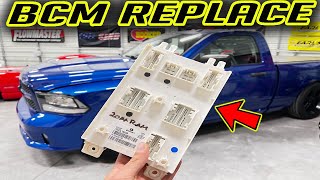
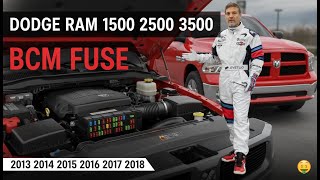

![[A,E] Encountering a CAN bus that breaks the 60 Ohm rule? Probably just a matter of time.](https://img.youtube.com/vi/KW0Ql3GT-g0/mqdefault.jpg)
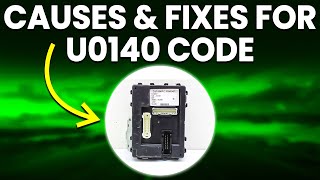
We Have This Part in Stock

The information in this article is provided for general reference and educational purposes only. Vehicle specifications, procedures, and part compatibility can vary by production date, trim level, and region. Always consult your vehicle's factory service manual and verify part numbers before purchasing or performing repairs. Safety-critical components such as airbags, seat belts, and braking systems should be installed by a qualified professional.
- Ram 3500:
- 🧭 Diagnostic Flowchart
- 🎬 Helpful Videos
- 🛍️ Shop This Part
- What's Unique About the 2014-2020 Ram 3500
- Symptoms You May Notice
- Most Likely Causes
- Rare But Worth Checking
- Diagnosis Steps
- Parts You'll Likely Need
- Related Codes That Often Appear With This One
- Technical Service Bulletins (TSBs) & Recalls
- Platform-Specific Known Issues
- Mechanic-Grade Diagnostic Values
- Hidden / Shadow Codes Worth Checking
- Scan Tool Commands That Help
- Wiring & Ground Locations
- Real Owner Repair Stories
- OEM Part Supersession History
- Model Year Variations Within This Range
- 🎟️ Get 5% Off