

U0140 on 2012-2016 Subaru Impreza: Lost Communication With Body Control Module Fixes
This code means the Body Integrated Unit (BIU), which controls most non-engine electronics, has stopped communicating. The most common causes are a weak battery, blown fuses, or bad ground connections, not a failed BIU. Always check the battery and fuses first. A replacement BIU must be programmed to the car.
- U0140 on a Subaru means the Body Integrated Unit (BIU) is offline.
- Before suspecting a bad BIU, always check for a weak battery, blown fuses, and bad ground connections, as these are the most frequent causes.
- Do not drive the vehicle if possible, as essential systems like lights may fail, and the car may not restart.
- Diagnosing this code properly requires a full-system scan tool; a basic engine code reader will not suffice.
- Replacing the BIU is an expensive last resort and requires professional programming to sync with your vehicle.
What's Unique About the 2012-2016 Subaru Impreza
For this generation of Subaru, the Body Control Module (BCM) is referred to as the Body Integrated Unit (BIU). While the function is the same, knowing the correct terminology is crucial when searching for parts or service information. The BIU is also a critical part of the immobilizer system, communicating with the key, the ECM, and the combination meter (instrument cluster) to authorize the engine to start. A communication failure can therefore cause a no-start condition. Before condemning the expensive BIU, it's critical to rule out more common Subaru issues like weak batteries or parasitic drains, which can cause this code when system voltage drops too low. A notable issue for 2015-2016 models is a parasitic draw from the Data Communications Module (DCM) or telematics unit, which can drain the battery as it fruitlessly searches for a decommissioned 3G network.
Symptoms You May Notice
- Multiple dashboard warning lights are illuminated (ABS, Traction Control, etc.)
- Interior or exterior lights do not work, flicker, or stay on
- Power windows and door locks are inoperative
- Keyless entry or remote start fails to work
- Windshield wipers operate erratically or not at all
- Vehicle will not start (crank-no-start)
- Check Engine Light is on
- Parasitic battery drain (battery dies overnight) from a BIU that fails to go to sleep.
- Replacing the Body Integrated Unit (BIU) without first thoroughly checking the battery, fuses, and ground connections. These simpler issues are far more common causes for the code.
Most Likely Causes
- Weak or Failing Battery 🔴 High Probability → Shop Vehicle Battery Modern vehicles with numerous electronic modules are sensitive to low voltage. A battery dropping below 12.0V can cause modules to shut down unpredictably and drop off the communication network, triggering a U0140 code.
How to confirm: Test the battery voltage with a multimeter (should be ~12.6V with engine off) and have its health checked with a load tester. Check charging system voltage with the engine running (should be ~13.5-14.5V).
Typical fix: Recharge or replace the battery.
Est. part cost: $150-$300 - Blown Fuse(s) 🟡 Medium Probability The BIU has multiple power inputs, and a short circuit in a related component (like a dome light or window motor) can blow a fuse, cutting power to the module and taking it offline. The BIU is tied to multiple fuses in the interior panel, including FB-6, FB-18, FB-24, FB-29, and FB-38.
How to confirm: Inspect all fuses related to the BIU, BCM, or 'Body' in both the interior and under-hood fuse panels. Check the owner's manual or online diagrams for fuse locations.
Typical fix: Replace the blown fuse. If it blows again, further diagnosis of a short circuit is needed.
Est. part cost: $1-$10 - Poor Ground Connection 🟡 Medium Probability Corrosion or loose connections at chassis ground points can create intermittent electrical problems. The BIU's ground is essential for stable communication.
How to confirm: Locate the main ground points for the BIU (referencing a factory service manual), which are typically in the driver's footwell area. Inspect for corrosion, looseness, or damage. Clean and tighten as necessary.
Typical fix: Clean the ground connection point to bare metal and tighten the fastener securely.
Est. part cost: $0-$5 - Damaged Wiring or Connectors ⚪ Low Probability Wires in the CAN bus network can be damaged by chafing, previous improper repairs, or rodent activity. Water intrusion into connectors is also a possibility.
How to confirm: Visually inspect the wiring harness going to the Body Integrated Unit for any signs of damage, corrosion in the connector pins, or loose connections. Pay close attention to the driver's kick panel area where wires can be disturbed.
Typical fix: Repair the damaged section of wire or replace the affected connector.
Est. part cost: $10-$100 - Faulty Body Integrated Unit (BIU) ⚪ Low Probability → Shop Body Control Module Internal failure of the module due to component aging, vibration, or moisture intrusion can occur, though it's much less common than power/ground issues.
How to confirm: This is a process of elimination. If all power, ground, and network wiring tests pass, and a professional scan tool cannot communicate with the BIU, the module itself is likely faulty.
Typical fix: Replace the Body Integrated Unit. The replacement MUST be programmed by a dealer or the data from the original unit must be cloned to a matching used part.
Est. part cost: $400-$800
Rare But Worth Checking
- Faulty Aftermarket Accessories: Improperly installed remote starters, alarms, or stereos that are tapped into the vehicle's CAN bus wiring can interfere with network communication and trigger this code.
- Failing Alternator: An alternator that is failing can produce inconsistent voltage or excessive AC ripple, causing electrical modules to malfunction and drop off the network. Check charging system voltage (should be ~13.5-14.5V with engine running).
- Parasitic Drain from Data Communications Module (DCM): → Shop Telematics Interface Module On 2015-2016 models equipped with Starlink telematics, the DCM can fail to enter sleep mode as it searches for a now-defunct 3G network. This creates a significant parasitic draw (~100-120mA) that drains the battery, causing low voltage and triggering communication codes like U0140.
Diagnosis Steps
- Check Battery Health: Start by testing the battery. Ensure it is fully charged (>12.4V) and healthy under load. A weak battery is a very common cause of communication codes.
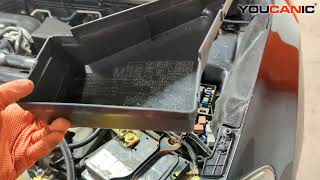
- Inspect Fuses: Carefully check all fuses related to the Body Control Module/Body Integrated Unit in both the interior and engine bay fuse boxes. Refer to your owner's manual for locations.
- Scan for Codes in All Modules: Use a full-system scan tool (not a basic code reader) to see which other modules are reporting communication errors. This helps determine if the problem is isolated to the BIU or is a network-wide issue.
- Perform a Parasitic Draw Test: If the battery is frequently dead, perform a parasitic draw test to see if a module is failing to shut down. Subaru specifies a maximum allowable 'dark current' of 70mA after the system stabilizes (which can take up to 30-60 minutes). A draw over 100mA often points to the DCM on later models.
- Inspect BIU Connections: Locate the Body Integrated Unit, which is in the driver's side footwell, up under the dashboard near the interior fuse panel. Visually inspect its connectors for looseness, corrosion, or damage.
- Check for Power and Ground at the BIU: Using a multimeter and a vehicle wiring diagram, confirm that the BIU is receiving proper battery and ignition power and has a solid ground connection (<0.1 Ω resistance to chassis). This is a critical step before condemning the module.
- Check CAN Bus Resistance: With the battery disconnected, use a multimeter to measure the resistance between Pin 6 (CAN High) and Pin 14 (CAN Low) at the OBD-II port. A healthy network should read approximately 60 ohms. A reading of 120 ohms suggests a break in the circuit or a missing terminating resistor.
- Professional Diagnosis: If the above steps do not reveal the cause, the next steps involve using an oscilloscope to check for data signals on the CAN bus, which should be performed by a professional technician.
Parts You'll Likely Need
- Body Integrated Unit (BIU)
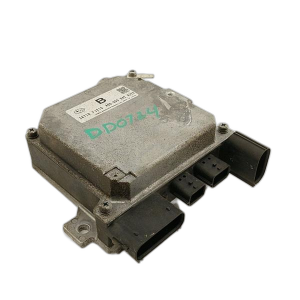
(OEM #88281FJ360 (Example for 2015 Impreza w/ push start; verify exact part number with VIN))— This is the module that has lost communication. It is only replaced after all other possibilities (power, ground, wiring) have been exhausted. The part number on the replacement MUST match the original.
Trusted brands: Subaru (OEM)
OEM price range: $400-$800
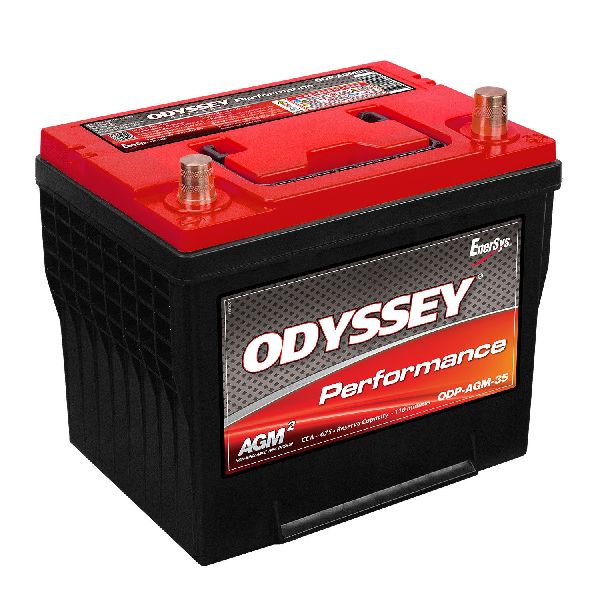
Aftermarket price range: $150-$400 (Used/Cloned) - Automotive Battery (Group 35) — A weak or failing battery is a primary cause of this communication code.
Trusted brands: Interstate, DieHard, Duralast
OEM price range: $200-$300
Aftermarket price range: $150-$250
Related Codes That Often Appear With This One
- U0073 — U0073 means 'Control Module Communication Bus A Off', indicating the entire communication network is down. If you see both, U0140 is just a symptom of the larger network failure.
- U0155 — This code indicates 'Lost Communication with Instrument Panel Cluster'. Seeing U0140 and U0155 together strongly suggests a shared network wiring or power supply problem rather than two separate module failures, as both are on the same CAN bus.
Technical Service Bulletins (TSBs) & Recalls
- TSB 02-157-14R: Addresses excessive oil consumption in the FB20 engine, a major known issue for this platform.
- TSB 07-181-20: While for a newer Outback, this TSB shows Subaru has specific diagnostic procedures for U0140-related starting issues, highlighting the link between this code and the immobilizer system.
Platform-Specific Known Issues
- The BIU is located in the driver's side footwell, up under the dash near the fuse box.
- Replacement of the BIU is not plug-and-play. The new or used unit must be programmed to the car's immobilizer system by a dealer or through a mail-in cloning service where data from your old unit is transferred to the donor.
Mechanic-Grade Diagnostic Values
- CAN Bus Network Resistance — expected: Approximately 60 Ω. Failure: A reading of 120 Ω indicates an open circuit or a fault in one of the two terminating resistors. A reading near 0 Ω indicates a short between the CAN High and CAN Low wires.
- Parasitic Draw (Dark Current) — expected: Less than 70 mA. Failure: A sustained reading above 70 mA after the vehicle has been off and locked for at least 30-60 minutes indicates a parasitic draw. Draws of 100-120mA on 2015-2016 models often point to a faulty DCM.
- BIU Power Supply Voltage — expected: 12.2V - 12.8V. Failure: Voltage significantly below 12V indicates a power supply issue to the module, which could be from the battery, fuse, or wiring.
- BIU Ground Resistance — expected: < 0.1 Ω. Failure: Resistance higher than 0.1 Ω indicates a poor ground connection, which can cause intermittent communication issues.
Scan Tool Commands That Help
- Subaru Select Monitor (SSM3/SSM4): BIU/Immobilizer Registration — This dealer-level function is required when installing a new, non-cloned Body Integrated Unit. It programs the vehicle's VIN and synchronizes the immobilizer data between the new BIU, the existing keys, and the Engine Control Module (ECM) to allow the vehicle to start.
Wiring & Ground Locations
- BIU (Body Integrated Unit) — Located in the driver's side footwell, mounted up under the dashboard near the interior fuse panel and steering column.. This is the module that has lost communication. Physical access is needed to check its connectors for corrosion or damage and to perform power/ground tests directly at the module.
- Interior Fuse Box — Located behind a cover to the left of the steering wheel in the driver's side dashboard.. This panel contains multiple fuses that supply power to the BIU, including FB-6, FB-18, FB-24, FB-29, and FB-38. A single blown fuse here can take the BIU offline.
- OBD-II Diagnostic Port — Under the driver's side dashboard, typically near the steering column.. Pins 6 (CAN High) and 14 (CAN Low) on this port provide a direct access point for testing the resistance of the entire CAN bus network, which is a key diagnostic step.
- Main Engine Ground — A primary ground strap typically bolts to the top starter bolt on the transmission bell housing.. While not the direct ground for the BIU, a poor main engine or chassis ground can introduce electrical noise and voltage stability issues that affect all modules on the network.
Real Owner Repair Stories
- Reddit user post on r/subaru (2016 Subaru Impreza) — Battery constantly dying over a period of two years, requiring multiple replacements. Vehicle was often parked for a week at a time.
❌ Tried (didn't work) Multiple trips to the dealer, who claimed they could not find a problem., Dealer refused to perform a DCM reset under an extended warranty because their initial parasitic draw test did not show a fault.
✅ What actually fixed it The owner performed their own parasitic draw test and found a consistent 110-120mA draw. Pulling fuse #18 (Telematics/DCM) caused the draw to drop to a normal level (under 20mA). This provided proof that the Data Communications Module was the source of the parasitic drain, which was causing low voltage and likely triggering the U0140 and other electrical faults.
OEM Part Supersession History
88281FJxxx→Varies— Subaru frequently updates BIU part numbers for minor hardware or software revisions. There is no single supersession path; the correct part number depends on the vehicle's VIN, model year, and specific options (e.g., push-start vs. keyed ignition).
Heads up: It is absolutely critical that a donor BIU for cloning has the exact same OEM part number as the original unit. Modules with different part numbers, even if from a similar vehicle, cannot be cloned together and will not function correctly.
Model Year Variations Within This Range
- 2015-2016: Models from these years may be equipped with a 3G-based Starlink telematics system (Data Communications Module - DCM). As the 3G network has been shut down, the DCM can get stuck in a constant search loop, causing a significant parasitic battery drain. This drain leads to low system voltage, which is a primary cause of the U0140 code. Earlier models (2012-2014) do not have this specific issue.
Diagnostic Flowchart
Other Known Issues on This Vehicle
Issues unrelated to this code that are worth knowing about as an owner of this generation:
- Excessive Engine Oil Consumption 🔴 High — Common in early FB20 engines (2012-2014 models). Caused by defective piston rings allowing oil to burn. Can require adding oil between changes. (Ref: Subject of class-action lawsuit (Yaegar v. Subaru) and TSB 02-157-14R. Subaru extended the powertrain warranty to 8 years/100,000 miles for affected vehicles.)
- CVT Transmission Failure/Malfunction 🔴 High → Shop Transmission Assembly — Widespread reports of shuddering, hesitation, stalling, and jerking. Problems were common enough that Subaru extended the CVT warranty to 10 years/100,000 miles for 2012-2017 models. (Ref: Warranty Extension Program.)
- Faulty Brake Light Switch 🟠 Medium → Shop Brake Light Switch — A faulty switch can prevent brake lights from illuminating, prevent the engine from starting (on push-button start models), and prevent the transmission from being shifted out of Park. (Ref: NHTSA Recall 18V772000.)
- Engine Valve Spring Fracture 🔴 High — Valve springs may fracture, causing engine malfunction, unusual noise, or a stall while driving. (Ref: NHTSA Recall 16V738000.)
Used vs. New Parts: Buying Guide for This Vehicle
When a used part is the smart pick: A used Body Integrated Unit (BIU) is a very smart and common choice for this repair, provided you use a mail-in cloning service. This avoids the high cost of a new OEM part and expensive dealer programming. Since the BIU is a solid-state electronic module without moving parts, a used unit from a reputable source is generally reliable.
Donor-vehicle mileage cap: roughly under 150000 miles for the part to have meaningful remaining life.
What to inspect on the donor part:
- The part number on the label must be an exact match to your original BIU.
- Inspect the connectors for any signs of corrosion, bent pins, or water damage. A flooded donor car is a major red flag.
- Ensure the plastic casing is not cracked or showing signs of being forcibly pried open.
- Buy from a salvage yard or seller that offers a short warranty or return period in case the module is dead on arrival.
OEM-only on this vehicle (don't cheap out):
- Body Integrated Unit (BIU) - While a used OEM part is recommended, avoid unbranded aftermarket 'new' BIUs. The quality and compatibility are unproven. Stick with genuine Subaru parts, whether new or used.
Aftermarket brands forum-validated for this vehicle:
- For the battery, which is a common root cause, upgrading to a quality AGM (Absorbent Glass Mat) battery from brands like Odyssey, NorthStar, or Interstate is a good preventative measure.
Brands owners have reported issues with on this vehicle:
- Caution is advised with any no-name, unbranded electronic modules from online marketplaces. For a critical component like the BIU, it's safer to use a cloned OEM part.
Real Owner Stories
Aggregated from forums and TSBs cited above. Mileages and costs reflect what owners reported in those sources.
2012-2016 Subaru Impreza
Symptoms: Multiple dashboard warning lights illuminated and various electrical symptoms occurred simultaneously.
What fixed it: Replacing the battery. Many owners found that a weak or dying battery was the root cause, and replacing it resolved the code and all associated symptoms.
Source hint: forum_citations
2012-2016 Subaru Impreza
Symptoms: U0140 code persisted even after an expensive Body Integrated Unit (BIU) replacement.
What fixed it: Repairing a corroded ground wire or replacing a blown fuse. The initial BIU replacement was unnecessary as the fault was in the power/ground circuit.
Source hint: forum_citations
Related OBD-II Codes
Frequently Asked Questions
Where is the Body Integrated Unit (BIU) located on my 2012-2016 Impreza?
Can I just buy a used BIU from a salvage yard and plug it in to fix U0140?
My Impreza is consuming a lot of oil; is this related to the U0140 code?
Which fuses should I check if I have a U0140 code?
Could a weak battery really cause all these dashboard lights and the U0140 code?
Is there a TSB for U0140 starting issues on Subarus?
Helpful Videos
Used OEM Parts in Stock
New Aftermarket Parts Available


The information in this article is provided for general reference and educational purposes only. Vehicle specifications, procedures, and part compatibility can vary by production date, trim level, and region. Always consult your vehicle's factory service manual and verify part numbers before purchasing or performing repairs. Safety-critical components such as airbags, seat belts, and braking systems should be installed by a qualified professional.
- Subaru Impreza:
- 🧭 Diagnostic Flowchart
- 🎬 Helpful Videos
- 🛍️ Shop This Part
- What's Unique About the 2012-2016 Subaru Impreza
- Symptoms You May Notice
- Most Likely Causes
- Rare But Worth Checking
- Diagnosis Steps
- Parts You'll Likely Need
- Related Codes That Often Appear With This One
- Technical Service Bulletins (TSBs) & Recalls
- Platform-Specific Known Issues
- Mechanic-Grade Diagnostic Values
- Scan Tool Commands That Help
- Wiring & Ground Locations
- Real Owner Repair Stories
- OEM Part Supersession History
- Model Year Variations Within This Range
- Other Known Issues on This Vehicle
- Used vs. New Parts: Buying Guide for This Vehicle
- Real Owner Stories
- 2012-2016 Subaru Impreza
- 2012-2016 Subaru Impreza
- Related OBD-II Codes
- Frequently Asked Questions
- 🎟️ Get 5% Off