

U0140 on 2011-2018 Volkswagen Jetta: Lost Communication With Body Control Module
This code means the Body Control Module (BCM) has stopped communicating with other vehicle computers. The most common causes are simple electrical issues like a weak battery, a blown fuse, a bad ground connection, or water intrusion from clogged sunroof drains, not a failed BCM. Check these simple fixes before suspecting the module itself.
- U0140 means the Body Control Module (BCM) is offline.
- Before suspecting a bad BCM, always check the battery, fuses, and ground connections first, as these are the most common and cheapest fixes.
- On a 2011-2018 Jetta, check for signs of water leaks under the dashboard and carpets, as this is a known cause of electrical network problems.
- Diagnosis is complex and replacing the BCM requires special programming, making this a job best suited for a professional mechanic with the right tools.
What's Unique About the 2011-2018 Volkswagen Jetta
On VWs from this era, including the Jetta (A6/MK6), communication codes like U0140 are very frequently linked to water intrusion. Clogged front sunroof drains are a notorious issue, causing water to overflow from the sunroof tray, run down the inside of the A-pillar, and drip directly onto the BCM and its connectors, which are located high in the driver's side footwell. This moisture causes corrosion on the connector pins, bridging CAN bus signals and causing communication to drop. While the BCM itself can fail, it's often a wiring, power supply, or water-related issue that is the true root cause.
Symptoms You May Notice
- Multiple, unrelated dashboard warning lights illuminating (sometimes called a 'Christmas tree' effect).
- Power windows, door locks, or mirrors not working.
- Interior or exterior lights acting erratically or failing to turn on/off.
- Wipers turning on by themselves or not working at all.
- Key fob commands for lock/unlock are unresponsive.
- Parasitic battery drain, leading to a dead battery.
- Vehicle may not start or may crank but not start.
- Anti-theft system may trigger randomly or immobilize the vehicle.
- Scan tool cannot communicate with the BCM (address 09-Cent. Elect.).
- Replacing the BCM when the actual problem is a weak battery, blown fuse, or a bad ground connection. These are much more common and cheaper to fix.
- Immediately condemning the BCM due to water damage without first attempting to thoroughly clean and dry the connectors and then sealing them with dielectric grease. Often, the connectors are the problem, not the module itself.
Most Likely Causes
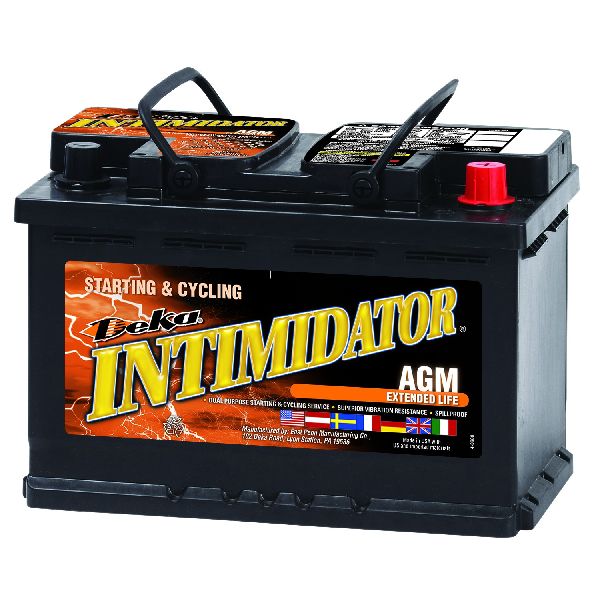
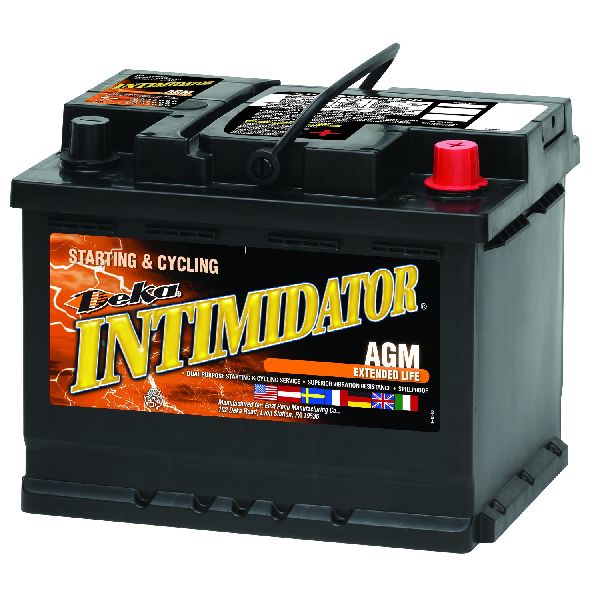
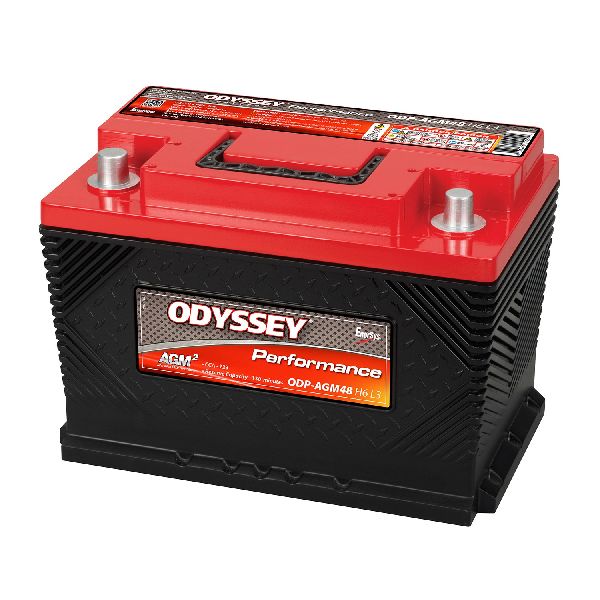
- Weak or Failing Battery 🔴 High Probability → Shop Vehicle Battery Modern vehicle modules are highly sensitive to voltage. A battery that can still start the car may drop below the stable voltage needed for modules to communicate properly, causing network errors. Low voltage can cause modules to reset or drop off the network intermittently.
How to confirm: Test the battery voltage with a multimeter. It should be above 12.4V with the engine off. Perform a load test to check its health, as voltage alone isn't a complete indicator.
Typical fix: Recharge or replace the battery. Ensure the new battery is coded to the vehicle using a compatible scan tool to inform the charging system.
Est. part cost: $150-$300 - Damaged Wiring or Corroded Connectors due to Water Intrusion 🔴 High Probability Water intrusion from clogged sunroof drains is a very well-documented issue on the Jetta A6 platform. The front drain tubes get blocked with debris, causing water to overflow and run down the A-pillar directly onto the BCM, leading to corrosion in the wiring harness connectors.
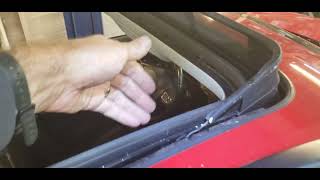
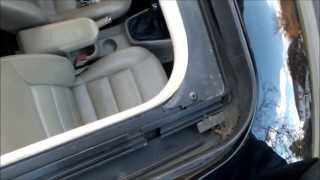
How to confirm: Check for dampness in the driver's side footwell carpet. Remove the A-pillar trim to inspect the drain tube. Unplug the large connectors from the BCM and inspect for any signs of green/white corrosion, moisture, or backed-out pins. Test the drain by slowly pouring water into the sunroof channel and seeing if it exits behind the front wheel. 🎬 Watch: How to clear clogged sunroof drains on your Jetta.
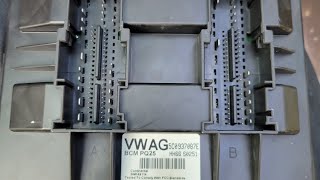
Typical fix: Clear the clogged sunroof drains using compressed air or a flexible trimmer line. Thoroughly clean the corroded BCM connectors with electrical contact cleaner and a small brush. 🎬 Watch: Pro tips for cleaning green corrosion off electrical connectors. If damage is severe, the connector pins or a section of the harness may need to be replaced. Pack the cleaned connector with dielectric grease before reassembly to prevent future moisture intrusion.
Est. part cost: $10-$250 - Blown Fuse for the BCM 🟡 Medium Probability
How to confirm: Locate the fuse boxes (in the cabin, left of the dashboard, and under the hood) and check all fuses labeled for the BCM (J519), Central Electronics, or body systems. Use a fuse tester or visually inspect the fuses.
Typical fix: Replace the blown fuse with one of the correct amperage. If the fuse blows again, a short circuit exists that must be diagnosed.
Est. part cost: $1-$5 - Corroded or Loose BCM Ground Connection 🟡 Medium Probability The primary ground point for the BCM is located in the driver's footwell area, which is susceptible to moisture and corrosion if water leaks are present. A poor ground can cause intermittent and unpredictable module behavior.
How to confirm: Locate the BCM's ground point (typically a brown wire bolted to the chassis under the driver's side dashboard). Inspect it for looseness, rust, or corrosion. A voltage drop test on the ground circuit can confirm a bad connection; it should be less than 0.1 Ω.
Typical fix: Unbolt the ground wire, clean the terminal and the chassis contact point with a wire brush until shiny, and securely refasten it. Apply a protective coating.
Est. part cost: $0-$10 - Faulty Body Control Module (BCM) ⚪ Low Probability → Shop Body Control Module
How to confirm: This is a last resort after all other possibilities (power, ground, wiring, water damage) have been ruled out. A professional scan tool that can directly communicate with the BCM is needed. If the BCM is powered, grounded, and has good wiring but still won't communicate or function, it has likely failed internally.
Typical fix: Replace the Body Control Module and have it professionally programmed to the vehicle. Component protection must be adapted by a dealer or qualified shop.
Est. part cost: $300-$600
Rare But Worth Checking
- Faulty CAN Gateway Module: The CAN Gateway (address 19) manages traffic between different CAN bus networks. If it fails, it can prevent the BCM from communicating with other essential modules like the ECM, even if the BCM itself is fine. This often presents with multiple 'U' codes across the vehicle.
- Interference from Aftermarket Accessories: Improperly installed remote starters, alarms, LED lighting, or stereo systems can disrupt CAN bus communications by introducing electrical noise or improper connections, triggering this code.
- Broken LIN Bus Wire to Alternator: On some VW platforms, a break in the single LIN wire (often yellow/green) between the alternator and the BCM/battery sensor can cause charging system faults and, in some cases, trigger communication codes like U0140, particularly affecting start-stop functionality.
Diagnosis Steps
- Check Battery Health: Use a multimeter to ensure battery voltage is above 12.4V at rest and over 13.5V when the engine is running. Perform a load test to confirm the battery is healthy.
- Scan for All Codes: Use a VW-compatible scanner (like VCDS) to perform a full vehicle scan. Note all 'U' codes and in which modules they are stored. Check if you can communicate with the BCM (09-Cent. Elect.).
- Inspect Fuses: Check all fuses related to the BCM, ECU, and interior electronics in both the cabin and under-hood fuse panels.
- Inspect for Water Intrusion: This is a critical step. Pull back the driver's side carpet and remove the A-pillar trim. Check for any signs of dampness, water stains, or corrosion, especially around the BCM and its connectors.
- Test Sunroof Drains: Slowly pour water into the front sunroof drain channels. Verify that water flows freely out from behind the front wheels. If it backs up or leaks inside, the drains are clogged.
- Inspect BCM Connectors: Disconnect the battery. Unplug the large connectors from the BCM. Carefully inspect every pin and socket for green/white corrosion or moisture. Clean thoroughly with contact cleaner if any is found.
- Test BCM Power and Ground: Using a multimeter and wiring diagram, confirm the BCM is receiving proper battery and ignition power on the correct pins. Perform a voltage drop test on the ground circuit; resistance to chassis ground should be minimal (<0.1 ohms).
- Check CAN Bus Wiring: With the battery disconnected, measure the resistance between CAN High and CAN Low pins at the OBD-II port (pins 6 and 14). A healthy network should read approximately 60 Ω.
Parts You'll Likely Need
- Body Control Module (BCM)
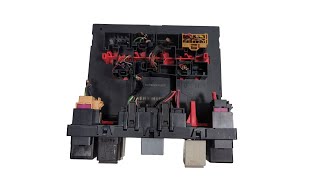
(OEM #5K0-937-087-xx (xx varies by features/year, e.g., AD, AS))— This is the part to replace if it has been confirmed to have failed internally after ruling out all power, ground, and wiring issues. Part number must match exactly or be a compatible supersession.
Trusted brands: Genuine Volkswagen
OEM price range: $400-$600
Aftermarket price range: $250-$450 (Used or Remanufactured) - Automotive Battery — A weak or failing battery is a very common cause of module communication errors.
Trusted brands: Varta, Bosch, Interstate
OEM price range: $200-$350
Aftermarket price range: $150-$250
Related Codes That Often Appear With This One
- U0073 — This code means 'Control Module Communication Bus A Off'. If you see U0073, the U0140 is a symptom of a larger network-wide failure, not just a BCM issue. A GM TSB (PIT4730B) notes these codes can appear together if the CAN bus shorts out intermittently.
- U0155 — This indicates a loss of communication with the Instrument Panel Cluster (IPC). The IPC often acts as a gateway or has a terminating resistor, so its failure can cause other modules like the BCM to lose communication.
- U0100 — Lost Communication with ECM/PCM. Seeing this with U0140 is a major red flag for a systemic network failure, not just an isolated BCM problem. It could point to a faulty CAN Gateway or a major wiring harness issue.
Technical Service Bulletins (TSBs) & Recalls
- While no direct TSB for U0140 on the Jetta was found, GM TSB PIT4730B provides valuable insight into how intermittent CAN bus shorts can cause a BCM to appear offline, setting U0140 and U0073, which is relevant diagnostic logic for any vehicle with this issue.
Platform-Specific Known Issues
- Water leaks from clogged sunroof drains are a known issue for this Jetta generation and can lead to corrosion of electrical components under the dashboard and carpet, including the BCM or its wiring.
- The rubber grommets at the exit of the drain tubes can become clogged with dirt and debris, causing water to back up the entire tube. Some owners cut the restrictive tips off the grommets to prevent future clogs.
- BCM part numbers are complex and must be matched carefully. There are 'lowline', 'midline', and 'highline' versions depending on vehicle options (e.g., KESSY keyless entry, Xenon headlights). Using the wrong BCM will cause features to not work.
Mechanic-Grade Diagnostic Values
- CAN Bus Network Resistance — expected: Approximately 60 Ω. Failure: A reading of 120 Ω indicates one of the two terminating resistors (or the wiring to it) has failed. A reading near 0 Ω indicates a short between CAN High and CAN Low wires.
- BCM Power Supply Voltage (Key On) — expected: 12.2V - 12.8V. Failure: Significantly lower voltage indicates a power supply issue (fuse, relay, wiring) to the module.
- BCM Ground Circuit Resistance — expected: < 0.1 Ω. Failure: Higher resistance indicates a poor ground connection, which can cause intermittent communication and unpredictable behavior.
- CAN Bus Voltage (Recessive/Idle State) — expected: CAN High and CAN Low should both be at ~2.5V. Failure: Voltages stuck high or low indicate a short to power or ground on the bus.
- CAN Bus Voltage (Dominant/Active State) — expected: CAN High rises to ~3.5V, CAN Low falls to ~1.5V. Failure: Failure to achieve these voltage levels during communication indicates a bus problem or a faulty transceiver in a module.
Scan Tool Commands That Help
- VCDS (VAG-COM): Long Coding Helper (Address 09 - Cent. Elect.) — When replacing the BCM, the long coding from the original module must be saved and transferred to the new one. The Long Coding Helper deciphers the string of numbers into plain English options, allowing for correct configuration of vehicle features (lights, windows, etc.).
- VCDS (VAG-COM): Adaptation - Channel 001: Remote Control Matching — After replacing the BCM, the key fobs will not work. This function is used to match the existing key fobs to the new BCM so the remote lock/unlock functions are restored.
- VCDS (VAG-COM): Adaptation - Channel 000: Remote Control Clearing — If new remotes cannot be adapted, this function can be used to erase all previously learned remotes from the BCM's memory before attempting to match them again.
- ODIS (Dealer Software): Guided Functions - Replace Control Module J519 — This is the official dealer procedure for BCM replacement. While this generation Jetta does not have Component Protection on the BCM, ODIS provides a step-by-step guided process to ensure correct coding and adaptation. For later VW models (MQB platform), this function is mandatory for removing Component Protection.
Wiring & Ground Locations
- J519 — High in the driver's side footwell, to the left of the steering column and typically behind the main fuse panel.. This is the physical location of the Body Control Module itself. It is notoriously susceptible to water dripping from clogged sunroof drains running down the A-pillar.
- Ground Point 44 — In the lower part of the left (driver's side) A-pillar.. This is a primary chassis ground point in the immediate vicinity of the BCM. Corrosion at this point due to water intrusion can cause a faulty ground for the BCM and other nearby electronics, leading to communication errors.
- Ground Point 605 — On the top end of the steering column.. The BCM communicates with the steering column control module. A bad ground at this location can cause communication issues on the network that may be misdiagnosed as a BCM failure.
- BCM Power Supply Pins — Within the large multi-pin connectors on the J519 module. Specific pins for Terminal 30 (permanent power) and Terminal 15 (ignition power) need to be identified from a wiring diagram.. Before condemning the BCM, these pins must be tested to confirm the module is receiving the power it needs to operate. Loss of power at these pins is a common cause of U0140.
Real Owner Repair Stories
- Reddit user in r/jetta (2012 Volkswagen Jetta) — Flat battery after rain. Front left headlight and rear right tail/turn lights were stuck on and unresponsive to the switch. Wipers and door locks also did not work.
❌ Tried (didn't work) Charging the battery., Disconnecting the headlight switch.
✅ What actually fixed it The BCM was removed and found to have significant water inside ('water dripped out of it'). After cleaning the circuit board, most functions (lights, locks, wipers) were restored, although one running light remained inoperative due to visible board damage. The root cause was confirmed water incursion.
OEM Part Supersession History
Ending in 084, 085, or 086 (e.g., 5K0 937 084 J)→Ending in 087 (e.g., 5K0 937 087 AD)— VW consolidates part numbers and releases updated hardware revisions over time. The 087 modules are generally 'Highline' versions that support the most vehicle features.
Heads up: You can generally replace a 'Lowline' (084/085) or 'Midline' (086) BCM with a 'Highline' (087) version, but not the other way around, as you would lose features. The new module must be re-coded with the vehicle's original configuration, and Byte 18 may need manual adjustment per VW technical tip 97-11-03TT.5C0937087 series (e.g., 5C0937087E)→5C5-937-087-G-Z0B— Standard part number evolution and updates.
Heads up: Part numbers starting with '5C0' are specific to the Jetta A6 platform. Always match the base number and ensure the replacement is a 'Highline' version if the original was, to maintain all features like KESSY keyless entry.
Model Year Variations Within This Range
- 2011-2014 vs 2015-2018 (Facelift): While the fundamental cause (water intrusion) and diagnosis remain the same, part numbers for the BCM may differ between pre-facelift and post-facelift models due to changes in features and electronics. For example, some earlier cars use a 5K0- part number prefix (shared with the Golf MK6), while later Jetta-specific modules use a 5C0- prefix. Always verify the part number on the original module before ordering a replacement.
Diagnostic Flowchart
Used vs. New Parts: Buying Guide for This Vehicle
When a used part is the smart pick: A used BCM from a junkyard is a very cost-effective option for this repair, especially since this generation does not have the difficult-to-defeat Component Protection. If the original BCM is non-functional due to water damage and its coding cannot be read, sourcing a used BCM from a car with the exact same trim level and options can provide a close-enough starting point for coding.
Donor-vehicle mileage cap: roughly under 150000 miles for the part to have meaningful remaining life.
What to inspect on the donor part:
- CRITICAL: Ask the seller if the donor car had a sunroof. If so, there is a high risk the used BCM has also been exposed to moisture. Prioritize parts from non-sunroof cars.
- Visually inspect the connectors on the used BCM for any hint of white or green powder (corrosion) or water stains.
- Verify the part number EXACTLY. While you can upgrade from a lowline to a highline BCM, it complicates the coding process. A direct part number match is simplest.
- Ensure the seller has a return policy in case the module is dead on arrival.
OEM-only on this vehicle (don't cheap out):
- Body Control Module (BCM/J519). While used OEM is a good choice, avoid new aftermarket/cloned BCMs. They are notorious for failing prematurely or having bizarre software glitches that are impossible to diagnose.
Brands owners have reported issues with on this vehicle:
- Unbranded 'new' BCMs from online marketplaces. These are often poorly refurbished units or clones that do not meet OEM quality standards.
Real Owner Stories
Aggregated from forums and TSBs cited above. Mileages and costs reflect what owners reported in those sources.
2012 Jetta Sportwagen
Symptoms: While trying to fix a BCM issue, the owner discovered the complexity of finding a replacement. The correct part depended on specific vehicle features like KESSY keyless entry, with different 'lowline' and 'highline' versions and incompatible part number series (1K0 vs 5K0).
What fixed it: The issue was resolved by carefully sourcing a replacement BCM that precisely matched the original part number and feature level required by the vehicle's factory options.
Source hint: VWVortex Forum - Thread 'Which BCM is the right one?' (https://www.ross-tech.com/vcds/scans/)
VW T6 Transporter
Symptoms: The vehicle had a U0140 fault code and the start-stop system was not working.
What fixed it: The problem was traced to a broken LIN wire running from the alternator. The fault was resolved by repairing the broken wire with a more robust replacement.
Source hint: VW T6 Transporter Forum - 'Garages avoiding my Body Control Module fault (U0140)' (https://www.t6forum.com/threads/garages-avoiding-my-body-control-module-fault-u0140-affecting-start-stop.13110/page-2)
Related OBD-II Codes
Frequently Asked Questions
My 2013 Jetta's driver-side carpet is damp. Could this be related to the U0140 code and all my warning lights?
What is the first and most important thing to check on my Jetta for a U0140 code?
My battery seems fine and starts the car. Could it really be the cause of the BCM communication error?
How can I test my sunroof drains to see if they are clogged?
I need to replace the Body Control Module (BCM) in my Jetta. Can I use any BCM from another Jetta?
I've replaced the battery in my Jetta. Is there any special procedure I need to follow?
Helpful Videos

Used OEM Parts in Stock
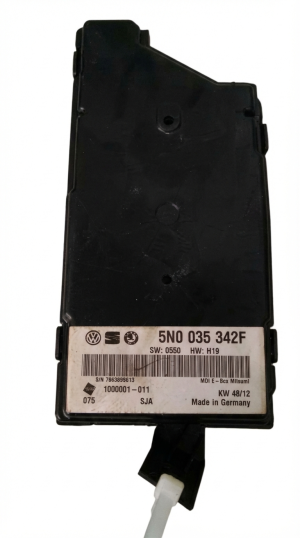
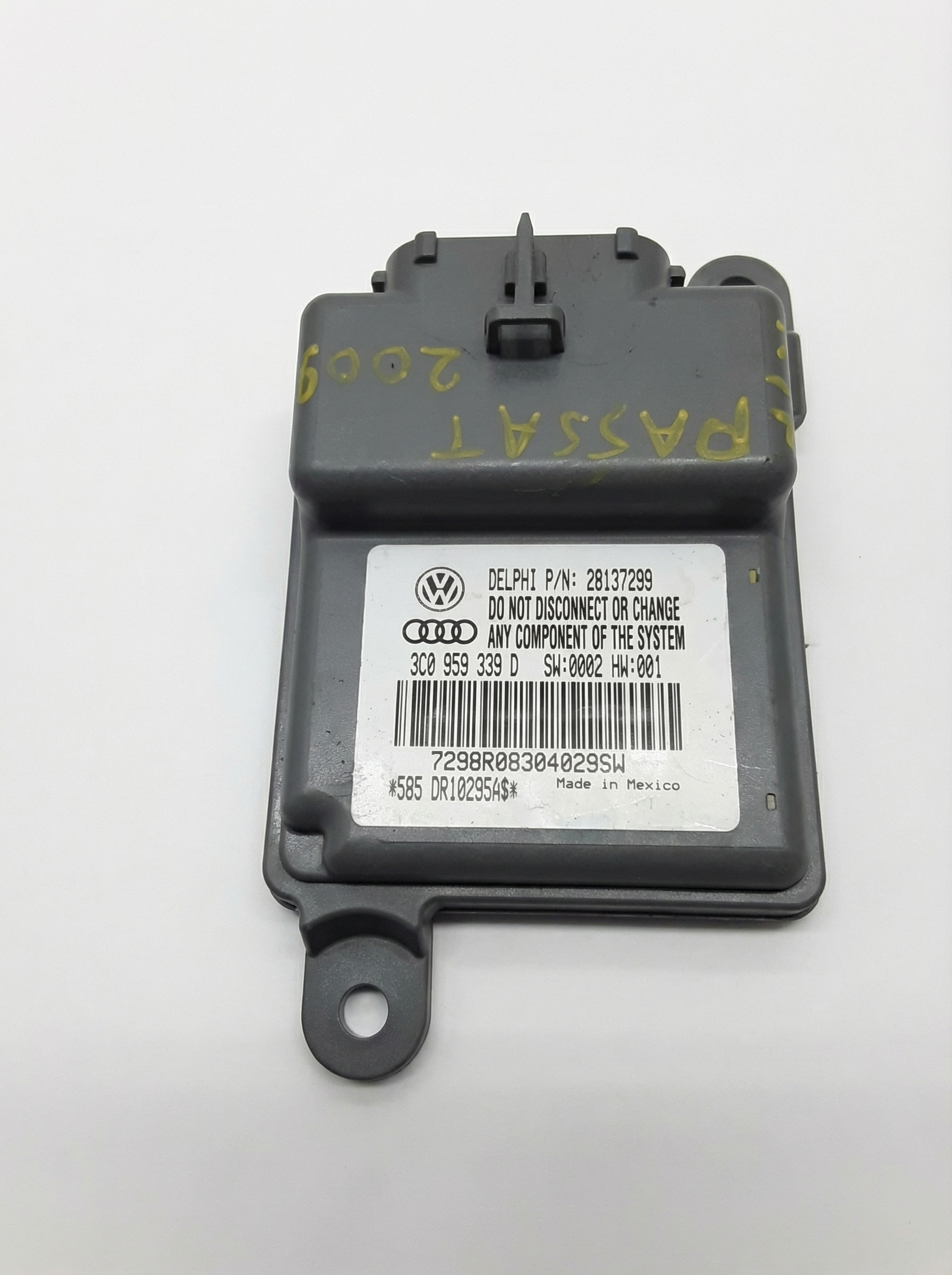
New Aftermarket Parts Available



The information in this article is provided for general reference and educational purposes only. Vehicle specifications, procedures, and part compatibility can vary by production date, trim level, and region. Always consult your vehicle's factory service manual and verify part numbers before purchasing or performing repairs. Safety-critical components such as airbags, seat belts, and braking systems should be installed by a qualified professional.
- Volkswagen Jetta:
- 🧭 Diagnostic Flowchart
- 🎬 Helpful Videos
- 🛍️ Shop This Part
- What's Unique About the 2011-2018 Volkswagen Jetta
- Symptoms You May Notice
- Most Likely Causes
- Rare But Worth Checking
- Diagnosis Steps
- Parts You'll Likely Need
- Related Codes That Often Appear With This One
- Technical Service Bulletins (TSBs) & Recalls
- Platform-Specific Known Issues
- Mechanic-Grade Diagnostic Values
- Scan Tool Commands That Help
- Wiring & Ground Locations
- Real Owner Repair Stories
- OEM Part Supersession History
- Model Year Variations Within This Range
- Used vs. New Parts: Buying Guide for This Vehicle
- Real Owner Stories
- 2012 Jetta Sportwagen
- VW T6 Transporter
- Related OBD-II Codes
- Frequently Asked Questions
- 🎟️ Get 5% Off