

U0141 on 2021 Chrysler 300: Lost Communication with BCM Causes and Fixes
This code means your Chrysler 300's Body Control Module (BCM) has stopped communicating. The most common causes are a weak battery, a blown fuse, or a wiring issue. Always test the battery and check BCM-related fuses before suspecting a bad BCM.
- U0141 means the Body Control Module (BCM) has lost communication.
- Before blaming the BCM, always check the simplest things first: the battery's health and all related fuses.
- The problem is often in the electrical system (wiring, connectors, grounds), not the expensive computer module itself.
- Due to the complexity of network diagnostics, professional help is recommended if the issue isn't a simple battery or fuse replacement.
What's Unique About the 2021-2021 Chrysler 300
On modern Chrysler vehicles like the 300 and its platform-mate, the Dodge Charger, the BCM acts as a central gateway between different CAN bus networks. A failure here can cause a cascade of seemingly unrelated electrical problems, from a non-responsive radio to a no-start condition. Unlike a simple sensor failure, U0141 often points to a broader network health issue. 🎬 Watch: Understanding lost communication codes and common BCM fixes. Owners frequently discover the root cause isn't the expensive BCM itself, but a simpler electrical fault like a bad ground, corroded connector, or low battery voltage that disrupts the sensitive communication system. A weak battery can cause multiple 'U' codes to appear at once as modules fail to initialize correctly.
Diagnostic Flowchart
Tap your situation to follow the diagnostic path that matches what you're seeing on this vehicle.
Symptoms You May Notice
- Check Engine Light is on
- Warning lights on the instrument cluster may flash or behave erratically
- Interior lights, power windows, or power locks do not work
- Remote key fob stops working
- Vehicle will not start (cranks but won't fire, or doesn't crank at all)
- Issues with the climate control system
- Malfunction of the anti-theft or security system
- Radio or infotainment screen takes a long time to turn on or doesn't turn on at all
- "Service Shifter" or other warnings on the instrument display 🎬 Watch: A quick guide to common bad BCM symptoms.
- Replacing the BCM without first checking the battery, fuses, and wiring. These simple electrical issues are far more common causes for the code.
Most Likely Causes
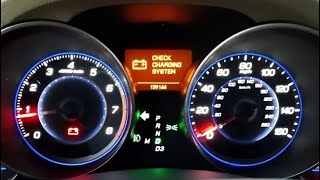
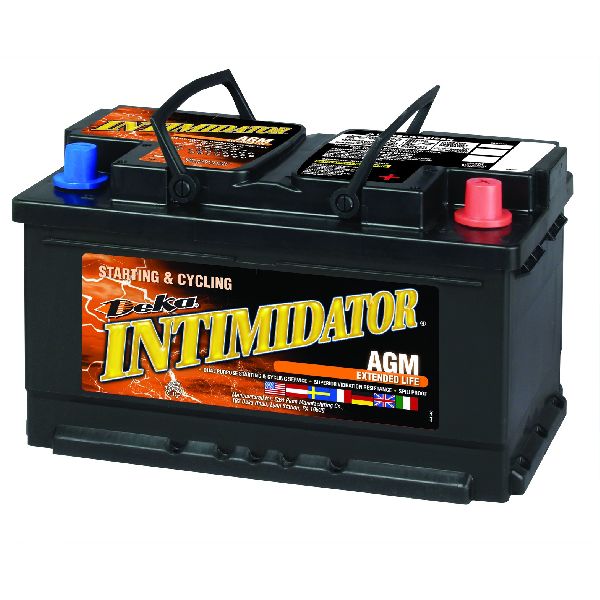
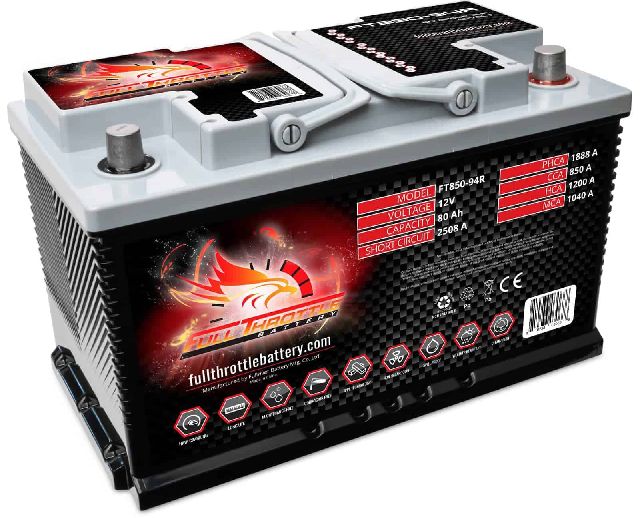
- Weak or Failing Battery 🔴 High Probability → Shop Vehicle Battery Modern vehicles like the Chrysler 300 are packed with electronics that are highly sensitive to voltage. A battery that can still start the car may not provide the stable voltage required by all modules, leading to communication dropouts and multiple 'U' codes.
How to confirm: Test the battery with a multimeter or a professional battery tester. A healthy, resting battery should show ~12.6V. Check voltage while cranking; if it drops below 10V, the battery is weak. A load test is the most definitive way to confirm battery health.
Typical fix: Replace the battery. Ensure the new battery meets or exceeds the OEM cold cranking amps (CCA) specification.
Est. part cost: $150-$300 - Blown Fuse or Faulty Relay 🟡 Medium Probability The BCM is protected by multiple fuses. A simple fuse failure will cut power to the module, causing it to drop off the network.
How to confirm: Consult the owner's manual or online diagrams for the 2021 Chrysler 300. Check fuses in the rear fuse box (in the trunk). Specifically, inspect fuses related to 'Body Control Module', 'Interior Lighting', and 'Power Locks'. For a 2021 model, relevant fuses include F8 (Interior Lighting) and F9 (Power Locks) in the trunk-mounted fuse box.
Typical fix: Replace the blown fuse. If the fuse blows again, there is a short circuit that needs to be traced.
Est. part cost: $1-$10 - Wiring or Connector Issue 🟡 Medium Probability The CAN bus communication wires are a 'twisted pair'. Corrosion at connectors, damage from abrasion, or loose pins can disrupt the sensitive network signals. Common chafe points can occur where the harness passes near sharp metal edges or engine components that vibrate.
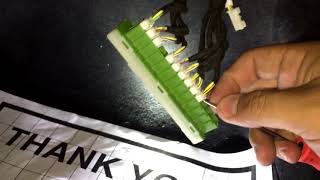
How to confirm: Visually inspect the wiring harness going to the BCM for any signs of damage, chafing, or corrosion. The BCM is typically located under the dashboard, often behind the glove box or to the left of the steering column. Check for a secure connection at the BCM connectors. Diagnosing a CAN bus requires a multimeter to check for proper resistance (typically 60 ohms between CAN High and CAN Low at the OBD-II port with the battery disconnected) and an oscilloscope for advanced signal analysis. 🎬 See this tech tip for diagnosing CAN bus network signals.
Typical fix: Repair the damaged section of wiring or clean/replace the corroded connector. Apply dielectric grease to connectors to prevent future moisture intrusion.
Est. part cost: $10-$100 - Faulty Body Control Module (BCM) ⚪ Low Probability → Shop Body Control Module While less common than wiring or power issues, the BCM itself can fail internally due to hardware failure (e.g., water damage) or software corruption.
How to confirm: This is a diagnosis of exclusion. If the battery, fuses, and all wiring/network tests come back good, the BCM is the likely culprit. A high-end scan tool (like Chrysler's wiTECH) may be able to communicate with other modules but not the BCM, confirming its failure.
Typical fix: Replace the Body Control Module. The new module will need to be programmed to the vehicle's specific VIN and configuration using a capable scan tool like Autel or the dealer's wiTECH software.
Est. part cost: $400-$800
Rare But Worth Checking
- Faulty Ground Connection: A loose or corroded ground strap for the BCM or the main chassis can cause intermittent and hard-to-diagnose electrical issues, including communication codes. Verify ground resistance is below 0.5 ohms.
- Another Failing Module on the Network: A different module on the CAN bus (e.g., ABS module, radio, or even the power steering module) can fail and broadcast disruptive 'noise' onto the network, preventing the BCM from communicating. This is often diagnosed by unplugging modules one by one at a central splice pack (STAR connector) to see if communication is restored.
- Faulty Clockspring: The clockspring (or spiral cable) in the steering column contains wiring for steering wheel controls, the horn, and the airbag. A failure in the clockspring can short out or disrupt CAN bus signals that pass through it, leading to communication codes like U0141, often accompanied by an airbag light and non-functional steering wheel buttons.
Diagnosis Steps
- Scan for all stored trouble codes to see if other 'U' codes are present, which would indicate a wider network problem. A scan tool showing the network topology is very helpful here.
- Perform a full battery and charging system test. Ensure voltage is stable and above 12.4V at rest and does not drop significantly during cranking. A weak battery is a primary suspect.
- Locate the fuse box in the trunk and inspect all fuses related to the Body Control Module, instrument cluster, and interior functions. Check fuses F8, F9, F32, and others mentioned in the owner's manual.
- Visually inspect the BCM connectors and nearby wiring harnesses for any obvious signs of damage, corrosion, or loose connections. The BCM is located under the driver's side dash, to the left of the steering column on many 300 models.
- If tools are available, disconnect the battery and measure the resistance on the CAN bus at the OBD-II port (pins 6 and 14). It should be approximately 60 Ohms. If it's 120 Ohms, a terminating resistor or module is offline. If it's near 0 Ohms, there's a short between the CAN lines.
- Check for power and ground at the BCM connector using a multimeter. You should have constant battery voltage and a solid ground connection (less than 0.5 ohms resistance to chassis).
- If the above steps do not identify the issue, a professional diagnosis using an oscilloscope or an advanced scan tool is needed to analyze network signals and isolate the fault.
- As a last resort, if all wiring and power sources are confirmed good, suspect a faulty BCM.
Parts You'll Likely Need
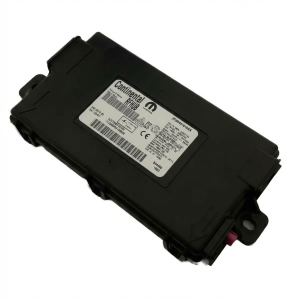
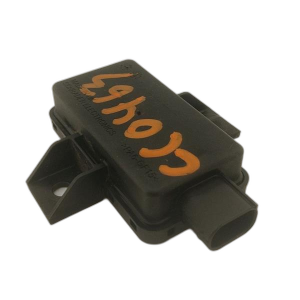
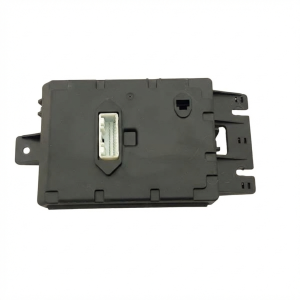
- Body Control Module (BCM)
(OEM #68500900AB)— This is the part that needs to be replaced if it has failed internally, after all other power, ground, and wiring issues have been ruled out. Note that multiple part numbers exist depending on vehicle options, so VIN verification is required.
Trusted brands: Mopar
OEM price range: $290-$450
Aftermarket price range: $170-$500 (used or rebuilt) - Automotive Battery — A weak or failing battery is a very common cause of network communication codes on modern vehicles.
Trusted brands: Interstate, DieHard, Duralast
OEM price range: $200-$350
Aftermarket price range: $150-$300
Related Codes That Often Appear With This One
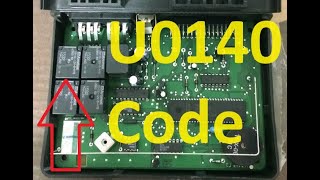
- U0140 — U0140 is a similar code for 'Lost Communication with Body Control Module'. They often appear together or point to the same family of network problems.
- U0126 — Lost communication with the Steering Angle Sensor (SAS). The SAS is often integrated with the clockspring. A fault here can disrupt the local CAN bus, leading to broader communication issues like U0141.
- U0129 — As seen in TSB #18-013-22, when a major module like the BCM fails, it can cause a cascade of communication codes with other modules, such as the Brake System Control Module.
- U0155 — Also listed in TSB #18-013-22, this indicates a loss of communication with the instrument cluster, a common symptom when the BCM is offline.
- U0101 — Lost Communication with the Transmission Control Module (TCM). This is another code frequently listed in Chrysler TSBs alongside U0141, indicating a widespread network communication failure.
Technical Service Bulletins (TSBs) & Recalls
- Chrysler TSB #18-013-22: This bulletin, dated January 20, 2022, addresses a potential MIL illumination where U0141 is one of many possible communication DTCs that can be stored. It suggests a PCM software update may resolve a condition causing this and other network codes on 2021 models with the 3.6L engine.
Platform-Specific Known Issues
- Harness Chafing: On Chrysler/Dodge platforms, wiring harnesses can sometimes rub against sharp metal brackets under the hood or dash, eventually wearing through the insulation and causing a short. A visual inspection of the entire harness is recommended during diagnosis.
- Security Gateway Module (SGW) Complications: → Shop Body Control Module Since 2018, Chrysler vehicles are equipped with a Security Gateway Module (SGW) located behind the OBD-II port. This module prevents unauthorized access to the vehicle's network. To perform advanced diagnostics, BCM programming, or bidirectional tests, a technician needs either an authenticated scan tool with an AutoAuth subscription or a physical SGW bypass cable (often a 12+8 pin connector).
Mechanic-Grade Diagnostic Values
- CAN Bus Network Resistance — expected: ~60 Ohms. Failure: A reading of ~120 Ohms indicates an open circuit or a missing terminating resistor. A reading near 0 Ohms indicates a short between the CAN High and CAN Low wires.
- CAN High (CAN-H) Voltage — expected: Toggles between ~2.5V (recessive state) and ~3.5V (dominant state) when measured to a known good ground with the key on.. Failure: Voltage stuck high, stuck low, or not toggling indicates a bus fault or a module pulling the bus to an incorrect voltage.
- CAN Low (CAN-L) Voltage — expected: Toggles between ~2.5V (recessive state) and ~1.5V (dominant state) when measured to a known good ground with the key on.. Failure: Voltage stuck high, stuck low, or not toggling indicates a bus fault or a module pulling the bus to an incorrect voltage.
- BCM Power Supply Voltage — expected: 12.2V - 12.8V. Failure: Low or no voltage at the BCM's main power input pin points to a problem with the fuse, relay, or wiring supplying the module, not the module itself.
Scan Tool Commands That Help
- wiTECH (Chrysler Dealer Tool): Reprogram the BCM — This function is used to flash the BCM with the latest software updates, which can resolve known bugs or software corruption issues. It is a required step when installing a new BCM.
- wiTECH (Chrysler Dealer Tool): Vehicle Configuration — After replacing and reprogramming a BCM, this routine must be run. It configures the new module to the specific options and VIN of the vehicle, ensuring all features work correctly.
- wiTECH (Chrysler Dealer Tool): Clear All DTCs — After reprogramming a module, temporary fault codes are often set in other modules across the network. This function clears all codes from all modules to ensure a clean slate after the repair.
Wiring & Ground Locations
- Body Control Module (BCM) — Located under the driver's side dashboard, typically to the left of the steering column or behind the instrument cluster area.. This is the module that has lost communication. All power, ground, and network wiring at its connectors must be inspected first.
- STAR Connector (Front) — Underneath the glove box. The glove box may need to be lowered or removed, and carpet pulled back to access it. The connector slides out of a bracket for easier access.. This is a central splice pack for the CAN bus. It's a critical diagnostic point for isolating sections of the network. A technician can disconnect branches one by one to see if communication is restored, pinpointing a faulty module or wire.
- STAR Connector (Rear) — In the trunk, near the spare tire, often under the trunk floor lining.. Connects rear-body modules to the network. A fault here can cause network-wide issues. It is also a required connection point for some key programming procedures.
- Security Gateway Module (SGW) — Located directly behind the vehicle's OBD-II diagnostic port.. On 2018+ models, this module blocks most diagnostic commands and all programming functions unless bypassed with a special cable or accessed with an authenticated scan tool. This is critical to know before attempting to diagnose or replace the BCM.
Real Owner Repair Stories
- Multiple Chrysler/Dodge forums and YouTube repair videos (Various Chrysler 300 / Dodge Charger models (LX Platform)) — Airbag light on, steering wheel buttons not working, horn inoperative, and sometimes intermittent communication codes.
❌ Tried (didn't work) Clearing codes, which would sometimes work temporarily., Checking fuses for steering wheel controls and airbag systems., Replacing the airbag itself.
✅ What actually fixed it Replacing the clockspring assembly (also called a spiral cable) in the steering column. The internal ribbon cable of the clockspring had failed, causing shorts or open circuits in the CAN bus wiring that runs through it to the steering wheel controls and Steering Angle Sensor. This failure disrupted network communication, leading to various codes, including communication faults with other modules.
Helpful Videos

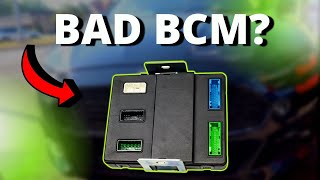
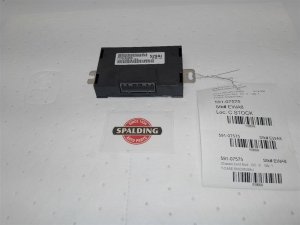
Used OEM Parts in Stock
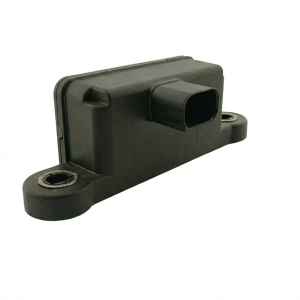
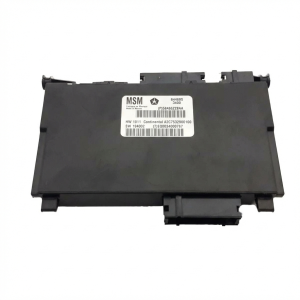
New Aftermarket Parts Available


The information in this article is provided for general reference and educational purposes only. Vehicle specifications, procedures, and part compatibility can vary by production date, trim level, and region. Always consult your vehicle's factory service manual and verify part numbers before purchasing or performing repairs. Safety-critical components such as airbags, seat belts, and braking systems should be installed by a qualified professional.
- Chrysler 300:
- 🧭 Diagnostic Flowchart
- 🎬 Helpful Videos
- 🛍️ Shop This Part
- What's Unique About the 2021-2021 Chrysler 300
- Symptoms You May Notice
- Most Likely Causes
- Rare But Worth Checking
- Diagnosis Steps
- Parts You'll Likely Need
- Related Codes That Often Appear With This One
- Technical Service Bulletins (TSBs) & Recalls
- Platform-Specific Known Issues
- Mechanic-Grade Diagnostic Values
- Scan Tool Commands That Help
- Wiring & Ground Locations
- Real Owner Repair Stories
- 🎟️ Get 5% Off