

U0141 on 2021 Dodge Charger: Causes and Fixes for Lost BCM Communication
This code means the Body Control Module (BCM) has lost communication with other modules. The most common causes are a weak battery, a wiring issue, or a software glitch. A simple battery check or a software update per a manufacturer TSB may resolve the issue without replacing the expensive BCM.
- First, check for TSB #1801222, as a simple software update for the PCM might fix the problem.
- Before suspecting expensive parts, have your battery professionally load-tested and inspect all main power and ground connections.
- A visual inspection of the wiring near the BCM in the driver's footwell for water damage or chafing is a crucial step.
- Due to the complexity of the network diagnostics and the need for programming, this code is best handled by a professional technician.
- Do not drive the vehicle, as essential safety systems like lights and wipers can fail unexpectedly.
What's Unique About the 2021-2021 Dodge CHARGER
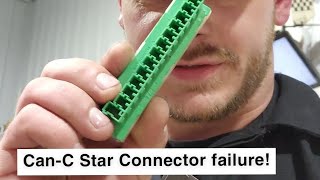
On the 2021 Dodge Charger, the BCM is deeply integrated into almost every vehicle function. A Technical Service Bulletin (TSB #18-012-22) was issued for 2021 models, indicating that a flood of communication codes, including U0141, could be triggered by a software issue in the Powertrain Control Module (PCM). This suggests that before suspecting a hardware failure of the BCM itself, performing a software update is a critical diagnostic step. The network architecture on these cars often uses a central 'star connector,' also known as a gateway connector, located behind the glove box on the passenger side. 🎬 Watch: How to diagnose a faulty star connector network failure. A fault in this connector or in a seemingly unrelated module can sometimes bring down the entire network and trigger a BCM communication code.
Diagnostic Flowchart
Tap your situation to follow the diagnostic path that matches what you're seeing on this vehicle.
Symptoms You May Notice
- Multiple, unrelated warning lights on the instrument cluster (ABS, airbag, check engine).
- Interior or exterior lights flickering, staying on, or not working at all.
- Power windows, door locks, or power seats not working or operating randomly.
- Key fob not working for locking, unlocking, or remote start.
- Vehicle will not start (no-crank condition).
- Parasitic battery drain leading to a dead battery.
- Instrument cluster gauges freezing or flickering.
- Wipers not functioning correctly.
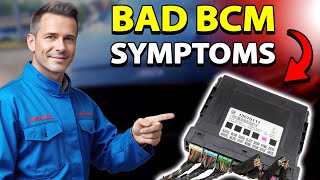
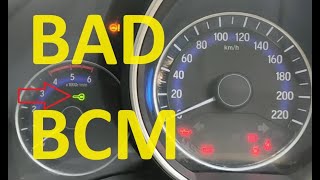
- Radio or infotainment system malfunctioning. 🎬 See this guide on common BCM symptoms and DIY checks.
- Replacing the BCM when the actual fault is a weak battery, a simple wiring issue, or outdated software that could be fixed with a reflash.
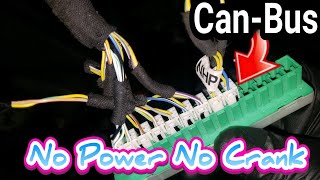
- Blaming the BCM for a no-start condition when a faulty Transmission Control Module (TCM) or its wiring is the root cause, 🎬 Watch: Troubleshooting a no-start condition caused by a down bus. which can also cause communication codes.
Most Likely Causes
- Software Glitch / Outdated PCM Software 🔴 High Probability Manufacturer TSB #18-012-22 explicitly lists U0141 as a code that can be resolved by a PCM software update for 2021 models. This TSB addresses a large number of seemingly random communication codes being set at once.
How to confirm: A dealer or qualified shop with a wiTECH scan tool can check the current software calibration against the latest available version and see if an update is available per the TSB.
Typical fix: Reprogramming the Powertrain Control Module (PCM) with the latest software. This requires a battery charger to be connected to maintain stable voltage (13.2-13.5V) during the flash process.
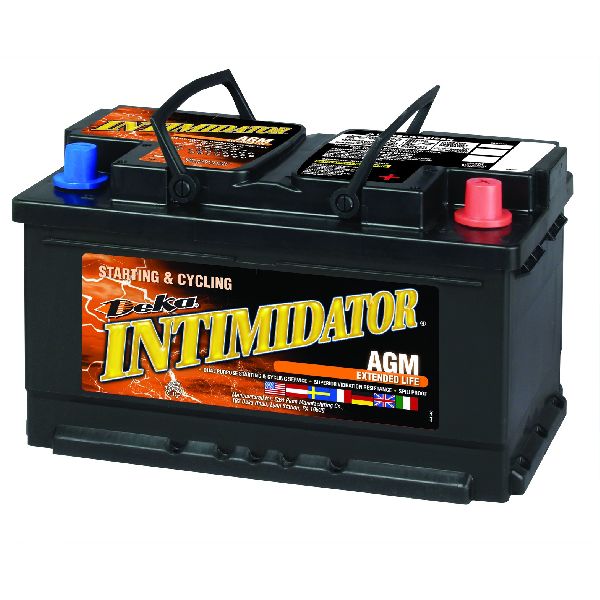
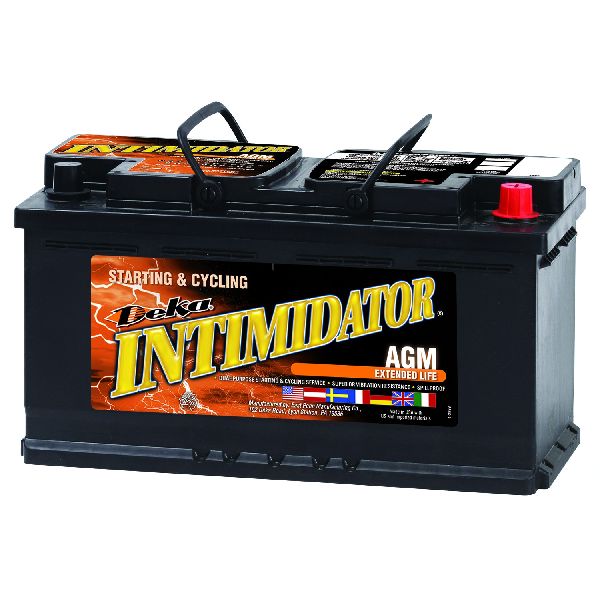
Est. part cost: $0 - Low Battery Voltage or Poor Connections 🟡 Medium Probability → Shop Vehicle Battery Modern vehicles like the Charger have a high electrical demand, and modules are sensitive to voltage drops, which can cause them to go offline. Corrosion on terminals, even if not obvious, can cause a significant voltage drop and trigger communication faults.
How to confirm: Perform a load test on the battery (a simple voltage check is not enough). Inspect battery terminals (located in the trunk), main chassis grounds, and fuse box connections for corrosion and tightness. A voltage reading below 12.4V with the engine off is a red flag.
Typical fix: Replace the battery if it fails a load test. Thoroughly clean battery terminals, posts, and all connected ground straps with a wire brush or sandpaper. Tighten all connections securely.
Est. part cost: $150-$350 - Damaged Wiring or Loose Connectors 🟡 Medium Probability Wiring for the CAN bus network can become chafed, corroded, or damaged, especially in areas where harnesses pass through the firewall, door jambs, or near hot components like coolant pipes. The twisted pair of CAN wires can suffer from electromagnetic interference if their protective loom is compromised and they are resting against metal components.
How to confirm: Visually inspect the wiring harness going to the BCM (located high in the driver's footwell, under the dash). Check for chafing points where the harness touches metal brackets or engine components. A technician would use a multimeter to check for continuity and proper resistance (around 60 ohms) on the CAN network between the CAN High and CAN Low pins.
Typical fix: Repair the damaged section of the wiring harness or clean and re-seat the connectors. Use dielectric grease on connectors in areas prone to moisture.
Est. part cost: $10-$100 - Faulty Body Control Module (BCM) ⚪ Low Probability → Shop Body Control Module The BCM is vulnerable to water damage from windshield or sunroof leaks due to its location in the driver's footwell. Internal component failure can also occur, but this should be the last diagnosis after ruling out all other possibilities.
How to confirm: If the battery, software, and wiring are all confirmed to be good, and the BCM has proper power and ground but still won't communicate, the module itself is the likely culprit. Diagnosis involves checking for battery voltage and good ground directly at the BCM's connector pins.
Typical fix: Replace the Body Control Module and have the new unit programmed to the vehicle's VIN and configuration.
Est. part cost: $650-$950
Rare But Worth Checking
- Faulty Gateway Module or Other Module on the Network: A shorted module elsewhere on the CAN bus (like the radio, ABS module, or shifter module) can disrupt the entire network, causing other modules like the BCM to report a loss of communication. Diagnosis involves using a scan tool to see all offline modules and unplugging them one by one from the central STAR connector (behind the glove box) to see if communication is restored to the others.
- Faulty Clock Spring: The clock spring in the steering column is a common failure point that can short the CAN bus wires passing through it. This can cause a U0141 code along with an airbag light and non-functional steering wheel buttons (cruise control, radio controls). If these symptoms are present, the clock spring becomes a primary suspect.
Diagnosis Steps
- Check for Technical Service Bulletins (TSBs). Specifically, see if TSB #18-012-22 applies, which involves a PCM software update.
- Perform a full vehicle scan with a professional-grade tool to see which modules are reporting 'no communication'. A red indicator next to a module in the network topology view often signifies it's offline.
- Thoroughly test the battery with a load tester. Ensure voltage is stable and above 12.4V. Clean terminals and ground points regardless of appearance.
- Inspect the battery terminals and all major power and ground connections under the hood and in the trunk for tightness and corrosion.
- Check all fuses related to the Body Control Module in the vehicle's fuse boxes (engine bay and trunk).
- Visually inspect the wiring harness leading to the BCM, which is typically located high in the driver's side footwell area, for any signs of water intrusion, chafing, or damage.
- If wiring appears intact, a technician should test the CAN bus wires for proper voltage (around 2.6V-2.7V on CAN High, 2.3V-2.4V on CAN Low) and resistance (around 60 ohms between CAN High and CAN Low with the battery disconnected).
- Inspect the STAR/Gateway connector behind the passenger glove box for any loose connections or corrosion.
- If all power, grounds, and network wiring test good, the BCM itself is the primary suspect.
Parts You'll Likely Need
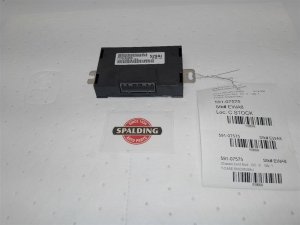
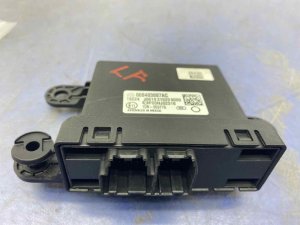
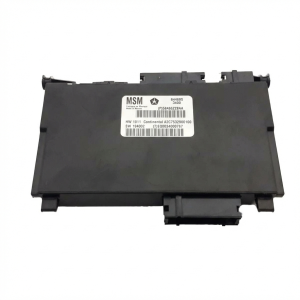
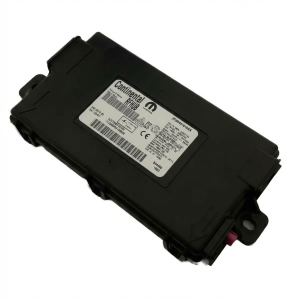
- Body Control Module (BCM)
(OEM #68444793AD (example, always verify with VIN))— This is the module that has lost communication. If all other causes are ruled out, the module itself has likely failed internally. It is a common failure point, especially due to water intrusion. Replacement requires programming.
Trusted brands: Mopar
OEM price range: $650-$950
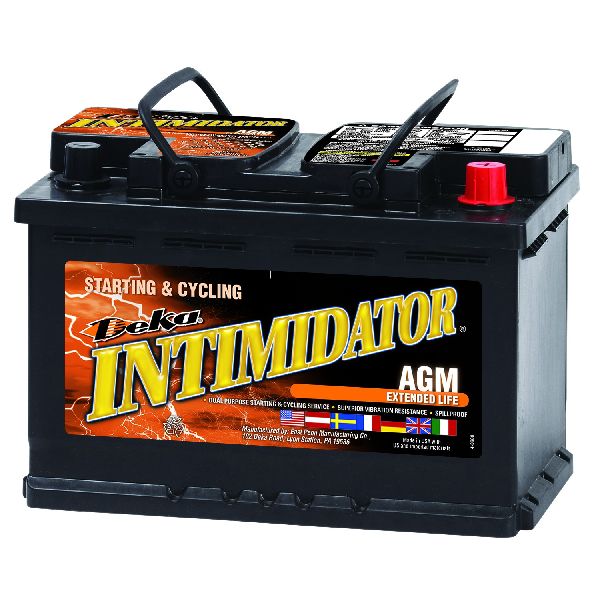
Aftermarket price range: $400-$700 - Automotive Battery — A weak or failing battery is a very common cause of communication codes on modern vehicles with high electrical demands.
Trusted brands: Interstate, DieHard, Duralast
OEM price range: $200-$350
Aftermarket price range: $150-$250
Related Codes That Often Appear With This One
- U0140 — This is a similar code for 'Lost Communication With Body Control Module'. They often appear together.
- U0101 — Lost Communication With TCM. TSB #18-012-22 lists this as a related code that can be set by the same software issue.
- U0129 — Lost Communication With Brake System Control Module. Also listed in TSB #18-012-22.
- U0155 — Lost Communication With Cluster/CCN. The instrument cluster is another key module on the network, and its failure to communicate is often seen with BCM issues.
Technical Service Bulletins (TSBs) & Recalls
- 18-012-22: Addresses a potential software issue in the Powertrain Control Module (PCM) that can cause U0141 and a host of other communication DTCs. The fix is to reprogram the PCM with the latest software.
Platform-Specific Known Issues
- A known software issue can cause this and many other communication codes, which is addressed by TSB #18-012-22. A PCM reflash is the specified fix.
- The BCM's location in the driver's footwell makes it particularly vulnerable to water damage from a leaking windshield or clogged sunroof drain, which is a leading cause of failure for this part.
- The CAN bus wiring harness can chafe against metal brackets in the engine bay or under the dash, causing intermittent shorts that lead to a flood of 'U' codes.
Mechanic-Grade Diagnostic Values
- CAN Bus Network Resistance — expected: ~60 Ohms. Failure: A reading of ~120 Ohms indicates a missing termination resistor or an open circuit in the bus. A reading significantly lower than 60 Ohms (e.g., 40 Ohms or less) suggests a shorted module or extra terminating resistor on the network.
- CAN High Voltage (Key On) — expected: ~2.6V - 2.7V. Failure: Voltage that is stuck high (5V) or low (0V) indicates a short to power or ground.
- CAN Low Voltage (Key On) — expected: ~2.3V - 2.4V. Failure: Voltage that is stuck high (5V) or low (0V) indicates a short to power or ground.
- Ground Circuit Resistance — expected: Less than 1.0 Ohm. Failure: A reading higher than 1.0 Ohm indicates excessive resistance in the ground circuit, which can cause modules to malfunction.
- Battery Voltage (Ignition On) — expected: Between 10.0V and 16.0V. Failure: Voltage outside this range can cause modules to stop communicating.
Scan Tool Commands That Help
- wiTECH: Restore BCM Proxi Configuration — This function is used after replacing the BCM to restore the vehicle's original configuration data to the new module.
- wiTECH: Proxi Configuration Alignment — This is performed after installing a new BCM to ensure all modules on the network are properly aligned and communicating with the new configuration.
- wiTECH: Configure BUX Headlamp Parameters — This specific function must be run after BCM replacement on vehicles equipped with the Headlamp Leveling System (Sales Code JKL) to ensure the leveling switch operates correctly.
Wiring & Ground Locations
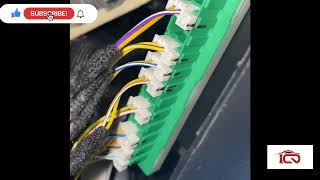
- STAR Connector / Gateway Connector — Located behind the glove box on the passenger side. Requires removing the lower trim panel to access.. This is the central hub where all CAN bus networks meet. A bad connection here can take down the entire network. It's also the primary access point for diagnosing a downed bus by unplugging modules one by one.
- BCM (Body Control Module) — Located high in the driver's footwell, under the dashboard, often near the steering column.. This is the module that has lost communication. Physical inspection for water damage, corrosion, or loose connectors is a key diagnostic step.
- Main Chassis Ground — There are multiple key ground points. One is under the passenger front seat, attached to a ground stud. Another is on the engine block, and a primary ground strap connects the engine to the chassis.. A poor ground connection is a common cause of intermittent and widespread electronic issues, including communication codes. Verifying these grounds are clean and tight is crucial.
- BCM Connector C6 — This is one of the main multi-pin connectors on the Body Control Module itself.. Knowing the specific connector (e.g., C6) allows a technician to use a wiring diagram to find the exact pins for CAN High, CAN Low, power, and ground to perform targeted voltage and resistance tests directly at the module.
Real Owner Repair Stories
- YouTube channel 'T&C Auto' (Dodge Charger (year not specified, but similar platform)) — No crank, no start, multiple modules offline on the CAN bus, including the BCM.
❌ Tried (didn't work) Initial scan showed multiple 'U' codes for lost communication.
✅ What actually fixed it The technician isolated the fault by unplugging modules one by one at the STAR connector. Unplugging the shifter module restored communication to all other modules. The internal circuitry of the shifter module had failed and was shorting the entire CAN bus network. Replacing the shifter module resolved the U0141 and all other communication codes.
Helpful Videos
Used OEM Parts in Stock
New Aftermarket Parts Available


The information in this article is provided for general reference and educational purposes only. Vehicle specifications, procedures, and part compatibility can vary by production date, trim level, and region. Always consult your vehicle's factory service manual and verify part numbers before purchasing or performing repairs. Safety-critical components such as airbags, seat belts, and braking systems should be installed by a qualified professional.
- Dodge CHARGER:
- 🧭 Diagnostic Flowchart
- 🎬 Helpful Videos
- 🛍️ Shop This Part
- What's Unique About the 2021-2021 Dodge CHARGER
- Symptoms You May Notice
- Most Likely Causes
- Rare But Worth Checking
- Diagnosis Steps
- Parts You'll Likely Need
- Related Codes That Often Appear With This One
- Technical Service Bulletins (TSBs) & Recalls
- Platform-Specific Known Issues
- Mechanic-Grade Diagnostic Values
- Scan Tool Commands That Help
- Wiring & Ground Locations
- Real Owner Repair Stories
- 🎟️ Get 5% Off