

OBD-II Code U0145: Lost Communication With Body Control Module 'C'
The Ultimate 2026 Guide: What U0145 means, why it triggers, and how to fix it for good.
- Code U0145 indicates your vehicle's primary network lost communication with the Body Control Module (BCM), disabling accessories like power windows, wipers, and security systems.
- Test your battery and inspect the BCM's dedicated fuses before buying parts; voltage drops below 12.4V cause a significant percentage of false communication codes.
- Verify the BCM receives 12V+ power and has a ground circuit voltage drop under 100mV before condemning the module itself.
- Never replace a BCM without professional programming tools; a new module requires VIN syncing and security initialization to start the engine, costing $450 to $1,200 total.
What Does U0145 Mean?
The code U0145 signifies your car's primary computer network lost its connection to Body Control Module 'C' (BCM-C). The BCM acts as the central command for comfort, convenience, and security features. When this link breaks, functions like power windows, locks, interior lighting, the security system, and wipers stop working or behave erratically.
Technical definition: Lost Communication With Body Control Module 'C' or 'E'. Scan tools and repair manuals use various letters to denote different body-related modules depending on the manufacturer. The core problem is a complete communication failure with a body module on the Controller Area Network (CAN) bus.
Can I Drive With U0145?
Yes, But With Caution. Yes, you can typically drive the vehicle because core engine and transmission functions operate on separate networks. However, driving is not recommended for extended periods. The BCM controls safety-critical items like exterior lights, turn signals, and wipers, which fail unexpectedly when this code is active. Furthermore, a faulty BCM causes a parasitic battery drain, leaving you stranded without warning. Limit driving to reaching a repair shop.
Common Causes
- Low Battery Voltage or Charging System Fault (Very Common) — Control modules require stable voltage to communicate. A weak battery, failing alternator, or corroded battery terminals drop the system voltage below the operating threshold, instantly triggering U0145.
- Blown Fuse for the BCM (Very Common) — The BCM relies on dedicated fuses for power. A blown fuse instantly cuts power, taking the module offline and logging this communication code.
- Poor Ground Connections (Very Common) — A loose or corroded ground strap deprives the BCM of a stable reference voltage. This mimics an internal module failure and completely disrupts CAN bus communication.
- Damaged, Corroded, or Loose Wiring/Connectors (Common) — Broken, chafed, or shorted CAN bus wires interrupt the network signal. Moisture corrodes connector pins, breaking the physical circuit between the BCM and the network.
- Water Intrusion into the BCM (Common) — BCMs sit under dashboards or seats. Leaks from windshields, sunroofs, or blocked A/C drains push moisture directly into the module, destroying the internal circuit board.
- Improperly Installed Aftermarket Accessories (Common) — Incorrectly wired remote starters, alarms, or stereos tap into the wrong circuits, creating electrical noise on the CAN bus or drawing excessive power that crashes the network.
- Faulty Body Control Module (BCM) (Less Common) — The BCM itself fails internally due to age, cracked solder joints from vibration, or permanent damage from severe voltage spikes.
- Corrupted BCM Software (Less Common) — BCM software corrupts after a battery replacement or improper jump-start. A dealer software reflash resolves this without requiring hardware replacement.
- CAN Bus Network Fault (Rare) — A shorted module elsewhere on the network 'shouts' over the CAN bus, preventing the BCM from communicating. This triggers communication codes for multiple modules simultaneously.
Symptoms
- Inoperative or Erratic Body Accessories — Features controlled by the BCM fail or act unpredictably. Power windows, door locks, interior lights, and power mirrors stop working. Dashboard lights flicker, and windshield wipers turn on by themselves or refuse to operate.
- Key Fob and Security System Malfunctions — Remote keyless entry stops working. The vehicle's anti-theft system acts up, either preventing the engine from cranking or triggering the alarm randomly.
- Check Engine Light or BCM Warning Light (also visible on scanner) — The vehicle's main computer (PCM) triggers the Check Engine Light when it loses contact with the BCM. Some vehicles illuminate a specific electrical fault warning light on the instrument cluster.
- Parasitic Battery Drain (also visible on scanner) — A faulty BCM fails to enter 'sleep mode' when the car is off, causing a persistent power draw that drains a healthy battery overnight or over a few days.
Diagnostic Flowchart
Tap your situation to follow the diagnostic path that matches what you're seeing on this code.
Common Fixes & Costs
- Replacing a Weak Battery — Parts: $150-$350, Labor: $25-$75, ~0.5 hr book time (DIY)
- Replacing a Blown Fuse — Parts: $1-$5, Labor: $0-$50, ~0.1 hr book time (DIY)
- Cleaning or Repairing Ground Connections — Parts: $5-$20, Labor: $50-$150, ~0.8 hr book time (DIY)
- Repairing Damaged Wiring or Connectors — Parts: $10-$50, Labor: $250-$750, ~2.5 hr book time (Professional)
- BCM Software Update / Reflash — Parts: $0, Labor: $100-$250, ~1.0 hr book time (Professional)
- Replacing the Body Control Module (BCM) — Parts: $250-$800, Labor: $200-$400, ~2.0 hr book time (Professional)
Used vs. New Parts: Buying Guide
When a used part is worth it: A used BCM is a budget-friendly option for an older, high-mileage vehicle, or if a new OEM part is on backorder. It makes sense when cost savings outweigh the risks of a shorter lifespan and potential programming issues.
Donor-vehicle mileage cap: roughly under 100000 miles for the part to have meaningful remaining life.
Donor quality checklist:
- Verify the part number matches EXACTLY. BCMs are highly specific to trim level and options.
- Source from a reputable recycler offering at least a 30-90 day warranty.
- Inspect the part for any signs of water damage, corrosion, or physical case damage.
Decision logic:
- If The vehicle is less than 8 years old or has under 100k miles. → Buy a new OEM or high-quality remanufactured BCM. The reliability and warranty are worth the extra cost.
- If The budget is extremely tight and the vehicle is over 10 years old. → A used BCM is a viable gamble, but be prepared for the possibility it fails programming or dies prematurely.
- If The part is for a known problem vehicle (e.g., TIPM issues on a Dodge). → Favor a new or updated/remanufactured part from a specialist, as a used part likely has the same original design flaw.
Warranty tradeoff: Used parts typically offer a 30-90 day warranty covering only the part. New aftermarket or remanufactured units come with a 1-year to limited lifetime warranty. New OEM parts carry a 1-2 year warranty.
Worst-case if a used part fails: $300-$600. If a used BCM is faulty or won't accept programming, you lose the money spent on the part plus the non-refundable labor/programming fee, forcing you to start over.
What Happens If You Wait — Timeline
- 0-2 weeks: Code U0145 sets, and the Check Engine Light illuminates. Symptoms are intermittent; the key fob fails occasionally, or a power window stops responding but works on the next trip. (MPG impact: 0%% · Added cost: $0)
- 2 weeks - 3 months: Symptoms become frequent and persistent. The faulty BCM fails to enter 'sleep mode', creating a parasitic battery drain. The battery dies if the car sits for more than 2 days. Critical safety systems like wipers fail intermittently while driving. (MPG impact: 0%% · Added cost: $50-$150 (cost of being stranded, jump starts, or diagnostic time))
- 3-6 months: Constant parasitic draw causes permanent sulfation to the main 12V battery. The battery no longer holds a full charge, requiring replacement. Constant deep cycling puts significant strain on the alternator. (MPG impact: 0%% · Added cost: $200 - $600 (cost of a new battery and potential alternator wear))
- 6+ months: The BCM fails completely or develops an internal short. The internal short sends incorrect voltage onto the CAN bus, potentially damaging other expensive control modules like the PCM or ABS module. The vehicle is rendered immobile. (MPG impact: 0%% · Added cost: $700 - $2500+ (cost of BCM replacement plus risk of damaging a second control module))
Cost of Not Fixing It
- Immediate: Critical safety systems like exterior lights, turn signals, or wipers fail without warning, increasing accident risk. The anti-theft system malfunctions, preventing the car from starting. (Added cost: $0 - $1000s (cost of an accident or being stranded))
- 0-3 Months: A faulty BCM creates a parasitic draw, repeatedly draining the battery. Constant deep cycling permanently damages the battery, requiring premature replacement, and strains the alternator. (Added cost: $200 - $600 (cost of a new battery and potential alternator wear))
- 3+ Months: Continued operation with an intermittent electrical fault puts stress on other modules connected to the CAN bus. An internal short in the BCM sends voltage spikes that damage other expensive electronics. (Added cost: $500 - $2000+ (risk of damaging other control modules))
Diagnosis Steps
- Check Battery Health and Fuses
Verify the battery is fully charged and passes a load test. A resting voltage below 12.4V indicates a weak battery, a primary cause of communication codes. Inspect all fuses related to the BCM in the cabin and engine bay. Replace any blown fuses.
Tools: Multimeter, Fuse Puller, Battery Load Tester (Beginner) - Scan for All Trouble Codes
Using an advanced OBD-II scanner, check for U0145. Note all other 'U' (network), 'B' (body), and 'P' (powertrain) codes. Multiple 'U' codes suggest a network-wide problem, not an isolated BCM issue.
Tools: Advanced OBD-II Scanner (Beginner) - Visually Inspect BCM Wiring and Grounds
Locate the BCM (often under the dash or behind a kick panel). Inspect its connectors for corrosion, pushed-out pins, or water damage. Trace its main ground wire to the chassis and ensure the connection is clean, tight, and rust-free.
Tools: Flashlight, Trim Removal Tools (Intermediate) - Verify Power and Ground at the BCM Connector
Using a vehicle-specific wiring diagram, unplug the BCM and test for battery voltage (12V+) on the power supply pins. Test for ground integrity by measuring resistance between the ground pins and the negative battery terminal; the reading must be less than 0.5 ohms.
Tools: Multimeter, Vehicle Wiring Diagram (Advanced) - Perform a Ground Circuit Voltage Drop Test
With the ignition on, set a multimeter to a low DC voltage scale. Place the black probe on the negative battery terminal and the red probe on the BCM's ground pin at its connector (while plugged in). A reading above 0.1 volts (100mV) indicates excessive resistance in the ground circuit.
Tools: Multimeter, Vehicle Wiring Diagram (Advanced) - Test the CAN Bus Network Resistance
With the battery disconnected, measure resistance at the OBD-II port between Pin 6 (CAN High) and Pin 14 (CAN Low). A healthy network reads approximately 60 Ohms. 120 Ohms indicates an open circuit or missing terminating resistor. 0 Ohms indicates a short circuit.
Tools: Multimeter (Advanced) - Test CAN Bus Network Voltages
With the battery connected and ignition ON, measure DC voltage at the OBD-II port. CAN High (Pin 6) to ground should be 2.5V to 3.5V. CAN Low (Pin 14) to ground should be 1.5V to 2.5V. Significant deviation points to a short to power or ground.
Tools: Multimeter (Advanced) - Perform a 'Wiggle Test'
With the scan tool connected and monitoring BCM communication status, gently wiggle the wiring harness leading to the BCM, firewall, and door jambs. If communication restores or drops as you move the wires, you pinpointed a wiring break or loose connection.
Tools: Advanced OBD-II Scanner (Intermediate) - Isolate the Module
If the CAN bus resistance test fails, disconnect modules on the network one by one. When the faulty module unplugs, network resistance returns to normal (60 Ohms), and communication with other modules restores. This isolates the source of the network disruption.
Tools: Professional Scan Tool, Vehicle Wiring Diagram (Professional)
When This Code Triggers (Freeze-Frame Conditions)
- DTC that caused freeze frame: U0145 (Code that triggered the data snapshot.)
- Module Voltage: 11.5 - 12.5V (Code sets if voltage drops below the stable operating threshold for the BCM, often during engine cranking or due to a weak battery.)
- Engine State: Key ON Engine OFF / Engine RUN (Communication loss is detected immediately at key-on when modules perform a network check-in, or intermittently while driving.)
- Time Since Engine Start: 0-30 seconds (The fault frequently logs shortly after startup as the network initializes and the primary control unit fails to receive a signal from the BCM.)
Related Codes
- U0140 — U0140 is the generic code for 'Lost Communication With Body Control Module'. U0145 is more specific, pointing to a particular BCM ('C' or 'E'). If a vehicle has only one BCM, the codes are functionally identical.
- U0100 — This means 'Lost Communication With ECM/PCM'. Seeing U0100 and U0145 together strongly indicates a network-wide failure, not an isolated BCM problem. Diagnostic priority shifts to the main CAN bus wiring.
- U0415 — This means 'Invalid Data Received From ABS Control Module'. U0145 means the BCM is offline, while U0415 means the ABS module is online but sending corrupt signals. If together, investigate the ABS module first.
- B-codes (e.g., B1081) — Body codes refer to specific faults in systems controlled by the BCM. A B-code alongside U0145 indicates an internal failure within a specific circuit of the BCM or a short in the wiring for that component.
Climate & Environmental Factors
- High Humidity / Coastal Regions: Elevated moisture accelerates corrosion on electrical connectors, circuit boards, and ground points. Condensation forms inside modules when temperatures change, leading to short circuits.
- Cold Climates / Road Salt: Salt spray from de-iced roads is highly corrosive to wiring harnesses and connectors. The salt solution acts as an electrolyte, rapidly degrading metal contacts and causing high resistance.
- Water Leaks: Leaks from clogged sunroof drains, bad windshield seals, or damaged door seals allow rainwater to drip directly onto the BCM, causing immediate and severe damage.
How to Talk to a Mechanic About This Code
Say this: "I have a U0145 code, and I'd like to schedule a diagnostic appointment. I understand this is a communication code and the cause could be the BCM, but it could also be wiring, grounds, or a network issue. I'd like you to focus on confirming the root cause before replacing any expensive modules."
This signals that you understand the complexity of the code and prevents a shop from jumping to the most expensive conclusion. It frames the job as a diagnostic challenge and sets the expectation that you want proof of failure.
Avoid saying:
- 'My check engine light is on, can you just fix it?'
- 'My car's electronics are acting weird.'
- 'I think I need a new BCM.' (Never diagnose the car for the mechanic; it leads them to replace a part you suggested without full diagnosis).
Questions to ask before authorizing the repair:
- What were the results of the CAN bus resistance and voltage tests at the OBD-II port?
- Did you perform a voltage drop test on the BCM's power and ground circuits? What were the readings?
- If you recommend a BCM replacement, can you show me the test results proving the old module is faulty and its power/ground connections are good?
- Does the estimate for a BCM replacement include the cost of programming the new module to my vehicle?
- What is the warranty on this specific repair, including both parts and labor?
Where to Take It: Dealer vs Independent vs Chain
- Dealer:
A strong choice if the vehicle is under warranty or has a known TSB. They have the exact diagnostic tools and software required for programming a new BCM.
Best for: Vehicles still under warranty., Repairs covered by a known Technical Service Bulletin (TSB) or recall., Complex programming or software updates specific to the manufacturer.
Downsides: Typically the highest labor rates and part costs., Defaults to replacing a module rather than repairing a wire to save time. (Typical cost: +50% vs. baseline) - Independent Shop:
Best fit for most out-of-warranty situations. A good independent diagnostician excels at tracing wiring and ground faults, which are common causes of U0145 and cheaper to fix than a full BCM replacement.
Best for: Out-of-warranty vehicles where cost is a major factor., Shops specializing in automotive electronics and diagnostics., Building a long-term relationship with a trusted mechanic.
Downsides: Quality and expertise vary widely; vetting is crucial., May lack the latest programming tools for all brands. (Typical cost: +0% vs. baseline) - Chain Shop:
AVOID for diagnosis. They are generally not equipped for the in-depth CAN bus and module-level diagnostics required to accurately solve a U0145 code.
Best for: Simple, routine maintenance like oil changes, tires, and battery replacement.
Downsides: Technician skill for complex electrical diagnostics is inconsistent., Business model incentivizes quick parts replacement over time-consuming diagnostics. (Typical cost: -10% vs. baseline)
When to Walk Away From the Repair
If the estimated repair cost exceeds 50% of the car's private-party value, seriously consider selling or trading in the vehicle instead of repairing it.
- Car worth $5000, fix is $2800: Walk away. The repair cost is over 50% of the car's value. It's not a sound investment.
- Car worth $15000, fix is $1200: Fix it. The repair cost is well below the 50% threshold and restores the vehicle's function and value.
- Car worth $3000, fix is $1600: Walk away. The repair is more than half the car's value, and other age-related issues will likely appear soon.
What Scan Tool You Need for This Code
Minimum: A scanner that reads beyond basic powertrain (P) codes and accesses Body Control Module (B) and Network (U) codes. It must read manufacturer-specific codes.
A generic $20 code reader will not see the U0145 code or will only give the code number with no context. Diagnosing this issue requires confirming communication with other modules, demanding a more capable scanner.
Budget: Foxwell NT301 / Ancel AD410 (~$70) — These advanced code readers confirm the U0145 code exists but offer limited live data or diagnostic paths for network issues. It's a starting point but may not be enough to find the root cause.
Mid-range: BlueDriver Pro / XTOOL D7 (~$120-350) — This is the sweet spot for a serious DIYer. These tools perform a full-system scan, reading and clearing codes from the BCM. They provide live data streams to check module activity and include bidirectional controls to test components.
Professional: Autel MaxiCOM MK808BT / Launch X431 Series (~$450-1200) — These professional-grade tablet scanners offer full bidirectional control, comprehensive live data graphing, and special functions like BCM programming. They allow a technician to command functions directly from the tool to see if the BCM responds.
Rent vs buy: Renting a scanner from a parts store is not recommended as they typically only offer basic code readers. Buying a mid-range scanner is a wise investment that pays for itself by avoiding just one diagnostic fee at a shop.
How to Clear the Code After You Fix It
- Reconnect the battery if it was disconnected for the repair.
- Use a quality OBD-II scan tool to erase the U0145 and any related fault codes.
- Perform a complete OBD-II drive cycle to allow the vehicle's self-diagnostic tests (Readiness Monitors) to run.
Drive cycle (~30 minutes): A generic drive cycle includes: a cold start (sit overnight), 2-3 minutes of idling with electrical loads on (A/C, defroster), 10-15 minutes of mixed city/suburban driving, followed by 10 minutes of steady-state highway speed (55-60 mph). The vehicle must then be shut off and allowed to cool.
Readiness monitors affected: Since U0145 is a communication code, it does not directly affect emissions monitors. However, clearing ANY code resets ALL readiness monitors to 'Not Ready'., The EVAP monitor is the most difficult to set and requires the fuel tank to be between 1/4 and 3/4 full while the vehicle sits for several hours.
Before emissions retest: drive at least 100 miles to fully set monitors.
Watch out for:
- Clearing the code without fixing the root cause results in the code returning almost immediately.
- Taking the vehicle for an emissions test right after clearing the code results in a 'Not Ready' failure. Drive 50-100 miles over several trips to set the monitors.
- Disconnecting the battery clears the code from the dashboard but resets all readiness monitors and learned adaptations in other modules.
Will This Fail Emissions / State Inspection?
Yes — this code typically fails an OBD-II emissions inspection.
- California: An illuminated Check Engine Light from a 'U' code is an automatic failure. After clearing the code, you cannot pass until readiness monitors are 'Ready'. For 2001+ vehicles, only one monitor is allowed to be incomplete.
- New York: A vehicle automatically fails the emissions portion of the NYS inspection if the Check Engine Light is on for any reason. After a repair, you must complete a drive cycle to set the readiness monitors before re-inspection.
- Texas: In counties requiring emissions testing, an active U0145 code causes an automatic failure. Texas allows one 'Not Ready' monitor for 2001 and newer vehicles. Attempting a test immediately after clearing the code results in a failure.
Most Commonly Affected Vehicles
- Ford F-150 (2015-2020) — Wiring issues in the driver's side kick panel are common. TSBs and recalls address BCM software and hardware issues on various model years.
- Chevrolet / GMC Silverado / Sierra (2014-2020) — BCM failures are a widely known issue. Symptoms include erratic behavior of lights and radio. An improper jump-start damages the BCM, and replacement requires dealer programming.
- Dodge / Ram Ram 1500 (2013-2018) — These trucks use a Totally Integrated Power Module (TIPM) combining the fuse box and BCM. The TIPM is a notorious failure point subject to recalls and class-action lawsuits.
- Jeep Grand Cherokee (2011-2017) — CAN bus network faults are a known pattern, causing a cascade of warning lights. Faults stem from the BCM, ABS module, or wiring harnesses susceptible to corrosion.
- Hyundai Elantra, Sonata, Santa Fe (2011-2020) — Hyundai issued multiple TSBs involving software updates for the BCM to resolve alarm logic and communication issues, fixing problems via reflash rather than hardware replacement.
- Nissan Pathfinder, Rogue (2013-2018) — Nissan issued numerous TSBs related to CVT communication and electrical issues, indicating a sensitive network prone to disruption.
- Toyota Camry (2012-2017) — Network communication issues are sometimes linked to a failing ABS module or bad wheel speed sensor sending corrupt data onto the CAN bus, disrupting BCM communication.
- Chrysler / Dodge Town & Country / Grand Caravan (2008-2016) — A common issue is a poor engine-to-chassis ground strap causing bizarre electrical problems including U-codes. Corrosion inside the TIPM is also a frequent cause.
Manufacturer-Specific Notes
- Ford: Ford issued recalls for BCM issues, including Safety Recall 10S14 for contaminated circuit boards and recall 24S27 for improper BCM calibration causing taillight failure. Always check for open recalls before starting a repair.
- General Motors (GM): The BCM is a critical part of the vehicle's security system. Replacing it requires an online programming procedure with GM's software to link the new module to the vehicle's VIN and existing keys.
- Dodge / Chrysler / Jeep: The Totally Integrated Power Module (TIPM) is a known failure point. Many electrical issues blamed on the TIPM are actually caused by poor factory ground straps. Adding a redundant ground wire often resolves mysterious electrical problems.
- Hyundai / Kia: Hyundai service campaigns frequently involve updating the BCM software. This history shows communication issues are often resolved via software flashes, a much cheaper alternative to hardware replacement.
Real Owner Stories
2009 GMC Sierra 1500 with parasitic battery drain
The truck's battery died completely after sitting for a day. Replacing the battery did not fix it. The owner measured a massive parasitic draw of 1.6 amps.
Outcome: The root cause was a combination of the aftermarket radio failing to shut down correctly and a failing BCM that kept multiple systems awake. The final fix required removing the radio and replacing the BCM.
Lesson: A high parasitic draw that disappears only when multiple fuses are pulled points directly to a faulty BCM or network issue preventing modules from sleeping. Always suspect aftermarket electronics first.
2014 Dodge Ram with intermittent no-start and electrical gremlins
The truck occasionally failed to start, or started and immediately stalled. The owner had previously replaced the Totally Integrated Power Module (TIPM), which acts as the BCM, but the problem returned.
Outcome: The issue traced back to a poor internal connection within the replacement TIPM. Reseating the fuse momentarily re-established the connection. The long-term solution required installing an updated, remanufactured TIPM known to fix the original design flaws.
Lesson: If a problem returns after replacing a known problematic module like the Dodge TIPM, investigate the module again. An intermittent fix achieved by manipulating a fuse indicates an internal module fault, not a separate component failure.
2019 Ford F-150 with U0145 after a windshield replacement
The truck developed electrical issues and a U0145 code. The dealer found severe corrosion on the BCM connector pins and blamed a leaking windshield replaced by a third-party company a year prior.
Outcome: A faulty windshield seal allowed water to run down the A-pillar behind the trim, dripping directly onto the BCM and its connectors. The resolution involved resealing the glass and replacing the damaged BCM connector and module.
Lesson: If a U0145 code appears after recent windshield work or heavy rain, immediately suspect a water leak. BCMs located in kick panels sit directly in the path of leaks from bad windshield seals.
How to Prevent This Code From Triggering
- Perform regular battery and charging system tests (Annually, especially before winter) — Modules are highly sensitive to low voltage. A weak battery or failing alternator drops voltage below the stable operating threshold, triggering communication codes. Testing catches these issues before they cause electronic faults.
- Clean and protect main ground connections (Every 2-3 years or when working in the area) — Corrosion on main battery-to-chassis and engine-to-chassis ground points creates high resistance, starving modules of a stable reference voltage. Cleaning these points to bare metal prevents intermittent electrical gremlins.
- Apply dielectric grease to critical connectors (When a connector is disconnected for any repair) — Dielectric grease is a non-conductive sealant that protects electrical pins from moisture, oxygen, and salt. Applying it to connectors exposed to the elements prevents the corrosion that leads to communication failures.
- Regularly inspect for and clear water drains (Annually, especially in the fall) — Clogged sunroof, cowl, and A/C evaporator drains cause water to overflow into the cabin, dripping directly onto the BCM. Keeping drains free of debris prevents catastrophic water damage to electronics.
- Ensure proper installation of aftermarket electronics (During any aftermarket installation) — Improperly installed accessories are a major source of CAN bus problems. Never splice them directly into network wires. Using proper adapters and dedicated fused power sources prevents electrical noise and overloads.
Frequently Asked Questions
What is the Body Control Module (BCM)?
The Body Control Module is a computer that manages electronic accessories not related to the engine. This includes power windows, locks, the security system, lights, and wipers. It acts as the central hub for your car's comfort and convenience features.
What is Body Control Module 'C'?
Vehicles with complex electronics use multiple BCMs, differentiated by letters ('A', 'B', 'C'). 'C' refers to a specific module in the network hierarchy. If your car has only one BCM, U0145 points directly to that single module.
Can I replace the BCM myself?
Physically swapping the module is possible for a DIYer, but the new BCM will not work without professional programming. This procedure uses special tools to pair the new module to your car's specific VIN and security system. You must tow the vehicle to a dealer or well-equipped independent shop for this final step.
Can a bad ground cause U0145?
Yes, a bad ground is a highly common cause of U0145. Without a solid ground connection, the BCM cannot maintain the stable voltage required to communicate on the network. Always clean and tighten ground connections before condemning the module itself.
How do you perform a BCM reset?
Perform a 'soft reset' by disconnecting both battery cables and touching them together for 30 seconds to drain internal capacitors. This clears temporary software glitches but will not fix a hardware failure or broken wire. A 'hard reset' requires a professional bidirectional scan tool.
What are common misdiagnosis mistakes for U0145?
The most frequent mistake is immediately replacing the BCM without testing the circuits. U0145 indicates a communication failure, which is usually caused by broken wiring, corroded grounds, or a blown fuse. A thorough multimeter diagnosis prevents wasting money on an unnecessary module replacement.
Will the U0145 code clear itself?
If the cause was a temporary voltage drop from a weak battery, the code clears itself after several successful drive cycles. However, if the fault stems from a broken wire or blown fuse, the code remains active until you repair the underlying problem.
Is U0145 the same as P0145?
No, they are completely different codes. 'U' codes signify network communication problems between vehicle computers. P0145 refers to a slow response from an oxygen sensor in the powertrain, which is entirely unrelated to the BCM.
Key Takeaways
- Code U0145 indicates your vehicle's primary network lost communication with the Body Control Module (BCM), disabling accessories like power windows, wipers, and security systems.
- Test your battery and inspect the BCM's dedicated fuses before buying parts; voltage drops below 12.4V cause a significant percentage of false communication codes.
- Verify the BCM receives 12V+ power and has a ground circuit voltage drop under 100mV before condemning the module itself.
- Never replace a BCM without professional programming tools; a new module requires VIN syncing and security initialization to start the engine, costing $450 to $1,200 total.
Shop the Parts Behind U0145
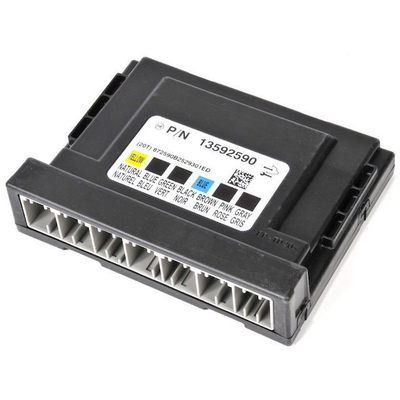
Below are the parts most often responsible for code U0145, ranked by how frequently each one is the actual culprit (per the diagnosis above). Tap any to see what we have for your vehicle.



The information in this article is provided for general reference and educational purposes only. Vehicle specifications, procedures, and part compatibility can vary by production date, trim level, and region. Always consult your vehicle's factory service manual and verify part numbers before purchasing or performing repairs. Safety-critical components such as airbags, seat belts, and braking systems should be installed by a qualified professional.
- 🧭 Diagnostic Flowchart
- 🛍️ Shop This Part
- What Does U0145 Mean?
- Can I Drive With U0145?
- Common Causes
- Symptoms
- Common Fixes & Costs
- Used vs. New Parts: Buying Guide
- What Happens If You Wait — Timeline
- Cost of Not Fixing It
- Diagnosis Steps
- When This Code Triggers (Freeze-Frame Conditions)
- Related Codes
- Climate & Environmental Factors
- How to Talk to a Mechanic About This Code
- Where to Take It: Dealer vs Independent vs Chain
- When to Walk Away From the Repair
- What Scan Tool You Need for This Code
- How to Clear the Code After You Fix It
- Will This Fail Emissions / State Inspection?
- Most Commonly Affected Vehicles
- Manufacturer-Specific Notes
- Real Owner Stories
- 2009 GMC Sierra 1500 with parasitic battery drain
- 2014 Dodge Ram with intermittent no-start and electrical gremlins
- 2019 Ford F-150 with U0145 after a windshield replacement
- How to Prevent This Code From Triggering
- Frequently Asked Questions
- What is the Body Control Module (BCM)?
- What is Body Control Module 'C'?
- Can I replace the BCM myself?
- Can a bad ground cause U0145?
- How do you perform a BCM reset?
- What are common misdiagnosis mistakes for U0145?
- Will the U0145 code clear itself?
- Is U0145 the same as P0145?
- Key Takeaways
- 🎟️ Get 5% Off