

OBD-II Code U0156: Lost Communication With Information Center 'A'
What U0156 means, why it triggers, and how to fix it
- Code U0156 indicates a total communication failure between the main dashboard display (or infotainment unit) and the vehicle's network.
- Check the battery and grounds first; voltage drops below 12.4V are the leading cause of U0156 communication glitches.
- Driving with an active U0156 code is illegal in most jurisdictions due to the loss of the speedometer and critical safety warnings.
- Never replace the instrument cluster without first scanning all modules; multiple 'U' codes point to a shared wiring fault, not a bad cluster.
- Definitive diagnosis requires a bi-directional scanner to read all modules and a multimeter to verify the CAN bus resistance sits at exactly 60 ohms.
What Does U0156 Mean?
Code U0156 means your car's main computer lost connection to 'Information Center A'. This center is usually your main instrument cluster—the dashboard area with your speedometer, fuel gauge, and warning lights. In newer vehicles (like Mazda), it refers to the central infotainment or Connectivity Master Unit (CMU). When this Controller Area Network (CAN bus) connection drops, the dashboard goes blank or acts erratically.
Technical definition: The formal OBD-II definition is "Lost Communication With Information Center 'A'". This indicates a communication failure on the Controller Area Network (CAN) bus between the Information Center module and other control units, such as the Powertrain Control Module (PCM). The module failed to send or respond to network messages for a manufacturer-specified period, typically 2-5 seconds.
Can I Drive With U0156?
Yes, But With Caution. Yes, the vehicle is drivable, but it is unsafe and illegal. You lose your primary method of monitoring speed and critical safety warnings. Driving without a functional speedometer results in traffic citations (fines starting at $100) and complicates insurance claims in an accident. In modern vehicles, a faulty information center also disables systems like cruise control or ABS.
Common Causes
- Low Battery Voltage or Poor Ground (Very Common) — Control modules need a stable 9-16 volts to communicate. A weak battery, failing alternator, or corroded ground strap drops voltage, causing immediate communication errors across the network.
- Faulty Wiring or Connectors (Very Common) — Wires in the CAN bus system corrode, loosen, or suffer damage from vibrations and heat. A loose connector behind the instrument cluster or at a splice point is a primary culprit.
- Blown Fuse (Common) — A blown fuse supplying power to the instrument cluster or a related communication module shuts it down instantly, severing it from the network.
- Failed Information Center Module (Common) — The instrument cluster or Connectivity Master Unit (CMU) fails internally due to cracked solder joints, a faulty micro-controller, or water intrusion.
- Corrupted or Outdated Software (Common) — A software glitch, incomplete update, or outdated firmware halts communication. This is a heavily documented issue on modern Mazdas.
- Failure of an Unrelated Module (Less Common) — A single faulty module (like the radio or HVAC) broadcasts corrupt data or shorts out the network, preventing other modules from communicating.
- Interference from Aftermarket Electronics (Less Common) — Poorly installed remote starters or alarms tap into the CAN bus improperly, creating electromagnetic interference that disrupts signals.
- Failing Gateway Module (Rare) — The Gateway Module routes data between different vehicle networks. If it fails, messages cannot reach the information center.
Symptoms
- Blank or Flickering Instrument Cluster — The entire dashboard goes completely dark, or the gauges and lights flicker on and off intermittently.
- Inoperative Gauges — The speedometer, tachometer, fuel gauge, and temperature gauge freeze at zero or show erratic readings.
- Warning Lights Malfunctioning — Critical warning lights fail to illuminate, or every light on the dashboard turns on at once.
- Check Engine Light Illuminated — The check engine light turns on to signal a stored diagnostic trouble code.
- Loss of Electronic Features — Power windows, the infotainment screen, backup camera, or cruise control stop working.
Diagnostic Flowchart
Tap your situation to follow the diagnostic path that matches what you're seeing on this code.
Common Fixes & Costs
- Replacing a Blown Fuse — Parts: $1-$5, Labor: $0-$50, ~0.2 hr book time (DIY)
- Cleaning or Repairing a Ground Connection — Parts: $1-$5, Labor: $50-$150, ~0.8 hr book time (DIY)
- Repairing Damaged Wiring or Connectors — Parts: $5-$50, Labor: $150-$400, ~1.5 hr book time (Intermediate)
- Updating Module Software — Parts: $0, Labor: $100-$250, ~1 hr book time (Professional)
- Replacing the Information Center Module — Parts: $800-$1600 (New OEM), $150-$400 (Used/Salvage), Labor: $200-$400, ~2 hr book time (Professional)
- Replacing a Different Faulty Module on the Network — Parts: $200-$800, Labor: $100-$300, ~1.5 hr book time (Professional)
Used vs. New Parts: Buying Guide
When a used part is worth it: A used instrument cluster makes sense for older, high-mileage vehicles (over 100k miles) where the cost of a new OEM part exceeds a significant portion of the vehicle's value.
Donor-vehicle mileage cap: roughly under 120000 miles for the part to have meaningful remaining life.
Donor quality checklist:
- Verify the part number matches exactly; visual similarity is not enough.
- Avoid parts from flood-damaged vehicles or cars that sat exposed to the elements.
- Ask about the donor vehicle's mileage; a lower-mileage donor is always preferable.
Decision logic:
- If The vehicle is less than 5 years old or has low mileage (<80k) → Buy new OEM or a professionally remanufactured unit to ensure longevity and warranty support.
- If The budget is extremely tight and the vehicle is over 150k miles → A used part is a reasonable gamble, but be prepared for potential programming costs.
- If The replacement requires VIN and odometer programming → Favor a remanufactured unit from a service that offers pre-programming before shipping to avoid a mandatory trip to the dealer.
Warranty tradeoff: Used/salvage parts typically offer a 30-90 day warranty. Aftermarket new parts offer a 1-year to limited lifetime warranty. A professionally remanufactured unit often comes with a 1-year or lifetime warranty.
Worst-case if a used part fails: 400-800. If a used part is faulty, you pay for installation labor twice, plus the cost of another part and a separate programming fee.
What Happens If You Wait — Timeline
- Immediate: Instrument cluster goes blank or flickers, Check Engine Light comes on. Speedometer, fuel gauge, and critical warning lights are inoperative. (MPG impact: 0%% · Added cost: $100-$300 in potential traffic citations for having no speedometer.)
- 0-3 months: Vehicle fails state safety or emissions inspections. Driving becomes increasingly risky as you cannot monitor speed or vehicle warnings. (MPG impact: 0%% · Added cost: $0, but vehicle registration is blocked.)
- 3-6 months: If the root cause is an intermittent short or bad ground, unstable voltage causes unrelated electronic glitches in the radio, climate control, or power windows. (MPG impact: 0%% · Added cost: $0-$150 if a parasitic drain kills the battery.)
- 6+ months: A persistent electrical fault sends damaging voltage through the network, permanently destroying other expensive control modules like the BCM or PCM. (MPG impact: 0%% · Added cost: $500-$1500 to replace a damaged BCM or PCM.)
Cost of Not Fixing It
- Immediate: Safety risk due to no speedometer, fuel gauge, or warning lights. Potential for traffic citations for a non-functional speedometer. (Added cost: 100+)
- 0-3 months: Inability to pass state safety or emissions inspections, preventing vehicle registration renewal. Complications with insurance claims if an accident occurs. (Added cost: 0)
- 3+ months: A minor, intermittent electrical fault causes voltage instability that damages other expensive control modules on the same network. (Added cost: 500-1500)
Diagnosis Steps
- Check Battery and Fuses
Ensure the battery reads 12.4-12.6 volts with the engine off. Modules require 9-16V to operate. Check all fuse boxes for blown fuses related to the 'Cluster', 'Info Display', or 'BCM'.
Tools: Multimeter, Fuse Puller (Beginner) - Scan All Modules
Use a bi-directional OBD-II scanner to read codes from all modules. Multiple 'U' codes (U0140, U0164) indicate a network-wide failure. A lone U0156 points to the cluster itself.
Tools: OBD-II Scanner (Bi-directional capable) (Beginner) - Visual Inspection
Inspect the wiring harness and connectors behind the instrument cluster. Look for chafing, corrosion, loose connections, or poorly installed aftermarket accessories.
Tools: Flashlight, Trim Removal Tools (Intermediate) - Check Power and Ground
Using a multimeter, verify 12.0V+ at the module's main power pin. Measure resistance between the ground pin and chassis ground; it must be under 0.2 ohms. Higher resistance requires cleaning the ground.
Tools: Multimeter, Vehicle-specific Wiring Diagram (Advanced) - Test CAN Bus Resistance
With the battery disconnected, measure resistance between CAN High and CAN Low at the DLC port. A healthy network reads exactly 60 ohms. 120 ohms indicates an open circuit; 0 ohms indicates a short.
Tools: Multimeter (Advanced) - Isolate the Faulty Module
If multiple U-codes exist, disconnect modules one by one from a central splice pack. Re-scan the network to see when communication returns, identifying the module crashing the bus.
Tools: Scan Tool, Wiring Diagram, Trim Removal Tools (Advanced) - [PRO TIP] Test CAN Bus Voltages
With the key on, backprobe the CAN wires. CAN High averages 2.5-3.5V; CAN Low averages 1.5-2.5V. Voltages stuck at 0V or 5V indicate a short to ground or power.
Tools: Multimeter (with backprobe pins) (Advanced) - [PRO TIP] Analyze CAN Bus Signal
Use an oscilloscope to view the CAN bus waveform. A healthy bus shows two clean, mirror-image square waves. Distorted waveforms confirm physical layer problems like shorts or interference.
Tools: Oscilloscope, Backprobe Pins (Professional)
When This Code Triggers (Freeze-Frame Conditions)
- Vehicle Speed: Varies (The fault is detected at any speed, including 0 mph, as it is a communication fault.)
- Engine State: Key On, Engine Running (The code sets when the engine is running and modules are expected to be actively communicating on the CAN bus.)
- Battery Voltage: 9-16V (The fault occurs if battery voltage drops below the stable threshold required for module communication.)
- Time Since Start: 2-5 seconds (Systems set this code if the Information Center module does not check in on the network within the first few seconds after startup.)
Related Codes
- U0155 — Lost Communication With Instrument Panel Cluster (IPC) Control Module. For most manufacturers, it is functionally identical to U0156 and points to the same physical part.
- U0140 — Lost Communication With Body Control Module (BCM). The BCM is a central hub for many electronic features.
- U0164 — Lost Communication With HVAC Control Module. The HVAC module shares the same data bus as the instrument cluster in many vehicles.
- U0184 — Lost Communication With Radio. The radio often lives on the same network as the instrument cluster.
Climate & Environmental Factors
- High Humidity & Road Salt: Salt and moisture create a corrosive electrolyte that attacks wiring and ground points, causing high resistance and communication failures.
- Extreme Heat: Sustained high temperatures cause microscopic cracks in circuit board solder joints, leading to intermittent connections.
- Vibration: Constant vibration chafes wires against brackets, wearing through insulation and causing shorts.
How to Talk to a Mechanic About This Code
Say this: "I have a U0156 code and my instrument cluster is intermittent/blank. I'd like to schedule a diagnostic. Please start by scanning all vehicle modules for other 'U' codes and check the power and ground connections to the cluster before recommending a full replacement."
This signals you understand that the problem could be a simple wiring issue or a network-wide fault, not just a bad cluster. It directs the technician to perform a thorough diagnosis.
Avoid saying:
- 'My dashboard is acting weird, can you fix it?'
- 'Just replace the instrument cluster.'
- 'My check engine light is on, just do whatever it takes.'
Questions to ask before authorizing the repair:
- Did you find any other communication codes (U-codes) in other modules?
- Did you test the power and ground circuits at the module's connector, and what were the voltage and resistance readings?
- Did you test the CAN bus network resistance, and was it 60 ohms?
- If you are recommending a module replacement, does it require programming and is that cost included in your estimate?
Where to Take It: Dealer vs Independent vs Chain
- Dealer:
Best for: Vehicles under warranty, Known manufacturer-specific issues covered by a TSB (e.g., Mazda CMU failures)., Repairs that require proprietary software updates or module programming.
Downsides: Highest labor rates, often 1.5-2x an independent shop., May prefer to replace a whole module rather than repair a wire. (Typical cost: +50% vs. baseline) - Independent Shop:
Best fit for most cases. A reputable independent shop with strong electrical diagnostic skills is the ideal choice. They are more likely to find and fix a wiring fault, saving you from buying an expensive module.
Best for: Out-of-warranty vehicles where cost is a major factor., Diagnosing and repairing wiring, connector, or ground issues., Most common U0156 scenarios on common vehicle makes.
Downsides: Shop quality and diagnostic skill vary widely; look for ASE certifications in electronics., May not have the latest tools for programming brand-new models. (Typical cost: +0% vs. baseline) - Chain Shop:
AVOID. U0156 is a complex electrical/network code that is outside the scope of most chain repair shops. Misdiagnosis is highly likely.
Best for: Simple maintenance like oil changes or tire rotations.
Downsides: Technicians often lack the specialized training and advanced tools for complex network diagnostics., Business model incentivizes quick part replacement over detailed diagnostic work. (Typical cost: -10% vs. baseline)
When to Walk Away From the Repair
If the estimated repair cost exceeds 50% of the car's current private-party market value, you should seriously consider selling the car as-is or trading it in.
- Car worth $5000, fix is $1800: Borderline. The repair cost is 36% of the vehicle's value. Get a second opinion before proceeding, but fixing it is still a reasonable choice.
- Car worth $15000, fix is $2000: Fix it. The repair cost is well below the threshold and is a sound investment to maintain the vehicle's function and value.
- Car worth $3000, fix is $1800: Walk away. The repair cost is 60% of the car's value. It is not financially sensible to invest this much into an aging vehicle.
What Scan Tool You Need for This Code
Minimum: A scanner that can read codes from ALL vehicle systems (ABS, BCM, SRS, etc.), not just the engine (PCM).
A cheap, engine-only code reader is useless for this code. It cannot see if other modules are reporting communication errors, which is the critical first step to determine if the fault is network-wide or isolated.
Budget: BlueDriver Pro Scan Tool (~$100) — Connects to your smartphone and reads codes from all vehicle modules, providing the essential data needed to see the full scope of the communication failure.
Mid-range: Autel MaxiCOM MK808 / Foxwell NT1009 (~$300-400) — These tablet-style scanners offer full-system diagnostics plus bi-directional controls. This allows you to actively test modules and components.
Professional: Autel MS906 MAX / LAUNCH X431 Series (~$900-1300) — Provides professional, OE-level diagnostics, including bi-directional control, ECU coding, and network topology mapping. Essential for advanced diagnostics and module programming.
Rent vs buy: For a one-time diagnosis, many auto parts stores have a loaner tool program. Verify their loaner scanner can perform an 'all-system scan'. If you plan to do your own repairs regularly, buying a mid-range scanner is a worthwhile investment.
How to Clear the Code After You Fix It
- Reconnect the battery if it was disconnected for the repair.
- Use an OBD-II scan tool to clear any stored Diagnostic Trouble Codes (DTCs).
- Perform a complete drive cycle to allow the vehicle's readiness monitors to run and complete.
Drive cycle (~20 minutes): A general drive cycle includes: 1) A cold start after sitting for 8+ hours. 2) Idle for 2-3 minutes. 3) Drive a mix of city (25-45 mph) and highway (55-60 mph) speeds for 15-20 minutes. 4) Allow the vehicle to cool down.
Readiness monitors affected: This is a communication code, so it doesn't directly affect emissions monitors like Catalyst or O2 sensors., However, clearing the code with a scanner or disconnecting the battery resets ALL readiness monitors to 'Not Ready'.
Before emissions retest: drive at least 100 miles to fully set monitors.
Watch out for:
- Clearing the code without a proper drive cycle results in a 'Not Ready' status at an emissions test.
- The code returns immediately if the root cause has not been fixed.
- Driving only on the highway at a constant speed will not complete all necessary monitors.
Will This Fail Emissions / State Inspection?
Yes — this code typically fails an OBD-II emissions inspection.
- California: An illuminated Check Engine Light is an automatic failure. After repair, you must complete a drive cycle to set the readiness monitors before re-testing.
- New York: A vehicle fails the OBD-II inspection if the Check Engine Light is on. Clearing the code resets all monitors, requiring a drive cycle before re-inspection.
- Texas: In counties requiring emissions testing, an illuminated Check Engine Light is an automatic failure.
Most Commonly Affected Vehicles
- Mazda 3, CX-3, CX-5, CX-30 (2019-2022) — Extremely common issue with the Connectivity Master Unit (CMU). Covered by TSBs like SA-029/20g. Symptoms include a black/rebooting screen. Try a hard reset before replacing.
- Ford Focus, Fusion, F-150, Explorer (2010-2018) — Prone to CAN bus wiring issues and internal failures of the instrument cluster module. On 2011-2014 F-150s, a faulty lead frame on the cluster's circuit board is a known cause.
- GMC / Chevrolet Sierra, Silverado, Trailblazer, Tahoe (2003-2014) — Often related to failures in the low-speed GMLAN data bus. GM TSB 08-07-30-021H details widespread issues of communication loss from corroded wiring at the transmission harness connector.
- Dodge / Chrysler / Ram Magnum, Durango, Ram 1500 (2006-2015) — Commonly caused by an internal failure of the HVAC control module or the Electronic Overhead Module (EOM), which disrupts the CAN bus network.
- Subaru Outback, Ascent, Forester (2018-2021) — Issues stem from loose harness connectors. A known issue involves a connector in the driver's side door mirror assembly affecting the entire CAN network.
- Volkswagen / Skoda Passat, Touran, Octavia, Fabia (2015-2021) — Linked to faults in the Gateway module or the infotainment unit. Corroded ground points under the driver's seat are also a common cause.
- Hyundai Accent, Elantra, Sonata (2015-2018) — Caused by intermittent open/shorts in the CAN bus wiring or internal failure of the instrument cluster module itself. Check for corroded pins at the main cluster connector.
- Nissan Altima, Sentra, Rogue (2013-2019) — General data bus communication failures. On models with navigation, the AV (Audio Visual) control unit is a common point of failure that disrupts the network.
Manufacturer-Specific Notes
- Mazda: On 2019+ models, this code is frequently caused by a software glitch or internal hardware failure of the Connectivity Master Unit (CMU). Always check for TSBs and attempt a system hard reset before replacing hardware.
- General Motors (GM): On 2007-2014 trucks and SUVs, a single faulty module or wiring issue disrupts the entire GMLAN network. TSB 08-07-30-021H points to corroded wiring in the transmission harness connector causing multiple 'U' codes.
- Ford: U0156 points directly to a problem with the instrument cluster itself or its wiring. A faulty gateway module can also be the cause. Cluster replacements require complex programming.
- Chrysler/Dodge/Jeep: Communication issues are often traced back to the HVAC module or the Electronic Overhead Module (EOM). When one of these fails, it stops other modules from communicating, triggering U0156.
Real Owner Stories
2019 Mazda 3 with ~30K miles
Owner saw an 'IN-VEHICLE NETWORK MALFUNCTION' message. The center infotainment screen was black and constantly rebooting, storing code U0156.
Outcome: A Mazda dealer confirmed the Connectivity Master Unit (CMU) had an internal hardware failure covered by TSB 16-004/22. The CMU was replaced under warranty, resolving all symptoms.
Lesson: On newer Mazdas, U0156 is almost always a CMU fault. Check for relevant TSBs and warranty extensions before paying for diagnostics.
2008 GMC Sierra 1500 with 150K+ miles
The instrument cluster intermittently went dead alongside the radio. Multiple communication codes were present, including U0156, U0184, and U0164.
Outcome: Following GM TSB 08-07-30-021H, a technician found severe corrosion inside the X205 connector on the transmission harness. Cleaning the pins and applying dielectric grease restored communication.
Lesson: When multiple 'U' codes appear together, the fault lies in shared wiring or a ground. Never replace an expensive module until the network itself is proven intact.
Harley-Davidson Trike with aftermarket gauges
After stopping for gas, the aftermarket Dakota Digital gauges went completely dark and stored a U0156 code.
Outcome: The owner found the main 'Maxi Fuse' was not fully seated due to vibration. Securing the fuse resolved the intermittent power loss.
Lesson: If a problem appears after installing an aftermarket part, start your diagnosis there. Intermittent issues are often caused by loose fuses or poor battery connections.
How to Prevent This Code From Triggering
- Maintain Stable Battery Voltage (Monthly / During Storage) — Modules require stable voltage (9-16V) to communicate. Using a battery tender prevents discharge, which is a primary cause of communication glitches.
- Protect Electrical Connectors (During any related repair) — Apply dielectric grease to the housing seal (not the pins) when reconnecting. This prevents moisture from entering and corroding delicate CAN bus pins.
- Periodically Inspect and Clean Grounds (Every 30,000 miles or 2 years) — Main ground straps are critical for electrical stability. Cleaning contact surfaces prevents high resistance and intermittent module failures.
- Secure Wiring Harnesses (During any under-hood or under-dash work) — Ensure harnesses are secured away from sharp metal edges to prevent chafing, which causes short circuits on the CAN bus.
Frequently Asked Questions
What should I check first when I get a U0156 code?
Always start with the simplest things. First, check the vehicle's battery to ensure it's healthy and fully charged (above 12.4V). Second, check all fuses related to the instrument panel, radio, and body control module.
What are the most common misdiagnoses for U0156?
The most common mistake is immediately replacing the expensive instrument cluster. Technicians often find the true cause was a simple corroded ground wire, a weak battery, or another module causing interference. Always rule out the simple and cheap possibilities first.
Can aftermarket accessories cause a U0156 code?
Yes. A poorly installed remote starter, alarm, or stereo system improperly connected to the data bus creates electrical noise. This disrupts communication between modules and triggers a U0156 code.
How much does it cost to fix U0156?
A simple fix like replacing a fuse or cleaning a ground connection costs under $150. A dealer software update typically costs $100-$250. Replacing the information center module costs $1000-$2000 for a new OEM part, or $300-$800 for a used unit with labor.
Will the U0156 code go away on its own?
If the issue was temporary, the code becomes a history code and the cluster resumes function after several successful drive cycles. However, if the code persists as an active fault, it indicates a hard fault requiring diagnosis and repair.
Can a weak battery cause a U0156 code?
Yes, absolutely. Control modules require a stable 9-16V to communicate properly. A weak, dying, or improperly charged battery is a primary cause of intermittent communication failures.
Can I reset the U0156 code, and how?
You can clear the code with an OBD-II scanner, but it returns immediately if the fault is still present. Disconnecting the battery for 15-30 minutes performs a 'hard reset' and sometimes restores communication for temporary glitches. This is not a guaranteed fix.
What is the difference between Information Center 'A' and 'B'?
Information Center 'A' (U0156) is almost always the main instrument cluster in front of the driver. Information Center 'B' (U0157) refers to a secondary display, such as a head-up display (HUD) or center console screen.
Key Takeaways
- Code U0156 indicates a total communication failure between the main dashboard display (or infotainment unit) and the vehicle's network.
- Check the battery and grounds first; voltage drops below 12.4V are the leading cause of U0156 communication glitches.
- Driving with an active U0156 code is illegal in most jurisdictions due to the loss of the speedometer and critical safety warnings.
- Never replace the instrument cluster without first scanning all modules; multiple 'U' codes point to a shared wiring fault, not a bad cluster.
- Definitive diagnosis requires a bi-directional scanner to read all modules and a multimeter to verify the CAN bus resistance sits at exactly 60 ohms.
Shop the Parts Behind U0156
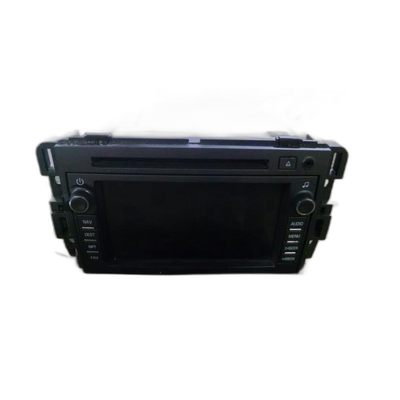
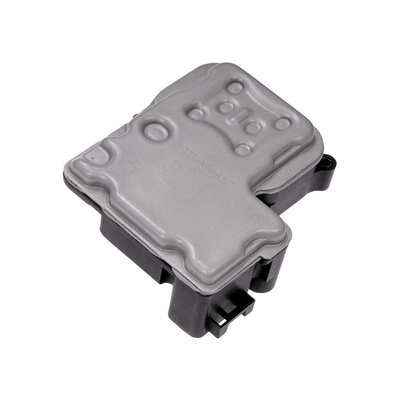
Below are the parts most often responsible for code U0156, ranked by how frequently each one is the actual culprit (per the diagnosis above). Tap any to see what we have for your vehicle.



The information in this article is provided for general reference and educational purposes only. Vehicle specifications, procedures, and part compatibility can vary by production date, trim level, and region. Always consult your vehicle's factory service manual and verify part numbers before purchasing or performing repairs. Safety-critical components such as airbags, seat belts, and braking systems should be installed by a qualified professional.
- 🧭 Diagnostic Flowchart
- 🛍️ Shop This Part
- What Does U0156 Mean?
- Can I Drive With U0156?
- Common Causes
- Symptoms
- Common Fixes & Costs
- Used vs. New Parts: Buying Guide
- What Happens If You Wait — Timeline
- Cost of Not Fixing It
- Diagnosis Steps
- When This Code Triggers (Freeze-Frame Conditions)
- Related Codes
- Climate & Environmental Factors
- How to Talk to a Mechanic About This Code
- Where to Take It: Dealer vs Independent vs Chain
- When to Walk Away From the Repair
- What Scan Tool You Need for This Code
- How to Clear the Code After You Fix It
- Will This Fail Emissions / State Inspection?
- Most Commonly Affected Vehicles
- Manufacturer-Specific Notes
- Real Owner Stories
- 2019 Mazda 3 with ~30K miles
- 2008 GMC Sierra 1500 with 150K+ miles
- Harley-Davidson Trike with aftermarket gauges
- How to Prevent This Code From Triggering
- Frequently Asked Questions
- What should I check first when I get a U0156 code?
- What are the most common misdiagnoses for U0156?
- Can aftermarket accessories cause a U0156 code?
- How much does it cost to fix U0156?
- Will the U0156 code go away on its own?
- Can a weak battery cause a U0156 code?
- Can I reset the U0156 code, and how?
- What is the difference between Information Center 'A' and 'B'?
- Key Takeaways
- 🎟️ Get 5% Off