

OBD-II Code U0158: Lost Communication With Head-Up Display (HUD)
What U0158 means, why it triggers, and how to fix it
- Code U0158 indicates a broken data connection to the Head-Up Display (HUD), causing the windshield projection to go blank.
- You can safely drive with a U0158 code, as the HUD is a convenience feature that does not impact engine or braking systems.
- Check for dealer software updates first; GM TSB #22-NA-113 fixes this exact issue on 2020-2023 Cadillacs without replacing any parts.
- Test your battery voltage, as drops below 11V during engine cranking frequently trigger false communication codes across multiple modules.
- Verify the code definition on Chrysler, Dodge, and Jeep vehicles, where U0158 sometimes indicates a critical failure in the stability control's inertial sensor.
What Does U0158 Mean?
The trouble code U0158 means your car's main computer lost its data connection to the Head-Up Display (HUD) control module. The HUD projects information like vehicle speed onto the windshield. When this communication link breaks, the HUD goes blank and stops working.
Technical definition: The official SAE/OBD-II definition is "Lost Communication With Head Up Display Control Module". This indicates the HUD module is failing to send or receive signals on the vehicle's communication network, typically the LIN (Local Interconnect Network) or CAN bus.
Can I Drive With U0158?
Yes. The vehicle is perfectly safe to drive. The Head-Up Display is a convenience feature. Its failure does not impact the engine, transmission, or safety systems.
Common Causes
- Instrument Panel Cluster (IPC) Software Glitch (Very Common) — A known software bug on modern GM vehicles causes the HUD to stick in standby mode and fail to 'wake up' on startup. A specific Technical Service Bulletin (TSB) addresses this via a software update.
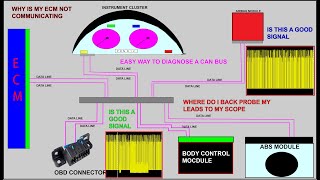
- Low or Unstable Battery Voltage (Common) — A weak battery drops voltage below 11V during engine cranking. This prevents electronic modules from initializing correctly, triggering a flood of false communication codes like U0158. 🎬 Watch: A simple way to diagnose and fix CAN bus issues.
- Blown Fuse or Power Supply Issue (Common) — The HUD module relies on a dedicated fuse. A blown fuse or failed relay cuts power to the module instantly, preventing all communication.
- Aftermarket Device Interference (Common) — Improperly installed remote starters, alarm systems, or telematics trackers tapped into the vehicle's CAN bus disrupt network communication and cause modules to drop offline.
- Wiring or Connector Problems (Less Common) — Damaged wires or loose, corroded connectors create intermittent or total connection loss between the HUD and the vehicle's network.
- Faulty Head-Up Display (HUD) Module (Less Common) — Moisture intrusion, heat damage, or internal circuit board failures destroy the HUD projector unit itself.
- Incorrect Module Programming (Rare) — A recently replaced HUD, IPC, or BCM requires specific VIN programming. Without it, the modules refuse to communicate.
- CAN Bus Network Failure (Rare) — A missing termination resistor or a fault in a gateway module crashes the entire communication network. This always triggers multiple 'U' codes simultaneously.
Symptoms
- Head-Up Display is blank — The HUD fails to turn on, leaving the windshield projection area completely dark.
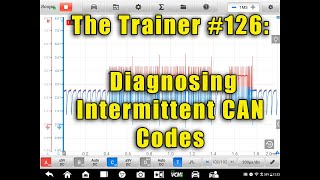
- HUD works intermittently — The display functions normally on some trips but fails on others, often resetting after turning the car off and back on. 🎬 See this guide on diagnosing intermittent communication codes.
- HUD flickers or shows garbled text — The display flashes or shows distorted graphics before failing completely.
- HUD settings menu is grayed out — HUD brightness and position settings in the infotainment menu become inaccessible or grayed out.
- No Check Engine Light — This code rarely triggers the Check Engine Light, instead displaying a warning message on the driver information center.
Common Fixes & Costs
- Reprogram Instrument Panel Cluster (IPC) — Parts: $0, Labor: $150-$250, ~1.0 hr book time (Professional)
- Replace Blown Fuse — Parts: $1-$5, Labor: $0, ~0.1 hr book time (DIY)
- Clean and Secure Connectors — Parts: $5-$10, Labor: $50-$150, ~0.8 hr book time (DIY)
- Repair Wiring/Connector — Parts: $10-$50, Labor: $150-$400, ~2.5 hr book time (Intermediate)
- Replace Head-Up Display (HUD) Module
— Parts: $500-$1200, Labor: $200-$400, ~2.0 hr book time
(Professional)
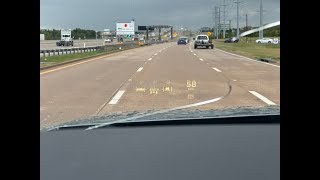
Cadillac CT4 (2020-2023): OEM GM/ACDelco: 84899768 (Alt: Used OEM units are the primary alternative.) 🎬 Watch: Silverado and Sierra HUD removal and installation walkthrough.
Cadillac CT5 (2020-2023): OEM GM/ACDelco: 85163349 (Alt: Used OEM units are the primary alternative.)
Chevrolet Silverado / GMC Sierra (2019-2024): OEM GM/ACDelco: 85077116 (Alt: Used OEM units are the primary alternative.)
BMW G05 X5 (2019-2023): OEM BMW: 62308798837 (Alt: Used OEM units are the primary alternative.)
Used vs. New Parts: Buying Guide
When a used part is worth it: A used OEM HUD module makes sense for older vehicles where a new OEM part exceeds 10% of the car's value.
Donor-vehicle mileage cap: roughly under 80000 miles for the part to have meaningful remaining life.
Donor quality checklist:
- Verify the part number matches exactly, as variations exist based on trim and year.
- Demand photos of the unit powered on or a 'guaranteed to work' return policy.
- Source parts from rear-end collisions to avoid front-end impact damage.
- Reject units with signs of water damage or connector corrosion.
Decision logic:
- If The vehicle is under warranty or a known TSB exists → Do not buy any part. Pursue the software fix at a dealership.
- If The vehicle is less than 5 years old and a new OEM part is under $700 → Buy new OEM. The risk of a used part failing and requiring repeat dashboard labor is too high.
- If The vehicle is over 10 years old and budget is a primary concern → Buy a used OEM part, provided you verify the part number and seller reputation.
Warranty tradeoff: Used parts offer a 30-90 day warranty. New OEM parts carry a 1-2 year warranty.
Worst-case if a used part fails: $200-$400. This is the cost of repeat labor if the used part is dead on arrival.
What Happens If You Wait — Timeline
- 0-4 weeks: The HUD works intermittently. It fails to turn on during one trip but works fine on the next after a key cycle. (MPG impact: 0%% · Added cost: $0)
- 1-3 months: The failure becomes permanent. The HUD is blank on every startup, and U0158 is stored as an active fault. (MPG impact: 0%% · Added cost: $0)
- 3-12 months: No direct damage occurs to the HUD. However, if the root cause is a failing battery or wiring short, these issues eventually crash other critical electronic modules. (MPG impact: 0%% · Added cost: $0 - $500 (Cost if a failing battery or short damages the BCM or IPC).)
- Immediately (Special Case): If the code appears on a Chrysler/Jeep/Dodge and refers to the 'Inertial Sensor Module', Electronic Stability Control is disabled. This is an immediate safety risk. (MPG impact: 0%% · Added cost: High risk of accident due to loss of vehicle stability control.)
Cost of Not Fixing It
- Short-Term (0-6 months): Loss of the Head-Up Display feature. This does not impact vehicle safety or drivability. (Added cost: $0)
- Medium-Term (6-12 months): If the root cause is an intermittent wiring short or failing battery, those issues eventually affect other systems. (Added cost: $0)
- Long-Term (12+ months): If U0158 refers to the inertial sensor (Jeep/Chrysler), Electronic Stability Control remains disabled, posing a severe safety risk. (Added cost: Eventual repair costs ranging from $150 (reprogramming) to $1200+ (HUD replacement).)
Diagnosis Steps
- Check for Technical Service Bulletins (TSBs)
Search online for your vehicle's make, model, year, and 'U0158 TSB'. For GM vehicles, TSB #22-NA-113 dictates a software update that fixes this code without replacing parts.
Tools: Internet access (Beginner) - Inspect the HUD Fuse
Locate the HUD fuse in the interior fuse panel. Pull it out and verify the metal strip inside is intact. Replace a blown fuse with one of the exact same amperage.
Tools: Fuse puller or needle-nose pliers (Beginner) - Perform a System Reset
Turn the vehicle off, open and close the driver's door, and let it sit for 15 minutes to power down all modules. Restart the engine to see if communication is restored.
Tools: None (Beginner) - Scan for All Trouble Codes
Use a scanner capable of reading all modules. If U0158 is accompanied by many other 'U' codes, diagnose a system-wide power or ground issue. If isolated, focus solely on the HUD circuit.
Tools: Advanced OBD-II Scanner (Intermediate) - Visually Inspect Wiring
Inspect the wiring harness connecting to the HUD unit in the dashboard. Look for pinched wires and ensure the connector is securely seated.
Tools: Flashlight, trim removal tools (Intermediate) - Test for Power and Ground
Check for battery voltage (12.0V+) at the HUD module's electrical connector with the key on. Measure resistance between the ground pin and chassis; it must be less than 0.5 ohms.
Tools: Multimeter, vehicle-specific wiring diagram (Advanced) - Test LIN Bus Voltage
Backprobe the LIN bus wire at the HUD connector. With the key on, voltage should toggle between ~1V and ~11V. A steady 0V or 12V indicates a short or a master module fault.
Tools: Multimeter, wiring diagram (Advanced) - Test CAN Bus Resistance
With the battery disconnected, measure resistance between CAN High and CAN Low pins at the HUD connector. A healthy network reads ~60 Ω. A reading of ~120 Ω means a termination resistor is missing.
Tools: Multimeter, vehicle-specific wiring diagram (Advanced) - Test CAN Bus Voltage
Reconnect the battery and turn the key ON. Measure CAN High (~2.5V to 3.5V) and CAN Low (~2.5V to 1.5V) relative to ground. Voltages stuck high or low indicate a short.
Tools: Multimeter, vehicle-specific wiring diagram (Advanced) - Isolate the Faulty Module
If bus voltage is stuck low, disconnect slave modules one by one. When voltage returns to normal, the last module disconnected contains the internal short.
Tools: Oscilloscope or Multimeter, wiring diagram (Professional)
When This Code Triggers (Freeze-Frame Conditions)
- Vehicle Speed: 0 MPH (During initial startup. The fault logs when the master module fails to detect the HUD during its network check.)
- Battery Voltage: 10.5-11.8V (During engine cranking. A momentary voltage drop prevents the HUD module from initializing.)
- Time Since Engine Start: 0-5 seconds (Immediately after startup. The code sets when the HUD fails to respond to initial communication requests.)
- Module Status: No Communication (A network scan shows the HUD module as not present or not responding.)
Related Codes
- U0155 — Lost Communication With Instrument Panel Cluster (IPC). The IPC acts as the master controller for the HUD. If U0155 is present, diagnose the IPC first.
- U0140 — Lost Communication With Body Control Module (BCM). If U0140 appears with U0158, it indicates a widespread network failure originating from the BCM.
- B101D — Electronic Control Unit Hardware. If stored in the HUD module, this confirms an internal hardware failure requiring replacement.
- U0001 — High Speed CAN Communication Bus. Indicates a broader network problem affecting multiple modules, not just the HUD.
Climate & Environmental Factors
- High Humidity: Moisture intrusion corrodes connector pins, increasing resistance and causing the intermittent communication failures that trigger U0158.
- Thermal Cycling (Hot/Cold): Repeated temperature swings cause dashboard materials to expand and contract, loosening electrical connectors over time.
How to Talk to a Mechanic About This Code
Say this: "I have a U0158 code and a blank HUD. Please check for software updates (like GM TSB #22-NA-113) and test the battery before quoting a replacement HUD unit."
This directs the service advisor away from expensive hardware replacements and toward the proper diagnostic path (software, power supply), saving you money.
Avoid saying:
- 'My HUD is broken, how much for a new one?'
- 'My dashboard has a warning, can you just fix it?'
- 'Just do whatever it takes to get the display working again.'
Questions to ask before authorizing the repair:
- Did you check for open TSBs or software updates for the Instrument Panel Cluster?
- Did you confirm the HUD module has 12V power, a solid ground, and an active LIN bus signal?
- What specific test confirmed the old HUD unit failed?
- Is the software update covered under warranty?
Where to Take It: Dealer vs Independent vs Chain
- Dealer:
Best fit for GM vehicles due to the high likelihood of a dealer-only software fix.
Best for: GM vehicles where a software update (TSB #22-NA-113) is the fix., Vehicles under bumper-to-bumper warranty., European cars requiring battery registration.
Downsides: Highest labor rates., May default to replacing modules rather than diagnosing wiring faults. (Typical cost: +50% vs. baseline) - Independent Shop:
Strong choice for non-GM vehicles or if the problem appeared after an aftermarket installation.
Best for: Out-of-warranty vehicles with wiring, fuse, or battery issues., Getting a second opinion after a dealership diagnosis.
Downsides: May lack proprietary tools for manufacturer software updates. (Typical cost: +0% vs. baseline) - Chain Shop:
AVOID for diagnosing U0158. Only use them to replace a confirmed dead battery.
Best for: Installing a new battery if the old one fails a test.
Downsides: Not equipped for complex network communication diagnostics. (Typical cost: -10% vs. baseline)
When to Walk Away From the Repair
The HUD is a non-essential convenience feature. Base your repair decision purely on personal budget and desire for the feature. There is no safety reason to fix it.
- Car worth $25000, fix is $150: Fix it. A $150 software update is a small price to restore a major feature.
- Car worth $8000, fix is $1200: Walk away. Paying 15% of the car's value for a non-essential display is poor value.
- Car worth $4000, fix is $1200: Walk away. Save this money for critical future repairs.
What Scan Tool You Need for This Code
Minimum: A scanner that reads 'manufacturer-specific codes' from all modules, including the Instrument Panel Cluster (IPC) and Body Control Module (BCM).
Basic $20 code readers only check engine codes (P-codes). U0158 is a network code stored in other modules, so a basic reader will report 'No Codes Found'.
Budget: BlueDriver Pro (~$100) — Performs a full system scan to read U-codes from the IPC and BCM.
Mid-range: Innova 5610 (~$350) — Offers full system diagnostics and special functions like battery registration for European cars.
Professional: Autel MaxiCOM MK808 series (~$500) — Provides bidirectional control to command modules and verify communication.
Rent vs buy: Free loaner scanners from parts stores are usually basic readers that cannot see U-codes. Buy a budget pick like the BlueDriver to diagnose U0158.
How to Clear the Code After You Fix It
- Fix the root cause (e.g., replace fuse, repair wiring, reprogram IPC).
- Use an OBD-II scan tool to clear the U0158 code from the fault memory.
- Turn the vehicle off, open and close the driver's door, and let it sit for 15 minutes to ensure all modules fully power down.
- Start the vehicle and verify the HUD functions correctly.
Drive cycle (~15 minutes): A specific drive cycle is not required for 'U' codes. After clearing the code, turn the car off and on several times to ensure the HUD initializes correctly on each startup.
Readiness monitors affected: None directly. 'U' codes do not affect emissions readiness monitors., However, clearing codes with a scanner resets all emissions readiness monitors to 'incomplete'.
Before emissions retest: drive at least 50 miles to fully set monitors.
Watch out for:
- Clearing the code with a scanner will not fix the problem; it returns immediately if the underlying fault is not corrected.
- Disconnecting the battery erases all emissions readiness monitors, causing an automatic emissions test failure until a full drive cycle is completed.
Will This Fail Emissions / State Inspection?
No — by itself this code doesn't fail OBD inspection (but it can keep readiness monitors from setting, which causes a separate fail).
- California: U0158 will not cause a smog check failure. It does not illuminate the Check Engine Light.
- New York: U0158 will not cause a failure. NYS inspections fail for an illuminated Check Engine Light and emissions codes.
- Texas: U0158 will not cause an emissions failure.
Most Commonly Affected Vehicles
- Cadillac CT4, CT5 (2020-2023) — Extremely common due to an IPC software glitch. GM TSB #22-NA-113 provides a software update to fix LIN bus timing.
- Chevrolet / GMC Corvette, Silverado, Sierra (2018-2024) — Highly susceptible to software issues. Part numbers for the HUD have been superseded multiple times due to revisions.
- BMW 5 Series, 7 Series, X3, X5 (2017-2023) — Frequently triggered after a battery replacement if the new battery is not electronically registered to the vehicle.
- Hyundai / Kia Genesis G70, Genesis G80, Kia Stinger (2018-2023) — Triggered by wiring faults or internal HUD module failures. Intermittent connection issues are common.
- Ford F-150 (2015-2020) — Often appears alongside a cluster of other communication codes, indicating a CAN bus grounding issue.
- Ford Explorer, Edge (2016-2022) — Triggered by wiring faults. A self-test of the HUD module can be performed with an advanced scan tool.
- Subaru Ascent, Outback (2019-2024) — Typically points to physical wiring or connector issues near the dashboard harness.
- Jeep Grand Cherokee (2014-2018) — U0158 sometimes refers to the 'Inertial Sensor' module, part of the Electronic Stability Control system, making diagnosis critical for safety.
Manufacturer-Specific Notes
- General Motors (Cadillac, Chevrolet, GMC): The most common cause is a software glitch. TSB #22-NA-113 instructs dealers to reprogram the IPC. Do not replace the HUD unit until this software fix is applied.
- Chrysler / Dodge / Jeep: U0158 sometimes means 'Lost Communication with Incline/Inertial Sensor Module'. This is a serious safety issue related to stability control, not a convenience display.
- Ford: Code U0158-00 sometimes has an alternate definition like 'Pressure Regulator Valve 1 Plausibility'. Use a high-level scan tool to read the exact definition.
- BMW: Communication codes trigger immediately if a new battery is not 'registered' with the power management system.
Real Owner Stories
2021 Cadillac CT5 with intermittent HUD failure
The owner reported the HUD was blank on startup 50% of the time. The dealer initially quoted over $1,500 to replace the HUD unit.
What they tried:
- Pulled the HUD fuse, which temporarily restored function for a few days.
- Presented GM Technical Service Bulletin (TSB) #22-NA-113 to the service advisor.
Outcome: The dealer performed the TSB fix, reprogramming the Instrument Panel Cluster (IPC) instead of replacing the HUD. The repair took one hour, was covered under warranty, and permanently resolved the U0158 code.
Lesson: On modern GM vehicles, U0158 is almost always an IPC software issue. Demand the dealer check for TSBs before authorizing expensive hardware replacements.
2019 BMW X5 with multiple electrical faults after battery change
After replacing a 5-year-old battery, the HUD stopped working (U0158), the power tailgate failed, and several communication codes appeared.
What they tried:
- Tested the new battery to confirm it was healthy.
- Cleared the codes with a basic scan tool, but they returned immediately.
Outcome: The new battery was never 'registered' to the vehicle's power management system. A BMW specialist used an advanced scan tool to register the battery. All modules, including the HUD, immediately resumed normal operation.
Lesson: Modern European vehicles require electronic battery registration. Skipping this step causes voltage instability and a cascade of communication faults.
2018 Chevy Silverado with U0158 after aftermarket remote starter installation
Weeks after installing an aftermarket remote starter, the truck's HUD failed and set code U0158.
What they tried:
- Returned to the installer, who denied responsibility.
- Visited a Chevrolet dealer, who voided warranty coverage for the diagnostic work due to the aftermarket parts.
Outcome: An automotive electronics specialist found the remote start module was improperly 'T-tapped' into the LIN bus wiring, creating electrical noise. Removing the remote starter and soldering the damaged wires restored the HUD.
Lesson: Improperly installed aftermarket devices are a primary cause of network codes. If faults appear after an installation, the aftermarket device is the culprit.
2016 Ford F-150 with U0158 and other communication codes
The HUD went blank and the dash displayed a 'Service AdvanceTrac' warning. A scan revealed U0158, U0140 (Lost Comm with BCM), and U0155 (Lost Comm with IPC).
What they tried:
- Checked all fuses and battery voltage.
- Visually inspected under-dash wiring for damage.
Outcome: The issue stemmed from a corroded main ground connection behind the driver's side kick panel. Cleaning the connection and tightening the ground bolt resolved all communication codes simultaneously.
Lesson: Multiple 'U' codes appearing at once point to a shared power or ground failure, not multiple broken modules.
How to Prevent This Code From Triggering
- Maintain Battery Health (Every 6 months) — A fully charged battery prevents low voltage drops during startup, eliminating the primary cause of random communication codes.
- Keep Battery Terminals and Grounds Clean (Annually) — Corrosion creates resistance, leading to unstable voltage. Clean terminals and apply dielectric grease to ensure solid module grounding.
- Install Dealer Software Updates (During routine dealer service) — Manufacturers frequently release software updates to fix module timing bugs. A simple update prevents codes like U0158 from ever appearing.
- Use Professional Installers for Electronics (Always) — Improper wire taps destroy data bus integrity. Professionals use correct T-harnesses and soldering to prevent network interference.
Frequently Asked Questions
What is a Head-Up Display (HUD)?
A Head-Up Display projects information, like your speed or navigation, directly onto the lower windshield. This allows you to view data without taking your eyes off the road.
Is it safe to drive with code U0158?
Yes. The HUD is a non-essential convenience feature, and its failure does not affect engine, braking, or safety systems.
I replaced my HUD unit, but the U0158 code came back. Why?
The root cause is often a software glitch in the Instrument Panel Cluster (IPC), not the HUD hardware. On GM vehicles, the correct fix is a dealer software update outlined in TSB #22-NA-113. Replacing the hardware will not solve a software bug.
Can a low battery cause code U0158?
Yes. Voltage drops below 11V during startup cause communication errors between electronic modules. Always test an old or weak battery before starting complex diagnostics.
Will pulling the HUD fuse fix the problem permanently?
No. Pulling the fuse forces a temporary reset, restoring function briefly. If the issue is a software glitch, the problem returns until the controlling module is reprogrammed.
Can my aftermarket remote starter cause a U0158 code?
Yes. Devices improperly wired into the CAN bus create electrical noise that disrupts normal module communication.
My car doesn't have a HUD, but I got code U0158. What does it mean?
On certain Chrysler, Jeep, and Dodge models, U0158 means 'Lost Communication With Incline/Inertial Sensor Module'. This sensor controls Electronic Stability Control. Have this diagnosed immediately, as it disables your traction systems.
Key Takeaways
- Code U0158 indicates a broken data connection to the Head-Up Display (HUD), causing the windshield projection to go blank.
- You can safely drive with a U0158 code, as the HUD is a convenience feature that does not impact engine or braking systems.
- Check for dealer software updates first; GM TSB #22-NA-113 fixes this exact issue on 2020-2023 Cadillacs without replacing any parts.
- Test your battery voltage, as drops below 11V during engine cranking frequently trigger false communication codes across multiple modules.
- Verify the code definition on Chrysler, Dodge, and Jeep vehicles, where U0158 sometimes indicates a critical failure in the stability control's inertial sensor.
Helpful Videos
![Ford Lost Communication Problems [The U-Codes]](https://img.youtube.com/vi/h04Cyo78bBU/mqdefault.jpg)
Shop the Parts Behind U0158
Below are the parts most often responsible for code U0158, ranked by how frequently each one is the actual culprit (per the diagnosis above). Tap any to see what we have for your vehicle.



The information in this article is provided for general reference and educational purposes only. Vehicle specifications, procedures, and part compatibility can vary by production date, trim level, and region. Always consult your vehicle's factory service manual and verify part numbers before purchasing or performing repairs. Safety-critical components such as airbags, seat belts, and braking systems should be installed by a qualified professional.
- 🎬 Helpful Videos
- 🛍️ Shop This Part
- What Does U0158 Mean?
- Can I Drive With U0158?
- Common Causes
- Symptoms
- Common Fixes & Costs
- Used vs. New Parts: Buying Guide
- What Happens If You Wait — Timeline
- Cost of Not Fixing It
- Diagnosis Steps
- When This Code Triggers (Freeze-Frame Conditions)
- Related Codes
- Climate & Environmental Factors
- How to Talk to a Mechanic About This Code
- Where to Take It: Dealer vs Independent vs Chain
- When to Walk Away From the Repair
- What Scan Tool You Need for This Code
- How to Clear the Code After You Fix It
- Will This Fail Emissions / State Inspection?
- Most Commonly Affected Vehicles
- Manufacturer-Specific Notes
- Real Owner Stories
- 2021 Cadillac CT5 with intermittent HUD failure
- 2019 BMW X5 with multiple electrical faults after battery change
- 2018 Chevy Silverado with U0158 after aftermarket remote starter installation
- 2016 Ford F-150 with U0158 and other communication codes
- How to Prevent This Code From Triggering
- Frequently Asked Questions
- What is a Head-Up Display (HUD)?
- Is it safe to drive with code U0158?
- I replaced my HUD unit, but the U0158 code came back. Why?
- Can a low battery cause code U0158?
- Will pulling the HUD fuse fix the problem permanently?
- Can my aftermarket remote starter cause a U0158 code?
- My car doesn't have a HUD, but I got code U0158. What does it mean?
- Key Takeaways
- 🎟️ Get 5% Off