

OBD-II Code U0159: Lost Communication With Parking Assist Control Module 'A'
The Ultimate 2026 Guide: What U0159 means, why it triggers, and how to fix it for good.
- Code U0159 indicates the Parking Assist Control Module (PACM) is offline, completely disabling your parking sensors and backup beeps.
- Your vehicle remains 100% safe to drive, but you must rely on your mirrors as all automated parking aids are disabled.
- On 2014-2018 GM trucks and SUVs, a software glitch causes 80% of U0159 codes; a $150-$250 dealer software update fixes it without replacing parts.
- Never replace the PACM without verifying power, ground, and a healthy 60-ohm CAN bus resistance at the module's connector.
What Does U0159 Mean?
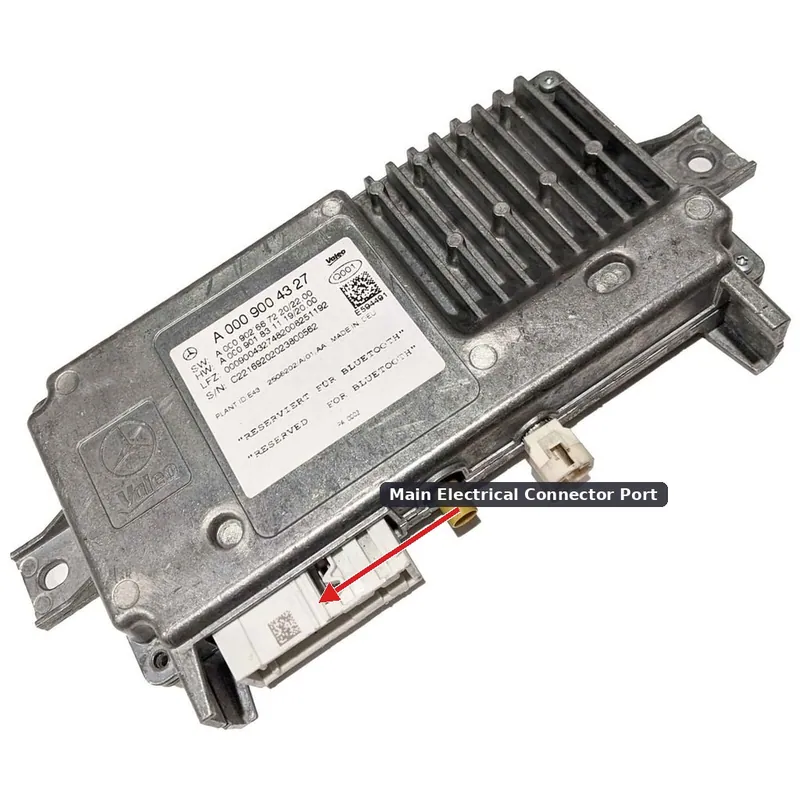
Code U0159 means your vehicle's main computer lost connection to the Parking Assist Control Module (PACM). The PACM processes data from your parking sensors. When it goes offline, the entire parking assist system shuts down and triggers a dashboard warning.
Technical definition: Lost Communication With Parking Assist Control Module 'A'. The Controller Area Network (CAN) bus failed to receive messages from the PACM for a specified timeout period (typically 2 to 5 seconds), prompting other network modules to log the U0159 code.
Can I Drive With U0159?
Yes. This code only disables parking assistance features. It does not affect your engine, transmission, or braking systems. Your vehicle remains 100% safe to drive, but you must rely on your mirrors to park.
Common Causes

- Software or calibration glitch in the PACM (Very Common) — On many vehicles (especially General Motors), a software glitch prevents the module from 'waking up' when the car starts. A dealer software update permanently resolves this.
- Blown fuse or bad ground connection (Common) — The PACM requires a steady 12V supply. A blown fuse, faulty relay, or corroded chassis ground prevents the module from powering on and communicating.
- Damaged or corroded rear bumper wiring harness (Common) — Located behind the bumpers, the PACM 🎬 See this walkthrough for installing new parking sensors and its wiring are highly vulnerable to moisture, road salt, and minor impacts. Corrosion at the main bulkhead connector frequently severs the network connection.
- Low battery voltage (Uncommon) — A weak battery causes voltage drops during engine cranking. This prevents sensitive electronic modules from initializing correctly, triggering random communication codes.
- Failed Parking Assist Control Module (PACM) (Less Common) — The module itself fails internally due to heat, vibration, or water intrusion. Suspect this only after ruling out software updates, blown fuses, and wiring faults.
- Network interference from another module (Uncommon) — A failed module sharing the same CAN bus (like a blind spot radar sensor) can short out the network, blocking the PACM's signals. U0159 is the symptom, but the other module is the root cause.
- Interference from aftermarket accessories (Rare) — Improperly installed trailer light controllers or remote starters tapped into the CAN bus wiring disrupt network traffic, causing U0159.
Symptoms

- 'Service Park Assist' dashboard warning — A prominent text warning appears on the instrument cluster indicating the system is unavailable.
- Complete loss of parking assist features — The system produces no audible beeps, the infotainment distance display is blank or frozen, and automated parking steering fails to engage.
- Parking assist switch is unresponsive — The manual on/off button for the parking sensors does not work, and its LED indicator remains off.
Diagnostic Flowchart
Tap your situation to follow the diagnostic path that matches what you're seeing on this code.
Common Fixes & Costs
- Reprogramming the Parking Assist Control Module — Parts: $0, Labor: $150-$250, ~1.0 hr book time (Professional)
- Replacing a Blown Fuse — Parts: $1-$5, Labor: $0, ~0.1 hr book time (DIY)
- Repairing Bumper Wiring Harness or Connector — Parts: $20-$100, Labor: $150-$400, ~2.0 hr book time (Intermediate)
- Replacing the Parking Assist Control Module
— Parts: $150-$400, Labor: $150-$350, ~1.5 hr book time
(Intermediate)
Chevrolet/GMC (2014-2018): OEM ['84078176', '23444865'] (Alt: {'Dorman': '599-219'})
Ford F-150 (2015-2020): OEM ['JL3T-19H423-BD']
DIY vs Professional
- Replacing a Blown Fuse 🟢 Beginner
Tools: ['Fuse puller', "Owner's manual"] - Repairing Bumper Wiring Harness 🟢 Beginner
Tools: ['Multimeter', 'Wire strippers', 'Soldering iron', 'Heat shrink tubing'] - Replacing the Parking Assist Control Module 🟢 Beginner
Tools: ['Socket set', 'Trim removal tools', 'Professional scan tool'] - Reprogramming the Parking Assist Control Module 🟢 Beginner
Tools: ['Manufacturer diagnostic interface', 'Dealer software subscription']
Used vs. New Parts: Buying Guide
When a used part is worth it: A used PACM is cost-effective for vehicles over 10 years old where new OEM parts are discontinued or prohibitively expensive.
Donor-vehicle mileage cap: roughly under 100000 miles for the part to have meaningful remaining life.
Donor quality checklist:
- Match the OEM part number exactly.
- Ensure the donor vehicle was not flooded or rear-ended.
- Verify the seller offers a minimum 30-day warranty.
Decision logic:
- If You own a 2014-2018 GM vehicle. → Do not buy any part. Pay for the dealer software update first.
- If The vehicle is under 7 years old and the part is under $300. → Buy a new OEM module to ensure compatibility and avoid programming lockouts.
- If The vehicle is older and budget is tight. → Buy a used module, but confirm a local shop can program a used VIN to your car.
Warranty tradeoff: Used parts offer 30-90 days. New OEM offers 1-2 years. If a used module fails, you pay labor and programming fees twice.
Worst-case if a used part fails: $300
What Happens If You Wait — Timeline
- 0-1 month: Code U0159 sets. Parking sensors are disabled. The vehicle remains safe to drive. (MPG impact: 0%% · Added cost: $0)
- 1-6 months: If caused by water intrusion, corrosion spreads, creating high resistance and parasitic battery drains. (MPG impact: 0%% · Added cost: $150 - $350)
- 6-12 months: Corrosion shorts the CAN bus network. Other modules (Blind Spot, Radio) begin failing intermittently. (MPG impact: 0%% · Added cost: $400 - $1000)
- 12+ months: Prolonged network shorts permanently damage the Body Control Module (BCM), leading to widespread electrical failure. (MPG impact: 0%% · Added cost: $1500 - $2500)
Cost of Not Fixing It
- Immediate: Total loss of parking assistance, increasing the risk of low-speed collisions. (Added cost: $0)
- 1-6 months: If caused by water intrusion, corrosion spreads through the wiring harness, shorting out other CAN bus modules like blind spot monitors. (Added cost: $150 - $500)
- 6+ months: A persistent network short or parasitic draw kills the battery and can permanently damage the expensive Body Control Module (BCM). (Added cost: $500 - $2000)
Diagnosis Steps
- Check for Technical Service Bulletins (TSBs)
Search online for TSBs related to code U0159 for your specific year, make, and model. Manufacturers frequently issue software updates to fix this exact code, rendering hardware replacement unnecessary.
Tools: ['Smartphone or computer with internet access'] (Beginner) - Check Battery Voltage
Test the battery voltage with the engine off. A reading below 12.4V indicates a weak battery causing initialization failures. Ensure voltage rises above 13.2V when the engine runs.
Tools: ['Multimeter'] (Beginner) - Inspect PACM Fuses
Locate the fuse for the Parking Assist Control Module in your owner's manual. Test it for continuity. If blown, replace it. If it blows again immediately, you have a short circuit.
Tools: ['Fuse puller', "Owner's manual", 'Test light or Multimeter'] (Beginner) - Visually Inspect the Bumper Harness
Inspect the wiring harness behind the rear bumper. Look for pinched wires, rodent damage, or disconnected plugs. Disconnect the main bulkhead connector and check for green corrosion or water intrusion.
Tools: ['Flashlight', 'Creeper or floor jack'] (Beginner) - Verify Power and Ground at the Module
Unplug the PACM. Probe the power pin to ensure a steady 12V supply. Probe the ground pin to confirm near-zero resistance to the vehicle chassis. A missing power or ground drops the module offline.
Tools: ['Multimeter', 'Vehicle-specific wiring diagram'] (Intermediate) - Check CAN Bus Resistance
Disconnect the battery. At the unplugged PACM connector, measure resistance between the CAN High and CAN Low pins. A healthy network reads exactly 60 ohms. A 120-ohm reading indicates an open circuit; 0 ohms indicates a short.
Tools: ['Multimeter', 'Vehicle-specific wiring diagram'] (Advanced) - Check CAN Bus Voltages
Reconnect the battery and turn the ignition on. Back-probe the CAN wires. CAN High should read ~2.6V and CAN Low ~2.4V. If both are stuck at 2.5V, or one is at 0V/5V, the network wiring is compromised.
Tools: ['Multimeter', 'Back-probe pins'] (Advanced) - Perform a Network 'Wiggle Test'
Connect a scan tool viewing live network status. Gently wiggle the rear bumper wiring harness and connectors. If the PACM briefly comes back online, you have pinpointed the exact location of the wiring break.
Tools: ['Scan tool with live data'] (Intermediate) - [ADVANCED] Scan Tool Network Topology Test
Run a full network topology scan. If the PACM shows as 'No Response' but all other modules are green, the fault is isolated to the PACM's specific circuit. If multiple modules are offline, the main CAN bus is down.
Tools: ['Professional bi-directional scan tool'] (Advanced) - [ADVANCED] Oscilloscope Waveform Analysis
Connect an oscilloscope to CAN High and CAN Low. A healthy bus shows mirror-image square waves. A flatline or distorted signal at the PACM confirms a localized wiring short or module failure.
Tools: ['Automotive oscilloscope', 'Back-probe pins'] (Advanced)
When This Code Triggers (Freeze-Frame Conditions)
- Module Voltage: 11.5-12.5V (During startup (Key On, Engine Off))
- Ignition Status: On/Run (Code sets within 2-5 seconds of ignition on)
- Vehicle Speed: 0 mph (Fault is typically present before the vehicle moves)
Related Codes
- U0140 — Lost Communication with Body Control Module (BCM). If present with U0159, ignore U0159. The BCM is the network master; if it fails, all its reports about other modules are invalid. Fix the BCM first.
- B-series codes (e.g., B1B44, B261D) — B-codes indicate a specific parking sensor failure. If you have a B-code, the PACM is online but sees a bad sensor. If a sensor shorts internally, it can overload the PACM, triggering U0159.
- B101D — Control Module Hardware failure. If a scan tool pulls this code from the PACM after a power cycle, it confirms the module has suffered catastrophic internal failure and must be replaced.
Climate & Environmental Factors
- High Humidity, Rain, and Snow: Moisture penetrates poorly sealed bumper connectors, shorting the CAN bus lines and triggering immediate communication loss.
- High-Pressure Car Washes: Forcing water into panel gaps drives moisture past weather seals, causing intermittent U0159 codes that appear immediately after a wash.
- Cold Climates with Road Salt: Salt brine accelerates corrosion on exposed ground straps and harness pins under the vehicle, increasing electrical resistance until the module drops offline.
- Physical Impact: Minor bumper taps that leave no cosmetic damage can crack the module housing or pinch the wiring harness against the frame.
How to Talk to a Mechanic About This Code
Say this: "I have a U0159 code for 'Lost Communication with Parking Assist Module'. Please check for TSBs regarding a software update before replacing any parts, and verify power, ground, and CAN bus integrity at the module connector."
This proves you understand the common causes. It directs the technician to check software and wiring first, preventing them from immediately quoting a $700 module replacement.
Avoid saying:
- 'My backup camera is broken.'
- 'My parking sensors don't beep anymore.'
- 'Just fix the Service Park Assist message.'
Questions to ask before authorizing the repair:
- Did you check for any software updates or TSBs for this code?
- Did you confirm the module is getting 12V power and a solid ground at the connector?
- If replacing the module, does the quote include the required programming fee?
Where to Take It: Dealer vs Independent vs Chain
- Dealer:
Best fit for 2014-2018 GM models where a software update is the guaranteed fix. They have exclusive access to the required programming tools.
Best for: Vehicles with known software TSBs (GM, Ford, BMW)., Vehicles under warranty.
Downsides: Highest labor rates. (Typical cost: +50% vs. baseline) - Independent Shop:
Excellent for tracing wiring faults, provided they have a bi-directional scan tool capable of reading network topology.
Best for: Out-of-warranty vehicles requiring wiring or connector repairs.
Downsides: May lack the subscription tools to program a new module. (Typical cost: +0% vs. baseline) - Chain Shop:
AVOID. CAN bus diagnostics and module programming are beyond the scope of quick-lube or tire chain shops.
Best for: Simple fuse replacement.
Downsides: Technicians lack training for CAN bus diagnostics., High risk of misdiagnosis. (Typical cost: -10% vs. baseline)
When to Walk Away From the Repair
If the repair cost exceeds 40% of the car's value, and you are comfortable parking with mirrors, skip the fix.
- Car worth $15000, fix is $750: Fix it. The cost is a small fraction of the vehicle's value.
- Car worth $4000, fix is $1500: Borderline. A $1500 wiring repair on a $4000 car is a tough sell.
- Car worth $2500, fix is $900: Walk away. The repair cost is nearly 40% of the car's value for a non-essential feature.
What Scan Tool You Need for This Code
Minimum: A scanner that reads manufacturer-specific 'U' codes from all modules and displays network topology.
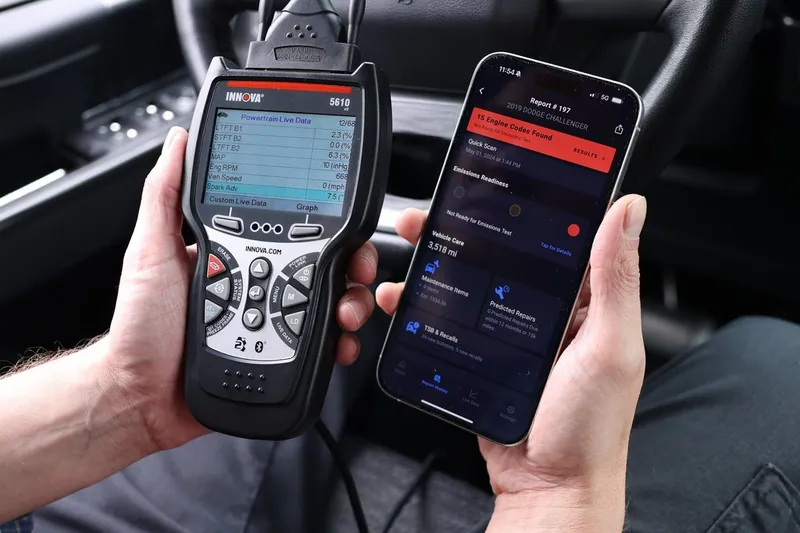
A $20 code reader only scans the Engine Control Module. It will not see U0159, nor can it tell you which specific module is offline.
Budget: BlueDriver Pro (~$90) — Reads enhanced 'U' codes from various modules. Confirms the presence of U0159 but lacks network topology mapping.
Mid-range: Foxwell NT716 or Autel MaxiDiag MD906 Pro (~$250-400) — Offers full system diagnostics to scan all modules. Confirms if the PACM is responding at all. Minimum requirement for DIY diagnosis.
Professional: Autel MaxiCOM MK808 (~$500-800) — Provides network topology mapping to visually show which modules are offline. The fastest way to confirm a U0159 fault.
How to Clear the Code After You Fix It
- Use a professional scan tool to clear U0159 from all network modules.
- Disconnect the battery for 15 minutes to perform a hard module reset.
- If the PACM was replaced, perform the 'VIN learn' procedure with a bi-directional scan tool.
- Cycle the ignition, wait 30 seconds, start the vehicle, and shift into Reverse to test the system.
Drive cycle (~5 minutes): Communication codes do not require a complex emissions drive cycle. Start the vehicle, let it idle for 1 minute, and perform forward and reverse parking maneuvers to confirm the 'Service Park Assist' message remains off.
Readiness monitors affected: None
Watch out for:
- Clearing the code with a cheap OBD2 scanner only clears the Engine Control Module, leaving the code active in the Body Control Module.
- Failing to program a newly installed module guarantees the code will persist.
Will This Fail Emissions / State Inspection?
No — by itself this code doesn't fail OBD inspection (but it can keep readiness monitors from setting, which causes a separate fail).
- California: U0159 does not cause a smog check failure. Emissions tests focus strictly on powertrain (P) codes.
- New York: Will pass emissions. However, an active 'Service Park Assist' warning light could theoretically fail the separate safety inspection at the inspector's discretion.
Most Commonly Affected Vehicles
- Chevrolet/GMC Tahoe, Suburban, Yukon, Silverado, Sierra (2014-2018) — Extremely common. GM TSB #PIT5507E identifies a software glitch as the primary cause. Always perform a software update before replacing parts.
- Cadillac Escalade, CT6, XT5 (2015-2021) — Covered by the same GM software TSB. Additionally, corroded blind spot monitor modules in the rear bumper frequently short the network, causing a false U0159.
- Ford F-150, Explorer, Super Duty (2013-2024) — Often traced to water intrusion in the rear bumper harness. On 2023+ Super Duty models, TSBs indicate an ABS module reprogram fixes false U0159 codes after remote starts.
- Chrysler/Dodge/Jeep 300, Charger, Grand Cherokee (2006-2016) — Typically caused by physical wiring breaks or module failure. Diagnosis requires verifying the Park Assist Module (PTS) status in a scan tool's network view.
- Chevrolet Equinox (2010-2017) — Prone to module failure due to its location in the rear quarter panel, which is susceptible to condensation buildup.
- Honda CR-V, Odyssey (2018-2022) — Usually caused by loose connections at the sensor harnesses after minor bumper impacts. Often accompanied by B-series sensor codes.
- Nissan Rogue, Rogue Sport (2017-2022) — A failed 'Warning Speaker Module' causes the BCM to flag a system error, setting U0159. The primary symptom is a total loss of warning chimes.
- BMW X5 (G05), X7 (G07) (2019-2021) — Caused by a software glitch resolved by a dealer i-Level update. The issue appears randomly and often disables blind spot monitoring simultaneously.
Manufacturer-Specific Notes
- General Motors (Chevrolet, GMC, Cadillac): For 2014-2018 models, the cause is almost always a software glitch requiring a dealer reprogram (TSB #PIT5507E). Replacing hardware before this update is the most common and expensive misdiagnosis.
- Ford: U0159 often appears with a -00 suffix (U0159:00), pointing to a total MS-CAN bus failure. Diagnosis must focus on the twisted pair of Grey/Orange and Violet/Orange wires between the BCM and the module.
- Nissan: A 'Parking Sensor Error' on the dashboard is frequently caused by a failed warning chime speaker, not the PACM itself. If the car stops beeping entirely, check the speaker module first.
Real Owner Stories
2016 GMC Sierra 1500 - The Classic GM Story
Owner reported a 'Service Park Assist' message appearing randomly on startup. An independent shop quoted $700 for a new module.
Outcome: The dealer referenced TSB #PIT5507E and reprogrammed the existing module. The total cost was $180, and the code never returned.
Lesson: Always check for TSBs. A software update is the official fix for intermittent U0159 codes on 2014-2018 GM trucks.
2015 Ford F-150 - The Water Intrusion Story
The parking assist died after heavy rain, followed by flickering headlights and a rebooting infotainment screen.
Outcome: Cleaning the connector pins, drying it out, and applying dielectric grease fixed U0159 and all other electrical glitches for under $20.
Lesson: If U0159 appears after rain or a car wash, immediately check the rear bumper harness connectors for water intrusion.
2014 Chrysler Town & Country - The Unusual Wiring Break
System set code U0159. A shop swapped in a known-good module, but it still wouldn't communicate.
Outcome: The technician ran a new, fused power wire directly to the module, restoring communication without tearing apart the interior to find the broken wire.
Lesson: A good fuse doesn't guarantee power reaches the module. You must verify 12V directly at the module's connector pins.
How to Prevent This Code From Triggering
- Apply dielectric grease to connector seals (Anytime a bumper connector is disconnected.) — Waterproofs the connection, preventing salt and moisture from corroding the pins and dropping the module offline.
- Use caution with pressure washers (During every car wash.) — Prevents high-pressure water from bypassing weather seals on bumper-mounted modules and wiring harnesses.
- Maintain a healthy battery (Test annually after 3 years.) — Prevents low-voltage drops during engine cranking that cause modules to fail initialization.
Frequently Asked Questions
Can I fix a U0159 code myself?
Yes, if the cause is a blown fuse, weak battery, or visible wiring damage. However, the most common fix is a software update requiring dealer-level tools. Replacing the module also requires professional programming.
Will my check engine light be on with a U0159 code?
No. Code U0159 triggers a specific 'Service Park Assist' message on your dashboard instead of the check engine light.
How much does it cost to fix code U0159?
Costs range from $5 for a fuse to $750 for a new programmed module. The most common fix—a dealer software update—costs between $150 and $250. Extensive wiring repairs average $200 to $500.
What is the most common misdiagnosis for U0159?
Replacing the module without checking for Technical Service Bulletins (TSBs). On many vehicles, a simple software update fixes the issue permanently. Owners waste hundreds of dollars on hardware when software was the actual culprit.
Can a bad parking sensor cause a U0159 code?
Rarely. A bad sensor triggers a specific B-series code. However, a severe internal short in a sensor can overload the module's 5-volt reference circuit, shutting down the entire module and triggering U0159.
Will disconnecting the battery clear the U0159 code?
It clears the code temporarily. If the underlying software glitch or wiring fault remains, U0159 returns immediately upon startup.
Can a car wash cause a U0159 code?
Yes. High-pressure water forces moisture into poorly sealed bumper connectors. This shorts the communication lines, triggering the code until the connector dries out.
Key Takeaways
- Code U0159 indicates the Parking Assist Control Module (PACM) is offline, completely disabling your parking sensors and backup beeps.
- Your vehicle remains 100% safe to drive, but you must rely on your mirrors as all automated parking aids are disabled.
- On 2014-2018 GM trucks and SUVs, a software glitch causes 80% of U0159 codes; a $150-$250 dealer software update fixes it without replacing parts.
- Never replace the PACM without verifying power, ground, and a healthy 60-ohm CAN bus resistance at the module's connector.
Helpful Videos
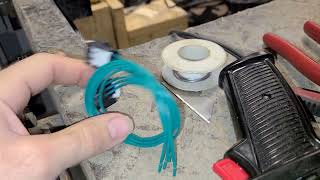
Shop the Parts Behind U0159
Below are the parts most often responsible for code U0159, ranked by how frequently each one is the actual culprit (per the diagnosis above). Tap any to see what we have for your vehicle.



The information in this article is provided for general reference and educational purposes only. Vehicle specifications, procedures, and part compatibility can vary by production date, trim level, and region. Always consult your vehicle's factory service manual and verify part numbers before purchasing or performing repairs. Safety-critical components such as airbags, seat belts, and braking systems should be installed by a qualified professional.
- 🧭 Diagnostic Flowchart
- 🎬 Helpful Videos
- 🛍️ Shop This Part
- What Does U0159 Mean?
- Can I Drive With U0159?
- Common Causes
- Symptoms
- Common Fixes & Costs
- DIY vs Professional
- Used vs. New Parts: Buying Guide
- What Happens If You Wait — Timeline
- Cost of Not Fixing It
- Diagnosis Steps
- When This Code Triggers (Freeze-Frame Conditions)
- Related Codes
- Climate & Environmental Factors
- How to Talk to a Mechanic About This Code
- Where to Take It: Dealer vs Independent vs Chain
- When to Walk Away From the Repair
- What Scan Tool You Need for This Code
- How to Clear the Code After You Fix It
- Will This Fail Emissions / State Inspection?
- Most Commonly Affected Vehicles
- Manufacturer-Specific Notes
- Real Owner Stories
- 2016 GMC Sierra 1500 - The Classic GM Story
- 2015 Ford F-150 - The Water Intrusion Story
- 2014 Chrysler Town & Country - The Unusual Wiring Break
- How to Prevent This Code From Triggering
- Frequently Asked Questions
- Can I fix a U0159 code myself?
- Will my check engine light be on with a U0159 code?
- How much does it cost to fix code U0159?
- What is the most common misdiagnosis for U0159?
- Can a bad parking sensor cause a U0159 code?
- Will disconnecting the battery clear the U0159 code?
- Can a car wash cause a U0159 code?
- Key Takeaways
- 🎟️ Get 5% Off