

U0159 on 2015-2018 Chevrolet Suburban: Causes and Fixes for Lost Communication With Park Assist Module
On a 2015-2018 Suburban, code U0159 is most often caused by a software glitch in the Parking Assist Control Module (PACM). A dealer software update, as recommended by GM TSB PIT5507E, is the primary fix. If that doesn't work, the module itself (located behind the rear bumper) or its wiring may be faulty due to moisture or damage.
- Code U0159 on a 2015-2018 Suburban means the Parking Assist Control Module has stopped communicating with other vehicle systems.
- The most common cause is a known software glitch, which a GM dealer can fix by reprogramming the module per TSB PIT5507E.
- This is not a simple DIY fix; professional diagnosis and likely dealer programming are required.
- Before replacing any parts, ensure the battery is healthy and have a dealer check if the module's software is up-to-date, as this is the most likely and least expensive solution.
What's Unique About the 2015-2018 Chevrolet SUBURBAN

For this specific generation of Chevrolet Suburban and its sister platforms (Tahoe, Silverado, etc.), General Motors issued Technical Service Bulletins (TSBs) acknowledging that a software anomaly was a primary cause for this code appearing randomly at startup. Unlike many other vehicles where U0159 points directly to a hardware failure, on these trucks, the first and most common solution is a software re-calibration of the Parking Assist Control Module (designated K41) performed by a dealer using the TIS2WEB service.
🎬 See how GM service programming works with ACDelco TechConnect.Diagnostic Flowchart

Tap your situation to follow the diagnostic path that matches what you're seeing on this vehicle.
Symptoms You May Notice

- "Service Park Assist" message on the Driver Information Center (DIC).
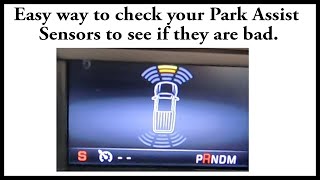
- Parking assist system is completely inoperative; no beeps or display graphics when approaching objects.
- The parking assist warning light on the dashboard is illuminated.
- The light on the park assist on/off switch may be disabled or flash.
- In some cases, the system may give false alerts or a "Park Assist Off" message before the U0159 code appears.
- Replacing individual parking sensors. While faulty sensors can cause the park assist system to malfunction, they typically set different trouble codes related to sensor circuits (B-codes) or performance, not a total loss of communication (U-code) with the control module.
Most Likely Causes

- Software Anomaly in Parking Assist Control Module 🔴 High Probability → Shop Park Assist Control Module GM released multiple Technical Service Bulletins (e.g., PIT5507E) specifically identifying a software glitch that causes DTC U0159 to set randomly in the IPC and/or BCM on startup for this vehicle generation.
How to confirm: A GM dealer or qualified shop with access to GM's TIS2WEB service can check the current calibration of the Parking Assist Control Module (K41) against the latest available version. The TSB explicitly states this is the first step for a randomly appearing "Service Park Assist" message.
Typical fix: Reprogramming the Parking Assist Control Module with the updated software calibration using TIS2WEB. This is a well-documented fix in owner forums.
Est. part cost: $0 - Failed Parking Assist Control Module (PACM) 🟡 Medium Probability → Shop Park Assist Control Module The module is located behind the rear bumper cover, typically on the passenger side, an area susceptible to water intrusion, road salt corrosion, and damage from minor rear-end impacts.
How to confirm: If the module's software is up-to-date and it has proper power and ground but still won't communicate (shows as 'offline' on a network topology scan), the module itself is likely faulty. A technician would verify power, ground, and data signal at the module's connector before condemning the module.
Typical fix: Replace the Parking Assist Control Module and program the new module to the vehicle's VIN. This programming is essential for it to work.
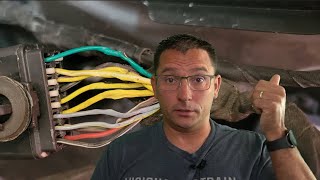
Est. part cost: $80-$160 - Wiring or Connector Issue ⚪ Low Probability The PACM is located behind the rear bumper cover, making its wiring harness vulnerable to moisture from rain and snow, corrosion from road salt, and physical damage from impacts. A YouTube video on a platform-mate Escalade showed a completely corroded rear module connector causing a similar failure.
How to confirm: Visually inspect the wiring harness and connector at the PACM for damage, corrosion (green crust), or loose pins. Use a multimeter to test for proper power, ground, and network voltage (Low-Speed GMLAN is a single wire that should pulse between 0-5V) at the module's connector.
Typical fix: Repair the damaged section of the wiring harness or clean/replace the affected connector.
Est. part cost: $10-$50
Rare But Worth Checking
- Low Battery Voltage: Weak or failing batteries can cause random communication codes across various modules during vehicle startup. A user on TahoeYukonForum reported that recurring "Service Park Assist" messages were the precursor to a complete battery failure, and a new battery resolved the issue. It's a crucial preliminary check.
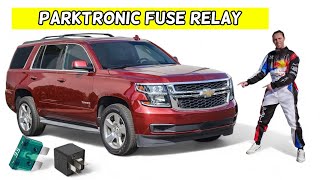
- Blown Fuse: A blown fuse for the parking assist system will cut power to the module, causing it to go offline and trigger a U0159 code. Check the fuses in the instrument panel and rear compartment fuse blocks. Specifically, fuse F28 in the passenger-side Instrument Panel fuse block is listed for "Obstacle Detection".
- Loose Park Assist Switch Connector: A user on the TahoeYukonForum mentioned that a loose connector for the on/off switch in the dash can cause an intermittent "PARK ASSIST OFF" message, which could potentially be related to communication issues.
Diagnosis Steps
- Check for official Technical Service Bulletins (TSBs). TSB #PIT5507E is highly relevant and should be the first reference.
- Using a capable OBD-II scanner that can read codes from all modules (not just the ECM), confirm which module is setting the U0159 code (e.g., BCM, IPC).
- Verify the vehicle's battery voltage is stable and within specification (approx. 12.6V at rest, 13.5V+ when running). A weak battery is a known cause of random electronic faults.
- Check the relevant fuses. Specifically, inspect fuse F28 in the Instrument Panel fuse block on the passenger side, labeled for "Obstacle Detection".
- If fuses and battery are good, the next step is to have a dealer or qualified shop check the software calibration of the Parking Assist Control Module (PACM) and update it per TSB PIT5507E. This is the most probable fix.
- If the code persists after the software update, the PACM itself needs to be accessed for physical inspection. It is located behind the rear bumper cover, usually on the passenger side.
- Inspect the PACM connector and wiring harness for any signs of corrosion, water intrusion, or physical damage.
- Using a multimeter, test for 12V power, good ground, and a fluctuating 0-5V signal on the Low-Speed GMLAN wire at the PACM connector.
- If all wiring, power, and grounds are confirmed good, the Parking Assist Control Module itself is the most likely point of failure and should be replaced and programmed.
Parts You'll Likely Need
- Parking Assist Control Module
(OEM #23381529, 84333482 (Part numbers are model-year specific; always verify with VIN))— This is the module that fails or requires a software update. If the software update doesn't fix the issue, the module hardware is likely faulty.
Trusted brands: ACDelco (OEM)
OEM price range: $100-$160
Aftermarket price range: $80-$120
Technical Service Bulletins (TSBs) & Recalls
- PIT5507E: Addresses a "Service Park Assist" message at startup with DTC U0159 set in the IPC and/or BCM. Recommends reprogramming the Parking Assist Control Module (K41) with updated calibrations. This TSB applies to a wide range of 2015-2018 GM Trucks and SUVs, including the Suburban.
- PIT5507C: An earlier version of the bulletin also identifying the need for a software update to correct the U0159 concern, specifically mentioning it occurs randomly at startup.
Platform-Specific Known Issues
- A known software anomaly documented in GM TSB #PIT5507E can cause a "Service Parking Assist" message and a U0159 code to appear randomly at startup. The fix is a module re-calibration, which is the most common solution for this specific platform.
Mechanic-Grade Diagnostic Values
- Low-Speed GMLAN Bus Voltage — expected: The single-wire bus should show approximately 0.2V at rest (logic '1') and pulse to around 4.0V or higher when transmitting data (logic '0').. Failure: A constant 0V may indicate a short to ground. A constant high voltage may indicate a short to power. No voltage fluctuation indicates no communication.
- Parking Assist Sensor 12V Feed (at sensor connector) — expected: Approximately 12V with the key on.. Failure: Low voltage (e.g., 0.8V) can indicate a shorted sensor or a wiring issue downstream from the main module connector, pulling the whole circuit down.
Hidden / Shadow Codes Worth Checking
- U0159-04: Indicates an open or high resistance in the communication circuit, often pointing to a broken wire or disconnected connector. (see via GM GDS2 or other professional-grade scan tool that can read manufacturer-specific symptom codes.)
- U0159-18: Indicates a signal performance issue where the module is on the network but its signal is erratic or incorrect. (see via GM GDS2 or other professional-grade scan tool that can read manufacturer-specific symptom codes.)
Scan Tool Commands That Help
- GDS2: Module Diagnostics > K182 Parking Assist Control Module > Programming and Setup — This function is required after replacing the Parking Assist Control Module to load the correct software and configure it for the vehicle's specific options (e.g., front and rear sensors).
- GDS2: Reprogram (NOT Replace and Reprogram) — When performing the TSB software update on the existing module, selecting "Reprogram" updates the calibration without erasing vehicle-specific settings. A GM bulletin warns to use this specific path.
Wiring & Ground Locations
- K41 Parking Assist Control Module — Located behind the rear bumper cover, typically on the passenger side frame rail.. This is the module that loses communication. Its location makes it and its connector susceptible to water, corrosion, and physical damage from rear impacts.
- Connector X400 (or similar rear bumper harness connector) — This is the main harness connector for the rear bumper assembly, through which the PACM and all rear sensors are wired.. A single point of failure for the entire park assist system. Corrosion or damage here can cut power, ground, or communication to the module, causing U0159.
Real Owner Repair Stories
- YouTube channel "New Level Auto" (2019 Chevrolet Traverse (platform-mate with similar system)) — Vehicle was a no-start with multiple communication codes across the low-speed network, including with the park assist module.
❌ Tried (didn't work) Initial scan showed multiple modules offline.
✅ What actually fixed it A shorted park assist sensor was pulling down the 12V feed for all sensors, causing network chaos. Unplugging the main bumper harness connector (X400) brought the voltage back to 12V, isolating the fault to the bumper area. Replacing the bad sensor and programming the module resolved the issue.
OEM Part Supersession History
Non-scalloped front park assist sensor rings→GM Part # 84075328 (Scalloped design)— The original non-scalloped rings could cause false alerts on 2016-2017 models by allowing the sensor to bind or have a direct transmission path with the bumper fascia.
Heads up: Using the old, non-scalloped rings on 2016-2017 models can cause the park assist system to malfunction with false alerts.
Model Year Variations Within This Range
- 2016: The 2016 model year is specifically called out in TSBs PIT5507C and PIT5507E as being particularly prone to the random "Service Parking Assist" message at startup, which is resolved by the software update.
Helpful Videos

The information in this article is provided for general reference and educational purposes only. Vehicle specifications, procedures, and part compatibility can vary by production date, trim level, and region. Always consult your vehicle's factory service manual and verify part numbers before purchasing or performing repairs. Safety-critical components such as airbags, seat belts, and braking systems should be installed by a qualified professional.
- Chevrolet SUBURBAN:
- 🧭 Diagnostic Flowchart
- 🎬 Helpful Videos
- What's Unique About the 2015-2018 Chevrolet SUBURBAN
- Symptoms You May Notice
- Most Likely Causes
- Rare But Worth Checking
- Diagnosis Steps
- Parts You'll Likely Need
- Technical Service Bulletins (TSBs) & Recalls
- Platform-Specific Known Issues
- Mechanic-Grade Diagnostic Values
- Hidden / Shadow Codes Worth Checking
- Scan Tool Commands That Help
- Wiring & Ground Locations
- Real Owner Repair Stories
- OEM Part Supersession History
- Model Year Variations Within This Range
- 🎟️ Get 5% Off