

OBD-II Code U0191: Lost Communication With Television
What U0191 means, why it triggers, and how to fix it
- Code U0191 indicates a communication failure with the rear entertainment system; it does not affect drivability or safety.
- Inspect the power sliding door wiring harness first on minivans, as repeated flexing breaks wires and causes 80% of these faults.
- Perform a 30-minute battery disconnect to hard reset the system before buying parts, as low voltage events frequently cause module lockups.
- Call a dealership to check for Technical Service Bulletins (TSBs) before replacing hardware, as software updates costing $150-$250 fix most Chrysler and GM communication errors.
- Test for a parasitic battery draw exceeding 85mA if your battery dies overnight, as a failed television module often refuses to enter sleep mode.
What Does U0191 Mean?
Code U0191 means the vehicle's main computer network lost connection to the rear seat television or entertainment module. This dedicated module controls the screens, audio, and inputs for the rear entertainment system. When this communication link breaks, the system becomes inoperable and triggers the fault code.
Technical definition: The Society of Automotive Engineers (SAE) defines this code as "Lost Communication With Television". It indicates the Television Control Module is not receiving or transmitting messages on the Controller Area Network (CAN) bus, the primary data network connecting the vehicle's computers.
Can I Drive With U0191?
Yes, But With Caution. Yes, you can drive your vehicle with a U0191 code. This fault is isolated to the rear entertainment system and does not affect primary vehicle functions like the engine, brakes, or safety systems. However, a faulty module sometimes creates a parasitic draw that drains the battery overnight, potentially leaving you stranded.
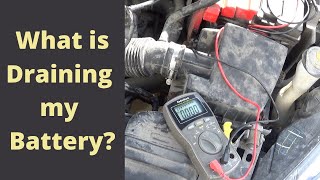
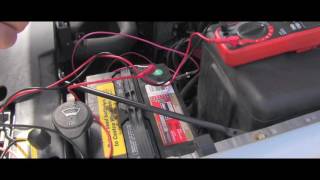
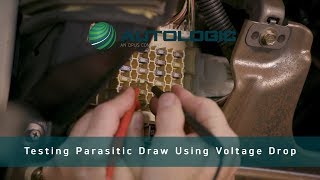
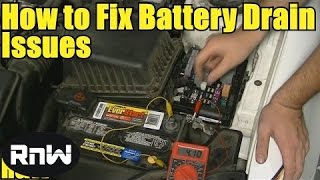
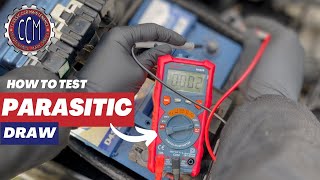
🎬 Learn the best way to test for a parasitic battery drain.Common Causes
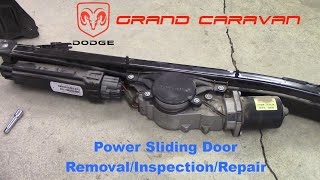
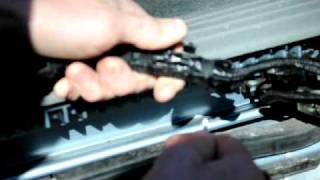
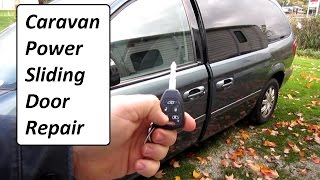
- Faulty Wiring or Corroded Connectors (Very Common) — The wiring harness connecting the television module is damaged, disconnected, or corroded. Vibrations, moisture, and physical stress interrupt data signals, especially in harnesses running through sliding doors or under seats. 🎬 See how to fix damaged wiring in minivan sliding doors.
- Corrupted or Outdated Module Software (Common) — The firmware inside the television module develops bugs. Manufacturers frequently release software updates to fix known issues like black screens and communication faults, particularly on Chrysler, Honda, and GM vehicles.
- Power Supply Issue / Blown Fuse (Common) — The entertainment module requires a stable 12-volt power supply. A blown fuse, a poor ground connection, or a loose power wire shuts the module down and triggers this code.
- Low Battery Voltage (Common) — A weak battery provides insufficient voltage during vehicle startup, preventing electronic modules from initializing correctly. This sets a temporary communication code resolved by charging the battery and performing a hard reset. 🎬 Watch: How to reset and reboot your Chrysler Uconnect system.
- Failed Television / Rear Entertainment Module (Less Common) — The internal electronic components of the module fail due to heat, vibration, or age. A cracked solder joint or a failed microcontroller on the circuit board prevents communication.
- Faulty Gateway Module (BCM/HMI) (Rare) — A central gateway module (like the Body Control Module or Human Machine Interface) manages communication between networks. A fault within this gateway prevents messages from reaching the television module, setting U0191 alongside other communication faults.
- CAN Bus Network Failure (Rare) — A network-wide problem, such as a short in the bus wiring or a missing termination resistor, causes this code to appear along with multiple other communication codes.
Symptoms
- Rear Entertainment System is Inoperative — The rear screens remain completely black, frozen, or fail to turn on, and no audio plays from the rear speakers or headphones.
- Warning Message on Dash or Main Screen — The instrument cluster or main infotainment display shows an error like “TV Communication Fault” or “Infotainment Bus Error.”
- Auxiliary Inputs and Remotes Fail — The remote control fails to communicate, and inputs such as HDMI, USB, or Miracast are not detected.
- Parasitic Battery Drain (also visible on scanner) — The faulty module fails to enter 'sleep' mode when the vehicle is off, causing a steady battery drain that leads to a dead battery overnight.
Diagnostic Flowchart
Tap your situation to follow the diagnostic path that matches what you're seeing on this code.
Common Fixes & Costs
- Software Update at Dealership — Parts: $0, Labor: $150-$250, ~1.0 hr book time (Professional)
- Repairing Damaged Wiring or Connectors
— Parts: $10-$150, Labor: $150-$450, ~2.0 hr book time
(Intermediate)
Dodge Grand Caravan: OEM - Replacing a Blown Fuse — Parts: $1-$5, Labor: $0, ~0.1 hr book time (DIY)
- Screen Assembly Replacement (GM Specific)
— Parts: $500-$1,200, Labor: $150-$250, ~1.2 hr book time
(Intermediate)
Cadillac Escalade (2021-2024): OEM - Replacing the Rear Entertainment Module
— Parts: $300-$1,500, Labor: $150-$300, ~1.5 hr book time
(Professional)
Chrysler Pacifica (2017-2020): OEM
DIY vs Professional
- Replacing a Blown Fuse 🟢 Beginner
Tools: Fuse puller, Owner's Manual - Repairing Damaged Wiring 🟢 Beginner
Tools: Multimeter, wire strippers, soldering iron, heat shrink tubing. - Replacing Rear Entertainment Module/Screen 🟢 Beginner
Tools: Trim removal tools, basic socket set. - Software Update 🟢 Beginner
Tools: OEM-level scan tool and valid software subscription.
Used vs. New Parts: Buying Guide
When a used part is worth it: For simple components like wiring harnesses or older, non-VIN-locked screens, a used part from a salvage yard is cost-effective.
Donor-vehicle mileage cap: roughly under 100000 miles for the part to have meaningful remaining life.
Donor quality checklist:
- Ensure the part number matches exactly.
- Verify the donor vehicle was not involved in a flood.
- Ask the seller for the donor VIN to check equipment compatibility.
Decision logic:
- If The fix is a software update → New is the only option, performed at a dealership.
- If The part is a modern (2017+) infotainment module → Favor new or professionally refurbished. Used units require dealer VIN programming, which adds cost and may fail.
- If The part is a wiring harness or simple screen → Used is a reasonable choice if visual inspection shows no damage.
Warranty tradeoff: Salvage yards offer 30-90 day warranties. New aftermarket parts offer 1-year warranties. New OEM parts carry 12-month/12,000-mile warranties.
Worst-case if a used part fails: $300-$600 if a used module is faulty or non-programmable, wasting labor costs.
What Happens If You Wait — Timeline
- 0-2 Weeks: The U0191 code sets, and the rear entertainment system becomes inoperable. No drivability issues occur. (MPG impact: 0%% · Added cost: $0)
- 2 Weeks - 3 Months: If the module causes a parasitic draw, the battery dies overnight, requiring frequent jump-starts. (MPG impact: 0%% · Added cost: $0-$25)
- 3-6 Months: Constant deep-discharging permanently damages the battery's internal plates, requiring full replacement. (MPG impact: 0%% · Added cost: $150-$350)
- 6+ Months: A constantly drained battery forces the alternator to work at maximum output, leading to premature alternator failure. (MPG impact: 0%% · Added cost: $500-$1000)
Cost of Not Fixing It
- Immediate: Loss of rear entertainment system functionality. The screens remain black. (Added cost: 0)
- 1-3 Months: If a parasitic draw exists, the battery is repeatedly drained, requiring jump starts and destroying the battery's lifespan. (Added cost: $150-$350)
- 6+ Months: Persistent parasitic draw leads to premature alternator failure as it works harder to recharge a constantly drained battery. (Added cost: $500-$1000)
Diagnosis Steps
- Read Codes and Check for TSBs
Use an OBD-II scanner to confirm U0191 and note any other 'U' codes. Search online for Technical Service Bulletins (TSBs) for your specific vehicle, as a known software update is frequently the required fix.
Tools: OBD-II Scanner, Internet Access (Beginner) - Check Fuses and Perform a Hard Reset
Locate the fuse for the rear entertainment system in the owner's manual and verify it is intact. If the fuse is good, disconnect the negative battery terminal for 30 minutes to force a hard reset of all vehicle modules.
Tools: Owner's Manual, Fuse Puller, Wrench (Beginner) - Inspect Wiring and Connectors
Locate the television module (often under a front seat, center console, or behind dash trim). Visually inspect the wiring harness for damage, pinching (especially in minivan sliding door tracks), or corrosion. Unplug and securely replug the main connector.
Tools: Flashlight, Trim Removal Tools (Intermediate) - Test for Power and Ground at the Module
Using a multimeter and wiring diagram, verify 12V power on the module's connector with the ignition on (should read 11.5V-12.5V). Check for a solid ground by measuring resistance between the ground wire and the chassis; it must be less than 1.0 ohm.
Tools: Multimeter, Wiring Diagram (Intermediate) - Test for Parasitic Draw
If the battery dies overnight, test for parasitic draw. With the vehicle off and modules asleep (wait 30 minutes), connect a multimeter in series with the negative battery cable. If the draw exceeds 85 milliamps, pull the entertainment system fuse. If amperage drops, the module is failing to sleep.
Tools: Multimeter with Amp setting (Advanced) - Test CAN Bus Integrity (Resistance & Shorts)
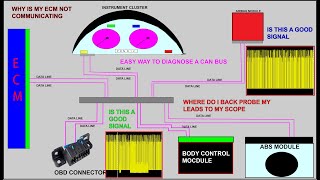
With the battery disconnected, measure resistance between the CAN High and CAN Low pins at the OBD-II port. A healthy bus reads ~60 ohms. A 120-ohm reading indicates an open circuit. A 0-ohm reading indicates a short. Next, check for continuity between each CAN wire and chassis ground; any continuity indicates a short to ground.
Tools: Multimeter, Wiring Diagram (Advanced) - Check CAN Bus Voltage
With the battery reconnected and ignition on, measure the DC voltage of the CAN lines to ground. In the recessive state, both CAN High and Low sit at ~2.5V. During active transmission, CAN High toggles toward 3.5V and CAN Low toward 1.5V. Voltages stuck at 0V or 12V confirm a hard short.
Tools: Multimeter, Wiring Diagram (Advanced) - Analyze Network with an Advanced Scan Tool
Use a professional bidirectional scan tool to poll the network. If the television module is the only one offline, the fault is isolated to that unit or its direct wiring. If multiple modules are offline, the problem is a broader network failure.
Tools: Advanced Bi-Directional Scan Tool (Professional)
When This Code Triggers (Freeze-Frame Conditions)
- DTC That Caused Freeze Frame: U0191 (The code that triggered the data snapshot.)
- Ignition Status: Key On, Engine Running (Fault is detected during the initial network check after startup.)
- Module Voltage: 12.0V - 14.5V (A reading below 11.5V indicates a battery or charging system issue is the root cause.)
- Vehicle Speed: 0 mph (Communication loss is frequently identified when the vehicle is first started.)
Related Codes
- U0184 — Lost Communication With Radio. Often appears with U0191. A U0184 fault points to the main head unit, which acts as a gateway. U0191 is specific to the rear video module.
- U0196 — Lost Communication With Rear Seat Entertainment Control Module. An interchangeable code used by some manufacturers for the exact same fault. Diagnosis is identical.
- U0193 — Lost Communication With Digital Audio Control Module 'A'. Points to a fault with the audio amplifier. The primary symptom is a loss of audio, whereas U0191 primarily causes a non-functional video screen.
- B15AA-00 — Lost LVDS Connection With Display 1. A Chrysler-specific code indicating a failure in the video signal cable between the module and screen. If present with U0191, the LVDS cable is highly suspect.
Climate & Environmental Factors
- High Humidity & Moisture: Moisture penetrates connectors and wiring, causing corrosion that increases electrical resistance and disrupts data signals. Condensation inside components leads to short circuits.
- Road Salt & Winter Conditions: Salt spray infiltrates under-vehicle and door-sill wiring harnesses, accelerating the degradation of connectors and wires, leading to open or shorted circuits on the CAN bus.
How to Talk to a Mechanic About This Code
Say this: "I have a U0191 code and my rear screen is not working. I'd like to schedule a diagnostic, but please check for any Technical Service Bulletins, inspect the fuses, and check the wiring for power and ground at the module before quoting a module replacement."
This directs the technician to follow a logical diagnostic path (cheapest to most expensive) and prevents them from immediately quoting a costly module replacement. It specifically calls out known failure points like wiring and software.
Avoid saying:
- 'My kids' TV in the back isn't working, can you fix it?'
- 'My check engine light is on, can you look at it?'
- 'Just replace the TV screen.'
Questions to ask before authorizing the repair:
- What was the specific point of failure you found? Was it a wire, a fuse, or the module itself?
- Did you check for power, ground, and CAN bus signals at the module connector?
- Is there a software update specified by a TSB for this problem?
- Does the quoted module replacement price include necessary programming?
- What is the warranty on this specific repair?
Where to Take It: Dealer vs Independent vs Chain
- Dealer:
Recommended for newer (2017+) vehicles where software updates and TSBs are common fixes.
Best for: Vehicles under warranty, Fixes requiring a software update (common for Chrysler/GM), Complex network diagnostics requiring manufacturer-specific tools.
Downsides: Highest labor rate, May default to module replacement instead of detailed wiring repair. (Typical cost: +50% vs. baseline) - Independent Shop:
A good choice if you have a trusted mechanic with strong electrical diagnostic skills, especially for older vehicles.
Best for: Out-of-warranty vehicles where the suspected cause is wiring (e.g., minivan sliding doors), Owners looking for lower labor costs.
Downsides: May lack subscription-based tools for software updates., Diagnostic skill for complex network issues varies widely. (Typical cost: +0% vs. baseline) - Chain Shop:
Not recommended. This communication fault requires diagnostic expertise beyond the scope of chain shops.
Best for: Simple tasks like battery testing or fuse replacement.
Downsides: Technicians lack specialized training for CAN bus diagnostics., High pressure to sell parts leads to incorrect recommendations. (Typical cost: -10% vs. baseline)
When to Walk Away From the Repair
Since this is a non-essential feature, base the decision on personal value. If the repair cost exceeds $500 on a car worth less than $15,000, it is rarely worth it. On a newer luxury SUV, a higher repair cost is justified for resale value.
- Car worth $5000, fix is $750: Walk away. The repair cost is 15% of the car's value for a non-essential feature.
- Car worth $25000, fix is $500: Fix it. The cost is minor relative to the vehicle's value and important for resale.
- Car worth $8000, fix is $1800: Walk away. The repair cost is too high for the vehicle's value.
What Scan Tool You Need for This Code
Minimum: An 'all-system' scanner that reads codes from the Body Control Module (BCM), radio, and other CAN bus modules.
A basic $20 code reader only communicates with the Engine Control Unit. It will not see 'U' codes stored in other modules, making it blind to this fault.
Budget: BlueDriver Pro or Foxwell NT301 (~$90) — Connects to a smartphone to read/clear codes from all vehicle systems. Sufficient to confirm U0191 and check for other communication codes.
Mid-range: Foxwell NT510 Elite or Autel MaxiCOM MK808S (~$350) — Provides manufacturer-specific diagnostics, live data graphing for CAN bus signals, and bidirectional controls. Allows DIYers to check network status.
Professional: Autel MaxiSys MS906Pro or Launch X431 Series (~$1200+) — Offers full bidirectional control, module programming, and network topology mapping. Required to program a new module after replacement.
Rent vs buy: Buy a budget 'all-system' scanner (like BlueDriver) for around $100. It provides necessary insight into which modules are offline that a free rental tool from a parts store will miss.
How to Clear the Code After You Fix It
- Reconnect any disconnected components (battery, module connectors).
- Use an OBD-II scan tool to select 'Clear Codes' or 'Erase DTCs'.
- Cycle the ignition off and on, and operate the rear entertainment system to verify functionality.
Drive cycle (~20 minutes): A specific drive cycle is not required for a U-code. After clearing the code, start the vehicle and operate the rear entertainment system. A short 15-20 minute drive with the system active confirms the fix.
Readiness monitors affected: None
Watch out for:
- Disconnecting the battery does not clear the code from all modules; a scan tool is required.
- If the underlying issue is not fixed, the code returns immediately upon the next ignition cycle.
- U0191 does not affect emissions readiness monitors, so extensive drive cycles are unnecessary.
Will This Fail Emissions / State Inspection?
No — by itself this code doesn't fail OBD inspection (but it can keep readiness monitors from setting, which causes a separate fail).
- California: This code does not illuminate the Check Engine Light. The vehicle passes the OBD-II Smog Check as long as emissions monitors are set.
- New York: NYS inspection checks for illuminated warning lamps. U0191 does not cause a failure on its own.
- Texas: Emissions inspections fail if the Check Engine Light is commanded on. U0191 is a non-emissions code and will not cause a failure.
Most Commonly Affected Vehicles
- Chrysler Pacifica (2017-2023) — Highly prone to software glitches in the Uconnect Theater system. Multiple TSBs address updating the Video Routing Module (VRM) software to fix black screens.
- Dodge Grand Caravan (2011-2020) — The wiring harness for the Vehicle Entertainment System (VES) running through the sliding door track breaks from repeated flexing. Replacement harnesses are widely available.
- Honda Odyssey (2018-2022) — Subject to TSB 21-013 for popping audio and black screens caused by poor MOST bus network connections. Honda extended the warranty to 5 years/60,000 miles to replace faulty FAKRA connectors.
- Cadillac Escalade / Escalade ESV (2021-2024) — Known for buggy rear entertainment systems and physical screen failures. HDMI handshake issues are common, and replacement screen assemblies exceed $1,500 at dealers.
- Chevrolet / GMC Traverse / Acadia / Tahoe / Suburban (2018-2023) — Communication failures link to the Human Machine Interface (HMI) module. GM TSB 17-NA-382 advises replacing the HMI, though a 5-minute fuse pull sometimes restores function.
- Hyundai / Kia Palisade / Telluride (2020-2024) — Infotainment glitches are frequently fixed with a free software update owners can perform themselves via USB using the official Navigation Updater program.
- Ford Expedition / Lincoln Navigator (2015-2020) — U0191 is often a symptom of a fault in the Body Control Module (BCM) or Gateway Module (GWM). Ford requires specific pinpoint tests rather than immediately replacing the TV module.
- Toyota Sienna (2011-2020) — TSB T-SB-0170-13 addresses inoperative switches in the overhead console controlling the entertainment system. Faults frequently arise from the overhead display unit wiring.
Manufacturer-Specific Notes
- Chrysler / Dodge / Jeep: Uconnect Theater issues are frequently resolved with a Video Routing Module (VRM) software update. Check TSBs 08-095-19, 08-075-20, or 08-018-21.
- General Motors (Cadillac, GMC, Chevrolet): A 'soft reset' by holding the power/volume knob for 15 seconds, or pulling the HMI module fuse for 5 minutes, often restores communication without replacing parts.
- Honda: Honda issued a warranty extension (5 years/60k miles) for 2018-2022 Odyssey/Pilot/Passport models to replace faulty FAKRA connectors causing MOST bus communication failures.
- Hyundai / Kia: Owners can download free infotainment software updates from the official Navigation Updater website and install them via USB to fix communication bugs.
- Ford: Ford requires checking all DTCs in all modules. A U0191 code is often a symptom of a fault in a different part of the CAN bus, requiring specific pinpoint tests.
Real Owner Stories
2016 Dodge Grand Caravan at 110K miles
The rear screen went black, U0191 appeared, and the power sliding door acted up intermittently.
What they tried:
- Checked the entertainment system fuse (intact).
- Performed a battery reset (symptoms returned immediately).
Outcome: The owner inspected the sliding door wiring harness and found several broken wires. They replaced the harness (Mopar #68211876AA) for $150 in 2 hours. The U0191 code cleared, and the door functioned normally.
Lesson: On minivans, the sliding door wiring harness is the primary weak point. Always inspect this harness before suspecting a failed module.
2019 Honda Odyssey at 45K miles
The screen went black, audio popped, and a 'Network Loss' message appeared alongside U0191.
What they tried:
- A local mechanic quoted $1,200 to replace the head unit.
Outcome: The owner discovered Honda TSB 21-013 covering faulty FAKRA connectors on the MOST bus. A dealership performed the TSB repair for free under an extended warranty program.
Lesson: Always check for TSBs and warranty extensions before approving expensive hardware replacements.
2018 Chrysler Pacifica at 70K miles
Rear Uconnect screens were black and unresponsive with a U0191 code.
What they tried:
- Checked fuses and performed a 1-hour battery reset with no success.
Outcome: The owner called a dealership and referenced the code. The dealer applied a software update to the Video Routing Module (VRM) for $185, restoring full functionality.
Lesson: Software glitches cause major communication faults in modern infotainment systems. A dealership re-flash is often the cheapest and most effective fix.
How to Prevent This Code From Triggering
- Apply Dielectric Grease to Connectors (During any related repair) — Dielectric grease repels moisture and prevents oxygen from causing corrosion, the primary cause of high resistance and signal loss.
- Maintain a Healthy Battery (Annually) — A weak battery provides unstable voltage, causing electronic modules to glitch, lose programming, and trigger communication codes.
- Keep Sliding Door Tracks Clean (Quarterly) — Debris in minivan sliding door tracks binds the flexible wiring harness, causing it to stretch and break over time.
- Perform User-Installable Software Updates (Annually (for applicable makes)) — Installing the latest software via USB (on makes like Hyundai/Kia) patches communication bugs before they trigger faults.
Frequently Asked Questions
Can I fix the U0191 code myself?
Yes, simple fixes are very possible. Checking fuses, performing a 30-minute battery reset, inspecting for loose connectors, and performing USB software updates (on Hyundai/Kia) are all DIY-friendly tasks.
What are common misdiagnosis mistakes for a U0191 code?
The most common mistake is immediately replacing the expensive television module. Simpler causes like a blown fuse, a corroded ground wire, a broken sliding door wire, or a pending software update are frequently overlooked.
Can a weak car battery cause a U0191 code?
Yes. A low voltage event from a weak battery causes electronic modules to glitch or fail to initialize properly during startup. Fully charge or replace the battery and clear the codes to see if the issue returns.
Will a U0191 code go away on its own?
Rarely. Unless the fault was a temporary low-voltage glitch, the code indicates a persistent hardware or software fault. It remains active until the communication problem is repaired.
What is the CAN bus?
The Controller Area Network (CAN) bus is a two-wire network allowing vehicle computers to communicate. Code U0191 means the television module dropped off this network.
Why did my rear screen stop working after the battery died?
A low voltage event causes electronic modules to lose their configuration. This triggers a U0191 code requiring a 30-minute battery reset or a dealership software re-flash to restore function.
How much does it cost to diagnose a U0191 code?
Most repair shops charge a diagnostic fee equal to one to two hours of labor. Expect to pay between $150 and $300 for a shop to accurately identify the cause using professional scan tools.
Can a bad ground wire cause a U0191 code?
Absolutely. A module needs a stable power source and a solid ground connection to function. A loose or corroded ground wire causes voltage fluctuations that prevent communication, directly triggering a U0191 code.
Key Takeaways
- Code U0191 indicates a communication failure with the rear entertainment system; it does not affect drivability or safety.
- Inspect the power sliding door wiring harness first on minivans, as repeated flexing breaks wires and causes 80% of these faults.
- Perform a 30-minute battery disconnect to hard reset the system before buying parts, as low voltage events frequently cause module lockups.
- Call a dealership to check for Technical Service Bulletins (TSBs) before replacing hardware, as software updates costing $150-$250 fix most Chrysler and GM communication errors.
- Test for a parasitic battery draw exceeding 85mA if your battery dies overnight, as a failed television module often refuses to enter sleep mode.
Helpful Videos

Shop the Parts Behind U0191
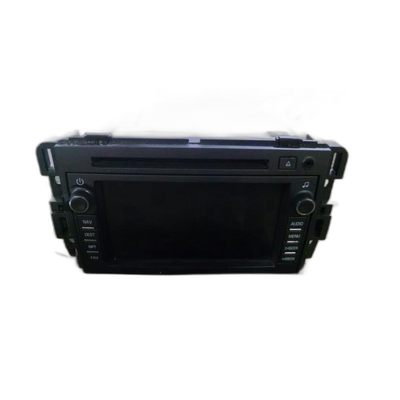
Below are the parts most often responsible for code U0191, ranked by how frequently each one is the actual culprit (per the diagnosis above). Tap any to see what we have for your vehicle.



The information in this article is provided for general reference and educational purposes only. Vehicle specifications, procedures, and part compatibility can vary by production date, trim level, and region. Always consult your vehicle's factory service manual and verify part numbers before purchasing or performing repairs. Safety-critical components such as airbags, seat belts, and braking systems should be installed by a qualified professional.
- 🧭 Diagnostic Flowchart
- 🎬 Helpful Videos
- 🛍️ Shop This Part
- What Does U0191 Mean?
- Can I Drive With U0191?
- Common Causes
- Symptoms
- Common Fixes & Costs
- DIY vs Professional
- Used vs. New Parts: Buying Guide
- What Happens If You Wait — Timeline
- Cost of Not Fixing It
- Diagnosis Steps
- When This Code Triggers (Freeze-Frame Conditions)
- Related Codes
- Climate & Environmental Factors
- How to Talk to a Mechanic About This Code
- Where to Take It: Dealer vs Independent vs Chain
- When to Walk Away From the Repair
- What Scan Tool You Need for This Code
- How to Clear the Code After You Fix It
- Will This Fail Emissions / State Inspection?
- Most Commonly Affected Vehicles
- Manufacturer-Specific Notes
- Real Owner Stories
- 2016 Dodge Grand Caravan at 110K miles
- 2019 Honda Odyssey at 45K miles
- 2018 Chrysler Pacifica at 70K miles
- How to Prevent This Code From Triggering
- Frequently Asked Questions
- Can I fix the U0191 code myself?
- What are common misdiagnosis mistakes for a U0191 code?
- Can a weak car battery cause a U0191 code?
- Will a U0191 code go away on its own?
- What is the CAN bus?
- Why did my rear screen stop working after the battery died?
- How much does it cost to diagnose a U0191 code?
- Can a bad ground wire cause a U0191 code?
- Key Takeaways
- 🎟️ Get 5% Off