

OBD-II Code U0219: Lost Communication With Driver Door Module
The Ultimate 2026 Guide: What U0219 Means, Why It Triggers, and How to Fix It for Good
- Broken wires inside the rubber door jamb boot cause over 80% of U0219 codes; perform a wiggle test here before buying parts.
- U0219 poses a severe safety risk by disabling or delaying driver's side airbag deployment during a crash.
- Verify the 15A to 30A door module fuse and test for 12V power at the connector before condemning the $200+ Driver Door Module.
- Replacing the Driver Door Module on modern Ford, VW, and BMW vehicles requires dealer-level software programming to restore window and lock functionality.
What Does U0219 Mean?
Code U0219 indicates the vehicle's main computer lost communication with the Driver Door Control Module (DDM). The DDM acts as a localized computer managing the door's electronic features via the car's CAN bus data network. When this data link breaks, the DDM goes offline, disabling the features it controls and storing the U0219 code.
Technical definition: Lost Communication With Door Switch E. (SAE/OBD-II standard definition, where "Door Switch E" designates the Driver Door Control Module).
Can I Drive With U0219?
Yes, But With Caution. You can drive the vehicle, but you lose control of driver's door functions like power windows, locks, and mirrors. This creates a significant safety risk: the communication loss disables or delays the driver's side airbag deployment during a crash. On specific models, it also triggers unexpected behaviors like the electronic parking brake engaging at low speeds.
Common Causes
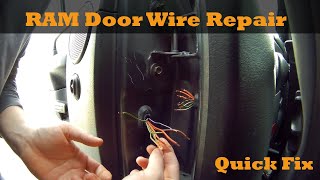
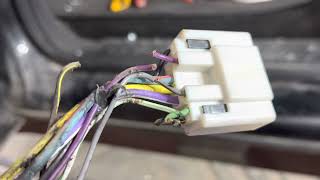
- Broken Wires in Door Jamb (Very Common) — The wiring harness inside the flexible rubber door boot is the primary culprit. These wires bend every time the door opens, causing metal fatigue and eventual breakage. This severs power, ground, or CAN bus communication to the module.
- Failed Driver Door Control Module (DDM) (Common) — The electronic module itself, frequently integrated into the master window switch panel, fails due to water intrusion from an open window, circuit board micro-cracks from door slamming, or standard component degradation.
- Corroded or Loose Connector (Common) — The main electrical connector at the DDM or the A-pillar loosens or corrodes. Moisture causes fretting corrosion on the pins, creating high electrical resistance that blocks data transmission.
- Blown Door Module Fuse (Common) — An electrical surge, a shorted wire in the door jamb, or an internal module fault blows the dedicated DDM fuse, instantly cutting power and halting communication.
- Low Battery Voltage or Poor Ground (Less Common) — Control modules require stable voltage (12V+) and a solid ground. A dying battery, failing alternator, or corroded chassis ground causes voltage drops that corrupt data packets and trigger communication codes.
- Failing Body Control Module (BCM) or Water Intrusion (Less Common) — The BCM acts as the central network hub. If it fails—often due to water leaking from clogged sunroof drains directly onto the module—it stops communicating with the DDM. This usually triggers multiple 'U' codes simultaneously.
- Software Glitch (Uncommon) — Manufacturers occasionally release Technical Service Bulletins (TSBs) containing software updates for the BCM or DDM to patch known communication logic errors.
- Aftermarket Accessory Interference (Uncommon) — Improperly installed remote starters, alarms, or audio systems tapped into the CAN bus introduce electrical noise that disrupts network communication.
Symptoms
- Complete failure of driver's door electronic controls — Power windows, locks, and mirrors on the driver's door stop working. This includes the inability to operate passenger windows from the master switch.
- Key fob fails to lock/unlock driver's door — Remote keyless entry operates the passenger doors, but the driver's door remains unresponsive because the DDM cannot receive the lock command.
- Incorrect door ajar status and interior lighting anomalies — The dashboard falsely shows the driver's door as open or closed. Consequently, interior dome lights stay on and drain the battery, or fail to illuminate entirely.
- Warning lights illuminated on dashboard — The Check Engine Light, Airbag warning light, or a specific 'Door Sensor Fault' message appears on the instrument cluster.
- Inadvertent window or parking brake activation — On specific vehicles (notably VW), sporadic harness shorts cause windows to roll down autonomously or the electronic parking brake to engage at low speeds.
- U0219 code present in scan tool memory (scan-tool only — no driver-felt sign) — The code is stored in the Body Control Module (BCM) and retrieved using an OBD-II scanner.
Diagnostic Flowchart
Tap your situation to follow the diagnostic path that matches what you're seeing on this code.
Common Fixes & Costs
- Repairing Broken Wires in Door Jamb — Parts: $10-$50, Labor: $150-$400, ~1.5 hr book time (Intermediate)
- Replacing a Blown Fuse — Parts: $1-$5, Labor: $0, ~0.1 hr book time (DIY)
- Replacing the Driver Door Control Module (DDM)
— Parts: $70-$900, Labor: $150-$300, ~1.0 hr book time
(DIY)
Ford F-150 (2015-2020): OEM
Chevrolet Silverado (2007-2013): OEM - Cleaning Connectors and Improving Grounds — Parts: $5-$15, Labor: $150-$200, ~1.0 hr book time (DIY)
- Replacing the Entire Door Wiring Harness
— Parts: $150-$500, Labor: $250-$500, ~2.5 hr book time
(Intermediate)
Volkswagen Atlas (2019-2023): OEM
DIY vs Professional
- Replacing a Blown Fuse 🟢 Beginner
Tools: Fuse puller, owner's manual. - Repairing Broken Wires in Door Jamb 🟢 Beginner
Tools: Wire strippers, soldering iron, heat shrink tubing, multimeter. - Replacing the Driver Door Control Module (DDM) 🟢 Beginner
Tools: Trim removal tools, screwdriver set.
Used vs. New Parts: Buying Guide
When a used part is worth it: For vehicles 10+ years old where the module is plug-and-play (no programming required) and OEM parts are discontinued.
Donor-vehicle mileage cap: roughly under 100000 miles for the part to have meaningful remaining life.
Donor quality checklist:
- Verify the part number matches exactly.
- Inspect connector pins for green corrosion indicating flood damage.
Decision logic:
- If The vehicle requires module programming (Ford, VW, BMW) → Buy new. Used modules are often locked to the donor vehicle's VIN and cannot be reprogrammed.
- If The cost of a new aftermarket part is under $100 → Buy new to secure a warranty and avoid premature failure.
Warranty tradeoff: Used parts offer 30-90 days. New aftermarket parts offer 1 year to lifetime. New OEM parts offer 1-2 years.
Worst-case if a used part fails: $200-$400 (Cost of the failed used part plus paying labor twice).
What Happens If You Wait — Timeline
- 0-1 month: Driver's door controls become intermittent or fail completely. Key fob fails to lock the door, creating a security risk. (MPG impact: 0%% · Added cost: $0)
- 1-3 months: False 'Door Ajar' warnings keep interior lights on, causing parasitic battery drains overnight. (MPG impact: 0%% · Added cost: $150-$250 (premature battery replacement))
- 3-6 months: Safety systems are compromised. The vehicle disables or delays the driver's side airbag deployment due to lack of door status data. (MPG impact: 0%% · Added cost: $0 (severe non-monetary safety risk))
- 6+ months: A severed power wire in the door jamb shorts against a data line, sending a voltage spike that destroys the Body Control Module (BCM). (MPG impact: 0%% · Added cost: $800-$1500 (BCM replacement and programming))
Cost of Not Fixing It
- Immediate: Loss of driver's door controls. Vehicle security is compromised if the door cannot be locked via the fob. (Added cost: 0)
- 0-6 Months: Severe safety risk. The vehicle disables the driver's side airbag. A shorted wire drains the battery overnight. (Added cost: $150-$250 (premature battery replacement))
- 6+ Months: A short-to-voltage in the damaged door harness sends a spike through the CAN bus, destroying the Body Control Module. (Added cost: $800-$1500 (BCM replacement))
Diagnosis Steps
- Check the Fuses
Locate the fuse box using the owner's manual. Find the 15A-30A fuse labeled for the DDM, power windows, or door locks. Replace it if blown. If the new fuse blows immediately, you have a dead short in the wiring.
Tools: Owner's manual, fuse puller (Beginner) - Perform a 'Wiggle Test'
Turn the ignition ON. Hold down the driver's window switch while aggressively wiggling the rubber wiring boot in the door jamb. If the window briefly moves, you have confirmed a broken wire inside that harness.
Tools: None (Beginner) - Visually Inspect the Door Jamb Harness
Pull back the rubber boot between the door and the chassis. Inspect for severed, frayed, or pinched wires. Focus on the thicker power/ground wires and the twisted pairs used for the CAN bus.
Tools: Flashlight (Beginner) - Analyze Live Data with a Scan Tool
Connect an advanced scan tool and attempt to communicate directly with the DDM. If the tool cannot connect, or if live data parameters (like 'Window Position') show default error values, you have a hard communication failure.
Tools: Advanced OBD-II Scan Tool (Advanced) - Inspect the DDM Connector
Remove the interior door panel to access the DDM. Unplug the main connector. Look for green/white corrosion, bent pins, or moisture. Clean with contact cleaner if necessary.
Tools: Trim removal tools, screwdriver set (Intermediate) - Test for Power and Ground at the Module
Using a multimeter and wiring diagram, probe the DDM connector with the ignition ON. Verify >12V on the power pin and <0.1V on the ground pin. Missing power or ground confirms an upstream wiring fault, not a bad module.
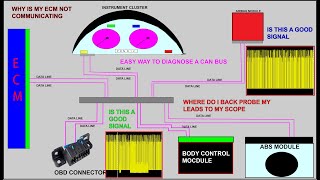
Tools: Multimeter, vehicle wiring diagram (Intermediate) - Check CAN Bus Network Resistance
Disconnect the battery. Measure resistance between the CAN High and CAN Low pins at the DDM connector. A healthy network reads ~60 Ohms. A 120 Ohm reading indicates an open circuit (broken wire); 0 Ohms indicates a short.
Tools: Multimeter, vehicle wiring diagram (Advanced) - Check CAN Bus Voltages
Reconnect the battery and turn ignition ON. Back-probe the CAN pins. CAN High should read ~2.7V and CAN Low should read ~2.3V. Readings of 0V or 5V indicate a short to ground or power.
Tools: Multimeter with back-probe pins, vehicle wiring diagram (Advanced) - Analyze CAN Bus Signal with an Oscilloscope
Connect oscilloscope probes to the CAN lines. Look for clean, mirrored square-wave patterns. Distorted signals or lazy rise times indicate network interference or a failing module transceiver.
Tools: Automotive oscilloscope, vehicle wiring diagram (Expert)
When This Code Triggers (Freeze-Frame Conditions)
- Module Voltage: 12.0-14.5V (A value below 11.5V indicates a weak battery or failing alternator triggered the communication drop.)
- System Time Since Key On: 1-5 seconds (The fault logs immediately upon startup as the BCM polls all network modules and fails to receive a handshake from the DDM.)
Related Codes
- U0199 — Lost Communication With Door Control Module A. Many manufacturers use this interchangeably with U0219 to describe the exact same driver's door fault.
- U0200 — Lost Communication With Door Control Module B (passenger door). If both U0219 and U0200 trigger simultaneously, suspect a failing BCM or a main CAN bus short.
- U0155 — Lost Communication With Instrument Panel Cluster. If present alongside U0219, the issue is a system-wide network crash, not an isolated door fault.
- B1325 — Device Power Circuit Voltage Below Threshold. Indicates the DDM is offline because it lacks 12V power, pointing directly to a blown fuse or severed power wire.
Climate & Environmental Factors
- Cold Weather: Sub-freezing temperatures make wire insulation brittle. This drastically increases the likelihood of wires snapping inside the door jamb harness from the repetitive motion of the door.
- High Humidity & Road Salt: Moisture combined with winter road salt accelerates fretting corrosion on connector pins, creating an insulating oxide layer that blocks CAN bus data transmission.
How to Talk to a Mechanic About This Code
Say this: "I have a U0219 code and my driver's door controls are dead. I've verified the fuse is good. Please start by inspecting the wiring in the door jamb before quoting a new module."
This directs the technician to the most likely point of failure (broken wires), preventing them from immediately quoting an expensive, unnecessary module replacement.
Avoid saying:
- Just fix whatever is wrong with the door.
- I think I need a new window switch.
Questions to ask before authorizing the repair:
- Did you perform a 'wiggle test' on the door harness?
- Did you confirm the module is receiving 12V power and ground at the connector?
- If quoting a new module, does the price include the required software programming?
Where to Take It: Dealer vs Independent vs Chain
- Dealer:
Use only if under warranty, recall, or if programming is strictly required.
Best for: Vehicles under warranty or active recall (VW Atlas)., Complex cases requiring brand-specific module programming.
Downsides: Highest labor rates ($180-$250/hr)., Likely to replace the entire $500 harness rather than perform a $150 wire repair. (Typical cost: +50% vs. baseline) - Independent Shop:
Best choice. An experienced independent tech quickly repairs the common wiring failure for the best value.
Best for: Out-of-warranty vehicles., Cost-effective diagnosis and repair of broken door jamb wires.
Downsides: May lack the software to program a new module on certain modern vehicles. (Typical cost: +0% vs. baseline) - Chain Shop:
AVOID. U0219 requires electrical troubleshooting skills not found at quick-lube chains.
Best for: Oil changes and tires.
Downsides: Technicians lack specialized CAN bus diagnostic skills., High pressure to sell unnecessary parts. (Typical cost: -10% vs. baseline)
What Scan Tool You Need for This Code
Minimum: An OBD-II scanner capable of reading 'U' (network) codes from the Body Control Module (BCM).
Cheap $20 engine-only readers cannot access the BCM and will not even see the U0219 code.
Budget: BlueDriver Pro Scan Tool (~$100) — Reads codes from all vehicle modules (BCM, ABS, SRS) to confirm U0219 and check for related network failures.
Mid-range: XTOOL D7 (~$350) — Offers bidirectional control. You can command the windows to roll down via the scanner. If it works, the wiring is good and the physical switch is bad.
Professional: Autel MaxiCOM MK808 / FORScan (~$500-1200) — Provides module programming capabilities. Essential if you are replacing the DDM on a modern Ford and need to perform Programmable Module Installation (PMI).
Rent vs buy: Auto parts stores scan codes for free, but use basic readers. If you plan to DIY the repair, invest in a midrange bidirectional scanner.
How to Clear the Code After You Fix It
- Repair the underlying electrical fault (wire, fuse, or module).
- Use an OBD-II scan tool to clear the U0219 code from the Body Control Module (BCM).
- Perform a 'window re-learn' procedure if the module was replaced to restore auto up/down functionality.
Drive cycle (~5 minutes): No specific drive cycle is required. Turn the ignition ON, operate the driver's windows and locks, and verify the code does not return immediately.
Readiness monitors affected: None directly. However, if the battery was disconnected for repair, all emissions monitors reset to 'incomplete'.
Before emissions retest: drive at least 50 miles to fully set monitors.
Watch out for:
- Clearing the code without fixing the broken wire guarantees the code returns instantly.
- Skipping the window normalization procedure leaves the auto-roll features disabled.
Will This Fail Emissions / State Inspection?
Yes — this code typically fails an OBD-II emissions inspection.
- California: Any 'U' code that illuminates the Check Engine Light causes an automatic Smog Check failure.
- New York: Active diagnostic trouble codes triggering the MIL result in an immediate safety/emissions inspection failure.
Most Commonly Affected Vehicles
- Ford F-150 / Super Duty (2015-2022) — Extremely prone to wire fatigue in the driver's door jamb. Replacement DDMs require Programmable Module Installation (PMI) via FORScan.
- Volkswagen Atlas / Atlas Cross Sport (2019-2023) — Subject to Safety Recall 97GF (NHTSA 22V-152) for harness fretting corrosion that delays side airbag deployment.
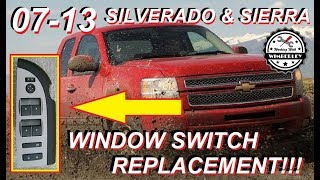
- Chevrolet / GMC Silverado / Sierra (2007-2014) — The DDM is integrated into the master window switch, which fails frequently. Replacement is typically plug-and-play.
- Dodge / Ram 1500 / 2500 / 3500 (2009-2018) — Heavy doors place extreme stress on the jamb wiring, leading to severed conductors and communication loss.
- BMW 3-Series / 5-Series (2006-2017) — The root cause is often a corrupted Footwell Module (FRM) caused by voltage spikes during battery replacement, not the door module itself.
- Chrysler / Dodge 300 / Charger (2011-2014) — Covered by TSB 08-061-12 for frequent wire breakage in the door jamb leading to U0199/U0219 codes.
- Jeep Grand Cherokee (2011-2021) — Water intrusion into the door module connectors via leaking window seals is the primary trigger.
- Hyundai / Kia Elantra / Optima (2011-2018) — High failure rate of the flexible door jamb harness wiring.
Manufacturer-Specific Notes
- General Motors: The DDM is integrated into the master window switch. After replacement, you must perform a 'window re-learn' procedure to restore the auto up/down feature.
- Ford: A new DDM must be programmed to the vehicle's VIN using IDS or FORScan software. An unprogrammed module will not operate the windows or locks.
- Volkswagen: Recall 97GF addresses this specific code. The official fix involves securing the harness and applying a specialized stabilizing compound to the connector pins.
- BMW: Diagnose the Footwell Module (FRM) first. The FRM controls door communication and frequently 'bricks' during low voltage events, requiring specialized repair.
Real Owner Stories
2011 Ford F-150 - The Classic Broken Wire
Driver's side power windows, locks, and mirrors completely failed overnight.
Outcome: Pulled back the rubber boot in the door jamb and found a thick black ground wire completely severed. Splicing the wire restored all functions. Returned the unneeded switch.
Lesson: Never replace the module without inspecting the door jamb wiring first. A broken wire is the most common cause.
2020 VW Atlas - A Dangerous Recall
Experienced sporadic issues: driver's door wouldn't open, windows rolled down autonomously, and a 'Faulty Door Sensor' warning appeared.
Outcome: The dealer identified the vehicle as part of VW Safety Recall 97GF. Fretting corrosion on the A-pillar harness connector caused the communication loss. The dealer replaced the harness and applied stabilizing compound for free.
Lesson: Always check your VIN for active safety recalls. This specific defect delays side airbag deployment.
2011 Chevy Silverado - The Misdiagnosis Cascade
Replaced the master window switch to fix a heated seat issue. Afterward, only the driver's window worked; all other door functions died.
Outcome: The new DDM required dealer-level programming. The unprogrammed module crashed the entire vehicle network. A trip to the dealer for programming resolved all cascading failures.
Lesson: Replacing a door module on modern trucks is rarely plug-and-play. Factor in programming costs before attempting a DIY swap.
How to Prevent This Code From Triggering
- Lubricate the Door Jamb Harness Boot (Every 2 years) — Spraying silicone lubricant on the rubber boot keeps it flexible, reducing friction and strain on the internal wires during door operation.
- Apply Dielectric Grease to Connectors (During any door panel service) — A thin layer of dielectric grease seals out moisture, preventing the fretting corrosion that blocks data transmission.
- Clean Sunroof and Door Drains (Annually) — Prevents water from pooling inside the door and submerging the DDM, or leaking onto the BCM inside the cabin.
- Avoid Violent Door Slams (Daily) — Harshly swinging the door to its mechanical stop puts immense stress on the wiring harness flex point, accelerating wire fatigue.
Frequently Asked Questions
What is the most common mistake when diagnosing U0219?
The most common and costly mistake is replacing the Driver Door Module (DDM) without first proving the wiring is intact. Broken wires in the flexible door jamb harness cause the vast majority of U0219 codes. Always perform a 'wiggle test' and check for power, ground, and network signals before condemning the module.
Can a bad battery cause a U0219 code?
Yes. A weak battery causes low voltage across the entire vehicle network. Control modules fail to boot up correctly or drop communication when system voltage fluctuates, triggering U0219.
How do I reset the driver door module?
You cannot 'reset' a physical fault like a broken wire or failed module. Disconnecting the battery clears the code temporarily, but it returns immediately upon startup if the main computer cannot reach the DDM. You must repair the underlying electrical problem.
Can I replace the Driver Door Module myself?
On older vehicles, the DDM is often a plug-and-play master window switch that a DIYer can easily replace. However, modern vehicles (especially Ford, BMW, and VW) require professional programming to match the new module to the car's VIN. Failure to program the module leaves it non-functional.
Will clearing the code fix the problem?
No. U0219 indicates a persistent, hard loss of connection. Clearing the code with a scan tool makes it disappear for a second, but it reappears instantly as the main computer fails to establish communication.
Is U0219 a serious safety issue?
Yes. The DDM is a critical part of the vehicle's safety system. A communication loss delays or disables the deployment of the driver's side airbag in a crash, significantly increasing injury risk.
How much does it cost to diagnose a U0219 code?
Most repair shops charge a one-hour diagnostic fee ranging from $150 to $200. This fee covers the technician's time to perform initial electrical tests and trace the fault. Shops typically apply this fee as a credit toward the total repair cost if you approve their quote.
Key Takeaways
- Broken wires inside the rubber door jamb boot cause over 80% of U0219 codes; perform a wiggle test here before buying parts.
- U0219 poses a severe safety risk by disabling or delaying driver's side airbag deployment during a crash.
- Verify the 15A to 30A door module fuse and test for 12V power at the connector before condemning the $200+ Driver Door Module.
- Replacing the Driver Door Module on modern Ford, VW, and BMW vehicles requires dealer-level software programming to restore window and lock functionality.
Helpful Videos
Shop the Parts Behind U0219
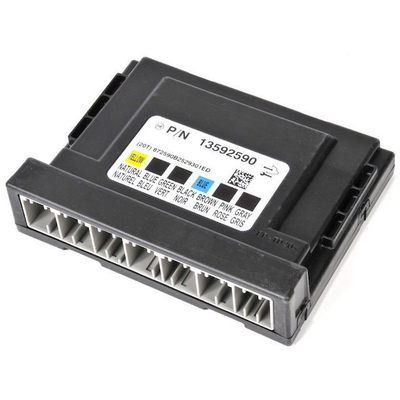
Below are the parts most often responsible for code U0219, ranked by how frequently each one is the actual culprit (per the diagnosis above). Tap any to see what we have for your vehicle.



The information in this article is provided for general reference and educational purposes only. Vehicle specifications, procedures, and part compatibility can vary by production date, trim level, and region. Always consult your vehicle's factory service manual and verify part numbers before purchasing or performing repairs. Safety-critical components such as airbags, seat belts, and braking systems should be installed by a qualified professional.
- 🧭 Diagnostic Flowchart
- 🎬 Helpful Videos
- 🛍️ Shop This Part
- What Does U0219 Mean?
- Can I Drive With U0219?
- Common Causes
- Symptoms
- Common Fixes & Costs
- DIY vs Professional
- Used vs. New Parts: Buying Guide
- What Happens If You Wait — Timeline
- Cost of Not Fixing It
- Diagnosis Steps
- When This Code Triggers (Freeze-Frame Conditions)
- Related Codes
- Climate & Environmental Factors
- How to Talk to a Mechanic About This Code
- Where to Take It: Dealer vs Independent vs Chain
- What Scan Tool You Need for This Code
- How to Clear the Code After You Fix It
- Will This Fail Emissions / State Inspection?
- Most Commonly Affected Vehicles
- Manufacturer-Specific Notes
- Real Owner Stories
- 2011 Ford F-150 - The Classic Broken Wire
- 2020 VW Atlas - A Dangerous Recall
- 2011 Chevy Silverado - The Misdiagnosis Cascade
- How to Prevent This Code From Triggering
- Frequently Asked Questions
- What is the most common mistake when diagnosing U0219?
- Can a bad battery cause a U0219 code?
- How do I reset the driver door module?
- Can I replace the Driver Door Module myself?
- Will clearing the code fix the problem?
- Is U0219 a serious safety issue?
- How much does it cost to diagnose a U0219 code?
- Key Takeaways
- 🎟️ Get 5% Off