

OBD-II Code U0233: Lost Communication With Side Obstacle Detection Control Module B
The Ultimate Guide to U0233: What it means, why it triggers, and how to fix it for good
- Code U0233 indicates a total communication loss with the passenger-side blind spot module, instantly disabling blind-spot and rear cross-traffic alerts.
- Corroded wiring harnesses behind the rear bumper and water leaking into taillight assemblies cause over 80% of U0233 failures.
- The vehicle remains mechanically safe to drive, but the loss of ADAS features increases lane-change collision risk by up to 14%, requiring strict manual mirror checks.
- Repair costs range from $150 for simple wiring fixes to over $1,200 for module replacement, as new modules require professional ADAS calibration tools to function.
What Does U0233 Mean?

U0233 means your car's main computer has lost all communication with the passenger-side blind spot sensor (officially called the 'Side Obstacle Detection Control Module B'). Because the computer cannot receive data from this sensor, it shuts down the entire blind spot and cross-traffic system as a safety precaution and triggers a dashboard warning.
Technical definition: The SAE/OBD-II definition is 'Lost Communication With Side Obstacle Detection Control Module B'. This network code indicates the Controller Area Network (CAN bus) detects a total communication failure with the passenger-side blind spot module. On systems utilizing a master/slave configuration (like Toyota and Mazda), this code sets when the driver's side master module loses its dedicated communication link with the passenger side slave module.
Can I Drive With U0233?
Yes, But With Caution. The vehicle is mechanically safe to drive because this code does not affect the engine, transmission, or brakes. However, blind-spot monitoring and rear cross-traffic alerts are completely disabled. This increases the risk of a side-swipe collision when changing lanes or backing up. You must strictly use your mirrors and turn your head to check blind spots manually until the system is repaired.
Common Causes

- Damaged or Corroded Wiring/Connectors (Very Common) — Blind spot modules sit behind the rear bumper, exposing them to moisture, road salt, and debris. This harsh environment causes wire breakage, chafed insulation, and green copper corrosion on connector pins, instantly severing the CAN bus signal.
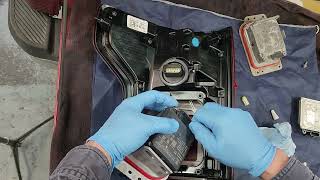
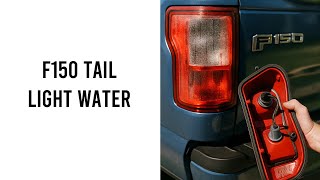
- Water Intrusion into Module or Taillight (Very Common) — Failing taillight seals (especially on Ford F-150s 🎬 Watch: How a shorted taillight causes multiple system faults.) funnel water directly onto the blind spot module, causing catastrophic short circuits. Module casings also crack from vibration, allowing water intrusion.
- Failed Blind Spot Module (Common) — Modules fail internally due to water damage, vibration-induced cracked solder joints, or a burnt-out CAN transceiver.
- Blown Fuse (Common) — A dedicated or shared fuse supplies power to the blind spot system. If this fuse blows due to a short circuit, the module loses power and drops off the network.
- Poor Power or Ground Connection (Less Common) — The module requires a stable 12V power supply and a solid chassis ground. A loose or heavily rusted ground bolt prevents the module from powering on.
- Physical Damage from Impact (Less Common) — Minor parking lot bumps or rear-end accidents crack the module's housing, damage the internal radar sensor, or sever the wiring harness, leading to immediate failure.
- Low Battery Voltage (Less Common) — ADAS modules are highly sensitive to system voltage. A weak battery causes unpredictable communication errors during vehicle startup, triggering U0233 even if the blind spot hardware is perfectly fine.
- CAN Bus Network Fault (Rare) — A short in the main CAN bus wiring or a failure in the Body Control Module (BCM) disrupts communication for multiple components simultaneously.
Symptoms

- Blind Spot Warning Light On or Flashing — The system status indicator light on your dashboard or side mirror stays illuminated constantly, flashes, or fails to turn on at all.
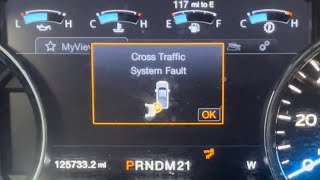
- Dashboard Warning Message — A prominent message such as 'Blind Spot System Fault,' 'Service Side Detection System,' or 'Cross Traffic System Fault' appears on the instrument cluster.
- Loss of ADAS Alerts — The system completely fails to illuminate mirror indicators, sound chimes, or warn of approaching cross-traffic when reversing.
- Intermittent False Alerts Before Failure — Prior to total failure, the system behaves erratically, giving false warnings when no car is present or failing to detect a car that is there.
Diagnostic Flowchart
Tap your situation to follow the diagnostic path that matches what you're seeing on this code.
Common Fixes & Costs
- Repair Damaged Wiring or Clean Connectors — Parts: $5 - $30, Labor: $150 - $350, ~1.5 hr book time (Intermediate)
- Replace the Failed Blind Spot Module
— Parts: $600 - $1,400, Labor: $200 - $400 (includes calibration), ~3.5 hr book time
(Professional)
Ford F-150 (2015-2016): OEM FL3Z-14C689-A (Alt: Standard Motor Products BSD77)
Ford F-150 (2017-2020): OEM HC3Z-14C689-D (Alt: Various unbranded online)
Chevrolet/GMC Traverse, Acadia (2013-2017): OEM 84440529 (Alt: Standard Motor Products BSD107)
Toyota Tacoma (2016-2018): OEM 88162-04015 (Alt: Limited availability) - Replace Blown Fuse — Parts: $1 - $10, Labor: $0 - $50, ~0.1 hr book time (DIY)
- Repair Faulty Ground Connection — Parts: $5 - $15, Labor: $100 - $200, ~1.2 hr book time (Intermediate)
- Reprogram or Update Module Software — Parts: $0, Labor: $150 - $250, ~1.5 hr book time (Professional)
Used vs. New Parts: Buying Guide
When a used part is worth it: Buying a used module is highly risky and generally not recommended due to the critical need for programming and calibration. It only makes sense if you have a guaranteed-to-work part from a reputable source and professional-level tools to perform the programming.
Donor-vehicle mileage cap: roughly under 50000 miles for the part to have meaningful remaining life.
Donor quality checklist:
- Verify donor vehicle was not a flood or front/rear collision vehicle.
- Match the part number exactly; superseded numbers may not be backward-compatible without dealer software.
- Get a warranty or return policy in writing, specifically covering functionality after programming.
Decision logic:
- If The vehicle is under warranty or the budget allows → Always buy a new OEM part. The reliability and guarantee of function outweigh the cost savings.
- If Budget is the primary concern and you accept the risk → A used part is an option, but factor in the cost of a failed attempt. A new aftermarket part is often a better compromise.
- If The manufacturer requires modules to be replaced in pairs (e.g., Mazda) → Buying used is extremely risky; buy a new pair to ensure compatibility and proper configuration.
Warranty tradeoff: Used parts: Typically 30-90 day warranty, which may expire before you discover a post-programming issue. Aftermarket new: 1-year to limited lifetime warranty. OEM new: 12-month/12,000-mile warranty is standard.
Worst-case if a used part fails: $500-1000. If a used module fails to program, you must pay for the labor a second time and purchase another module.
What Happens If You Wait — Timeline
- Immediate: Code U0233 sets. A 'Blind Spot System Fault' message appears. Passenger-side blind spot and rear cross-traffic alert systems are completely disabled. (MPG impact: 0%% · Added cost: $0)
- 0-6 months: The driver must rely exclusively on mirrors. The statistical risk of a lane-change collision increases by up to 14%. The initial cause (e.g., water intrusion) slowly worsens. (MPG impact: 0%% · Added cost: Potential for a minor wiring repair to become a more expensive module replacement if water intrusion continues unchecked.)
- 6-12 months: Sustained exposure to moisture causes corrosion to spread from the connector to the module pins, guaranteeing the need for module replacement. A simple wiring fix is no longer possible. (MPG impact: 0%% · Added cost: $500-$1400 (The cost of a new module that was avoidable if the initial water leak was fixed promptly).)
- 12+ months: The non-functional system becomes 'normal' to the driver. The primary risk is an at-fault lane-change or backing accident. (MPG impact: 0%% · Added cost: $500 - $10,000+ (Cost of an at-fault collision including insurance deductibles and rate increases).)
Cost of Not Fixing It
- Immediate: Loss of passenger-side blind spot and rear cross-traffic alerts. Increased risk of side-swipe or backing collisions. (Added cost: 0)
- 1-6 months: Driver becomes accustomed to manually checking blind spots, but complacency sets in. The non-functional warning light becomes 'normal', increasing risk if the driver forgets the system is offline. (Added cost: 0)
- 6+ months: Significantly increased statistical risk of an at-fault lane-change collision. A minor wiring issue worsens, making the eventual repair more difficult and expensive. (Added cost: Potential insurance deductible and rate increase from an at-fault accident.)
Diagnosis Steps
- Read All Trouble Codes
Use a professional OBD-II scanner to confirm U0233 is present. Check for other 'U' codes (like U0232 for the driver's side) or 'B' codes. Multiple codes point to a shared power, ground, or main network issue rather than a single module failure.
Tools: Professional OBD-II Scan Tool (Beginner) - Check the BSM Fuse
Consult your owner's manual to locate the fuse for the blind spot monitoring system (often labeled 'BSM' or 'SOD'). Visually inspect the fuse and replace it if blown.
Tools: Owner's Manual, Fuse Puller or Pliers (Beginner) - Visually Inspect Wiring and Connectors
Access the passenger-side blind spot module behind the rear bumper. Inspect the wiring harness for chafing or breaks. Unplug the connector and meticulously check for green/white corrosion, bent pins, or water intrusion.
Tools: Flashlight, Trim Removal Tools (Intermediate) - Perform a Live 'Wiggle Test'
If the fault is intermittent, have an assistant wiggle the wiring harness near the module and along the frame while you monitor the module's communication status on a live scan tool. If communication drops, you have located the wire break.
Tools: Professional OBD-II Scan Tool, Assistant (Advanced) - Verify Power and Ground at the Module
Using a multimeter and wiring diagram, check for battery voltage (11-14V) at the power pin on the module's connector with the ignition on. Measure resistance between the ground pin and the vehicle chassis; it must be less than 1.0 ohm.
Tools: Multimeter, Vehicle Wiring Diagram (Advanced) - Test CAN Bus Resistance
With the battery disconnected, measure resistance between the CAN High and CAN Low wires at the module's connector. A healthy network reads approximately 60 ohms. A reading of 120 ohms indicates an open circuit or broken wire.
Tools: Multimeter, Vehicle Wiring Diagram (Advanced) - Test for CAN Bus Shorts
With the battery disconnected, check the resistance from the CAN High pin to chassis ground, and CAN Low to chassis ground. Both should show an open circuit (OL). A low resistance reading indicates a short to ground.
Tools: Multimeter, Vehicle Wiring Diagram (Advanced) - Check Live CAN Bus Voltages
With the ignition on and battery connected, back-probe the CAN pins. Set the multimeter to DC volts. CAN High should be approximately 2.6V to 3.5V; CAN Low should be 1.5V to 2.4V. Voltages stuck at 0V or 12V indicate a hard short.
Tools: Multimeter, Back-probe Kit, Vehicle Wiring Diagram (Professional) - Isolate the Module
If you suspect the module is shorting the network, leave it disconnected, clear the codes, and rescan. If other previously offline modules come back online, the blind spot module has an internal short and requires replacement.
Tools: Professional OBD-II Scan Tool (Professional) - Module Programming and Calibration
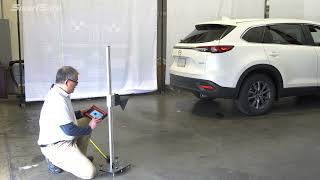
If replacing the module, you must use manufacturer-specific software to program the new module to the vehicle's VIN and perform a dynamic or static radar calibration procedure.
Tools: Manufacturer-Specific Scan Tool (e.g., Techstream, FORScan), ADAS Calibration Targets (Professional)
When This Code Triggers (Freeze-Frame Conditions)
- System Voltage: 11.5V - 14.5V (Fault triggers at key-on if voltage is low, or during operation if voltage is unstable.)
- Vehicle Speed: 0 mph or >35 mph (Code sets at startup (0 mph) during the network check, or at highway speeds when the BSM system is actively scanning.)
- Ignition Status: ON / RUN (The network communication check that identifies the fault occurs when the ignition is on.)
- Network Status: Module Not Communicating (Freeze frame shows the Side Obstacle Detection Module B is offline, while other modules remain online.)
Related Codes
- U0232 — Lost Communication With Side Obstacle Detection Control Module A (driver's side). If both U0232 and U0233 are present, the fault is in a shared component like a fuse, power supply, or the main CAN bus wiring.
- U0140 — Lost Communication With Body Control Module (BCM). The BCM acts as the network gateway for the blind spot system. If present with U0233, the problem is a widespread network issue or faulty BCM.
- C1AB7 — Blind Spot Monitor Slave Module. This chassis code points to an internal fault or misalignment of the passenger side module. It is often seen alongside U0233 in Toyota TSBs.
- U0423 — Invalid Data Received From Side Obstacle Detection Control Module B. The computer receives data, but it is corrupt. This happens due to a software glitch or internal module fault, often preceding a complete communication loss (U0233).
Climate & Environmental Factors
- High Humidity & Road Salt: These are the primary drivers of corrosion for module connectors and wiring harnesses located behind the rear bumper. Regions with harsh winters that use road salt see a significantly higher incidence of this failure.
- Heavy Rain & Snow: Heavy precipitation causes water intrusion. On vehicles like the Ford F-150, water leaks past taillight seals directly onto the module. Constant tire spray forces water into failing harness connector seals.
- Mud & Debris: Driving on dirt or gravel roads cakes the rear bumper and sensor area with mud. This traps moisture against electrical components, accelerating corrosion and leading to connection failures.
How to Talk to a Mechanic About This Code
Say this: "I have a U0233 code indicating a communication loss with the passenger-side blind spot module. Please test for power, ground, and CAN bus signals at the module connector, and inspect the harness for corrosion before quoting a module replacement."
This proves you understand the system. It forces the technician to perform a proper electrical diagnosis first, preventing them from immediately quoting a $1,200 module replacement for what might be a $150 corroded wire repair.
Avoid saying:
- 'My blind spot light is on.'
- 'Just fix whatever is wrong with the blind spot system.'
- 'My car is acting weird, can you look at it?'
Questions to ask before authorizing the repair:
- Did you confirm the module is receiving 12V power and has a ground resistance under 1 ohm?
- Did you test the CAN bus communication wires for shorts or opens?
- If replacing the module, does your quote include the mandatory ADAS programming and calibration?
- Is there an active Technical Service Bulletin (TSB) for this issue on my specific vehicle?
Where to Take It: Dealer vs Independent vs Chain
- Dealer:
Best for: Vehicles under warranty., Complex manufacturer-specific issues (e.g., Mazda paired-module replacements, Toyota TSBs)., Guaranteed access to OEM ADAS calibration targets and programming software.
Downsides: Highest labor and parts costs, typically 50-100% more than independent shops., Technicians often default to replacing entire assemblies rather than repairing a single broken wire. (Typical cost: +50% vs. baseline) - Independent Shop:
Acceptable, with strict screening. Excellent for wiring repairs. Before authorizing a module replacement, you must ask: 'Do you own the specific ADAS targets and software to calibrate a new blind spot module for my exact vehicle?'
Best for: Out-of-warranty vehicles where cost is a major factor., Diagnosing and repairing wiring harness and connector faults., Shops specializing in automotive electrical diagnostics.
Downsides: Many lack the $10,000+ ADAS calibration equipment required to aim a new module., Quality and network diagnostic expertise vary widely. (Typical cost: +0% vs. baseline) - Chain Shop:
AVOID. This complex network and safety system repair falls entirely outside the scope of quick-lube and chain tire shops.
Best for: Tires, brakes, and basic fluid changes.
Downsides: Technicians lack training for CAN bus network diagnostics., Shops almost never possess ADAS calibration equipment., High risk of misdiagnosis leading to unnecessary parts swapping. (Typical cost: -10% vs. baseline)
When to Walk Away From the Repair
If the repair cost for this non-essential safety feature exceeds 30% of your car's private-party value, consider driving without the feature and relying strictly on manual mirror checks.
- Car worth $15000, fix is $1200: Fix it. The repair is a small fraction of the vehicle's value and restores a highly desirable safety feature for resale.
- Car worth $6000, fix is $1800: Borderline. The repair is 30% of the car's value. Pay for a diagnostic to see if it's a cheap wiring fix. If it requires a new module, consider leaving it broken.
- Car worth $3500, fix is $1800: Walk away. The repair cost exceeds 50% of the car's value. It is financially irresponsible to fix.
What Scan Tool You Need for This Code
Minimum: A scanner capable of reading manufacturer-specific 'U' (Network) codes from the Body Control Module (BCM) and ADAS modules.
A basic $20 code reader only reads powertrain ('P') codes from the engine computer. It cannot communicate with the blind spot network, so it will falsely report 'No Codes Found'.
Budget: BlueDriver Pro Scan Tool (~$100) — Connects via Bluetooth to your smartphone to read and clear enhanced network codes like U0233. It confirms the code is present but cannot perform the bidirectional tests or calibration needed for a full repair.
Mid-range: Foxwell NT510 Elite (~$200) — Provides full system diagnostics, reads live data from the BSM module, and features bidirectional control to test component functionality. This is the minimum tool required to verify if the module is receiving power and communicating intermittently.
Professional: Autel MaxiCOM MK808S (~$450) — A tablet-based diagnostic tool with advanced bidirectional controls and the ability to perform ADAS calibration and programming functions required after replacing a blind spot module on most vehicles.
Rent vs buy: Free 'loaner' scanners from auto parts stores are basic code readers and cannot diagnose U0233. Buy the 'Budget Pick' to verify the code. Buy the 'Midrange Pick' for serious DIY electrical testing. The 'Pro Pick' is only necessary if you intend to program a new module yourself.
How to Clear the Code After You Fix It
- Reconnect battery if disconnected for repair.
- Use a compatible OBD-II scan tool to clear all DTCs from all modules.
- Perform a full drive cycle to allow all system monitors to run and confirm the fix.
Drive cycle (~30 minutes): Start the engine and idle for 2-3 minutes. Drive in mixed city/highway conditions, including steady speeds of 40-60 mph for at least 10 minutes to ensure the BSM system activates and self-tests. Include several stops and key-off/key-on cycles.
Readiness monitors affected: This code does not directly affect primary emissions readiness monitors like Catalyst or O2 sensors.
Before emissions retest: drive at least 50 miles to fully set monitors.
Watch out for:
- Clearing the code without fixing the root cause results in the code returning immediately.
- Using a basic code reader that only clears powertrain (P-codes) will not clear a network (U-code) from the BCM.
- Forgetting to perform the calibration step after a module replacement prevents the system from working and sets new codes.
Will This Fail Emissions / State Inspection?
No — by itself this code doesn't fail OBD inspection (but it can keep readiness monitors from setting, which causes a separate fail).
- California: This code will not cause a smog check failure by itself, as it does not illuminate the Malfunction Indicator Lamp (MIL). However, if the fault prevents the testing equipment from communicating with the vehicle's ECU, the test cannot be completed.
- New York: A U0233 code will not fail the OBD-II emissions inspection. It represents a failed safety system, which could potentially be flagged during the separate annual safety inspection, though enforcement varies.
- Texas: In counties requiring emissions testing, this code will not cause a failure as it does not affect the MIL. It may be noted during the annual safety inspection portion, but is not listed as a specific failure criterion.
Most Commonly Affected Vehicles
- Ford F-150 (2015-2020) — Extremely common issue caused by water intrusion into the taillight assembly, which houses the module. The entire taillight assembly may require replacement.
- Ford Expedition, Edge (2015-2022) — Failures of the Side Obstacle Detection Module (SODR) and related wiring harnesses are frequent. A failing DC/DC converter powering the modules is sometimes the root cause.
- Chevrolet / GMC Traverse, Acadia, Tahoe, Yukon (2013-2017) — A known issue with water intrusion into the module harness connector is addressed by TSB 16-NA-178. The fix requires replacing the harness and both modules.
- Toyota Tacoma (2016-2018) — TSB T-SB-0063-19 addresses this problem. The official fix replaces both the master (LH) and slave (RH) sensors with updated parts.
- Mazda CX-5, Mazda3, Mazda6 (2014-2020) — If the passenger (RH) module is replaced, the driver (LH) module MUST be replaced simultaneously for the system to configure properly.
- Jeep / Chrysler / Dodge Grand Cherokee, Durango, Pacifica (2014-2020) — Wiring damage and module failure behind the rear bumper are the most common causes, often presenting as intermittent faults initially.
- Honda CR-V, Pilot (2017-2022) — Module failures are common. The part number for the left sensor on a 2017-2022 CR-V is often 36935-TLA-A21.
- Hyundai / Kia Various Models (2017-2022) — Failures of the Blind-Spot Collision-Avoidance Assist systems are common, frequently caused by low battery voltage or sensor hardware faults.
Manufacturer-Specific Notes
- General Motors (Chevrolet/GMC): TSB 16-NA-178 for 2013-2014 Traverse/Acadia identifies water intrusion in the harness connector. The repair involves replacing the harness and BOTH modules, then packing the new connectors with dielectric grease.
- Mazda: Mazda requires the left and right modules to be a matched pair. If the right (RH) 'slave' module is replaced, the left (LH) 'master' module must also be replaced to allow for proper system configuration.
- Toyota/Lexus: TSB T-SB-0063-19 for 2016-2018 Tacomas addresses U0233 by recommending the replacement of BOTH blind spot sensors with updated parts.
- Ford: On F-150s (2015-2020), the blind spot module is integrated into the taillight assembly. Water leaking past the taillight seal is the primary cause of failure. A failing DC/DC converter can also be misdiagnosed as a module failure.
Real Owner Stories
2018 Ford F-150 with intermittent faults
Owner experienced intermittent 'Blind Spot System Fault' messages that seemed random and would sometimes clear on their own.
Outcome: The wiggle test pinpointed a loose connection inside the main connector to the passenger-side module, caused by vibration. The connector was cleaned, secured, and the code did not return. Cost was 1 hour of diagnostic labor.
Lesson: Intermittent electrical faults are often caused by simple connection issues. A 'wiggle test' is a highly effective diagnostic step before replacing expensive components.
2014 GMC Acadia with 'Service Side Detection System' message
The 'Service Side Detection System' message appeared permanently. Codes U0232 and U0233 were stored.
Outcome: The mechanic followed GM TSB 16-NA-178, replacing the module wiring harness and BOTH side modules, then packing the new connectors with dielectric grease. Total repair cost exceeded $1,200.
Lesson: Check for TSBs related to your vehicle. In this GM case, the official repair requires replacing both modules and the harness to prevent a repeat failure, even if only one side shows a code.
2017 Mazda CX-5 after a minor bumper incident
A rear bumper was lightly tapped in a parking lot. A week later, the BSM OFF light illuminated and code U0233 appeared.
Outcome: The system still did not work. Research revealed that on Mazda vehicles, if the RH (slave) module is replaced, the LH (master) module MUST be replaced simultaneously as a matched pair. The owner had to purchase a new pair from the dealer.
Lesson: Always check for manufacturer-specific quirks. For Mazda, replacing only the U0233-related module is a costly mistake; they must be replaced as a pair.
How to Prevent This Code From Triggering
- Apply Dielectric Grease to Connectors (During any repair or inspection involving the rear bumper) — Dielectric grease is a non-conductive, silicone-based grease that seals electrical connectors from moisture. Applying it into the female end of the module connector prevents water and salt from reaching the pins, stopping corrosion.
- Inspect and Seal Taillight Assemblies (Annually, especially for Ford F-150 owners) — Failing taillight housing seals allow water to drip directly onto the blind spot module. Periodically remove the taillight, inspect for moisture, and apply clear automotive silicone sealant around the lens seam if a leak is found.
- Clean Bumper and Sensor Areas Regularly (After driving in mud, snow, or heavy rain) — Mud, ice, and road salt cake onto the rear bumper, trapping moisture against the wiring harness. Regularly washing the underside and inside corners of the bumper prevents buildup that accelerates corrosion.
- Secure and Protect Wiring Harnesses (Once, or after any rear-end collision repair) — Ensure the harness is properly secured in its clips, away from moving suspension parts or sharp edges. Wrap exposed sections with high-quality electrical tape or protective loom.
Frequently Asked Questions
Can I fix the U0233 code myself?
Simple fixes like replacing a blown fuse or cleaning a corroded connector are DIY-friendly. Diagnosing wiring faults requires a multimeter and intermediate electrical skills. However, replacing the module requires professional software for ADAS calibration, making it strictly a shop repair.
Why is it so expensive to fix?
High costs stem from the radar module's price ($600-$1,400 OEM) and the labor required. Mechanics must remove the rear bumper, diagnose the electrical fault, and perform a specialized calibration to aim the new sensor.
Will clearing the code make it go away?
Clearing the code only works temporarily if the fault was a one-time voltage drop. If you have a hard fault like a broken wire or dead module, U0233 returns immediately upon startup.
Do I have to replace both blind spot modules at the same time?
It depends on the manufacturer. Mazda requires replacing both modules as a matched pair if the passenger side fails. GM and Toyota often recommend replacing both via Technical Service Bulletins to prevent repeat failures.
My car was in a minor accident and now I have this code. Are they related?
Yes, they are directly related. Rear-end impacts frequently crack the module housing, break the mounting bracket, or sever the wiring harness, causing immediate communication loss.
What is the difference between a 'U' code and a 'Blocked Sensor' warning?
A 'Blocked Sensor' message means mud, snow, or ice is physically obstructing the radar's view. Code U0233 is a hard electrical fault indicating the computer cannot communicate with the sensor at all. Cleaning the bumper fixes a blocked sensor, but will not fix a U0233 code.
Can bad trailer wiring cause a U0233 code on my truck?
Yes. Faulty aftermarket trailer wiring can short the CAN bus circuit, disrupting communication to the blind spot modules and triggering U0233.
Key Takeaways
- Code U0233 indicates a total communication loss with the passenger-side blind spot module, instantly disabling blind-spot and rear cross-traffic alerts.
- Corroded wiring harnesses behind the rear bumper and water leaking into taillight assemblies cause over 80% of U0233 failures.
- The vehicle remains mechanically safe to drive, but the loss of ADAS features increases lane-change collision risk by up to 14%, requiring strict manual mirror checks.
- Repair costs range from $150 for simple wiring fixes to over $1,200 for module replacement, as new modules require professional ADAS calibration tools to function.
Helpful Videos
Shop the Parts Behind U0233
Below are the parts most often responsible for code U0233, ranked by how frequently each one is the actual culprit (per the diagnosis above). Tap any to see what we have for your vehicle.


The information in this article is provided for general reference and educational purposes only. Vehicle specifications, procedures, and part compatibility can vary by production date, trim level, and region. Always consult your vehicle's factory service manual and verify part numbers before purchasing or performing repairs. Safety-critical components such as airbags, seat belts, and braking systems should be installed by a qualified professional.
- 🧭 Diagnostic Flowchart
- 🎬 Helpful Videos
- 🛍️ Shop This Part
- What Does U0233 Mean?
- Can I Drive With U0233?
- Common Causes
- Symptoms
- Common Fixes & Costs
- Used vs. New Parts: Buying Guide
- What Happens If You Wait — Timeline
- Cost of Not Fixing It
- Diagnosis Steps
- When This Code Triggers (Freeze-Frame Conditions)
- Related Codes
- Climate & Environmental Factors
- How to Talk to a Mechanic About This Code
- Where to Take It: Dealer vs Independent vs Chain
- When to Walk Away From the Repair
- What Scan Tool You Need for This Code
- How to Clear the Code After You Fix It
- Will This Fail Emissions / State Inspection?
- Most Commonly Affected Vehicles
- Manufacturer-Specific Notes
- Real Owner Stories
- 2018 Ford F-150 with intermittent faults
- 2014 GMC Acadia with 'Service Side Detection System' message
- 2017 Mazda CX-5 after a minor bumper incident
- How to Prevent This Code From Triggering
- Frequently Asked Questions
- Can I fix the U0233 code myself?
- Why is it so expensive to fix?
- Will clearing the code make it go away?
- Do I have to replace both blind spot modules at the same time?
- My car was in a minor accident and now I have this code. Are they related?
- What is the difference between a 'U' code and a 'Blocked Sensor' warning?
- Can bad trailer wiring cause a U0233 code on my truck?
- Key Takeaways
- 🎟️ Get 5% Off