

OBD-II Code U0237: Lost Communication With Left Side Obstacle Detection Control Module
The Ultimate 2026 Guide to U0237: Why it triggers, how to fix it, and why it might be your radio.
- Code U0237 indicates the left rear blind spot radar sensor has stopped communicating with the vehicle's main CAN bus network.
- On 2020-2023 Ford models, this code is frequently a false alarm caused by a software glitch in the audio system, fixable with a $150-$300 dealer update.
- The most common physical failure is a corroded wiring connector behind the rear bumper, requiring a $200-$450 repair to splice in a new pigtail.
- Replacing a failed blind spot sensor costs $600 to $1,200 because it mandates a professional ADAS calibration procedure to aim the new radar unit correctly.
What Does U0237 Mean?
U0237 means the vehicle's CAN bus network lost connection with the left-side blind spot monitor. This radar sensor, located behind the rear bumper, detects vehicles in your driver-side blind spot. When communication breaks, the system shuts down and disables driver-side warnings.
Technical definition: The formal SAE/OBD-II definition is "Lost Communication With Side Obstacle Detection Control Module Left". On many 2020+ Ford vehicles, this code is misleadingly triggered by a software fault in the Audio Control Module (ACM) or Digital Signal Processor (DSP), not the blind spot sensor itself.
Can I Drive With U0237?
Yes, But With Caution. Yes, but you must manually shoulder-check. Blind spot monitoring and cross-traffic alerts are disabled, eliminating a critical safety layer. Failure to adapt dramatically increases side-collision risk.
Common Causes
- Software or Firmware Glitch (Ford Vehicles) (Very Common) — On 2020-2023 Ford models, the root cause is a software bug in the audio system's Digital Signal Processor (DSP). The DSP crashes and stops communicating on the network, logging U0237. A hard reset or dealer software update fixes this.
- Damaged Wiring or Corroded Connector (Very Common) — The blind spot sensor sits behind the rear bumper, exposing its wiring to water, road salt, and debris. Corrosion on the connector pins severs the communication link.
- Failed Left Blind Spot Sensor (Common) — The sensor module fails internally due to age, moisture intrusion, or physical damage from a minor rear-end collision.
- Blown Fuse (Less Common) — A blown fuse cuts power to the blind spot module, forcing it offline and triggering the communication code.
- Failing 12V Battery (Less Common) — Low system voltage from a dying battery prevents modules from initializing during startup, logging 'U' codes even if the hardware is perfectly fine.
- Rodent Damage (Rare) — Rodents chew through the soy-based wiring harnesses running to the rear bumper, causing an open or short circuit.
- CAN Bus Network Fault (Rare) — A short or open circuit in the shared CAN bus wiring harness prevents the module from communicating, usually setting multiple 'U' codes simultaneously.
- Incorrect Module Configuration (Rare) — If a module was recently replaced without proper dealer programming, the network rejects the new part.
Symptoms
- Blind Spot Monitoring Inoperative — The warning light on your driver-side mirror stays off, and the system is completely disabled.
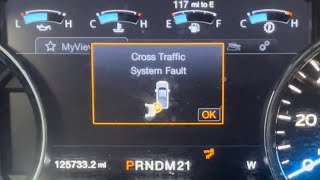
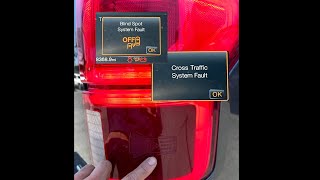
- Dashboard Warning Message — A "Check Blind Spot System" or "Blind Spot Alert Unavailable" message appears in the instrument cluster, often accompanied by a yellow triangle icon.
- Cross-Traffic Alert Inoperative — The rear cross-traffic alert system uses the same radar sensors and disables itself alongside the blind spot monitor.
- Audio System Malfunctions (Ford) — On Ford vehicles, the radio screen goes blank, speakers produce no sound, and system warning chimes route through 🎬 Watch: Fix for F-150 blind spot and cross traffic faults the dashboard instead of the main speakers.
- U0237 Code Stored (scan-tool only — no driver-felt sign) — An OBD-II scanner reads the U0237 code, confirming the communication loss.
Diagnostic Flowchart
Tap your situation to follow the diagnostic path that matches what you're seeing on this code.
Common Fixes & Costs
- Software Update (Dealer) — Parts: $0, Labor: $150-$300, ~1.5 hr book time (Professional)
- Repair Damaged Wiring or Connector — Parts: $30-$60, Labor: $200-$450, ~2.5 hr book time (Intermediate)
- Replace Left Blind Spot Sensor
— Parts: $300-$600, Labor: $250-$600 (includes mandatory ADAS calibration), ~3.5 hr book time
(Professional)
Ford F-150 (2021-2023): OEM
Chevy/GMC Silverado/Sierra (2019+): OEM - Repair/Replace Audio Module (Ford)
— Parts: $180-$450, Labor: $100-$200, ~1.2 hr book time
(Intermediate)
Ford Explorer (2020-2021): OEM - Replace Blown Fuse — Parts: $1-$5, Labor: $0, ~0.1 hr book time (DIY)
DIY vs Professional
- Replace Blown Fuse 🟢 Beginner
Tools: Owner's manual, fuse puller. - Perform Hard Reset 🟢 Beginner
Tools: 10mm wrench. - Repair Damaged Wiring 🟢 Beginner
Tools: Soldering iron, heat shrink, multimeter, trim tools. - Replace Blind Spot Sensor 🟢 Beginner
Tools: Socket set, trim tools, ADAS calibration targets. - Software Update 🟢 Beginner
Tools: Manufacturer-specific diagnostic software (e.g., Ford FDRS).
Used vs. New Parts: Buying Guide
When a used part is worth it: A used sensor is cost-effective if it costs less than 50% of a new OEM part and the vehicle is over 8 years old.
Donor-vehicle mileage cap: roughly under 100000 miles for the part to have meaningful remaining life.
Donor quality checklist:
- Verify the part number and suffix letters match exactly.
- Source from a dry, rust-free climate.
- Ensure the donor vehicle was not rear-ended.
Decision logic:
- If The fault is a known software issue (Ford) → Do not buy parts; get a dealer software update.
- If The vehicle is under 5 years old → Buy a new OEM part for warranty coverage.
- If The budget is tight and the vehicle is older → Buy a used part, but factor in calibration costs.
Warranty tradeoff: Used parts offer 30-90 day warranties. New OEM parts carry 1-2 year warranties.
Worst-case if a used part fails: $400-$800 to pay for bumper removal and calibration a second time if the used part fails.
What Happens If You Wait — Timeline
- Immediate: Code U0237 stores. Blind spot and cross-traffic alerts disable. (MPG impact: 0%% · Added cost: $0)
- 1-3 months: Moisture degrades connector pins. On Fords, the audio system fails intermittently. (MPG impact: 0%% · Added cost: $0)
- 3-12 months: Corrosion destroys connector pins, requiring a new pigtail splice. (MPG impact: 0%% · Added cost: $200-$400)
- 12+ months: Corrosion travels up the wiring, requiring main body harness replacement. (MPG impact: 0%% · Added cost: $500-$1500)
Cost of Not Fixing It
- Immediate: Loss of blind spot monitoring and rear cross-traffic alerts, increasing collision risk. (Added cost: Potential insurance deductible ($500-$2000+) from an at-fault accident.)
- 1-6 months: On Ford models, ignoring the DSP fault leads to complete infotainment system failure. (Added cost: $0)
- 6+ months: Corrosion spreads up the wiring harness, requiring a main body harness replacement instead of a simple connector pigtail. (Added cost: $500-$1500)
Diagnosis Steps
- Check for Service Bulletins (TSBs)
Search online for TSBs for your specific vehicle. Ford has multiple bulletins (e.g., SSM 50739, 51778) dictating a software update for this exact issue.
Tools: Internet access (Beginner) - Perform a Hard Reset
Disconnect the negative terminal of your 12-volt battery for 30 minutes. This forces all modules to reboot and temporarily resolves Ford DSP software glitches.
Tools: 10mm wrench (Beginner) - Check the Fuse
Locate the fuse for the 'Blind Spot Monitor' or 'Driver Assist' system in your owner's manual. Replace it if blown.
Tools: Owner's manual, fuse puller (Beginner) - Perform a Visual Inspection
Access the blind spot module behind the driver's side rear bumper. Inspect the wiring harness and connector for chafing, cuts, or green/white corrosion.
Tools: Flashlight, trim removal tools (Beginner) - Test for Power and Ground
Disconnect the module. Using a multimeter and wiring diagram, verify 12.0-12.6V at the power pin and less than 0.5 Ω resistance at the ground pin.
Tools: Multimeter, vehicle-specific wiring diagram (Intermediate) - Scan Tool Live Data Analysis
Use a bi-directional scan tool to ping the Left Side Obstacle Detection Module (SODL). If the tool reports 'Not Present', the module is offline. On Fords, check if the ACM/DSP modules are also offline.
Tools: Bi-directional OBD-II Scan Tool (Advanced) - Check CAN Bus Voltages
With the key on, measure voltage on the CAN High and CAN Low wires at the module connector. Expect ~2.7V on CAN High and ~2.3V on CAN Low.
Tools: Multimeter, back-probe pins (Advanced) - Check CAN Bus Resistance
With the battery disconnected, measure resistance between CAN High and CAN Low. A healthy network reads 60 Ω. A 120 Ω reading indicates an open circuit.
Tools: Multimeter (Advanced) - Check Network Activity with an Oscilloscope
Connect an oscilloscope to the CAN lines. A healthy network shows clean, mirror-image square waves. A flat line confirms zero communication.
Tools: Oscilloscope, back-probe pins (Professional)
When This Code Triggers (Freeze-Frame Conditions)
- System Voltage: 11.5-14.5V (Low voltage prevents modules from initializing during startup.)
- Vehicle Speed: 0-70 mph (The fault logs at any speed, as the module requires constant communication.)
- Engine State: Key On, Engine Off (The code sets during the initial network 'handshake' before the engine starts.)
Related Codes
- U0238 — Lost Communication With Right Side Obstacle Detection Module. Seeing U0237 and U0238 together indicates a shared failure (like a Ford DSP glitch or a blown fuse), not two broken sensors.
- U0184 — Lost Communication With Radio. If paired with U0237, the fault is definitively in the audio system taking down the shared network.
- U0073 — Control Module Communication Bus A Off. Indicates a network-wide failure, such as a faulty gateway module or a shorted CAN bus harness.
- U3000 — Control Module Internal Electronic Failure. Confirms the blind spot module itself has suffered a fatal internal hardware failure.
Climate & Environmental Factors
- Water Intrusion: Degraded seals allow moisture into the module housing or connector, causing short circuits.
- Road Salt: Salt accelerates corrosion rapidly, destroying connector pins and compromising wiring insulation.
- Physical Impacts: Minor bumper taps crack the sensor housing or break mounting brackets, causing immediate failure or misalignment.
How to Talk to a Mechanic About This Code
Say this: "I have a U0237 code. If it's a Ford, please check for TSBs related to the DSP/audio module first. For other makes, please inspect the wiring and connector at the rear bumper for corrosion."
Directs the shop to the most likely and cheapest fixes first, preventing unnecessary sensor replacement.
Avoid saying:
- 'My blind spot monitor is broken, just fix it.'
- 'I think I need a new blind spot sensor.'
Questions to ask before authorizing the repair:
- Did you check for technical service bulletins (TSBs)?
- What tests did you perform to rule out a wiring or power problem?
- Does the estimate include mandatory ADAS calibration?
- Can you show me the corrosion on the connector?
Where to Take It: Dealer vs Independent vs Chain
- Dealer:
Best fit for Ford software issues and final calibration.
Best for: Vehicles under warranty., Ford models requiring FDRS software updates., Repairs requiring ADAS calibration.
Downsides: Highest labor rates., May prefer full module replacement over wiring repair. (Typical cost: +50% vs. baseline) - Independent Shop:
Good fit for hardware faults. Verify they have ADAS calibration tools.
Best for: Out-of-warranty vehicles with wiring corrosion., Diagnosing power and ground issues.
Downsides: May lack ADAS calibration equipment. (Typical cost: +0% vs. baseline) - Chain Shop:
AVOID. This code requires expertise beyond chain shops.
Best for: Checking a fuse.
Downsides: Lack advanced diagnostic tools., No ADAS calibration equipment., High risk of misdiagnosis. (Typical cost: -10% vs. baseline)
When to Walk Away From the Repair
If the repair cost exceeds 40-50% of the car's value and the feature is not critical, consider selling as-is.
- Car worth $5000, fix is $1800: Walk away. Sell the car 'as-is'.
- Car worth $25000, fix is $1200: Fix it. Restores a critical safety feature.
What Scan Tool You Need for This Code
Minimum: A scanner that performs a 'full system scan' to read 'U' codes from all modules (BCM, ACM, SODL).
Basic $20 engine readers cannot access the blind spot or audio modules and will falsely show 'No Codes Found'.
Budget: BlueDriver Pro (~$90) — Performs full-system scans to confirm which modules are offline.
Mid-range: Autel MaxiCOM MK808S (~$300) — Offers bi-directional control to actively test modules and view live CAN bus data.
Professional: Autel MaxiSys MS906 Pro (~$1200+) — Provides dealer-level diagnostics and performs mandatory ADAS calibration.
Rent vs buy: Buy. Free auto parts store scans only read engine codes, which is useless for U0237.
How to Clear the Code After You Fix It
- Reconnect the battery and module connectors.
- Use an OBD-II scan tool to clear the DTCs.
- Perform a complete drive cycle to verify the repair.
Drive cycle (~30 minutes): A cold start followed by mixed city driving and 10-15 minutes of steady highway speed at 55 mph.
Readiness monitors affected: Comprehensive Component Monitor
Before emissions retest: drive at least 50 miles to fully set monitors.
Watch out for:
- Clearing the code without fixing the root cause guarantees it will return immediately.
- Disconnecting the battery resets all emissions monitors, causing an automatic smog test failure until a drive cycle is completed.
- Replacing the sensor without performing ADAS calibration prevents the system from functioning.
Will This Fail Emissions / State Inspection?
No — by itself this code doesn't fail OBD inspection (but it can keep readiness monitors from setting, which causes a separate fail).
- California: The code itself passes, but disconnecting the battery to fix it resets readiness monitors, causing a failure until a drive cycle is completed.
- New York: Safety inspectors may fail the vehicle if a dashboard warning light for a safety system is illuminated.
- Texas: Passes emissions, but readiness monitors must be set if the battery was disconnected.
Most Commonly Affected Vehicles
- Ford F-150 (2021-2023) — Extremely prone to DSP software glitches causing this code. Fix is a software update, not sensor replacement.
- Ford Mustang Mach-E (2021-2022) — Covered under SSM 49737 for DSP module software faults.
- Ford Explorer / Expedition / Escape (2020-2022) — Included in TSBs SSM 50739 and 51778 for audio and communication DTCs.
- Chevrolet / GMC Silverado / Sierra (2016-2022) — Frequently caused by corrosion in the main module connector located on the frame rail under the truck bed.
- Honda CR-V (2020-2024) — Highly sensitive to calibration. Code appears after minor rear-end collisions if the mounting angle shifts.
- Toyota RAV4 / Camry (2019-2023) — Sensor location makes them susceptible to moisture intrusion and physical damage.
- Hyundai / Kia Sonata / Elantra (2020-2023) — Sensors are sensitive to rear impacts, causing internal failure.
- Subaru Outback / Forester (2018-2023) — Prone to sensor failure from moisture intrusion and road debris.
Manufacturer-Specific Notes
- Ford: On 2020+ models, U0237 is usually a 'ghost code' caused by the audio system's DSP crashing. Update the software; do not replace the sensor.
- General Motors: On trucks, the failure point is often the large, exposed wiring connector on the frame rail under the bed, not the sensor itself.
- Honda: Sensors require strict ADAS recalibration after any rear body work, even if the sensor wasn't directly hit.
- Stellantis: Module casing seals degrade quickly, allowing water to corrode the internal circuit board.
Real Owner Stories
2021 Ford F-150 with 30K miles
Blind spot fault message appeared, and the radio went completely dead.
What they tried:
- Performed a hard reset by disconnecting the battery for 15 minutes.
- Took the truck to the dealer after the reset only provided a temporary fix.
Outcome: The dealer diagnosed a DSP software fault per TSB 50739 and reprogrammed the module under warranty. The issue was resolved permanently.
Lesson: On modern Fords with audio failure, the problem is the DSP software. Do not replace the sensor.
2018 Chevy Silverado at 110K miles
Intermittent 'Service Safety Systems' message and U0237 code, worsening in wet weather.
What they tried:
- Checked the fuse (good).
- Inspected the main wiring harness connector on the frame rail.
Outcome: Found heavy corrosion in the frame rail connector. Cleaned the pins and applied dielectric grease. The $250 repair permanently cleared the code.
Lesson: On GM trucks, check the exposed frame rail connector for corrosion before assuming the sensor is dead.
2020 Honda CR-V after minor accident
Rear-ended at low speed. A week later, U0237 triggered.
What they tried:
- Cleared the code, but it returned immediately.
- Body shop confirmed the sensor wasn't physically broken.
Outcome: The dealer found the sensor's mounting bracket was slightly bent. Replacing the bracket and performing ADAS calibration fixed it for $1,200.
Lesson: Sensors require exact alignment. Post-collision faults mandate professional calibration.
2017 Ford Escape with 85K miles
Blind spot warning appeared after mice were seen in the garage.
What they tried:
- Visual inspection behind the rear bumper.
Outcome: Found chewed wires leading to the module. Spliced the wires and wrapped them in rodent-deterrent tape for under $30.
Lesson: Inspect wiring for rodent damage if parked outdoors or in garages.
How to Prevent This Code From Triggering
- Apply Dielectric Grease to Connectors (Once every 2-3 years.) — Creates a barrier against moisture and road salt, preventing corrosion.
- Clean Rear Bumper and Undercarriage (Seasonally, especially after winter.) — Washes away corrosive road salt and grime from the sensor housing.
- Inspect After Minor Impacts (After any rear collision.) — Catches cracked housings or bent brackets before water intrusion destroys the module.
- Use Rodent Deterrents (Ongoing if parked outdoors.) — Prevents rodents from chewing soy-based wire insulation.
Frequently Asked Questions
Why is my radio not working and I have a U0237 blind spot code?
On modern Fords, this is a known software glitch in the Digital Signal Processor (DSP). The DSP shares the network and triggers false communication codes when it crashes. The fix is a dealer software update, not a new sensor.
What is the most common misdiagnosis for code U0237?
Replacing the physical blind spot sensor on Ford vehicles. The actual root cause is often the audio system software, requiring a hard reset or update.
Does the blind spot sensor need calibration after replacement?
Yes. Replacing a blind spot sensor requires a mandatory ADAS calibration using specialized dealer-level targets. Without it, the system remains disabled and the code returns.
Can I fix U0237 myself?
You can check fuses or perform a battery hard reset. However, replacing the sensor or repairing wiring requires bumper removal and professional calibration.
How much does it cost to fix U0237?
A dealer software update is $150-$300. Repairing a corroded connector costs $200-$450. Replacing and calibrating a new sensor ranges from $600 to $1,200.
Will my check engine light be on with code U0237?
No. U0237 is a network code that triggers a specific driver-assist warning message or triangle icon, not the primary check engine light.
Can a car wash cause code U0237?
High-pressure water can force moisture into a failing sensor seal or corroded connector. The root cause is the compromised weather seal, not the wash itself.
Key Takeaways
- Code U0237 indicates the left rear blind spot radar sensor has stopped communicating with the vehicle's main CAN bus network.
- On 2020-2023 Ford models, this code is frequently a false alarm caused by a software glitch in the audio system, fixable with a $150-$300 dealer update.
- The most common physical failure is a corroded wiring connector behind the rear bumper, requiring a $200-$450 repair to splice in a new pigtail.
- Replacing a failed blind spot sensor costs $600 to $1,200 because it mandates a professional ADAS calibration procedure to aim the new radar unit correctly.
Helpful Videos
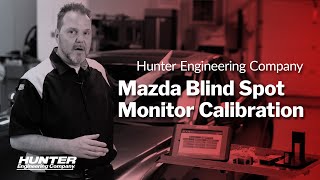
Shop the Parts Behind U0237
Below are the parts most often responsible for code U0237, ranked by how frequently each one is the actual culprit (per the diagnosis above). Tap any to see what we have for your vehicle.



The information in this article is provided for general reference and educational purposes only. Vehicle specifications, procedures, and part compatibility can vary by production date, trim level, and region. Always consult your vehicle's factory service manual and verify part numbers before purchasing or performing repairs. Safety-critical components such as airbags, seat belts, and braking systems should be installed by a qualified professional.
- 🧭 Diagnostic Flowchart
- 🎬 Helpful Videos
- 🛍️ Shop This Part
- What Does U0237 Mean?
- Can I Drive With U0237?
- Common Causes
- Symptoms
- Common Fixes & Costs
- DIY vs Professional
- Used vs. New Parts: Buying Guide
- What Happens If You Wait — Timeline
- Cost of Not Fixing It
- Diagnosis Steps
- When This Code Triggers (Freeze-Frame Conditions)
- Related Codes
- Climate & Environmental Factors
- How to Talk to a Mechanic About This Code
- Where to Take It: Dealer vs Independent vs Chain
- When to Walk Away From the Repair
- What Scan Tool You Need for This Code
- How to Clear the Code After You Fix It
- Will This Fail Emissions / State Inspection?
- Most Commonly Affected Vehicles
- Manufacturer-Specific Notes
- Real Owner Stories
- 2021 Ford F-150 with 30K miles
- 2018 Chevy Silverado at 110K miles
- 2020 Honda CR-V after minor accident
- 2017 Ford Escape with 85K miles
- How to Prevent This Code From Triggering
- Frequently Asked Questions
- Why is my radio not working and I have a U0237 blind spot code?
- What is the most common misdiagnosis for code U0237?
- Does the blind spot sensor need calibration after replacement?
- Can I fix U0237 myself?
- How much does it cost to fix U0237?
- Will my check engine light be on with code U0237?
- Can a car wash cause code U0237?
- Key Takeaways
- 🎟️ Get 5% Off