

OBD-II Code U0254: Lost Communication With Remote Climate Control Module
What U0254 means, why it triggers, and how to fix it
- Code U0254 disables your remote start and climate control features because the module lost connection to the vehicle's CAN bus network.
- Always test your battery and check the 10-amp to 20-amp remote accessory fuses before replacing expensive control modules.
- On 2019-2022 Subaru Outback and Legacy models, this code is often a harmless software glitch (TSB 15-258-19R) that requires a module update rather than replacement.
- If multiple U-codes appear alongside U0254, the root cause is likely a failed Serial Data Gateway Module (SDGM) or a damaged main wiring harness, costing $300 to $650 to repair.
What Does U0254 Mean?
Code U0254 indicates the vehicle's main computer lost communication with the remote climate control or remote start module. This severs the connection required to start the engine remotely or pre-condition the cabin temperature, triggering a Check Engine Light.
Technical definition: Lost Communication With Remote Start Module. This network trouble code triggers when the Controller Area Network (CAN) bus fails to receive expected data packets from the Remote Start Module (RSM). The communication break stems from a module failure, severed wiring, or a faulty gateway module routing the messages.
Can I Drive With U0254?
Yes, But With Caution. Yes, you can drive the vehicle, but remote start and climate control features will be disabled. Do not ignore this code long-term; it often signals a failing gateway module that will eventually disrupt other critical electrical systems.
Common Causes
- Blown remote accessory fuse. (Very Common) — A blown fuse cuts power directly to the remote start module, instantly disabling communication. This is the most frequent and easiest-to-fix culprit.
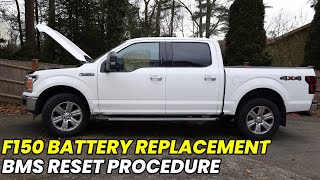
- Low battery voltage or a failing battery. (Common) — A weak battery drops system voltage below the threshold required for modules to boot up and communicate during the vehicle's wake-up sequence. 🎬 Watch: How to replace the battery and reset the BMS
- Wiring damage and corroded connectors. (Common) — Moisture from clogged drains or road debris corrodes the pins inside the module's connector, or severs the CAN bus wires, physically breaking the network connection.
- Faulty Body Control Module (BCM) or Gateway Module. (Common) — The central gateway module (SDGM) routes messages across the network. A failure here blocks signals from reaching the remote start module, a highly documented issue on GM and Ford trucks.
- Software or firmware glitches. (Common) — Outdated software causes the module to drop off the network. A dealer software update or re-flash resolves this, particularly on late-model Subarus.
- Interference from aftermarket accessories. (Less Common) — Poorly installed aftermarket alarms, remote starters, or dashcams spliced into the CAN bus introduce electrical noise that crashes the network.
- Faulty Remote Start or Climate Control Module. (Less Common) — The module itself fails internally due to component fatigue or electrical surges, permanently stopping network communication.
- CAN bus termination fault. (Rare) — The CAN network requires two 120-ohm resistors. If one fails, network resistance drops, causing signal reflections that corrupt data packets.
Symptoms
- Remote start and climate pre-conditioning fail. — The engine will not start and the cabin will not heat or cool when using the key fob or mobile app.
- Check Engine Light illuminates. — The primary computer triggers the MIL (Malfunction Indicator Lamp) upon detecting the network drop.
- Warning message on the instrument cluster. — The dashboard displays a specific alert such as 'Remote Start Disabled' or a general service warning.
- Mobile app fails to update vehicle status. — Telematics apps fail to show the car's locked/unlocked status or respond to remote commands.
- U-series codes present in other modules. (scan-tool only — no driver-felt sign) — A diagnostic scan reveals multiple 'Lost Communication' codes, indicating a broader network crash.
Diagnostic Flowchart
Tap your situation to follow the diagnostic path that matches what you're seeing on this code.
Common Fixes & Costs
- Replacing a blown fuse — Parts: $1-$5, Labor: $0, ~0.2 hr book time (DIY)
- Cleaning or repairing a corroded connector — Parts: $5-$20, Labor: $50-$150, ~1.0 hr book time (Intermediate)
- Updating or reprogramming a control module — Parts: $0, Labor: $100-$250, ~1.0 hr book time (Professional)
- Replacing a faulty Serial Data Gateway Module (SDGM)
— Parts: $70-$200, Labor: $150-$300, ~1.5 hr book time
(Professional)
: OEM [{'part_number': '13534928', 'description': 'Supersedes multiple older part numbers'}] (Alt: Genuine GM Parts equivalent) - Repairing a broken wire in the CAN bus harness — Parts: $10-$30, Labor: $150-$400, ~2.5 hr book time (Professional)
- Replacing the Remote Start/Climate Control Module
— Parts: $150-$700, Labor: $100-$200, ~1.5 hr book time
(Professional)
: OEM [{'part_number': 'H001SAN011', 'description': 'Updated ECU per TSB 15-258-19R'}] - Replacing a faulty Battery Management Module (EVs) — Parts: $500-$1200, Labor: $150-$300, ~1.5 hr book time (Professional)
DIY vs Professional
- Replacing a blown fuse 🟢 Beginner
Tools: Fuse puller or pliers - Cleaning or repairing a corroded connector 🟢 Beginner
Tools: Connector cleaner, small wire brush, dielectric grease - Repairing a broken wire in the CAN bus harness 🟢 Beginner
Tools: Multimeter, wiring diagrams, soldering iron, heat shrink tubing - Updating or reprogramming a control module 🟢 Beginner
Tools: Manufacturer-specific scan tool and software subscription - Replacing a control module (RSM, SDGM, BCM) 🟢 Beginner
Tools: Basic hand tools, manufacturer-specific scan tool for programming
Used vs. New Parts: Buying Guide
When a used part is worth it: A used Remote Start Module or Gateway Module from a reputable auto recycler saves 50-80% and makes sense for vehicles older than 5 years.
Donor-vehicle mileage cap: roughly under 100000 miles for the part to have meaningful remaining life.
Donor quality checklist:
- Match the part number exactly. Superseded numbers are often incompatible.
- Purchase from a supplier offering a minimum 90-day warranty.
- Verify the donor vehicle was not scrapped due to flood damage.
Decision logic:
- If The vehicle is under warranty or the part is for a new model year → Buy new OEM to ensure compatibility and warranty coverage.
- If The cost of a new module is less than $200 → Buy new for the longer warranty and assurance of the latest software revisions.
- If The vehicle is over 10 years old and the part is expensive → Buy used, as the expected lifespan of the part aligns with the remaining life of the vehicle.
Warranty tradeoff: Used parts typically include a 30-90 day warranty. New aftermarket parts offer 1-year to limited lifetime warranties. New OEM parts carry a 1-2 year manufacturer warranty.
Worst-case if a used part fails: $250-$600 if a used module fails after installation, requiring repeat labor for diagnosis and programming.
Cost of Not Fixing It
- Immediate: Loss of remote start and remote climate control functionality. Inconvenience is the primary cost. (Added cost: $0)
- 1-6 months: If U0254 is a symptom of a failing gateway module, other vehicle functions (radio, instrument cluster, power windows) begin failing intermittently. (Added cost: $400-$850 (Gateway module replacement))
- 6+ months: Ignoring a persistent network problem leads to a no-start condition when a critical module (BCM or ECM) loses communication. (Added cost: $500-$2000+)
Diagnosis Steps
- Check Battery Health
Test the battery voltage. A reading below 12.4 volts with the engine off prevents modules from powering up correctly. Charge or replace the battery if it fails a load test.
Tools: Multimeter or battery load tester (Beginner) - Inspect Fuses
Locate the fuse box and test all fuses related to the remote start, telematics, and body control modules. Replace any blown fuses and retest the system.
Tools: Fuse puller, multimeter or test light (Beginner) - Check for Other Codes
Scan all vehicle modules. If multiple U-codes (like U0140 or U0100) are present, you have a network-wide issue or a failed gateway module, not a bad remote start module.
Tools: OBD-II Scanner with all-system access (Beginner) - Visually Inspect Wiring and Connectors
Find the remote start module. Unplug the connector and inspect for green corrosion, bent pins, or water intrusion. Check the wiring harness for chafing against metal brackets.
Tools: Flashlight, basic hand tools to access module (Intermediate) - Check for Power and Ground at the Module
Back-probe the module's connector. Verify it receives 12.0-14.5V on the power pin and has less than 0.1 ohms of resistance on the ground pin. Missing power or ground means the module is turned off, not broken.
Tools: Multimeter, vehicle-specific wiring diagram (Advanced) - Isolate the Module
Unplug the remote start module completely. Clear the codes. If communication with the rest of the vehicle's network is restored, the remote start module has an internal short and requires replacement.
Tools: OBD-II Scanner (Advanced) - Check CAN Bus Resistance
Disconnect the battery. Measure resistance between CAN High and CAN Low at the OBD-II port. A reading of 60 ohms means the network wiring is intact. A reading of 120 ohms indicates a broken wire or missing terminating resistor.
Tools: Multimeter (Advanced) - Check CAN Bus Voltages
Reconnect the battery and turn the ignition on. CAN High should read 2.5V to 3.5V, and CAN Low should read 1.5V to 2.5V. Voltages stuck at 0V or 12V indicate a hard short to ground or power.
Tools: Multimeter (Advanced) - Perform a Network Integrity Test
Connect an oscilloscope to the CAN lines. Look for a clean, mirror-image square wave. Distorted waveforms or noise spikes pinpoint electromagnetic interference or a failing module corrupting the data.
Tools: Automotive Oscilloscope (Professional)
When This Code Triggers (Freeze-Frame Conditions)
- DTC that caused freeze frame: U0254 (This is the primary code stored in the freeze frame data.)
- Vehicle Speed: 0 mph (The code sets when the vehicle is first started, as modules perform their initial network check-in.)
- Battery Voltage: 11.5-12.5V (The fault records during ignition-on before the engine runs and the alternator begins charging.)
- Engine State: Off or Start-up (Communication is critical during the vehicle's wake-up sequence, making this the most common time for the fault to log.)
Related Codes
- U0140 — Lost Communication With Body Control Module. Appears with U0254 because the BCM acts as the gateway for the remote start module. If power windows and interior lights also fail, the BCM is the root cause.
- B1325 — Device Power Circuit Malfunction. Indicates a power supply issue (blown fuse or bad wire) causing the U0254 communication failure. Diagnosis must start with the power and ground circuits.
- U0100 — Lost Communication With ECM/PCM. Points to a severe network-wide crash. If the Engine Control Module is offline, the vehicle will not start, making U0254 a secondary symptom.
- U0155 — Lost Communication With Instrument Panel Cluster (IPC). The instrument panel displays remote start status; a communication breakdown between them triggers related codes. If the IPC is unresponsive, suspect a broader network issue.
Climate & Environmental Factors
- High Humidity: Humidity levels above 60% accelerate corrosion. Moisture penetrates connectors and circuit boards, causing short circuits that disrupt communication.
- Salt Air: Coastal salt air combined with humidity is highly corrosive. Salt deposits on wiring speed up degradation, leading to total communication failure.
- Extreme Cold: Freezing temperatures cause wiring insulation to become brittle and crack. Cold also weakens batteries, dropping system voltage below the threshold required for module communication.
- Water Intrusion: Leaks from clogged sunroof drains or damaged weatherstripping drip directly onto modules, causing immediate shorts and triggering U-codes.
How to Talk to a Mechanic About This Code
Say this: "I have a U0254 'Lost Communication with Remote Start Module' code. I'd like to book a diagnostic appointment. Can you please check for TSBs and verify power, ground, and network wiring to the module before recommending a replacement part?"
This signals you understand communication codes are often caused by simple wiring or power issues. It directs the technician to follow a logical diagnostic process rather than immediately quoting an expensive module replacement.
Avoid saying:
- 'My remote start isn't working.'
- 'The check engine light is on, can you just fix it?'
- 'Just replace the remote start module.'
Questions to ask before authorizing the repair:
- Were you able to confirm the module has proper power and ground?
- Are there any other 'U' codes stored in other modules?
- Was the CAN bus wiring to the module checked for continuity and shorts?
- If a module replacement is needed, does the new part require programming and is that included in the quote?
Where to Take It: Dealer vs Independent vs Chain
- Dealer:
Recommended if the issue is a known TSB or if module programming is required. The default choice for in-warranty vehicles.
Best for: Vehicles under warranty., Known manufacturer-specific issues or TSBs (Subaru or GM models)., Repairs requiring software updates or module programming.
Downsides: Higher labor rates and parts costs., May default to replacing a whole assembly rather than performing a targeted wiring repair. (Typical cost: +40% vs. baseline) - Independent Shop:
Best fit for out-of-warranty vehicles, provided you choose an ASE-certified shop with strong electrical diagnostic skills.
Best for: Out-of-warranty vehicles where cost is a factor., Diagnosing complex wiring or network issues.
Downsides: Diagnostic capabilities vary widely; requires finding a shop with strong electrical expertise., May lack access to the latest manufacturer-specific software. (Typical cost: +0% vs. baseline) - Chain Shop:
AVOID for diagnosing a U0254 code. The risk of misdiagnosis is high.
Best for: Simple jobs like battery replacement or fuse checks.
Downsides: Technicians lack specialized training and tools for complex network diagnostics., High pressure to sell parts leads to misdiagnosis and unnecessary replacements. (Typical cost: -10% vs. baseline)
When to Walk Away From the Repair
If the estimated repair cost for the U0254 fault exceeds 40-50% of your car's current private-party value, pause and reconsider the repair.
- Car worth $5000, fix is $2200: Walk away. The repair cost is nearly half the car's value, and for an electrical issue, other problems will likely follow.
- Car worth $15000, fix is $850: Fix it. The repair cost is a small fraction of the vehicle's value and restores full functionality.
- Car worth $3000, fix is $250: Fix it. A simple wiring or connector repair is an inexpensive way to keep the car fully functional.
What Scan Tool You Need for This Code
Minimum: A scanner that reads codes from ALL vehicle systems (BCM, Gateway, RSM), not just standard engine (ECM) codes.
A basic $20 code reader only checks engine codes and misses the U0254 code entirely, failing to show the scope of a network problem.
Budget: BlueDriver Pro (~$100) — Reads codes from all modules (ABS, SRS, BCM) to reveal the full scope of a communication problem. Provides live data and freeze frame data.
Mid-range: Autel MaxiPRO MP808 / Foxwell NT530 (~$300-400) — Offers bidirectional control, allowing you to command the module to perform actions to test its functionality directly.
Professional: Autel MaxiCOM MK906BT / Launch X431 Series (~$500-1200) — Provides OE-level bidirectional controls, network topology mapping to visualize communication pathways, and module programming capabilities.
How to Clear the Code After You Fix It
- Reconnect the battery if disconnected for repair.
- Use an OBD-II scan tool to select the 'Clear/Erase Codes' function.
- Perform a complete drive cycle to allow readiness monitors to run.
Drive cycle (~30 minutes): Cold start (after 8 hours off). Idle for 2-3 minutes. Drive at a steady 55 mph for 5-10 minutes. Perform stop-and-go city driving for 15 minutes. Allow the vehicle to cool down completely.
Readiness monitors affected: Comprehensive Component Monitor, Misfire Monitor
Before emissions retest: drive at least 100 miles to fully set monitors.
Watch out for:
- Clearing the code without fixing the underlying problem guarantees the code will return immediately.
- Disconnecting the battery resets all readiness monitors, causing an automatic emissions test failure.
Will This Fail Emissions / State Inspection?
Yes — this code typically fails an OBD-II emissions inspection.
- California: An illuminated Check Engine Light results in an automatic failure. All readiness monitors must be set to 'Ready'.
- New York: A vehicle automatically fails the NYS inspection if the Check Engine Light is on. After repairs, the vehicle must be driven to reset readiness monitors.
- Texas: In emissions-testing counties, an illuminated Check Engine Light is an automatic failure. A test with 'Not Ready' status also fails.
Most Commonly Affected Vehicles
- Subaru Outback, Legacy, Forester, Ascent (2019-2022) — Documented in TSB 15-258-19R. The code stores due to a software interface glitch with the accessory remote start system, even if it works perfectly. If no symptoms are present, the code requires a module update, not a replacement.
- Chevrolet Silverado (2017-2019) — Per TSB 20-NA-212, communication codes are frequently caused by a faulty Serial Data Gateway Module (SDGM) suffering from 'logic lock', not the remote start module itself. Symptoms include a blank radio screen.
- GMC Sierra (2017-2019) — Shares the exact Serial Data Gateway Module (SDGM) failure as the Chevrolet Silverado. Diagnosis must focus on the SDGM and its connectors before replacing other modules.
- Ford Fusion, F-150, Edge (2014-2019) — Appears after a battery replacement if the Battery Management System (BMS) is not reset. The system disables high-draw features like remote start to conserve power.
- Hyundai Palisade, Santa Fe (2020-2023) — Traced to either a faulty remote start module or a wiring harness issue near the module causing intermittent connections.
- Kia Telluride, Sorento (2020-2023) — Often related to the vehicle entering a 'deep sleep' mode to conserve battery, requiring a manual start to re-establish communication.
- Toyota RAV4, Highlander, Tacoma (2020-2022) — Failures are often linked to preconditions for remote start not being met (e.g., hood not fully latched) or a failure in the telematics module (DCM).
- Tesla Model 3 (2019-2021) — Traced to a faulty battery management module requiring a costly replacement (approx. $1,500) to restore communication.
Manufacturer-Specific Notes
- Subaru: Per TSB 15-258-19R, code U0254 stores in memory on vehicles with an accessory remote start system due to a software logic flaw, even if the system functions perfectly. Updated modules (H001SAN011) resolve the issue.
- General Motors (GM): On 2017-2019 trucks, communication codes are caused by a 'logic lock' in the Serial Data Gateway Module (SDGM). TSB 20-NA-212 requires diagnosing the SDGM before replacing the remote start module.
- Ford: After replacing the battery, the Battery Management System (BMS) must be reset using a scan tool or manual procedure. Skipping this causes the vehicle to disable remote start to conserve energy, triggering U0254.
- Aftermarket Systems: Aftermarket remote starts or alarms spliced into the CAN bus frequently fail and disrupt the entire network. Disconnecting the aftermarket unit is the mandatory first diagnostic step.
Frequently Asked Questions
Can a weak key fob battery cause a U0254 code?
No. The U0254 code relates to a hardwired communication failure between internal vehicle modules, not the wireless signal from your key fob.
Will the U0254 code go away on its own?
If caused by a temporary voltage drop, the code clears after several successful drive cycles. If it remains, you have a persistent hardware or wiring fault requiring repair.
How much does it cost to diagnose a U0254 code?
Shops charge a diagnostic fee of $100 to $200. Simple fixes like a fuse cost under $5, while replacing a gateway module on a GM truck ranges from $400 to $850.
Is the Remote Climate Control Module the same as the Remote Start Module?
Yes. Modern vehicles use a single electronic module to handle both remote engine ignition and cabin temperature pre-conditioning.
What is a common misdiagnosis when dealing with U0254?
Technicians often mistakenly replace the remote start module immediately. The actual root cause is frequently a blown fuse, a corroded ground wire, or a failing gateway module.
My remote start works sometimes but not others. Could this still be a U0254 issue?
Yes. An intermittent U0254 code points to a loose connector, a frayed wire, or a module failing under extreme temperature changes.
What should I do if the U0254 code comes back after a repair?
A returning code means the initial diagnosis missed an intermittent short or a failing module on the same network. Professional technicians must use an oscilloscope to trace the network signals and find the disruption.
Does this code affect my car's safety inspection?
Yes. An illuminated Check Engine Light caused by a U0254 code results in an automatic failure for state emissions and safety inspections.
Key Takeaways
- Code U0254 disables your remote start and climate control features because the module lost connection to the vehicle's CAN bus network.
- Always test your battery and check the 10-amp to 20-amp remote accessory fuses before replacing expensive control modules.
- On 2019-2022 Subaru Outback and Legacy models, this code is often a harmless software glitch (TSB 15-258-19R) that requires a module update rather than replacement.
- If multiple U-codes appear alongside U0254, the root cause is likely a failed Serial Data Gateway Module (SDGM) or a damaged main wiring harness, costing $300 to $650 to repair.
Helpful Videos
Shop the Parts Behind U0254
Below are the parts most often responsible for code U0254, ranked by how frequently each one is the actual culprit (per the diagnosis above). Tap any to see what we have for your vehicle.




The information in this article is provided for general reference and educational purposes only. Vehicle specifications, procedures, and part compatibility can vary by production date, trim level, and region. Always consult your vehicle's factory service manual and verify part numbers before purchasing or performing repairs. Safety-critical components such as airbags, seat belts, and braking systems should be installed by a qualified professional.
- 🧭 Diagnostic Flowchart
- 🎬 Helpful Videos
- 🛍️ Shop This Part
- What Does U0254 Mean?
- Can I Drive With U0254?
- Common Causes
- Symptoms
- Common Fixes & Costs
- DIY vs Professional
- Used vs. New Parts: Buying Guide
- Cost of Not Fixing It
- Diagnosis Steps
- When This Code Triggers (Freeze-Frame Conditions)
- Related Codes
- Climate & Environmental Factors
- How to Talk to a Mechanic About This Code
- Where to Take It: Dealer vs Independent vs Chain
- When to Walk Away From the Repair
- What Scan Tool You Need for This Code
- How to Clear the Code After You Fix It
- Will This Fail Emissions / State Inspection?
- Most Commonly Affected Vehicles
- Manufacturer-Specific Notes
- Frequently Asked Questions
- Can a weak key fob battery cause a U0254 code?
- Will the U0254 code go away on its own?
- How much does it cost to diagnose a U0254 code?
- Is the Remote Climate Control Module the same as the Remote Start Module?
- What is a common misdiagnosis when dealing with U0254?
- My remote start works sometimes but not others. Could this still be a U0254 issue?
- What should I do if the U0254 code comes back after a repair?
- Does this code affect my car's safety inspection?
- Key Takeaways
- 🎟️ Get 5% Off