

OBD-II Code U0287: Lost Communication With Transmission Fluid Pump Module
What U0287 means, why it triggers, and how to fix it
- Code U0287 indicates a communication failure between the main computer and the transmission fluid pump module, immediately disabling hybrid and auto start-stop systems.
- Always test the 12V auxiliary battery first on Ford hybrids, as a voltage drop below 12.4V is the leading cause of this code.
- On 2021-2024 Jeep Wrangler 4xe models, U0287 is almost exclusively caused by a damaged high-voltage wiring harness rubbing the driveshaft, requiring a $1,500+ harness replacement per TSB S2208000154.
- Do not replace the $400+ transmission fluid pump module until you have verified stable 12V power, solid ground, and exactly 60 ohms of resistance across the CAN bus network.
- Stop driving the vehicle if it enters 'limp mode' or shifts harshly; operating without proper hydraulic pressure causes catastrophic transmission clutch failure within weeks.
What Does U0287 Mean?
U0287 means the Powertrain Control Module (PCM) lost communication with the transmission fluid pump control module. This electric pump maintains hydraulic pressure for gear shifts, especially in vehicles with auto start-stop or hybrid systems where the gas engine shuts off.
Technical definition: The formal SAE/OBD-II definition is "Lost Communication With Transmission Fluid Pump Module". It indicates the Controller Area Network (CAN bus) communication link between the PCM/TCM and the pump module has been severed or interrupted.
Can I Drive With U0287?
Yes, But With Caution. You can drive, but do not exceed short distances to reach a safe location. The vehicle will experience harsh shifting, reduced power, or stall, leaving you stranded. Continued driving in limp mode causes excessive heat and destroys internal transmission components. On hybrids, it prevents electric-only mode, increasing fuel consumption.
Common Causes
- Low Battery Voltage or Power Supply Issues (Very Common) — The transmission fluid pump module requires a stable 12-volt power supply. A weak battery, failing alternator, blown fuse, or faulty relay causes the module to lose power intermittently, which the PCM flags as a communication failure. On Ford hybrids, a weak auxiliary 12V battery is the primary culprit.
- Faulty Wiring or Damaged Connectors (Very Common) — Wires fray, corrode, short, or disconnect due to vibrations, heat, or rodent damage. This severs the physical communication link between the main computer and the pump module.
- Damaged High-Voltage (HV) Wiring Harness (Hybrid Vehicles) (Common) — On specific hybrids like the Jeep Wrangler 4xe, a damaged high-voltage wire creates electromagnetic interference that disrupts the low-voltage communication circuit. This triggers U0287 even if the pump and its wiring are perfectly fine.
- Failed Transmission Fluid Pump Module (Common) — The control module for the pump fails internally due to water intrusion, cracked solder joints from vibration, or burnt-out driver transistors.
- Connector Terminal Fretting (Common) — Micro-vibrations cause metal pins within electrical connectors to rub together, creating oxidation. This 'fretting corrosion' forms a high-resistance joint that blocks communication signals.
- Software Glitches or Outdated Module Calibration (Less Common) — Software bugs within the PCM, TCM, or pump module falsely trigger the code. Manufacturers release software updates to patch these logic errors.
- Faulty Powertrain Control Module (PCM) or Transmission Control Module (TCM) (Rare) — The main computer (PCM) or transmission computer (TCM) suffers an internal hardware failure, preventing it from communicating with the network.
Symptoms
- Check Engine Light or Transmission Warning Light is On — This is the immediate visual indicator that the vehicle's computer has detected a network fault.
- Auto Start-Stop or Hybrid System Disabled — The system disables these features because the electric pump cannot maintain transmission pressure when the engine is off. The vehicle will not enter electric-only mode.
- Harsh, Delayed, or Missed Shifts — Without proper communication, the transmission shifts abruptly, hesitates before engaging a gear, or fails to shift entirely.
- Vehicle Enters 'Limp Mode' — The vehicle protects itself by limiting engine power and locking the transmission in a single gear (often 2nd or 3rd) to prevent mechanical destruction.
- Vehicle Shakes or Stumbles — On the Jeep Wrangler 4xe, this code is accompanied by a severe vehicle shake during a cold start or random stumbling in reverse due to electrical interference.
- Unusual Whining or Buzzing Noise — A loud, constant whining from the electric transmission pump indicates the pump is running continuously or failing mechanically.
Diagnostic Flowchart
Tap your situation to follow the diagnostic path that matches what you're seeing on this code.
Common Fixes & Costs
- Replacing the 12V Auxiliary Battery
— Parts: $75-$150, Labor: $50-$100, ~0.8 hr book time
(DIY)
: OEM - Repairing Damaged Wiring or Connectors — Parts: $20-$50, Labor: $100-$250, ~1.5 hr book time (Intermediate)
- Replacing High-Voltage Wiring Harness (Jeep 4xe)
— Parts: $800-$1200, Labor: $1000-$1500, ~8 hr book time
(Professional)
: OEM - Replacing the Transmission Fluid Pump Module
— Parts: $300-$600, Labor: $150-$250, ~2.5 hr book time
(Professional)
: OEM
: OEM - Software Re-flash or Update — Parts: $0, Labor: $100-$200, ~1.2 hr book time (Professional)
DIY vs Professional
- Replacing the 12V Battery or Auxiliary Battery 🟢 Beginner
Tools: Socket set, multimeter. - Repairing Damaged Wiring or Connectors 🟢 Beginner
Tools: Multimeter, wiring diagrams, wire strippers, crimpers, heat shrink. - Software Re-flash or Update 🟢 Beginner
Tools: Manufacturer-specific scan tool and service portal subscription. - Replacing the Transmission Fluid Pump Module 🟢 Beginner
Tools: Socket set, torque wrench, fluid drain pan, bi-directional scan tool. - Replacing High-Voltage Wiring Harness 🟢 Beginner
Tools: Specialized HV safety equipment, manufacturer-specific diagnostic tools.
Used vs. New Parts: Buying Guide
When a used part is worth it: A used Transmission Fluid Pump Module is a cost-effective option for older, high-mileage vehicles where a new OEM part is cost-prohibitive. It makes sense if the donor vehicle has low mileage and was scrapped for non-powertrain reasons.
Donor-vehicle mileage cap: roughly under 80000 miles for the part to have meaningful remaining life.
Donor quality checklist:
- Verify the exact part number matches; superseded numbers require programming.
- Inspect the connector pins for any signs of corrosion, damage, or fretting.
- Prefer sellers offering a 30-90 day warranty to protect against dead-on-arrival parts.
Decision logic:
- If Vehicle is under warranty or part of a known TSB/recall campaign → Use new OEM parts installed by a dealer to ensure coverage.
- If The part requires VIN programming to function → Favor a new OEM part or a reputable remanufacturer who pre-programs it. A used module is often locked to the donor vehicle's VIN.
- If The vehicle is over 150,000 miles and budget is the primary concern → A tested, used module from a reputable salvage yard is an acceptable risk.
Warranty tradeoff: Used parts come with a 30-90 day warranty covering the part only. New aftermarket modules offer a 1-year to limited lifetime warranty. New OEM parts installed by a dealer carry the manufacturer's parts and labor warranty.
Worst-case if a used part fails: $300-$600 if a used module fails after installation, accounting for repeat labor costs and a replacement part.
What Happens If You Wait — Timeline
- 0-2 weeks: Code U0287 is set, Check Engine Light is on. Hybrid or Auto Start-Stop system is disabled. Shifting feels normal or slightly harsher than usual. (MPG impact: 5-15% (due to disabled hybrid/start-stop)% · Added cost: $0-$50 in wasted fuel.)
- 2 weeks - 3 months: The transmission operates without proper pressure modulation, causing consistently harsh, delayed, or clunky shifts. This puts extra stress on clutches and internal mechanical parts. (MPG impact: 5-15%% · Added cost: $50-$200 in wasted fuel. Minor, premature wear on transmission components begins.)
- 3-6 months: The vehicle unexpectedly enters 'limp mode', locking into a single gear and drastically reducing power. Constant harsh shifting causes glazing and excessive wear on transmission clutch packs. (MPG impact: 10-20% (if limp mode is active)% · Added cost: $1500-$3000 if clutch packs are damaged and require a partial transmission rebuild.)
- 6+ months: Catastrophic internal transmission damage occurs. The cumulative stress from operating without proper hydraulic control leads to failure of hard parts like gears or the torque converter. The vehicle fails to move. (MPG impact: N/A (vehicle likely inoperable)% · Added cost: $3500-$7000+ for a complete transmission replacement or rebuild.)
Cost of Not Fixing It
- 0-1 month: Inconvenience due to harsh shifting, potential stalling, and disabled hybrid/auto-stop features. Reduction in fuel economy as the hybrid system fails to engage. (Added cost: Negligible to $50 in extra fuel costs.)
- 1-6 months: Continued driving in 'limp mode' or with harsh shifting causes excessive heat and premature wear on transmission clutches. The communication problem worsens, leading to a stranded situation. (Added cost: $2000-$5000 for additional transmission wear or rebuild if damage occurs.)
- 6+ months: Severe internal transmission damage occurs, requiring a full transmission rebuild or replacement. A simple wiring fix escalates into a major mechanical failure. (Added cost: $3500-$7000+)
Diagnosis Steps
- Check for Other Codes and TSBs
Use an OBD-II scanner to read all active codes. Other 'U' (network) codes or battery voltage codes provide critical context. Check for Technical Service Bulletins (TSBs) for your specific year and model, as manufacturers often document exact fixes for U0287.
Tools: OBD-II Scanner (Beginner) - Inspect the Battery and Fuses
Test the battery voltage with a multimeter; a healthy battery reads 12.6 volts with the engine off. On hybrids with an auxiliary 12V battery, test it directly. Locate and inspect the fuses related to the TCM and transmission fluid pump.
Tools: Multimeter, Vehicle-specific fuse diagram (Beginner) - Perform a Visual Inspection
Inspect the wiring harness and connectors going to the transmission fluid pump module. Look for chafed, burnt, or broken wires, and check for corrosion or bent pins in the connectors. On a Jeep Wrangler 4xe, inspect the PIM-to-P2 HV harness near the driveshaft shield for rubbing.
Tools: Flashlight, Inspection mirror (Intermediate) - Verify Power and Ground at the Module
Check for proper battery voltage and a solid ground connection at the transmission fluid pump module's connector. The power feed must read a stable 12.0-12.6V with the key on. Ground resistance, measured between the ground pin and a clean chassis point, must be less than 0.5 Ω.
Tools: Multimeter, Vehicle-specific wiring diagram (Intermediate) - Perform a CAN Bus Resistance Test
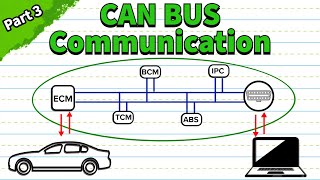
With the battery disconnected, measure the resistance between the CAN High and CAN Low terminals at the diagnostic port. A healthy network reads exactly 60 ohms. A reading of 120 ohms indicates a terminating resistor is offline; a reading near 0 ohms indicates a short circuit.
Tools: Multimeter, Vehicle-specific wiring diagram (Advanced) - Check CAN Bus Voltages
With the ignition on and engine off, measure the voltage on the CAN bus lines. CAN High should be 2.5V-3.5V, and CAN Low should be 1.5V-2.5V. A wire stuck at 0V or 12V indicates a hard circuit fault.
Tools: Multimeter (Advanced) - Analyze Live Data and Command the Pump
Using a bi-directional scan tool, navigate to the transmission control module data list. Command the auxiliary pump on. If the actual speed reads zero or fails to match the command, the module or pump has failed.
Tools: Bi-directional scan tool (Advanced) - Check for Electrical Noise with an Oscilloscope
Connect an oscilloscope to the communication circuit. A healthy pattern shows a clean square wave. Voltage spikes or distorted patterns confirm electromagnetic interference, pointing to a damaged high-voltage harness rather than a faulty pump module.
Tools: Oscilloscope, Wiring diagram, Alligator clips (Professional) - Check for Software Updates
Using a dealer-level scan tool, check if the PCM, TCM, or the pump module have available software updates. Manufacturers release patches to resolve communication logic errors.
Tools: Professional scan tool, Manufacturer service portal access (Professional)
When This Code Triggers (Freeze-Frame Conditions)
- Engine Coolant Temp: 180-210°F (Fully warmed up)
- RPM: 0 or 1500-2500 (During an auto-stop event or at steady cruise)
- Battery Voltage: 11.5-12.5V (Low voltage during startup or an auto-start event)
- Vehicle Speed: 0 mph or 35-55 mph (At a stop or during highway driving)
Related Codes
- P0C2A — Means 'Electric/Auxiliary Transmission Fluid Pump Motor Stalled'. U0287 indicates the computer can't talk to the module, while P0C2A means they are talking, but the module reports the pump motor is physically failing.
- U0293 — Means 'Lost Communication With Hybrid Powertrain Control Module'. If U0287 and U0293 appear together, it indicates a wider network problem, like a fault in the main CAN bus wiring or a failing gateway module.
- B273C-00 — On the Jeep Wrangler 4xe, this code for 'Digital Crash Input' appears with U0287. Both are triggered by electrical noise from a damaged high-voltage harness (TSB S2208000154).
- U0284 — Means 'Lost Communication With Active Grille Air Shutter Module'. Appearing alongside U0287 indicates a shared wiring harness has been damaged (e.g., by rodents), causing multiple CAN bus failures.
Climate & Environmental Factors
- Cold Climates with Road Salt: Road salt and brine accelerate the degradation of wiring harnesses and ground points exposed under the vehicle. This corrosion creates high resistance, leading to communication codes.
- High Humidity / Coastal Regions: Constant moisture exposure leads to water intrusion into connectors. This causes pin corrosion, terminal fretting, and short circuits, triggering intermittent communication faults.
How to Talk to a Mechanic About This Code
Say this: "I have a U0287 'Lost Communication' code and I'd like to schedule a diagnostic. I authorize one hour of diagnostic time to start. Please begin by checking the battery, fuses, and performing a visual inspection of the wiring harness to the transmission pump module before quoting parts replacement."
This signals that you understand U0287 is a network/electrical code, not a failed part. It directs the technician to follow a logical diagnostic process rather than immediately quoting an expensive pump replacement.
Avoid saying:
- 'My check engine light is on, can you fix it?'
- 'My transmission is acting funny, I think the pump is bad.'
- 'Just do whatever it takes to fix it.'
Questions to ask before authorizing the repair:
- What were the results of the power, ground, and CAN bus resistance tests at the module connector?
- If you are recommending a pump replacement, how did you rule out a wiring or power supply issue?
- For my specific vehicle, did you check for known TSBs related to this code?
- Can you show me the damaged wiring or the test results that condemn the part?
- What is the warranty on the recommended repair, including parts and labor?
Where to Take It: Dealer vs Independent vs Chain
- Dealer:
Recommended, especially for hybrid models with known TSBs or if the vehicle is under warranty. They have direct access to the latest software and specialized tools.
Best for: Vehicles under warranty, Hybrid vehicles with high-voltage systems (Jeep 4xe, Pacifica Hybrid), Repairs requiring manufacturer-specific software updates or programming
Downsides: Highest labor rates, May replace modules or harnesses rather than perform detailed wiring repairs (Typical cost: +50% vs. baseline) - Independent Shop:
Good fit, IF the shop is well-equipped. Choose an ASE-certified shop with a strong reputation for electrical and network diagnostics. Ask if they are comfortable diagnosing CAN bus communication faults.
Best for: Out-of-warranty vehicles where the cause is a common wiring or battery issue, Shops specializing in diagnostics or a specific vehicle make
Downsides: Quality and diagnostic capabilities vary widely, May lack access to the latest dealer-only software updates or high-voltage training (Typical cost: +0% vs. baseline) - Chain Shop:
AVOID. Complex electrical diagnosis is outside the scope of a typical chain repair shop. They lack the tools and expertise to solve the root cause.
Best for: Simple, unrelated maintenance like oil changes or tires.
Downsides: Technicians are not equipped or trained for complex network diagnostics, High risk of misdiagnosis and being sold unnecessary parts (Typical cost: -10% vs. baseline)
When to Walk Away From the Repair
If the estimated repair cost for U0287 exceeds 40-50% of your car's private-party value, pause and consider your options.
- Car worth $30000, fix is $2500: Fix it. While expensive, a high-voltage harness replacement on a newer Jeep 4xe is much less than the vehicle's value.
- Car worth $8000, fix is $900: Fix it. A module replacement on an out-of-warranty Ford Explorer is well below the threshold.
- Car worth $4000, fix is $2500: Walk away. The repair cost is over 60% of the car's value. The risk of other age-related failures is high.
What Scan Tool You Need for This Code
Minimum: A tool that reads more than engine codes. It must access the transmission control module and view live data PIDs related to the pump.
A basic $20 code reader only shows the U0287 code. It cannot determine if the fault is in the wiring, the module, or the power supply.
Budget: BlueDriver Pro (~$100) — Connects to your smartphone and reads codes from multiple modules (Engine, Transmission, ABS). It allows you to view live data, a critical first step.
Mid-range: Foxwell NT809 / Autel MaxiCOM MK808S (~$350-450) — These bi-directional tools actively command the transmission fluid pump to turn on. If you command it on and nothing happens, you have isolated the fault.
Professional: Autel MaxiSys MS906Pro / Launch X431 V+ (~$800-1500) — Provides full OEM-level diagnostics, module programming, and advanced network topology views. Built-in oscilloscope functions are invaluable for 'seeing' electrical noise on the CAN bus.
Rent vs buy: Renting a basic scanner from an auto parts store is insufficient. Buy a capable mid-range tool for DIY diagnosis or take the vehicle to a qualified shop.
How to Clear the Code After You Fix It
- Reconnect battery if disconnected for repair
- Use an OBD-II scan tool to clear all Diagnostic Trouble Codes (DTCs)
- Perform a complete drive cycle to allow readiness monitors to run
Drive cycle (~30 minutes): Start the vehicle from a cold soak. Idle for 2-3 minutes. Drive in mixed city/highway conditions, including steady cruising between 40-60 mph for at least 10 minutes and several stop-and-go cycles. Allow the vehicle to cool down completely.
Readiness monitors affected: Comprehensive Component Monitor, CAN Bus Communication
Before emissions retest: drive at least 50 miles to fully set monitors.
Watch out for:
- Disconnecting the battery does not clear the code from permanent memory and resets all readiness monitors.
- The code returns immediately if the root electrical or communication fault is not repaired.
- Failing to perform a Battery Management System (BMS) reset after replacing a battery causes recurring electrical issues.
Will This Fail Emissions / State Inspection?
Yes — this code typically fails an OBD-II emissions inspection.
- California: An illuminated Check Engine Light results in an automatic failure. All readiness monitors must be set to 'Ready', requiring a complete drive cycle after repair.
- New York: An active U0287 code with the Malfunction Indicator Lamp (MIL) on is an automatic failure during the OBD-II scan.
- Texas: In the 17 counties requiring emissions testing, an illuminated Check Engine Light causes an automatic failure. If readiness monitors are incomplete, the test cannot be passed.
Most Commonly Affected Vehicles
- Jeep Wrangler 4xe (2021-2024) — Prone to a damaged high-voltage wiring harness near the driveshaft causing electrical interference. Documented in TSBs S2208000154 and 08-082-25.
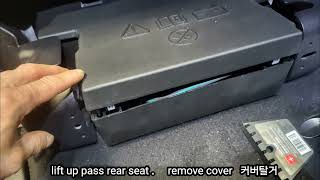
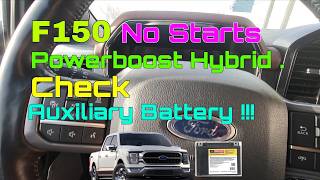
- Ford F-150 Powerboost Hybrid, Maverick Hybrid (2021-2024) — Caused by a failing 12V auxiliary battery under the rear seat. This is a common misdiagnosis where the pump is replaced unnecessarily.
- Ford Explorer, Edge, F-150 (with Auto Start-Stop) (2015-2024) — Vehicles equipped with auto start-stop use an auxiliary electric transmission pump that triggers this code upon failure of the pump, module, or wiring.
- Hyundai Sonata Hybrid, Tucson Hybrid (2011-2024) — Linked to oil leaks from the electric oil pump on older models, and blown multi-fuse assemblies after front-end damage on newer models.
- Honda Accord Hybrid (2023-2024) — Relates to a loss of communication between the TCM and the electric oil pump. Diagnosis focuses on the pump, relay, DCDC converter, and TCM.
- Chevrolet / GMC Silverado, Sierra, Bolt EV/EUV (2019-2024) — On the Bolt, a failure triggers a speed limitation warning. On trucks, it is an early sign of module or wiring issues.
- Kia Niro, Sorento Hybrid, Optima Hybrid (2017-2024) — Shares platforms with Hyundai; susceptible to identical electric oil pump and communication issues.
- Chrysler Pacifica Hybrid (2017-2024) — The dual-motor eFlite transmission relies on electric pumps. U0287 points to issues with the pump module, wiring, or the Power Inverter Module (PIM).
Manufacturer-Specific Notes
- Jeep (Stellantis): On the Wrangler 4xe, U0287 is almost always a symptom of a damaged high-voltage wiring harness. Technicians must reference TSBs S2208000154, 08-082-25, and 08-116-25 before replacing any modules.
- Ford: On Powerboost models, U0287 is frequently misdiagnosed. A weak auxiliary 12V battery (Part No. BHAGMAUX1B) is the primary cause and must be tested before replacing the expensive transmission fluid pump.
- Honda: Diagnosis focuses heavily on the DCDC converter, which powers the pump circuit. A bi-directional scanner is required to command the pump on to test its operation directly.
- General Motors (Chevrolet/GMC): This code often points to intermittent connection issues. Technicians must closely inspect harness connectors for terminal fretting or corrosion before condemning the module.
Real Owner Stories
2021 Ford F-150 Powerboost Hybrid with U0287
Check Engine Light came on. The truck ran but would not enter hybrid or electric-only drive modes.
What they tried:
- Dealer replaced the electric transmission fluid pump under warranty. The code returned immediately.
- Owner tested the auxiliary battery and found its voltage was low (12.3V).
- Replaced both the main and auxiliary 12V batteries, but the code returned, indicating a complex wiring issue.
Outcome: The initial fixes (pump replacement, battery replacement) failed, requiring the truck to return to the dealer for deeper diagnosis of the wiring harness.
Lesson: On Ford hybrids, a weak auxiliary 12V battery is a common cause for U0287 and must be tested first. If the code persists after battery replacement, the issue is in the wiring; replacing the pump is a misdiagnosis.
2022 Jeep Wrangler 4xe with U0287 and vehicle shake
The 'Service Hybrid Electric Vehicle System' message appeared, the vehicle shook during cold starts, and a noise was heard near the transmission. Codes U0287-00 and B273C-00 were present.
What they tried:
- A visual inspection of the wiring harnesses was performed.
- The PIM-to-P2 high-voltage (HV) wiring harness was found rubbing against the transmission driveshaft CV joint shield, damaging the insulation.
Outcome: The damaged high-voltage wiring harness was replaced by the dealer according to TSB S2208000154. This resolved the electrical noise, cleared the codes, and eliminated the shaking.
Lesson: On a Jeep Wrangler 4xe, U0287 accompanied by code B273C-00 and shaking is caused by a damaged HV harness. Do not replace the pump module. Inspect and replace the harness per Jeep's TSBs.
Ford F-150 with U0287 and U0284 after rodent activity
Check Engine Light appeared with codes U0287 (Transmission Pump) and U0284 (Active Grille Air Shutter).
What they tried:
- Owner noticed signs of rodent activity in the engine bay.
- Visual inspection revealed wires for both the transmission pump and the active grille shutter had been chewed by rodents.
Outcome: The damaged wiring harness was repaired by splicing in new wires and protecting the area with rodent-repellent tape. Both codes cleared.
Lesson: If you get U0287 along with other 'U' codes for modules in a similar area, suspect damage to a shared wiring harness. Rodent damage causes multiple, seemingly unrelated communication faults.
How to Prevent This Code From Triggering
- Perform Regular Battery Maintenance (Every 6 months) — A weak battery is a primary cause of communication codes. Regularly check that terminals are clean and tight. Test battery voltage to catch a failing battery before it causes module errors.
- Protect Wiring from Rodents (As needed) — Rodents chew through soy-based wiring insulation, causing open circuits. Use deterrents like peppermint oil spray or rodent-repellent electrical tape if parking outdoors.
- Apply Dielectric Grease to Connectors (During any related repair or inspection) — Moisture enters connectors and causes corrosion, leading to high resistance. Applying dielectric grease to connector seals creates a barrier against moisture.
- Inspect and Secure Wiring Harnesses (Annually or during oil changes) — Vibrations cause wiring harnesses to rub against sharp edges, chafing through the insulation. Ensure harnesses are properly secured with clips and not resting on moving parts.
Frequently Asked Questions
What are the most common misdiagnoses for code U0287?
The most common mistake is replacing the transmission fluid pump when the actual cause is electrical. On Ford hybrids, a failing auxiliary 12V battery is usually the true culprit. On the Jeep Wrangler 4xe, the cause is almost always a damaged high-voltage wiring harness creating electrical interference.
Can I fix a U0287 code myself?
Simple fixes like checking fuses or replacing a weak 12V battery are DIY-friendly. Diagnosing CAN bus resistance or replacing the pump module requires specialized bi-directional scan tools. Leave high-voltage hybrid repairs to certified professionals to avoid lethal electrical shock.
Will clearing the code make it go away?
You can clear the code with an OBD-II scanner, but it will return on the next drive cycle if the underlying electrical or mechanical problem remains.
Can a low transmission fluid level cause a U0287 code?
No. U0287 is a 'Lost Communication' code pointing to an electrical or network problem. Low fluid causes the pump to overheat or stall, triggering a mechanical code like P0C2A instead.
Why is this code common on hybrid and start-stop vehicles?
These vehicles shut the gas engine off frequently, relying on an electric pump to maintain transmission hydraulic pressure. This extra component and its dedicated control module create an additional point of electrical failure compared to traditional vehicles.
Is the transmission fluid pump the same as the transmission fluid pump module?
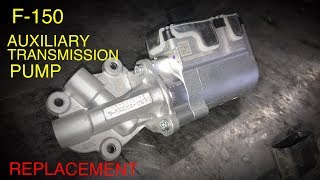
The pump is the mechanical part that moves the fluid, while the module is the electronic brain controlling it. Code U0287 specifically points to a communication problem with the electronic module, not the mechanical pump.
What does the ':87-0A' mean after some Ford codes?
In Ford diagnostics, the ':87' indicates a 'Missing Message', which directly aligns with the 'Lost Communication' definition of U0287. The '-0A' is a counter for the number of occurrences.
Key Takeaways
- Code U0287 indicates a communication failure between the main computer and the transmission fluid pump module, immediately disabling hybrid and auto start-stop systems.
- Always test the 12V auxiliary battery first on Ford hybrids, as a voltage drop below 12.4V is the leading cause of this code.
- On 2021-2024 Jeep Wrangler 4xe models, U0287 is almost exclusively caused by a damaged high-voltage wiring harness rubbing the driveshaft, requiring a $1,500+ harness replacement per TSB S2208000154.
- Do not replace the $400+ transmission fluid pump module until you have verified stable 12V power, solid ground, and exactly 60 ohms of resistance across the CAN bus network.
- Stop driving the vehicle if it enters 'limp mode' or shifts harshly; operating without proper hydraulic pressure causes catastrophic transmission clutch failure within weeks.
Helpful Videos
Shop the Parts Behind U0287
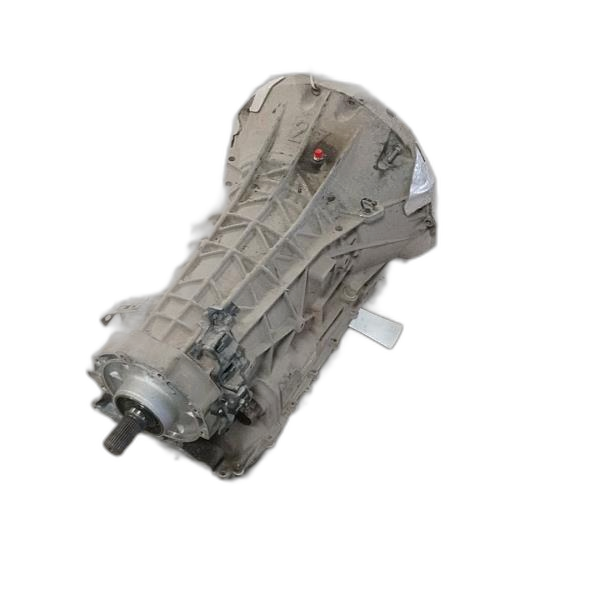
Below are the parts most often responsible for code U0287, ranked by how frequently each one is the actual culprit (per the diagnosis above). Tap any to see what we have for your vehicle.


The information in this article is provided for general reference and educational purposes only. Vehicle specifications, procedures, and part compatibility can vary by production date, trim level, and region. Always consult your vehicle's factory service manual and verify part numbers before purchasing or performing repairs. Safety-critical components such as airbags, seat belts, and braking systems should be installed by a qualified professional.
- 🧭 Diagnostic Flowchart
- 🎬 Helpful Videos
- 🛍️ Shop This Part
- What Does U0287 Mean?
- Can I Drive With U0287?
- Common Causes
- Symptoms
- Common Fixes & Costs
- DIY vs Professional
- Used vs. New Parts: Buying Guide
- What Happens If You Wait — Timeline
- Cost of Not Fixing It
- Diagnosis Steps
- When This Code Triggers (Freeze-Frame Conditions)
- Related Codes
- Climate & Environmental Factors
- How to Talk to a Mechanic About This Code
- Where to Take It: Dealer vs Independent vs Chain
- When to Walk Away From the Repair
- What Scan Tool You Need for This Code
- How to Clear the Code After You Fix It
- Will This Fail Emissions / State Inspection?
- Most Commonly Affected Vehicles
- Manufacturer-Specific Notes
- Real Owner Stories
- 2021 Ford F-150 Powerboost Hybrid with U0287
- 2022 Jeep Wrangler 4xe with U0287 and vehicle shake
- Ford F-150 with U0287 and U0284 after rodent activity
- How to Prevent This Code From Triggering
- Frequently Asked Questions
- What are the most common misdiagnoses for code U0287?
- Can I fix a U0287 code myself?
- Will clearing the code make it go away?
- Can a low transmission fluid level cause a U0287 code?
- Why is this code common on hybrid and start-stop vehicles?
- Is the transmission fluid pump the same as the transmission fluid pump module?
- What does the ':87-0A' mean after some Ford codes?
- Key Takeaways
- 🎟️ Get 5% Off