

OBD-II Code U0288: Lost Communication With DC/AC Inverter Control Module 'A'
What U0288 means, why it triggers, and how to fix it
- Code U0288 indicates a communication failure with the DC/AC inverter module, which disables 110V household power outlets and USB ports.
- In hybrid vehicles like the Toyota Prius or Ford F-150 PowerBoost, this code triggers a high-voltage safety lockout that prevents the engine from starting.
- Before replacing the $600+ inverter module, test the CAN bus network resistance at the OBD-II port to confirm it reads a healthy 60 ohms.
- On 2021-2023 Ford F-150s and Hyundai Elantra Hybrids, U0288 is frequently caused by a software glitch that requires a $150-$250 dealer reprogramming, not a hardware replacement.
- Water intrusion from clogged sunroof drains or cracked taillights is the leading physical cause of the corroded wiring that triggers this communication loss.
What Does U0288 Mean?
Code U0288 means the vehicle's main computer lost connection to the DC/AC Inverter Control Module 'A'. This module converts the battery's 12-volt direct current (DC) into 110/120-volt alternating current (AC) to power household-style outlets 🎬 See how the Ford Pro Power Onboard system works or hybrid system components. When this link fails, the computer cannot control or monitor the module.
Technical definition: Lost Communication With DC to AC Converter Control Module 'A'.
Can I Drive With U0288?
Yes, But With Caution. In non-hybrid vehicles, you can drive, but you lose accessory power (110V outlets, USB ports, HVAC). In hybrids (like the F-150 PowerBoost or Toyota Prius), the DC/AC inverter is critical to the powertrain. A communication loss prevents the vehicle from starting or causes it to shut down. Do not drive hybrids with this code.
Common Causes
- Water Intrusion and Corroded Wiring (Very Common) — Water leaking from clogged sunroof drains, failed windshield seals, or cracked taillights drips onto module connectors. This causes severe pin corrosion and broken CAN bus wires, severing the communication link.
- Software Corruption or Glitch (Very Common) — A failed over-the-air update or firmware glitch corrupts the module's software, preventing communication. This is a heavily documented issue on 2021+ Ford F-150 and Hyundai Elantra models.
- Blown Fuse or Power Supply Issue (Common) — A blown 10-20A fuse, loose battery terminal, or weak 12V battery starves the module of power, causing it to drop off the network.
- Failed DC/AC Inverter Control Module (Common) — The module fails internally due to electrical surges, cracked solder joints, or excessive heat, permanently severing its network connection.
- Faulty Gateway or Body Control Module (BCM) (Less Common) — A fault in a central network module disrupts the entire communication bus, causing multiple modules to report communication loss simultaneously.
- Aftermarket Accessory Interference (Rare) — Improperly installed remote starters or alarms that tap into CAN bus wires inject electrical noise, crashing the network.
Symptoms
- Check Engine Light or Warning Message — An illuminated Check Engine Light or a specific warning message like 'Module Fault' or 'Check Electrical System' appears on the dashboard.
- In-Car AC Power Outlets Dead — Household-style 110V/120V power outlets in the vehicle are completely unresponsive.
- Vehicle Will Not Start (Hybrids) — In hybrids like the Toyota Prius or Ford F-150 PowerBoost, a communication failure prevents the engine from starting as a high-voltage safety precaution.
- HVAC or Radio Failure — The climate control system or radio becomes unresponsive, as they share the disrupted communication network.
Diagnostic Flowchart
Tap your situation to follow the diagnostic path that matches what you're seeing on this code.
Common Fixes & Costs
- Module Reprogramming or Software Update — Parts: $0, Labor: $150-$250, ~1.5 hr book time (Professional)
- Wiring Harness Repair — Parts: $10-$50, Labor: $240-$480, ~2.0 hr book time (Professional)
- Replacing a Blown Fuse — Parts: $1-$5, Labor: $0, ~0.1 hr book time (DIY)
- Replacing the DC/AC Inverter Module
— Parts: $650-$950, Labor: $240-$360, ~2.5 hr book time
(Professional)
Ford F-150 (2021-2023): OEM
Hyundai Elantra Hybrid (2021-2023): OEM
Toyota Prius (2010-2015): OEM - Diagnostic Inspection — Parts: $0, Labor: $120-$180, ~1.0 hr book time (Professional)
Used vs. New Parts: Buying Guide
When a used part is worth it: A used DC/AC inverter module is a high-risk purchase. It only makes sense if the vehicle is older than 10 years, the part powers non-critical accessories, and you buy from a reputable seller offering a VIN-matched part with a warranty.
Donor-vehicle mileage cap: roughly under 60000 miles for the part to have meaningful remaining life.
Donor quality checklist:
- Verify the part number matches exactly; superseded numbers are often incompatible.
- Visually inspect connector pins for green corrosion, moisture, or physical damage.
- Buy from a source offering at least a 30-day warranty and a clear return policy.
- Avoid parts from flood-damaged vehicles entirely.
Decision logic:
- If Vehicle is a hybrid → Buy a new OEM part. The risk of a used part failing and causing a no-start condition is too high.
- If The fault is software-related (per a TSB) → Do not replace the part; pay a dealer 1-2 hours of labor for reprogramming.
- If Vehicle is older (>10 years) and the part is for non-critical accessory power → A tested, used part from a low-mileage donor is a cost-effective option.
Warranty tradeoff: Used parts carry a 30-90 day warranty. Refurbished units offer a 1-year warranty. New OEM parts carry a 1-2 year manufacturer warranty, but only if installed by an authorized dealer.
Worst-case if a used part fails: $500-$1500 if a used module fails, requiring repeat labor for diagnosis and a second replacement part.
What Happens If You Wait — Timeline
- 0-4 weeks: Code sets, Check Engine Light illuminates. Non-hybrids lose 110V outlets. Hybrids fail to start, requiring an immediate tow. (MPG impact: 0%% · Added cost: $0-$250 (Towing for hybrids))
- 1-3 months: If caused by a water leak, intermittent issues begin. Other accessories fail randomly. The faulty module causes a minor parasitic battery drain. (MPG impact: 0-1%% · Added cost: $50 (Wasted fuel, diagnostic uncertainty))
- 3-9 months: Corrosion spreads to other wires or modules. Parasitic drain worsens, killing the 12V battery if the car sits for a few days. (MPG impact: 1-3%% · Added cost: $400-$1000 (New 12V battery, increased diagnostic time))
- 9+ months: A short circuit takes down the entire network, making the vehicle undrivable. Severely corroded harnesses require complete replacement. (MPG impact: N/A (Vehicle inoperable)% · Added cost: $2000-$5000+ (Harness and multiple module replacements))
Cost of Not Fixing It
- Immediate: Loss of household power outlets and USB ports. In a hybrid, this causes a no-start condition, leaving you stranded. (Added cost: $100-$250 (Towing))
- 1-6 Months: If caused by water intrusion, continued driving spreads corrosion to other modules on the same network, destroying the wiring harness. (Added cost: $500-$2000+)
- 6+ Months: A persistently faulty module causes intermittent electrical shorts, draining the 12V battery and leading to premature battery failure. (Added cost: $200-$400 (New Battery + Labor))
Diagnosis Steps
- Scan for All Trouble Codes
Use a professional-grade OBD-II scanner to read codes from all modules. If U0288 appears with many other 'U' codes (e.g., U0100, U0140), it indicates a system-wide network problem. If U0288 is the only code, the issue is isolated to the inverter module's circuit.
Tools: Professional OBD-II Scanner (Beginner) - Check the Inverter Fuses
Locate the fuse box using your owner's manual. Find the fuse for the 'DC/AC Inverter' or 'Power Outlet' (typically 10-20A). If blown, replace it with the exact same amperage. A repeatedly blowing fuse indicates a short circuit.
Tools: Owner's Manual, Fuse Puller or Pliers (Beginner) - Inspect Module Wiring for Water Damage
Locate the DC/AC Inverter module (often under the dashboard, front seats, or trunk). Visually inspect its electrical connector and surrounding wires for green/white corrosion, moisture, or physical damage. Ensure the connector is securely plugged in.
Tools: Flashlight, Trim Removal Tools (Intermediate) - Test Battery and Ground Connections
Use a multimeter to confirm the battery has at least 12.4V with the engine off. Check that the main battery terminals are clean and tight. Inspect the module's ground wire connection to the vehicle chassis for tightness and corrosion.
Tools: Multimeter, Socket Set, Wire Brush (Intermediate) - Test for Power and Ground at the Module
With the ignition on, use a multimeter and wiring diagram to check for 12V power at the module's main supply pin (should be 11.8V-12.6V). Check for a good ground by measuring resistance between the ground pin and the chassis (should be < 1 ohm).
Tools: Multimeter, Vehicle-Specific Wiring Diagram (Advanced) - Test the CAN Bus Network Resistance
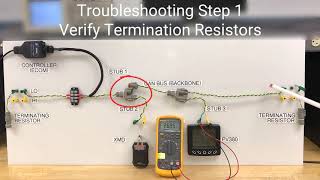
With the battery disconnected, measure the resistance between Pin 6 (CAN High) and Pin 14 (CAN Low) on the OBD-II port. A healthy network reads ~60 ohms. A reading of 120 ohms indicates an open circuit. A reading near 0 ohms indicates a short circuit.
Tools: Multimeter, Wiring Diagram (Advanced) - [PRO TIP] Check CAN Bus Voltage Activity
With the ignition on, back-probe the inverter connector's CAN pins. On a 5V CAN system, CAN High averages 2.6-3.5V, and CAN Low averages 1.5-2.4V. Voltages stuck at 5V, 12V, or 0V indicate a short. Identical, unchanging voltages (e.g., 2.50V) indicate the module is powered but not broadcasting.
Tools: Multimeter, Back-Probes, Wiring Diagram (Professional) - [PRO TIP] Isolate the Faulty Module
If multiple 'U' codes are present, locate a network splice connector. Disconnect the splice to isolate all modules. Add each module back one by one while monitoring CAN bus voltage. When the network crashes, the last reconnected module is the source of the short.
Tools: Oscilloscope or Multimeter, Wiring Diagram, Splice Connector Tool (Professional) - [ADVANCED] Check Internal Module Resistance
With the module unplugged, measure resistance between its CAN High and CAN Low pins. A healthy module reads 28k-50k ohms. Measure resistance from each CAN pin to the module's ground pin; it should show an open circuit. Low resistance indicates an internal short.
Tools: Multimeter, Module Pinout Diagram (Advanced) - [ADVANCED] Monitor Live Data PIDs
Using a professional scan tool, access live data for the Gateway Module. Monitor 'CAN Bus Status' and 'Module Communication Status' for the inverter. A high error frame count points to physical interference or a wiring fault.
Tools: Professional OBD-II Scanner with Live Data (Advanced)
When This Code Triggers (Freeze-Frame Conditions)
- Vehicle Status: Key On, Engine Off (The code sets during the initial network integrity check when the ignition turns on, before the engine starts.)
- System Voltage: 9V - 11.5V (Low voltage during startup prevents modules from initializing correctly, triggering communication faults.)
- Vehicle Speed: 0 mph (The fault logs when the vehicle is stationary during the startup self-test sequence.)
- Module Status: No Response/Offline (The Gateway or Body Control Module attempts to communicate with the inverter module but receives no response.)
Related Codes
- U0289 — Indicates 'Lost Communication With DC to AC Converter Control Module B'. Appears on vehicles with multiple inverter modules. Diagnostic process is identical to U0288.
- U0298 / U0299 — Points to communication loss with the DC-to-DC converter module. Diagnostic approach is similar, but tests a different component.
- U01xx (e.g., U0100, U0140, U0121) — A flood of general communication loss codes indicates a wider network problem. The inverter module is likely not the root cause.
- P-prefix codes (e.g., P060B, P164C) — Accompanies U0288 during software issues. Ford TSB 21-2053 resolves these combinations with a PCM software update.
Climate & Environmental Factors
- High Humidity / Heavy Rain: Increases water intrusion into the cabin or onto exposed connectors. Moisture promotes corrosion on wiring pins, a primary cause of communication failures.
- Winter Conditions (Road Salt): Road salt and brine solutions accelerate the degradation of wiring harnesses, ground points, and module casings, leading to shorts and open circuits.
- Extreme Cold: Makes wire insulation brittle and prone to cracking from vibration. Lowers battery efficiency, causing low system voltage and random communication codes.
How to Talk to a Mechanic About This Code
Say this: "I have a U0288 code and need a diagnostic appointment. Please check for technical service bulletins for software updates, then verify power, ground, and CAN bus network integrity at the inverter module before recommending a replacement part."
Signals you understand 'U' codes are complex and the module isn't always the problem. Directs the technician to follow a logical diagnostic process (software > wiring > hardware).
Avoid saying:
- 'My power outlet isn't working, can you fix it?'
- 'My check engine light is on, can you look at it?'
- 'Just replace the inverter module.'
Questions to ask before authorizing the repair:
- Did you check for TSBs related to this code for my VIN?
- Were there any other 'U' codes stored in other modules?
- Can you confirm you tested for 12V power and a good ground directly at the module's connector?
- What were the CAN bus resistance and voltage readings?
- What is the warranty on this specific repair, including parts and labor?
Where to Take It: Dealer vs Independent vs Chain
- Dealer:
Recommended, especially for newer Ford, Hyundai, and Kia models with known software or warranty extension issues.
Best for: Vehicles under warranty., Known software issues (Ford F-150, Hyundai/Kia ICCU) requiring manufacturer-specific tools., Complex hybrid or EV systems requiring high-voltage expertise.
Downsides: Highest labor rates., May default to module replacement rather than in-depth wiring diagnostics. (Typical cost: +50% vs. baseline) - Independent Shop:
Good fit, but only if the shop is a known electrical specialist comfortable diagnosing CAN bus network failures.
Best for: Out-of-warranty vehicles where the cause is likely wiring., Shops specializing in electrical diagnostics with positive reviews for complex problems.
Downsides: May lack access to the latest manufacturer software or high-voltage hybrid tools., Quality varies greatly; must vet the shop's electrical capabilities. (Typical cost: +0% vs. baseline) - Chain Shop:
AVOID. This fault is beyond the scope of a typical chain shop and highly likely to result in a costly misdiagnosis.
Best for: Simple tasks like battery replacement or reading a code for free.
Downsides: Technicians are not equipped or trained for complex network diagnostics., High risk of misdiagnosis, leading to unnecessary parts replacement. (Typical cost: -10% vs. baseline)
When to Walk Away From the Repair
If the estimated repair cost for the U0288 fault exceeds 40-50% of your car's private-party value, consider selling or trading it in.
- Car worth $5000, fix is $2500: Walk away. A repair costing 50% of the car's value is a poor investment.
- Car worth $15000, fix is $1200: Fix it. The repair cost is well below the 40% threshold and restores critical functionality.
- Car worth $3000, fix is $1800: Walk away. The repair is 60% of the vehicle's value. Put that money towards a replacement.
What Scan Tool You Need for This Code
Minimum: A scanner that reads manufacturer-specific codes from ALL vehicle modules (BCM, ABS, Gateway), not just the engine.
A basic $20 scanner only reads generic engine codes. It cannot see if other modules are offline, leaving you blind to the real network problem.
Budget: Ancel BD310 or BlueDriver Pro (~$60) — Connects to a smartphone app to perform a full system scan, showing if U0288 is an isolated code or part of a wider network failure.
Mid-range: Innova 5610 or Foxwell NT510 Elite (~$350) — Adds bidirectional controls, allowing you to actively test components by sending commands to confirm if a module is truly dead.
Professional: Autel MaxiCOM MK808 / MK906BT or Launch X431 Series (~$500-1200) — Provides full bidirectional control, network topology maps, and ECU programming capabilities to perform software updates.
Rent vs buy: Buying a budget pick like a BlueDriver is a wise investment. It allows you to see the full picture before talking to a shop, preventing misdiagnosis.
How to Clear the Code After You Fix It
- Correct the underlying fault (e.g., repair broken wire, reprogram module).
- Use a compatible OBD-II scan tool to erase the Diagnostic Trouble Codes from all modules.
- Perform a complete OBD-II drive cycle to allow all vehicle readiness monitors to run their self-tests.
Drive cycle (~30 minutes): A generic drive cycle includes a cold start (coolant temp below 122°F), a 2-3 minute idle, 10-15 minutes of mixed city/suburban driving with gentle stops and starts, followed by 5-10 minutes of steady-state highway driving (55-60 mph). Shut the vehicle off and allow it to cool down.
Readiness monitors affected: Comprehensive Component Monitor, Misfire Monitor, EVAP System Monitor, Catalyst Monitor, O2 Sensor Monitor
Before emissions retest: drive at least 100 miles to fully set monitors.
Watch out for:
- Disconnecting the battery clears the code but resets all readiness monitors to 'Not Ready,' guaranteeing an emissions test failure.
- The code returns immediately if the root cause of the communication failure remains unaddressed.
- The EVAP monitor requires specific conditions (e.g., fuel level between 1/4 and 3/4 tank) and takes multiple days to set.
Will This Fail Emissions / State Inspection?
Yes — this code typically fails an OBD-II emissions inspection.
- California: An active U0288 code illuminating the check engine light is an automatic smog check failure. You are allowed one 'Not Ready' monitor (typically EVAP) on older vehicles.
- New York: A check engine light from any 'U' code results in an immediate NYS DMV inspection failure.
- Texas: An illuminated check engine light is an automatic failure. Vehicles model year 2001 and newer are allowed one 'Not Ready' monitor.
Most Commonly Affected Vehicles
- Ford F-150 PowerBoost Hybrid (2021-2023) — Covered by TSB 21-2357 and 21-2053. Caused by a software issue in the inverter system controller. Fix is a multi-module reprogram by a dealer.
- Ford F-150 (with Pro Power Onboard) (2015-2024) — Water intrusion into taillight assemblies shorts out modules on the MS-CAN network, crashing the entire network and causing communication faults.
- Hyundai Elantra Hybrid (2021-2023) — Communication failures linked to a software issue in the Integrated Central Control Unit (ICU). TSB 22-01-076H provides a software update.
- Toyota Prius (2010-2015) — Communication failures between the hybrid control ECU and the inverter cause a no-start condition. Misdiagnosis leads to unnecessary ECU replacement.
- Chevrolet / GMC Trucks and SUVs (2014-2024) — Network issues trace to a central splice comb where multiple module wires meet, making it a key diagnostic point.
- Dodge / Ram Trucks and Vans (2013-2024) — Susceptible to communication faults due to wiring damage in the harness running under the vehicle.
- Jeep Various Models (2018-2024) — Wiring harnesses are vulnerable to damage from off-road debris and water, leading to communication codes.
- Kia Niro, EV6 (2017-2024) — Sharing platforms with Hyundai, these models are susceptible to communication network faults involving power conversion modules.
Manufacturer-Specific Notes
- Ford: On 2021-2023 F-150 PowerBoost trucks, U0288 is a software parameter issue. TSB 21-2357 directs dealers to reprogram the PCM and inverter module, not replace parts.
- Hyundai / Kia: On 2021-2023 EV/Hybrid models, communication DTCs stem from an Integrated Central Control Unit (ICU) software bug. Warranties are extended to 15 years/180,000 miles.
- General Motors (Chevy/GMC): Uses a 'splice comb' where CAN bus wires meet. Technicians disconnect modules one by one from this comb to quickly identify short circuits.
- Toyota: For 2010-2015 Prius models, Toyota issued a Warranty Enhancement Program (ZE3) extending coverage for the Intelligent Power Module (IPM) to 15-20 years.
Real Owner Stories
2022 Hyundai Ioniq 5 at 29K miles
Owner heard a loud 'pop' followed by a 'Check Electrical System' warning. The 12V battery died, and the car was inoperable.
What they tried:
- Towed the vehicle to the dealership.
Outcome: Dealer diagnosed a failed Integrated Charging Control Unit (ICCU). The part was replaced under Hyundai's extended warranty after a 36-day wait.
Lesson: On modern Hyundai/Kia EVs, a sudden 'pop' and electrical warning indicates ICCU failure. Tow it to a dealer and reference the warranty extension.
2016 Toyota Prius C with 150K miles
Vehicle caught in a flood. After drying, it would not enter 'Ready' mode and displayed multiple error codes.
What they tried:
- Systematically replaced water-damaged ECUs and corroded circuit boards.
Outcome: After replacing numerous components, the owner cleared many codes but still faced a no-start condition. The repair became a total loss.
Lesson: Water damage is catastrophic. A U0288 code in a flood car is just the tip of the iceberg. Flood-damaged cars are rarely worth repairing.
2021 Ford F-150 PowerBoost
Check Engine Light came on, and Pro Power Onboard system was unavailable. Only code stored was U0288.
What they tried:
- Took the truck to the Ford dealership.
Outcome: Dealer identified TSB 21-2357. The fix was a software update reprogramming the PCM and inverter module, resolved in a few hours.
Lesson: For the F-150 PowerBoost, U0288 is a known software bug. Always ask the service advisor to check for TSBs before authorizing part replacements.
Generic vehicle with aftermarket remote starter
Intermittent U0288 code appeared months after a remote starter installation.
What they tried:
- Traced the CAN bus wiring and found an improper splice.
Outcome: The installer used a 't-tap' connector on a CAN bus wire, introducing electrical noise. Soldering and insulating the wire resolved all codes.
Lesson: If communication faults appear after installing aftermarket electronics, the new device is the primary suspect.
How to Prevent This Code From Triggering
- Keep sunroof drains and cowl vents clear of debris. (Annually) — Prevents water from overflowing into the cabin and corroding modules and wiring harnesses located under carpets.
- Maintain battery health and clean terminals. (Every oil change) — Prevents low voltage during startup, ensuring modules initialize correctly and avoiding random communication faults.
- Apply dielectric grease to vulnerable connectors. (During electrical service) — Seals electrical connections from moisture and road salt, preventing pin corrosion.
- Avoid high-pressure washing directly at module casings. (Every car wash) — Prevents water from forcing past weather seals and introducing moisture to electronics.
- Ensure aftermarket accessories are installed professionally. (During installation) — Prevents improper tapping into CAN bus wires, preserving network integrity and avoiding electrical noise.
Frequently Asked Questions
What is a DC to AC converter module?
It converts your car's 12-volt Direct Current (DC) battery power into 110/120-volt Alternating Current (AC). This powers household-style plugs for charging laptops and running tools.
Is U0288 related to the active grille shutters?
No. U0288 specifically refers to the DC/AC inverter module. Active grille shutter communication issues trigger codes U0284 and U0285.
My mechanic wants to replace the inverter module. Could it be something else?
Yes. A fault in another module, a short-circuit in the CAN bus wiring, or a gateway module problem disrupts communications and mimics a failed inverter. If multiple 'U' codes are present, a wider network issue is the culprit.
Can aftermarket accessories cause a U0288 code?
Yes. Improperly installed remote starters, alarms, or stereos cause this code. Tapping into a CAN bus wire for power injects electrical noise, disrupting the entire vehicle network.
Why would this code prevent my car from starting?
In hybrid vehicles, the DC/AC inverter is a critical high-voltage powertrain component. If the main computer loses communication with it, the system disables the starter to prevent high-voltage danger or unpredictable behavior.
How much does it cost to diagnose this code?
A professional shop charges 1 to 1.5 hours of labor for a diagnostic inspection. This typically costs $120 to $180 and covers tracing the fault, not the repair.
What does a CAN bus resistance of 60 ohms mean?
A 60-ohm reading between CAN High and CAN Low indicates a healthy network. It confirms the two required 120-ohm terminating resistors are present and the main bus wiring is intact.
Key Takeaways
- Code U0288 indicates a communication failure with the DC/AC inverter module, which disables 110V household power outlets and USB ports.
- In hybrid vehicles like the Toyota Prius or Ford F-150 PowerBoost, this code triggers a high-voltage safety lockout that prevents the engine from starting.
- Before replacing the $600+ inverter module, test the CAN bus network resistance at the OBD-II port to confirm it reads a healthy 60 ohms.
- On 2021-2023 Ford F-150s and Hyundai Elantra Hybrids, U0288 is frequently caused by a software glitch that requires a $150-$250 dealer reprogramming, not a hardware replacement.
- Water intrusion from clogged sunroof drains or cracked taillights is the leading physical cause of the corroded wiring that triggers this communication loss.
Helpful Videos
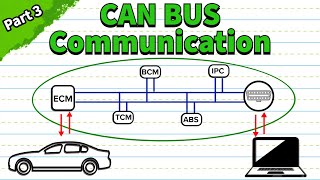
Shop the Parts Behind U0288
Below are the parts most often responsible for code U0288, ranked by how frequently each one is the actual culprit (per the diagnosis above). Tap any to see what we have for your vehicle.



The information in this article is provided for general reference and educational purposes only. Vehicle specifications, procedures, and part compatibility can vary by production date, trim level, and region. Always consult your vehicle's factory service manual and verify part numbers before purchasing or performing repairs. Safety-critical components such as airbags, seat belts, and braking systems should be installed by a qualified professional.
- 🧭 Diagnostic Flowchart
- 🎬 Helpful Videos
- 🛍️ Shop This Part
- What Does U0288 Mean?
- Can I Drive With U0288?
- Common Causes
- Symptoms
- Common Fixes & Costs
- Used vs. New Parts: Buying Guide
- What Happens If You Wait — Timeline
- Cost of Not Fixing It
- Diagnosis Steps
- When This Code Triggers (Freeze-Frame Conditions)
- Related Codes
- Climate & Environmental Factors
- How to Talk to a Mechanic About This Code
- Where to Take It: Dealer vs Independent vs Chain
- When to Walk Away From the Repair
- What Scan Tool You Need for This Code
- How to Clear the Code After You Fix It
- Will This Fail Emissions / State Inspection?
- Most Commonly Affected Vehicles
- Manufacturer-Specific Notes
- Real Owner Stories
- 2022 Hyundai Ioniq 5 at 29K miles
- 2016 Toyota Prius C with 150K miles
- 2021 Ford F-150 PowerBoost
- Generic vehicle with aftermarket remote starter
- How to Prevent This Code From Triggering
- Frequently Asked Questions
- What is a DC to AC converter module?
- Is U0288 related to the active grille shutters?
- My mechanic wants to replace the inverter module. Could it be something else?
- Can aftermarket accessories cause a U0288 code?
- Why would this code prevent my car from starting?
- How much does it cost to diagnose this code?
- What does a CAN bus resistance of 60 ohms mean?
- Key Takeaways
- 🎟️ Get 5% Off