

U0293 on 2022-2023 Ford F-150 Lightning: Causes for Lost Communication & Fixes
On a 2022-2023 F-150 Lightning, code U0293 almost always indicates a software problem in the Gateway Module (GWM). This can cause a 'Stop Safely Now' message or a no-start condition. The fix is a software update performed by a Ford dealer, as outlined in TSB 23-2317 and its successor, TSB 24-2008. In some cases, it may relate to charging system communication failures detailed in TSB 24-2266.
- U0293 on a 2022-2023 F-150 Lightning is a serious code indicating a communication failure, often resulting in a no-start or 'Stop Safely Now' warning.
- The most common cause is a software bug in the Gateway Module (GWM), not a failed hardware part.
- The correct first step is to have a Ford dealer check for and apply any available software updates, as outlined in TSB 24-2008 (which supersedes TSB 23-2317).
- Do not drive the vehicle if it displays a 'Stop Safely Now' message.
- While checking the 12V battery is good practice and required for software updates, the root cause for this specific code is very likely a software issue that only a dealer can resolve.
What's Unique About the 2022-2023 Ford F-150 LIGHTNING BEV

As a fully electric vehicle, the F-150 Lightning's operation is managed by a complex network of interconnected computers. Unlike older vehicles where communication codes often point to wiring failures, on this new platform, U0293 is frequently caused by software glitches. Ford has acknowledged these issues through Technical Service Bulletins (TSBs), which direct technicians to perform software updates as the primary solution, highlighting the software-defined nature of the truck's architecture. Forum discussions among owners confirm that dealer-performed software updates are the most common resolution.
Diagnostic Flowchart

Tap your situation to follow the diagnostic path that matches what you're seeing on this vehicle.
Symptoms You May Notice

- Intermittent no-start condition.
- 'Stop Safely Now' message on the instrument cluster.
- Inoperative high-voltage to low-voltage energy transfer.
- Inability to charge using a Level 2 (AC) charger, sometimes indicated by an orange charge ring.
- Illuminated wrench or 'Service Vehicle Soon' light.
- Multiple other communication codes appearing simultaneously.
- Unnecessarily replacing control modules before performing software updates. Ford's own TSBs for the related F-150 Hybrid explicitly state that module replacement is not recommended until software issues are ruled out.
- Replacing the 12V battery without addressing the root cause. While a weak 12V battery can cause codes, with U0293 on the Lightning, it's more often a symptom or a prerequisite for a fix, not the primary failure.
Most Likely Causes

- Gateway Module (GWM) Software Glitch 🔴 High Probability As a new BEV platform, early software versions contained bugs that have since been addressed by Ford through TSBs. This is the most widely reported cause for the 'Stop Safely Now' message.
How to confirm: A Ford dealer can check for available software updates for the GWM using the Ford Diagnostic & Repair System (FDRS). TSB 24-2008 (which supersedes 23-2317) is the guiding document.
Typical fix: Reprogram the GWM to the latest software version as specified in Ford TSB 24-2008. This must be done by a dealer.
Est. part cost: $0 - Secondary On-Board Diagnostic Module (SOBDM) Communication Failure 🟡 Medium Probability This module is a key part of the EV control and charging network and can suffer from similar software or communication issues, particularly affecting charging functions.
How to confirm: Diagnosed by a dealer, often seen with code U019B as noted in TSB 24-2266. Owners on f150lightningforum.com report these two codes appearing together when charging or energy transfer features fail.
Typical fix: Dealer diagnosis is required. The fix may involve reprogramming the SOBDM or related modules. In a documented forum case, a user experiencing charging failure with U0293 ultimately needed a new 'Charger Battery' part after initial diagnostics failed.
Est. part cost: $0 - $2000 - Poor 12V Battery State of Charge or Failing 12V Battery ⚪ Low Probability → Shop Vehicle Battery Like all modern vehicles, a weak 12V system can cause a cascade of communication errors between modules. A low 12V battery can disrupt programming and cause various faults.
How to confirm: Test the 12V battery's voltage and state of health. TSB 24-2008 specifically requires technicians to verify the 12V battery state of charge is above 50% before attempting software updates. A forum user on a related platform noted that charging the 12V battery and clearing codes was an attempted fix, though it didn't resolve the underlying issue in their case.
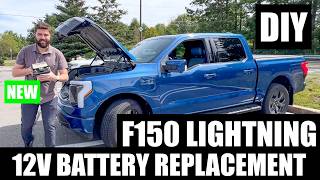
Typical fix: Fully charge the 12V AGM battery. If it fails a load test, it must be replaced. Ford's TSB specifies using a Rotunda GRX-3590 or DCA-8000 tester. After replacement, a Battery Monitor Sensor (BMS) reset via FDRS is required.
Est. part cost: $200-$350
Rare But Worth Checking
- Wiring Harness or Connector Issue: While less common than software issues on this truck, physical damage to the CAN bus wiring or connectors between the GWM, BECM, or SOBDM can interrupt communication. This could be from road debris, rodents, or a previous repair. A Mach-E owner with U0293 had the issue traced to compromised CAN bus lines requiring harness replacement.
- Module Hardware Failure: In rare instances where software updates and wiring checks don't solve the problem, the GWM, BECM, or SOBDM itself may have an internal hardware fault, requiring replacement. One forum user reported a dealer replacing the onboard AC-DC charger and then a part called a 'Charger Battery' (Part # NL3Z-10B689-C) to resolve a charging issue accompanied by U0293.
Diagnosis Steps
- Check for Technical Service Bulletins (TSBs). For a 2022-2023 F-150 Lightning, TSB 24-2008 (supersedes 23-2317) and TSB 24-2266 are directly relevant. This is the most critical first step.
- Visit a Ford dealer for a software check. The primary fix is a GWM software update that can only be performed with Ford's FDRS tool. The dealer should also check for APIM and TCU updates as part of the procedure.
- Verify the health of the 12V battery. Ensure it is fully charged (above 50% SOC) and passes a load test before any programming is attempted, as per TSB 24-2008. If replaced, a BMS reset is mandatory.
- If software is up-to-date, perform a full network scan to see which other modules are logging communication errors. This can help pinpoint the origin of the fault (e.g., GWM vs. SOBDM).
- Inspect the wiring harnesses and connectors between the main EV control modules (GWM, BECM, SOBDM) for any signs of damage, corrosion, or loose connections, as this is a possible, though less common, cause.
- If all other steps fail, advanced diagnostics are needed to test for module hardware failure, which is a job for a qualified technician specializing in EVs. This may involve module replacement.
Parts You'll Likely Need
- 12V AGM Battery
(OEM #BAGM-48H6-760 or BAGM-94RH7-800 (Varies by vehicle build))— A weak 12V battery can cause communication codes and must be in a healthy state for software updates to be performed correctly. TSB 24-2008 lists these part numbers as potential replacements if the original battery fails testing.
Trusted brands: Motorcraft
OEM price range: $250-$350
Aftermarket price range: $200-$300
Related Codes That Often Appear With This One
- P1A43 — This code is frequently logged alongside U0293 and is mentioned in the same Technical Service Bulletin (TSB 23-2317 and its successor 24-2008) related to the GWM software issue causing a no-start condition.
- U019B — TSB 24-2266 links this code (Lost Communication With Battery Charger Control Module 'A') with U0293 when there are issues with energy transfer features. Owners on f150lightningforum.com confirm seeing these codes together when experiencing charging problems.
Technical Service Bulletins (TSBs) & Recalls
- TSB 23-2317: Addresses an intermittent no start and 'Stop Safely Now' message with DTC U0293, caused by a Gateway Module (GWM) software concern.
- TSB 24-2008: Supersedes TSB 23-2317, providing revised part information and a production fix date, confirming the GWM software update as the primary repair.
- TSB 24-2266: Pertains to DTC U0293 in the SOBDM and U019B in the SOBDMC, resulting in inoperative energy transfer features.
Platform-Specific Known Issues
- Ford TSB 23-2317 / 24-2008: Acknowledges that a software issue in the Gateway Module A (GWM) can cause an intermittent no-start, a 'Stop Safely Now' message, and log DTC U0293. The prescribed fix is to reprogram the GWM.
- Ford TSB 24-2266: Links DTC U0293 in the Secondary On-Board Diagnostic Module A (SOBDM) with inoperative high-voltage to low-voltage energy transfer features, pointing to another module-specific communication fault.
- Owner Experience on f150lightningforum.com: A detailed thread titled 'Unable to charge, DTC U0293' documents a real-world case where a user could not AC charge. The diagnostic process involved replacing the onboard charger and eventually a part identified as 'Charger Battery' (NL3Z-10B689-C), showing that while software is common, hardware failures can occur.
Mechanic-Grade Diagnostic Values
- CAN Bus Resistance (HS-CAN) — expected: Approximately 60 Ω. Failure: A reading of 120 Ω indicates an open circuit or a missing terminating resistor in one module. A reading near 0 Ω indicates a short between the CAN High and CAN Low wires.
- Ground G127 Torque Specification — expected: 25 Nm (18 lb-ft). Failure: A loose connection at this ground can cause various communication DTCs in the BECM and other modules.
- 12V Battery State of Charge (BCM PID: BATT_SOC) — expected: 50% or higher. Failure: A reading below 50% can prevent module programming from starting or completing successfully.
Hidden / Shadow Codes Worth Checking
- U0293:00: The ':00' is a Failure Type Code (FTC) suffix indicating 'No Sub Type Information'. While not a hidden code, its presence confirms the code was read by a more advanced scanner like the dealer's FDRS, as basic readers may only show 'U0293'. (see via Ford Diagnostic & Repair System (FDRS) or a high-end professional scan tool.)
Scan Tool Commands That Help
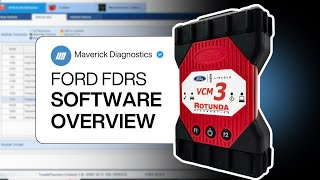
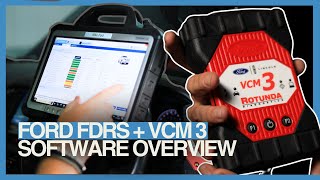
- Ford FDRS: Network Test — This is a primary diagnostic step to see which modules are online (green), offline (gray), or have stored DTCs (orange). It must be run after every module software update to refresh the status of all modules on the network.
- Ford FDRS: Module Software Updating — This is the primary repair procedure for U0293 when caused by a software glitch, as specified in TSB 24-2008 for the GWM.
- Ford FDRS: Reset Battery Monitor Sensor (BMS) Learned Values — This function is mandatory after charging or replacing the 12V battery to ensure the vehicle's power management system has an accurate baseline for the battery's state of health.
- Ford FDRS: BECM — High Voltage System De-energizing — This is a critical safety procedure that must be performed before any physical work is done on or near high-voltage components, including the battery pack and related modules.
- Ford FDRS: Self-Test — Used to command a specific module (or all modules) to run an internal diagnostic check and report any DTCs. It is also used to clear codes after a repair.
Wiring & Ground Locations
- Gateway Module (GWM) — Mounted under the driver's side of the instrument panel. The OBD-II diagnostic port is directly attached to or wired into the GWM.. This is the central communication hub for the vehicle. TSB 24-2008 identifies a software fault within this specific module as the primary cause of U0293.
- Ground G127 — Refer to the official Ford Wiring Diagram for the exact location on the vehicle's frame or body.. SSM 51545 identifies this as a potential point of failure for communication issues with the Battery Energy Control Module (BECM) on the F-150 Lightning. A loose ground here can cause a cascade of network errors.
- Connector C1168B — Refer to the official Ford Wiring Diagram for the exact location.. SSM 51545 specifically calls for inspecting this connector for a loose connection when diagnosing related communication DTCs.
Real Owner Repair Stories
- f150lightningforum.com user 'Jamchampnate' (2023 Ford F-150 Lightning Lariat) — Vehicle went in for a different software update (IMPA for front sensor issue). During the update process, the truck 'tripped out' and became inoperative.
❌ Tried (didn't work) The initial software update procedure failed catastrophically.
✅ What actually fixed it The dealer, after consulting with Ford, determined the Gateway Module (GWM) needed to be replaced. Following the GWM replacement, the dealer then stated the Telematics Control Unit (TCU) also required replacement.
"I Checked Everything" — The Actual Cause
- While not a smoke test, a parallel exists for communication codes. A technician may find a module connector that is clean and appears well-protected with dielectric grease. However, Ford issued a TSB for other hybrid models (SSM 47649) warning that applying dielectric grease to the connectors of certain sensitive modules (like the SOBDM-C) can actually impede the low-voltage CAN signals and *cause* communication codes like U0293. The grease, intended to help, becomes the source of the fault.
OEM Part Supersession History
NL3Z-10B689-C→NL3Z-10B689-E— Part revision or update by the manufacturer. The 'Charger Battery' part, which is a charging and control module, was updated.
Heads up: The new part number NL3Z-10B689-E replaces both NL3Z-10B689-B and NL3Z-10B689-C, indicating it is the correct and current service part.
Model Year Variations Within This Range
- 2022-2023: TSB 24-2008, addressing the GWM software fix, initially specified a production fix date of November 2, 2023. However, a subsequent TSB (24-2103) superseded it and removed the production fix date, implying that vehicles built after this date may still be susceptible to the issue and require the software update.
Helpful Videos

The information in this article is provided for general reference and educational purposes only. Vehicle specifications, procedures, and part compatibility can vary by production date, trim level, and region. Always consult your vehicle's factory service manual and verify part numbers before purchasing or performing repairs. Safety-critical components such as airbags, seat belts, and braking systems should be installed by a qualified professional.
- Ford F-150 LIGHTNING BEV:
- 🧭 Diagnostic Flowchart
- 🎬 Helpful Videos
- What's Unique About the 2022-2023 Ford F-150 LIGHTNING BEV
- Symptoms You May Notice
- Most Likely Causes
- Rare But Worth Checking
- Diagnosis Steps
- Parts You'll Likely Need
- Related Codes That Often Appear With This One
- Technical Service Bulletins (TSBs) & Recalls
- Platform-Specific Known Issues
- Mechanic-Grade Diagnostic Values
- Hidden / Shadow Codes Worth Checking
- Scan Tool Commands That Help
- Wiring & Ground Locations
- Real Owner Repair Stories
- "I Checked Everything" — The Actual Cause
- OEM Part Supersession History
- Model Year Variations Within This Range
- 🎟️ Get 5% Off