

U0300 on 2020-2021 Mazda CX-30: BCM Software and Fixes
On a 2020-2021 Mazda CX-30, U0300:57 indicates an internal Body Control Module (BCM) malfunction, almost always due to a software glitch documented in Mazda TSB SA-003-22d. The code commonly appears after a BCM replacement or software update and cannot be cleared with standard tools. The fix is a specific dealer-only software procedure. A physically failed BCM is a less common cause.
- U0300:57 on a 2020-2021 CX-30 is most often a software problem, not a hardware failure, affecting vehicles built before February 8, 2022.
- If the code appeared after service, do not replace the BCM again. The vehicle needs a specific software update from a Mazda dealer per TSB SA-003-22d.
- DIY repair is not recommended. The BCM is a critical component tied to the vehicle's security system and requires dealer-level tools (MDARS) to program.
- If the BCM has failed, a replacement (new or used) MUST be programmed to the vehicle, or it will not start. This process also involves transferring odometer data.
What's Unique About the 2020-2021 Mazda CX-30

For the 2020-2021 Mazda CX-30 and its platform-mate, the 2019-2021 Mazda3, this code is uniquely tied to a specific software bug documented by Mazda. The problem frequently occurs *after* a technician replaces the BCM or attempts a software update using the Mazda Diagnostic and Repair Software (MDARS). Due to a BCM-VCM software error in vehicles built before February 8, 2022, the U0300:57 code can become permanently stored and cannot be erased through normal means. Resolving it requires a special dealer-only software update procedure detailed in TSB SA-003-22d.
Diagnostic Flowchart

Tap your situation to follow the diagnostic path that matches what you're seeing on this vehicle.
Symptoms You May Notice

- Check Engine Light or other warning lights on the dashboard.
- Unpredictable electrical malfunctions (e.g., infotainment screen freezing, power windows/locks working intermittently).
- Keyless entry or push-button start not working.
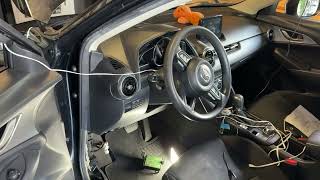
- Persistent dead battery due to the BCM not entering 'sleep mode', a known issue addressed by TSB 09-030-22. 🎬 Watch: How to fix the low battery risk warning quickly.
- In many cases, especially after a service procedure, there may be no symptoms other than the stored code that cannot be erased.
- A user on Mazda-Forum.com described a series of escalating electrical issues on their new CX-30, starting with battery problems, inability to unlock the car, and progressing to 'push button malfunction' and 'headlight malfunction' warnings, which are consistent with BCM failure.
- Replacing other modules
- Attempting to clear the code with a standard OBD-II scanner (when the TSB software issue is present)
- Replacing the BCM when only the TSB software update is needed.
Most Likely Causes

- BCM Software Glitch After Service 🔴 High Probability A documented BCM-VCM software error affects vehicles built before Feb 8, 2022, causing the code to become permanently stored after a BCM replacement or software update.
How to confirm: Confirm if the code appeared immediately after a BCM replacement or a software update was performed. The code will resist normal clearing procedures. This requires a Mazda dealer or a specialized shop with MDARS to verify the condition described in the TSB.
Typical fix: A specific BCM software update procedure must be performed by a Mazda dealer using the MDARS system, as outlined in Technical Service Bulletin SA-003-22d. A Reddit user with a 2024 CX-30 described a similar preventative dealer visit where the BCM/VCM was patched via a laptop running Mazda software.
Est. part cost: $0 - Failed Body Control Module (BCM) 🟡 Medium Probability → Shop Body Control Module The BCM is a complex computer that can fail internally due to hardware faults, leading to a variety of electrical issues and setting this code.
How to confirm: After ruling out the software glitch via the TSB, a technician will perform a comprehensive diagnostic scan. If the BCM is unresponsive or fails internal self-tests and all wiring, power, and grounds are confirmed to be good, the module itself is condemned.
Typical fix: Replacement of the Body Control Module, which must be followed by programming and configuration using Mazda's MDARS tool. This is critical as the BCM stores VIN, odometer, and immobilizer data.
Est. part cost: $250-$500
Rare But Worth Checking
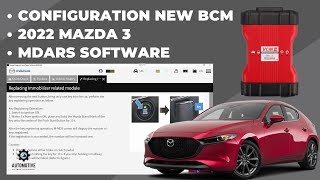
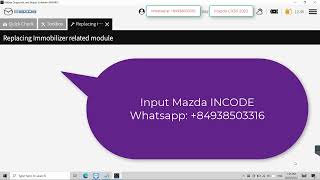
- Incorrect Module Configuration: If a new or used BCM is installed but not programmed correctly to the vehicle's VIN and options, it can set a U0300 code. This is a procedural error rather than a part failure. The Mazda repair manual outlines a specific multi-step configuration process using MDARS. 🎬 Watch: A walkthrough of the MDARS software configuration process.
- Network Wiring or Power/Ground Issues: While less common for this specific code, damage to the CAN bus wiring connected to the BCM or an unstable power/ground supply to the module could theoretically cause an internal malfunction code. A specific diagnostic procedure exists to test for shorts between circuits in the CAN harness at connectors like C-09 and C-53.
Diagnosis Steps
- Connect a professional scan tool (preferably Mazda MDARS) to read the full DTC, including the suffix (e.g., U0300:57).
- Question the vehicle owner about recent service history. Specifically ask if the BCM was recently replaced or if any software updates were performed.
- If the code appeared after service on a pre-Feb 2022 vehicle, consult TSB SA-003-22d.
- Verify that the code cannot be erased using the scan tool. This is a key symptom of the TSB issue.
- If the TSB condition is met, perform the specific BCM software update procedure outlined by Mazda. Do not replace the BCM.
- If the TSB does not apply, perform a full vehicle network test to check communication with all modules.
- Inspect the power, ground, and communication wiring to the BCM for any signs of damage or corrosion. The BCM is located behind the driver's side kick panel.
- If wiring and communications are intact, follow the specific CAN bus diagnostic procedure to check for shorts between circuits at BCM terminals 2H and 2F.
- If all wiring and communications are intact and the code persists, suspect a faulty BCM.
- If replacing the BCM, it is critical to perform the post-installation configuration and programming with MDARS to sync it with the vehicle's immobilizer and other systems. Failure to do so will result in a no-start condition.
Parts You'll Likely Need
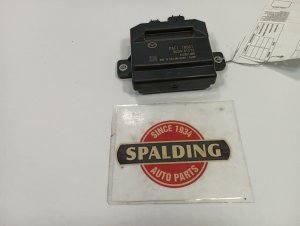
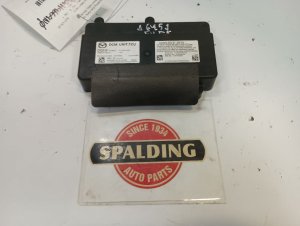
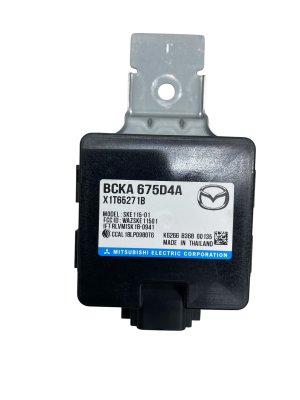
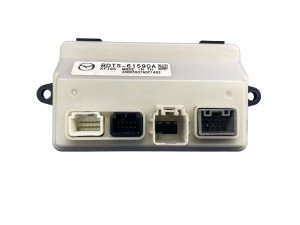
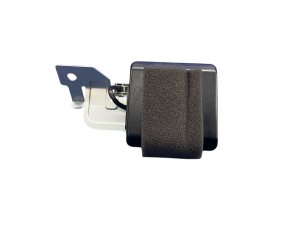
- Body Control Module (BCM)
(OEM #BDTS-67-560F)— This is the hardware that fails or requires a software update. A replacement is needed if the module has an internal hardware failure that cannot be resolved with a software flash. Part numbers may be superseded (e.g., BDTS-67-560G), and it's best to use the latest available version.
Trusted brands: Mazda (OEM)
OEM price range: $400-$500
Aftermarket price range: $250-$350 (Used/Remanufactured)
Technical Service Bulletins (TSBs) & Recalls
- SA-003-22d: "Prior to February 8, 2022, some vehicles may store DTC U0300:57 (Body control module (BCM) internal malfunction) and cannot be erased after a BCM replacement or MDARS BCM software update... This is caused by a BCM-VCM software error."
- TSB 09-030-22: Addresses customer complaints of dead batteries by reprogramming the BCM to enter sleep mode more quickly, reducing parasitic draw.
Platform-Specific Known Issues
- A Mazda Technical Service Bulletin (SA-003-22d) was issued for 2020-2021 CX-30s and 2019-2021 Mazda3s built before February 8, 2022. It addresses a software bug where DTC U0300:57 becomes stored and cannot be erased after a BCM replacement or software update. The fix is a specific dealer-performed software update.
- A separate TSB (09-030-22) addresses a common related symptom of parasitic battery drain, which is also fixed by a BCM software update to help the module enter 'sleep mode' correctly.
Mechanic-Grade Diagnostic Values
- Battery Support Voltage During Reflash — expected: 14.50 V (Continuous). Failure: Low or fluctuating voltage can cause the reflash to fail and corrupt the module.
- CAN Bus Line Voltage Check — expected: Voltage at BCM terminal 2H and 2F (wiring harness side) should be the same.. Failure: If voltages are not the same, it indicates a short circuit within the BCM itself.
Hidden / Shadow Codes Worth Checking
- U0300:57: This is the primary manufacturer-specific code indicating a 'Body control module (BCM) internal malfunction'. While not 'hidden', the :57 suffix is critical and may not be visible on all generic scanners. It is the specific trigger for consulting TSB SA-003-22d. (see via Mazda MDARS or a professional scan tool capable of reading manufacturer-specific DTC suffixes.)
Scan Tool Commands That Help
- Mazda MDARS: Software Update (for TSB SA-003-22d) — Used to apply the specific software patch to fix the bug causing U0300:57 to become permanently stored. The path is: Toolbox -> Wrench icon -> Software Update -> Run -> BCM.
- Mazda MDARS: Configuration (for new BCM) — Required after installing a new BCM to program the vehicle's VIN, immobilizer data, and user settings. The path is: Work Support -> Configuration -> Run -> BCM.
- Mazda MDARS: As-Built Data Retrieval — When replacing a BCM that is too damaged to be read, MDARS automatically accesses a Mazda server to download the vehicle's original factory configuration data ('As-Built') using the VIN. This avoids manual data entry.
Wiring & Ground Locations
- Body Control Module (BCM) — Located on the driver's side, behind the kick panel and side trim.. This is the location of the module itself, which must be accessed for physical replacement or to test its connectors.
- Ground Point (for Jump-Starting) — A specific, unpainted metal bracket on the vehicle body designated in the owner's manual, away from the battery.. While not the BCM's primary ground, using correct grounding points is critical for overall vehicle electrical health. An unstable ground can cause various module issues.
- BCM Terminals 2H & 2F — These are specific pins on the BCM's main connector (harness side).. These pins are used to test for an internal short in the BCM as part of the advanced diagnostic procedure for CAN bus errors.
- Harness Connectors C-09, C-53, C-02, C-31 — These are various inline harness connectors located throughout the vehicle.. These connectors are checkpoints in the diagnostic procedure to isolate a short circuit in the CAN bus wiring harness between the BCM and other modules.
OEM Part Supersession History
BDTS-67-560F→BDTS-67-560G (and likely later revisions)— Part revisions to fix hardware or software issues.
Heads up: Always use the latest available part number when replacing. Using an older, un-updated part may re-introduce the original software flaw.
Model Year Variations Within This Range
- Vehicles built before Feb 8, 2022: These vehicles are susceptible to the BCM-VCM software error where DTC U0300:57 can become permanently stored after a BCM replacement or update, requiring the fix from TSB SA-003-22d.
- 2019-2021 Mazda3 (Platform Mate): The MDARS software update procedure for the U0300:57 fix has a different, critical step for the Mazda3 compared to the CX-30. On the Mazda3, the technician must check the MDARS version before proceeding, as clicking 'Next' with the wrong version will permanently brick the module. This specific caution does not apply to the CX-30 procedure.
Helpful Videos

We Have This Part in Stock

The information in this article is provided for general reference and educational purposes only. Vehicle specifications, procedures, and part compatibility can vary by production date, trim level, and region. Always consult your vehicle's factory service manual and verify part numbers before purchasing or performing repairs. Safety-critical components such as airbags, seat belts, and braking systems should be installed by a qualified professional.
- Mazda CX-30:
- 🧭 Diagnostic Flowchart
- 🎬 Helpful Videos
- 🛍️ Shop This Part
- What's Unique About the 2020-2021 Mazda CX-30
- Symptoms You May Notice
- Most Likely Causes
- Rare But Worth Checking
- Diagnosis Steps
- Parts You'll Likely Need
- Technical Service Bulletins (TSBs) & Recalls
- Platform-Specific Known Issues
- Mechanic-Grade Diagnostic Values
- Hidden / Shadow Codes Worth Checking
- Scan Tool Commands That Help
- Wiring & Ground Locations
- OEM Part Supersession History
- Model Year Variations Within This Range
- 🎟️ Get 5% Off