

U0300 on 2019-2021 Mazda MAZDA3: BCM Software Incompatibility Causes and Fixes
On a 2019-2021 Mazda3 and its platform-mate, the Mazda CX-30, code U0300 (specifically U0300:57) almost always indicates a software incompatibility with the Body Control Module (BCM). This typically occurs after a BCM replacement or software update. It is not a DIY fix; it requires a Mazda dealer or a specialized shop with MDARS diagnostic software to perform a specific reprogramming procedure detailed in multiple service bulletins.
- U0300 on a 2019-2021 Mazda3 is a highly specific code, often U0300:57, pointing to a software problem in the Body Control Module (BCM).
- The most common trigger for this code is a recent BCM replacement or software update that was not performed with the latest procedure outlined by Mazda after February 2022.
- This issue also affects the 2020-2021 Mazda CX-30, which shares the same platform and BCM.
- This is not a DIY-friendly repair. The fix requires a Mazda dealer or specialist with access to the proprietary MDARS diagnostic system.
- Do not replace the BCM if the code appeared after it was just serviced; the problem is software, not a faulty part.
What's Unique About the 2019-2021 Mazda MAZDA3
For the fourth-generation Mazda3 and the related CX-30, this code is uniquely tied to service procedures. Multiple TSBs from Mazda confirm that the U0300:57 code often appears specifically after a technician replaces the Body Control Module (BCM) or attempts a software update using the Mazda Diagnostic and Repair Software (MDARS). The problem isn't a random component failure but rather a known software glitch that occurs during a repair, making the code impossible to erase until a specific, updated software procedure is performed. Another TSB, SA-060/20, even notes that the official workshop manual contained incorrect instructions for configuring a new BCM, further highlighting the procedural sensitivity.
Diagnostic Flowchart
Tap your situation to follow the diagnostic path that matches what you're seeing on this vehicle.
Symptoms You May Notice
- Check Engine Light or other malfunction indicator lights are on
- Inability to erase the U0300:57 trouble code after a repair.
- Erratic or non-functional power windows or door locks.
- Intermittent failure of interior lights or other electronic accessories.
- Keyless entry or push-button start system may malfunction
- Vehicle may not start, as the BCM is part of the immobilizer system.
- Malfunction of safety systems like lane-keeping assist or adaptive cruise control.
- Persistent dead battery due to the BCM failing to enter 'sleep mode' correctly (a related BCM software issue addressed by TSB 09-030-22).
- Replacing the BCM again. If the code appeared after a BCM replacement, the issue is almost certainly the software procedure, not a defective new part. Replacing it again without the correct software flash will result in the same error.
Most Likely Causes
- Incorrect BCM Software Update or Replacement Procedure 🔴 High Probability Mazda has issued multiple TSBs (e.g., SA-003-22d, SA-003-22b) specifically addressing this issue. The code U0300:57 is known to get 'stuck' and cannot be erased if the BCM is replaced or updated using a procedure from before February 8, 2022. This is due to a 'BCM-VCM software error'. There are reports of dealership software updates causing the vehicle to become completely non-operational.
How to confirm: Verify the vehicle's service history. If the BCM was recently replaced or reprogrammed, this is the most likely cause. A Mazda dealer can confirm the software version and see if it matches the TSB criteria.
Typical fix: The vehicle must be taken to a Mazda dealer or a qualified independent shop with the MDARS system. They will need to perform a specific BCM software update procedure outlined in the latest service bulletins (SA-003-22d or newer).
Est. part cost: $0 - Failed Body Control Module (BCM) ⚪ Low Probability → Shop Body Control Module While less common than the software issue, the BCM itself can fail internally, which would also trigger an internal malfunction code. This can manifest as general electrical chaos or a persistent parasitic battery drain. 🎬 See the easiest way to perform a parasitic draw test
How to confirm: If a software update does not resolve the issue, or if the code appeared without any prior BCM-related service, the module itself needs to be diagnosed. This involves checking for proper power, ground, and network communication at the BCM connector.
Typical fix: Replace the Body Control Module and then perform the necessary software configuration using the MDARS tool. This is critical, as failure to program the new module will result in a no-start condition. The vehicle's VIN and odometer data must be written to the new module; if the old module is unreadable, the odometer will reset to zero.
Est. part cost: $400-$700
Diagnosis Steps
- Verify the exact code with a professional scan tool capable of reading Mazda-specific DTCs, including the suffix (e.g., U0300:57).
- Check the vehicle's recent service history. Ask if the Body Control Module (BCM) has been replaced or if any software updates have been performed.
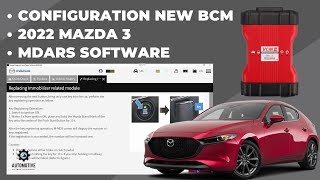
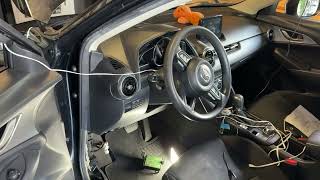
- If a BCM replacement or update was performed before February 8, 2022, consult Mazda TSB SA-003-22d. The fix is a specific software update procedure using the Mazda MDARS tool. 🎬 Watch: How to configure a new BCM using MDARS software
- If there is no history of BCM service, diagnose the BCM itself. Check for stable power and clean grounds at the BCM.
- Inspect the CAN bus wiring and connectors for any signs of damage or corrosion that could disrupt communication.
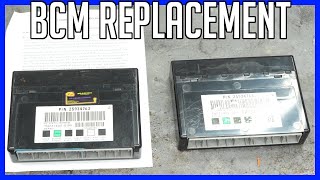
- If power, ground, and network connections are all good, and the software update procedure does not apply or fails, the BCM is likely internally faulty and requires replacement and subsequent programming. 🎬 Watch: A general guide on how to replace a BCM
Parts You'll Likely Need
- Body Control Module (BCM) Reprogramming — This is a software fix, not a physical part. The most common cause is a software glitch during a previous repair that requires an authorized Mazda technician to correct using their proprietary MDARS tool.
OEM price range: $150-$300
Aftermarket price range: N/A - Body Control Module (BCM)
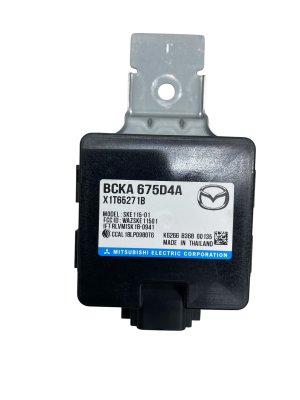
(OEM #BCYA-67-560A, superseded by BCYA-67-560B, etc., up to BCYA-67-560K. BCKA-67-560B is also a valid number. Part number must be matched exactly or with a compatible superseded version.)— In the rare case that the code is not caused by the known software issue and the module itself has failed, it will need to be replaced. Part numbers are VIN-specific but follow a common sequence.
Trusted brands: Mazda (OEM)
OEM price range: $400-$700
Aftermarket price range: $250-$500
Technical Service Bulletins (TSBs) & Recalls
- SA-003-22d: States that prior to Feb 8, 2022, some vehicles (Mazda3, CX-30, MX-30) may store DTC U0300:57 after a BCM replacement or software update and it cannot be erased. Details the MDARS software update procedure to fix it for the Mazda3 and CX-30.
- SA-003-22b: Similar to the above, noting the U0300:57 code appearing after BCM service.
- SA-003-22a: An earlier version of the bulletin describing the same U0300:57 issue after BCM replacement or MDARS update.
- SA-060/20: Notes that the official workshop manual has incorrect instructions for configuring a new BCM and provides the correct procedure for technicians using the MDARS tool.
Platform-Specific Known Issues
- Mazda has released several Technical Service Bulletins (TSBs) for an issue where DTC U0300:57 becomes stored and cannot be erased after a BCM replacement or a specific type of software update. This is due to a BCM-VCM software error.
- If a BCM is replaced and the data from the old module cannot be transferred, the odometer will reset to zero. The dealer is then required to place a sticker on the driver's side door jamb documenting the mileage at the time of the swap, which can negatively impact resale value.
Mechanic-Grade Diagnostic Values
- CAN Bus Network Resistance — expected: ~60 Ω. Failure: A reading of ~120 Ω indicates an open circuit to one of the two terminating resistors. A reading near 0 Ω indicates a short between the CAN High and CAN Low wires.
- CAN High Voltage (Key On, Engine Off) — expected: ~2.6V - 2.7V. Failure: Significant deviation, or a reading of 2.5V if the lines are shorted together, indicates a network problem.
- CAN Low Voltage (Key On, Engine Off) — expected: ~2.3V - 2.4V. Failure: Significant deviation, or a reading of 2.5V if the lines are shorted together, indicates a network problem.
- Battery Voltage during Reprogramming — expected: 14.50 V. Failure: Voltage dropping below the specified level during programming can cause the procedure to fail and potentially corrupt the module.
Hidden / Shadow Codes Worth Checking
- U0300:57: Body control module (BCM) internal malfunction. This specific sub-code is the primary focus of Mazda's TSBs for this issue. (see via A professional scan tool capable of reading manufacturer-specific DTCs, such as the dealer-level Mazda MDARS.)
Scan Tool Commands That Help
- Mazda MDARS: Software Update — This is the specific function required to fix the U0300:57 code when it appears after a BCM replacement or a previous failed update. The technician must navigate to Toolbox -> Wrench Icon -> Software Update -> Run -> BCM.
- Mazda MDARS: Configuration (As-Built Data) — When replacing a BCM that is too damaged to read data from, the technician must use this function to load the vehicle's original factory configuration into the new module. This is followed by key programming.
- Mazda MDARS: Immobilizer System-Related Parts Programming — This function is mandatory after installing and configuring a new BCM to program the vehicle's keys to the new module, allowing the car to start.
Wiring & Ground Locations
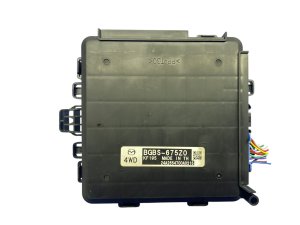
- BCM (Body Control Module) — Located in the driver's side footwell, behind the lower dash panel and left kick panel.. This is the central module that stores the U0300:57 code. Physical access is required for replacement or to check its connectors and ground points if a software fix fails.
- G18 — A primary ground point located under the front passenger's seat.. A wiring diagram for the 2020 Mazda3 shows a BCM ground wire (Pin 1D, BLK) terminating at ground point G18. A poor ground connection here could cause a variety of BCM-related electrical issues, though it is not the primary cause of the U0300:57 software bug.
- G21 — A ground point located in the left side of the luggage compartment.. A wiring diagram for the rear Electrical Supply Unit (related to the BCM) shows a ground connection (Pin 5T, BLK) at G21. Issues with this ground could affect BCM-controlled functions in the rear of the vehicle.
OEM Part Supersession History
BCYA-67-560C, BCYA-67-560D, BCYA-67-560E, BCYA-67-560F, BCYA-67-560G, BCYA-67-560H, BCYA-67-560J→BCYA-67-560K— Incremental hardware and/or firmware revisions by the manufacturer to improve reliability or resolve issues.
Heads up: Part numbers are specific to build location (Japan vs. Mexico) and installed features. BCKA-67-560 is another valid series. Using the wrong series or an incompatible superseded part can cause this U0300 code or other malfunctions. Always verify the correct part number by VIN.
Model Year Variations Within This Range
- 2019-2021: The specific software glitch causing U0300:57 is noted in TSBs as occurring on vehicles serviced prior to February 8, 2022. Vehicles manufactured or serviced after this date should have updated software that prevents this specific issue from occurring during a BCM replacement or update.
Helpful Videos

We Have This Part in Stock

The information in this article is provided for general reference and educational purposes only. Vehicle specifications, procedures, and part compatibility can vary by production date, trim level, and region. Always consult your vehicle's factory service manual and verify part numbers before purchasing or performing repairs. Safety-critical components such as airbags, seat belts, and braking systems should be installed by a qualified professional.
- Mazda MAZDA3:
- 🧭 Diagnostic Flowchart
- 🎬 Helpful Videos
- 🛍️ Shop This Part
- What's Unique About the 2019-2021 Mazda MAZDA3
- Symptoms You May Notice
- Most Likely Causes
- Diagnosis Steps
- Parts You'll Likely Need
- Technical Service Bulletins (TSBs) & Recalls
- Platform-Specific Known Issues
- Mechanic-Grade Diagnostic Values
- Hidden / Shadow Codes Worth Checking
- Scan Tool Commands That Help
- Wiring & Ground Locations
- OEM Part Supersession History
- Model Year Variations Within This Range
- 🎟️ Get 5% Off