

OBD-II Code U0316: Software Incompatibility with Vehicle Dynamics Control Module
What U0316 means, why it triggers, and how to fix it
- Code U0316 indicates a software mismatch between the Powertrain Control Module (PCM) and the Vehicle Dynamics Control Module (VDCM), instantly disabling ABS and traction control.
- Do not replace hardware first; over 80% of U0316 cases are resolved by a 1-to-2 hour dealer software update costing $150 to $400.
- Check your VIN for open recalls immediately, as Hyundai and Kia issued massive free ABS module replacements (Campaigns 23V-651 and 23V-652) that trigger this code.
- Limit driving to under 50 miles to reach a repair shop, as affected vehicles like the 2018-2025 Mazda CX-5 lock the transmission into a 3rd or 4th gear 'limp mode'.
What Does U0316 Mean?
Code U0316 means the Vehicle Dynamics Control Module (VDCM)—the computer managing stability and traction control—has a software conflict. It cannot communicate with other vehicle computers because their software versions do not match. This conflict instantly disables safety features designed to prevent skidding.
Technical definition: The SAE definition for U0316 is "Software Incompatibility With Vehicle Dynamics Control Module". The VDCM (or ABS/DSC module) detects a mismatch between its calibration and the software of other essential modules (like the PCM) on the Controller Area Network (CAN bus).
Can I Drive With U0316?
Yes, But With Caution. Driving is possible, but critical safety systems like stability control (ESC), traction control (TCS), and ABS are disabled. On some vehicles, advanced features like automatic emergency braking shut down. The transmission locks into one gear ('limp mode'), limiting speed. Drive under 50 miles directly to a shop to avoid secondary drivetrain damage.
Common Causes
- Outdated or Corrupted Module Software (Very Common) — This is the most frequent cause. A module's software becomes outdated, or its firmware corrupts due to a failed update, sudden power loss, or voltage spike. This is a heavily documented issue on 2018+ Mazda vehicles.
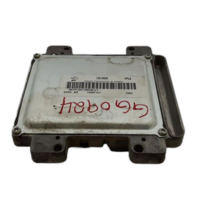
- Mismatched Software After Module Replacement or Tuning (Common) — Replacing a major computer (PCM, ABS module) with a part not programmed to your specific VIN triggers this code. Installing an aftermarket performance tune on the PCM also creates a software version conflict with the factory VDCM.
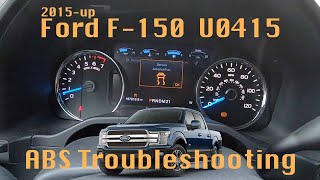
- Damaged CAN Bus Wiring or Connectors (Common) — The CAN bus is the wiring network computers use to communicate. Chafed wires, corroded connector pins, or a loose ground garble messages, causing modules to report a software error. Ford F-150 transmission harnesses are highly susceptible to this. 🎬 Watch: Troubleshooting ABS module and wiring issues on Ford trucks
- Weak or Failing 12V Battery (Less Common) — Low battery voltage (below 12.4V) causes communication errors between modules during startup. Ensure the battery is fully charged and healthy before attempting complex diagnostics.
- Failing Control Module Hardware (Less Common) — The control module fails internally due to an electrical short. This is the root cause behind massive Hyundai/Kia ABS module recalls. Once software and wiring are ruled out, the module itself requires replacement.
- Blocked or Damaged Sensor Input (Rare) — The VDCM relies on wheel speed, yaw rate, and radar sensors. If a sensor sends irrational data due to damage or blockage, the module interprets the nonsensical input as a software error.
Symptoms
- Traction/Stability Warning Lights On & Systems Disabled — The ESC, VDC, or ABS warning lights illuminate permanently. Traction control, stability control, and advanced driver-assistance systems (radar cruise, auto-braking) turn off.
- Transmission Stuck in Gear (Limp Mode) — The vehicle enters 'limp mode' and locks the transmission into a single gear (usually 3rd or 4th), preventing normal shifting and severely limiting highway speed.
- Surging or Jerking When Accelerating — The vehicle stumbles, surges, or jerks during acceleration, feeling like it hits a rev limiter prematurely.
- Heavy or Inconsistent Power Steering — The power steering feels unusually heavy or inconsistent, as the VDCM shares data with the electric power steering system.
Common Fixes & Costs
- Reprogramming (Flashing) a Control Module — Parts: $0-$100 (software license fee), Labor: $150-$300, ~1.5 hr book time (Professional)
- Performing a Recall Repair — Parts: $0, Labor: $0, ~1.5 hr book time (Professional)
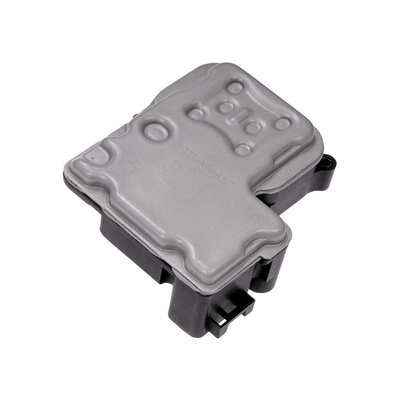
- Replacing the Vehicle Dynamics / ABS Control Module
— Parts: $400-$1500, Labor: $150-$400, ~2.5 hr book time
(Professional)
Mazda CX-5 (2019): OEM KN0W-43-7A0 (Alt: Cardone (Remanufactured))
Ford F-150 (2018): OEM JL34-2B373-AH (Alt: Dorman (Remanufactured)) - Repairing Damaged CAN Bus Wiring — Parts: $10-$50, Labor: $200-$800, ~3.0 hr book time (Intermediate)
- Replacing the 12V Car Battery — Parts: $150-$250, Labor: $0-$50, ~0.5 hr book time (DIY)
Used vs. New Parts: Buying Guide
When a used part is worth it: A used ABS/VDCM is a budget-friendly option for older, high-mileage vehicles where a new OEM part exceeds the car's value, or when new parts are discontinued.
Donor-vehicle mileage cap: roughly under 100000 miles for the part to have meaningful remaining life.
Donor quality checklist:
- Verify the part number on the used module is an exact match to the original.
- Visually inspect the module for corrosion on pins or signs of physical damage.
- Purchase from a reputable seller offering at least a 30-90 day warranty.
Decision logic:
- If The fix is a known software bug confirmed by a TSB → Do not buy any part; pay for the software update first.
- If Vehicle is newer and the part is available new → Buy a new OEM or rebuilt module for maximum reliability and warranty coverage.
- If Vehicle is older (>120k miles), budget is strict, and you have access to professional programming → A used part is a viable but risky option; factor in the cost of programming.
Warranty tradeoff: Used parts typically offer a 30-90 day functional warranty. Aftermarket rebuilt parts come with a 1-year to lifetime warranty. New OEM parts carry a 12-month warranty.
Worst-case if a used part fails: $300-$600 if the used part is dead on arrival. This includes the sunk cost of the part plus non-refundable labor for installation and a failed programming attempt.
Cost of Not Fixing It
- Immediate: ABS, Traction Control, and Stability Control are disabled, significantly increasing the risk of losing control in an emergency maneuver or on slippery surfaces. (Added cost: N/A)
- 0-3 months: Driving in 'limp mode' causes poor performance and puts additional stress on the transmission and engine mounts. Intermittent braking causes premature brake pad wear. (Added cost: $0 - $500)
- 3+ months: Continued operation forces the driver to operate a vehicle without critical safety systems. An accident caused by disabled systems is the most significant potential outcome. (Added cost: $0)
Diagnosis Steps
- Check for Technical Service Bulletins (TSBs) and Recalls
Search your VIN for TSBs or recalls related to U0316. Manufacturers release software updates to fix known bugs. For Hyundai/Kia, checking for ABS module fire risk recalls (23V-651/23V-652) is mandatory.
Tools: Internet access, Vehicle VIN (Beginner) - Check Battery and Perform Full System Scan
Verify battery voltage is above 12.4V with the engine off. Use an OEM-level OBD-II scanner to read codes from ALL modules (ABS, BCM, PCM). Document concurrent communication codes like U0401 or U0415.
Tools: OEM-level OBD-II Scanner, Multimeter (Beginner) - Verify Software Versions
Use an advanced scan tool to display the current software/firmware part numbers for the PCM and VDCM. Compare these to the latest versions listed in dealer service manuals to confirm a mismatch.
Tools: OEM-level scan tool (Advanced) - Inspect Module Wiring and Connectors
Visually inspect the wiring harnesses for the VDCM and PCM. Look for corrosion, chafed wires, or loose pins. Pay special attention to areas where harnesses route near hot engine components or suspension parts.
Tools: Flashlight, Inspection mirror (Intermediate) - Test CAN Bus Resistance
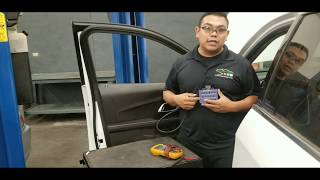
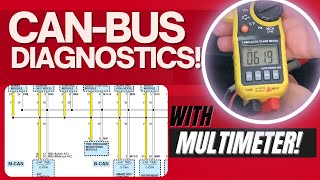
Disconnect the battery. Measure resistance between CAN High (Pin 6) and CAN Low (Pin 14) at the OBD-II port. A healthy network reads 60 Ohms. 120 Ohms 🎬 Watch: How to perform a CAN bus resistance check indicates an open circuit; 0 Ohms indicates a short.
Tools: Multimeter, OBD-II pinout diagram (Advanced) - Test CAN Bus Voltage
Turn the ignition on (engine off). Measure DC voltage of the CAN lines relative to chassis ground. CAN High should be ~2.5V-3.5V; CAN Low should be ~2.5V-1.5V. Voltages stuck at 2.5V indicate a short.
Tools: Multimeter, OBD-II pinout diagram (Advanced) - Isolate the Faulty Module
If the network is down, unplug non-essential modules (radio, door modules) one by one. If unplugging a specific module restores communication to the rest of the network, that module is the failure point.
Tools: Basic hand tools, Wiring diagrams (Advanced)
When This Code Triggers (Freeze-Frame Conditions)
- Engine Coolant Temp: 180-200°F (Fully warmed up)
- RPM: 1500-2500 (Cruise / steady throttle)
- Engine Load: 25-50% (Steady state driving, not under heavy acceleration)
- Vehicle Speed: 35-55 mph (Highway or arterial road cruising speed)
Related Codes
- U0401 — Means 'Invalid Data Received From ECM/PCM'. U0401 indicates the PCM's internal logic is failing. U0316 is logged because the VDCM receives that bad data. Seeing both strongly points to a PCM software issue.
- U0415 — Means 'Invalid Data Received From ABS Control Module'. U0316 points to a software version mismatch, while U0415 suggests the module is sending corrupted data. Together, they indicate a fault within the ABS/VDCM itself.
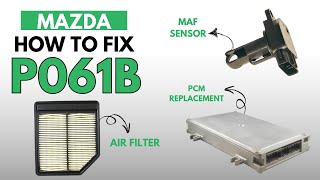
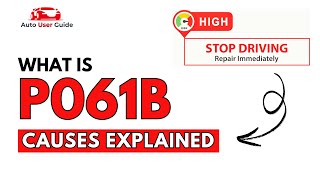
- P061B — Means 'Internal Control Module Torque Calculation Performance'. On Mazdas, P061B is the underlying fault. The PCM sends faulty torque data to the dynamics module, triggering U0316. The fix is a PCM software update.
- U3000 — Means 'Control Module Internal Malfunction'. U3000 is a direct statement that a module's internal processor failed a self-test. Seeing U3000 in the ABS module guarantees hardware failure requiring replacement.
Climate & Environmental Factors
- Cold Weather: Low temperatures severely weaken battery output, causing startup voltage drops that trigger false communication codes.
- High Humidity & Road Salt: Moisture and salt accelerate corrosion on wiring connectors. Hyundai/Kia ABS module recalls stem directly from moisture penetrating the module and causing electrical shorts.
- High Altitude & High Temperature: Mazda TSB 01-010/19 notes that driving in high temperatures at high altitudes triggers engine torque calculation errors, leading directly to U0316.
How to Clear the Code After You Fix It
- Reconnect battery (if disconnected for repair)
- Use an OBD-II scan tool to clear all DTCs from all modules
- Perform a complete drive cycle to allow readiness monitors to run
Drive cycle (~30 minutes): Start with a cold soak (vehicle sits for 8+ hours). Start engine and idle for 2-5 minutes. Drive in mixed city traffic, including several full stops. Accelerate to highway speed (55 mph) and maintain a steady speed for at least 3-5 minutes. Coast down from highway speed without using the brake. Repeat city and highway portions if monitors are not yet set.
Readiness monitors affected: Comprehensive Component Monitor, Misfire Monitor
Before emissions retest: drive at least 100 miles to fully set monitors.
Watch out for:
- Disconnecting the battery clears codes but resets all readiness monitors, guaranteeing an emissions test failure until a full drive cycle is completed.
- The code returns immediately if the root cause (software mismatch, bad wiring, faulty module) is not fixed.
Will This Fail Emissions / State Inspection?
Yes — this code typically fails an OBD-II emissions inspection.
- California: An illuminated ABS/TCS warning light causes a visual inspection failure. If cleared, the vehicle fails for incomplete readiness monitors until a drive cycle is finished.
- New York: The NYS inspection includes a check for illuminated ABS lights. A U0316 causing a light to be on is an automatic failure.
- Texas: While a U-code may not cause a Check Engine Light, the associated ABS warning light fails the safety inspection portion required statewide.
Most Commonly Affected Vehicles
- Mazda CX-5, Mazda3, Mazda6 (2018-2025) — Extremely prone to this code due to a PCM software glitch (TSB 01-015/19). The transmission locks in gear, often accompanied by code P061B. The repair is a software update covered under warranty.
- Hyundai Elantra, Santa Fe, Sonata (2011-2021) — Subject to massive recalls (e.g., NHTSA 23V-651) for internal electrical shorts within the ABS module causing communication failures and fire risks. Check for open recalls immediately.
- Ford F-150 (2011-2020) — Prone to chafing on main wiring harnesses, particularly the transmission harness. Replacing the ABS module requires exact option matching, or software incompatibility codes trigger instantly.
- Ford Transit Connect (2014-2019) — Known for ATE MK100 ABS pump failures, illuminating traction control lights and storing U3000 alongside U0316.
- Chrysler / Dodge Town & Country, Grand Caravan (2008-2020) — A single faulty interior module (radio, DVD player) shorts the entire CAN bus, causing a 'NO BUS' dashboard error and multiple U-codes.
- Subaru Outback (2020-2022) — The ABS wiring harness behind the wheel hub pinches or stretches after suspension work, leading to intermittent stability control faults.
Manufacturer-Specific Notes
- Mazda: For 2018+ models, U0316 is almost always a PCM software bug requiring a dealer update (TSB 01-015/19). Do not replace the transmission. The repair is covered under the Federal Emission Warranty.
- Ford: Communication codes trace back to damaged wiring harnesses chafing against the frame. When replacing an F-150 ABS module, the donor part must match the exact engine and options, or programming fails.
- Chrysler / Dodge: A 'NO BUS' dashboard message means one interior module failed and silenced the network. Technicians diagnose this by unplugging non-essential modules until communication returns.
- Hyundai / Kia: These brands issued massive recalls for ABS modules that leak brake fluid internally, short circuit, and cause fires. Always check for open recalls first, as the repair is free.
Frequently Asked Questions
Can I fix U0316 myself?
Fixing the most common cause—outdated software—requires OEM tools available only to professionals. You can diagnose simple causes by checking the battery, inspecting wiring, and verifying open recalls. Stop DIY and go to a shop if the battery and wiring are healthy.
My car is hesitating and has a U0316 code. Should I replace the spark plugs?
Do not replace ignition parts first. Hesitation combined with U0316 is a classic symptom of a PCM software glitch, not a misfire. Have a dealer check the software version before spending money on an unnecessary tune-up.
Can I use a cheaper, used control module to fix code U0316?
Yes, but it is highly risky. A used module must perfectly match your vehicle's year, model, engine, and options. It still requires professional programming to your VIN, and a failed flash ruins the part.
Will the code go away on its own?
No. This code indicates a persistent software or hardware conflict requiring active repair. The code returns immediately upon startup until the underlying incompatibility is resolved.
How much does it cost to fix U0316?
A software update costs $150 to $400 for labor and licensing fees. Replacing a control module ranges from $550 to $1,900 for parts and labor. Wiring repairs cost $200 to $800 depending on diagnostic time.
Is it safe to drive with code U0316?
Drive directly to a repair shop, keeping speeds low. Stability control, traction control, and ABS are disabled, severely limiting emergency handling. Some vehicles lock into a low gear, making highway driving dangerous.
What is the difference between OBD-II codes U0316 and P0316?
They are completely different. U0316 is a Network code indicating software incompatibility between computers. P0316 is a Powertrain code indicating an engine misfire on startup.
What is a CAN bus and why does it matter for code U0316?
The Controller Area Network (CAN) bus is the wiring system allowing your car's computers to communicate. Code U0316 means the conversation between the dynamics module and other computers broke down due to a software language barrier. Diagnosing it involves testing this network's electrical health.
My mechanic wants to replace a module. What should I ask?
Ask if they checked for TSBs or software updates first. Request confirmation that they performed a full CAN bus resistance test to rule out wiring faults. This ensures they eliminate cheaper software and wiring fixes before replacing a $1,000 part.
Key Takeaways
- Code U0316 indicates a software mismatch between the Powertrain Control Module (PCM) and the Vehicle Dynamics Control Module (VDCM), instantly disabling ABS and traction control.
- Do not replace hardware first; over 80% of U0316 cases are resolved by a 1-to-2 hour dealer software update costing $150 to $400.
- Check your VIN for open recalls immediately, as Hyundai and Kia issued massive free ABS module replacements (Campaigns 23V-651 and 23V-652) that trigger this code.
- Limit driving to under 50 miles to reach a repair shop, as affected vehicles like the 2018-2025 Mazda CX-5 lock the transmission into a 3rd or 4th gear 'limp mode'.
Helpful Videos
![How To Test CAN BUS With A Multimeter [CAN Bus Resistance Check] Mechanic Mindset](https://img.youtube.com/vi/JPE42HSJxAk/mqdefault.jpg)
Shop the Parts Behind U0316
Below are the parts most often responsible for code U0316, ranked by how frequently each one is the actual culprit (per the diagnosis above). Tap any to see what we have for your vehicle.


The information in this article is provided for general reference and educational purposes only. Vehicle specifications, procedures, and part compatibility can vary by production date, trim level, and region. Always consult your vehicle's factory service manual and verify part numbers before purchasing or performing repairs. Safety-critical components such as airbags, seat belts, and braking systems should be installed by a qualified professional.
- 🎬 Helpful Videos
- 🛍️ Shop This Part
- What Does U0316 Mean?
- Can I Drive With U0316?
- Common Causes
- Symptoms
- Common Fixes & Costs
- Used vs. New Parts: Buying Guide
- Cost of Not Fixing It
- Diagnosis Steps
- When This Code Triggers (Freeze-Frame Conditions)
- Related Codes
- Climate & Environmental Factors
- How to Clear the Code After You Fix It
- Will This Fail Emissions / State Inspection?
- Most Commonly Affected Vehicles
- Manufacturer-Specific Notes
- Frequently Asked Questions
- Can I fix U0316 myself?
- My car is hesitating and has a U0316 code. Should I replace the spark plugs?
- Can I use a cheaper, used control module to fix code U0316?
- Will the code go away on its own?
- How much does it cost to fix U0316?
- Is it safe to drive with code U0316?
- What is the difference between OBD-II codes U0316 and P0316?
- What is a CAN bus and why does it matter for code U0316?
- My mechanic wants to replace a module. What should I ask?
- Key Takeaways
- 🎟️ Get 5% Off