

U0316 on 2018-2025 Mazda CX-5: Causes for Software and Communication Faults
On a 2018-2025 Mazda CX-5, code U0316 is a software communication error, almost always appearing with P061B. It causes limp mode (stuck in gear) and requires a dealer to perform a PCM software update. This is not a DIY fix.
- Code U0316 on a 2018-2025 CX-5 is a secondary communication fault, almost always triggered by the primary code P061B.
- The root cause is overly sensitive PCM software logic, as acknowledged by Mazda in multiple Technical Service Bulletins.
- Symptoms are severe, including a 'limp mode' where the transmission is stuck in 4th gear, and multiple dashboard warning lights.
- The definitive fix is a PCM software update (re-flash) performed by a Mazda dealer, not hardware replacement.
- This is not a DIY repair and requires proprietary Mazda diagnostic tools (MDARS).
- The issue is also common on other Mazda models of the same era, including the Mazda6 and Mazda3.
What's Unique About the 2018-2025 Mazda CX-5

On this generation of Mazda CX-5, U0316 is a common secondary code that appears when the Powertrain Control Module (PCM) has an internal software logic fault, which is flagged by the primary code P061B ('Internal Control Module Torque Calculation Performance'). The manufacturer has issued multiple Technical Service Bulletins acknowledging that overly sensitive software can falsely trigger these codes, leading to severe drivability issues like being stuck in 4th gear. The problem is almost always solved with a PCM software update (re-flash), not by replacing hardware.
🎬 Watch: Three methods to fix the P061B engine error codeDiagnostic Flowchart

Tap your situation to follow the diagnostic path that matches what you're seeing on this vehicle.
Symptoms You May Notice

- Check Engine Light is on
- Transmission will not shift past 4th gear (limp mode)
- AT (Automatic Transmission) warning light may be on
- Surging or hesitation during acceleration
- Multiple warning lights on the dashboard, including ABS, traction control (TCS/DSC), and Smart Brake System (SBS/SCBS)
- Dashboard message: "Smart Brake System Malfunction" or similar warnings
- Mazda Radar Cruise Control (MRCC) and other advanced driver-assistance systems are disabled
- Replacing the transmission or transmission control module (TCM). The shifting issue is a 'limp mode' symptom commanded by the PCM due to a software fault, not a mechanical transmission failure.
- Replacing the ABS module or wheel speed sensors. While communication codes for these systems may be present, they are typically symptoms of the root PCM software issue, not the cause.
- Replacing the forward-facing radar or camera for the SBS/MRCC systems. The U0316 code points to a software incompatibility, not a hardware failure of the sensor itself.
- Replacing the Mass Airflow (MAF) sensor. While a faulty MAF can cause P061B on its own, it's less likely to be the cause when the specific cluster of U-codes (U0316, U0401, U0415) is present and a TSB for a PCM update exists.
Most Likely Causes

- Outdated Powertrain Control Module (PCM) Software 🔴 High Probability → Shop Engine Control Module (ECM) Mazda has identified that the original PCM software logic is too sensitive, causing false detection of an engine torque calculation error (P061B). This is documented in multiple TSBs (e.g., 01-015/19) which explicitly state the fix is a software update.
How to confirm: A Mazda dealer or a qualified shop with OEM tools (Mazda Diagnostic and Repair Software - MDARS) must connect to the vehicle and check the current PCM software calibration number against the latest 🎬 Learn more about the causes and fixes for code P061B version available from Mazda.
Typical fix: Update (re-flash) the PCM to the latest software version using the Mazda Diagnostic Repair System (MDRS). This is typically a 1-hour labor charge at a dealership.
Est. part cost: $0
Rare But Worth Checking
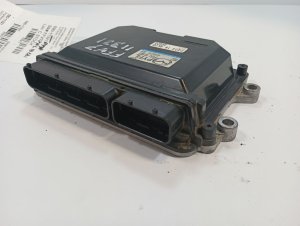
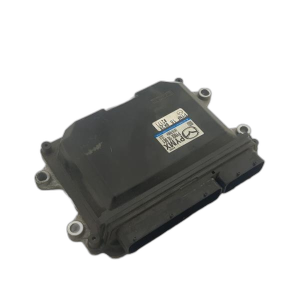
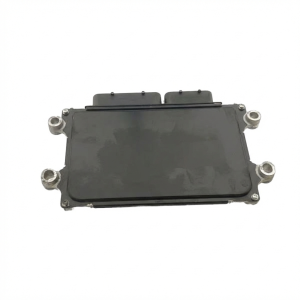
- Failed Powertrain Control Module (PCM): → Shop Engine Control Module (ECM) Extremely rare. This should only be considered if a PCM software update does not resolve the issue, or if the PCM is completely unresponsive to diagnostic tools. A replacement PCM will also require programming by the dealer.
- Failed SAS Control Module: A separate TSB (08-001/15) for earlier CX-5s notes that an internal failure of the Steering Angle Sensor (SAS) control module can cause a cascade of communication codes, including U0316. While less common for the P061B-related issue, it's a possibility if other SAS-related codes are present.
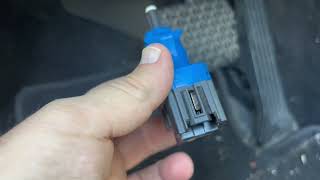
- Faulty Brake Light Switch: A failing brake light switch can send erratic signals to the ABS and VDC modules, causing communication faults and disabling safety systems. One owner on Reddit reported fixing multiple smart brake system warnings, which can accompany U0316, by replacing the brake light switch (Part No. BNZN-66-490A). This is an inexpensive part and a simple DIY replacement. 🎬 See this walkthrough on replacing the Mazda stoplight switch
- Low Battery Voltage or Poor Ground Connection: → Shop Vehicle Battery While less likely to be the root cause of the specific P061B/U0316 pattern, low system voltage can cause widespread communication (U-prefix) codes across various modules. Always ensure the battery is healthy and terminals are clean before proceeding with expensive diagnostics.
Diagnosis Steps
- Scan all vehicle modules with a professional-grade scanner. Confirm that U0316 is present with P061B and likely U0401 and U0415.
- Document all Diagnostic Trouble Codes (DTCs) and Freeze Frame Data.
- Check battery voltage and inspect battery terminals for corrosion. A weak battery can cause spurious communication codes.
- Using a Mazda-specific diagnostic tool (M-MDS or MDARS), identify the current software calibration version of the Powertrain Control Module (PCM).
- Check for any open Technical Service Bulletins (TSBs) related to P061B or U-codes for the specific vehicle VIN. TSBs 01-015/19, SA-011-19a, and SA-011-26 are the primary documents for this issue.
- If the PCM software is outdated per the TSBs, perform a PCM re-flash procedure to install the latest calibration. This is the most likely fix.
- After the update, clear all DTCs from all modules.
- Disconnect and reconnect the negative battery cable for at least 30 seconds to reset the Keep Alive Memory (KAM) for fuel and transmission data.
- Perform a thorough test drive, ensuring the vehicle can shift through all gears and that no symptoms or codes return.
Parts You'll Likely Need
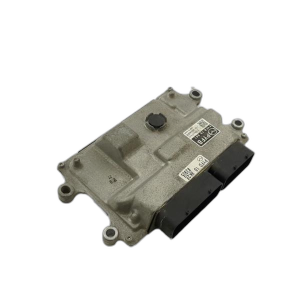
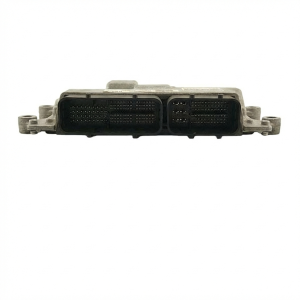
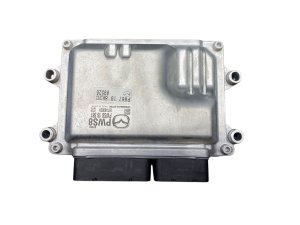
- Powertrain Control Module (PCM) — This part is only needed in the rare case that a software update fails to fix the problem and the module itself is diagnosed as faulty. The most common fix is a software update which requires no parts. Replacement cost is estimated between $946 and $998 for the part alone.
Trusted brands: Mazda (OEM)
OEM price range: $950-$1200
Aftermarket price range: Not Available
Related Codes That Often Appear With This One
- P061B — This 'Internal Control Module Torque Calculation Performance' code is the primary fault. U0316 is a secondary code that is triggered as a result of the PCM's internal error.
- U0401 — 'Invalid Data Received From ECM/PCM'. This is another generic communication code that indicates network instability, usually caused by the root PCM software problem.
- U0415 — 'Invalid Data Received From Anti-Lock Brake System (ABS) Control Module'. The PCM's confusion causes a cascade of communication errors with other critical safety systems.
Technical Service Bulletins (TSBs) & Recalls
- SA-011-26: Mentions that various U-codes, including U0316 SBS/MRCC, may be set with symptoms like the transmission not shifting past 4th gear.
- SA-011-19a: Links DTC P061B with various U-codes, including U0316, and transmission shifting issues for 2018 models.
- SA-011-19: The original bulletin for 2018 models that describes the relationship between P061B, surging, transmission issues, and associated U-codes like U0316.
- 01-015/19: A detailed TSB explaining that P061B is a false detection caused by 'improper control logic of the PCM' where the 'engine torque calculation error detection is too sensitive'. It explicitly states the fix is a PCM software update and applies to the CX-5, Mazda6, Mazda3, and CX-3.
Platform-Specific Known Issues
- Mazda has issued multiple Technical Service Bulletins (including SA-011-26, SA-011-19a, and 01-015/19) acknowledging that the PCM software can be overly sensitive, leading to a false detection of an engine torque calculation error (P061B). This false detection triggers a fail-safe mode, which includes limiting transmission gears and is accompanied by various communication codes like U0316. The official and most common repair is a PCM software update. One owner on mazda-forum.com with a 2018 CX-5 experienced the full cluster of codes (U0415, U0316, U0401) and symptoms after extensive, unsuccessful parts replacement, highlighting the software-based nature of the problem.
Mechanic-Grade Diagnostic Values
- HS-CAN Bus Network Resistance — expected: ~60 Ohms. Failure: A reading of ~120 Ohms indicates an open circuit or one missing terminating resistor. A reading near 0 Ohms indicates a short between CAN_H and CAN_L wires. A reading of ~40 Ohms suggests a third, unwanted terminating resistor is on the network.
- Battery Voltage During PCM Reprogramming — expected: Stable voltage with a charger supplying 10-15A.. Failure: Low or fluctuating voltage can cause the reprogramming to fail, potentially corrupting the PCM.
Hidden / Shadow Codes Worth Checking
- U2120:00 / U2500:82: These are not hidden fault codes, but procedural error codes that can be set if the post-PCM flash process is done incorrectly. They indicate a communication error with the Forward Sensing Camera or other modules. (see via These codes will appear on a post-repair scan if the technician fails to let the vehicle sit with the doors closed and locked for at least 10 minutes after clearing codes and reconnecting the battery.)
Scan Tool Commands That Help
- Mazda MDARS: Software Update (PCM) — This is the primary, dealer-level function used to re-flash the Powertrain Control Module (PCM) with the updated software calibration that corrects the false P061B detection, which is the root cause of the U0316 code.
- FORScan: Steering Angle Sensor (SAS) Calibration — If the U0316 code is accompanied by SAS or traction control warnings and is not part of the typical P061B cluster, a calibration of the Steering Angle Sensor may be required. This can be done with powerful aftermarket tools like FORScan.
Wiring & Ground Locations
- HS-CAN Bus Termination — The High-Speed CAN bus has two 120-Ohm terminating resistors: one is internal to the Powertrain Control Module (PCM) and the other is internal to the instrument cluster.. U0316 is a communication code. A failure of either terminating resistor or the wiring between them will disrupt the entire network, causing this and other U-codes. A resistance check across the network is a fundamental diagnostic step.
- G03 / G11 — Based on similar models, G03 is a primary ground point located in the left front of the engine compartment. G11 is located at the lower left center of the dash, near the driver's kick panel area.. The PCM and other interior modules rely on clean ground connections. A corroded or loose ground at G11 or G03 can introduce electrical noise and voltage drops, leading to a variety of communication codes, including U0316.
- Front Body Control Module (FBCM) — The FBCM is physically integrated into the main fuse box in the engine compartment.. The FBCM is a major node on the CAN network. Any issues with the fuse box (water intrusion, corrosion) can directly impact the FBCM and disrupt network communication.
Real Owner Repair Stories
- Reddit user in r/CX5 (2019 Mazda CX-5) — Dashboard message "Smart Brake System Malfunction".
❌ Tried (didn't work) An initial replacement with a faulty aftermarket brake light switch from RockAuto did not fix the problem.
✅ What actually fixed it Replacing the brake light switch with an OEM part from a Mazda dealer for about $25. The user confirmed the associated trouble code was P0504 (Brake Switch A/B Correlation).
When the Usual Fixes Don't Work
- While the overwhelming evidence and manufacturer TSBs point to a PCM software update as the definitive fix for the P061B/U0316 code combination, there is compelling anecdotal evidence that other, simpler faults can cause the same symptom pattern. Multiple owners have reported a cascade of dashboard warnings, including 'Smart Brake System Malfunction' (related to the VDC module in U0316), which were ultimately traced back to a faulty brake light switch. In these cases, the switch sends erratic or incorrect data onto the CAN bus, causing communication breakdowns between modules. This leads to a flurry of U-codes that are symptoms, not the cause. Before committing to a potentially expensive dealer-only PCM re-flash, a technician should rule out this inexpensive component, especially if brake-related codes like P0504 or P0571 are also present.
OEM Part Supersession History
Initial Factory Software→Updated PCM Calibration Files (e.g., PX07-188K2-L, PX06-188K2-J)— The original PCM software logic for engine torque calculation was too sensitive, leading to false P061B codes. The updated software corrects this logic.
Heads up: These are not hardware parts but software file names. A technician can use MDARS to check the current file name. If the suffix is the same or later than the one listed in the TSB, the PCM already has the updated software and flashing it again will not help.
Model Year Variations Within This Range
- 2018-onward: The diagnostic software required for PCM reprogramming changed. For 2018 and later CX-5 models, the Mazda Diagnostic and Repair Software (MDARS) is mandatory. The older Mazda Modular Programming System (MMP) used for 2017 and earlier models will not work for PCM flashing on these vehicles.
- 2018-2019: TSB 01-015/19, which addresses the root P061B software flaw, applies specifically to CX-5 vehicles with VINs lower than JM3KF**623863 (produced before April 22, 2019). Vehicles produced after this date are expected to have the corrected software from the factory.
Helpful Videos
We Have This Part in Stock

The information in this article is provided for general reference and educational purposes only. Vehicle specifications, procedures, and part compatibility can vary by production date, trim level, and region. Always consult your vehicle's factory service manual and verify part numbers before purchasing or performing repairs. Safety-critical components such as airbags, seat belts, and braking systems should be installed by a qualified professional.
- Mazda CX-5:
- 🧭 Diagnostic Flowchart
- 🎬 Helpful Videos
- 🛍️ Shop This Part
- What's Unique About the 2018-2025 Mazda CX-5
- Symptoms You May Notice
- Most Likely Causes
- Rare But Worth Checking
- Diagnosis Steps
- Parts You'll Likely Need
- Related Codes That Often Appear With This One
- Technical Service Bulletins (TSBs) & Recalls
- Platform-Specific Known Issues
- Mechanic-Grade Diagnostic Values
- Hidden / Shadow Codes Worth Checking
- Scan Tool Commands That Help
- Wiring & Ground Locations
- Real Owner Repair Stories
- When the Usual Fixes Don't Work
- OEM Part Supersession History
- Model Year Variations Within This Range
- 🎟️ Get 5% Off