

U0401 on 2015-2019 Chevrolet Silverado 3500: Causes and Fixes for Invalid ECM Data
On a 2015-2019 Silverado 3500, code U0401 is most often caused by a damaged or corroded wiring harness under the driver or passenger side sill plates, a known issue documented in GM TSB #PIT5457D. The fix typically involves repairing the damaged wires, specifically the pink 'Communication Enable' wire (Circuit 5986), which costs under $50 in materials for a DIY repair or a few hundred dollars at a shop.
- For a 2015-2019 Silverado 3500, U0401 almost always points to a wiring problem under the door sill plates, not a failed computer.
- Before buying any parts, pull up the sill plates and carpet to inspect the wiring harness for corrosion or damage, as per TSB #PIT5457D.
- Symptoms often appear as failures in other systems (power steering, Stabilitrak), but the root cause is a communication error.
- Do not replace the expensive ECM unless all potential wiring, ground, and power supply issues have been professionally ruled out.
- Driving with this code is risky as it can disable important safety systems without warning.
What's Unique About the 2015-2019 Chevrolet SILVERADO 3500
The 2015-2019 Silverado 3500, built on the K2XX platform, is specifically known for wiring issues that trigger this code. General Motors issued Technical Service Bulletin #PIT5457D, which directly links U0401 and other communication codes to a damaged wiring harness routed under the driver and passenger sill plates. This area is prone to moisture and physical damage from occupants entering and exiting the vehicle, making it the primary suspect. The TSB specifically highlights issues with the 'Communication Enable circuit 5986' within this harness, which is responsible for waking up various modules by sending a 12-volt signal. A fault in this single circuit can cause a cascade of communication codes and seemingly unrelated electronic issues like loss of power steering and Stabilitrak warnings.
Diagnostic Flowchart
Tap your situation to follow the diagnostic path that matches what you're seeing on this vehicle.
Symptoms You May Notice
- Check Engine Light illuminated
- "Service Stabilitrak" message on the driver information center (DIC)
- "Power Steering Assist Reduced" message on the DIC
- Loss of power steering assist
- Harsh or erratic transmission shifting
- Vehicle may enter a reduced power "limp mode"
- ABS and Traction Control lights may illuminate
- Radio or HVAC displays may go blank or reset
- Wipers may behave erratically
- Replacing the Power Steering Rack or Module: Many symptoms point to a power steering failure, but the issue is often just the invalid data the module is receiving. Replacing expensive steering components without fixing the communication problem will not solve the issue.
- Replacing the ECM Prematurely: The code points to the ECM as the source of invalid data, but it's far more likely that the data is being corrupted by a wiring issue *after* it leaves the ECM. Replacing the ECM is an expensive and often incorrect first step.
Most Likely Causes
- Damaged or Corroded Wiring in Sill Plates 🔴 High Probability As documented in TSB #PIT5457D, the harness channel under the door sill plates is a known collection point for water and debris, leading to corrosion and wire damage. The Communication Enable circuit (5986), a pink wire, is particularly vulnerable. Splice J365 under the passenger sill plate is also a common failure point.
How to confirm: Remove the driver and passenger side plastic sill plates and peel back the carpet. Visually inspect the wiring harness channel for signs of water, corrosion (often green or white powder on wires), or physical damage. Unwrap the harness tape and specifically inspect the pink wire (Circuit 5986) for breaks or corrosion.
Typical fix: Repair the specific damaged wire(s), most commonly the pink wire for Circuit 5986. This involves cutting out the corroded section, splicing in a new piece of wire with waterproof butt connectors, and protecting the repair with heat shrink and electrical tape. Ensure the splice is secure and the harness is re-routed to prevent future water damage.
Est. part cost: $5-$20 - Low Battery Voltage or Poor Ground Connection 🟡 Medium Probability → Shop Vehicle Battery Modern control modules require stable voltage to communicate correctly. A weak battery, failing alternator, or corroded ground connection can cause modules to send corrupt data. TSB PIT5405C specifically identifies the BCM ground G218 as a source of numerous electrical issues, including communication codes. This ground is located on the driver's side A-pillar, behind the dash/kick panel area.
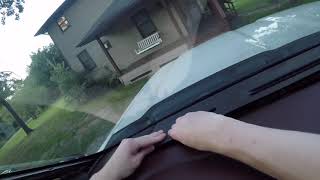
How to confirm: Test the battery voltage with a multimeter (should be ~12.6V engine off, ~14.0-14.7V engine running). Load test the battery. Inspect and clean the main battery terminals and chassis grounds. Locate and inspect ground G218 for looseness or corrosion; sometimes the dash insulator mat gets trapped under the ground lug, preventing a good connection. 🎬 See how to locate and repair the G218 ground connection.
Typical fix: Replace a weak battery, repair the charging system, or clean/tighten the affected ground connection. For G218, this may involve removing the nut, cleaning the contact surfaces, and ensuring no insulation is trapped under the terminal.
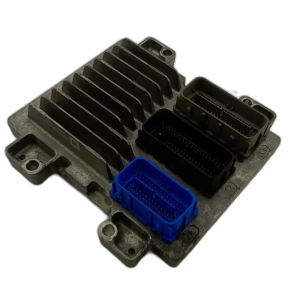
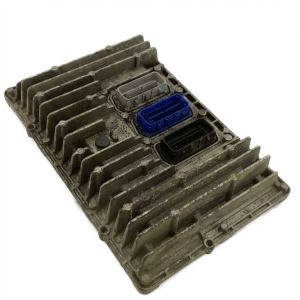
Est. part cost: $0-$300 - Faulty Engine Control Module (ECM) ⚪ Low Probability → Shop Engine Control Module (ECM) While possible, a truly faulty ECM is not the most common cause. It should only be considered after all wiring and power/ground issues have been completely ruled out. An internal ECM failure can cause it to send corrupted data packets onto the CAN bus.
How to confirm: This is typically a process of elimination. If all wiring, connectors, grounds, and power sources are confirmed to be perfect, the ECM becomes the likely suspect. A dealership or specialized shop can perform advanced diagnostics to confirm.
Typical fix: Replace the ECM and program it to the vehicle's VIN. This requires dealership-level tools.
Est. part cost: $500-$1200
Rare But Worth Checking
- Aftermarket Devices: Poorly installed aftermarket electronics like remote starters, alarms, or performance tuners that tap into the CAN bus can introduce electrical noise and corrupt data, triggering a U0401 code.
- PSCM Software Glitch: GM TSB #20-NA-113 (and PIE0563 for 1500s) notes that on some 2017-2018 models, a software error in the Power Steering Control Module (PSCM) can cause U0401 to stay active even after the root cause (like a dead battery) is fixed. The solution is a dealer-level software update for the PSCM.
Diagnosis Steps
- Scan all vehicle modules for DTCs. Note which module(s) have stored the U0401 code.
- Check and document all other codes present. Codes like U0121, U0131, or U0077 strongly point towards a network wiring issue.
- Test the battery and charging system to ensure stable voltage (12.6V+ engine off, ~14.0-14.7V running).
- Following TSB #PIT5457D, remove the driver's side and passenger's side front door sill plates.
- Carefully lift the carpet and inspect the plastic wiring channel for any signs of water, moisture, or corrosion.
- Open the harness and inspect the wires, paying close attention to the pink wire (Circuit 5986). Look for any breaks, corrosion, or previous poor repairs. Also inspect splices like J365 under the passenger sill plate.
- If damage is found, perform a proper wire repair using sealed, waterproof connectors.
- If no damage is found in the sill plates, inspect major ECM, BCM, and chassis ground points for tightness and corrosion, paying special attention to ground G218 on the driver's side A-pillar.
- Disconnect any aftermarket electronic devices and re-test.
- If all wiring and connections are verified to be good, the final step would be to suspect a faulty control module, likely the ECM.
Parts You'll Likely Need
- Wire Repair Supplies — This is needed to fix the most common cause: a corroded or broken wire in the sill plate harness, as identified in TSB #PIT5457D.
Trusted brands: 3M, Dorman
OEM price range: $5-$20
Aftermarket price range: $5-$15 - Engine Control Module (ECM)
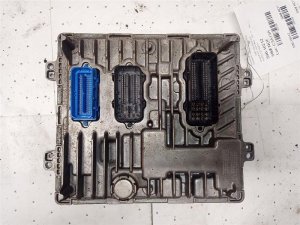
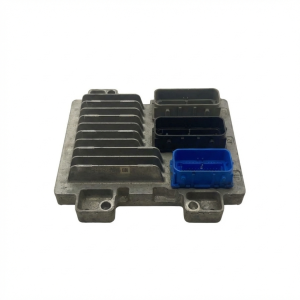
(OEM #12692201 (example for 6.0L gas engine, verify by VIN))— This is a low-probability fix. It should only be replaced after exhausting all wiring and connection diagnostic steps. Part number varies by engine and year.
Trusted brands: ACDelco
OEM price range: $700-$1200
Aftermarket price range: $400-$800
Related Codes That Often Appear With This One
- U0121 — Lost Communication With Anti-Lock Brake System (EBCM) Control Module. Often set alongside U0401 due to the same harness issue affecting 🎬 Watch this walkthrough for diagnosing U0121 and communication loss issues. the communication enable circuit.
- U0131 — Lost Communication With Power Steering Control Module (PSCM). Often set alongside U0401 due to the same harness issue.
- U0077 — Control Module Communication Bus 'B' Off. This indicates a broader network shutdown, often caused by the same wiring faults that trigger U0401.
- U0415 — Invalid Data Received From Anti-Lock Brake System Control Module. This can be set in conjunction with U0401 when the EBCM is affected by the communication fault.
Technical Service Bulletins (TSBs) & Recalls
- PIT5457D: Loss of communication with various modules (EBCM, PSCM, etc.) and codes like U0401 can be caused by damaged wiring in the sill plate area.
- PIT5405C: Details various electrical issues including communication DTCs caused by a poor BCM ground at G218.
- 20-NA-113: Notes a PSCM software glitch on 2017-2018 models that can cause U0401 to persist after the initial fault is fixed, requiring a reprogram.
Platform-Specific Known Issues
- TSB #PIT5457D: This is the most critical document for this code on this truck. It explicitly calls out loss of communication codes including U0401 being caused by open/damaged wiring in the driver and passenger sill plate harness.
Mechanic-Grade Diagnostic Values
- High-Speed CAN Bus Resistance — expected: ~60 Ω (measured between pins 6 and 14 of the DLC with battery disconnected).. Failure: A reading of ~120 Ω indicates an open circuit or a missing terminating resistor. A reading near 0 Ω indicates a short between the CAN High and CAN Low wires.
- High-Speed CAN Bus Voltage (Key On, Engine Off) — expected: CAN High (Pin 6 to ground): ~2.7V. CAN Low (Pin 14 to ground): ~2.3V.. Failure: Significant deviation, or voltages matching each other, indicates a bus fault.
- Communication Enable Circuit (5986) Voltage — expected: Approximately 12V (battery voltage) at the destination module connector with the key in ACC or ON position.. Failure: Low or no voltage indicates an open or high resistance in the circuit, most likely in the sill plate harness.
- Communication Enable Circuit (5986) Load Test — expected: Circuit should maintain at least 11V while powering a small test load, such as a 194 bulb (~250mA draw).. Failure: If the bulb does not light or voltage drops significantly below 11V, it confirms high resistance in the wire that a simple voltage check might miss.
- BCM Current Limit for Circuit 5986 — expected: Current draw should be less than 0.88 amps.. Failure: The BCM will shut down the output driver for circuit 5986 if it detects a draw greater than 0.88 amps, indicating a short to ground.
Hidden / Shadow Codes Worth Checking
- U0401-71: This is a common GM-specific variant of the code, indicating 'Invalid Data Received From ECM'. The '-71' is a symptom byte that specifies the type of failure, in this case, invalid serial data. (see via A professional-grade scan tool capable of reading manufacturer-specific codes and symptom bytes, such as a GM GDS2/Tech2 or equivalent.)
Scan Tool Commands That Help
- GDS2 / TIS2WEB: PSCM (Power Steering Control Module) Reprogramming — Per TSB #20-NA-113, this is used on 2017-2018 models when code U0401 remains as a 'current' DTC after a temporary fault (like a disconnected/dead battery) has been resolved. A software error prevents the code from moving to 'history'.
- Professional Scan Tool: Live Data Request from ECM/PCM — Use this to confirm a communication breakdown. If the scan tool requests data from the ECM and the values fail to appear, are erratic, or are clearly nonsensical, it helps verify the issue reported by the other modules.
Wiring & Ground Locations
- G218 — Driver's side, under the dash near the A-pillar, above the hood release lever. It is a ground stud on the body.. This is the primary ground for the Body Control Module (BCM). TSB #PIT5405C notes that the dash insulator mat can get trapped under the ground lug, causing high resistance and a host of communication codes, including U0401.
- Splice J365 — Located within the main wiring harness under the passenger's front door sill plate.. This is a known weak point and common failure location for the Communication Enable Circuit (5986). Corrosion at this splice can interrupt the 'wake-up' signal to multiple modules.
- Rear CAN Bus Terminating Resistor — On some 2015+ models, this is a separate, serviceable 120-ohm resistor taped to the main wiring harness, located near the spare tire and above the muffler.. The CAN bus requires two 120-ohm resistors to function. One is internal to a module (like the ECM), and this is the second. If this external resistor or its wiring fails, the total bus resistance will jump from 60 ohms to 120 ohms, causing network-wide communication failures.
- Circuit 5986 (Communication Enable) — Runs from the BCM, through the harnesses under both the driver and passenger sill plates, to various modules like the PSCM and EBCM.. This is the 'wake-up' wire. An open or high resistance on this single circuit prevents modules from activating to communicate on the CAN bus, triggering a cascade of U-codes. While often pink, the color can vary; it has been noted as Dark Green or White/Light Blue at specific module connectors.
Real Owner Repair Stories
- Reddit user Sorry-Conclusion1658 (2015 Chevrolet Silverado) — Misfire and code U0401-71.
❌ Tried (didn't work) Replacing all spark plugs., Replacing all spark plug wires.
✅ What actually fixed it Replacing the ignition coil on the specific cylinder that was misfiring (Cylinder #6).
"I Checked Everything" — The Actual Cause
- In the context of network codes, the equivalent of a 'smoke test clean' is when all wiring harness checks (continuity, resistance, voltage) pass inspection. In one documented case, after checking wiring, the actual root cause of U0401-71 was a failing ignition coil causing a misfire. The ECM was sending valid but erratic data related to the misfire, which other modules interpreted as an invalid communication, triggering the code.
When the Usual Fixes Don't Work
- While the most common cause for U0401 on this platform is wiring damage in the sill plates, it should not be the only diagnostic path. A real-world repair confirmed that a faulty ignition coil on a 2015 Silverado was the root cause. The resulting engine misfire caused the ECM to broadcast data that other modules flagged as invalid, setting the U0401-71 code. This demonstrates that the code can be triggered by a component failure causing the ECM to generate genuinely corrupt data, not just by a wiring issue corrupting good data in transit. Technicians should always diagnose any accompanying engine performance codes (like misfires) before focusing solely on the network fault.
Model Year Variations Within This Range
- 2017-2018: These model years are specifically called out in TSB #20-NA-113 for a Power Steering Control Module (PSCM) software glitch that can cause U0401 to remain as a current code after a temporary fault. The fix is a dealer-level software update.
- 2019: For 4WD models, TSB #22-NA-187 points to a faulty grommet on the transfer case actuator connector that can allow water intrusion, leading to corrosion and code U0401-71.
Helpful Videos



We Have This Part in Stock

The information in this article is provided for general reference and educational purposes only. Vehicle specifications, procedures, and part compatibility can vary by production date, trim level, and region. Always consult your vehicle's factory service manual and verify part numbers before purchasing or performing repairs. Safety-critical components such as airbags, seat belts, and braking systems should be installed by a qualified professional.
- Chevrolet SILVERADO 3500:
- 🧭 Diagnostic Flowchart
- 🎬 Helpful Videos
- 🛍️ Shop This Part
- What's Unique About the 2015-2019 Chevrolet SILVERADO 3500
- Symptoms You May Notice
- Most Likely Causes
- Rare But Worth Checking
- Diagnosis Steps
- Parts You'll Likely Need
- Related Codes That Often Appear With This One
- Technical Service Bulletins (TSBs) & Recalls
- Platform-Specific Known Issues
- Mechanic-Grade Diagnostic Values
- Hidden / Shadow Codes Worth Checking
- Scan Tool Commands That Help
- Wiring & Ground Locations
- Real Owner Repair Stories
- "I Checked Everything" — The Actual Cause
- When the Usual Fixes Don't Work
- Model Year Variations Within This Range
- 🎟️ Get 5% Off