

U0401 on 2010-2012 Dodge Challenger: Causes of Implausible Data from ECM/PCM
On a 2010-2012 Dodge Challenger, the U0401 code is most often caused by outdated Powertrain Control Module (PCM) software. A software update from a Dodge dealer or qualified shop is the primary fix, as documented in manufacturer TSBs. This issue is often accompanied by other seemingly unrelated codes like P0340 (camshaft sensor) and P0441 (EVAP system).
- For a 2010-2012 Challenger, U0401 is very likely a software bug in the PCM.
- Always check for available software updates with a dealer before replacing any parts, especially if codes P0340 or P0441 are also present.
- The issue is shared with the Dodge Charger and Chrysler 300 of the same era.
- A failing camshaft position sensor is the next most likely cause if the software is already up to date.
What's Unique About the 2010-2012 Dodge CHALLENGER
For this specific generation of Dodge Challenger, the U0401 code is very frequently a software issue rather than a hardware failure. Dodge released several Technical Service Bulletins (TSBs), notably #18-067-15 REV A, indicating that a simple software update for the Powertrain Control Module (PCM) can resolve this code. The glitch often causes the U0401 to appear alongside other DTCs like P0340 (Camshaft Position Sensor) and P0441 (EVAP Purge), misleading owners into thinking multiple hardware components have failed simultaneously. This makes checking for available software updates a critical first step in diagnosis.
🎬 Watch: Expert advice on diagnosing the U0401 trouble code.Diagnostic Flowchart
Tap your situation to follow the diagnostic path that matches what you're seeing on this vehicle.
Symptoms You May Notice
- Check Engine Light (Malfunction Indicator Lamp) is on.
- Vehicle may have difficulty starting or experience long crank times.
- Intermittent loss of power or hesitation during acceleration.
- Engine may stall, especially at low speeds or idle.
- Harsh or delayed transmission shifting.
- Traction control or other safety system warning lights may illuminate.
- Erratic engine RPM readings on the tachometer.
- Replacing the PCM when only a software update is needed.
- Replacing other control modules (like the TCM or BCM) that are reporting the code, when the root cause is the data coming from the PCM.
- Replacing the camshaft position sensor without first checking if a PCM software update is available, as the sensor code (P0340) is a known symptom of the software glitch.
- Replacing the TIPM without first checking for CAN bus wiring issues, such as chafing or interference from being routed too close to other components.
Most Likely Causes
- Outdated Powertrain Control Module (PCM) Software 🔴 High Probability → Shop Engine Control Module (ECM) Dodge issued multiple TSBs (#18-068-15, #18-067-15 REV A) for this exact issue, indicating a known software bug that can be fixed with an update. The software anomaly causes the PCM to send data that other modules flag as implausible, often setting multiple unrelated codes at once.
How to confirm: A Dodge dealer or a well-equipped independent shop can check the current software calibration ID against the latest available version using a wiTECH scan tool. They can look up the vehicle's VIN for applicable TSBs.
Typical fix: Flashing the PCM with the updated software. This is a reprogramming procedure, not a hardware replacement.
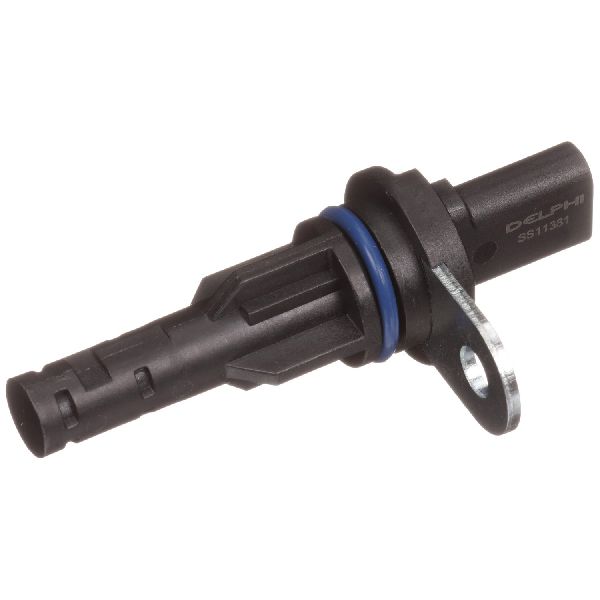
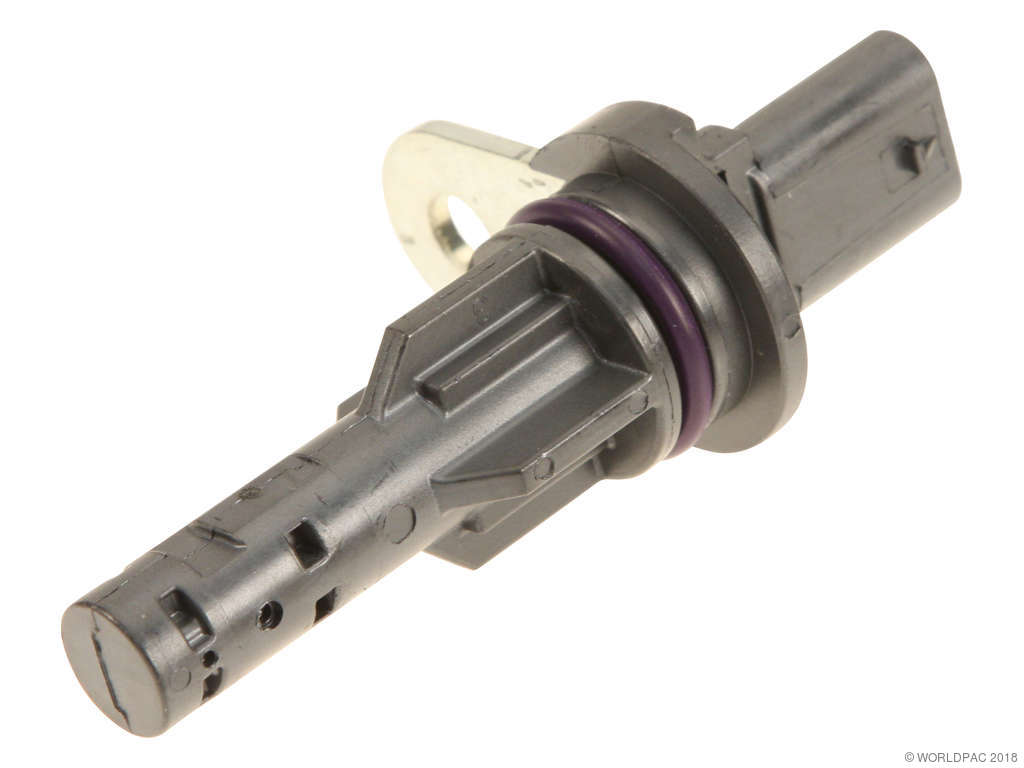
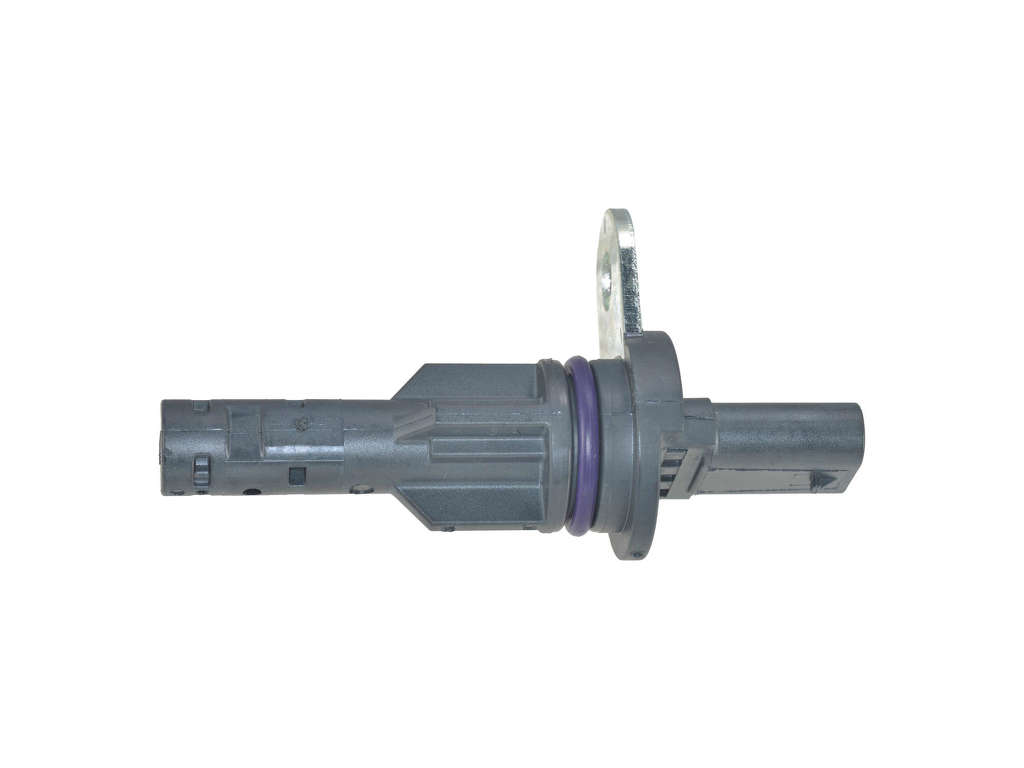
Est. part cost: $0 - Failing Camshaft Position Sensor 🟡 Medium Probability → Shop Engine Camshaft Position Sensor TSB #18-067-15 REV A explicitly links code U0401 with P0340 (Camshaft Position Sensor Circuit). A failing sensor can send erratic signals to the PCM. The PCM then broadcasts this bad data over the CAN network, triggering the U0401 in another module (like the TCM or ABS controller).
How to confirm: Scan for other codes, specifically P0340 or P0344. A failing sensor can cause stalling, rough idle, and starting issues. Diagnosis involves checking the sensor's signal with an oscilloscope or replacing it as a test, especially if the PCM software is already up to date.
Typical fix: Replace the faulty camshaft position sensor. After replacement, it is recommended to clear the codes with a scanner, as they may not clear on their own.
Est. part cost: $50-$100 - Wiring or Connector Issues ⚪ Low Probability Vibrations and heat in the engine bay can cause damage to the CAN bus wiring harness or connectors over time, leading to corrupted signals. A loose pin, corrosion in a connector, or a frayed wire can all introduce noise and data errors.
How to confirm: Visually inspect the wiring harnesses connected to the PCM, TCM, and ABS module for any signs of damage, corrosion, or loose pins. Pay close attention to the main connectors at the modules and any grounds.
Typical fix: Repair or replace the damaged section of the wiring harness or clean the connectors.
Est. part cost: $10-$300 - Low Battery Voltage or Charging System Fault ⚪ Low Probability → Shop Vehicle Battery Control modules require a stable voltage to communicate properly. A weak battery or failing alternator can cause modules to send incomplete or corrupt data, especially during startup. The TSBs for PCM flashing specifically warn technicians to connect a battery charger to maintain stable voltage during the procedure.
How to confirm: Test the battery and charging system. Voltage should be approximately 12.6V with the engine off and 13.7-14.7V when running.
Typical fix: Charge or replace the battery, or repair the charging system (e.g., replace the alternator).
Est. part cost: $150-$500
Rare But Worth Checking
- Failing Powertrain Control Module (PCM): → Shop Engine Control Module (ECM) While rare, the PCM itself can fail. This should only be considered after all other possibilities, especially software updates and wiring, have been thoroughly ruled out. A hardware failure inside the PCM can cause it to send out corrupted data.
- Aftermarket Tuner or Performance Part: If the vehicle has an aftermarket engine tune, performance chip, or even some non-OEM sensors, it could be sending data that other factory modules do not recognize, triggering a U0401 code.
- Failing Totally Integrated Power Module (TIPM): The TIPM acts as a central gateway for network communication. Internal failures within the TIPM can corrupt data passing through it, causing other modules to incorrectly blame the PCM and set a U0401 code. This is a known issue on many Chrysler products of this era and can cause a wide range of bizarre electrical problems. 🎬 Watch: How to remove and address TIPM issues.
Diagnosis Steps
- Connect a professional OBD-II scanner to check for U0401 and any other stored trouble codes. Note which module is setting the U0401 code (e.g., TCM, ABS).
- Check for applicable Technical Service Bulletins (TSBs) for your vehicle's VIN. Specifically, reference TSBs #18-068-15 and #18-067-15 REV A.
- If TSBs apply, have a dealer or qualified shop with a wiTECH tool verify the PCM's current software version and update it if a newer version is available. This is the most probable fix.
- If the software is up-to-date, perform a CAN bus integrity test. With the battery disconnected, measure the resistance between Pin 6 (CAN-H) and Pin 14 (CAN-L) at the OBD-II port. A healthy network should read approximately 60 Ohms. A reading of 120 Ohms indicates an open circuit or a missing termination resistor.
- If the software is current and CAN resistance is good, diagnose any other codes present, such as P0340 for the camshaft position sensor. Fix those issues first, as they are the likely source of the implausible data.
- Test the battery and charging system to ensure stable voltage is being supplied to all modules. Low voltage can cause communication errors.
- Carefully inspect the wiring harnesses and connectors for the PCM, TIPM, and the module that set the code. Look for any signs of corrosion, damage, or loose connections. Pay special attention to the twisted pair CAN bus wires to ensure they are not chafed or routed against hot components like coolant pipes.
- If an aftermarket tuner is installed, consider removing it and returning the PCM to the stock calibration to see if the code clears.
- If all other steps fail, investigate the TIPM for internal faults, as it can corrupt network data. Finally, consider that the PCM may be faulty, but this should be the last resort.
Parts You'll Likely Need
- PCM Software Update — This is the most common fix documented by Dodge TSBs for the 2010-2012 Challenger.
Trusted brands: Mopar (Dealer Service)
OEM price range: $100-$250
Aftermarket price range: N/A - Camshaft Position Sensor
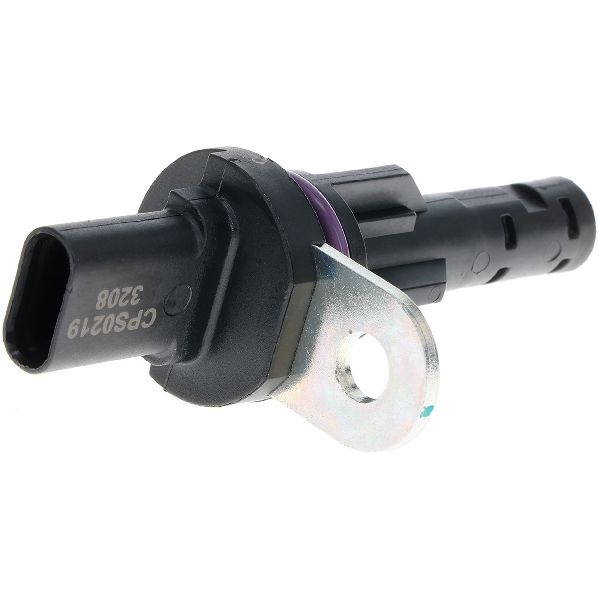
(OEM #5149141AF)— This sensor is a known point of failure that can directly lead to the U0401 code by sending bad data to the PCM, as noted in TSB #18-067-15. It is often the secondary cause if a software update doesn't resolve the issue.
Trusted brands: Mopar, Duralast (p/n SU14276), Dorman (p/n 907-728), NGK
OEM price range: $50-$100
Aftermarket price range: $30-$70
Related Codes That Often Appear With This One
- P0340 — As cited in TSB #18-067-15 REV A, a fault in the camshaft position sensor circuit is a primary code seen with U0401, all of which can be caused by the same PCM software issue.
- P0441 — TSB #18-067-15 REV A also links this EVAP system code, suggesting the software glitch affects multiple unrelated systems monitored by the PCM.
- U0140 — This code for lost communication with the Body Control Module (BCM) was also mentioned in TSB #18-067-15 REV A, indicating a broader network communication problem that can be resolved by a PCM software update.
Technical Service Bulletins (TSBs) & Recalls
- 18-067-15 REV A: Links U0401 with U0140, P0441, and P0340, often fixed by a PCM software update. Applies to 2011-2012 Challenger, Charger, and 300.
- 18-068-15: Specifically calls out a software update to fix U0401-00 and improve remote start functionality on 2010 models.
- 18-067-15: An earlier version of the bulletin also linking U0401 to P0441 and P0340.
Platform-Specific Known Issues
- A known software issue requires a PCM reflash to fix erroneous U0401 codes, as detailed in TSB #18-068-15 and #18-067-15 REV A.
- TSB #18-068-15 notes that the software update also improves fuel pump relay cycling during remote starts, indicating the original software had multiple minor flaws.
- The issue is not isolated to the Challenger; the TSBs also apply to Dodge Chargers and Chrysler 300s from the same period with the 5.7L and 6.4L engines, confirming it's a platform-wide software problem.
Mechanic-Grade Diagnostic Values
- CAN Bus Network Resistance — expected: ~60 Ohms. Failure: A reading of ~120 Ohms indicates an open in the circuit or a missing terminating resistor. A reading significantly less than 60 Ohms can indicate a shorted module or wire.
- CAN Bus Voltage (Idle/Key On) — expected: CAN_H: ~2.75V, CAN_L: ~2.25V, both with respect to a good ground. The lines should hover around a 2.5V midpoint.. Failure: Voltages that are stuck high, low, or at battery/ground potential indicate a short in the wiring or a faulty module. If CAN_L voltage is higher than CAN_H, the wires are reversed somewhere in the circuit.
- PCM Ground Circuit Integrity — expected: A test light connected to battery positive should be 'illuminated and bright' when the other end probes the PCM ground pins at the connector.. Failure: A dim light or no light indicates high resistance or an open in the ground circuit.
Hidden / Shadow Codes Worth Checking
- U0401-00: The '-00' is a Failure Type Code (FTC) specified by SAE J2012. For this code, it typically means 'No Sub Type Information' or a general, unspecified fault. Its presence in the TSBs confirms the code is being set without a more specific failure identified by the module, which is consistent with a software glitch. (see via A professional scan tool like the dealer's wiTECH system will display the full DTC with its FTC.)
Scan Tool Commands That Help
- wiTECH: Reprogram PCM (Flash) — This is the primary repair step indicated by TSBs #18-068-15 and #18-067-15 REV A to resolve the U0401 code caused by a software bug.
- wiTECH: Clear All DTCs — After completing the PCM flash procedure, the wiTECH application automatically presents any DTCs set in other modules during the reprogramming and allows for them to be cleared in a single step.
- Generic OBD-II Scanner: View Live Data — Monitor live data from engine sensors (like RPM, throttle position, etc.). Wildly fluctuating or nonsensical values can help confirm that the PCM is processing or sending bad data, even if the sensors themselves are good.
Wiring & Ground Locations
- Powertrain Control Module (PCM) — Located at the right rear of the engine compartment.. This is the module sending the 'implausible data'. Checking its connectors for corrosion or damage is a key diagnostic step.
- Totally Integrated Power Module (TIPM) — Located on the right side of the engine compartment; it also serves as the underhood fuse box.. The TIPM is the central gateway for the CAN bus. A fault here can corrupt messages passing through it, and its connectors (especially C5 and C6 on the bottom) are susceptible to corrosion from moisture.
- Ground G100 — Located at the left front of the engine compartment.. A poor engine or chassis ground can introduce electrical noise and voltage differentials, disrupting module communication and causing U-codes.
- Ground G101 — Located at the right front of the engine compartment.. This ground is physically closer to the PCM and TIPM. Ensuring it is clean and tight is critical for stable module operation.
- CAN C Bus Wires — A twisted pair of wires, often designated D64 (CAN C +) and D65 (CAN C -) in wiring diagrams, running between all high-speed modules.. These wires are the physical network. They can be susceptible to chafing or electromagnetic interference if routed too close to hot or high-current components, which can corrupt data and trigger a U0401.
Real Owner Repair Stories
- YouTube user Mark's Garage (Dodge vehicle (Ram/Chrysler/Jeep family) with TIPM and CAN bus architecture similar to the Challenger) — Gauges going haywire, shifter lock clicking, multiple warning lights, 'no bus' message, symptoms of a failing TIPM.
❌ Tried (didn't work) Initial diagnosis pointed towards a faulty TIPM, which is a very common failure point for these vehicles.
✅ What actually fixed it The root cause was not the TIPM module itself, but the twisted-pair CAN bus wiring harness. It was routed directly against a hot coolant pipe, causing electrical or magnetic interference that corrupted the communication signals. The fix was to inspect, re-route, and insulate the CAN bus wiring away from the interference source.
OEM Part Supersession History
5149141AF→Part number appears to be stable.— This is the current OEM part number for the camshaft position sensor associated with code P0340, which often accompanies U0401.
Heads up: Aftermarket cross-references include Dorman 907-728 and Airtex/Wells 5S12863.
Model Year Variations Within This Range
- 2010 vs 2011-2012: Dodge issued separate TSBs for the PCM software update based on model year. TSB #18-068-15 is for 2010 models, while TSB #18-067-15 REV A is for 2011-2012 models. This indicates different underlying software and requires the correct flash file to be used for the specific year.
Helpful Videos
![TIPM [Dodge, Chrysler, Jeep] Removal and Solution](https://img.youtube.com/vi/qea1H85HBwU/mqdefault.jpg)
We Have This Part in Stock


The information in this article is provided for general reference and educational purposes only. Vehicle specifications, procedures, and part compatibility can vary by production date, trim level, and region. Always consult your vehicle's factory service manual and verify part numbers before purchasing or performing repairs. Safety-critical components such as airbags, seat belts, and braking systems should be installed by a qualified professional.
- Dodge CHALLENGER:
- 🧭 Diagnostic Flowchart
- 🎬 Helpful Videos
- 🛍️ Shop This Part
- What's Unique About the 2010-2012 Dodge CHALLENGER
- Symptoms You May Notice
- Most Likely Causes
- Rare But Worth Checking
- Diagnosis Steps
- Parts You'll Likely Need
- Related Codes That Often Appear With This One
- Technical Service Bulletins (TSBs) & Recalls
- Platform-Specific Known Issues
- Mechanic-Grade Diagnostic Values
- Hidden / Shadow Codes Worth Checking
- Scan Tool Commands That Help
- Wiring & Ground Locations
- Real Owner Repair Stories
- OEM Part Supersession History
- Model Year Variations Within This Range
- 🎟️ Get 5% Off