

U0401 on 2015-2019 GMC Sierra 2500: Invalid ECM Data Causes & Fixes
On a 2015-2019 GMC Sierra 2500, code U0401 is most often caused by a damaged or corroded wiring harness located under the driver's or passenger's side door sill plate. This is a well-documented issue (TSB PIT5457D) where moisture damages the 'Communication Enable' circuit 5986, which is often a tan or pink wire. Repairing this single wire is a common and cost-effective fix compared to unnecessarily replacing expensive control modules.
- For a 2015-2019 GMC Sierra 2500, U0401 almost always points to a wiring problem, not a failed computer.
- Your first and most important diagnostic step is to inspect the wiring harnesses under the plastic door sill plates on both the driver's and passenger's sides for corrosion or damage.
- Do not replace any expensive control modules until you have exhaustively checked the sill plate wiring and verified that the battery and main ground connections are clean and tight.
- This code often appears with other communication codes (like U0121, U0131) and triggers warnings for power steering and Stabilitrak.
What's Unique About the 2015-2019 Gmc SIERRA 2500
The 2015-2019 GMC Sierra 2500, built on the K2XX platform, is known for specific electrical vulnerabilities that trigger the U0401 code. General Motors issued a Technical Service Bulletin (TSB #PIT5457D) that directly links this code to damaged wiring in the channel under the driver and passenger door sill plates. This area can trap moisture, leading to corrosion and failure of a specific wire called the 'Communication Enable' circuit (Circuit 5986). This circuit is responsible for 'waking up' various modules to communicate on the network. A failure in this single wire can cause a widespread communication breakdown, leading to a cascade of errors.
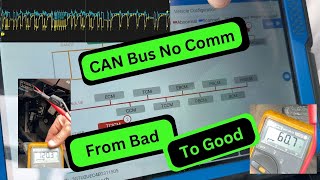
🎬 Watch: How a bad CAN bus signal causes no-crank issues.Diagnostic Flowchart
Tap your situation to follow the diagnostic path that matches what you're seeing on this vehicle.
Symptoms You May Notice
- "Service Power Steering" or "Steering Assist is Reduced" message on the dash.
- Illuminated Check Engine Light.
- Disabled Traction Control or Stabilitrak system warning lights.
- Intermittent loss of power or engine stalling.
- Vehicle may enter a reduced power "limp mode".
- Harsh or delayed transmission shifting.
- Backup camera inoperative or shows "Rear Vision System Unavailable" message.
- Instrument panel gauges may go blank or fluctuate erratically.
- No-start or start-and-stall condition.
- Replacing the Engine Control Module (ECM) without first inspecting the sill plate wiring harnesses.
- Replacing the Power Steering Control Module (PSCM) or Electronic Brake Control Module (EBCM) before verifying the integrity of the wiring and grounds.
- Overlooking the G218 ground issue, where the dash insulation impedes the BCM ground connection.
Most Likely Causes
- Damaged Wiring Harness in Sill Plates 🔴 High Probability As documented in TSB #PIT5457D, the wiring channel under the door sill plates is highly susceptible to water intrusion from wet boots, clogged sunroof drains, or poor door seals. This moisture corrodes the Communication Enable circuit (5986), which is a tan or sometimes pink wire. This circuit provides a ~12V wake-up signal from the BCM to other modules. Corrosion creates high resistance, preventing modules from waking up and communicating, which triggers the U0401 code.
How to confirm: Remove the driver and passenger side plastic sill plates and peel back the carpet. Visually inspect the wiring harness within the channel for signs of moisture, green or white corrosion, or physically damaged/pinched wires. The driver's side is a very common failure point. A voltmeter can be used to check for ~12V on circuit 5986 at a downstream module (like the EBCM or PSCM) when the ignition is on. TSB PIT5457C recommends load testing this circuit with a 194 bulb; the bulb should light and maintain at least 11 volts.
Typical fix: Cut out the corroded section of the wire (often found at a splice point like J365 under the passenger sill plate), splice in a new piece of 18-20 gauge wire using waterproof butt connectors or solder and heat shrink, and wrap the repaired harness with high-quality electrical tape. Ensure the channel is completely dry before reassembly and consider adding a drain hole to prevent future water pooling.
Est. part cost: $10-$50 - Poor Ground Connection (G218) 🟡 Medium Probability TSB #PIT5405C and #18-NA-161 identify a specific ground point, G218, as a potential source for numerous communication issues. This ground is for the Body Control Module (BCM). The factory design allows the dash insulator mat to get trapped between the ground eyelet and the body, preventing a solid connection and causing intermittent electrical faults, especially when electrical load increases (like turning the steering wheel).
How to confirm: Locate ground G218 under the driver's side dashboard, typically on the A-pillar behind the kick panel. Disassemble the connection and check if the black insulation material is sandwiched under the ground lug. The connection should be clean, bare metal to bare metal.
Typical fix: Remove the ground nut and eyelet. Cut away the section of the insulator mat that is interfering with the connection. Scuff the body and the eyelet with a wire brush or sandpaper to ensure clean contact, then re-secure it tightly.
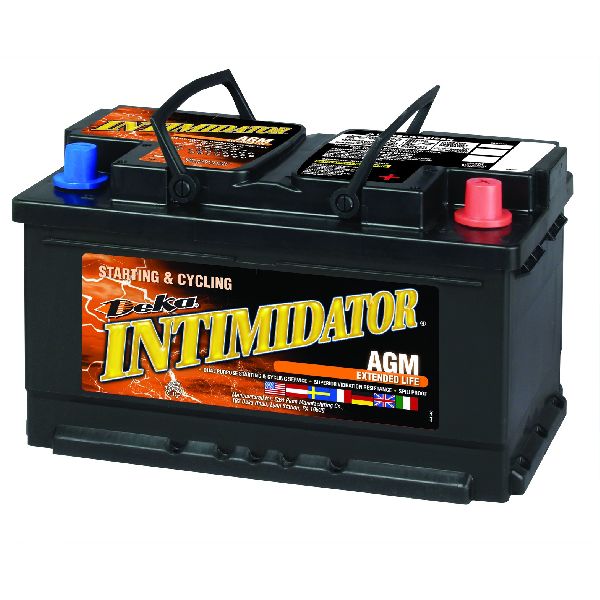
Est. part cost: $0-$5 - Low or Unstable Battery Voltage 🟡 Medium Probability → Shop Vehicle Battery Modern control modules require stable voltage to operate correctly. A weak battery, failing alternator, or high-resistance battery cables (a known issue covered in TSB 18-NA-161) can cause modules to send corrupt data during startup or under load, triggering a U0401-71 variant.
How to confirm: Test the battery voltage with a multimeter. It should be ~12.6V with the engine off and 13.7-14.7V with the engine running. Perform a voltage drop test on the main positive and negative battery cables as described in TSB 18-NA-161 to check for high resistance. Check battery terminals and main ground connections for corrosion or looseness.
Typical fix: Replace the failing battery, alternator, or faulty cables. Clean all battery and ground connection points thoroughly. GM has updated part numbers for faulty battery cables.
Est. part cost: $150-$600
Rare But Worth Checking
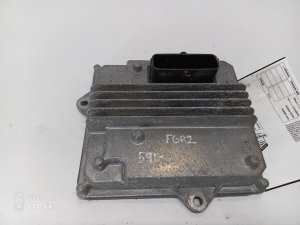
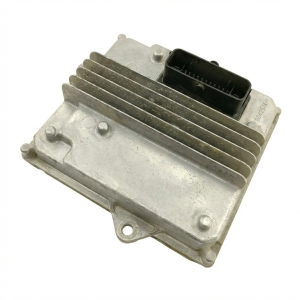
- Faulty Engine Control Module (ECM): → Shop Engine Control Module (ECM) This is a rare cause and should only be considered after all wiring, power, and ground issues have been completely ruled out. The ECM is an expensive part and requires professional programming (flashing) with GM's TIS2WEB software to the vehicle's VIN. In many cases, the ECM is replaced unnecessarily when the root cause is a wiring or ground fault.
- Faulty Receiving Module or Software Glitch (e.g., PSCM, EBCM): Less commonly, the module that is *reporting* the U0401 code may have an internal fault. For example, GM issued TSB #20-NA-113 for 2017-2018 models (1500 series, but relevant logic) where a PSCM software error can cause a U0401 to remain as a 'current' code even after the initial fault is fixed. The solution is a software reprogram, not hardware replacement.
- Aftermarket Electronics: Improperly installed remote starters, alarms, aftermarket radios, or performance tuners can interfere with the CAN bus network by drawing too much power or introducing electrical noise, causing communication codes.
Diagnosis Steps
- Scan all vehicle modules with a high-quality OBD-II scanner and record all stored DTCs. Note which specific module(s) are logging the U0401 code, as this points to the receiving module.
- Begin by inspecting the most likely cause: Remove the driver and passenger side door sill plates and carefully inspect the wiring harness in the channel for any signs of water damage, corrosion (especially green powder on tan or pink wires), or pinched wires, as per TSB PIT5457D.
- If the sill plate harness appears intact, inspect the BCM ground G218. Locate it under the driver's side dash near the A-pillar, remove the nut, and check for the dash insulator mat being trapped underneath the eyelet, as per TSB PIT5405C.
- If grounds and sill plate wiring are good, check the vehicle's battery and charging system. Ensure battery voltage is stable and above 12.4V engine-off and 13.7V+ engine-on. Perform voltage drop tests on battery cables if low voltage is suspected.
- If any wiring damage was found and repaired, clear all DTCs and perform a test drive to see if the code returns. Wake the vehicle systems multiple times to confirm the fix is stable.
- If the code persists and all wiring/grounds are confirmed good, the issue may be with a control module or software. This step typically requires professional diagnosis with advanced tools to isolate the faulty module or check for required software updates (like TSB 20-NA-113 for the PSCM).
Parts You'll Likely Need
- Wiring Repair Supplies — This is needed to fix the most common cause: corroded or broken wires in the sill plate harness. Includes wire, waterproof butt connectors, and Tesa tape.
- Battery — A weak or failing battery can cause low voltage, leading to various communication errors including U0401.
- Body Control Module (BCM) — In rare cases, the BCM itself fails and stops sending the 'wake up' signal on circuit 5986. This requires VIN-specific programming upon replacement.
- Engine Control Module (ECM)
(OEM #12673363 (Varies by engine/year, verify with VIN))— This is the least likely cause. The ECM is only replaced after all other wiring, ground, and power supply issues have been definitively ruled out.
Related Codes That Often Appear With This One
- U0077 — Indicates a communication issue with the Chassis CAN Bus, directly related to the same wiring harness fault in circuit 5986.
- U0121 — Lost Communication With Anti-Lock Brake System (ABS) Control Module, often due to the same harness issue cited in TSB PIT5457D.
- U0131 — Lost Communication With Power Steering Control Module (PSCM), a common companion code when steering assist is affected.
- U0140 — Lost Communication With Body Control Module (BCM), which can be caused by the poor G218 ground connection.
- U0126 — Lost Communication With Steering Angle Sensor Module, also related to the chassis communication network and circuit 5986.
Technical Service Bulletins (TSBs) & Recalls
- PIT5457D: Addresses loss of communication and codes like U0401 caused by an open or damaged wire harness (Circuit 5986) under the driver and passenger sill plates.
- PIT5405C: Details various electrical issues, including communication DTCs, caused by a poor BCM ground at G218 due to an interfering dash insulator mat.
- 18-NA-161: A comprehensive bulletin covering numerous electrical conditions caused by poor battery cable connections and grounds, including G218.
Platform-Specific Known Issues
- TSB #PIT5457D documents a known issue where the wiring harness under the driver and passenger sill plates can become damaged or corroded, leading to a loss of communication and multiple U-codes, including U0401. The specific wire to check is the Communication Enable circuit 5986.
- TSB #PIT5405C / 18-NA-161 points to a poor ground at G218 (under the driver's dash) as a potential cause for a multitude of communication DTCs and electrical symptoms. The dash insulation mat gets trapped under the ground lug, causing a poor connection.
- TSB #20-NA-113 (for 1500 series, but relevant) notes a PSCM software glitch on 2017-2018 models that can hold a U0401 as a current code, requiring a dealer reprogram.
Mechanic-Grade Diagnostic Values
- Communication Enable Circuit (5986) Voltage — expected: ~12 Volts (Battery Voltage) when BCM is awake (e.g., key on, headlights on).. Failure: Low or no voltage indicates an open, short, or high resistance in the circuit between the BCM and the module being tested.
- Communication Enable Circuit (5986) Load Test — expected: A 194 bulb connected between the circuit and ground should light up, and voltage measured across the lit bulb should be at least 11.0 Volts.. Failure: If the bulb does not light, or if the voltage drops below 11.0V, it confirms high resistance in the circuit that a simple voltmeter test might miss.
- CAN Bus Termination Resistance — expected: Approximately 60 Ohms when measured between Pin 6 (CAN High) and Pin 14 (CAN Low) at the DLC with the battery disconnected.. Failure: A reading of ~120 Ohms indicates one of the two terminating resistors is offline (often due to a break in the wiring). A reading significantly lower than 60 Ohms can indicate a short between the CAN lines.
- CAN Bus Voltage (Key On, Engine Off) — expected: CAN High (Pin 6) should be ~2.6V and CAN Low (Pin 14) should be ~2.4V, measured to a good ground. These are average readings on a multimeter; an oscilloscope is needed for true signal analysis.. Failure: Voltages that are stuck high, stuck low, or equal to each other indicate a short to power, short to ground, or short between the two CAN lines.
Hidden / Shadow Codes Worth Checking
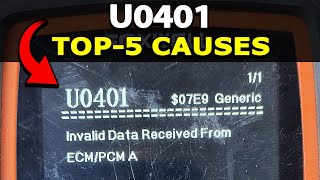
- U0401-71: Invalid Serial Data Received. This is a common symptom byte that accompanies U0401. It specifies that the receiving module determined the data packet from the ECM was corrupt or illogical, often due to low system voltage or intermittent connection issues. (see via A professional GM scan tool like a Tech 2 or a device running GDS2 software is required to view symptom bytes.)
Scan Tool Commands That Help
- GDS2 (GM Global Diagnostic System 2): Module Information / DTC Display — When U0401 is present, this screen will show which specific module set the code and display any accompanying symptom bytes (like -71), which helps narrow down the diagnostic path.
- GDS2 (GM Global Diagnostic System 2): Control Functions > BCM > Exterior Lighting — This is a simple bidirectional control to manually activate a function (like headlights) to force the BCM to 'wake up' the communication enable circuit (5986). This is used while simultaneously testing for voltage at a downstream module.
- GDS2 (GM Global Diagnostic System 2): Data Bus Diagnostic Tool — This is a specialized function within GDS2 used to query the status of all modules on a specific CAN bus. It can help identify which modules are not communicating, providing a starting point for checking wiring between the last communicating module and the first non-communicating one.
Wiring & Ground Locations
- Circuit 5986 — A tan or pink wire running in the main harness under the driver's and passenger's side door sill plates.. This is the 'Communication Enable' or 'wake-up' wire sent from the BCM. It is the most common point of failure due to corrosion from water intrusion in the sill plate channels, directly causing U0401 and related codes.
- G218 — Under the driver's side dashboard, on the left A-pillar behind the kick panel.. This is a primary ground for the Body Control Module (BCM). If this ground is poor due to trapped insulation, it can cause the BCM to malfunction and send corrupt data or fail to activate the wake-up circuit, triggering U0401.
- Splice J365 — A splice pack located in the wiring harness under the passenger's front door sill plate.. This is a known area where multiple wires, including Circuit 5986, are joined. It is highly susceptible to the same water intrusion and corrosion that affects the rest of the sill plate harness.
- BCM Connector X4, Pin 1 — The 4th connector (often black) on the Body Control Module, located under the driver's side of the dashboard.. This is the specific pin where Circuit 5986 originates. Testing for ~12V directly at this pin can determine if a lack of wake-up signal is due to a faulty BCM or a wiring issue downstream.
- PSCM Connector X1, Pin 8 — The main connector on the Power Steering Control Module, located on the power steering rack.. This is the specific pin where the Power Steering Control Module receives the wake-up signal on Circuit 5986. If U0131 is also present, testing for voltage at this pin is a key diagnostic step to confirm if the signal is reaching the module.
Real Owner Repair Stories
- gm-trucks.com forum user (2015 GMC Sierra 2500HD) — Service Power Steering message, loss of power steering assist, multiple U-codes including U0401.
❌ Tried (didn't work) Replacing the Power Steering Control Module (PSCM).
✅ What actually fixed it Found and repaired a corroded tan wire (Circuit 5986) in the wiring harness located under the driver's side door sill plate. The wire was damaged due to water intrusion, exactly as described in TSB PIT5457D. - Silverado/Sierra forum user (2016 Chevrolet Silverado 2500HD) — Intermittent loss of power steering, Stabilitrak warnings, U0401, U0131, U0077 codes.
❌ Tried (didn't work) Visually inspecting the sill plate harness (no obvious corrosion was seen).
✅ What actually fixed it The tan wire (Circuit 5986) under the driver's sill plate was broken internally inside the insulation. The break was only found by physically tugging on the individual wire, which then stretched and snapped. Repairing this single wire resolved all codes and symptoms.
Helpful Videos

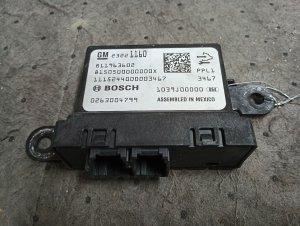
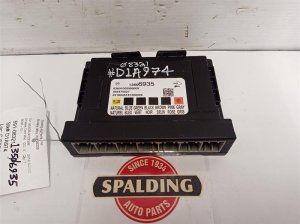
Used OEM Parts in Stock
New Aftermarket Parts Available



The information in this article is provided for general reference and educational purposes only. Vehicle specifications, procedures, and part compatibility can vary by production date, trim level, and region. Always consult your vehicle's factory service manual and verify part numbers before purchasing or performing repairs. Safety-critical components such as airbags, seat belts, and braking systems should be installed by a qualified professional.
- Gmc SIERRA 2500:
- 🧭 Diagnostic Flowchart
- 🎬 Helpful Videos
- 🛍️ Shop This Part
- What's Unique About the 2015-2019 Gmc SIERRA 2500
- Symptoms You May Notice
- Most Likely Causes
- Rare But Worth Checking
- Diagnosis Steps
- Parts You'll Likely Need
- Related Codes That Often Appear With This One
- Technical Service Bulletins (TSBs) & Recalls
- Platform-Specific Known Issues
- Mechanic-Grade Diagnostic Values
- Hidden / Shadow Codes Worth Checking
- Scan Tool Commands That Help
- Wiring & Ground Locations
- Real Owner Repair Stories
- 🎟️ Get 5% Off